As the summer solstice season unfolds, Humanity’s Team gathers some well known luminaries – including Neale Donald Walsch, Suzanne Giesemann, Debra Poneman, Rev Sue Frederick, Yosi Amram, Jan Hatcher and others – for a beautiful discussion highlighting our “Hearts for Humanity.” You will see how Steve Farrell and this extraordinary group of individuals are working to align themselves in Oneness and serve their communities and the planet all year ’round! Don’t let this opportunity to join us in action pass you by – come for the spirit of togetherness and leave empowered to make lasting change in your own Heart and greater worldwide community!
Johnathan Bi explores four influential philosophical works to help navigate the professional challenges posed by the rise of artificial intelligence. By examining themes of labor, value, and human intuition through the lens of historical thinkers, this analysis offers a strategic framework for finding existential fulfillment and sustaining creative contributions in an increasingly automated world.
After more than five years of roaming the desolate and dusty landscapes of the Martian surface, NASA’s Perseverance rover has come across some of the most intriguing evidence yet of ancient microbial life on the Red Planet. As detailed in a new paper published in the journal Science Advances, scientists confirmed that Perseverance had discovered a rock that contained “complex organic matter” — the building blocks of life, in biological parlance — in two rocks in a formation dubbed Bright Angel.
The outcropping is located inside the Jezero crater, which scientists believe is an ancient lakebed that dried out billions of years ago. The scientists found that samples from the rocks that Perseverance originally found in 2024 contained macromolecular carbon (MMC), large networks of carbon atoms commonly found in Earth rocks containing fossilized biological carbon and meteorites.
An initial analysis of the rocks made headlines last year after NASA announced it had spotted “potential biosignatures,” pointing at compelling “leopard spots” that may have been left behind by microbial life.
The latest paper fleshes out the compelling case even further, confirming the detection of MMC in the rocks by using one of Perseverance’s scientific instruments to detect their composition by shining an ultraviolet laser at them.
“Measurements of two mudstones show hundreds of organic detections, making this the most robust organic detection in Jezero crater thus far, and, to our knowledge, the only detection of macromolecular carbon on a natural rock surface on Mars,” the paper reads.
Hold your horses on the idea that they’ve confirmed extraterrestrial life, however: MMC can form both through biotic and abiotic processes.
“While the specific formation mechanism of the MMC detected in the Bright Angel mudstones remains unknown, this is still one of the most exciting findings to date,” said co-lead and Planetary Science Institute postdoctoral researcher Ashley Murphy in a statement, calling the discovery a “resounding win for Mars science.”
The MMCs might also original off world; they could either “be from meteorites or cosmic dust; abiological processes like hydrothermal reactions; or they could be biological in nature,” as Washington University planetary scientist Paul Byrne told Science News.
The scientists suggest fine-grained sediment carried by water through an ancient river channel hardened into the rocks Perseverance analyzed using its Scanning Habitable Environments with Raman & Luminescence for Organics & Chemicals (SHERLOC) instrument.
Scientists were baffled how close to the surface — mere microns away — the MMCs were preserved, considering the extreme environment.
“The Martian surface environment includes radiation and chemical oxidants that are destructive to organics, and terrestrial laboratory simulations have shown that the survival time of organics in Martian-like conditions — especially at or near the surface — depends on factors such as the type of organic molecule and the surrounding minerals,” Murphy explained.
“The MMC detected in the Bright Angel mudstones is either resistant to degradation and/or has been sufficiently shielded by other minerals, such as clays, or iron-rich Martian soil,” she added.
It’s yet another intriguing chapter in our efforts to probe the planet’s surface for evidence of ancient microbial life. Intriguingly, more than 2,000 miles away, NASA’s Curiosity rover detected organic molecules as well, raising the possibility that life may have once spread over a vast area.
However, to confirm the presence of microbial life, samples would need to be shipped back to Earth, an extremely complicated and expensive plan that has turned into a painful political football.
“The science payload of the Perseverance rover was not designed to distinguish between organics formed via abiotic and biotic processes but was instead selected to identify compelling rocks to be collected for possible return to Earth for more rigorous testing,” coauthor and NASA Jet Propulsion Lab research scientist Kyle Uckert told Space.com.
I’m a senior editor at Futurism, where I edit and write about NASA and the private space sector, as well as topics ranging from SETI and artificial intelligence to tech and medical policy.
“If I have the gift of prophecy and can fathom all mysteries and all knowledge, and if I have a faith that can move mountains, but do not have love, I am nothing.” [1]
–I Corinthians 13:2
“If a country has the largest population in the world and the largest economy in the world and the largest high-speed rail network in the world, but has not democracy, it is nothing.”
Nearing our 250th Declaration of Independence celebration, some words/thoughts by some of our colonial Fighters for Independence/Constitutional-Founders & Framers that didn’t make it into our Constitution; *plus, the words of possibly the most forward thinking scientist; **and the words/thoughts of one retired (2006) Supreme Court judge (who died in 2023):
“Government is, or ought to be instituted for the common benefit, protection, and security of the people, nation, or community…when any government shall be found inadequate or contrary to these purposes, a majority of the community hath an indubitable, inalienable, and indefeasible right to reform, alter, or abolish it, in such manner as shall be judged most conducive to the public weal.” George Mason
“That there be prefixed to the Constitution a declaration, that all power is originallyvested in, and consequently derived from the people.” James Madison
“The means of defense against foreign danger, have been always the instrumentsof tyranny at home…the armed forces kept under the pretext of defending, have enslaved the people.” James Madison
“…this (new government under the Constitution) is likely to be well administered for a course of years; and as other forms have done before, the people, being incapable of any other mode, will become so corrupted as to need authoritarian rule, such that, this Government will end in Despotism!” Benjamin Franklin
“As Nations become more corrupt and vicious, they have more need for masters. Only a virtuous people are capable of Liberty.” Benjamin Franklin
*”The world will not be destroyed by those who do evil, but by those who watch them without doing anything.” Albert Einstein
Depiction of Confucius by Wu Daozi, 8th century CE
“Heaven means to be one with God.”
~ Confucius
Confucius, born Kong Qiu, was a Chinese philosopher of the Spring and Autumn period who is traditionally considered the paragon of Chinese sages. Much of the shared cultural heritage of the Sinosphere originates in the philosophy and teachings of Confucius. Wikipedia
“Measurements of two mudstones show hundreds of organic detections, making this the most robust organic detection in Jezero crater.”
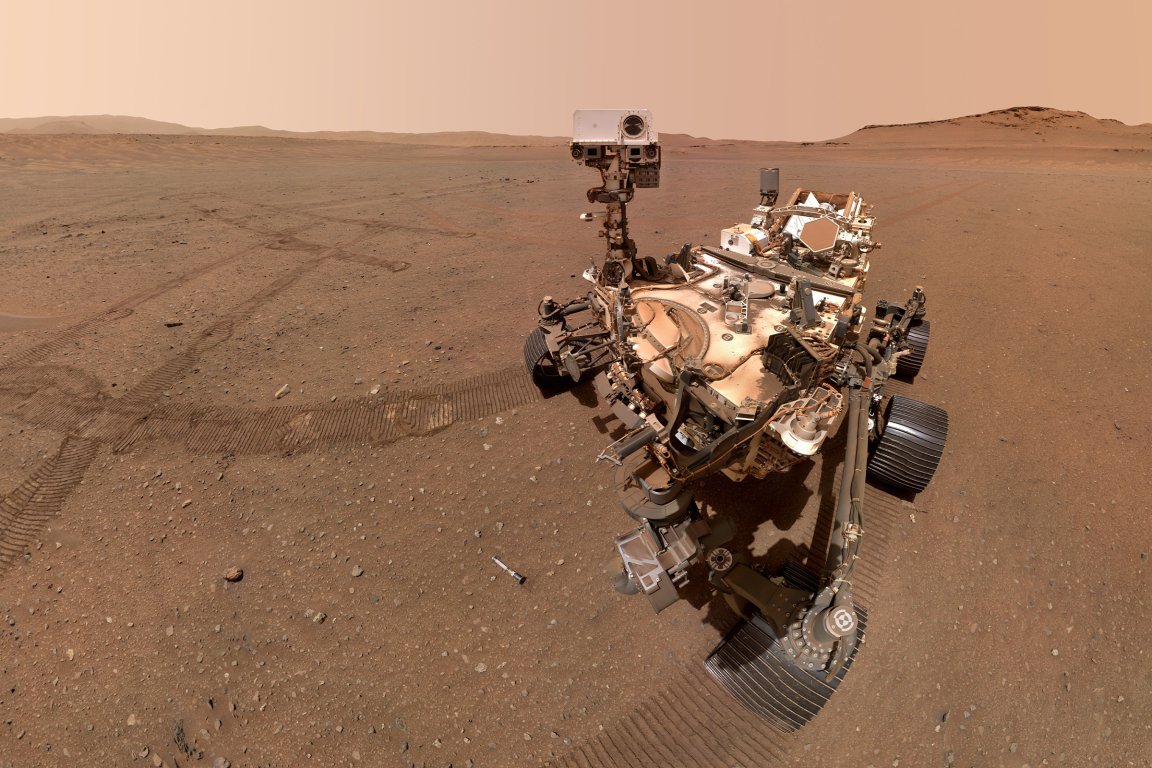
A “selfie” the Perseverance rover took. (Image credit: NASA/JPL-Caltech/MSSS)
Could Martian mudstones be holding evidence of ancient microbes? New findings strengthen the case that the Red Planet once held life.
New data from NASA’s Perseverance rover has revealed complex carbon in two Martian mudstones found in Mars’ Jezero crater, the same location where previous evidence of possible ancient life has been found. Scientists think this macromolecular (meaning large) complex carbon, could hold evidence that ancient microbial life once existed in the same sedimentary material, according to one new paper describing these observations. “Measurements of two mudstones show hundreds of organic detections, making this the most robust organic detection in Jezero crater,” the paper reads.
This comes soon after the news last year that Perseverance found what has been dubbed the strongest evidence of potential biosignatures, or hints of life, on Mars.
“Carbon is the primary building block for life on Earth, and all living things are made up of complex organic macromolecules,” co-lead author Ashley Murphy, a researcher at the Planetary Science Institute, told Space.com. “On Earth, [macromolecular carbon] is often found in extremely old rocks and in some cases it is the only organic evidence of past microbial life.
“Since early Mars may have been more similar to Earth,” Murphy added, “we may anticipate finding [macromolecular carbon] in old Martian rocks too, so we are searching for these organic macromolecules on Mars and other planetary bodies to determine whether the necessary chemical ingredients and environmental conditions to support life have ever existed there.”You may like
Perseverance landed on Mars in 2021 in Jezero Crater, an expansive crater thought to once be a lake that could have possibly harbored life. This landing site was in fact chosen because scientists thought it could have some of the best evidence for possible ancient life on the planet. And so far, in Perseverance’s extensive explorations — which have now officially taken the rover the distance of a marathon on Mars — that prediction seems like it’s turning out to be true.
In this new research, a team of scientists co-led by Murphy used Perseverance’s spectrometer SHERLOC (the Scanning Habitable Environments with Raman and Luminescence for Organics and Chemicals), which uses lasers to identify an area or object’s chemical and mineral makeup, to map the distribution of organic matter in the individual mudstones. The crew found organic carbon inside two mudstones.
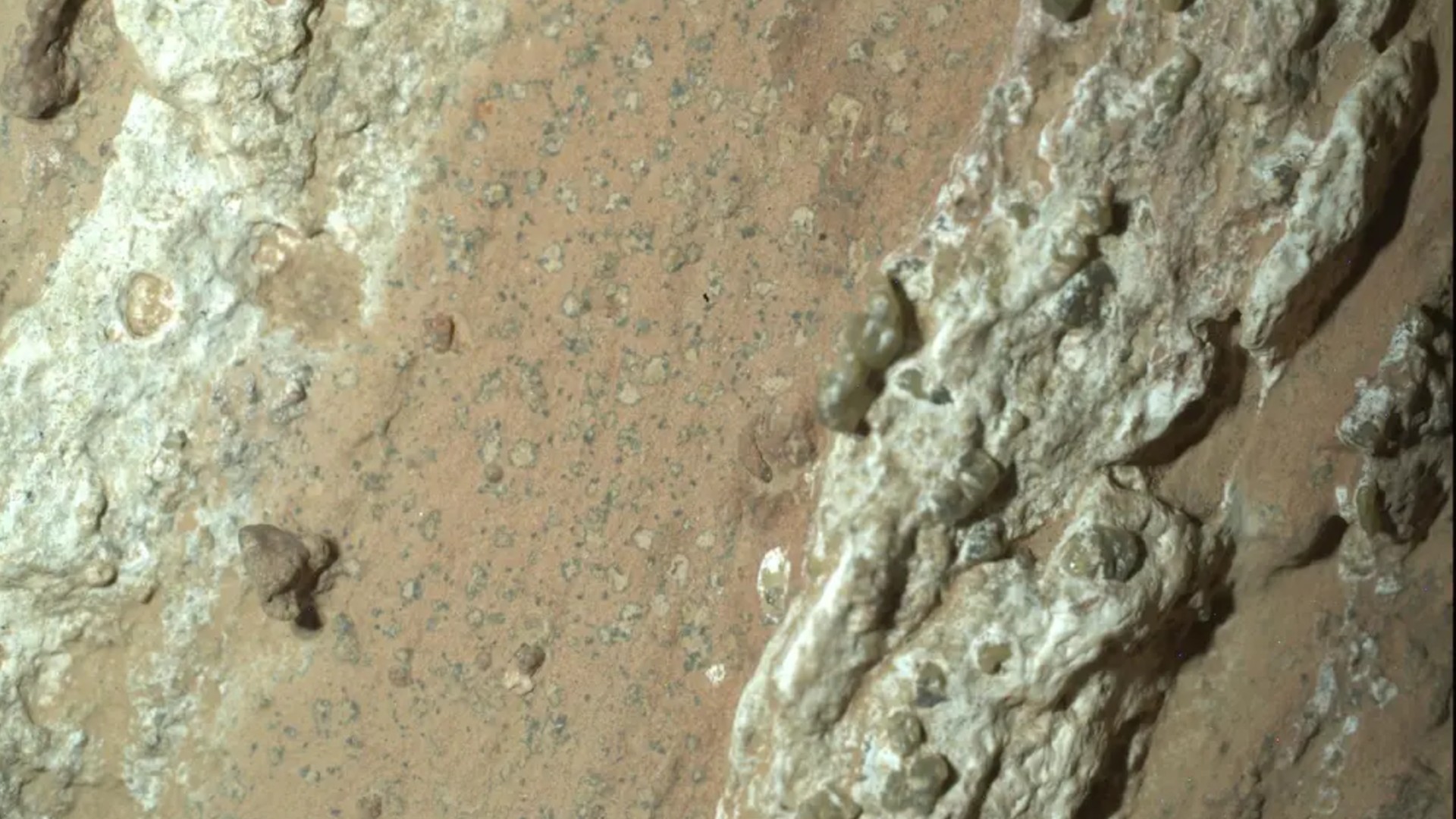
Furthermore, these carbon-filled mudstones were found in the same location as the last year’s discovery of a potential biosignature found in a sedimentary rock on the Red Planet, which scientists say is still the strongest evidence that life could have once existed on early Mars. In this discovery, Perseverance found a rock now-named “Cheyava Falls” with distinctive “leopard spots.”
These types of rock marking can be created in high heat or extremely acidic temperatures, but neither of these conditions are thought to have existed in the area. However, the markings can also be formed by the presence of life. So, while this rock wasn’t conclusive evidence of past life on Mars, it certainly provided significant evidence that is now supported by this new data.
With these observations, the rover has made two main findings.What to read next
First, Perseverance has found organic, large, complex carbon in mudstones in Bright Angel, a rocky area on the northern and southern edges of Neretva Vallis, which is an ancient river valley in the Jezero area. And not only did Perseverance make hundreds of detections of organic carbon in these rocks, but the researchers also state that this is “the only detection of macromolecular carbon on a natural rock surface on Mars.”
“This is also the first detection of MMC in a mudstone on Mars outside of Gale Crater, suggesting that the availability of organics may have been widespread across the planet billions of years ago,” co-lead author Kyle Uckert, the SHERLOC deputy principal investigator at NASA’s Jet Propulsion Laboratory, told Space.com.
A closeup of “leopard spots” on Mars seen by the Perseverance rover on the rock Cheyava Falls, which may show signs of a biosignature, but could also be from geologic processes. (Image credit: NASA/JPL-Caltech/MSSS)
While both studied mudstones have organic carbon in their interiors, according to these observations from Perseverance, there were some differences between the two rocks. The carbon in one mudstone was found mixed with primarily silicate minerals, while the other was filled with carbon mixed with secondary carbonate and sulfate minerals. The team also found that the carbon in both rocks was relatively intact, meaning the specimens might be resistant to radiation and oxidation or that it may have been recently exposed to the Martian surface.
Secondly, the team found that, in this identified carbon, Perseverance has detected evidence of potential biochemical interactions. These interactions left behind features in the two mudstones that look just like features created by microscopic life in sediments on Earth. This begs the question: Did ancient microbes on Mars really live in the sediments in this once-flowing river?
Maybe, maybe not. While that would certainly be one explanation, it’s also possible that the carbon could have been created without life.
“There are multiple potential pathways to form abiotic organics on Mars,” the authors state in this paper, clarifying that this, even compounded with other existing data, cannot conclusively say whether or not life created what Perseverance has observed.
“The science payload of the Perseverance rover was not designed to distinguish between abiotic and biotic processes, but was instead selected to identify compelling rocks to be collected for possible return to Earth for more rigorous testing,” Uckert told Space.com. Uckert added that there could be many non-life reasons behind the presence of this complex carbon, “for example, it may have been delivered to the surface via meteoritic infall, or formed through hydrothermal geologic processes,” he said.
For now, we can only wait until the next juicy bit of evidence about ancient life on Mars reveals itself.
This work was described in a paper published June 24 in the journal Science Advances.
World Cup 2026 kicked off last week, as 48 countries faced off in Canada, Mexico, and the United States. With all the excitement, it’s easy to forget that just four years ago the world’s most-watched sporting event, held in Qatar, was mired in controversy over human-rights abuses, backroom dealings, and geopolitical maneuvering. Qatar’s World Cup is just one of countless examples of “sportswashing” — the use of sports by autocratic regimes “to bolster repression at home and gain influence abroad.”To learn more about this growing phenomenon, read the following Journal of Democracy essays by Sarath K. Ganji.
The staggering global popularity of soccer makes it a prime target for regimes that worry about the negative press they get for their undemocratic practices. The Gulf monarchies have led the way in getting into the wide world of sports as a means of cleaning their image.
Authoritarians are developing new tools to project their malign influence across the globe. The world of sports can teach us a lot about the games they play.
The government has spent billions preparing to host the 2022 World Cup. Never mind the abusive labor practices and human-rights violations. It’s betting that your love of the “beautiful game” will make you more fond of this tiny Gulf state, too.