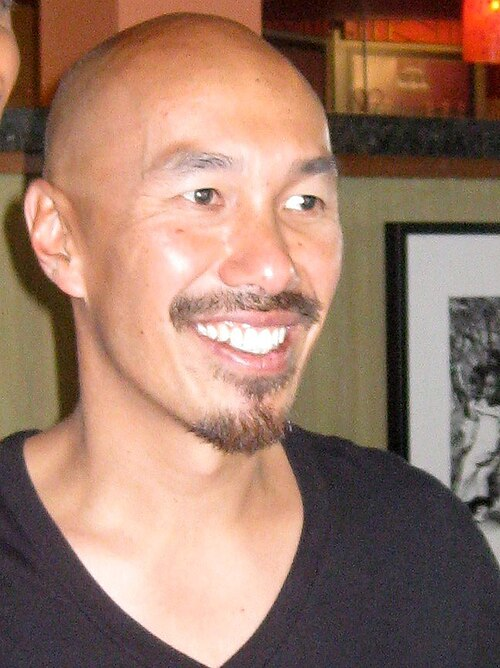
“Worry implies that we don’t quite trust God is big enough, powerful enough, or loving enough to take care of what’s happening in our lives. Stress says the things we are involved in are important enough to merit our impatience, our lack of grace towards others, or our tight grip of control. Basically, these two behaviors communicate that it’s okay to sin and not trust God because the stuff in my life is somehow exceptional. Both worry and stress reek of arrogance. They declare our tendency to forget that we’ve been forgiven, that our lives are brief … and that in the context of God’s strength, our problems are small, indeed.”
~ Francis Chan
Francis Chan is an American Protestant author, teacher, and preacher. He is the former teaching pastor of the nondenominational Cornerstone Community Church, an Evangelical church in Simi Valley, California founded by Chan in 1994. Wikipedia
Marco Pierre White is an English chef, restaurateur and television personality. In 1995, White became the first British chef and, at age 33, the youngest chef to earn three Michelin stars. He has trained chefs including Gordon Ramsay, Mario Batali, Shannon Bennett, Curtis Stone, Phil Howard and Stephen Terry. Wikipedia
“All sorrows can be borne if you put them into a story or tell a story about them.”
― Isak Dinesen
Baroness Karen Christentze von Blixen-Finecke was a Danish author who wrote in Danish and English. She is also known under her pen names Isak Dinesen, used in English-speaking countries; Tania Blixen, used in German-speaking countries; Osceola, and Pierre Andrézel. Wikipedia
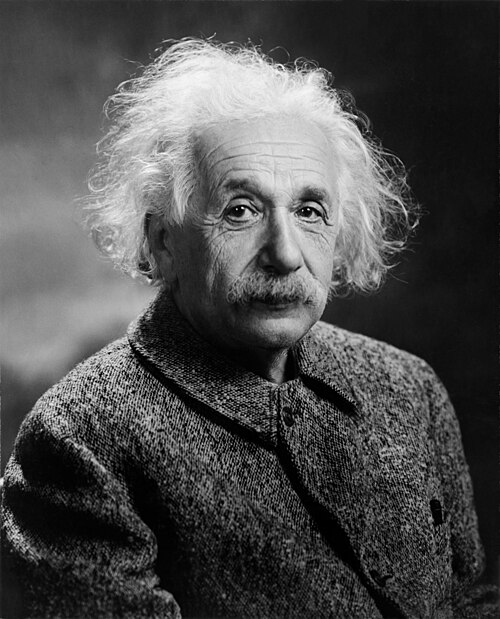
“The world as we have created it is a process of our thinking. It cannot be changed without changing our thinking.”
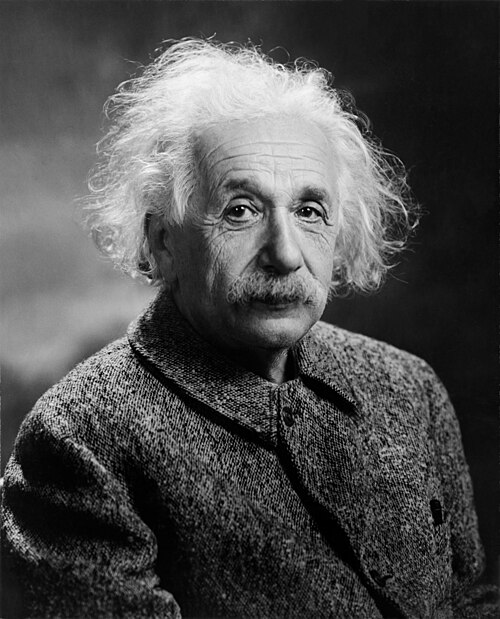
~ Albert Einstein
Albert Einstein was a German-born physicist who revolutionized physics and our understanding of the universe. He’s best known for his theory of relativity, which helped scientists understand how the universe works. His famous equation, E=mc², describes how matter can be converted into energy. Einstein’s work also contributed to quantum mechanics and statistics. He won the 1921 Nobel Prize in Physics for his explanation of the photoelectric effect.
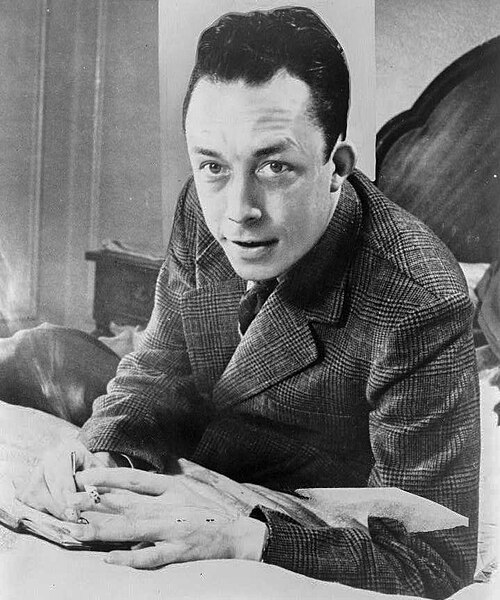
“For if there is a sin against life, it consists perhaps not so much in despairing of life as in hoping for another life and in eluding the implacable grandeur of this life.”
~ Albert Camus
Albert Camus was a French philosopher, novelist, author, dramatist, journalist, world federalist, and political activist. He was the recipient of the 1957 Nobel Prize in Literature at the age of 44, the second-youngest recipient in history, and the first laureate in literature born in Africa. Wikipedia
“Our task must be to free ourselves… by widening our circle of compassion to embrace all living creatures and the whole of nature and it’s beauty.”
~ Einstein
Albert Einstein was a German-born mathematician and physicist who revolutionized physics and our understanding of the universe. He’s best known for his theory of relativity, which helped scientists understand how gravity works and how objects affect space and time. His famous equation, E=mc², which comes from special relativity, shows that mass and energy are equivalent. Einstein also made significant contributions to quantum theory. (Wikipedia.org)
“Connectedness is of the essence of all things of all types. It is of the essence of types, that they be connected. Abstraction from connectedness involves the omission of an essential factor in the fact considered. No fact is merely itself. The penetration of literature and art at their height arises from our dumb sense that we have passed beyond mythology; namely, beyond the myth of isolation.”
Alfred North Whitehead’s quote means that everything in the universe is deeply connected to everything else, and true art and thought reject the false idea that humans or things exist in total isolation. [1, 2]
Key Ideas in Simple Terms
Everything is connected: Nothing in the world stands alone. Every object, event, and idea is shaped by and linked to other things. [1, 2]
No fact is by itself: When we try to study or look at something as if it is completely separate from the rest of the world, we miss the most important part of what it really is. [1]
The myth of isolation: Old myths and simple thinking taught that humans and things are trapped in separate boxes.
Art and literature: Great art and literature succeed because they tap into a deeper truth. They show us that we are part of a shared, living web of existence, moving past the illusion that we are all alone. [1]
Alfred North Whitehead was an English mathematician and philosopher. He created the philosophical school known as process philosophy, which has been applied in a wide variety of disciplines, including ecology, theology, education, physics, biology, economics, and psychology. Wikipedia
William Blake’s quote “Eternity is in love with the productions of time” means that the timeless, infinite divine realm deeply values, cherishes, and seeks expression through the physical things humans create and experience within our limited lifetimes. [1, 2, 3]
Key Concepts in the Quote
Eternity: The permanent, endless, and timeless realm of the spirit or God. It does not change and has no clock.
Time: Our temporary physical world. It is marked by aging, limits, endings, and change.
Productions of Time: Everything we make, feel, and do while alive. This includes art, music, human struggles, love, and everyday actions. [1, 2, 3]
The Core Message
Fulfilling the Infinite: Blake flips the usual idea that heaven or eternity is perfect and our physical world is just trash. Instead, he says eternity needs our mortal world to truly feel and express itself. [1]
Meaning in the Finite: Because time has limits, everything we do matters deeply. A poem, a painting, or an act of kindness has real weight because it happens in a temporary life. [1]
Making the Temporary Last: When we put true passion and soul into our work, those mortal creations take on an eternal quality. They echo far beyond our own lives. [1]
William Blake was an English poet, painter and printmaker. Largely unrecognised during his life, Blake has become a seminal figure in the history of the poetry and visual art of the Romantic Age. Wikipedia
Adeline Virginia Woolf was an influential 20th century English novelist, essayist, biographer, and feminist. A pioneer of stream of consciousness narration, her innovations in narrative technique expanded the possibilities of the novel. Woolf’s work resonated with feminist movements in the 1970s and inspired adaptations like Michael Cunningham’s Pulitzer Prize-winning novel The Hours (1998). (Wikipedia.org)