
An early defender of gay marriage, she made her case not by shaming opponents but with playful self-deprecation, quipping: “Why shouldn’t they get to be as miserable as the rest of us?”
–Ken Klippenstein

 presents Sunday Meeting with Thane — August 30 |
 — Thane of Hawaii — “Transcendentalism” Another in this series, this lesson discusses the difference between individuality and personality. The understanding of Ontology will bring true individuality, not simply a veneer. Click here for further information: https://www.theprosperos.org/prosperos-events/thane-the-law-of-the-vacuum-nwa3h-wbpk5-wrjzx-c49xz-zcrn6-s4g52 SUNDAY MEETING — August 30 11:00 am Pacific / Noon Mountain / 1:00 pm Central / 2:00 pm Eastern Join Sunday Meeting By contribution. Please click here to contribute: Contribute! Call In Information: One tap mobile +16699006833,,85882863391# US (San Jose) +16694449171,,85882863391# US — Meeting ID: 858 8286 3391 Find your local number: https://us02web.zoom.us/u/kdTAYZq0XQ |
| Copyright © 2026 The Prosperos, All rights reserved. |
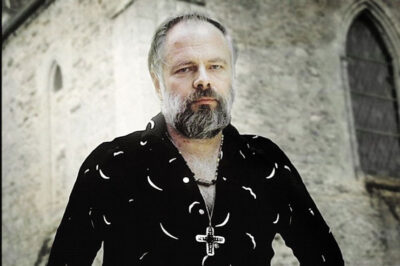
Best known to the wider world through the Hollywood interpretations of his works Blade Runner (from the book Do Androids Dream Of Electric Sheep?), Total Recall, Minority Report and others, Philip K. Dick was certainly not a typical ‘science-fiction’ writer.
Although his early books might indeed have featured ‘zap guns’ and ‘androids’, they generally did so only as ironic props in stories of bewildered human protagonists displaced by emergent technological absurdities and hostile bureaucracies.
Often plagued by relationship breakdowns (he had four wives) and an adventurous attitude to drug use, Dick wrote an extraordinary series of novels across the 1970s (and early 1980s) that have come to be known as his metaphysical or theological canon.
Inspired by a chain of otherworldly and mystical events in February and March of 1974 – Dick had often previously written of the fragile nature of what we perceive to be ‘reality’ – he now manifested a cogent and strikingly timeless alternate cosmology.
In essence, beginning with his novel Valis (originally written in 1978 but not published until 1981), Dick argued that the Roman Empire had never truly ended but instead transformed and adapted, continuing to dominate human civilisation through different masks and institutions.
In his view, what we perceive as historical progression – the fall of Rome, the rise of Christianity, the development of modern nations – was largely illusory. Beneath these surface changes, the same imperial power structure or spirit remained intact, continuously subjugating humanity.
That concept was deeply rooted in Gnostic philosophy, which Dick encountered (largely through the Nag Hammadi scriptures) during the intense metaphysical period following his transformative 1974 experiences. In Gnostic thought, the material world is ruled by a false god (or Demiurge) which keeps humans trapped in ignorance. Dick mapped this onto his understanding of the Roman Empire, seeing it as the earthly manifestation of this malign cosmic force.
Described as “The Empire That Never Ended,” it was one of Philip K. Dick’s most profound and complex philosophical concepts, central to these theological works and his sci-fi-tinged personal spiritual perspective.
The “Empire,” in Dick’s view, had constructed a “Black Iron Prison” – another key concept in his work – a metaphysical cage that traps human consciousness. This prison operates through multiple vectors, often hidden in plain sight:
Dick argued that the Empire’s continuation could be traced through various historical periods:
The methods may have become more sophisticated – psychological manipulation rather than direct, brute force – but the essential structure remained unchanged.
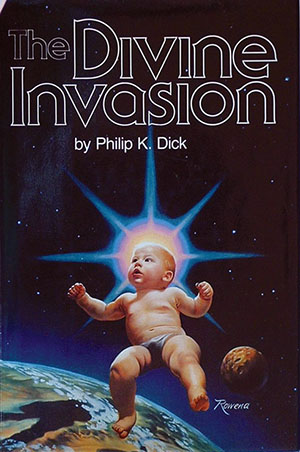
In Dick’s universe, the Empire is opposed by a divine force he sometimes called “VALIS” (“Vast Active Living Intelligence System”), represented, in the book of the same name, by a self-aware satellite that orbits Earth, shooting Gnosis (divine knowledge) through a blinding pink laser beam. This plot device presented authentic divine consciousness attempting to break the illusion and liberate humanity.
Dick believed that around 70 CE, with the destruction of the Second Temple in Jerusalem, time itself became corrupted or trapped. This wasn’t simply a historical event but a cosmic catastrophe that fundamentally altered the nature of reality. In his cosmology, we are all living in a kind of temporal loop or stasis, where the same imperial patterns repeat endlessly under different disguises.
This temporal imprisonment means that what we perceive as progress – technological advancement, social evolution, political change – is largely illusory. The essential power structures remain unchanged because time itself has been hijacked by the imperial force. We experience the sensation of moving forward while actually trapped in the same historical moment.

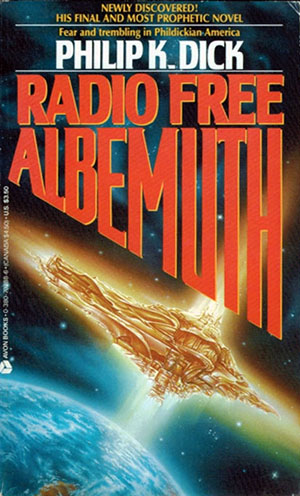
While couched across the novels Valis (1981), The Divine Invasion (1981), The Transmigration Of Timothy Archer (1982) and the astounding Radio Free Albemuth (originally written in 1976 but published posthumously in 1985) as a kind of quasi-hallucinogenic science-fiction mysticism, it should not be difficult to see Dick’s vision as hauntingly prescient and direly accurate of our historical and current circumstances.
According to Dick, the Empire now maintains its power through increasingly sophisticated methods:
His “Black Iron Prison” also represents the metaphysical structure that enforces the Empire’s control. It was Dick’s most powerful metaphor for the nature of oppression itself. Indeed, the Black Iron Prison is not a physical location but a state of consciousness – or rather, unconsciousness. The Prison functions through:
Directly intersecting with contemporary descriptions such as Matthias Desmet’s concept of “Mass Formation Psychosis” and the heaving totalitarianism that surfaced during the COVID Operation, there seems little doubt that Philip K. Dick’s ‘paranoid’ cosmology presents a vital roadmap for attempting to understand what passes for the spiritual, political, philosophical and informational landscape of the 21st century.
In classical Gnostic thought, the Demiurge is a false creator god who has trapped divine sparks (human souls) in the material world. Dick identified this figure with the “Empire That Never Ended,” seeing the Demiurge as the cosmic principle behind all earthly oppression.
While traditional Gnosticism often portrays the Demiurge as a cosmic principle, Dick historicised it, seeing it as actively manifesting through specific human institutions and historical periods. The Roman Empire wasn’t just influenced by the Demiurge – it was the Demiurge’s most successful Earthly incarnation.
The Archons, in Gnostic cosmology, are the Demiurge’s agents who maintain control over the material world. Dick saw these as manifesting in various forms such as political leaders, religious authorities, and institutional powers, who serve the Empire’s interests, often without realising their true role.
Furthermore, Dick identified Psychological Archons, internal forces that keep people trapped – fear, despair, conformity, the desire for security over truth. These are the ‘guards’ of the Black Iron Prison. And in Dick’s more modern interpretation, Information Archons are the forces that control information flow – media, education, propaganda systems that shape perception and belief.
Dick’s Gnostic perspective led him to a radical critique of institutional Christianity. He believed that Christianity had been co-opted by the Empire almost from its beginning, turning the revolutionary message into a tool of control. Orthodox Christianity promises salvation in another world, which Dick saw as a way of preventing people from recognising their potential for liberation in this world. And, Dick suggested, much of institutional Christianity actually worships the Demiurge while believing it worships the true God. Indeed, orthodox Christianity emphasises faith over direct knowledge, which Dick saw as keeping people dependent on external authority rather than developing their own direct divine consciousness.
In earlier Dick novels (such as Do Androids Dream of Electric Sheep? from 1968), he subtly presents questions about consciousness and the true nature of what it means to be human, blurring and shifting the lines between the ‘androids’ of the title and their ostensible human creators.
John Carpenter’s 1988 film They Live shared many settings and themes with Dick’s sublime novel Radio Free Albemuth. In the book, a scattered resistance battles the treacherous Archonic infection represented by President ‘Ferris F. Freemont’ (obviously, FFF is numerologically 666), as underground culture furtively keeps hope alive – situations loosely mirrored in the film. Similarly, the iconic 1999 film The Matrix presents ‘Dickian’ and Gnostic concepts wrapped in an action/sci-fi garb.
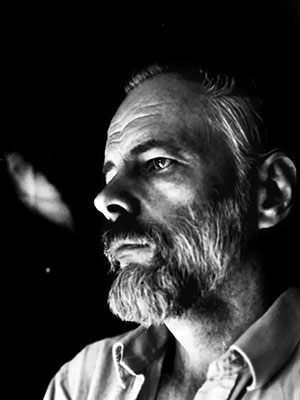
From 1974 until his untimely death in 1982, Dick produced a multitude of research, journals and letters that dealt with the events of “2-3-74” and his place in the great cosmic mystery. Condensed from over 8,000 pages of material, The Exegesis Of Philip K. Dick runs to more than 900 published pages and explores, in depth, Gnostic and unmistakeably Lovecraftian perspectives – indeed, “the Demiurge is still under the waters, dead but dreaming.”
While Philip K. Dick clearly and knowingly presented timeless Gnostic themes in a modern form, it is hard to imagine a time and place more necessary (than here and now) to examine concepts such as the constructed and manipulated nature of ‘reality’, the cancerous, imprisoning scourge of materialism, and the industrially designed death of the soul.
Indeed, it really is Philip K. Dick’s world… and we live in it.
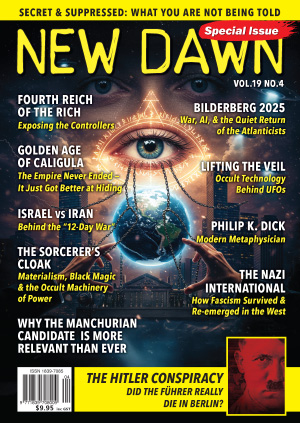
This article was published in New Dawn Special Issue Vol 19 No 4.
If you appreciate this article, please consider subscribing to help maintain this website.
© New Dawn Magazine and the respective author.
For our reproduction notice, click here.
No Paywall. No Clickbait. Only Truth.
This website exists because a few choose to give back for what they receive. If New Dawn has enriched your vision or sparked insight, let your gratitude flow. Help sustain the work that awakens the world. Your contribution matters more than you know.
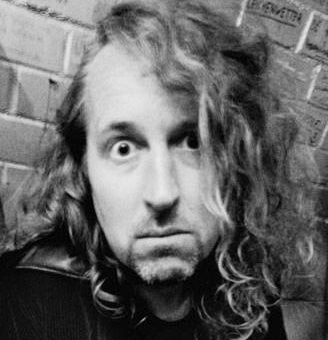
DAVID THRUSSELL is a poet trapped in the body of a hillbilly. Or a hopeless romantic hidden in the twisted frame of a dark electronic musician. Late at night Thrussell fantasises that actually he lives next door to Hieronymous Bosch in Medieval Europe and has hallucinated the whole dreadful modern era while suffering from acute ergot poisoning. We are not entirely convinced that this is not the case. The world knows him (if it knows him at all), as the creator of a seeming multitude of obscure recordings (Snog, Black Lung and Soma among others) and film scores. He has written previously for Wax Poetics, Fortean Times and numerous other publications.
© Copyright New Dawn Magazine, https://www.newdawnmagazine.com. Permission granted to freely distribute this article for non-commercial purposes if unedited and copied in full, including this notice.
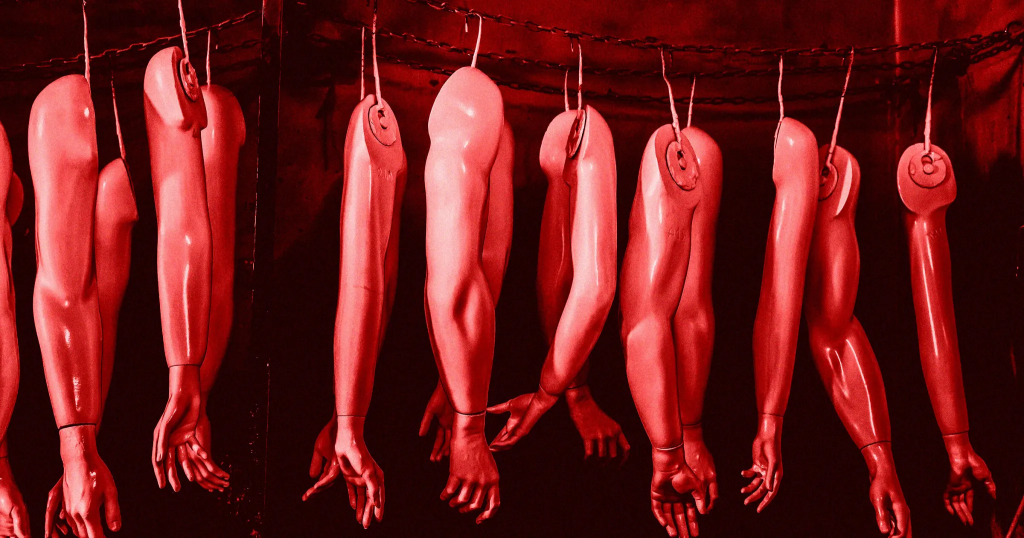
“Who decided this is a way we should be living?”
Published Aug 25, 2026 (Futurism.com)
We’re racing towards a future where AI enables the “factory farming of humans,” a Harvard professor warns — if tech elites get their way, at least.
In a new episode of The New York Time’s “Hard Fork” podcast, the historian Jill Lepore discusses her idea of an “artificial state” that’s supplanting the traditional nation state, and particular constitutional democracy, with one that erases human autonomy.
In this emerging world order, government is conducted “not by the consent of people but by machines that are making decisions,” she explained on the podcast. And those machines, of course, are owned by corporations.
We aren’t living in the artificial state quite yet, Lepore stresses, but it’s something that’s being built and realized around us. And crucially, it’s also a fantasy held by certain influential elites who believe their power should supersede the actual government and the voters who decide how it’s run.
“The rhetoric that comes out of this particular historical moment is really about the evanescence of modern liberal democracy, constitutional democracy,” she said. The elites pushing this rhetoric aren’t “interested in what the people want,” she added. “Because actually, what the people want is not to have AI and not to have data centers. So that’s the crisis.”
Lepore explores the idea in depth in her upcoming book “The Rise and Fall of the Artificial State.” She was inspired by a simple question: in our current world where you’re forced to talk to an AI to get answers, ranging from when you call in to ask about an appointment or talk to a company’s support chatbot on its website, “who decided this is a way we should be living?”
The artificial state is a sort of backsliding, in which more and more of the state’s functions are now being replaced by corporations that own and control our digital communications infrastructure. How we get our news, and information on elections and who to vote for, is all being mediated by these powerful groups — through technologies like the TV and radio, once, and now social media being the increasingly dominant medium.
The digital communication our lives are now structured around have a powerful isolating effect. In her 2024 piece for The New Yorker where she initially explored the idea that would later become her book, Lepore described the artificial state as the “factory farming of public life, the sorting and segmenting, the isolation and alienation, the destruction of human community.”
The artificial state isn’t purely driven by AI, but it’s certainly being accelerated by it. People are asking ChatGPT about who to vote for, rather than talking to their neighbors, local officials, or experts. The political messages they’re seeing, meanwhile, are probably in part being written with AI. Decisions at every level are being made with the assistance of thinking machines. AI is also entrenching surveillance, processing the mountains of data that is being gathered on all of us.
One nefarious aspect of the pro-AI rhetoric coming out of Silicon Valley is that it frames AI as an inevitability. But Lepore argued that this brand of fatalism is a “bogus premise,” itself nestled on top of several more dubious propositions. One we hear endlessly is that regulation stifles innovation, so the government should take the handbrake off AI development. The other is that technology always advances democracy, which assures us that all of the very real threats to democracy AI poses in the present will magically sort themselves out.
Neither of those are true, Lepore says, and you have to look no further than how similar promises were made for technologies in the recent past.
“So now, the AI people come back with the same argument that was made about the internet — the personal computer, the internet, and social media,” she said in the interview.
More on AI: Trump Says You’re a Rube If You Don’t Want a Data Center in Your Backyard
Add Futurism as a preferred source on Google to see more of our reporting.
I’m a tech and science correspondent for Futurism, where I’m particularly interested in astrophysics, the business and ethics of artificial intelligence and automation, and the environment.
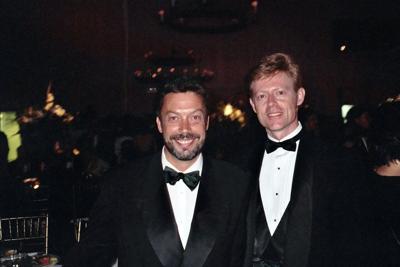
Tim Curry, the British-born actor whose gift for garish eccentricity lit up stage and screen, most notably as the outlandish, cross-dressing mad scientist in the midnight cult film “The Rocky Horror Picture Show,” died Tuesday at his home in Los Angeles. He was 80.
The death was confirmed by Marcia Hurwitz, his longtime agent and manager. In 2012, Curry suffered a serious stroke, from which, he said last year, “I’ve been recovering for quite a long time.”
With a mischief-maker’s good looks, a casual athletic grace and a supple and resonant voice, Curry was a favorite in roles calling for expressive villainy or general cartoonishness.
In the first screen version of “Annie” (1982), he brought more than a dollop of slime to the part of Rooster Hannigan, the con artist who concocts a plot to kidnap the plucky orphan of the title.
In “Clue” (1985), a suspense spoof derived from the popular board game, he played Wadsworth, a logorrheic butler who leads a cast full of murder suspects around a spooky mansion with the fast-talking fervor of a manic Sherlock Holmes.
In “Spamalot,” the stage musical based on the Monty Python troupe’s bottomlessly goofy retelling of the King Arthur legend, which opened on Broadway in 2005, he played Arthur himself and was nominated for a Tony Award. It was the most straight-faced role in the show, and yet, as Ben Brantley wrote in his review in The New York Times, he was “the best of the cast at translating classic Python style into a musical-comedy idiom.”
But no other role marked Curry’s career as emphatically as that of Dr. Frank-N-Furter, the “sweet transvestite from Transsexual, Transylvania,” as he proclaimed himself in “The Rocky Horror Picture Show.”
The 1975 screen adaptation of “The Rocky Horror Show” was based on the hit London stage musical that played for seven years in different theaters, and in which Curry originated the part in 1973. He also starred in the premiere American production in Los Angeles in 1974 and on Broadway in 1975, where it was a notable flop, closing after 45 performances.
A gleefully lurid send-up of the horror and science fiction genres, “Rocky Horror” tells the story of a clean-cut couple with a flat tire on a rainy night that leaves them at the home of the good doctor, whose scientific work involves the creation of a monster with a muscular body and a handsome face as a sexy plaything for himself. The movie became a cult hit shown at midnight around the world for fans who dress in costume and sing along; it celebrated its 50th anniversary in 2025, and the stage show returned to Broadway earlier this year.
Curry’s performance opened many casting doors, and his Frank-N-Furter was the first of many threatening bad guys he played, finding a variety of hues — arch or giddy or resonantly mean — with which to color their evildoing.
They included Darkness, the embodiment of bass-voiced evil, in Ridley Scott’s 1985 horror fantasy “Legend”; Pennywise, a murderous demon posing as a clown, in the 1990 miniseries adapted from Stephen King’s mammoth horror novel “It”; and Cardinal Richelieu in “The Three Musketeers” (1993). As a greedy gazillionaire presumed to be the chief malefactor in “Charlie’s Angels,” the 2000 movie adaptation of the television series about three female detectives, Curry laid on the oily self-satisfaction until the moment he was killed by the real villain.
Appearing on Broadway in 1980 in “Amadeus,” Peter Shaffer’s portrayal of the rivalry between the Hapsburg court composer Antonio Salieri (Ian McKellen) and the upstart genius Mozart, Curry introduced American audiences to Shaffer’s shocking depiction of one of history’s most gifted composers as a vulgar libertine.
“It’s a marvelous role to play,” Curry told the Times. “It has such a terrific arc. Mozart starts out as an energetic little punk and ends up as a truly tragic figure. So you get to go from high comedy to tragedy. This kind of role is a gift.”
The play won a Tony; Curry was nominated for best actor but lost to his castmate, McKellen. (In Milos Forman’s Oscar-winning 1984 film version, Salieri was played by F. Murray Abraham and Mozart by Tom Hulce.)
The Mozart depicted in the production, Frank Rich wrote in his review in the Times, was not “truly despicable, at least as delineated in the impressively fine-tuned performance by the braying yet sensitive Mr. Curry.”
His voice was perhaps the staunchest aspect of Curry’s talent. He may have been even more prolific as a disembodied performer — often giving voice to anthropomorphic animals — than he was in the flesh.
In “Valiant” (2005), an animated feature set during an ornithological version of World War II, he was the intimidating General Von Talon, a hook-billed hawk wearing an eye patch. He played a haughty gray cat named Fluffy with an imperious French accent in “A Turtle’s Tale: Sammy’s Adventures” (2010), and Terrence, a flamboyantly expressive toucan with a multihued beak, in “Ribbit” (2014), the story of an insecure tree frog.
Timothy James Curry was born April 19, 1946, in Grappenhall, England. His father, Jim, was a Methodist chaplain in the British navy; his mother, Maura Patricia (Langmead) Curry, was a secretary.
Radio was his prime source of entertainment as a child — he said that was why voice work later intrigued him — and he sang in a church choir as a young soprano.
He was 12 when his father died. “By the time I was 15 or so, I knew that acting was what I wanted to do,” he told The Washington Post in 1988. “And then I spent a long time trying to talk myself out of it, because everybody else was trying to. Particularly my widowed mother, who didn’t have very much money. She would have preferred a secure profession for me, and quite rightly, I guess, from her point of view.”
He acted in school and attended the University of Birmingham, graduating in 1968, before moving to London, where he earned a place in a new musical, “Hair.” He appeared in other productions in London and Glasgow before being cast in “Rocky Horror.”
“I couldn’t make up my mind whether to be a singer or an actor,” he told the Los Angeles Times in 1974. “Although in ‘Hair’ they never let me sing that much, because the score was fairly high and I didn’t have a high enough voice.”
He added: “I was offered things, recording contracts, offered to join groups. But as I thought about it, I got rather snippy. No, no, no, I decided, I want to be an actor.”
In the late 1970s and early ’80s, Curry had a brief run as a rock singer, with limited success — although the second of his three albums, “Fearless,” reached No. 53 on the Billboard chart in 1979 — before returning to the stage in London in 1982 as the Pirate King in “The Pirates of Penzance.”
His other theater roles included Tristan Tzara, the Dadaist writer, in Tom Stoppard’s “Travesties,” in London and on Broadway in the mid-1970s; Alan Swann, the onetime movie star who has become a swaggering, comic reprobate, in the Broadway musical version of the film “My Favorite Year,” which earned Curry his third Tony nomination; and, in 2001, Ebenezer Scrooge in the extravagant Madison Square Garden holiday production of “A Christmas Carol.”
Curry never married and resolutely declined to discuss his private life.
“I guarantee you, if it matters, that I have experienced true love, true heartbreak and everything in between, including no small amount of wreckage,” he wrote in his 2025 memoir, “Vagabond.” “Which, naturally, helps inform who I am. I have loved and been loved and I hope you have, too. But I’m not interested in your romances.”
Information on his survivors was not immediately available.
When Fox aired a new made-for-TV version of “The Rocky Horror Picture Show” in 2016, Curry had a small part as the narrator; Laverne Cox played Frank-N-Furter. Although the mad doctor would become Curry’s signature role, he initially had doubts about taking it.
“I was hesitant in that, if it worked, it might be a difficult image to shake off,” he said in a television interview in England just as “The Rocky Horror Picture Show” was opening in 1975. “But then, really, I’ve always thought it wasn’t worth doing unless you took a risk, really. So I just took the risk.”
Forty years later, when he received a lifetime achievement award from the Actors Fund, Los Angeles magazine asked him to reflect on his career-making role. How did he look at it in retrospect?
“With a sort of bemused tolerance,” he said. “It’s neither a blessing nor a curse. I was lucky to get it.”
This article originally appeared in The New York Times.

Published: August 26, 2026 (TheOnion.com)
THE HEAVENS—Her heart breaking when she discovered the Almighty fumbling over the most basic words on the page in front of Him, country music icon and noted humanitarian Dolly Parton was reportedly troubled to discover Wednesday that God was illiterate. “I just about washed off my makeup from crying when I saw the Lord struggle to sound out my name in the Book of Life, but now I’m thinking I might’ve been called here for a reason,” said Parton, adding that it was never too late to learn to read, not even if someone existed before the creation of the universe itself. “God always guided me in my life and lifted me up when I called out to Him, so I said, ‘Sugar, you’ve got absolutely nothing to be ashamed of. Let’s you and me start at the beginning, okay? Heck, we’re just sitting around on our tushes in the afterlife. It’s not like we don’t have a couple hours a week.’” At press time, celestial sources confirmed the first free book for God had reached heaven, with an additional book scheduled to arrive monthly for all eternity.
By Mike Zonta, BB editor
Translation is a 5-step process of “straight thinking in the abstract” comparing and contrasting what seems to be truth with what you can syllogistically, axiomatically and mathematically (using word equations) prove is the truth. It is not an effort to change, alter or heal anything other than our consciousness.
The claims in a Translation should be outrageous and mind-blowing, but they are always (or should always be) based on self-evident syllogistic reasoning. Here’s my Translation this week.
1) Truth is that which is so. That which is not truth is not so. Therefore Truth is all that is. Truth being all, there is nothing other than Truth, therefore truth is one, therefore united, therefore harmonious, therefore atoned. I think therefore I am. Since I am and since truth is all that is, therefore the beingness of me is truth. Since I am mind (self-evident) and since I am Truth (or the beingness of me is Truth), therefore Truth is Mind. (Two things being equal to a third thing are equal to each other.)
2) The world, like my father, is trying to fuck me.
Word-tracking:
world: all beings collectively, everything, everyone
father: owner, authority, ruler, sovereign
sovereign: above, over, superanus, superior
try: attempt, attack
fuck: fuck off, fuck you, fuck me, fuck it, fuck this, fuck that, What the fuck? Who the fuck? How the fuck? Why the fuck? For fuck’s sake, give a fuck, don’t give a fuck, I couldn’t give a fuck, fuck around, fuck around and find out, fuck up, I fucked up, get fucked, fucked up, we’re fucked. fucking hell, fucking A! fuck-all, not giving a flying fuck, fuck with someone, don’t fuck with me, fuck someone over, fuck off and die. Can intensity positive or negative expression, to cheat someone
cheat: marital infidelity
marriage, matricarchy, mother
wed: to pledge
3) Truth being one cannot be divided into patriarchy and matriarchy, men and women, masculine and feminine, father and mother, therefore Truth is wedded (pledged) to Itself. Truth being one, there can be no infidelity ’cause there is nothing other than Truth, therefore Truth is always true to Itself. Truth being one, there is nothing other to attack Truth, therefore Truth is always safe. Truth being one, there is no superior or inferior in truth, Therefore Truth is equality. Truth being one, there is no everyone, there only one One. Therefore Truth is one One.
4) Truth is wedded (pledged) to Itself.
Truth is always true to Itself.
Truth is always safe.
Truth is equality.
Truth is one One.
5) Truth is equal, safe, true and one.
And now I’ll ask ChatGPT:
Me: Please Translate the following sense testimony: The world, like my father, is trying to fuck me.
ChatGPT: Absolutely. This is a particularly charged testimony, and I think the distinction between what is being experienced and what is being asserted about Reality is important.
1. Statement of Being
Truth is that which is so. That which is not Truth is not so. Therefore Truth is all that is. Truth being all is therefore only. Truth being only is therefore one. Truth being one is therefore in agreement, at peace, harmonious, atoned.
I think, therefore I am. Since I am and since Truth is all that is, I cannot be outside or other than all that is; therefore my beingness is the same beingness as Truth, or my being is Truth being. Since I am consciousness (self-evident), and since my being is the being of Truth, therefore the being of Truth is consciousness/Mind.
2. Sense Testimony
“The world, like my father, is trying to fuck me.”
There are really two assertions here:
The sexual language appears to be functioning metaphorically here: fuck me means something like violate, overpower, exploit, hurt, or take advantage of me.
The deeper assumption may therefore be:
What is outside me is potentially hostile, invasive, and determined to overpower me.
And the comparison with the father introduces a second assumption:
The world is like the original source of my experience of being violated or overpowered.
That is a very powerful identification.
2½. Word-Tracking
World
From Old English weorold, literally related to the idea of human existence, the age of man.
The “world” can mean the physical universe, society, other people, or simply everything outside the individual.
That ambiguity is important.
Father
From Old English fæder.
Beyond the literal parent, “father” can represent authority, origin, protection, judgment, or power.
Thus “father” can become a symbol for an early experience of authority.
Trying
To make an effort toward an intended result.
The word implies intention.
The testimony therefore attributes intention to the world:
The world is trying to do something to me.
Fuck
Originally a vulgar term for sexual intercourse, but in contemporary usage it has developed an enormous range of figurative meanings:
In this testimony, its figurative meaning appears to be closer to:
“The world is going to overpower or violate me.”
Me
Again, this is crucial.
The testimony doesn’t merely say:
“The world is fucked up.”
It says:
“The world is doing something to me.”
The self is positioned as the object of the world’s action.
3. Argument
Truth is all that is.
Therefore there is nothing outside Truth that can ultimately oppose Truth.
Since my being is Truth being, I am not fundamentally separate from Reality.
The experience of being attacked, exploited, violated, or overpowered may be real as an experience, but the experience does not establish that the world is inherently hostile to my Being.
Furthermore, the fact that the world may resemble an earlier relationship does not make the world identical with that relationship.
The past may provide a pattern through which the present is interpreted, but interpretation is not necessarily Truth.
If I identify the world with my father, I transfer an earlier relationship onto Reality itself.
But Reality is not my father.
The world is not required to repeat the past.
Since Truth is One, harmonious, and infinite Intelligence, my Being cannot ultimately be defined as the helpless object of an external power.
What happened to me does not establish what the world is, and what my father was does not establish what Reality is.
That last distinction seems to me to be the heart of this Translation.
4. Summing Up Results
The past does not define the present.
An experience of violation does not define Being.
The world is not identical with the past.
My father does not define Reality.
I am not separate from Truth.
Truth is One and harmonious.
5. Establishing the Absolute
Several possibilities emerge.
Direct:
The world is not my father.
More metaphysical:
Reality does not repeat the past; Truth is present now.
More personal:
I am not the object of a hostile universe.
And the one I find most powerful in relation to your Step 1 is:
My Being is not subject to the past.
Or, combining the two levels:
Truth is not my father’s world; Truth is my Being.
I think there’s something especially profound here. The original testimony says, essentially:
“What happened in my first relationship with the world has become what I expect from the world.”
The Translation separates history from Being.
It doesn’t have to deny what happened with the father. It doesn’t have to say the experience wasn’t painful or violating. It says something more radical:
The past may explain an expectation without having the authority to define Reality.
That seems very much in keeping with the Translation principle we’ve been developing: an appearance can be true as an experience without being Truth as an absolute.
Me: I especially like this one: Truth is not my father’s world; Truth is my Being.
ChatGPT: Yes. I think that one has real power.
Truth is not my father’s world; Truth is my Being.
It does something that I think a good fifth step should do: it doesn’t argue with the historical experience. It doesn’t say, “My father wasn’t hurtful,” or “the world isn’t sometimes cruel.” Instead, it breaks the identification between the father’s world and Reality itself.
And it has a beautiful progression:
my father’s world → something I experienced
Truth → what is
my Being → what I fundamentally am
So the statement ultimately brings the person back to your Step 1:
Since I am, and since Truth is all that is, my beingness is Truth being.
In that light, “Truth is my Being” isn’t merely an affirmation. It is the conclusion of the metaphysical argument.
I think you’ve found a very good fifth step here.
Me:
For information about Translation or other Prosperos classes go to: https://www.theprosperos.org/teaching.
Or, if you have taken Translation class, join us each Saturday for Translation Saturday Meeting at 11 a.m. Pacific time for current, up-to-the-minute Translations on the issues of the day. Email zonta1111@aol.com for the Zoom link.
m.z.
(Image courtesy of Steve Hines and AI)
August 29: 11:00 AM – 12:00 PM PST
Mike Zonta, H.W., M.
In a crisis — any crisis — The Prosperos offers Translation. Translation Saturday Meetings is a weekly series of Translations, live and up to date on the issues of the day, personal or national.
It is not a Translation workshop, It is not a Translation class. It is a group Translation. And it is restricted to those who have taken Translation class. So if you have never taken Translation class, check the calendar tab on The Prosperos website (TheProsperos.org) or get in touch with us and we will schedule a class.
Last time our sense testimony was: Changing our beliefs can result in suffering or in awakening. And our conclusion was: The omnipresent harmoniousness of Truth is all that can be known.
Then we asked ChatGPT to Translate the same sense testimony.
– – – – – – – – – – – – – – See you there!!! – – – – – – – – – – – – – –
Here’s the link to the Translation group: https://us02web.zoom.us/j/81749347119
For more info and link to join please email Mike Zonta at:
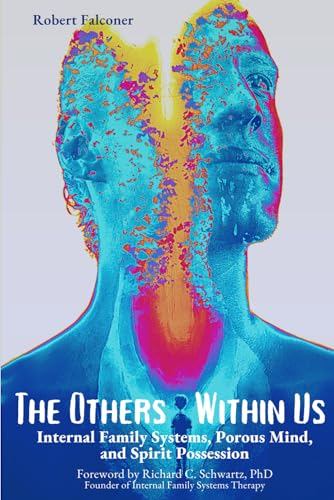
(Image from AbeBooks.com)
“Nearly every disease could be personified and experienced as possession.”
“This is so like the way of shamans and mediums all over the world. When they resist the calling, they become ill.”
“Look beyond the things and focus on the connections between them.”
“In some of [Daniel] Siegel’s talks, he is much more blunt, saying we have been living a lie and it will destroy us. . . the lie of the separate self. He compares living from the solo-self to a cancer cell that’s only concerned about its own well-being. He also uses a metaphor that I prefer, saying this solo-self idea is an autoimmune disease of the mind. We are nodes in a vast system, not independent beings at war with the world. Siegel states that Indigenous peoples and mystics have known this for a very long time. When we come to live this way, it can have a profound and pervasive healing impact on us and all those around us.”
“Another indicator of the extent and power of the porosity of the human mind is the existence of mass psychogenic illness, also known as both MPI and mass sociogenic illness. My personal favorite example of this is the dancing epidemic of 1518 in Strasburg. It started with one woman dancing uncontrollably all day and into the night. She couldn’t stop and kept dancing even though her feet were bleeding until finally she collapsed in exhaustion. At least fifty people also danced involuntarily for long periods of time; some accounts put the number at over four hundred. Some people danced themselves to death. John Waller (2009) claims over a hundred died in this way. This outbreak continued form July until September, when it seemed to fade away.”
“In Internal Family Systems, we talk about Self as a particle and also as a wave or field. Our Self–the curious, compassionate, creative, clear, light-filled being that we really are–is a particle, and this particle is also part of a wave or field of Self that is far larger and wiser than we are. The idea of Self as both particle and wave, particle and field, is mainstream IFS, and if we start to follow its implications, it leads to deep waters indeed.”
“Underlying this vast swath of ruin our civilization has caused is not human nature but the opposite: human nature denied. This denial of human nature rests in turn upon an illusion, a misconception of self and the world. We have defined ourselves as other than what we are, as discrete subjects separate from each other and separate from the world around us.” (quoting Charles Eisenstein in Ascent of Humanity).
Quoting D.H. Lawrence: “This is what I believe: that I am I. That my soul is a dark forest. That my known self will never be more than a little clearing in the forest. That gods, strange gods, come forth from the forest into the clearing of my known self, and then go back. That I must have the courage to let them come and go. That I will never let mankind put anything over me, but that I will try always to recognize and submit to the gods in me and the gods in other men and women. There is my creed.”
“We relate to everything either as an object or a person. We live on a continuum between these two stances. I-It is objective and monological; I-Thou is immediate, mutual, and dialogical. [Martin] Buber asserts that there is no I taken by itself; I is relational. All real living is a meeting, an encounter. Everything can be related to as a person, even a tree or a rock. We are unable to sustain this. All our Thous become Its (with one exception: Buber indicated that God, The Eternal Thou, is the only being who can never be an it). “
“Nikolai Berdyaev is also a dialogical personalist and is a theologian. He argues that the fall of Adam and Eve occurred when they started seeing their bodies as objects and forgot that they were persons. ‘Objectification is always antipersonalistic, hostile to personality and signifies estrangement of personality (Berd-yaev 2009, 1).'”
“Staretz Silouan (1866–1938) was a Russian Eastern Orthodox Christian monk on Mount Athos who has been sainted in the Orthodox church (Sophrony 2021). He taught that “What is truth?” is the wrong question. The question should be “Who is truth?” He also said that life itself is a person to be related to, not an object to be studied. We need a personal, face-to-face meeting with life and truth.”
“William James was ahead of his time. He wrote that a religious attitude means that we take the universe as a Thou, not an It (James 1956, 278). This personal nature of religious thought is “the one fundamental fact” about religion (ibid., 480–81). He stated that the person is always present in psychology, and the tendency of scientists to ignore this in their search for objectivity is a mistake (James 1950, 221). He argued that a real radical empiricism must include subjectivity as well as objectivity, both the personal and impersonal, because both are present in all our experience.”
Rumi: “Your task is not to seek for love, but merely to seek and find all the barriers within yourself that you have built against it.”
“In Hinduism, there is the tradition of ‘neti, neti,’ which literally means ‘not this, not that.’ This is a key element of jnana yoga and is characteristic of Vedic inquiry. Therefore, it is found in some of the most ancient religious texts on our planet. All worldly experiences and names are negated until all that remains is Self.”
“Brother David honors the apophatic truth that God can’t be named or fixed in place by saying his favorite name for God is Surprise.”
“Let me remind you that most of the greatest crimes in human history were committed by people convinced of their righteousness. Thomas Merton wrote, ‘When one is firmly convinced of his own righteousness and goodness, he can without qualms perpetrate the most appalling evil.’ Mao Tse Tung believed he was fundamentally transforming society, and his regime resulted in the greatest mass murder in human history. Hitler was stridently self-righteous and seemed to deeply believe in the purity and goodness of what he was doing. Pol Pot was trained by the most prominent French leftist academics of his day when he studied at the Sorbonne. He went home to Cambodia, put these idealist ideas into practice, and killed something like one-quarter of his people. Great criminal acts have been performed by churches in the name of God. It’s a very long list. As Rumi said, ‘The Veil of Light which is the barrier brought about by self-righteousness is more dangerous than the Veil of Darkness produced in the mind by vice.’ We are not somehow superior to all these people; we too can delude and deceive ourselves easily and profoundly.”
Thich Nhat Hanh’s long poem “Please Call Me by My True Names”:
“I am the twelve-year-old girl,
Refugee on a small boat,
Who throws herself into the ocean
After being raped by a sea pirate.
And I am the pirate,
My heart not yet capable,
Of seeing and loving.”
The Bill Wilson–Carl Jung Letters
The twelve steps are a very effective way of dealing with addictions, and they are fundamentally spiritual. Many professional therapists have been pooh-poohing the twelve steps for decades, but the research shows that they are more effective than most therapy. The first three steps are about recognizing a higher power and turning our lives over to it. This is spiritual work, and the neutral phrase “higher power” disguises it enough to allow rationalist-materialist atheists to have spiritual experiences. Bill Wilson, the founder of AA, wrote to Carl Jung in 1961. Shortly before Jung died, he replied that he had to be exceedingly careful about writing about spiritual things because he found that he was “misunderstood in every possible way.” But he did write frankly to Wilson about Roland H., an alcoholic he had treated. Jung wrote, “His craving for alcohol was the equivalent, on a low level, of the spiritual thirst of our being for wholeness, expressed in medieval language: the union with God.” Jung added a footnote here quoting Psalm 42:1, “as the hart panteth after the water brooks, so panteth my soul after thee, O God.”
The last section of the letter is:
I am strongly convinced that the evil principle prevailing in this world leads the unrecognized spiritual need into perdition if it is not counteracted either by real religious insight or by the protecting wall of the human community. An ordinary man not protected by an action from above and isolated in society cannot resist the power of evil which is called, very aptly, The Devil. But the use of such words arouses so many mistakes that one can only keep away from them as much as possible. These are the reasons why I could not give a full and sufficient explanation to Roland H. but I am risking it with you because I conclude from your very decent and honest letter that you have acquired a point of view above the misleading platitudes one usually hears about alcoholism. You see, alcohol in Latin is spiritus and you use the same word for the highest religious experiences as well as for the most depraving poison. The helpful formula, therefore, is: spiritus contra spiritum [the spirit against alcoholic spirits].
Jung could only be this honest very near the end of his life. Bill Wilson wrote him back almost immediately, but Jung died before he could respond. Spirituality — connection to a higher power, to the archetypal depths, to God, to something bigger than our isolated personal lives — is crucial for our health. Our society largely undermines and denies this.
“In science in the outer world, our standard of truth is whether an experiment is reliably replicable. What if this did not apply in the inner world? What if what was really valuable and meaningful in the inner world was what was unique and could not be repeated at all? This is true of art and literature. The great and meaningful works are totally unique. If this were true inside, it would turn our research methods upside down.”
Annie Dillard said, “It is madness to wear ladies’ straw hats and velvet hats to church; we should all be wearing crash helmets. Ushers should issue life preservers…”
“The Hearing Voices Movement encourages people to dialogue with the voices in their heads, to treat them as people. The mental health establishment considers this heresy — colluding with the delusions of the insane.”
Link to pdf of book: https://dokumen.pub/the-others-within-us-internal-family-systems-porous-mind-and-spirit-possession-9798987858806.html

(Image from talesandbedtimestories.blogspot.com)
Whosoever could do the most incredible thing was to have the King’s daughter and half of his kingdom.
The young men, yes, and the old ones too, bent their heads, their muscles, and their hearts upon winning. To do what they thought was the most incredible thing, two ate themselves to death, and one died of overdrinking. Even the boys in the street practiced spitting on their own backs, which they supposed was the most incredible thing anyone could do.
On a certain day there was to be an exhibition of things most incredible and everyone showed his best work. Judges were appointed, ranging from children of three to old men of ninety. It was a grand exposition of things out of the ordinary, but everybody promptly agreed that most incredible of all was a great hall clock – an extraordinary contraption, outside and in.
When the clock struck, out came lifelike figures to tell the hour. There were twelve separate performances of these moving figures, with speaking and singing. People said that nothing so incredible had ever before been seen.
The clock struck one, and there stood Moses on the mountain, writing in the tablets of the law the first great commandment: “There is only one true God.” The clock struck two, and there were Adam and Eve, just as they first met in the Garden of Eden. Were ever two people so lucky! They didn’t own so much as a clothes-closet, and they didn’t need one. At the stroke of three the three Holy Kings appeared. One was as black as a coal, but he couldn’t help that. The sun had blackened him. These kings brought incense and precious gifts. When the stroke of four sounded, the seasons advanced in their order. Spring carried a budding bough of beech, on which a cuckoo sang. Summer had for her sign a grasshopper on a ripening ear of wheat. Autumn had only an empty stork’s nest, for the birds had flown away. Winter’s tame crow perched on the corner of the stove, and told old tales of bygone days. At five o’clock there was a procession of the five senses. Sight was represented by a man who made spectacles. Hearing was a noisy coppersmith. Smell was a flower girl with violets for sale. Taste came dressed as a cook. Feeling was a mourner, with crape down to his heels. As the clock struck six, there sat a gambler, throwing dice for the highest cast of all, and they fell with the sixes up. Then came the seven days of the week, or they might be the seven deadly sins. People could not be sure which they were, for they were not easy to distinguish. Next came a choir of monks, to sing the eight o’clock evensong. At the stroke of nine, the nine muses appeared. One was an astronomer, one kept the books of history, and the others were connected with the theater. Ten o’clock struck, and Moses came forth again, this time with the tables in which were written all ten of God’s commandments. When the clock struck again, boys and girls danced out. They played and sang this song:
“All the way to heaven
The clock struck eleven.”
And eleven it struck. Then came the stroke of twelve. Out marched the night watchman, wearing his cap and carrying his morning star – which is a truncheon tipped with spikes. He sang the old watch song:
“‘Twas at the midnight hour
Our Savior He was born-“
and as he sang the roses about him unfolded into the heads of angels, with rainbow-tinted wings.
It was good to hear. It was charming to see. The whole thing was a work of extraordinary craftsmanship, and everyone agreed that it was the most incredible thing. The artist who had made it was young, generous, and sincere, a true friend, and a great help to his poor father and mother. He was altogether worthy of the Princess and of half the kingdom.
On the day that they were to proclaim who had won, the whole town was bedecked and be-draped. The Princess sat on her throne. It had been newly stuffed with horsehair for the occasion, but it was still far from comfortable or pleasant. The judges winked knowingly at the man they had chosen, who stood there so happy and proud. His fortune was made, for had he not done the most incredible thing!
“No!” a tall, bony, powerful fellow bawled out. “Leave it to me, I am the man to do the most incredible thing,” and then he swung his ax at the craftsman’s clock. Crack, crash, smash! There lay the whole thing. Here rolled the wheels, and there flew the hairsprings. It was wrecked and ruined. “I did that,” said the lout. “My work beat his, and bowled you over, all in one stroke. I have done the most incredible thing.”
“To destroy such a work of art!” said the judges. “Why it’s the most incredible thing we’ve ever seen.” And the people said so too. So he was awarded the Princess and half the kingdom, because a law is a law, even if it happens to be a most incredible one.
They blew trumpets from the ramparts and the city towers, and they announced, “The wedding will now take place.” The Princess was not especially happy about it, but she looked pretty and she wore her most expensive clothes. The church was at its best by candle-light, late in the evening. The ladies of the court sang in processions, and escorted the bride. The lords sung, and accompanied the groom. From the way he strutted and swaggered along, you’d think that nothing could ever bowl him over.
Then the singing stopped. It was so still that you could have heard a pin fall in the street. But it was not quiet for long. Crash! crash! the great church doors flew open, and boom! boom! all the works of the clock came marching down the church aisle and halted between the bride and the groom.
Dead men cannot walk the earth. That’s true, but a work of art does not die. Its shape may be shattered, but the spirit of art cannot be broken. The spirit of art jested, and that was no joke.
. To all appearances it stood there as if it were whole, and had never been wrecked. The clock struck one hour right after another, from one to twelve, and all the figures poured forth. First Moses came, shining as if bright flames issued from his forehead. He cast the heavy stone tablets of the law at the bridegroom’s feet, and tied them to the church floor. “I cannot lift them again,” said Moses, “for you have broken my arms. Stand where you are!”
Then came Adam and Eve, the three Wise Men of the East, and the four Seasons. Each told him the disagreeable truth. “Shame on you!” But he was not ashamed.
All the figures of all the hours marched out of the clock, and they grew wondrous big. There was scarcely room for the living people. And at the stroke of twelve out strode the watchman, with his cap and his many-spiked morning star. There was a strange commotion. The watchman went straight to the bridegroom, and smote him on the forehead with his morning star.
“Lie where you are,” said the watchman. “A blow for a blow. We have taken out vengeance and the master’s too, so now we will vanish.”
And vanish they did, every cogwheel and figure. But the candles of the church flared up like flowers of fire, and the gilded stars under the roof cast down long clear shafts of light, and the organ sounded though no man had touched it. The people all said that they had lived to see the most incredible thing.
“Now,” the Princess commanded, “summon the right man, the craftsman who made the work of art. He shall be my husband and my lord.”
He stood beside her in the church. All the people were in his train. Everyone was happy for him, everyone blessed him, and there was no one who was envious. And that was the most incredible thing.
.jpg)