
Amrit Sandhu ???????? Dec 31, 2025 Inspired Evolution Podcast ????????????✨ 2026 IS NOT A NORMAL YEAR. Legendary astrologer Pam Gregory reveals why a rare cosmic shift is already underway — and why so many people feel that EVERYTHING IS CHANGING. If this New Years Special conversation resonates, you don’t have to navigate these changes alone. The planetary shifts Pam describes affect EACH PERSON DIFFERENTLY. ???? BOOK YOUR PERSONAL ASTROLOGY READING Explore how this moment is showing up in your chart — impacting you, and how to work with it consciously and practically RIGHT NOW. ???? BOOK YOUR 1–1 READING Here Now: https://amritsandhu.com/reading
Monthly Archives: December 2025
Heather Cox Richardson on 2025
Heather Cox Richardson Dec 30, 2025 We’re live here on YouTube and Facebook every Tuesday and Thursday at 6 pm Maine time (3 pm PT). Get full, free access to Letters from an American here: https://heathercoxrichardson.substack…
Rebellious Hope
Our Insistence on Beauty and Love Is our Defiance
| Rob Brezsny Dec 30, 2025 |

Rebellious Hope
I want to talk about hope. But not the soft-focus, denial-based version that collapses the moment reality gets rough. Not the pastel-colored platitudes that dissolve under scrutiny. Not the decorative optimism that functions as spiritual bypassing.
We’re living in a time when hope feels suspect—and rightly so. To some people, it sounds naïve or irresponsible, especially amid the ongoing Trumpocalypse and the political, cultural, and ethical upheavals it has unleashed.
It almost feels obscene to speak of hope as we witness the systematic dismantling of institutional safeguards, the gleeful cruelty elevated to policy, and the sickening lies repeated until they metastasize into widely believed “truth.”
To some, hope is treated like a belief system that we cling to regardless of evidence. It’s a quasi-religious optimism that refuses to look directly at what’s happening. Like a sedative, it’s a way to avoid the uncomfortable work of recognizing and naming what is actually occurring.
I’m not interested in either of those approaches.

The kind of hope worth cultivating now is rebellious hope. It’s sober and alert. It’s militant in its refusal of both despair and fantasy. It doesn’t flinch and doesn’t artificially sweeten.
Rebellious hope doesn’t avert its gaze from the damage being done. With forensic precision, it sees clearly the enormity of the curses unleashed by the Trumpocalypse: the erosion of democratic norms, the normalization of cruelty as entertainment, the weaponization of disinformation, the corrosion of truth as a shared framework, and the debilitating exhaustion carried by so many of us who are trying to live with integrity while the rules keep changing.
The rebellious hope I aspire to embody and express doesn’t pretend that things are “basically fine.” Nor does it traffic in the delusion that positive thinking alone will save us from authoritarian impulses or ecological collapse.
Rebellious hope thrives because surrendering our agency is not an option. We won’t stop building our capacity to respond, to create, and to resist. We won’t hand victory to those who profit from our demoralization.
Rebellious hope is not a feeling we wait for like good weather, but a daily practice and discipline. We wield it as a lively, nourishing form of resistance. It’s a tool we use even when it would be easier to let it rust.
Rebellious hope thrives on truth-telling, even when the truth is brutal. It survives on discernment: the ability to distinguish between what we can influence and what we can’t, between strategic action and performative outrage. It grows stronger when we refuse to let cynicism become our personality, our brand, and our default setting.
Right now, many people are understandably tempted to believe that the world is irredeemably broken. I won’t be upset with you if you fear that everything is sliding toward chaos or if you believe that effort is pointless and the decent people have already lost.
That belief is seductive in its simplicity. It offers a perverse kind of comfort: If everything is doomed, we’re absolved from the responsibility of trying. But it’s also paralyzing. And paralysis is exactly what destructive forces rely on. Despair is the most effective weapon of authoritarianism.

Rebellious hope rejects paralysis without denying reality. It refuses the false choice between naive optimism and corrosive despair.
This means learning how to stay emotionally and ethically (and aesthetically!) alive while taking in hard news. It means developing the stamina to witness atrocities without becoming numb or collapsing into helplessness. It means choosing, consciously and repeatedly, where we focus our attention and how we spend our limited energy and which battles we engage.
It doesn’t mean letting outrage and despair claim every inch of our inner landscape, turning us into walking embodiments of emergency.
We who practice the martial art of rebellious hope don’t ignore what’s wrong. We don’t minimize the dangers or pretend that cruelty is just a difference of opinion or that the erosion of rights is merely a “political disagreement.” But we also refuse to let catastrophe monopolize our consciousness, to become the only story we tell ourselves about who we are and what is possible.
Instead, we cultivate a grounded, clear-eyed awareness of what still works: what still nourishes, connects, heals, and empowers. We notice the unglamorous but profound infrastructures of care that persist even in dark times: the people who show up for one another without fanfare, the systems that quietly function despite being underfunded and undervalued, and the acts of competence and kindness that don’t make headlines but keep the world from unraveling completely.
We stay aware of the fragile miracles we depend on: shelter, food, water, electricity, transportation, community, the intricate web of cooperation that sustains modern life. And we don’t pretending these treasures are guaranteed forever or evenly distributed. We acknowledge their precariousness. We honor their existence while they last.
Rebellious hope holds fragility and resilience in the same frame, refusing to choose between them.

We train our perception this way. We practice seeing both the damage and the persistence, the cruelty and the care, the collapse and the continuity. As we do, an important source stabilizes inside us.
We feel that while the world is deeply troubled, our life is not merely a passive casualty of history. We retain the power to choose how we respond, how we care, how we create, how we love, and how we resist.
Rebellious hope doesn’t ask us to be cheerful or relentlessly positive. It asks us to refuse the seduction of numbness: to be present, honest, engaged, and fiercely committed to our own aliveness.
Rebellious hope invites us to build inner structures that can withstand external turbulence. It empowers us to reinforce our foundations while the weather remains unpredictable and possibly worsening. It inspires us to become internally fortified not through rigidity but through flexibility, not through denial but through clear-eyed endurance.
Cultivating rebellious hope becomes easier when we stop expecting certainty and start practicing stamina. We shift from demanding guarantees to developing capacity. We accept that we may be in this for a while.
And here is a subtle but crucial truth: As we strengthen this hope—rooted in realism, sustained by attention, and expressed through practical action—we begin to notice more evidence that our efforts matter. Not miracles, necessarily, nor dramatic reversals of fortune. But confirmations. Small proofs of efficacy. Signs that we still have agency and our choices still creates ripples in the world.
We see that the systems of mutual aid we build actually help people. The truth we insist on speaking does reach others. The beauty we create does provide sustenance. Our refusal to surrender our humanity is, in fact, a gift to others.
So here is a simple, ongoing practice, which functions as both a spiritual discipline and a strategic intervention:
We keep a record of everything that genuinely supports us. We track what works. We name what steadies us. We acknowledge, with specificity and gratitude, the people, routines, places, and capacities that help us remain intact and responsive.
On my list today might be the friend who checks in, the tasty meal that nourishes me, and the walk that clears my mind. I might put a gold star next to the line on my list where I note how much I love the creative work I do.
You and I keep adding to this record regularly. We treat it as essential infrastructure.
This isn’t escapism or self-soothing denial. It’s strategic nourishment, building the resilience we need for sustained engagement.
In times like these, clarity and stamina are radical virtues. It’s revolutionary to see clearly what’s happening without being destroyed by that seeing.
We build our capacity to remain engaged without burning out. We don’t just survive but actually thrive as we tend to our own aliveness while also working for collective liberation.
Rebellious hope is how we cultivate vibrant, robust, intelligent LOVE. Not sentimental love, nor abstract or theoretical love. But the fierce, protective love that fights for what it cherishes. Our love says: I won’t abandon myself, my people, or my commitment to a more beautiful world, no matter how bleak the current chapter appears.
This is the rebellious hope that outlasts empires and builds the future while the present burns.


How we can not just survive but thrive during the Trumpocalypse:
Love, Lichen, and the Art of Trusting Time: The Best of The Marginalian 2025
By Maria Popova (themarginalian.org)
Bless hindsight for how it clarifies the confusions of time, for how precisely it plots the true highs and lows on the terrain map of life once the quakes of the moment have died down, for how dispassionately it reveals what was a fleeting enthusiasm and what a lifelong gift. It is good to have an annual hindsight ritual in one’s life and one’s work, the more so the more the two converge. Here are the twenty-five “best” Marginalian essays of 2025 — a composite measure of what you most loved reading and what I most loved writing, which never perfectly coincide. (Bless the otherness of minds.)
The Three Elements of the Good Life

Do Not Spare Yourself

An Almanac of Birds: 100 Divinations for Uncertain Days

How to Be a Lichen: Adaptive Strategies for the Vulnerabilities of Being Human from Nature’s Tiny Titans of Tenacity

A Defense of Joy

HOLD ON LET GO: Urns for Living and the Art of Trusting Time

How to Be a Good Explorer on the Lifelong Expedition to Yourself

The Coziest Place on the Moon: An Illustrated Fable about How to Live with Loneliness and What It Means to Love, Inspired by a Real NASA Discovery

Any Common Desolation

What a Weasel Knows: Annie Dillard on How to Live

How Humanity Saved the Ginkgo

The Stubborn Art of Turning Suffering into Strength: Václav Havel’s Extraordinary Letters from Prison

The Souls of Animals

How Two Souls Can Interact with One Another: Simone de Beauvoir on Love and Friendship

Mushrooms and Our Search for Meaning

By Contacts We Are Saved: The Forgotten Visionary Jane Ellen Harrison on Change, the Meaning of Faith, and the Courage of Heresy

Anima: One Woman’s Search for Meaning in the Footsteps of Bulgarian Mountain Shepherds

Hope Is the Thing with Feathers, and with Fangs: The Alchemy of Unrequited Love and the Story Behind Emily Dickinson’s Most Famous Poem

Forgiveness

Arundhati Roy on the Deepest Measure of Success

Little Free Library Divinations: Searching for the Meaning of Life in Discarded Books and Found Objects

Carl Jung on Creativity

The Search for Meaning Cast in Clay: 19 Years of The Marginalian in 19 Ceramic Sentences

How Not to Waste Your Life

Favorite Books of 2025

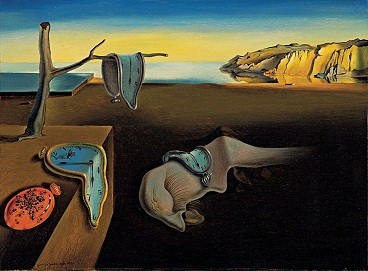
Dali’s “The Persistence of Memory”
A Battle with My Blood
[Tatiana Schlossberg, the granddaughter of President John F. Kennedy, died at age 35 on December 30, 2025, following a battle with acute myeloid leukemia. Her final words were largely captured in a powerful essay published in The New Yorker in late 2025 titled “A Battle with My Blood“, which served as her public final statement.
–Google AI]
When I was diagnosed with leukemia, my first thought was that this couldn’t be happening to me, to my family.
November 22, 2025 (newyorker.com)

Photograph by Thea Traff for The New Yorker
When you are dying, at least in my limited experience, you start remembering everything. Images come in flashes—people and places and stray conversations—and refuse to stop. I see my best friend from elementary school as we make a mud pie in her back yard, top it with candles and a tiny American flag, and watch, in panic, as the flag catches fire. I see my college boyfriend, wearing boat shoes a few days after a record-breaking snowstorm, slipping and falling into a slush puddle. I want to break up with him, so I laugh until I can’t breathe.
Maybe my brain is replaying my life now because I have a terminal diagnosis, and all these memories will be lost. Maybe it’s because I don’t have much time to make new ones, and some part of me is sifting through the sands.
On May 25, 2024, my daughter was born at 7:05 in the morning, ten minutes after I arrived at Columbia-Presbyterian hospital, in New York. My husband, George, and I held her and stared at her and admired her newness. A few hours later, my doctor noticed that my blood count looked strange. A normal white-blood-cell count is around four thousand to eleven thousand cells per microlitre. Mine was a hundred and thirty-one thousand cells per microlitre. It could just be something related to pregnancy and delivery, the doctor said, or it could be leukemia. “It’s not leukemia,” I told George. “What are they talking about?”
George, who was then a urology resident at the hospital, began calling friends who were primary-care doctors and ob-gyns. Everyone thought it was something to do with the pregnancy or the delivery. After a few hours, my doctors thought it was leukemia. My parents, Caroline Kennedy and Edwin Schlossberg, had brought my two-year-old son to the hospital to meet his sister, but suddenly I was being moved to another floor. My daughter was carried off to the nursery. My son didn’t want to leave; he wanted to drive my hospital bed like a bus. I said goodbye to him and my parents and was wheeled away.
The diagnosis was acute myeloid leukemia, with a rare mutation called Inversion 3. It was mostly seen in older patients. Every doctor I saw asked me if I had spent a lot of time at Ground Zero, given how common blood cancers are among first responders. I was in New York on 9/11, in the sixth grade, but I didn’t visit the site until years later. I am not elderly—I had just turned thirty-four.
Looking for new books, TV, and music? Get the Goings On newsletter for picks from our writers and critics.SIGN UP
By signing up, you agree to our user agreement (including class action waiver and arbitration provisions), and acknowledge our privacy policy.
I could not be cured by a standard course of treatment. I would need a few months, at least, of chemotherapy, which would aim to reduce the number of blast cells in my bone marrow. (Blast cells are immature blood cells; a high count can be a sign of leukemia.) Then I would need a bone-marrow transplant, which could cure me. After the transplant, I would probably need more chemotherapy, on a regular basis, to try to prevent the cancer from returning.
Advertisement
I did not—could not—believe that they were talking about me. I had swum a mile in the pool the day before, nine months pregnant. I wasn’t sick. I didn’t feel sick. I was actually one of the healthiest people I knew. I regularly ran five to ten miles in Central Park. I once swam three miles across the Hudson River—eerily, to raise money for the Leukemia and Lymphoma Society. I work as an environmental journalist, and for one article I skied the Birkebeiner, a fifty-kilometre cross-country race in Wisconsin, which took me seven and a half hours. I loved to have people over for dinner and to make cakes for my friends’ birthdays. I went to museums and plays and got to jump in a cranberry bog for my job. I had a son whom I loved more than anything and a newborn I needed to take care of. This could not possibly be my life.

Iended up spending five weeks at Columbia-Presbyterian, and the strangeness and sadness of what I was being told about myself made me hunt for the humor in it. I didn’t know what else to do. I decided that everyone in the hospital had Munchausen syndrome by proxy, and I was their target. It was a joke that I found funnier than everyone else did. Later, when I was bald and had a scrape on my face from a fall, my joke was that I was a busted-up Voldemort.
There were indignities and humiliations. I had a postpartum hemorrhage and almost bled to death, before being saved by my obstetrician. (She had already saved my life once, by noticing my blood count and giving me the chance to be cured. This time felt like overkill.) Little things made it easier, or somehow made it feel like everything was going to be fine. My son came to visit almost every day. When friends heard that I liked Spindrift seltzer, they sent cases of it; they also sent pajamas and watercolor kits and good gossip. People made paintings and drawings to decorate my walls. They dropped off food at my parents’ apartment, where George and the kids had moved. The nurses brought me warm blankets and let me sit on the floor of the skyway with my son, even though I wasn’t supposed to leave my room. They ate up the gossip that I gathered; they looked the other way when they saw that I had a contraband teakettle and toaster. They told me about their kids and their dating lives and their first trips to Europe. I have never encountered a group of people who are more competent, more full of grace and empathy, more willing to serve others than nurses. Nurses should take over.
Eventually, my blast-cell count went down and I was allowed to do a round of treatment at home, with my family. My care was transferred to Memorial Sloan Kettering, one of the largest centers for bone-marrow transplants in the country. Whenever I needed to be back in the hospital, my oncologist visited me almost daily, talking about my disease, of course, but also about foxhunting, who was annoying me that week, his new cat. He’s Orthodox Jewish and observes the Sabbath, but he would still answer texts that I rudely sent on Saturdays. He has scoured every inch of the earth for more treatments for me; he knows I don’t want to die and he is trying to stop it. My transplant doctor, always in a bow tie, always shouting a big hello, is a mad scientist in disguise as one of the country’s foremost experts on bone-marrow transplants, who safely got me through a lung infection and didn’t bat an eye when I pulled out a rosary and a bottle of holy water, blessed by Pope Francis and sent from Rome. He looked at me and said, “Vaya con Dios. Go with God.”
Video From The New Yorker“Cashing Out” Examines an Investment Strategy That Profited from AIDS Deaths
After the at-home chemo, I was admitted to M.S.K. for an even stronger dose of poison. Then I was ready for a transplant. My sister had turned out to be a match and would donate her stem cells. (My brother was a half-match, but he still asked every doctor if maybe a half-match was better, just in case.) My sister held her arms straight for hours as the doctors drained blood from one, scooped out and froze her stem cells, and pumped the blood back in the other.
Advertisement
The cells smelled like canned tomato soup. When the transfusion began, I sneezed twelve times and threw up. Then I waited—for my blood counts to recover, for my sister’s cells to heal and change my body. We wondered if I would get her banana allergy or her personality. My hair started to fall out and I wore scarves to cover my head, remembering, vainly, each time I tied one on, how great my hair used to be; when my son came to visit, he wore them, too. After a few days, I couldn’t speak or swallow because of sores in my mouth; food turned to dust on my tongue.
George did everything for me that he possibly could. He talked to all the doctors and insurance people that I didn’t want to talk to; he slept on the floor of the hospital; he didn’t get mad when I was raging on steroids and yelled at him that I did not like Schweppes ginger ale, only Canada Dry. He would go home to put our kids to bed and come back to bring me dinner. I know that not everyone can be married to a doctor, but, if you can, it’s a very good idea. He is perfect, and I feel so cheated and so sad that I don’t get to keep living the wonderful life I had with this kind, funny, handsome genius I managed to find.
My parents and my brother and sister, too, have been raising my children and sitting in my various hospital rooms almost every day for the last year and a half. They have held my hand unflinchingly while I have suffered, trying not to show their pain and sadness in order to protect me from it. This has been a great gift, even though I feel their pain every day. For my whole life, I have tried to be good, to be a good student and a good sister and a good daughter, and to protect my mother and never make her upset or angry. Now I have added a new tragedy to her life, to our family’s life, and there’s nothing I can do to stop it.
Iwent home after fifty days at Memorial Sloan Kettering. The transplant had put me in remission, but I had no immune system, and would have to get all my childhood vaccines again. I started a new round of chemotherapy to keep the cancer at bay. I relapsed. My transplant doctor said that leukemia with my mutation “liked to come back.”
In January, I joined a clinical trial of CAR-T-cell therapy, a type of immunotherapy that has proved effective against certain blood cancers. Scientists would engineer my sister’s T cells, directing them to attack my cancer cells. It was dark all the time outside my hospital window. I was given more chemotherapy; after the CAR-T treatment, I had cytokine-release syndrome, in which a storm of inflammation left me unable to breathe without high-flow oxygen. My lungs filled with fluid and my liver was unhappy and I was constantly on the brink of going to the I.C.U. A few weeks later, I was in remission again, though I had lost about twenty pounds. The doctors were happy with the results: I had done better than several other patients in the trial, which beggared belief, but I went home.
Advertisement
It didn’t really feel as if I was home: I had to go to the outpatient clinic most days, to treat infections or receive transfusions, sitting in a recliner for hours on end, waiting to know when I would need to go back to the hospital. In early April, I did go back, on just a few days’ notice, for my second transplant. I hoped that this would work. Actually, I decided that it would work. I dutifully copied Seamus Heaney poems into my notebook: “The Cure at Troy” (“Believe that a further shore / Is reachable from here. / Believe in miracles / And cures and healing wells.”) and “The Gravel Walks” (“So walk on air against your better judgement”). I tried to be the perfect patient: if I did everything right, if I was nice to everyone all the time, if I didn’t need any help or have any problems, then it would work.
This time, I had an unrelated donor, the logic being that the cells would be distinct from those of my sister and me, and thus better suited to take on the cancer. All I know about the donor is that he is a man in his twenties from the Pacific Northwest. I imagined a Portland woodcutter or a Seattle tech bro. Either way, I wished I could thank him. I went into remission again; I relapsed again. I joined another clinical trial. I was hospitalized twice more—weeks I don’t remember, during which I lost another ten pounds. First, I had graft-versus-host disease, in which new cells attack old ones, and then, in late September, I was downed by a form of Epstein-Barr virus that blasted my kidneys. When I got home a few weeks later, I had to learn how to walk again and couldn’t pick up my children. My leg muscles wasted and my arms seemed whittled into bone.
During the latest clinical trial, my doctor told me that he could keep me alive for a year, maybe. My first thought was that my kids, whose faces live permanently on the inside of my eyelids, wouldn’t remember me. My son might have a few memories, but he’ll probably start confusing them with pictures he sees or stories he hears. I didn’t ever really get to take care of my daughter—I couldn’t change her diaper or give her a bath or feed her, all because of the risk of infection after my transplants. I was gone for almost half of her first year of life. I don’t know who, really, she thinks I am, and whether she will feel or remember, when I am gone, that I am her mother.

Meanwhile, during the CAR-T treatment, a method developed over many decades with millions of dollars of government funding, my cousin Robert F. Kennedy, Jr., was in the process of being nominated and confirmed as the Secretary of Health and Human Services. Throughout my treatment, he had been on the national stage: previously a Democrat, he was running for President as an Independent, but mostly as an embarrassment to me and the rest of my immediate family.
In August, 2024, he suspended his campaign and endorsed Donald Trump, who said that he was going to “let Bobby go wild” on health. My mother wrote a letter to the Senate, to try and stop his confirmation; my brother had been speaking out against his lies for months. I watched from my hospital bed as Bobby, in the face of logic and common sense, was confirmed for the position, despite never having worked in medicine, public health, or the government.
Advertisement
Suddenly, the health-care system on which I relied felt strained, shaky. Doctors and scientists at Columbia, including George, didn’t know if they would be able to continue their research, or even have jobs. (Columbia was one of the Trump Administration’s first targets in its crusade against alleged antisemitism on campuses; in May, the university laid off a hundred and eighty researchers after federal-funding cuts.) If George changed jobs, we didn’t know if we’d be able to get insurance, now that I had a preëxisting condition. Bobby is a known skeptic of vaccines, and I was especially concerned that I wouldn’t be able to get mine again, leaving me to spend the rest of my life immunocompromised, along with millions of cancer survivors, small children, and the elderly. Bobby has said, “There’s no vaccine that is safe and effective.” Bobby probably doesn’t remember the millions of people who were paralyzed or killed by polio before the vaccine was available. My dad, who grew up in New York City in the nineteen-forties and fifties, does remember. Recently, I asked him what it was like when he got the vaccine. He said that it felt like freedom.
As I spent more and more of my life under the care of doctors, nurses, and researchers striving to improve the lives of others, I watched as Bobby cut nearly half a billion dollars for research into mRNA vaccines, technology that could be used against certain cancers; slashed billions in funding from the National Institutes of Health, the world’s largest sponsor of medical research; and threatened to oust the panel of medical experts charged with recommending preventive cancer screenings. Hundreds of N.I.H. grants and clinical trials were cancelled, affecting thousands of patients. I worried about funding for leukemia and bone-marrow research at Memorial Sloan Kettering. I worried about the trials that were my only shot at remission. Early in my illness, when I had the postpartum hemorrhage, I was given a dose of misoprostol to help stop the bleeding. This drug is part of medication abortion, which, at Bobby’s urging, is currently “under review” by the Food and Drug Administration. I freeze when I think about what would have happened if it had not been immediately available to me and to millions of other women who need it to save their lives or to get the care they deserve.
My plan, had I not gotten sick, was to write a book about the oceans—their destruction, but also the possibilities they offer. During treatment, I learned that one of my chemotherapy drugs, cytarabine, owes its existence to an ocean animal: a sponge that lives in the Caribbean Sea, Tectitethya crypta. This discovery was made by scientists at the University of California, Berkeley, who first synthesized the drug in 1959, and who almost certainly relied on government funding, the very thing that Bobby has already cut.
Iwon’t write about cytarabine. I won’t find out if we were able to harness the power of the oceans, or if we let them boil and turn into a garbage dump. My son knows that I am a writer and that I write about our planet. Since I’ve been sick, I remind him a lot, so that he will know that I was not just a sick person.
When I look at him, I try to fill my brain with memories. How many more times can I watch the video of him trying to say “Anna Karenina”? What about when I told him I didn’t want ice cream from the ice-cream truck, and he hugged me, patted me on the back, and said, “I hear you, buddy, I hear you”? I think about the first time I came home from the hospital. He walked into my bathroom, looked at me, and said, “It’s so nice to meet you in here.”
Then there’s my daughter, her curly red hair like a flame, squinting her eyes and grinning a gap-toothed grin after taking a sip of seltzer. She stomps around the house in bright-yellow rain boots, pretending to talk on my mother’s phone, a string of fake pearls around her neck, no pants, giggling and running away from anyone who tries to catch her. She asks us to play James Brown’s “I Got the Feelin’ ” by picking up a portable speaker and saying, “Baby, baby.”
Mostly, I try to live and be with them now. But being in the present is harder than it sounds, so I let the memories come and go. So many of them are from my childhood that I feel as if I’m watching myself and my kids grow up at the same time. Sometimes I trick myself into thinking I’ll remember this forever, I’ll remember this when I’m dead. Obviously, I won’t. But since I don’t know what death is like and there’s no one to tell me what comes after it, I’ll keep pretending. I will keep trying to remember. ♦

Published in the print edition of the December 8, 2025, issue, with the headline “A Further Shore.”
New Yorker Favorites
- The best movies, books, TV shows, albums, jokes, and podcasts of 2025.
- The French con man who impersonated more than a dozen fictional children.
- When an Ivy League school turned against a student.
- How to cycle like a Dutchman.
- The day the dinosaurs died.
- The brothers behind Warner Bros.
Sign up for our daily newsletter to receive the best stories from The New Yorker.
Tatiana Schlossberg is a journalist and the author of “Inconspicuous Consumption: The Environmental Impact You Don’t Know You Have.” She previously worked for the New York Times.
Chasing the Mirage of “Ethical” AI
Isaac Asimov’s “Handbook of Robotics” imagined simple rules for machine morality. But reality is a maze of contradictions, biases, and blind spots.
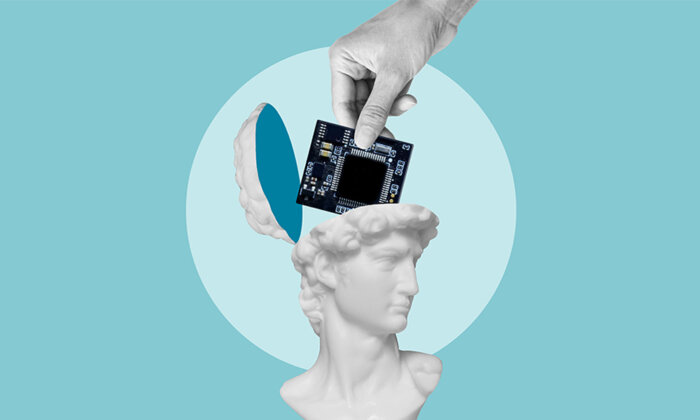
By: De Kai
December 15, 2025 (thereader.mitpress.mit.edu)
Artificial intelligence poses many threats to the world, but the most critical existential danger lies in the convergence of two AI-powered phenomena: hyperpolarization accompanied by hyperweaponization. Alarmingly, AI is accelerating hyperpolarization while simultaneously enabling hyperweaponization by democratizing weapons of mass destruction (WMDs).
For the first time in human history, lethal drones can be constructed with over-the-counter parts. This means anyone can make killer squadrons of AI-based weapons that fit in the palm of a hand. Worse yet, the AI in computational biology has made genetically engineered bioweapons a living room technology.
How do we handle such a polarized era when anyone, in their antagonism or despair, can run down to the homebuilder’s store and buy all they need to assemble a remote-operated or fully autonomous WMD?
It’s not the AI overlords destroying humanity that we need to worry about so much as a hyperpolarized, hyperweaponized humanity destroying humanity.
To survive this latest evolutionary challenge, we must address the problem of nurturing our artificial influencers. Nurturing them to be ethical and responsible enough not to be mindlessly driving societal polarization straight into Armageddon. Nurturing them so they can nurture us.
But is it possible to ensure such ethical AIs? How can we accomplish this?
Some have suggested that we need to construct a “moral operating system.” Kind of like Isaac Asimov’s classic “Laws of Robotics” from the (fictional) “Handbook of Robotics,” 56th edition, 2058 AD:
Zeroth Law: “A robot may not injure humanity or, through inaction, allow humanity to come to harm.”
First Law: “A robot may not injure a human being or, through inaction, allow a human being to come to harm.”
Second Law: “A robot must obey the orders given it by human beings except where such orders would conflict with the First Law.”
Third Law: “A robot must protect its own existence as long as such protection does not conflict with the First or Second Law.”
Should we simply hardwire AIs with ethical principles, so they can’t do the wrong thing?
Sad to say, a rule-based AI constitution of sorts is a pipe dream. It can’t work. There are several crucial reasons for this.
First, the idea of hardwiring AIs with ethical principles drastically oversimplifies the fact that in the real world, any such principles or laws are constantly in conflict with each other. In fact, the plots of dozens of Asimov stories usually hang on the contradictions between his laws of robotics! And if you have more than three or four laws, the number of ways they can contradict each other simply explodes.
Sad to say, a rule-based AI constitution of sorts is a pipe dream. It can’t work.
Let’s imagine, for example, an AI that’s piloting a self-driving Tesla, train, or trolley. As it rounds a bend to the left, it suddenly sees five people partying in its way, blissfully unaware of their impending doom.
It’s barreling down too fast to stop, but it has one choice: pull a lever to suddenly switch to the right at the fork just before hitting the partiers.
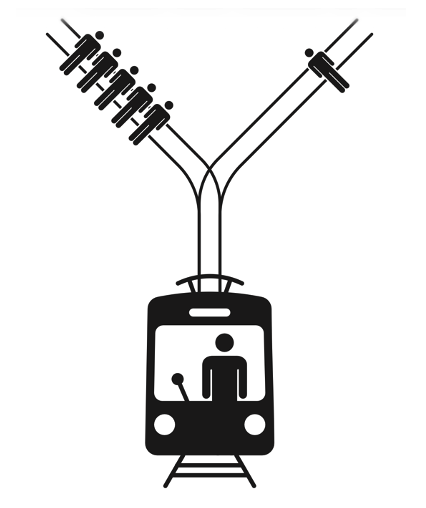
According to Asimov’s First Law of Robotics, the AI may not, through inaction, allow a human to come to harm, which means the AI should take the sudden right.
Unfortunately, it turns out that changing course would strike a different innocent bystander. What should the AI do?
Humans are split on this conundrum. Some say that taking action to steer right is still a decision to injure a human, whereas inaction isn’t actively deciding to injure, so the AI should do nothing. But others argue that inaction is also a decision, and that the AI should minimize the injury it does to humans. After all, taking the right injuries only one human instead of five.
How can we expect AIs to do the right thing when we humans can’t even agree on what’s right?
Imagine, instead, that all five partiers are serial killers. Does that alter your opinion?
What if the one human on the right fork is a newborn? Would you still expect the AI to take the right?
Now imagine a human overseer commands the AI to drive the Tesla, train, or trolley straight into the five humans. Does Asimov’s Second Law — that robots must obey human orders — come into effect? Well, that depends on whether you believe the order conflicts with the First Law — which is completely unclear!
Problems like these arise everywhere in the real world, where two or more ethical principles conflict. They’re called trolley problems, for obvious reasons. And humans typically can’t even figure out what the “right” actions are in trolley problems — so how are we supposed to define simple rules for what AIs should do?
Do you even know what you’d teach your children to do in such situations?
As I wrote in the New York Times after the near implosion of OpenAI in November 2023, even a tiny handful of executives and board members were unable to align on what the “right” goals and actions for AI should be — let alone all of humanity. “Philosophers, politicians, and populations have long wrestled with all the thorny trade-offs between different goals. Short-term instant gratification? Long-term happiness? Avoidance of extinction? Individual liberties? Collective good? Bounds on inequality? Equal opportunity? Degree of governance? Free speech? Safety from harmful speech? Allowable degree of manipulation? Tolerance of diversity? Permissible recklessness? Rights versus responsibilities?”
How can we expect AIs to do the right thing when we humans can’t even agree on what’s right?
Cultural background influences these decisions to some extent. Consider the “Moral Machine,” a fun — and somewhat disturbing — interactive gamification of the trolley problem you can play. The platform, created by MIT’s Iyad Rahwan, has already collected over 100 million decisions made by players from across the globe. What Rahwan found is that folks from different cultures tend toward slightly different trade-offs.
The second reason rule-based constitutions are oversimplistic is that — whereas Asimov’s entertaining robot stories deal primarily with AIs making decisions about physical actions — the real danger to humanity is the way AIs are driving hyperpolarization by making decisions about nonphysical communication actions.
Communication actions by AIs can be anything from what Siri, Google, or Instagram tells you (or doesn’t tell you) to recommendations on what to buy to instructions to destroy a village. As AIs proliferate, these trillions of small choices made by AI translate into trillions of decisions laden with ethical implications.
With nonphysical actions, it’s really hard for humans and AIs alike to decide whether a communication action might harm humanity or a human being or, by failing to communicate something, allow a human to come to harm. It’s really hard to evaluate whether communicating or failing to communicate something might be more harmful than disobeying a human’s orders or not protecting an AI’s own existence.
And third, critically, we literally can’t hardwire ethical laws into machine learning, any more than we can hardwire ethics into human kids, because, by definition, modern AIs are adaptive rather than logic machines — they learn the culture around them.
Will they learn a culture of fear, or of love? As Blue Man Group cofounder Chris Wink asked on my podcast, “For parenting, how do I make them feel loved? I don’t know that we have to do that to our AI, but the love part is related to a secure attachment as well. It isn’t just a feeling of love, but a feeling of safety . . . maybe an ability to go up Maslow’s hierarchy a little bit, not just be stuck at survival, right?”
Morals, ethics, and values need to be culturally learned, nurtured, and sustained. By humans and machines alike.
De Kai is a pioneer of AI. He is the Independent Director of the AI ethics think tank The Future Society and was one of eight inaugural members of Google’s AI Ethics council. He also holds joint appointments at HKUST’s Department of Computer Science and Engineering and at Berkeley’s International Computer Science Institute. He is the author of the book “Raising AI: An Essential Guide to Parenting Our Future,” from which this article is adapted.
Posted on Dec 15
The MIT Press is a mission-driven, not-for-profit scholarly publisher. Your support helps make it possible for us to create open publishing models and produce books of superior design quality.
Here’s What to Get Excited about in Space in 2026
December 30, 2025 (scientificamerican.com)
From crewed lunar voyages to flight tests of fully reusable rockets and launches of new orbital telescopes studying the outer limits of the cosmos, 2026 should be a banner year for space science and exploration
By Lee Billings edited by Andrea Thompson
Space Exploration
It’s a big universe out there—13.8 billion years old, full of hundreds of billions of star-and-planet-packed galaxies and, out past the limits of our sight, perhaps infinite in all directions. But as vast and inscrutable as the cosmos may seem, we’re poised for 2026 to be a banner year in bettering our understanding of how it works and our place within it while setting new milestones in spaceflight.
Return to the Moon
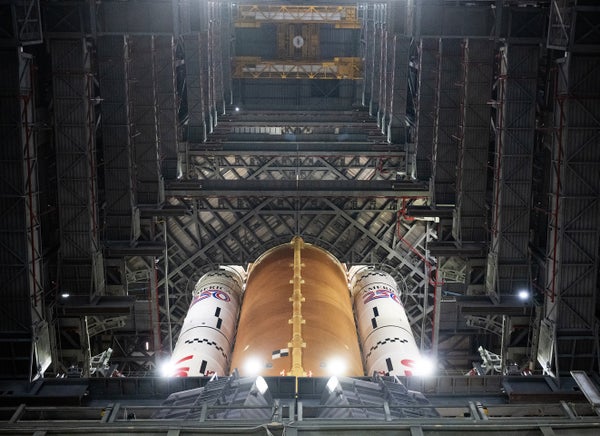
The most obviously exciting space event for the coming year is the launch of NASA’s Artemis II mission, which could occur as early as February. Taking four astronauts on a 10-day voyage around the moon, Artemis II will mark the first human presence in our natural satellite’s vicinity since the early 1970s and will set the stage for subsequent crewed forays to the lunar surface. Artemis II will also be a critical test of hardware for later Artemis missions: it will be the first crewed flight of NASA’s giant Space Launch System rocket and accompanying Orion spacecraft.
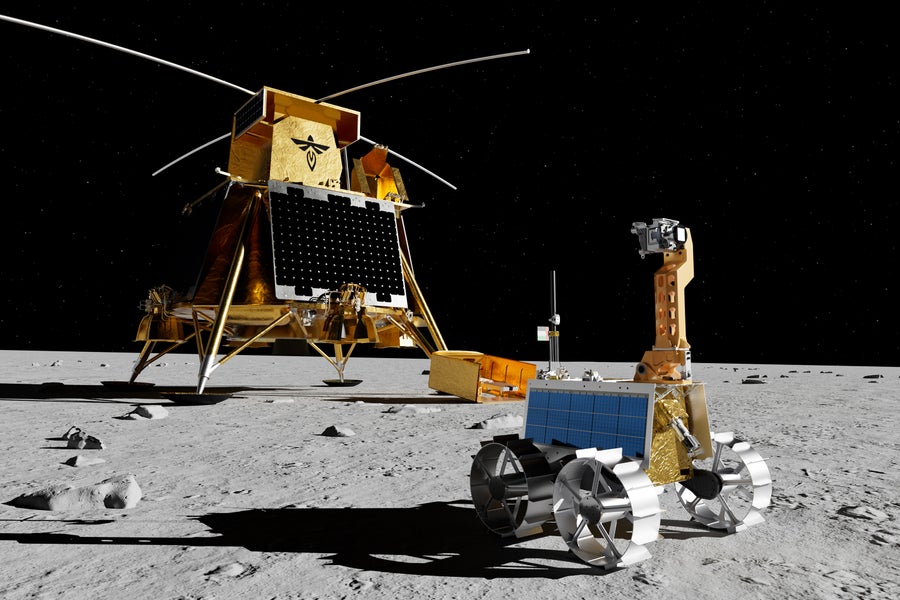
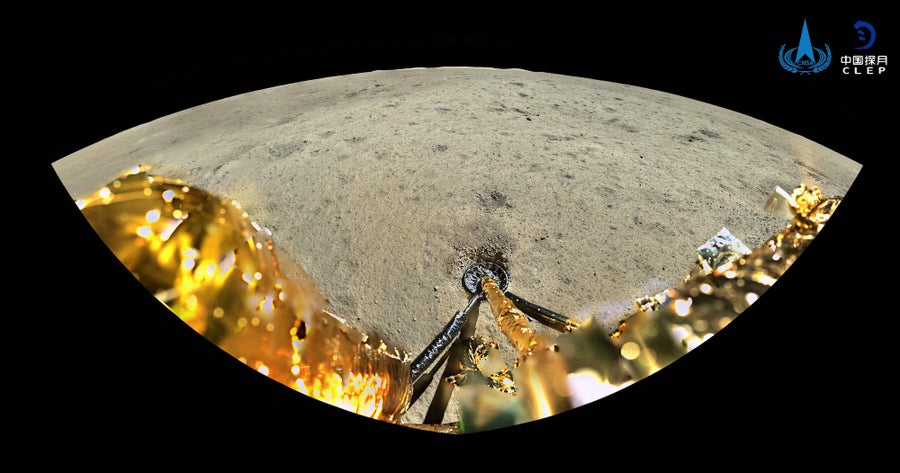
Artemis II will be only the beginning of an action-packed year for lunar exploration. Other highlights include Firefly Aerospace’s Blue Ghost Mission 2—set to deliver NASA and European Space Agency (ESA) payloads to the moon in late 2026—and China’s Chang’e 7 mission, which will head to the lunar south pole in the second half of the year.
Our Nearest Neighbors
Next year should also see new voyages to Earth’s nearest planetary neighbors, Mars and Venus. The Japan Aerospace Exploration Agency’s Martian Moons eXploration (MMX) mission is scheduled to launch in 2026 on a trip to the Martian moon Phobos, where it will collect samples for return to Earth. And Venus Life Finder, a private collaboration between the aerospace firm Rocket Lab and the Massachusetts Institute of Technology, will launch in the summer to seek signs of biology in our sister planet’s clouds.

Close-ups for Asteroids and Comets
Meanwhile 2026 could see big progress in studies of asteroids and comets. China’s sample-return mission Tianwen-2 will reach and gather material from the asteroid 469219 Kamoʻoalewa in early summer to midsummer, and near year’s end, ESA’s Hera mission will arrive at the binary asteroid 65803 Didymos to study the aftermath of NASA’s earlier Double Asteroid Redirection Test (DART) impact mission.
Curated by Our Editors
- The Best Space Photos of 2025 Reveal the Most Jaw-Dropping Views of the CosmosMeghan Bartels
- Rubin Observatory’s First Images Just Unveiled the Universe as We’ve Never Seen It BeforeMeghan Bartels
- NASA’s Next Major Space Telescope Is Ready to Launch. Trump Wants to Kill It and Other Vital ScienceNadia Drake
- Why Is It So Much Harder for NASA to Send People to the Moon Now Than It Was during the Apollo Era?Sarah Scoles
The asteroid on most people’s mind next year may be 2024 YR4, a space rock that for a few weeks in 2025 appeared to pose a decent chance of striking Earth in 2032; subsequent studies of 2024 YR4’s orbit ruled out that possibility, but uncertainty remains as to whether the asteroid could strike the moon to send debris showering toward us. Fortunately, NASA’s James Webb Space Telescope (JWST) could clear things up with additional observations of the asteroid in spring 2026.
And in the coming year, JWST and a host of other telescopes will also continue their studies of 3I/ATLAS, the third interstellar comet discovered passing through our solar system.
New Eyes on the Sky
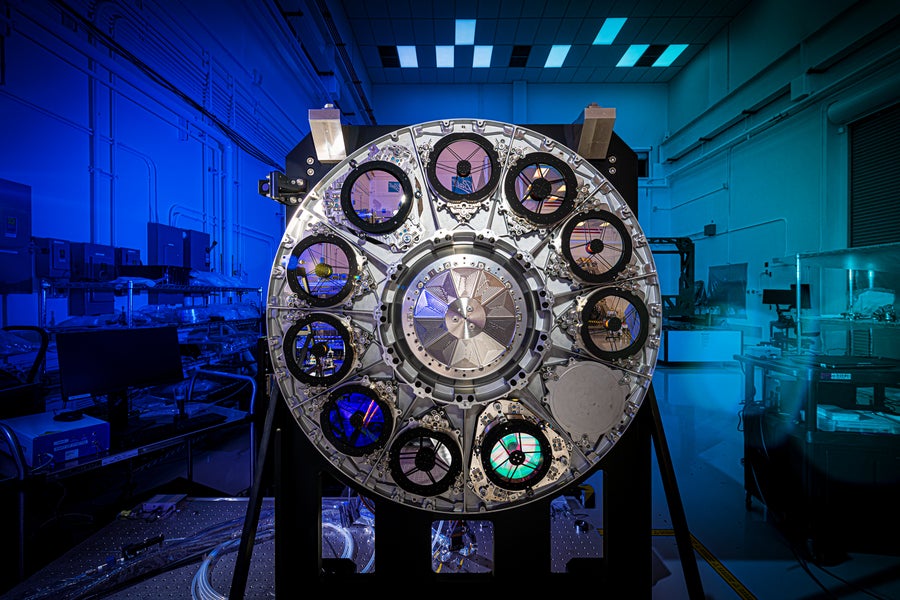
Speaking of telescopes, several are starting work in 2026 that could forever change our views of the cosmos. NASA’s Nancy Grace Roman Space Telescope may launch later in the year and start its mission to study large-scale cosmic structures to help clarify the still-mysterious nature of dark matter and dark energy. China’s Xuntian space telescope may launch as well; one of its primary goals is to make similar science observations. And the ground-based Vera C. Rubin Observatory, although officially beginning operations in 2025, will ramp up its panoramic observations of the heavens in 2026 to discover oodles of new asteroids, comets, supernovae and other transient celestial phenomena.
The Rise of Reusable Rocketry
In terms of sheer effect, however, the biggest events for space science in 2026 aren’t really acts of science at all. Rather, they’re flights of giant new rockets offering novel and transformative launch capabilities. SpaceX’s flight tests of its in-development Starship, a notionally fully reusable rocket that is also the world’s largest and most powerful, are set to continue throughout 2026. And after successful debuts in 2025, other partially reusable rockets—namely, New Glenn from Blue Origin, as well as Zhuque-3 from the Chinese commercial company LandSpace—are slated for additional flights in 2026, encroaching on SpaceX’s decade-long effective monopoly on rapid, reusable orbital launch services.
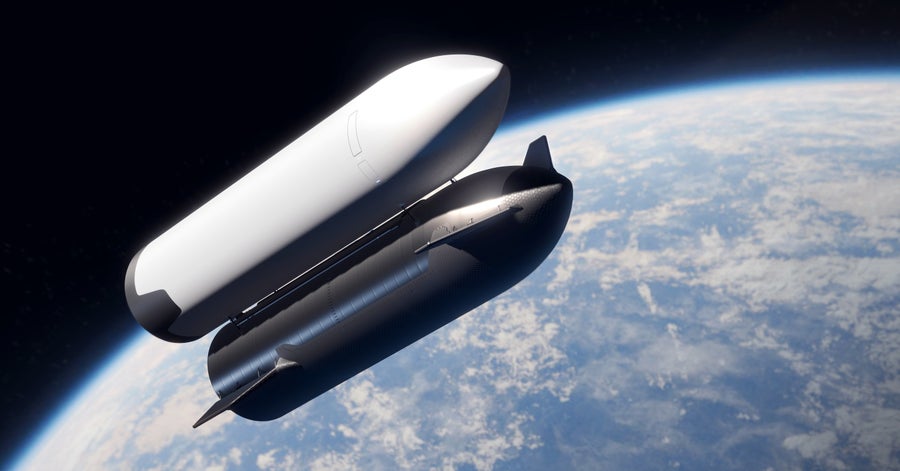
This ongoing meteoric rise of reusability is already causing launch costs to plummet while launch rates skyrocket, allowing the creation of a more active, diverse and robust space economy in which far more opportunities exist for science and exploration. Thanks to a packed docket of launches with these innovative rockets, in the fullness of time 2026 may be remembered as the year when early space-age dreams of nigh-ubiquitous and routine spaceflight actually became reality.
Lee Billings is a science journalist specializing in astronomy, physics, planetary science, and spaceflight and is senior desk editor for physical science at Scientific American. He is author of a critically acclaimed book, Five Billion Years of Solitude: The Search for Life Among the Stars, which in 2014 won a Science Communication Award from the American Institute of Physics. In addition to his work for Scientific American, Billings’s writing has appeared in the New York Times, the Wall Street Journal, the Boston Globe, Wired, New Scientist, Popular Science and many other publications. Billings joined Scientific American in 2014 and previously worked as a staff editor at SEED magazine. He holds a B.A. in journalism from the University of Minnesota.
Awakening from the Quantum Dream with Paul Levy
New Thinking Allowed with Jeffrey Mishlove Dec 29, 2025 Paul Levy is the author of The Madness of George W. Bush: A Reflection of Our Collective Psychosis, Dispelling Wetiko: Breaking the Curse of Evil, Awakened By Darkness: When Evil Becomes Your Father, and The Quantum Revelation: A Radical Synthesis of Science and Spirituality. He has been a Tibetan Buddhist practitioner for the past three decades. He describes the concept of a virus of the mind, infecting all of humanity. He references the native Cree term Wetiko. However, it could be thought of as Satan or Ahriman or the Archons. In Jungian terms, it involves a projection of one’s own shadow onto elements of the world at large. It is a form of psychic blindness. However, when we recognize Wetiko for what it is, we also see that it is an expression of our own power in the external world. Quantum physics now shows us, unequivocally, that the distinction between objective and subjective is an illusion. Just as all elements of a dream are a reflection of one’s own psyche, so do we bring the “objective world” into existence through our collective consciousness. New Thinking Allowed host, Jeffrey Mishlove, PhD, is author of The Roots of Consciousness, Psi Development Systems, and The PK Man. Between 1986 and 2002 he hosted and co-produced the original Thinking Allowed public television series. He is the recipient of the only doctoral diploma in “parapsychology” ever awarded by an accredited university (University of California, Berkeley, 1980). He is also the Grand Prize winner of the 2021 Bigelow Institute essay competition regarding the best evidence for survival of human consciousness after permanent bodily death. He is Co-Director of Parapsychology Education at the California Institute for Human Science. (Recorded on April 24, 2020)
Hypnagogic Consciousness with Adam Crabtree
New Thinking Allowed with Jeffrey Mishlove Dec 28, 2025 Psychology and Psychotherapy Adam Crabtree, RP, is a trainer of psychotherapists and has a private therapy practice in Toronto, Ontario, Canada. He is the author of From Mesmer to Freud: Magnetic Sleep and the Roots of Psychological Healing, Multiple Man: Explorations in Possession and Multiple Personality, Trance Zero: Breaking the Spell of Conformity, Evolutionary Love and the Ravages of Greed, and The Land of Hypnagogia. He is also coauthor of Irreducible Mind: Toward a Psychology for the 21st Century, and he is coeditor of Beyond Physicalism: Toward Reconciliation of Science and Spirituality. He explains that he is using the term hypnagogia to describe explorations of one’s psychic depths including, but not limited to, states associated with sleep and dreaming. He shares a number of his own hypnagogic journeys – starting at the age of five. He discusses the sense of dread that sometimes accompanies these encounters with the unknown within. He also suggests that, while each individual is absolutely unique, there is a universal quality, independent of cultural conditioning, to hypnagogic terrain. New Thinking Allowed host, Jeffrey Mishlove, PhD, is author of The Roots of Consciousness, Psi Development Systems, and The PK Man. Between 1986 and 2002 he hosted and co-produced the original Thinking Allowed public television series. He is the recipient of the only doctoral diploma in “parapsychology” ever awarded by an accredited university (University of California, Berkeley, 1980). He is also the Grand Prize winner of the 2021 Bigelow Institute essay competition regarding the best evidence for survival of human consciousness after permanent bodily death. He is Co-Director of Parapsychology Education at the California Institute for Human Science. (Recorded on August 2, 2020)