Life Is a Story That Begins in the Middle: Bayo Akomolafe on the Rewilding Power of Obstacles

By Maria Popova (themarginalian.org)

Whenever there is a will, there are two things: a way and an obstacle in the way — that place midway between desire and destination where one’s will collides with the will of the world, with the parameters of permission for imagination we call reality. The triumph of life is turning that collision into a particle collider for possibility, turning the limitation into a creative constraint that challenges more imaginative forms of being into existence, right there in the interruptive middle. Because every life is shaped by the obstacles it has encountered and how it has responded to them, every life is in a sense a story that begins in the middle.

Bayo Akomolafe celebrates the rewilding power of these interruptions in These Wilds Beyond Our Fences: Letters to My Daughter on Humanity’s Search for Home (public library). He writes:

An obstacle is the richest, thickest, densest place in the universe. This is so because it is where things stop and often die, failing to continue on their way. It is where carcasses of hope rot into the ground, inadvertently fertilizing it. It is a place of desperation and longing and roaming ghosts… bursting with activity, with microbial adventures, with dancing generativity, with experiments into dis/continuity, with playful meanings and alchemical shifts, with eloquent invocations and stuttered words. When you meet something fierce, too strong to overcome, too high to climb, too eminent to sidestep, too dark to enlighten, don’t take it too personally — you have merely met an antibody, whose sacred task is to challenge you, discombobulate you, disfigure you, and introduce “you” to the strange vastness of your family. A larger commonwealth of becoming.

In a lovely antidote to the cult of achievement — that punitive denial of the most wondrous aspect of being alive: the fact that we are unfinished — he adds:

Obstacles are the universe’s hubs of unspeakable creativity, redeeming us from tired victories, from the banality of crossing the finish line, from the soundtrack of getting everything we want, and especially from the hubris of thinking we are in control.

Supplementary art based on An Almanac of Birds: 100 Divinations for Uncertain Days, available as a print and more.

The moment an obstacle bisects the trajectory of intent, it creates a natural midpoint that is both an end and a beginning, but also something else entirely, for it lives on a different plane from the strict linearity of the will as cause and its intended effect.

Akomolafe considers the singular fertility of these midpoints:

It is here, right here in the contested middle that we often learn that our maps, however elaborate, are not the whole picture or the terrain they pretend to represent. And that home is not simply the fixed dot at the end of dashed lines, motionless and given, awaiting the ones who come marching in… Everything begins in the middle. There are no beginnings that appear unperturbed, pristine and without hauntings. And there are no endings that are devoid of traces of the new, spontaneous departures from disclosure, and simmering events that are yet to happen. The middle isn’t the space between things; it is the world in its ongoing practices of worlding itself.

Part of our difficulty in inhabiting middles, in orienting to obstacles, lies in our two-dimensional model of this ongoingness — causality as an arrow from the point of action to the point of consequence. Everything changes, however, if we conceive of it as a locus of points on a three-dimensional sphere of time. Akolafe offers a model from West Africa’s ancient cosmogonies consonant with the double-slit experiments of quantum mechanics and their implications of retrocausality:

The Yoruba people speak of ayé, loosely translated into the one-tongue as “life” — a poor translation, if you ask me, for what they try to articulate is a mode of causation that is unwieldy, surprising, diffracted, multilinear, ecstatic, and sensuous: where… one cannot draw too straight a line from cause to effect. Indeed, one cannot even draw a sure unidirectional line from cause to effect, since effect can flow into cause, and — even more startlingly — also because time is not conceived as a single stream flowing from past to future but as a cycle… a muddy viscous puddle that means the past is amenable to reconfiguration.

Discus chronologicus — a German depiction of time from the early 1720s. (Available as a print and as a wall clock.)

A century after Virginia Woolf gasped in her profoundest epiphany that “behind the cotton wool is hidden a pattern… the whole world is a work of art… there is no Shakespeare… no Beethoven… no God; we are the words; we are the music; we are the thing itself,” he adds:

We — together with multiple others — are part of a web of life, not just stuck on it like a hapless fly-turned-spider-breakfast, but the very web itself in its fluctuations and rich complexity. And movement, the slightest gesture, sends tremors through the veins of our never-ending reiterative becomings.

Couple with Iain McGilchrist on the loom on which we weave that web, then revisit physicist Alan Lightman’s poetic reimagining of time.

(Contributed by John Atwater, H.W.)

2 cities defy Gov. Ron DeSantis’ anti-rainbow orders by creatively displaying their Pride colors

“The fact we got to see it at the beginning of Pride Month was chef’s kiss.”

Photo of the author

Daniel Villarreal (he/him) June 22, 2026 (lgbtqnation.com)


Ron DeSantisFlorida Gov. Ron DeSantis (R) | YouTube screenshot
Two Florida cities are standing up to Gov. Ron DeSantis‘ removal of their rainbow crosswalks by painting rainbow colors on two other highly visible public places.

At the start of Pride month, St. Petersburg painted the steps of its city hall in the colors of the Progress Pride flag.


Related

City forced to scrap Rainbow Arch project due to Ron DeSantis’s anti-DEI law


“Losing the crosswalk was a huge hit to us, so making sure that we pop up more visual signs of inclusion was right in alignment,” said Dr. Byron Green-Calisch, president of the board of directors with St. Pete Pride, according to Bay News 9. “So, the fact we got to see it at the beginning of Pride Month was chef’s kiss.”

City Mayor Ken Welch said, “The Pride steps at City Hall are more than paint on concrete. They are a reflection of St. Petersburg’s values and a reminder that our city is strongest when everyone feels welcome, respected, and seen.”

The rainbow steps of St. Petersburg's City Hall
The rainbow steps of St. Petersburg’s City Hall | Bay News 9 video screenshot

Last July 1, Transportation Secretary Sean Duffy wrote in a letter directing the nation’s governors to keep all non-freeway intersections and crosswalks “free from distractions.” In a subsequent X post, he said, “Taxpayers expect their dollars to fund safe streets, not rainbow crosswalks.”

In response, DeSantis signed a law directing the Florida Department of Transportation (FDOT) “to ensure compliance with FDOT’s uniform system for traffic control devices,” according to a July statement from a department spokesperson. The law effectively bans all pavement art and murals like rainbow crosswalks, regardless of their political message.

The city of Fort Lauderdale also recently installed a rainbow-colored “circle of love” at the Selene condominiums near Sebastian Street Beach, a popular LGBTQ+ beach. The city had been fighting DeSantis’ order in court to keep its rainbow street art, but it relented after his administration threatened to withhold local transportation funding. Because the new rainbow circle is located on private business property, current state law cannot force the business to remove it, WPEC reported.

“We are here today to not only say that we are going to never be erased, but we’re going to find a way to still be able to appreciate and embrace the diversity of our community,” Mayor Dean Trantalis said during the circle’s unveiling earlier this month. “Because if there’s anything that Fort Lauderdale represents, it’s diversity. People from all walks of life should be able to come here.”

Rep. Debbie Wasserman Schultz (D-FL), who also attended the unveiling, said, “This expression in the circle of love, with the city working with a developer in the city to make sure that there continues to be a very public display of support for equality and the LGBTQ+ community, is remarkable and I’m so proud of them.”

X post: https://x.com/FTLCityNews/status/2068378399538569341?ref_src=twsrc%5Etfw%7Ctwcamp%5Etweetembed%7Ctwterm%5E2068378399538569341%7Ctwgr%5E1169961f10c2a2a31f292d52add275300ee596a9%7Ctwcon%5Es1_c10&ref_url=https%3A%2F%2Fwww.lgbtqnation.com%2F2026%2F06%2F2-cities-defy-gov-ron-desantis-anti-rainbow-orders-by-creatively-displaying-their-pride-colors%2F

St. Petersburg previously responded to DeSantis’ order by installing rainbow-colored bike racks and blasting a 60-mile-long rainbow laser across its night sky.

Subscribe to the LGBTQ Nation newsletter and be the first to know about the latest headlines shaping LGBTQ+ communities worldwide.


Daniel Villarreal is a longtime, award-winning journalist and editor who has written for NBC News, NewsweekVoxSlateVice NewsThe Seattle StrangerThe Dallas Voice and numerous other LGBTQ+ publications. He has spoken at SXSW, Creating Change, Netroots Nation, GaymerX, and is a graduate of GLAAD’s Voices of Color program and of the Poynter Institute’s 2024 Power of Diverse Voices seminar. He is also the founder of QueerBomb Dallas, an annual non-corporate Pride event; CinéWilde, the nation’s longest running monthly LGBTQ film series. He is available for interviews and educational talks.

Connect with Daniel Villarreal: 

WEST SIDE STORY – Something’s Coming

West Side Story On Broadway May 11, 2020 “It is always hard to see the light at the end of a tunnel and even more so, that of a tunnel we’ve never been in before. ‘Something’s coming, something good!’ would be good to keep in mind looking to a much brighter time when all this is over.” Lead Trumpeter Dominic Derasse organized a very special digital rendition of “Something’s Coming” featuring Isaac Powell and the WEST SIDE STORY orchestra. “I saw this video as a special opportunity to credit all the orchestra members whose hard work you always hear, but whose faces you don’t often see” (Isaac Powell). www.westsidestorybway.com

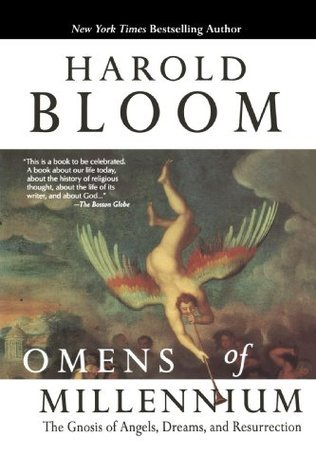
Excerpts from “Omens of Millennium”

Compiled by Mike Zonta, BB editor

(Image from Goodreads.com)

It is both pragmatic and shrewd of the mystics that they affirm the paradox that our dreams are less individual than we are. We die solitary deaths, but dream communal dreams.

What the Gnosis best teaches us, in this matter, is to end our enthusiasm for angels, who according to Gnosticism are not our guardians but our prison wardens.

Quoting Valentinus:

From the beginning you have been immortal, and you are children of eternal life. And you wanted death to be allocated to yourselves so that you might spend it and use it up and that death might die in you and through you. For when you nullify the world and are not yourselves annihilated, you are lord over creation and all corruption.

Omens of Millennium: The Gnosis of Angels, Dreams, and Resurrection by Harold Bloom

Consciousness, Spirituality, and the Martial Arts with James Tunney 

New Thinking Allowed with Jeffrey Mishlove Jun 27, 2026 James Tunney, LLM, is an Irish Barrister who has lectured on legal matters throughout the world. He is a poet, a visual artist, and author of The Mystery of the Trapped Light: Mystical Thoughts in the Dark Age of Scientism plus The Mystical Accord: Sutras to Suit Our Times, Lines for Spiritual Evolution. His website is http://www.jamestunney.com. Here he shares his passion for and knowledge of a wide variety of martial arts traditions. He emphasizes western boxing, particularly his distant cousin, the heavyweight champion Gene Tunney. The conversation also covers many other martial art forms including Jiu-Jitsu, Judo, Karate, Capoeira, and Kalari. He views martial arts as a positive way of addressing the aggressive aspects of human nature. New Thinking Allowed host, Jeffrey Mishlove, PhD, is author of The Roots of Consciousness, Psi Development Systems, and The PK Man. Between 1986 and 2002 he hosted and co-produced the original Thinking Allowed public television series. He is the recipient of the only doctoral diploma in “parapsychology” ever awarded by an accredited university (University of California, Berkeley, 1980). He is also the Grand Prize winner of the 2021 Bigelow Institute essay competition regarding the best evidence for survival of human consciousness after permanent bodily death. He is Co-Director of Parapsychology Education at the California Institute for Human Science. (Recorded on January 2, 2021)

Book: “City of God”

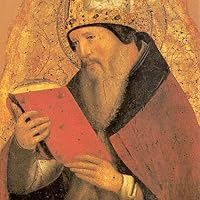
City of God

Augustine of HippoHenry Bettenson (Translator)

No book except the Bible itself had a greater influence on the Middle Ages than Augustine’s City of God. And since medieval Europe was the cradle of modern Western society, this work is vital for understanding our world and how it came into being.

About the author

Augustine of Hippo

Early church father and philosopher Saint Augustine served from 396 as the bishop of Hippo in present-day Algeria and through such writings as the autobiographical Confessions in 397 and the voluminous City of God from 413 to 426 profoundly influenced Christianity, argued against Manichaeism and Donatism, and helped to establish the doctrine of original sin.

An Augustinian follows the principles and doctrines of Saint Augustine.

People also know Aurelius Augustinus in English of Regius (Annaba). From the Africa province of the Roman Empire, people generally consider this Latin theologian of the greatest thinkers of all times. He very developed the west. According to Jerome, a contemporary, Augustine renewed “the ancient Faith.”

The Neo-Platonism of Plotinus afterward heavily weighed his years. After conversion and his baptism in 387, Augustine developed his own approach to theology and accommodated a variety of methods and different perspectives. He believed in the indispensable grace to human freedom and framed the concept of just war. When the Western Roman Empire started to disintegrate from the material earth, Augustine developed the concept of the distinct Catholic spirituality in a book of the same name. He thought the medieval worldview. Augustine closely identified with the community that worshiped the Trinity. The Catholics and the Anglican communion revere this preeminent doctor. Many Protestants, especially Calvinists, consider his due teaching on salvation and divine grace of the theology of the Reformation. The Eastern Orthodox also consider him. He carries the additional title of blessed. The Orthodox call him “Blessed Augustine” or “Saint Augustine the Blessed.”

Santo Agostinho

Anaïs Nin on love

Anaïs Nin

Do not seek the ‘because’ – in love there is no ‘because’, no reason, no explanation, no solutions.”

― Anaïs Nin

Angela Anaïs Juana Antolina Rosa Edelmira Nin y Culmell was a French-born American diarist, essayist, novelist, and writer of short stories and erotica. Born to Cuban parents in France, Nin was the daughter of the composer Joaquín Nin and the classically trained singer Rosa Culmell. Wikipedia

Born: February 21, 1903, Neuilly-sur-Seine, France

Died: January 14, 1977

~ Anais Nin

The Life Force, Part II, with Naomi Remen

New Thinking Allowed with Jeffrey Mishlove Jun 26, 2026 Biological Systems, Health and Healing This video is a special release from the original Thinking Allowed series that ran on public television from 1986 until 2002. It was recorded in about 2000. It will remain public for only one week.  Rachel Naomi Remen is author of The Human Patient, Kitchen Table Wisdom and My Grandfather’s Blessings: Tales of Strength, Refuge and Belonging. She is Professor Emeritus of Medicine at the University of California, San Francisco Medical Center. She emphasizes that we cut ourselves off from the power of the life force when we edit ourselves in accordance with the approval and disapproval of others. The life force, which is the basis of authentic healing, is our birthright as human beings. Now you can watch all of the programs from the original Thinking Allowed Video Collection, hosted by Jeffrey Mishlove. Subscribe to the new Streaming Channel (https://thinkingallowed.vhx.tv/) and watch more than 350 programs now, with more, previously unreleased titles added weekly. Free month of the classic Thinking Allowed streaming channel for New Thinking Allowed subscribers only. Use code THINKFREELY.

Featured Books from New Thinking Allowed

In My Grandfather’s Blessings, Rachel Naomi Remen, a cancer physician and master storyteller, uses her luminous stories to remind us of the power of our kindness and the joy of being alive. Dr. Remen’s grandfather, an orthodox rabbi and scholar of the Kabbalah, saw life as a web of connection and knew that everyone belonged to him, and that he belonged to everyone. He taught her that blessing one another is what fills our emptiness, heals our loneliness, and connects us more deeply to life.


The story of the Watchers began during the third century B.C. when a wave of apocalyptic Essene writings swept the Mediterranean world and came to fruition at the time of Jesus. From this epoch emerged a new hero, Enoch, ‘the Translated Man’, who was transformed into a being of light and joined the Watchers in heaven. William Henry proposes that the Watchers correspond to the Seven Rayed Naga “rainbow serpents of wisdom” of Buddhist tradition and the seven fish-cloaked Apkallu sages of Mesopotamia.


Presented as a philosophy of hope, the influence of Hermeticism runs like a river through Egyptian, Hellenic, Sufi, Renaissance, and Romantic territories, before branching into the delta of twentieth century philosophical and psychological thought. Drawing on her experience as a practicing psychiatrist, Nasser shows how the existential pioneers of the last century not only acknowledged their debt to their Hermetic past, but also spoke to the emergence of a new Self capable of exploring and integrating its multiplicities.


Good Answers to Tough Questions About Death explains the terms, beliefs and rituals surrounding dying and death. This book is designed for children up to twelve years of age.

Consciousness, spirituality, biography, sexuality, androgyny, futurism, space, the arts, science, astrology, democracy, humor, books, movies and more