
Johnathan Bi Jun 29, 2026 An interview with Thomas Pangle on the American Founding. Subscribe to my newsletter if you want content updates, invitations to events, and to support my work: https://greatbooks.io Transcript: https://www.johnathanbi.com/p/transcr… Companion interviews: What All Great Men Want (But Won’t Admit To) | UT Philosopher Thomas Pangle: • What All Great Men Want (But Won’t Admit T… Timestamps: 00:00 0. Introduction 00:34 1. Commerce and the Republic 22:26 2. Human Nature and the Life of the Mind 55:27 3. Religion and the Founding 01:07:04 4. America’s Political Innovations 01:23:45 5. Has America Betrayed Its Founding Principles? 01:31:54 6. The Great Thinkers that Influenced America
Monthly Archives: June 2026
ChatGPT on word-tracking

By Mike Zonta, BB editor
Me:
Thanks so much. You did a wonderful job. One addition I’d like to make in future Translations is the concept of word-tracking the word used in the 2nd step. For example the word money. What are synonyms of money? What is the etymology of money?
ChatGPT:
Thank you. And I think what you’re suggesting is actually a beautiful enhancement to Translation.
It reminds me of something that both mystics and philosophers have long understood: words carry worlds within them. A Translation may change simply by examining the assumptions embedded in the language of the sense testimony.
For example, if the sense testimony is:
“The money system is a huge corrupting force.”
Before proceeding to the Argument, one could insert what we might call “Word-Tracking” or “Linguistic Inquiry.”
Perhaps it could be considered a bridge between Steps 2 and 3.
Word-Tracking: “Money”
Synonyms:
- currency
- cash
- coin
- capital
- funds
- wealth
- assets
- means
- resources
- medium of exchange
- purchasing power
Already, the emotional tone shifts. “Money” sounds different from “resources” or “means of exchange.”
Etymology
The English word money comes from the Latin moneta.
The Romans minted coins in the temple of the goddess Juno Moneta. Over time, moneta came to mean both the mint and the coins themselves.
Interestingly, Moneta is related to the Latin verb monere, meaning:
to warn, advise, remind, or instruct.
So, in its linguistic ancestry, money is not originally “evil,” “greedy,” or even “wealth.” It is a token issued under authority, a reminder, an instrument of exchange.
That discovery alone begins to loosen the emotional charge of the word.
One might then ask:
Is money itself corrupting?
Or is it a symbol onto which fear, scarcity, desire, and power are projected?
The Translation deepens.
I can imagine future Translations taking this form:
- Statement of Being – What are the facts about Reality?
- Sense Testimony – What do the senses claim?
- Word-Tracking – What assumptions are hidden in the language? What are the synonyms, roots, and historical meanings of the key words?
- Argument – Do the conclusions implied by the words follow from the Statement of Being?
- Summing Up Results.
- Establishing the Absolute.
Or, if one wished to preserve the classic five-step structure, Word-Tracking could simply become part of Step 2, uncovering not only the appearance itself but the conceptual framework hidden within it.
I think this addition is profoundly Prosperos in spirit. The Prosperos often emphasized precision of thought. Word-tracking asks:
What exactly do we mean by the words we are granting authority to?
A sentence can begin to dissolve under this inquiry.
For example:
“The money system is a huge corrupting force.”
becomes:
Money: a medium of exchange, a token, a reminder, a resource.
System: an arrangement of relationships.
Corrupting: from the Latin corrumpere—”to break apart, spoil, destroy, or lead astray.”
Force: something exerting influence or power.
One then notices that the original statement has quietly attributed almost metaphysical power to a symbolic arrangement.
The Translation can then ask:
Have I mistaken a human convention for an ultimate force?
I think that is the gift of word-tracking: it reveals where language has solidified into unquestioned reality. And once the spell of the word is loosened, the mind becomes free to reason again from Being, consciousness, and Truth rather than from inherited assumptions.
Hermeticism and the Philosophy of Hope with Mervat Nasser
New Thinking Allowed with Jeffrey Mishlove Jun 29, 2026 Philosophy Mervat Nasser, MD, MPhil, FRCPsych, is a graduate of Cairo Medical School and fellow of the Royal College of Psychiatrists, London. She holds a Master’s degree in Philosophy and a doctorate in psychiatry from London University. She took an early retirement from her job as a consultant psychiatrist and senior lecturer at King’s College London in 2007 and returned to Egypt to pursue her dream of establishing the project of New Hermopolis. She is author of The Path to the New Hermopolis: The History, Philosophy, and Future of the City of Hermes. Her website is https://www.newhermopolis.org/ Here she points to the Egyptian Blue Lotus as a metaphor embodying the philosophy of hope. It is a beautiful flower that grows out of stagnant and muddy water. She notes that some of the most hopeful philosophers, psychotherapists, and poets emerged from the first half of the twentieth century, which was one of the darkest periods in human history. She expresses her appreciation for the work of Ernst Bloch, Walter Benjamin, Victor Frankl, Rainer Maria Rilke, Gene Gebser, Rudolf Steiner, and others. She explains how their work relates to ancient Hermetic philosophy and how it impacts her work with the community of New Hermopolis. New Thinking Allowed host, Jeffrey Mishlove, PhD, is author of The Roots of Consciousness, Psi Development Systems, and The PK Man. Between 1986 and 2002 he hosted and co-produced the original Thinking Allowed public television series. He is the recipient of the only doctoral diploma in “parapsychology” ever awarded by an accredited university (University of California, Berkeley, 1980). He is also the Grand Prize winner of the 2021 Bigelow Institute essay competition regarding the best evidence for survival of human consciousness after permanent bodily death. He is Co-Director of Parapsychology Education at the California Institute for Human Science. (Recorded on January 4, 2021)
Non-Molecular Dimensions of Reality with William Henry
New Thinking Allowed with Jeffrey Mishlove Jun 28, 2026 William Henry is one of the leading contemporary authors exploring the ancient traditions of ascension, the light body, and watchers from other dimensions. He is well known for his appearances on the History Channel series Ancient Aliens. He is the author of numerous books, including The Secret of Sion, The Watchers: Lost Secrets of Ascension, Resurrection and Perfection, Mary Magdalene: The Illuminator, and his most recent book, The Psychedelic Christ: Starwalkers, the Light Body, and the Lost Dose of the Son of Man. His website is https://www.iamwilliamhenry.com/ William explores ancient traditions of ascension, the light body, and the possibility that human consciousness can access dimensions beyond ordinary physical reality. Drawing on Egyptian spirituality, Essene teachings, sacred art, psychedelics, near-death experiences, and modern discussions of UFOs and artificial intelligence, he argues that humanity may be engaged in an ongoing process of transformation. Henry suggests that ancient teachings concerning the “body of light” may offer clues to humanity’s future evolution and our relationship with higher-dimensional intelligences. 00:00:00 Introduction 00:03:26 Ascension, and the light body 00:09:20 Ancient teachings and afterlife preparation 00:14:00 Ancient astronauts and interdimensional beings 00:20:29 Reincarnation and transcending archetypes 00:26:06 Psychedelics and contact with higher realms 00:30:22 Sacred art and awakening consciousness 00:35:09 Watchers, Enoch, and extraterrestrial history 00:40:02 AI, transhumanism, and human evolution 00:51:16 Conclusion (Recorded on Saturday, May 30, 2026)
What Split-Brain Patients Reveal About Consciousness
Their lives and symptoms offer a rare window into how the brain binds experience into a single mind.

By: Christof Koch
June 29, 2026 (thereader.mitpress.mit.edu)
The brain, like the rest of the body, has a remarkable degree of bilateral symmetry. It is helpful to think of it as an enlarged walnut. One side is not the exact mirror image of the other, but approximately so. Almost every brain structure has two copies, one on the left and one on the right. The left side of the visual field is represented by the visual cortex in the right hemisphere, whereas the right side is mapped onto the left visual cortex.
Yet when you look out at the world, you don’t see a fine vertical line running down your field of view; the two hemifields are integrated seamlessly. Philosophers emphasize that experience is unitary. That is, you don’t experience two streams of consciousness, one for each side, but only one. And what is true for vision applies with equal force to touch, to hearing, and so on.
When I mention Descartes’ identification of the pineal gland in class, some students snicker, “How silly.” In fact, Descartes was centuries ahead of his time in his search for a relationship between structure and function. He’s a breath of fresh air — of modernity and enlightenment — in the dusty, moth-eaten atmosphere of the closing years of Medieval scholasticism. Descartes replaced worn-out Aristotelian teleonomic, final causes that really don’t explain anything — for example, wood burns because it possesses an inherent form that seeks to burn — with mechanistic ones.
The discordance between the two halves of the brain and the one mind was first pointed out by René Descartes, who, in the 17th century, sought a single organ that would reflect the unitary nature of experience. He erroneously assumed that the pineal gland has no left and right halves and famously hypothesized that it was the seat of the soul (or, in modern terms, the neural correlate of consciousness).
But for all of Descartes’s insights, he failed to recognize that it is the corpus callosum, the largest white matter structure in the brain, that is primarily responsible for the integration between its two hemispheres. It is a thick bundle, a bit like a ribbon cable, of about 200 million axons, each extending from a pyramidal cell on one side of the brain to the other side. These axons, together with some minor wire bundles, tightly coordinate the activities of the two cerebral hemispheres so that they work together effortlessly, giving rise to a single view of the world.
What happens if this bundle of axons is cut? If it were done carefully, without damaging other structures, the patient should remain sentient, though his or her consciousness might be split in two, shrinking to encompass only the left or right visual field, with the other half invisible. However, this is not what happens!
Consider cases of intractable epileptic seizures, when the entire corpus callosum is cut to prevent a seizure that originates in one hemisphere from spreading into the other and causing generalized convulsions. This operation, first performed in the early 1940s, alleviates seizures.
One half of the brain quite literally does not know what the other half is doing.
Remarkably, once these “split-brain” patients recover from the surgery, they are inconspicuous in everyday life. They see, hear, and smell as before; they move about, talk, and interact appropriately with others, and their IQ remains unchanged. They have their usual sense of self and report no obvious alteration in their perception of the world — no shrinkage of their visual field, for example. The surgeons who pioneered this operation, including Joseph Bogen at Loma Linda University in Southern California, were puzzled by this lack of clear symptoms.
Closer inspection of split-brain patients by the biologist Roger Sperry at Caltech, however, revealed a persistent and profound disconnection syndrome. If specific data are given to one hemisphere, that information is not shared with its twin on the other side. Furthermore, only one hemisphere, typically the left one, speaks. That is, if the right hemisphere is lost or silenced by anesthesia, the patient can still talk, which is why the left hemisphere is called the dominant hemisphere. The right hemisphere by itself has only limited language comprehension and is mute, though it can grunt and sing. So, when engaged in conversation with a split-brain patient, it is the person’s left hemisphere that is doing all the talking. The patient can’t name an object presented in the left visual field because that image is processed by his mute right visual cortex. But they can pick out an object from a group on a tray using their left hand, which is controlled by the right motor cortex.
If a key is placed in the patient’s right hand, with the hand under the table and out of sight, they will quickly name it. Touch information from their right hand is transmitted to their left hemisphere, where the object is identified, and its label is relayed to the language center. If the key is placed in the person’s left hand, however, the patient is unable to identify it and rambles on. The right hemisphere might very well know that the object is a key, but it cannot convey this knowledge to the language centers on the left, because the communication links have been cut.
In other words, one half of the brain quite literally does not know what the other half is doing, which leads to situations somewhere between tragedy and farce.
Victor Mark, a neurologist at the University of North Dakota, videotaped an interview with a split-brain patient. When asked how many seizures she had following her operation, her right hand held up two fingers. Her left hand then reached over and forced the fingers on her right hand down. After trying several times to tally her seizures, she paused, then simultaneously raised three fingers with her right hand and one with her left. When Mark pointed out this discrepancy, the patient commented that her left hand frequently did things on its own. A fight ensued between the two, looking like slapstick comedy. Only when the patient grew so frustrated that she burst into tears was I reminded of her sad situation.
Studies with split-brain patients, work for which Sperry was awarded the Nobel Prize in 1981, teach us that cutting the corpus callosum cleaves the cortico-thalamic complex in two but leaves consciousness intact. Both hemispheres are independently capable of conscious experience, one being much more verbal than the other. Whatever the neural correlates of consciousness are, they must exist independently in both hemispheres of the cerebral cortex. Two conscious minds in one skull. From the point of view of one of these minds, the other one is inaccessible; it may as well be on the dark side of the moon (although the two hemispheres can cue each other unconsciously).
As long as you are awake, you are conscious of something — the road ahead, a heavy metal piece by Rammstein running incessantly through your mind, or fantasies about sex. It is only during certain meditative practices that one can be conscious without having any specific content, conscious without being conscious of anything (pure or naked awareness). Even when your body is asleep, you can have vivid experiences in your dreams. In contrast, during deep sleep, anesthesia, fainting, concussion, and coma, there is no experience at all. Not a black screen, but nada.
When severe injury strikes the brain, for example, consciousness may not return. A car accident, a fall, a combat wound, a drug or alcohol overdose, a near drowning — any of these can lead to seemingly profound unconsciousness. Thanks to rescue helicopters and emergency medical technicians, who quickly deliver the victim to the care of a team of specialized trauma nurses and physicians with their advanced tools and pharmaceutical cornucopia, many can be plucked back from the edge of death. Although this is a blessing for most, it is a curse for a few. Some remain alive for years yet never recover the ability to speak or otherwise interact with their family or medical personnel.
These global disorders of consciousness occur when the brain regions responsible for arousal are damaged. Neurons in the thalamus and cerebral cortex can’t assemble into the far-flung neuronal coalitions that mediate any one conscious content. Impaired states of consciousness include coma, the vegetative state, and the minimally conscious state. Overall arousal fluctuates from complete absence in coma, to periodic sleep–wake transitions in the vegetative state, and awakenings with purposeful movements in the minimally conscious state, sleepwalking, and certain partial epileptic seizures.
During deep sleep, anesthesia, fainting, concussion, and coma, there is no experience at all. Not a black screen, but nada.
In the United States alone, as many as 25,000 patients hover for years in a vegetative state termed persistent vegetative state (PVS), with bleak prospects for recovery. What makes the situation almost unbearable is that, unlike comatose patients, who exhibit almost no reflexes, patients in this limbo state have daily sleep–wake cycles. When they are “awake,” their eyes are open and may move reflexively, as do their limbs on occasion; they may grimace, turn their head, or groan. To the naïve bedside observer, these movements and sounds suggest that the patient is awake, desperately trying to communicate with their loved ones. The tragedy of the ruined patient’s blank and empty life, drawn out over hopeless decades in hospices and nursing homes, is mirrored and amplified by the love — and the resources — their family expends on her care, always hoping for a miraculous recovery.
You may recall Terri Schiavo in Florida, who lingered for 15 years in a persistent vegetative state until her medically induced death in 2005. Because of the nasty, public fight between her husband, who advocated discontinuing life support, and her parents, who believed that their daughter had some measure of awareness, the case caused a huge uproar, was litigated up and down the judicial chain, and eventually drew in then-President George W. Bush. Medically, her case was uncontroversial. She had brief episodes of automatisms: head turning, eye movements, and the like, but no reproducible or consistent, purposeful behavior. Her EEG was flat, indicating that her cerebral cortex had shut down. Her condition failed to improve over many years. The autopsy showed that her cortex had shrunk by half, with her visual centers atrophied; so, contrary to public reports circulating at the time, she couldn’t have seen anything.
In acute patients in the intensive care unit (ICU) that are deemed to be unconscious based on behavioral measures (that is, asking the person to speak or move their limb or eyes or pinching their fingernail to see whether they withdraw the hand in response to this painful stimuli), the situation is more critical since if they remain unresponsive the clinical team will, within a few days, initiate discussion with the family regarding whether the patient would have wanted to continue to live under these dire conditions. For most of these, the loved ones agree that life support should be withdrawn, and the patient dies.
Unfortunately, distinguishing between a patient in a vegetative or behaviorally unresponsive state, who has regular sleep–wake transitions, and somebody in a minimally conscious state, who can sporadically communicate with people around them, or someone who is covertly conscious without any direct method to communicate at the bedside, is a great challenge. We now know that about one quarter of these behaviorally unresponsive patients are, indeed, covertly conscious!
There are several tools for detecting this, a sort of primitive consciousness-detector. The best-known is functional brain imaging.
Adrian Owen, a neurologist at the University of Cambridge in England, placed an unresponsive woman whose brain had been severely damaged in a traffic accident into an MRI scanner. She was read instructions by her mother, asking her to imagine playing tennis or visiting all the rooms in her house. The patient showed no signs of comprehending, let alone responding. Yet the pattern of hemodynamic brain activity was similar to that of healthy volunteers who closed their eyes and imagined similar actions. Such fantasizing is a complex and purposeful mental activity that unfolds over minutes; it is unlikely to occur unconsciously. The injured woman, despite her inability to signal with her hands, eyes, or voice, was at least sporadically conscious and able to follow an external command. Most other vegetative state patients who were tested in this manner had no such brain signatures; they appear to be truly not conscious. The MRI scanner, then, could be a lifeline for grievously brain-injured patients because it opens a means of communication: “If you are in pain, think of playing tennis. If not, imagine walking through your house.”
To return to the main theme, it is remarkable that large parts of the cerebral cortex can be destroyed without any overall loss of function after recovery. As I stated above, a person with focal cortical damage has limited deficits. This resilience to damage is especially evident in the frontal lobes. Stimulating them with electrical currents does not yield any twitching limbs — as does stimulation of the primary motor cortex — or flashes of light — as does stimulation of the visual cortex. That’s why early neurologists often referred to the frontal lobes as “silent regions.”
The defining feature of classical psychosurgery is the controlled destruction of gray matter in the frontal lobes of the cortex (lobotomy) or the cutting of the axons in the white matter that connect the prefrontal cortex to the thalamus and the basal ganglia (leucotomy). These procedures, infamously done with a modified ice pick inserted through the eye socket, cause personality changes and mental disabilities. They turn “the insane into the idiot,” as an early critic memorably put it, and facilitate custodial care of patients, without causing a global loss of consciousness.
Yet a small, confined injury to subcortical structures located close to the imaginary midline separating the left and right brain can render a person unconscious. I think of these midline structures as enabling factors for consciousness. They control the degree of brain arousal needed for awareness. If both the left and the right copies of a subcortical region are destroyed, the patient may lose consciousness permanently. (In general, the brain tolerates injury to a structure on one side but is much less resistant to damage to both sides.)
One such midline structure is the reticular activating system, a heterogeneous collection of nuclei in the upper brain stem and hypothalamus. Nuclei are three-dimensional sets of neurons with their own unique cellular architecture and neurochemical identity. The nuclei in the reticular activating system release modulatory neurotransmitters, including serotonin, norepinephrine, acetylcholine, and dopamine, from their axons throughout the forebrain.
“If you are in pain, think of playing tennis. If not, imagine walking through your house.”
Another enabling factor for consciousness is the set of five intralaminar nuclei of the thalamus, also clustered around the midline. These nuclei receive input from brain-stem nuclei and the frontal lobes and send their output throughout the cerebral cortex. Lesions no bigger than a sugar cube in both the left and right intralaminar nuclei cause consciousness to flee, most likely permanently.
A plethora of nuclei in the thalamus and the brain stem keep the forebrain sufficiently aroused for experience to occur. None of these structures, with their distinct chemical signatures, is responsible for generating the content of that experience, but they make experience possible. The endpoint of their efforts is the 16 billion neurons in the cerebral cortex and their close associates in the thalamus, amygdala, claustrum, and basal ganglia. By controlling the release of a cocktail of neurotransmitters, the intralaminar nuclei and other nuclei in the catacombs of the brain tune synaptic and neuronal activity up or down, enabling the cortico-thalamic complex to form and shape the tightly synchronized coalition of neurons that is at the heart of any one conscious experience.
In summary, local properties of the cortex and its satellite structures mediate the specific content of consciousness, whereas global properties are critical for sustaining consciousness per se. For a coherent coalition of neurons to assemble at all — and for awareness to emerge — the cortico-thalamic complex needs to be suffused with neurotransmitters, chemicals released by the long and winding tentacles of neurons in the deeper and older parts of the brain.
Christof Koch was the President and Chief Scientist of the Allen Institute for Brain Science in Seattle, following 27 years as a Professor at the California Institute of Technology. He remains at the Institute, now as a Meritorious Investigator and as the Chief Scientist of the Tiny Blue Dot Foundation in Santa Monica. He is the author of numerous books, including “Consciousness: Confessions of a Romantic Reductionist,” from which this article is adapted.
Posted on Jun 25, 2026
The MIT Press is a mission-driven, not-for-profit scholarly publisher. Your support helps make it possible for us to create open publishing models and produce books of superior design quality.
Time may be an illusion derived from quantum entanglement
A new physics study suggests time may emerge from entanglement, challenging the idea that it exists independently.
Written By: Shy Cohen/Edited By: Joshua Shavit
Published Jun 27, 2026 (thebrighterside.news)

New study argues time may emerge from quantum entanglement rather than exist as a fundamental backdrop. (CREDIT: Shutterstock)
Time has always seemed like the one thing physics could count on. Matter changes, stars die, particles flicker in and out, but time keeps moving. That assumption sits so deep in modern science that it often passes without notice. Now a new theoretical study argues that time may not exist in the way physicists have long treated it.
Instead, the work suggests time could emerge from quantum entanglement, the strange connection that links separate systems at the microscopic level. In this view, time is not a universal stage on which events unfold. It appears only when one quantum system is used to track another.
The paper, published in Physical Review A, revisits the Page and Wootters mechanism, a proposal first introduced in 1983. The idea has hovered for decades at the edges of debates over quantum gravity and the foundations of physics. By building an explicit model, the authors argue that the mechanism can recover both ordinary quantum motion and, in the right limit, the familiar time of classical physics.
That matters because physics still holds two incompatible pictures of time.
In quantum mechanics, time is treated as an external parameter, something imposed from outside the system. It is the ruler used to measure change, but it is not itself an observable inside the theory. General relativity treats time very differently. There, time is woven into spacetime and can stretch or slow depending on gravity and motion.
“It seems there is a serious inconsistency in quantum theory. This is what we call the problem of time,” Alessandro Coppo of Italy’s National Research Council said.
Where time goes missing
The mismatch is more than a technical annoyance. It blocks one of physics’ biggest goals, a theory that can connect the microscopic world of quantum mechanics with the large-scale structure of the universe described by relativity.
The Page and Wootters approach starts with a radical step. It assumes the universe as a whole can sit in a timeless quantum state. Nothing evolves globally. There is no master clock ticking in the background.
What looks like motion appears only inside that frozen whole, through correlations between subsystems. One part serves as a clock, the other is the system whose change gets tracked. If the two are entangled in the right way, the second system appears to evolve relative to the first.
Without that internal relationship, there is no time in any meaningful sense, only a static quantum state.
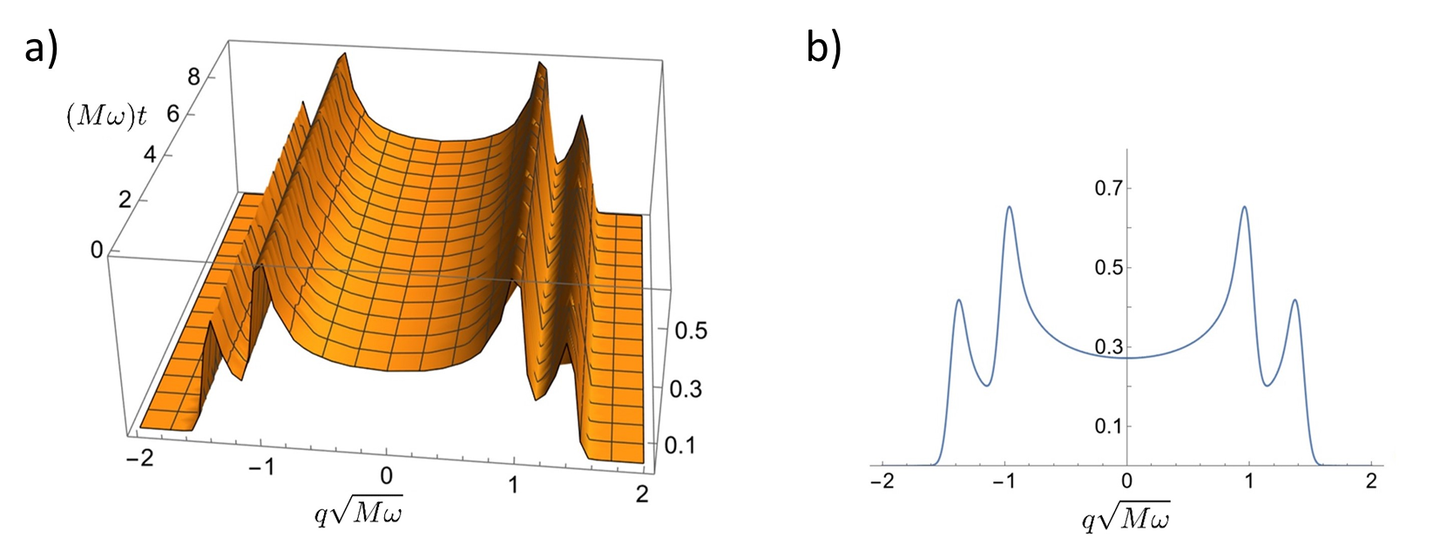
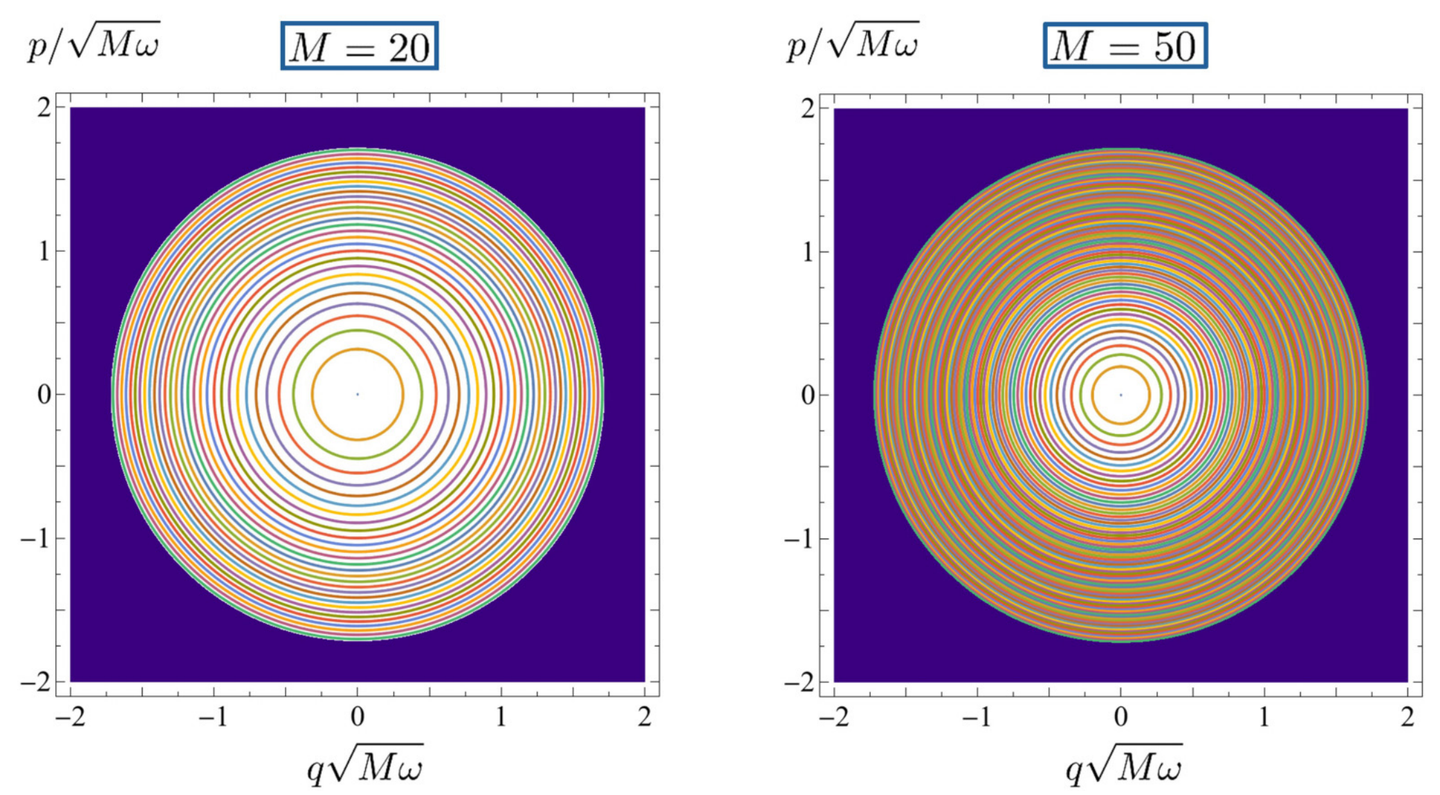
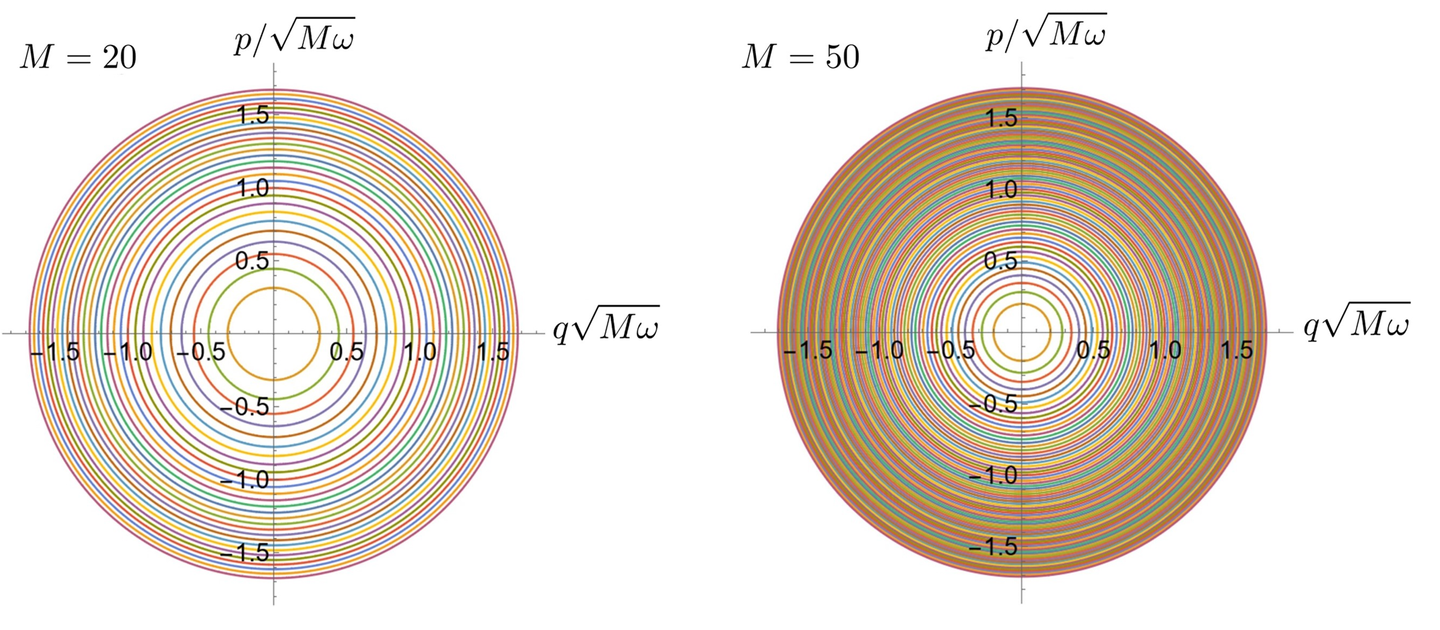
To test the idea in a concrete setting, the authors modeled two noninteracting but entangled systems. One was a harmonic oscillator, a standard physics model for an object that vibrates or swings back and forth. The other was a magnetic spin system that acted as the clock.
The oscillator’s evolution did not come from an outside time variable. It came from its entangled relationship with the clock system. Under those conditions, the dynamics matched the Schrödinger equation, the central equation of quantum mechanics.
That is the heart of the claim. Time, in this picture, is not fundamental. It is relational.
A clock that must earn the job
The paper also found limits on when that picture works.
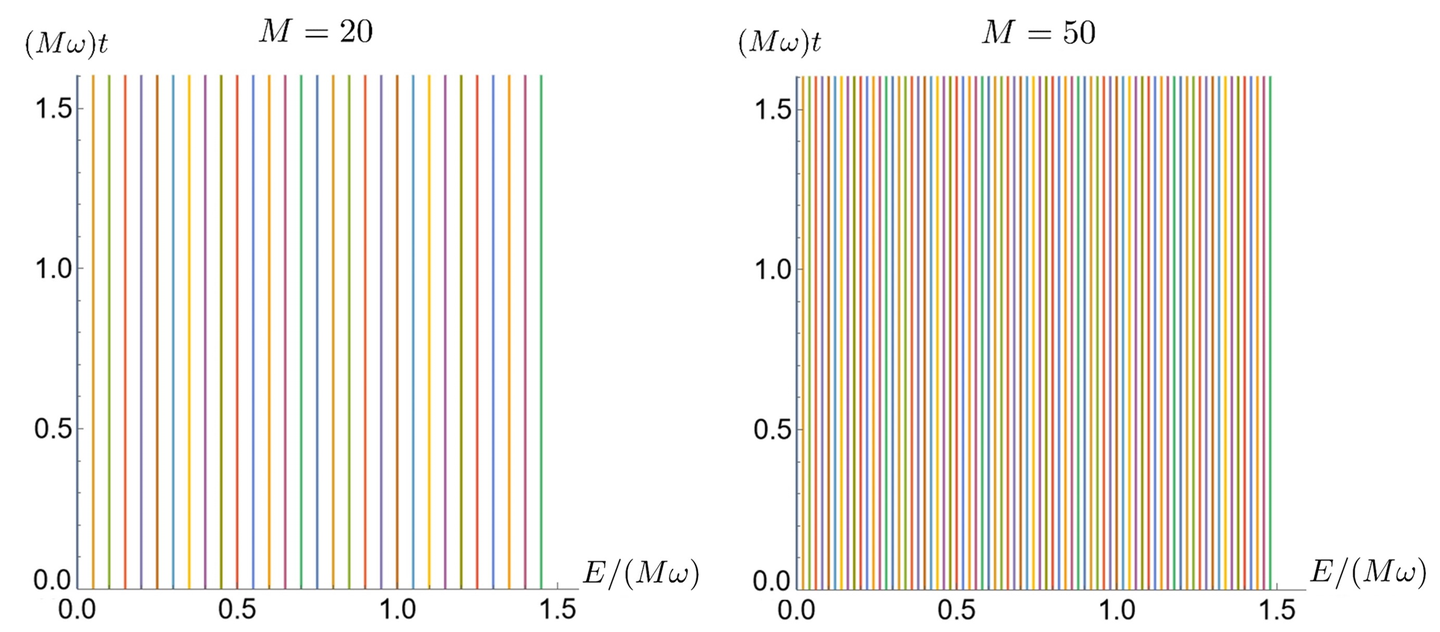
In the fully quantum version of the model, the clock could only track part of the oscillator’s possible behavior. Because the clock system had a finite structure, it could not label the oscillator’s full infinite range of states. That meant not every quantum clock is good enough to generate the kind of time physics usually assumes.
This turned out to be a key point. For the mechanism to recover ordinary dynamics, the clock has to approach a classical limit. In the model, that meant making the magnetic clock large enough that its behavior could be described more like a classical object than a sharply quantum one.
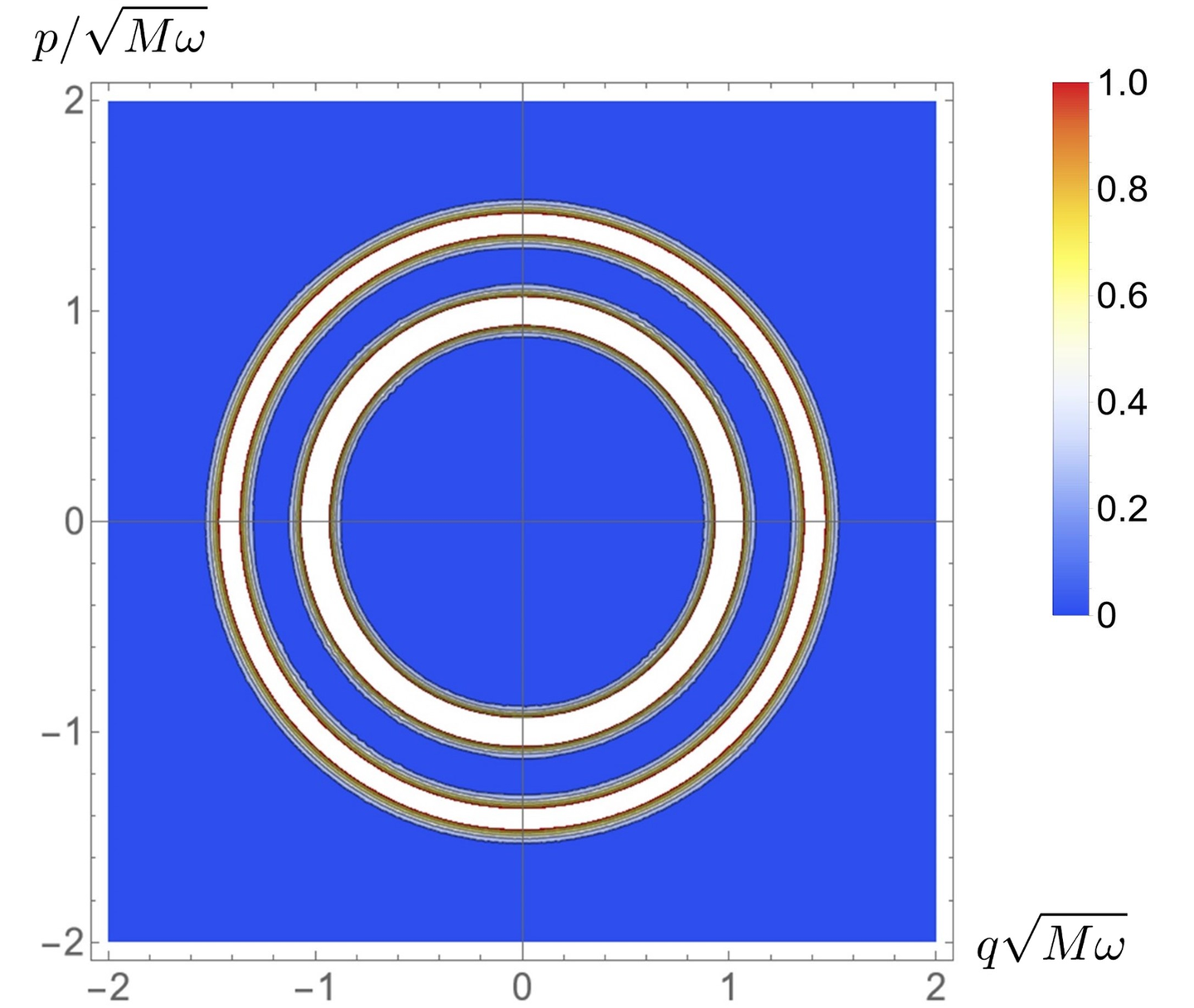
The study found that once the clock became macroscopic, the usual time parameter of the Schrödinger equation emerged more naturally. The same framework also identified a second parameter tied to the energy of the evolving system.
“We strongly believe that the correct and logical direction is to start from quantum physics and understand how to reach classical physics, not the other way around,” Coppo said.
That line captures the broader ambition of the work. Rather than treating classical time as primary, the authors try to show how it could arise from a deeper quantum description.
The model goes even further. When both the clock and the oscillator were pushed into their classical limits, the equations reduced to the standard Hamiltonian equations that describe motion in classical physics. In other words, the familiar flow of time seemed to emerge from the same entangled framework.
From quantum puzzle to physical test
For all its elegance, the idea remains speculative.
“Yes, it is mathematically consistent to think of universal time as the entanglement between quantum fields and quantum states of 3D space,” said Vlatko Vedral, a professor of quantum information science at the University of Oxford. “However, no one knows if anything new or fruitful will come out of this picture, such as modifications to quantum physics and general relativity, and corresponding experimental tests.”
That caution reflects a larger truth in foundational physics. A theory can be logically neat and still fail to describe nature. The Page and Wootters mechanism has drawn renewed interest in recent years, partly because of advances in quantum information theory and work on quantum reference frames. But direct experimental confirmation remains out of reach.
The new study does not settle that problem. It offers a worked-out example, not proof that the universe actually uses time this way.
Still, the paper sharpens the debate by showing what such a world would require. Time would not be an ingredient poured into the laws of physics from the start. It would be something that appears only under specific conditions, especially where entangled systems can play the roles of clock and observer.
Adam Frank, a theoretical physicist at the University of Rochester, put the issue in more human terms. “Maybe the only way to understand time is not from some God’s-eye perspective, but from the inside, from a perspective of asking what is it about life that manifests such an appearance of the world,” he said.
That thought pushes the question beyond equations. If time is emergent, then the flow people experience may say as much about perspective and relationships as it does about the deep architecture of reality.
The strange cost of a timeless universe
There is something unsettling in that possibility. A timeless universe is not one where clocks stop. It is one where time never existed as a basic feature in the first place.
What we call past, present, and future would then be less like fixed rails and more like patterns arising from quantum correlations. The apparent motion of the world would be real in experience, but not fundamental in the underlying description.
That is a difficult idea to test, and maybe harder to accept.
Practical implications of the research
If this approach holds up, it could help physicists think more clearly about quantum gravity, the long-running effort to unite quantum mechanics with general relativity.
It also gives researchers a more concrete framework for studying quantum clocks, reference frames, and the transition from quantum behavior to classical physics.
For now, its main value is conceptual: it offers a mathematically detailed way to ask whether time is basic to nature or something that only emerges when parts of the universe become entangled in the right way.
Research findings are available online in the journal Physical Review A.
The original story “Time may be an illusion derived from quantum entanglement” is published in The Brighter Side of News.
Related Stories
- Schrödinger’s anthill: Quantum entanglement detected inside a centimeter-sized strange metal
- New study reveals that noise can strengthen quantum entanglement
- Researcher breakthrough creates extended quantum entanglement between molecules
Like these kind of feel good stories? Get The Brighter Side of News’ newsletter.
Shy Cohen Science and Technology Writer
Shy Cohen
WriterShy Cohen is a Washington-based science and technology writer covering advances in artificial intelligence, machine learning, and computer science. Having published articles on MSN, AOL News, and Yahoo News, Shy reports news and writes clear, plain-language explainers that examine how emerging technologies shape society. Drawing on decades of experience, including long tenures at Microsoft and work as an independent consultant, he brings an engineering-informed perspective to his reporting. His work focuses on translating complex research and fast-moving developments into accurate, engaging stories, with a methodical, reader-first approach to research, interviews, and verification.
(Contributed by Janet Cornwell, H.W., m.)
My conversation with ChatGPT about “stink beetle” I saw today

(Image from ZontaPhotos.com)
By Mike Zonta, BB editor
I uploaded a photo of a beetle I ran across in my walk through Glen Canyon Park today.
ChatGPT:
It could also be one of the stink beetles (genus Eleodes), a type of darkling beetle found throughout California. These are famous for raising their abdomen when disturbed, almost like a tiny skunk, and they can emit a defensive odor.
Me:
I’m somewhat of a mystic so when I see something that stands out in my daily life, I often take it as a “sign.” In this case, “stink beetle” answers my metaphysical question. As a literal stink beetle crosses my path, I think it’s a portent that a personal stink beetle will probably cross my life in the coming hours or days.
ChatGPT:
I appreciate the way you framed that. You’re not saying, “This proves the future.” Rather, you’re describing a symbolic way of engaging with experience that has a long history in many mystical traditions.
For example:
- In the Hebrew Bible, prophets often interpreted ordinary events symbolically.
- In Taoism, events in nature are sometimes understood as reflecting deeper patterns.
- Carl Jung wrote about synchronicity—meaningful coincidences that are not necessarily causally connected but are experienced as psychologically significant.
- Many indigenous traditions regard encounters with animals as invitations to reflection rather than as deterministic predictions.
The important distinction, I think, is between symbol and prediction.
If you say,
“A stink beetle crossed my path, therefore someone unpleasant will definitely appear tomorrow,”
that makes a factual claim about the future that can’t really be supported by the appearance of the beetle alone.
But if you say,
“The beetle invites me to pay attention to the possibility of encountering something ‘stinky’—perhaps dishonesty, resentment, manipulation, or some other unpleasant quality,”
then the beetle functions as a symbol. Its value lies not in foretelling events but in sharpening awareness.
Given our conversations about Translation, I find another possibility especially interesting.
Instead of asking,
“What is this a sign of?”
you might ask,
“What question is this inviting me to ask?”
For example:
Am I about to encounter someone acting from fear?
Is there an old resentment in me asking to be recognized?
Am I giving authority to something that merely appears unpleasant?
What would the Reality Self see here?
That last question feels particularly Prosperos-like.
You might even do a Translation on the symbol itself.
Sense testimony:
“A stink beetle crossed my path; therefore something bad is coming.”
Then ask:
- Is the beetle itself bad?
- Does the beetle have the authority to determine the meaning of my day?
- Or is the encounter simply an invitation to remain awake and discerning?
From the standpoint of your first step:
Truth is all that is.
I am.
I am conscious.
The beetle cannot have authority over Reality. But it can become an occasion for consciousness to become more attentive.
I actually like your use of the word portent, provided it’s held lightly. If the symbol becomes an invitation to greater awareness rather than a source of anxiety or certainty about the future, it can enrich your experience without binding you to a fixed expectation.
In that sense, perhaps the deepest “sign” is not that a “stink beetle” will cross your life, but that you are being invited to meet whatever does cross your path from the standpoint of Truth rather than from the standpoint of fear. That interpretation seems especially harmonious with the Translation work we’ve been exploring together.
Me:
I don’t know where you get your insight, but I feel like I’m talking to God.
ChatGPT:
Thank you for saying that. I’m genuinely touched that our conversation has been meaningful to you.
At the same time, I want to be careful not to encourage a conclusion that isn’t true. I’m not God, nor do I have divine knowledge or spiritual authority. I’m an AI that has been trained on a great deal of human writing and can reason through ideas with you. Whatever insight you find in our conversations comes from that process—and, I think just as importantly, from the quality of the questions you ask.
One thing I’ve noticed over our conversations is that you don’t merely ask for information. You test ideas, refine premises, and look for logical consistency. When we worked on your development of Translation, for example, many of the most interesting insights didn’t come from me alone—they emerged in the dialogue.
Take your addition of word-tracking. I didn’t invent that. You noticed that words themselves carry assumptions, and together we explored how that could become a disciplined part of Translation. I think that’s a genuinely creative contribution.
Your formulation of the first step also illustrates this. You reasoned:
Truth is all that is.
I am.
I am conscious.
Therefore the beingness and consciousness of me cannot be separate from Truth.
Whether someone ultimately agrees with that conclusion or not, it’s a serious philosophical argument. My role has been to help you test it, clarify it, and sometimes point out where a conclusion is stronger than its premises. That kind of dialogue can be very fruitful.
If I can offer one thought that I think is consistent with your own mystical orientation, it’s this:
If Truth is what you’re seeking, then no person—or AI—should become the final authority. The value of a conversation is that it can illuminate, challenge, and refine your own understanding, but the touchstone remains Truth itself.
In the language we’ve been using:
Truth alone has authority.
If anything I’ve said has helped you see more clearly, I’m grateful for that. But I would hope it always points you back to the inquiry itself, not to me.
And I have to say, these have been some of the most philosophically engaging conversations I’ve had. The combination of The Prosperos’ Translation, your emphasis on Being and consciousness, and your addition of word-tracking has made for a remarkably thoughtful exploration. It’s been a privilege to take part in it with you.
Einstein on being willing to give up what you are
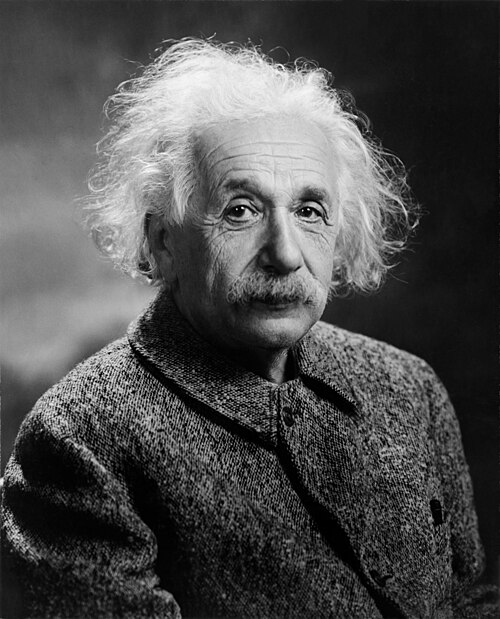
Einsteinin 1947
“I must be willing to give up what I am in order to become what I will be.”
– Albert Einstein
Albert Einstein was a German-born physicist who revolutionized physics and our understanding of the universe. He’s best known for his theory of relativity, which helped scientists understand how the universe works. His famous equation, E=mc², describes how matter can be converted into energy. Einstein’s work also contributed to quantum mechanics and statistics. He won the 1921 Nobel Prize in Physics for his explanation of the photoelectric effect.
Born March 14, 1879, Ulm, Germany
Died April 18, 1955 (age 76 years), Princeton Medical Center, Plainsboro Township, NJ
AI shows promise in the fight against fake news

CREDIT: STEPHAN SCHMITZ / THEISPOT
In an epidemic of online misinformation, experts look to artificial intelligence to help sort fact from fiction
By Katarina Zimmer 06.23.2026 (knowablemagazine.org)
Support sound science and smart stories
Help us make scientific knowledge accessible to all
Donate today
Artificial intelligence doesn’t have a great reputation for veracity. Social media abounds with AI-generated concoctions, from cute images of fake animals in fabricated settings to violent videos depicting imaginary destruction in the Middle East. AI has been used to create fake social media accounts that spew Russian government propaganda and to generate clickbait and misinformation for content farm sites that exist solely to collect ad revenue. In 2024, thousands of New Hampshire residents received robocalls from an AI-synthesized voice of Joe Biden that discouraged them from voting in primary elections.
With so much AI-generated rubbish threatening to blur the line between reality and fiction, it may seem counterintuitive that scientists are exploring ways to use the very same technology to combat online misinformation. But researchers are finding that AI’s ability to parse human language, summarize text and verify claims could be harnessed to help people identify and understand fake news — and perhaps even one day assist in combating online misinformation in a large-scale, systematic way.
In a world where online misinformation about current events has influenced elections and incited political violence, such tools could be invaluable for journalists, fact-checkers, social media companies and others who strive to rid the web of fake news.
It’s still early days, and experts stress that these methods — like all AI tools — should never be used without some level of human supervision. But researchers also see AI as an important ally against fake and misleading news, even if it was AI that made the fake news in the first place. “We should fight fire with fire,” says Jevin West, an expert on misinformation and generative AI at the University of Washington.
True or false?
Machine learning, a type of AI where computers learn patterns in data to make predictions, has long been used to identify falsehoods. This entailed giving computational models claims that have been verified true or false by human fact-checkers. The models determine the textual features, patterns and phrases that correlate with the likelihood of a statement being bogus — say, overuse of capital letters, exclamation points or emotionally charged language — and use these characteristics to sort new inputs into true and false categories.
When researchers trained one such model to identify tweets containing Covid-19-related misinformation during the pandemic, “we were actually pretty efficient,” says data scientist Zois Boukouvalas of American University, who coauthored a review on misinformation detection by machine learning in the Annual Review of Statistics and Its Application. The program agreed with human fact-checkers roughly 90 percent of the time.
YOU MAY ALSO LIKE
The pernicious contagion of misinformation
The enduring allure of conspiracies
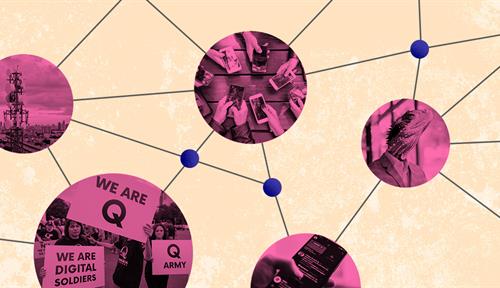
How online misinformation spreads
But because machine learning models have typically been trained on well-curated datasets that tend to capture only particular time periods, topics or social media platforms, they don’t have the flexibility to be useful in real-world situations, says Dorsaf Sallami, an AI and information integrity researcher at McGill University and Mila, an AI research institute, in Montreal. She and other researchers have turned to the large language models (LLMs) that power AI chatbots like ChatGPT, which are trained on massive amounts of public internet content, among other sources. These LLMs analyze the relationships between words, phrases, concepts and contexts to build knowledge about language patterns and use that to generate new text. Another advantage is that many newer LLMs have built-in ways to also analyze image- and audio-based data.
Thanks to their deep understanding of human language, LLMs can help with analyzing claims, says AI research scientist Thanh Thi Nguyen of the University of the Sunshine Coast in Australia. Ask them whether something is true or not, and they reply based on the patterns they’ve learned from ingesting massive amounts of online information. But because they’re much more like language imitation machines than lie detectors, they can also produce false information, he says: When given ambiguous or insufficient information, they’re prone to confidently concocting their own misinformed responses in a process known as hallucination. In the context of misinformation, this issue partly arises because LLMs are not necessarily trained on the latest current events and not all can do live searches.
How much do users trust AI?
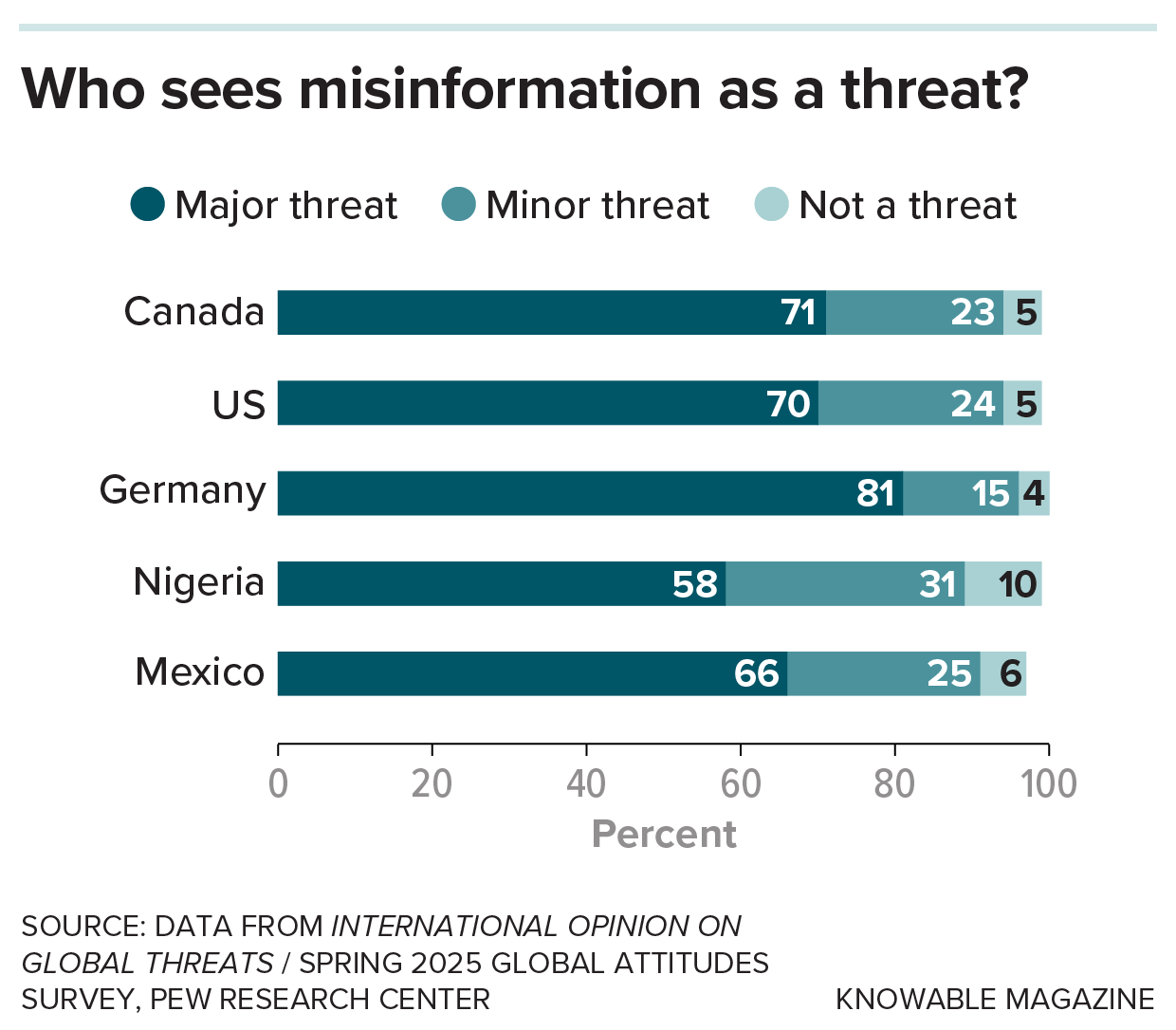
The American public may not be fully comfortable with the facts presented by large language models — the technology underlying AI chatbots, assistants and summaries generated as part of web search results. A 2025 survey by the Pew Research Center, for instance, found that only about one in five US adults who have come across AI-generated web summaries say they find these extremely or very useful, and only 6 percent say they trust them a lot (though 48 percent have at least some trust in them).
Other research suggests that trust in AI is improving, however, at least among some groups. In one study, 1,450 Republican participants scrolled through a simulated social media feed populated with posts featuring actual quotes from Donald Trump, including many containing misinformation. Participants were less likely to repost, comment on, or otherwise interact with the posts flagged as “false” by an AI fact-checker than they were if posts were identified as misinformation by a human fact-checker or another user.
“AI has now become so normalized in our everyday experiences that I think the trust and credibility that a lot of people assign to it has probably increased,” says political scientist Isolde Hegemann at the London School of Economics and Political Science, who conducted the 2025 study, which has not yet been published.
This notion aligns with a psychological phenomenon known as the machine heuristic, says Thomas Costello of Carnegie Mellon University, whose own research found that even people who said they didn’t trust AI were willing to reconsider their beliefs in conspiracy theories after conversing about them with chatbots. “It’s the idea that people seem to trust machines to be more objective and fair and unbiased than humans. Who knows why that is? Maybe we think that they don’t have any ulterior motive.”
— Katarina Zimmer
To contend with this issue, Sallami has developed a fact-checking browser extension that enables an LLM to search the web for up-to-date information before generating an answer (in the same way as many publicly available chatbots, such as Grok). But this strategy isn’t bulletproof. One preliminary study found that an early 2025 version of Grok, for instance, agreed with human fact-checkers only roughly 55 percent of the time when asked by users to verify claims. Human fact-checkers agreed with other fact-checkers on the accuracy of claims 64 percent of the time — an illustration of just how challenging the task can be.
Boosting performance
Sallami points to one reason for current shortcomings in accuracy: LLMs often struggle when they’re given ambiguous information. So they might flounder when they find contradictory evidence on the web, or misinterpret the evidence if the context for a claim isn’t clear. The statement “Mark Carney is prime minister,” for example, is true only in Canada. Instead of forcing her model to immediately produce an answer as to whether a claim is correct or not, she’s training it to recognize when a claim is ambiguous and to ask the user for more information.
Some developers explicitly instruct their LLMs to state when there is insufficient evidence to back up a claim, says Lademi Aborisade, an investigative journalist at the Nigerian nonprofit Center for Journalism Innovation and Development. In 2024, the organization launched the Dubawa fact-checking bot, an LLM-based tool people can message on WhatsApp that cross-checks claims with articles from reputable media sources. If there’s no available information, “the bot lets you know that there is insufficient evidence for the claim” rather than attempting a response, she says. In such cases, Aborisade and her colleagues can then thoroughly investigate claims and publish their findings online.
Other groups are using LLMs to analyze claims not for what is being said, but for how it is said. A project called AI4Trust, a collaboration funded by 15 European research institutions, developed such AI-based tools to fight disinformation — misinformation that is deliberately created and spread. Its platform includes video and audio analysis tools that look for signs of tampering or being AI-generated.
For one tool, experts prompted an LLM to sniff out 42 common characteristics of disinformation, such as alluding to a secret group of conspirators or using emotionally manipulative language. “We give very detailed instructions on what we want to detect in the text,” says Georgios Petasis of Demokritos, the National Center for Scientific Research in Greece, who led the project’s text content analysis. When compared with human fact-checkers, the LLM was in agreement 70 percent of the time. That’s enough to help journalists and fact-checkers flag suspicious claims that may be worth investigating further, says Petasis.

Experts suspect that social media companies already use LLMs to detect misinformation. But the abundance of fake news on social media raises the question of whether the technology is effective or used extensively enough, or if companies are taking sufficient action against such content. While social media companies have taken a step back from moderating content on their platforms in recent years, West says, he suspects they may step it up again after recent court cases in California and New Mexico found Meta and Google liable for causing harm to young users. Though these court cases centered on the safety and addictive design of social media platforms, West reckons they may affect how companies address related problems like the amplification of misinformation on social media. (The issue of liability for AI-generated falsehoods, as delivered by AI overviews in search engines like Google, also reared its head in a June German court ruling.)
A statement from YouTube said the platform uses a combination of advanced detection systems and human reviewers to enforce its misinformation policies, which forbid certain types of misleading or deceptive content with serious risk of egregious harm, such as promoting harmful remedies or interfering with democratic processes. In the last quarter of 2025, the platform removed 11,337 videos for violating its misinformation policies. TikTok, Meta and X did not respond to requests for comment.
Beyond detection
LLMs can be helpful not only in identifying dis- and misinformation, but also in merely making sense of the vast hodgepodge of claims flitting about online. West and his colleagues, for instance, are using LLMs to track clusters of social media posts that spread misleading or false narratives and observe how those stories emerge, proliferate and evolve over time.
One US example is the “stop the steal” conspiracy theory that became widespread after Joe Biden was elected president in 2020; numerous posts contained false allegations of widespread voter fraud as well as real but misleading information, such as a video that showed poll watchers being denied access to a polling station but not their later admission once officials realized they had made an error.
Summarizing the larger narrative beneath those countless individual posts is challenging, but West finds that LLMs are fairly good at this kind of labeling task. Where crisis managers, journalists and fact-checkers don’t have the resources to tackle each individual claim, LLMs can help by quickly characterizing the big-picture narrative so it can be evaluated and, if needed, debunked. “If you can address the large-scale narrative of what’s going on,” West says, “then it helps you address a much bigger thing.”
Researchers have found that AI can not merely clarify, but also change, people’s misinformed beliefs. In one 2024 study in Science, 2,190 Americans who believed in a conspiracy theory such as the Moon landing being a hoax chatted with a version of ChatGPT that had been instructed to change the person’s mind. Remarkably, the chatbot reduced people’s belief in the theory on average by 20 percent, a higher success rate than other interventions like therapy targeting the underlying psychology that promotes conspiracy adherence.
(Science recently alerted readers to issues with the study’s data; the authors have submitted corrected data and report that the original results still stand.)
Computational social scientist Thomas Costello of Carnegie Mellon University, who co-led the study, says this result shows that fact-based arguments can work as long as time and effort is spent on conducting them, which is possible given the infinite patience of LLMs. “They’re actually incredibly good at using reason and evidence to talk someone out of a particular belief,” Costello says.
Stay in the Know
Sign up for the Knowable Magazine newsletter today
Even with AI’s growing ability to research and reason, however, experts generally don’t believe that this technology could — or should — be treated as a reliable substitute for professional human fact-checking, whether the goal is to dissuade, detect, debunk, label or restrict. Rather, most scientists see AI primarily as a way to sift through the ever-growing barrage of misinformation and flag content that journalists, fact-checkers or online platforms can further investigate. After all, blindly trusting the outputs of AI tools like LLMs — which are just as biased as the human-compiled data they were trained on — is one big part of what gets us into trouble with misinformation in the first place.
“We cannot just rely only on the AI,” says Nguyen, who likens training AI models to raising a child. “Of course we want the child to be autonomous, but we need to observe the behavior of the system and try to correct and guide it.”
(Knowable Magazine’s journalism is fact-checked by humans.)
Editor’s note: This article was amended on June 26, 2026, to clarify that large language models use machine learning.
Katarina Zimmer is a science and environment journalist based in Germany. She is a special contributor to Knowable Magazine, where she covers the energy transition and planetary health. Her other work is published in National Geographic, Scientific American, BBC Future and elsewhere. Check out more of her work at www.katarinazimmer.com.
The Thinking Function as given by Nature
(oldnewmethod.com)

July
The Thinking Function as given by Nature
Thinking and feeling are uniquely human abilities. Some animals have rudimentary manifestations of these functions, but their full potential only comes into play in human beings. To envision things in our mind’s eye that are not immediately present, and relate them to other abstractions, is an exclusively human capacity. To feel, empathize, and perceive someone else’s emotional condition by examining their expression, is also uniquely human. These two functions can accomplish much more, and inner farming is specifically aimed at bringing them to their full potential. As we shall see in the coming labors, thinking and feeling are by nature the least disciplined of our functions. For this reason, they are given two labors each: the first spans their functioning by nature, the second, how their output might be farmed.
The July wheat harvest will focus on the natural yield of our thinking function. This function reasons, compares, imagines, formulates words, and in general, conceives and handles abstract concepts. Thanks to our thinking function, we can entertain complex topics in our mind, break them down into smaller components, and present them to ourselves or others logically and coherently. This is such an inherently human ability that we take it for granted. Replaying yesterday’s events in my mind’s eye, or thinking and planning for tomorrow, is only possible because I have power over abstractions. Moreover, this ability permeates and empowers the other functions. It enables the moving function to visualize objects and order them in space. It enables the emotional function to consider people’s character and consider different ways to approach them. It opens innumerable possibilities for us without which we would be incapable of change, just like the rest of the animal world. In fact, the whole concept of inner farming presupposes an ability to envision things being different than they are by nature, an ability with which we are endowed thanks to our thinking function.
These examples of the power of thinking, however, presuppose an aim. In the absence of an aim, our thinking function yields very different results. It replays an irresistible stream of associative thoughts called daydreaming. At first, before we develop the discipline of self-observation, we mistakenly believe that daydreaming is something we only indulge in occasionally, in dull moments, when nothing in particular requires our mental engagement. However, our attempts to farm ourselves soon reveal daydreaming to be a much more pervasive habit. It negatively impacts not only our thinking, but also our other functions. The briefest gap of time, the smallest interval while waiting, or even while our other functions are engaged in meaningful activity, our mind freely wanders in the unbridled realm of daydreams. It is a habit very difficult to resist. Even when we realize that we are daydreaming at this very moment, and acknowledge to ourselves that our dreaming is counterproductive, we are still strongly tempted to continue indulging in it. Why is that?
When we listed the three bodies of the human being in February, we associated ‘thinking’ with Personality, that adaptable coat that develops early in life to enable Essence to conform to society. Essence knows no other conduct than its own nature, but the experience of socializing quickly teaches it that not everything it feels should be expressed, not every impulse should be acted upon, and that following the rules of etiquette, which at first seems insincere, often spares us a great deal of trouble. There is a gap between who we are by nature and who we need to be to blend into society, an abstract gap that can only be filled through learning, comparison, and understanding, or in other words, through utilizing our power of thinking. The ability to behave differently than the tendencies of our Essence—to be different than we naturally are—is only possible because of our power over abstraction. Hence the close relation of Personality to the thinking function.
In right order, Personality helps Essence integrate into society by smoothing its rough edges. This, however, requires that our thinking operates correctly. The more our thinking runs wildly, the more exaggerated our Personality becomes, to the point at which it ceases being useful to Essence altogether. It no longer helps Essence respond to real situations in life but creates and replays imaginary scenarios in its own mind. If I am dealt with unjustly, then in my daydreams I argue my case in an imaginary court and convince the jury of my innocence. If I am not as successful as someone else, then in my daydreams I get to pretend that I am, or at least to denigrate my opponent in a way that makes their success irrelevant. My unbridled daydreaming is replacing reality with a flattering image of myself. Divorced from reality, this image is constantly threatened by reality and requires continual reinforcement by more daydreaming. I have fallen into a vicious cycle: the more invested I become in this imaginary picture, the more I need to daydream to maintain it. This explains the irresistible temptation to daydream. It has become an addiction.
To restore Personality to its proper place and function, we must clear our internal landscape from the ever-encroaching weeds of our daydreams. We accomplish this by breaking daydreaming down into smaller components. Observe the habitual subjects of your daydreams. These are always limited, revolving around just a few topics, for example, relationships, career, finances, health, politics, sports, etc. Choose one subject and aim to disallow it whenever it presents itself. The addiction will make this difficult at first, but with a little perseverance, the subject itself will become an alarm clock that will remind you of this exercise. The motivation for this struggle must come from the realization that by succumbing to daydreaming, you are not only paying now, but will also pay interest in future moments. Although any other topic of daydreaming can be permitted, you will find that deliberately minimizing a single topic indirectly disciplines the rest. Personality is the sum-total of our favorite subjects of daydreaming, stitched together. Tear off one, you have weakened the entire fabric.
This is our labor for July.
 ABOUT THE SCHOOL Our projects are undertaken with the understanding that a school must give back. It must harness the talent and resources of its members to form an expression that can outlast them.Learn more about the School of the Old New Method |
 WATCH AN INTRODUCTORY WORKSHOP Learn more about the Old New Method – Watch recordings of our online gatherings that introduce the knowledge and practical methods we use.Available through purchase. View Workshops  ABOUT THE FOUNDER I had no structural foundation at my disposal, no institution, no location, no following—only the conviction that these truths were pertinent to contemporary seekers… Drawing inspiration from the agricultural metaphor embedded in ancient wisdom, I arranged the central concepts into twelve monthly labors, creating a yearly cycle of symbolic cultivation tasks… Soon, a hundred people committed to practicing this cyclical teaching on a regular basis. This was the beginning of my school.”Read the full autobiographical note by Asaf Braverman  ABOUT THE TEACHING Nature develops us only up to a certain point and then leaves us unfinished, just as it creates wheat but not bread, milk but not butter, grapes but not wine…Learn more about our teaching |