After more than five years of roaming the desolate and dusty landscapes of the Martian surface, NASA’s Perseverance rover has come across some of the most intriguing evidence yet of ancient microbial life on the Red Planet. As detailed in a new paper published in the journal Science Advances, scientists confirmed that Perseverance had discovered a rock that contained “complex organic matter” — the building blocks of life, in biological parlance — in two rocks in a formation dubbed Bright Angel.
The outcropping is located inside the Jezero crater, which scientists believe is an ancient lakebed that dried out billions of years ago. The scientists found that samples from the rocks that Perseverance originally found in 2024 contained macromolecular carbon (MMC), large networks of carbon atoms commonly found in Earth rocks containing fossilized biological carbon and meteorites.
An initial analysis of the rocks made headlines last year after NASA announced it had spotted “potential biosignatures,” pointing at compelling “leopard spots” that may have been left behind by microbial life.
The latest paper fleshes out the compelling case even further, confirming the detection of MMC in the rocks by using one of Perseverance’s scientific instruments to detect their composition by shining an ultraviolet laser at them.
“Measurements of two mudstones show hundreds of organic detections, making this the most robust organic detection in Jezero crater thus far, and, to our knowledge, the only detection of macromolecular carbon on a natural rock surface on Mars,” the paper reads.
Hold your horses on the idea that they’ve confirmed extraterrestrial life, however: MMC can form both through biotic and abiotic processes.
“While the specific formation mechanism of the MMC detected in the Bright Angel mudstones remains unknown, this is still one of the most exciting findings to date,” said co-lead and Planetary Science Institute postdoctoral researcher Ashley Murphy in a statement, calling the discovery a “resounding win for Mars science.”
The MMCs might also original off world; they could either “be from meteorites or cosmic dust; abiological processes like hydrothermal reactions; or they could be biological in nature,” as Washington University planetary scientist Paul Byrne told Science News.
The scientists suggest fine-grained sediment carried by water through an ancient river channel hardened into the rocks Perseverance analyzed using its Scanning Habitable Environments with Raman & Luminescence for Organics & Chemicals (SHERLOC) instrument.
Scientists were baffled how close to the surface — mere microns away — the MMCs were preserved, considering the extreme environment.
“The Martian surface environment includes radiation and chemical oxidants that are destructive to organics, and terrestrial laboratory simulations have shown that the survival time of organics in Martian-like conditions — especially at or near the surface — depends on factors such as the type of organic molecule and the surrounding minerals,” Murphy explained.
“The MMC detected in the Bright Angel mudstones is either resistant to degradation and/or has been sufficiently shielded by other minerals, such as clays, or iron-rich Martian soil,” she added.
It’s yet another intriguing chapter in our efforts to probe the planet’s surface for evidence of ancient microbial life. Intriguingly, more than 2,000 miles away, NASA’s Curiosity rover detected organic molecules as well, raising the possibility that life may have once spread over a vast area.
However, to confirm the presence of microbial life, samples would need to be shipped back to Earth, an extremely complicated and expensive plan that has turned into a painful political football.
“The science payload of the Perseverance rover was not designed to distinguish between organics formed via abiotic and biotic processes but was instead selected to identify compelling rocks to be collected for possible return to Earth for more rigorous testing,” coauthor and NASA Jet Propulsion Lab research scientist Kyle Uckert told Space.com.
I’m a senior editor at Futurism, where I edit and write about NASA and the private space sector, as well as topics ranging from SETI and artificial intelligence to tech and medical policy.
“Measurements of two mudstones show hundreds of organic detections, making this the most robust organic detection in Jezero crater.”
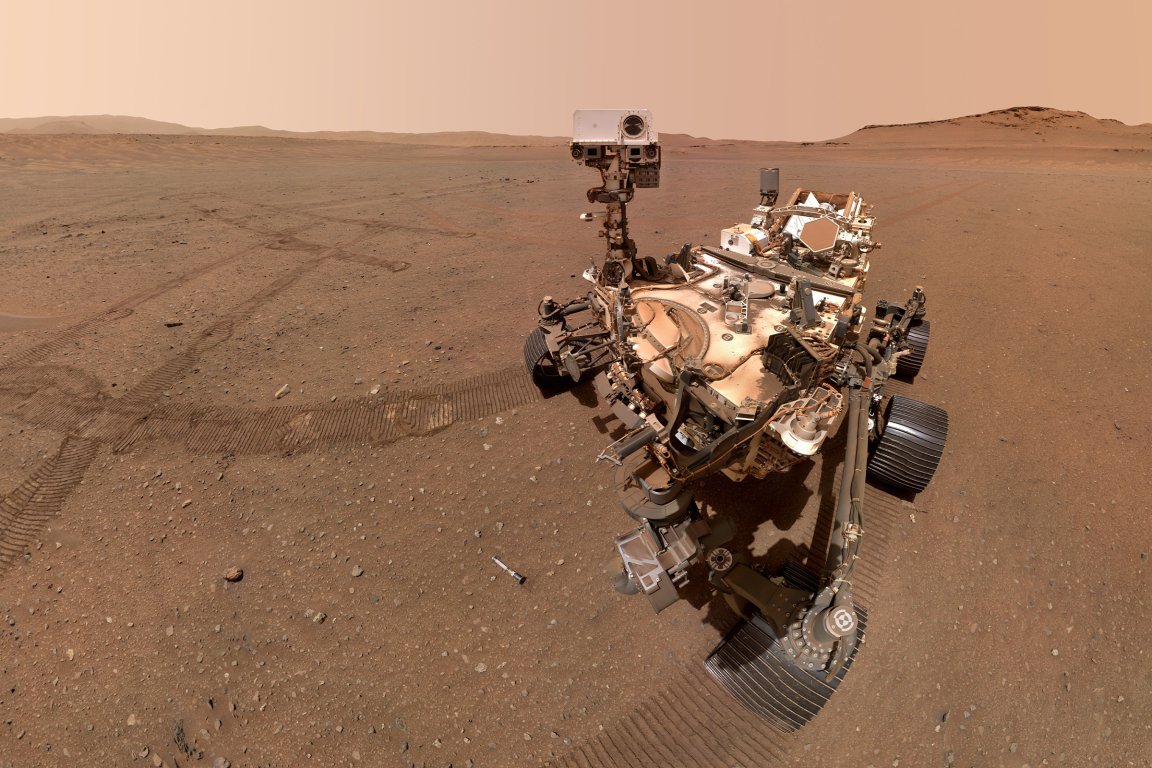
A “selfie” the Perseverance rover took. (Image credit: NASA/JPL-Caltech/MSSS)
Could Martian mudstones be holding evidence of ancient microbes? New findings strengthen the case that the Red Planet once held life.
New data from NASA’s Perseverance rover has revealed complex carbon in two Martian mudstones found in Mars’ Jezero crater, the same location where previous evidence of possible ancient life has been found. Scientists think this macromolecular (meaning large) complex carbon, could hold evidence that ancient microbial life once existed in the same sedimentary material, according to one new paper describing these observations. “Measurements of two mudstones show hundreds of organic detections, making this the most robust organic detection in Jezero crater,” the paper reads.
This comes soon after the news last year that Perseverance found what has been dubbed the strongest evidence of potential biosignatures, or hints of life, on Mars.
“Carbon is the primary building block for life on Earth, and all living things are made up of complex organic macromolecules,” co-lead author Ashley Murphy, a researcher at the Planetary Science Institute, told Space.com. “On Earth, [macromolecular carbon] is often found in extremely old rocks and in some cases it is the only organic evidence of past microbial life.
“Since early Mars may have been more similar to Earth,” Murphy added, “we may anticipate finding [macromolecular carbon] in old Martian rocks too, so we are searching for these organic macromolecules on Mars and other planetary bodies to determine whether the necessary chemical ingredients and environmental conditions to support life have ever existed there.”You may like
Perseverance landed on Mars in 2021 in Jezero Crater, an expansive crater thought to once be a lake that could have possibly harbored life. This landing site was in fact chosen because scientists thought it could have some of the best evidence for possible ancient life on the planet. And so far, in Perseverance’s extensive explorations — which have now officially taken the rover the distance of a marathon on Mars — that prediction seems like it’s turning out to be true.
In this new research, a team of scientists co-led by Murphy used Perseverance’s spectrometer SHERLOC (the Scanning Habitable Environments with Raman and Luminescence for Organics and Chemicals), which uses lasers to identify an area or object’s chemical and mineral makeup, to map the distribution of organic matter in the individual mudstones. The crew found organic carbon inside two mudstones.
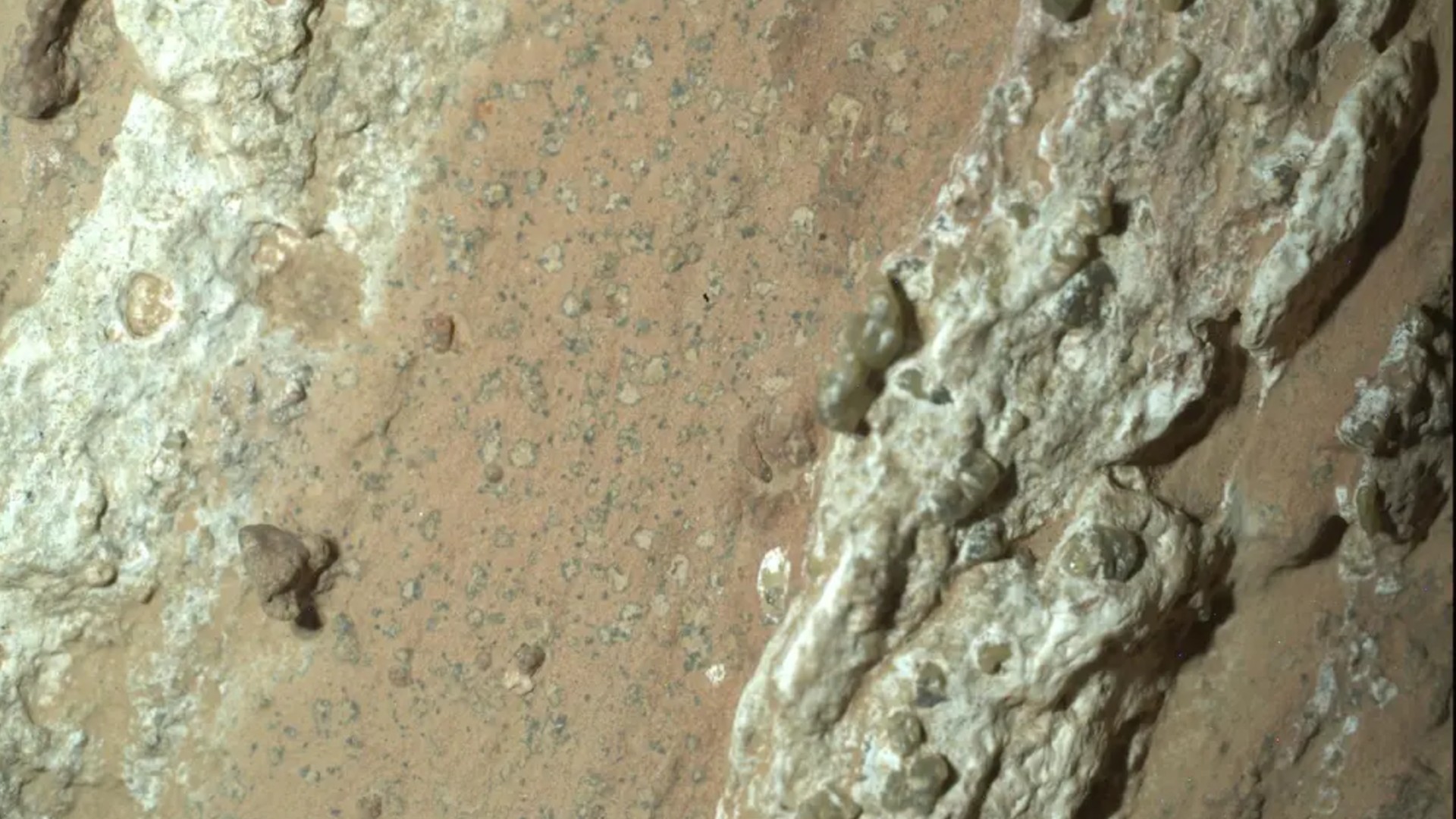
Furthermore, these carbon-filled mudstones were found in the same location as the last year’s discovery of a potential biosignature found in a sedimentary rock on the Red Planet, which scientists say is still the strongest evidence that life could have once existed on early Mars. In this discovery, Perseverance found a rock now-named “Cheyava Falls” with distinctive “leopard spots.”
These types of rock marking can be created in high heat or extremely acidic temperatures, but neither of these conditions are thought to have existed in the area. However, the markings can also be formed by the presence of life. So, while this rock wasn’t conclusive evidence of past life on Mars, it certainly provided significant evidence that is now supported by this new data.
With these observations, the rover has made two main findings.What to read next
First, Perseverance has found organic, large, complex carbon in mudstones in Bright Angel, a rocky area on the northern and southern edges of Neretva Vallis, which is an ancient river valley in the Jezero area. And not only did Perseverance make hundreds of detections of organic carbon in these rocks, but the researchers also state that this is “the only detection of macromolecular carbon on a natural rock surface on Mars.”
“This is also the first detection of MMC in a mudstone on Mars outside of Gale Crater, suggesting that the availability of organics may have been widespread across the planet billions of years ago,” co-lead author Kyle Uckert, the SHERLOC deputy principal investigator at NASA’s Jet Propulsion Laboratory, told Space.com.
A closeup of “leopard spots” on Mars seen by the Perseverance rover on the rock Cheyava Falls, which may show signs of a biosignature, but could also be from geologic processes. (Image credit: NASA/JPL-Caltech/MSSS)
While both studied mudstones have organic carbon in their interiors, according to these observations from Perseverance, there were some differences between the two rocks. The carbon in one mudstone was found mixed with primarily silicate minerals, while the other was filled with carbon mixed with secondary carbonate and sulfate minerals. The team also found that the carbon in both rocks was relatively intact, meaning the specimens might be resistant to radiation and oxidation or that it may have been recently exposed to the Martian surface.
Secondly, the team found that, in this identified carbon, Perseverance has detected evidence of potential biochemical interactions. These interactions left behind features in the two mudstones that look just like features created by microscopic life in sediments on Earth. This begs the question: Did ancient microbes on Mars really live in the sediments in this once-flowing river?
Maybe, maybe not. While that would certainly be one explanation, it’s also possible that the carbon could have been created without life.
“There are multiple potential pathways to form abiotic organics on Mars,” the authors state in this paper, clarifying that this, even compounded with other existing data, cannot conclusively say whether or not life created what Perseverance has observed.
“The science payload of the Perseverance rover was not designed to distinguish between abiotic and biotic processes, but was instead selected to identify compelling rocks to be collected for possible return to Earth for more rigorous testing,” Uckert told Space.com. Uckert added that there could be many non-life reasons behind the presence of this complex carbon, “for example, it may have been delivered to the surface via meteoritic infall, or formed through hydrothermal geologic processes,” he said.
For now, we can only wait until the next juicy bit of evidence about ancient life on Mars reveals itself.
This work was described in a paper published June 24 in the journal Science Advances.
“We are now on course for arrival at the asteroid Psyche in summer 2029.”
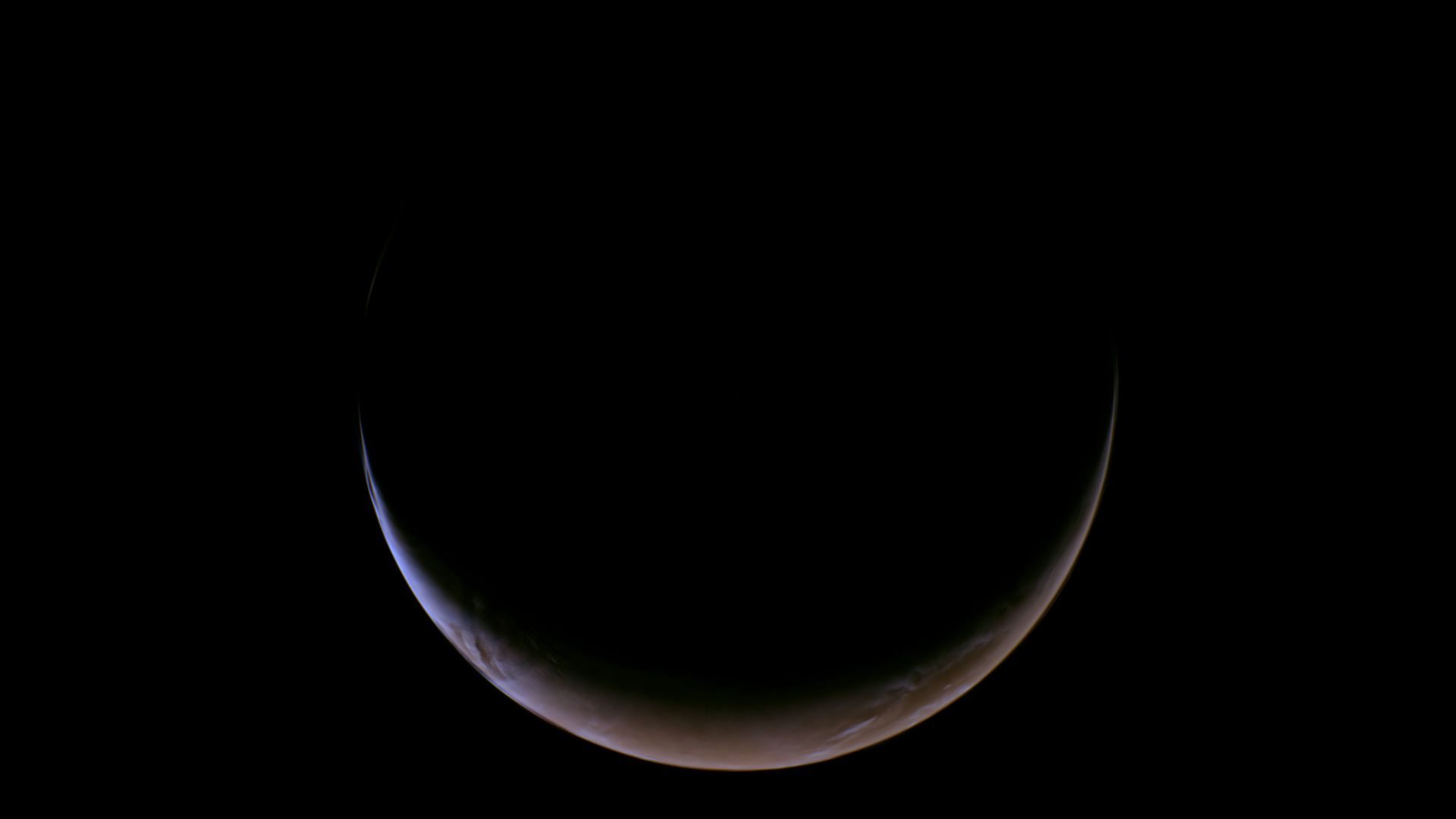
A view of Mars, captured by NASA’s Psyche asteroid probe in May 2026. The image has been processed into a natural-color view using red, green and blue data from the multispectral imager instrument. (Image credit: NASA/JPL-Caltech/ASU)
Right now, a spacecraft named Psyche is headed to its namesake asteroid, 16 Psyche. The theory is that 16 Psyche, which lies in the asteroid belt between Mars and Jupiter, may be made of precious metals that, on Earth, would be worth more than the entire world economy. However, we’ll only know for sure once this probe gets there in 2029. So, we’ll have to wait.
But in the mean time, this spacecraft has been keeping us entertained. On its way to that tremendously exciting asteroid, Psyche just made a memorable pit stop: It flew by Mars, getting within 2,864 miles (4,609 kilometers) of the planet’s surface. That’s very, very close — indeed, close enough to bring us some marvelous imagery of our neighbor, the Red Planet.
The image of Mars above was taken at about 8:03 a.m. EDT (1203 GMT) on May 15 during the flyby. The planet’s crescent shape is due to Psyche approaching Mars from what’s known as a “high phase angle,” in reference to the angle formed between the sun, the target being imaged (Mars, in this case), and the spacecraft itself.You may like
NASA also explains that one of Psyche’s instruments, the multispectral imager, saw the crescent appearing brighter and extending farther than expected due to the dusty Mars atmosphere scattering light. The multispectral imager is special because it can take images in both visible light (light we can see as humans) and near-infrared light (the kind of invisible light the James Webb Space Telescope famously specializes in).
That kind of imaging will be important once Psyche gets to 16 Psyche, because it’ll reveal better detail about the asteroid’s surface features. In fact, it would appear that a lot of asteroid-specific gear meant to help NASA decode the true composition of 16 Psyche and let us know whether or not it lives up to its proposed price tag of many (many) quadrillions of dollars was turned on during the Mars flyby. This includes instruments like the magnetometers that may have found a “bow shock” on Mars, which relates to solar wind dynamics near the planet.
But to keep our eyes on Mars for a minute: As breathtaking as that crescent is, it isn’t the only image Psyche’s operators managed to process during the probe’s close approach to the planet.
“We’ve captured thousands of images of the approach to Mars and of the planet’s surface and atmosphere at close approach. This dataset provides unique and important opportunities for us to calibrate and characterize the performance of the cameras, as well as test the early versions of our image-processing tools being developed for use at the asteroid Psyche,” Jim Bell, the Psyche imager instrument lead at Arizona State University, said in a statement.
For instance, NASA also released the flyby images below. And agency officials say we can expect further analysis of Psyche’s Martian views in the coming days as more opportunities arise.
“As the spacecraft continues its journey after the flyby, we’ll continue calibration imaging of Mars for the rest of the month as it recedes into the distance,” Bell said.
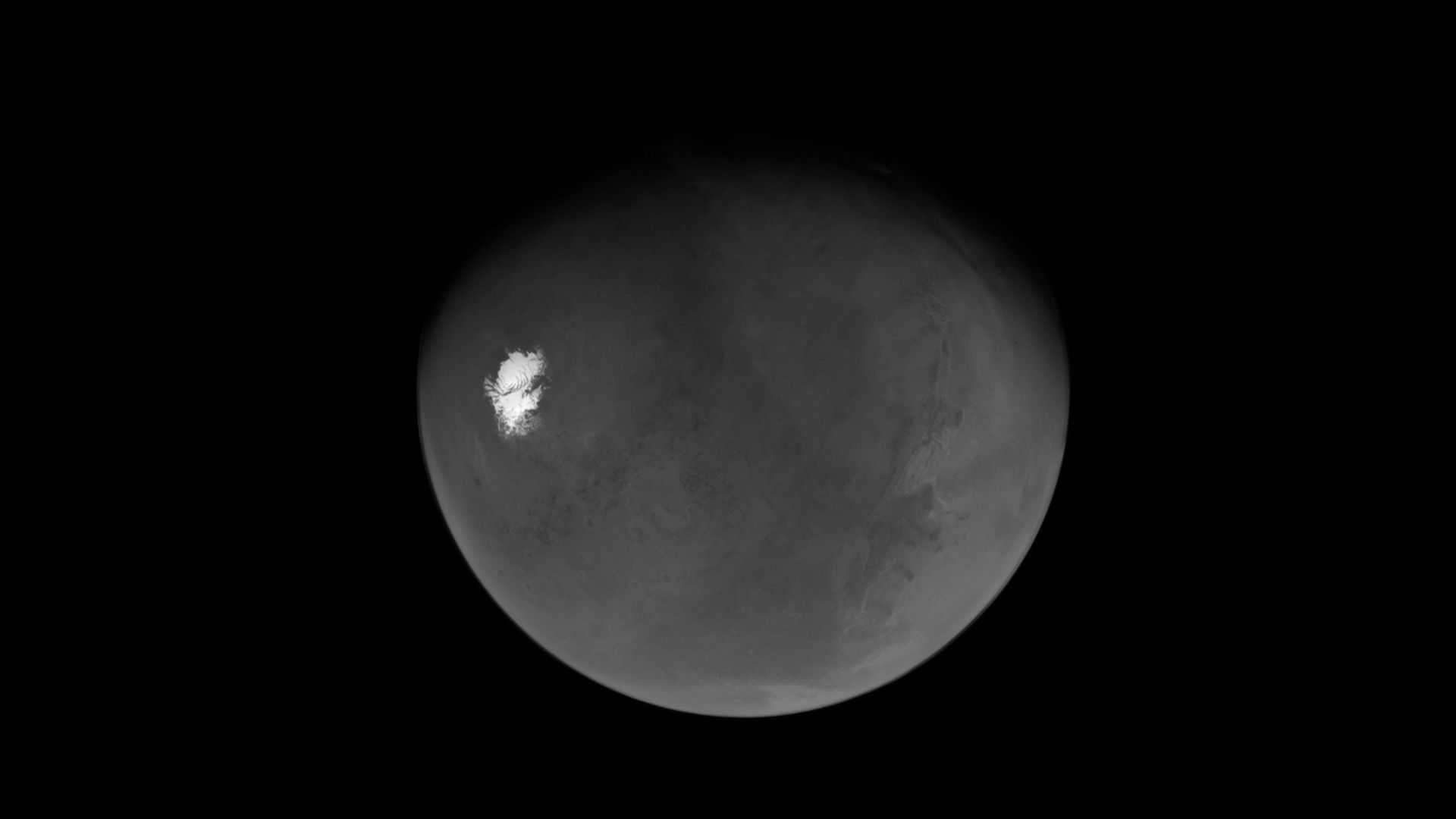
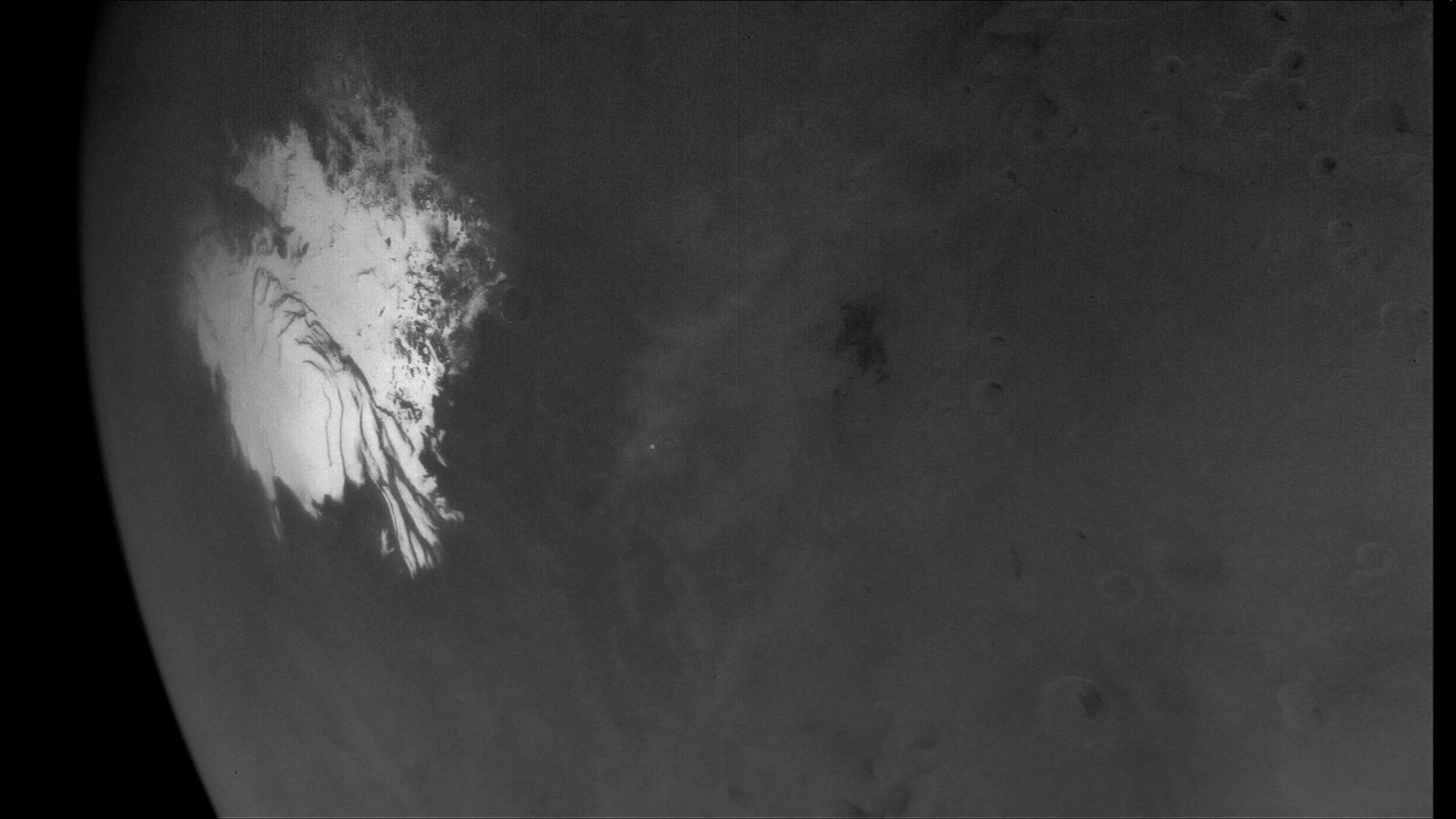
A view of Mars, captured by the Psyche probe. (Image credit: NASA/JPL-Caltech/ASU)A closer look at the Martian southern polar cap. (Image credit: NASA/JPL-Caltech/ASU)
This image just above showcases Psyche’s view of a nearly “full Mars.” The white blob toward the left is actually the planet’s south pole, depicting a high-resolution view of the water-ice-rich area in this region on Mars. That cap is over 430 miles (700 kilometers) in width, NASA says.What to read next
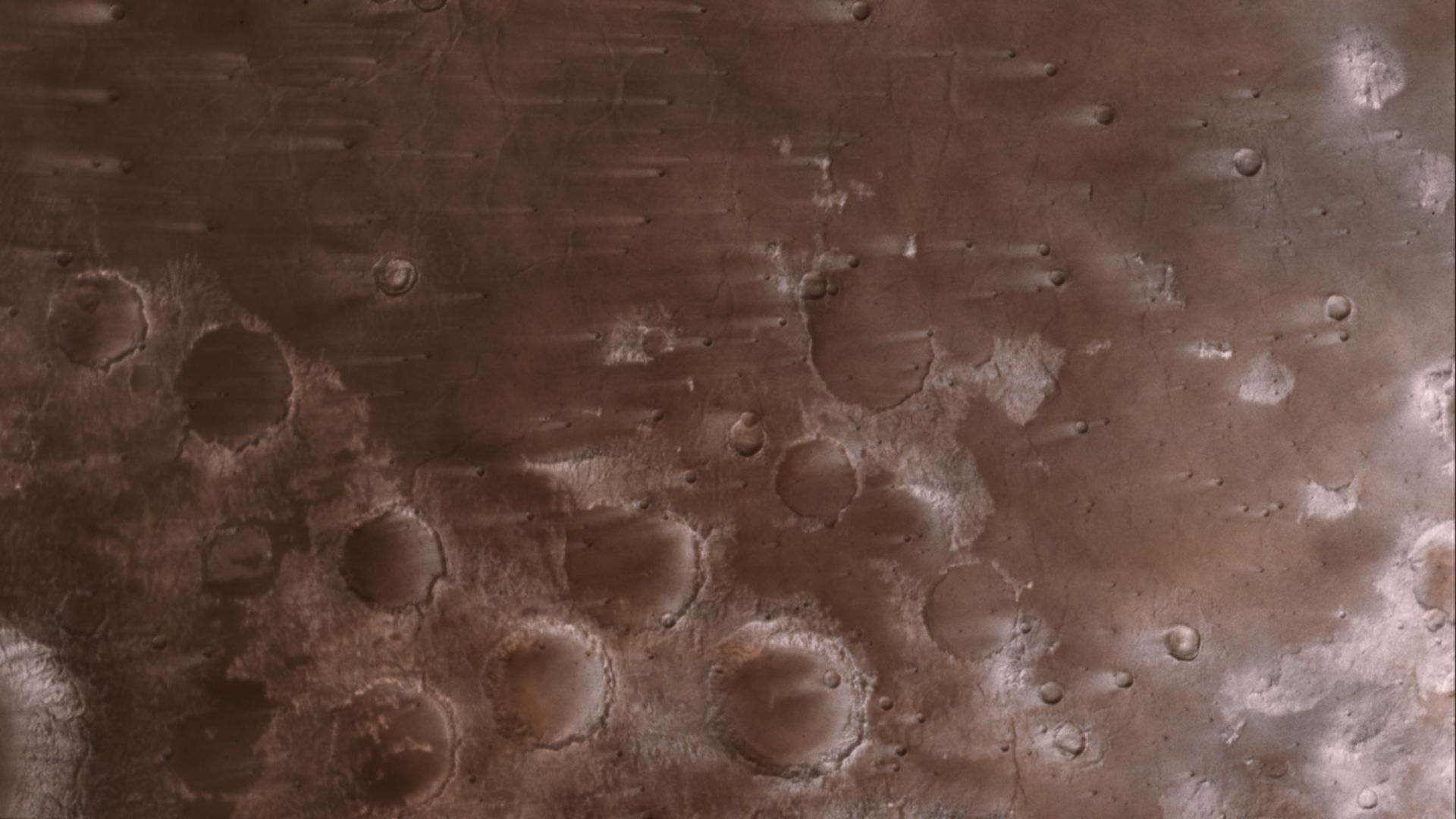
The first image below shows wind streaks over craters on the Red Planet, with the streaks extending to about 30 miles (50 km) in length. The craters average around 30 miles (50 km) in diameter as well.
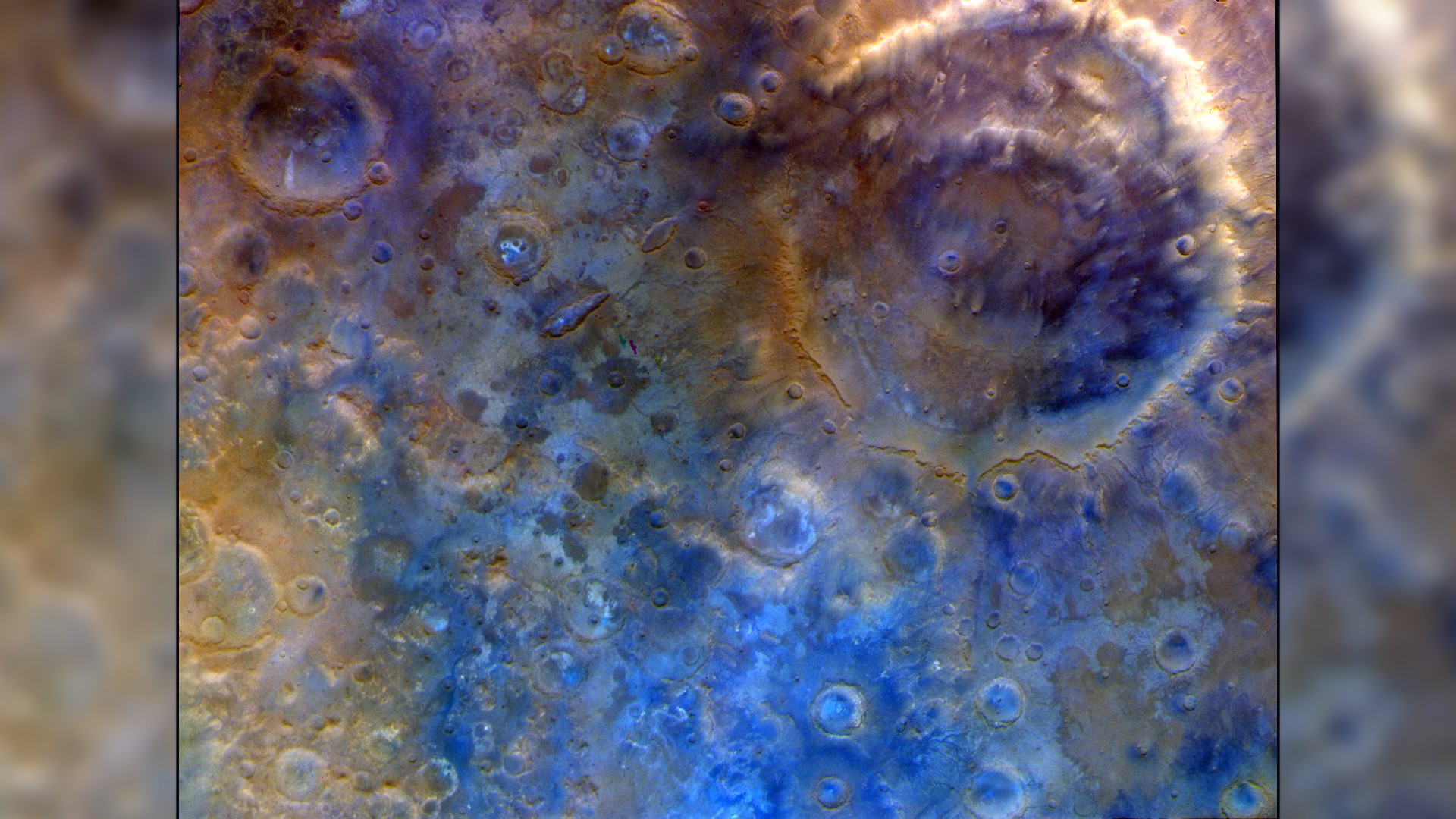
Meanwhile, the second image below is blue because it’s an enhanced color view of Mars, showing Huygens crater, which is about 290 miles (470 km) in width.
This view of the Martian surface shows streaks that have formed due to wind blowing over impact craters in the Syrtis Major region. (Image credit: NASA/JPL-Caltech/ASU)This is an enhanced-color view of the large double-ring Mars crater Huygens and the surrounding area. (Image credit: NASA/JPL-Caltech/ASU)
As to why Psyche made this little detour on its way to its final target? It’s because of something called a “gravity assist,” which is a popular maneuver taken by spacecraft headed into the depths of our solar system.
Basically, a gravity assist allows a probe to harness the gravitational influence of different objects in space (usually planets) and slingshot onto a planned trajectory that brings it toward an ultimate target. According to NASA, it would appear this gravity assist of Psyche was as effective as hoped for.
“We’ve confirmed that Mars gave the spacecraft a 1,000 mile‑per‑hour boost and shifted its orbital plane by about 1 degree relative to the sun. We are now on course for arrival at the asteroid Psyche in summer 2029,” Don Han, Psyche’s navigation lead at NASA’s Jet Propulsion Laboratory, said in the statement.
Han also explained that the Psyche flight team came to this conclusion by taking advantage of the Doppler Shift effect. The Doppler Shift has to do with the way wavelengths from an object moving away from you stretch out while those from an object moving toward you compress.
NASA’s Deep Space Network, which the agency uses to communicate with far-flung spacecraft, is able to tap into this effect and thus figure out the locations of spacecraft. It’s also worth noting that Psyche is testing out a cool new form of spacecraft communications that involves laser-beaming information back to Earth with its Deep Space Optical Communications (DSOC) software. That has, so far, been knocking it out of the park — even transmitting an image of a cat named Taters across 19 million miles (30 million km) of space.
“We’ve been anticipating the Mars flyby for years, but now it’s complete. We can thank the Red Planet for giving our spacecraft a critical gravitational slingshot farther into the solar system,” Lindy Elkins-Tanton, principal investigator for Psyche at the University of California, Berkeley, said in the statement.
Monisha Ravisetti is Space.com’s Astronomy Editor. She covers black holes, star explosions, gravitational waves, exoplanet discoveries and other enigmas hidden across the fabric of space and time. Previously, she was a science writer at CNET, and before that, reported for The Academic Times. Prior to becoming a writer, she was an immunology researcher at Weill Cornell Medical Center in New York. She graduated from New York University in 2018 with a B.A. in philosophy, physics and chemistry. She spends too much time playing online chess. Her favorite planet is Earth.
Barbara Mazzolai’s roboplants could analyze and enrich soil, search for water and other chemicals, or even be used to grow infrastructure from scratch.
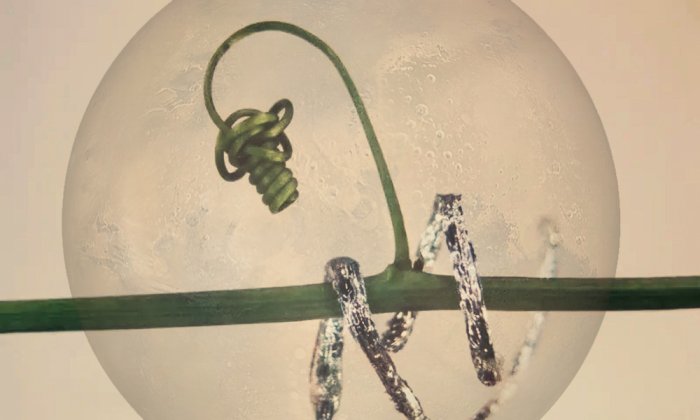
The tendril-like soft robot curling around a plant stalk. Source images: IIT-Istituto Italiano di Tecnologia and NASA
By: Dario Floreano and Nicola Nosengo
( thereader.mitpress.mit.edu)
In the early 2010s, a new trend in robotics began to emerge. Engineers started creating robotic versions of salamanders, dragonflies, octopuses, geckos, and clams — an ecosystem of biomimicry so diverse the Economist portrayed it as “Zoobotics.” And yet Italian biologist-turned-engineer Barbara Mazzolai raised eyebrows when she proposed looking beyond animals and building a robot inspired by a totally different biological kingdom: plants. As fluid as the definition of the word robot can be, most people would agree that a robot is a machine that moves. But movement is not what plants are famous for, and so a robotic plant might at first sound, well, boring.
But plants, it turns out, are not static and boring at all; you just have to look for action in the right place and at the right timescale. When looking at the lush vegetation of a tropical forest or marveling at the colors of an English garden, it’s easy to forget that you are actually looking at only half of the plants in front of you. The best-looking parts, maybe, but not necessarily the smartest ones. What we normally see are the reproductive and digestive systems of a plant: the flowers and fruits that spread pollen and seeds and the leaves that extract energy from sunlight. But the nervous system, so to speak, that explores the environment and makes decisions is in fact underground, in the roots.
Roots may be ugly and condemned to live in darkness, but they firmly anchor the plant and constantly collect information from the soil to decide in which direction to grow to find nutrients, avoid salty soil, and prevent interference with the roots of other plants. They may not be the fastest diggers, but they’re the most efficient ones, and they can pierce the ground using only a fraction of the energy that worms, moles, or manufactured drills require. Plant roots are, in other words, a fantastic system for underground exploration — which is what inspired Mazzolai to create a robotic version of them.
“It forced us to rethink everything, from materials to sensing and control of robots.”
Mazzolai’s intellectual path is a case study in interdisciplinarity. Born and raised in Tuscany, in the Pisa area that is one of Italy’s robotic hot spots, she was fascinated early on by the study of all things living, graduating in biology from the University of Pisa and focusing on marine biology. She then became interested in monitoring the health of ecosystems, an interest that led her to get her doctorate in microengineering and eventually to be offered by Paolo Dario, a biorobotics pioneer at Pisa’s Scuola Superiore Sant’Anna, the possibility of opening a new research line on robotic technologies for environmental sensing.
It was there, in Paolo Dario’s group, that the first seeds of her plant-inspired robots were planted. Mazzolai got in touch with a group at the European Space Agency (ESA) in charge of exploring innovative technologies that looked interesting but were still far away from applications, she recalls. While brainstorming with them, she realized space engineers were struggling with a problem that plants brilliantly solved several hundred million years ago.
“In real plants, roots have two functions,” says Mazzolai. “They explore the soil in search of water and nutrients, but even more important, they anchor the plant, which would otherwise collapse and die.” Anchoring happens to be an unsolved problem when designing systems that have to sample and study distant planets or asteroids. In most cases, from the moon to Mars and distant comets and asteroids, the force of gravity is weak. Unlike on Earth, the weight of the spacecraft or rover is not always enough to keep it firmly on the ground, and the only available option is to endow the spacecraft with harpoons, extruding nails, and drills. But these systems become unreliable over time if the soil creeps, provided they work in the first place. They didn’t work for Philae, for example, the robotic lander that arrived at the 67P/Churyumov–Gerasimenko comet in 2014 after a 10-year trip only to fail to anchor at the end of its descent, bouncing away from the ground and collecting just a portion of the planned measurements.
In a brief feasibility study carried out between 2007 and 2008 for ESA, Mazzolai and her team let their imagination run free and described an anchoring system for spacecrafts inspired by plant roots. The research group also included Stefano Mancuso, a Florence-based botanist who would later gain fame for his idea that plants display “intelligent” behavior, although of a completely different sort from that of animals. Mazzolai and her team described an ideal system that would reproduce, and transfer to other planets, the ability of Earth plants to dig through the soil and anchor to it.
In the ESA study, Mazzolai imagined a spacecraft descending on a planet with a really hard landing: The impact would dig a small hole in the planetary surface, inserting a “seed” just deep enough in the soil, not too different from what happens to real seeds. From there, a robotic root would start to grow by pumping water into a series of modular small chambers that would expand and apply pressure on the soil. Even in the best-case scenario, such a system could only dig through loose and fine dust or soil. The root would have to be able to sense the underground environment and turn away from hard bedrock. Mazzolai suggested Mars as the most suitable place in the solar system to experiment with such a system — better than the moon or asteroids because of the Red Planet’s low gravity and atmospheric pressure at surface level (respectively, 1/3 and 1/10 of those found on Earth). Together with a mostly sandy soil, these conditions would make digging easier because the forces that keep soil particles together and compact them are weaker than on Earth.
At the time, ESA did not push forward with the idea of a plant-like planetary explorer. “It was too futuristic,” Mazzolai admits. “It required technology that was not yet there, and in fact still isn’t.” But she thought that others beyond the space sector would find the idea intriguing. After transitioning to the Italian Institute of Technology, in 2012, Mazzolai convinced the European Commission to fund a three-year study that would result in a plant-inspired robot, code-named Plantoid. “It was uncharted territory,” says Mazzolai. “It meant creating a robot without a predefined shape that could grow and move through soil — a robot made of independent units that would self-organize and make decisions collectively. It forced us to rethink everything, from materials to sensing and control of robots.”
The project had two big challenges: on the hardware side, how to create a growing robot, and on the software side, how to enable roots to collect and share information and use it to make collective decisions. Mazzolai and her team tackled hardware first and designed the robot’s roots as flexible, articulated, cylindrical structures with an actuation mechanism that can move their tip in different directions. Instead of the elongation mechanism devised for that initial ESA study, Mazzolai ended up designing an actual growth mechanism, essentially a miniature 3D printer that can continuously add material behind the root’s tip, thus pushing it into the soil.
It works like this. A plastic wire is wrapped around a reel stored in the robot’s central stem and is pulled toward the tip by an electric motor. Inside the tip, another motor forces the wire into a hole heated by a resistor, then pushes it out, heated and sticky, behind the tip, “the only part of the root that always remains itself,” Mazzolai explains. The tip, mounted on a ball bearing, rotates and tilts independent of the rest of the structure, and the filament is forced by metallic plates to coil around it, like the winding of a guitar string. At any given time, the new plastic layer pushes the older layer away from the tip and sticks to it. As it cools down, the plastic becomes solid and creates a rigid tubular structure that stays in place even when further depositions push it above the metallic plates. Imagine winding a rope around a stick and the rope becomes rigid a few seconds after you’ve wound it. You could then push the stick a bit further, wind more rope around it, and build a longer and longer tube with the same short stick as a temporary support. The tip is the only moving part of the robot; the rest of the root only extends downward, gently but relentlessly pushing the tip against the soil.
The upper trunk and branches of the plantoid robot are populated by soft, folding leaves that gently move toward light and humidity. Plantoid leaves cannot yet transform light into energy, but Michael Graetzel, a chemistry professor at EPFL in Lausanne, Switzerland, and one of the world’s most cited scientists, has developed transparent and foldable films filled with synthetic chlorophyll capable of converting and storing electricity from light that one day could be formed into artificial leaves powering plantoid robots. “The fact that the root only applies pressure to the soil from the tip is what makes it fundamentally different from traditional drills, which are very destructive. Roots, on the contrary, look for existing soil fractures to grow into, and only if they find none, they apply just enough pressure to create a fracture themselves,” Mazzolai explains.
This new project may one day result in robot explorators that can work in dark environments with a lot of empty space, such as caves or wells.
The plantoid project has attracted a lot of attention in the robotics community because of the intriguing challenges that it combines — growth, shape shifting, collective intelligence — and because of possible new applications. Environmental monitoring is the most obvious one: The robotic roots could measure changing concentrations of chemicals in the soil, especially toxic ones, or they could prospect for water in arid soils, as well as for oil and gas — even though, by the time this technology is mature, we’d better have lost our dependence on them as energy sources on planet Earth. They could also inspire new medical devices, such as safer endoscopes that move in the body without damaging tissue. But space applications remain on Mazzolai’s radar.
Meanwhile, Mazzolai has started another plant-inspired project, called Growbot. This time the focus is on what happens over the ground, and the inspiration comes from climbing trees. “The invasiveness of climbing plants shows how successful they are from an evolutionary point of view,” she notes. “Instead of building a solid trunk, they use the extra energy for growing and moving faster than other plants. They are very efficient at using clues from the environment to find a place to anchor. They use light, chemical signals, tactile perception. They can sense if their anchoring in the soil is strong enough to support the part of the plant that is above the ground.” Here the idea is to build another growing robot, similar to the plantoid roots, that can overcome void spaces and attach to existing structures. “Whereas plantoids must face friction, grow-bots work against gravity,” she notes. This new project may one day result in robot explorators that can work in dark environments with a lot of empty space, such as caves or wells.
But for all her robots, Mazzolai is still keeping an eye on the visionary idea that started it all: planting and letting them grow on other planets. “It was too early when we first proposed it; we barely knew how to study the problem. Now I hope to start working with space agencies again.” Plant-inspired robots, she says, could not only sample the soil but also release chemicals to make it more fertile — whether on Earth or a terraformed Mars. And in addition to anchoring, she envisions a future where roboplants could be used to grow entire infrastructure from scratch. “As they grow, the roots of plantoids and the branches of a growbot would build a hollow structure that can be filled with cables or liquids,” she explains. This ability to autonomously grow the infrastructure for a functioning site would make a difference when colonizing hostile environments such as Mars, where a forest of plant-inspired robots could analyze the soil and search for water and other chemicals, creating a stable structure complete with water pipes, electrical wiring, and communication cables: the kind of structure astronauts would like to find after a year-long trip to Mars.
Nicola Nosengo is a science writer and science communicator formerly based at EPFL. His work has appeared in Nature, the Economist, Wired, and other publications. He is the Chief Editor of Nature Italy.
Support sound science and smart stories Help us make scientific knowledge accessible to all Donate today
March 17, 2022, was a rough day for Jorge Vago. A planetary physicist, Vago heads science for part of the European Space Agency’s ExoMars program. His team was mere months from launching Europe’s first Mars rover — a goal they had been working toward for nearly two decades. But on that day, ESA suspended ties with Russia’s space agency over the invasion of Ukraine. The launch had been planned for Kazakhstan’s Baikonur Cosmodrome, which is leased to Russia.
“They told us we had to call the whole thing off,” Vago says. “We were all grieving.
It was a painful setback for the beleaguered Rosalind Franklin rover, originally approved in 2005. Budget woes, partner switches, technical issues and the Covid-19 pandemic had all, in turn, caused previous delays. And now, a war. “I’ve spent most of my career trying to get this thing off the ground,” Vago says. Complicating things further, the mission included a Russian-made lander and instruments, which the member states of ESA would need funding to replace. They considered many options, including simply putting the unused rover in a museum. But then, in November, came a lifeline, when European research ministers pledged 360 million euros to cover mission expenses, including replacing Russian components.
When the rover finally does, hopefully, blast off in 2028, it will carry a suite of advanced instruments — but one in particular could make a huge scientific impact. Designed to analyze any carbon-containing material found underneath Mars’s surface, the rover’s next-generation mass spectrometer is the linchpin of a strategy to finally answer the most burning question about the Red Planet: Is there evidence of past or present life?
“There are a lot of different ways that you can search for life,” says analytical chemist Marshall Seaton, a NASA postdoctoral program fellow at the Jet Propulsion Laboratory and coauthor of a paper on planetary analysis in the Annual Review of Analytical Chemistry. Perhaps the most obvious and direct route is simply looking for fossilized microbes. But nonliving chemistry can create deceptively lifelike structures. Instead, the mass spectrometer will help scientists look for molecular patterns that are unlikely to be formed in the absence of living biology.
Hunting for the patterns of life, instead of structures or specific molecules, has an added benefit in an extraterrestrial environment, Seaton says. “It allows us to not only look for life as we know it, but for life as we don’t know it.”
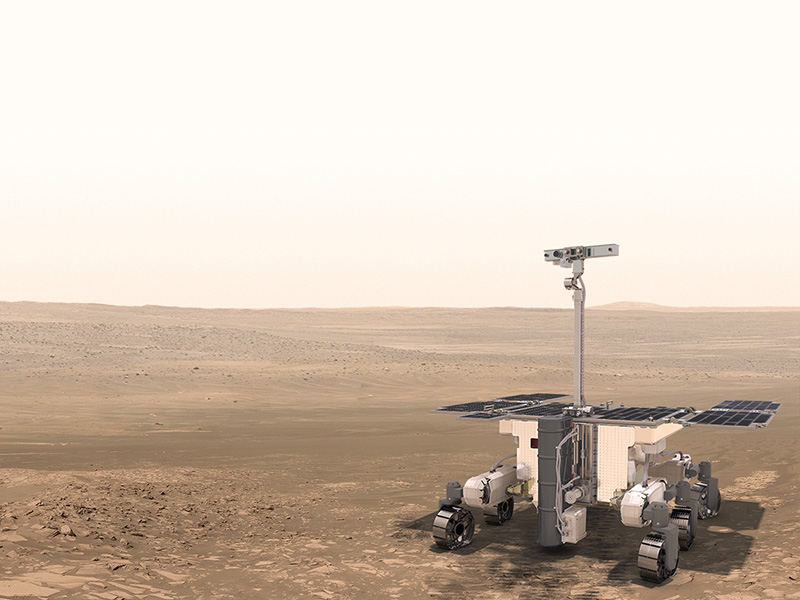
Artist’s rendition of the Rosalind Franklin rover.CREDIT: ESA / ATG MEDIALAB
Packing for Mars
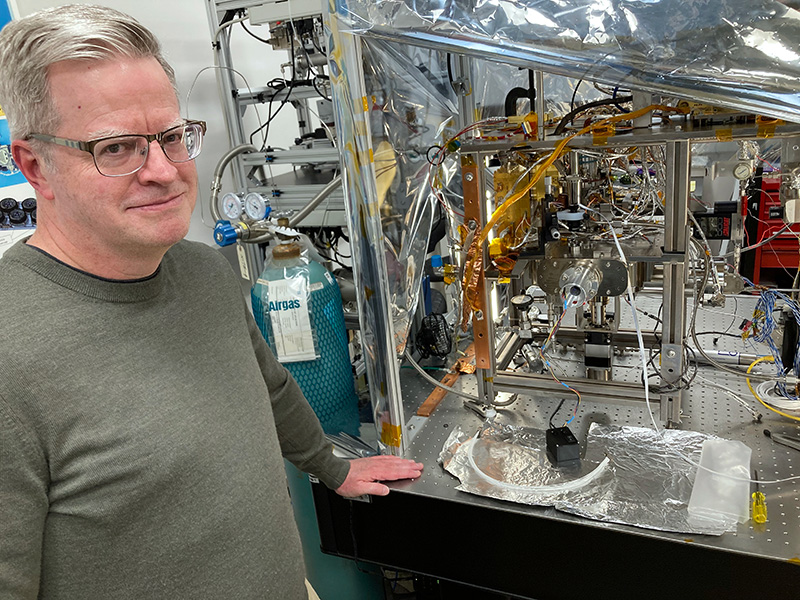
At NASA’s Goddard Space Flight Center outside Washington, DC, planetary scientist William Brinckerhoff shows off a prototype of the rover’s mass spectrometer, known as the Mars Organic Molecule Analyzer, or MOMA. Roughly the size of a carry-on suitcase, the instrument is a labyrinth of wires and metal. “It’s really a workhorse,” Brinkerhoff says as his colleague, planetary scientist Xiang Li, adjusts screws on the prototype before demonstrating a carousel that holds samples.
This working prototype is used to analyze organic molecules in Mars-like soils on Earth. And once the real MOMA gets to Mars, approximately in 2030, Brinckerhoff and his colleagues will use the prototype — as well as a pristine copy kept in a Mars-like environment at NASA — to test tweaks to experimental protocols, troubleshoot issues that come up during the mission and facilitate interpretation of Mars data.
This latest mass spectrometer can trace its roots back nearly 50 years, to the first mission that studied Martian soil. For the twin 1976 Viking landers, engineers miniaturized room-size mass spectrometers to roughly the footprint of today’s desktop printers. The instruments were also on board the 2008 Phoenix lander, the 2012 Curiosity rover and later Mars orbiters from China, India and the US.
Anyone visiting Brinckerhoff’s prototype must first pass a display case with a dismantled copy of the Viking instrument, on loan from the Smithsonian Institution. “This is like a national treasure,” Brinckerhoff says, enthusiastically pointing out components.
At NASA’s Goddard Space Flight Center, William Brinckerhoff stands next to a working prototype of the Rosalind Franklin rover’s mass spectrometer.CREDIT: CARMEN DRAHL
Mass spectrometers are indispensable tools that are used for analytical chemistry in laboratories and other facilities worldwide. TSA agents use them to test luggage for explosives at the airport. EPA scientists use them to test drinking water for contaminants. And drugmakers use them to determine chemical structures of potential new medications.
Many kinds of mass spectrometers exist, but each “is a three-part instrument,” explains Devin Swiner, an analytical chemist at the pharmaceutical company Merck. First, the instrument vaporizes molecules into the gas phase, and also gives them an electrical charge. These charged, or ionized, gas molecules can then be manipulated with electric or magnetic fields so they’ll move through the instrument.
Second, the instrument sorts ions by a measurement that scientists can relate to molecular weight, so they can determine the number and type of atoms a molecule contains. Third, the instrument records all the “weights” in a sample along with their relative abundance.
With MOMA aboard, the Rosalind Franklin rover will land at a Martian site that roughly 4 billion years ago likely had water, a crucial ingredient for ancient life. The rover’s cameras and other instruments will help to select samples and provide context about their environment. A drill will retrieve ancient samples from as deep as two meters. Scientists hypothesize that’s far enough, Vago says, to be shielded from cosmic radiation on Mars that breaks up molecules “like a million little knives.”
Space-bound mass spectrometers must be rugged and lightweight. A mass spectrometer with MOMA’s capabilities would normally occupy multiple workbenches, but it’s been shrunk substantially. “To be able to take something that can be as big as a room to the size of like a toaster or a small suitcase and send it into space is a very huge deal,” Swiner says.
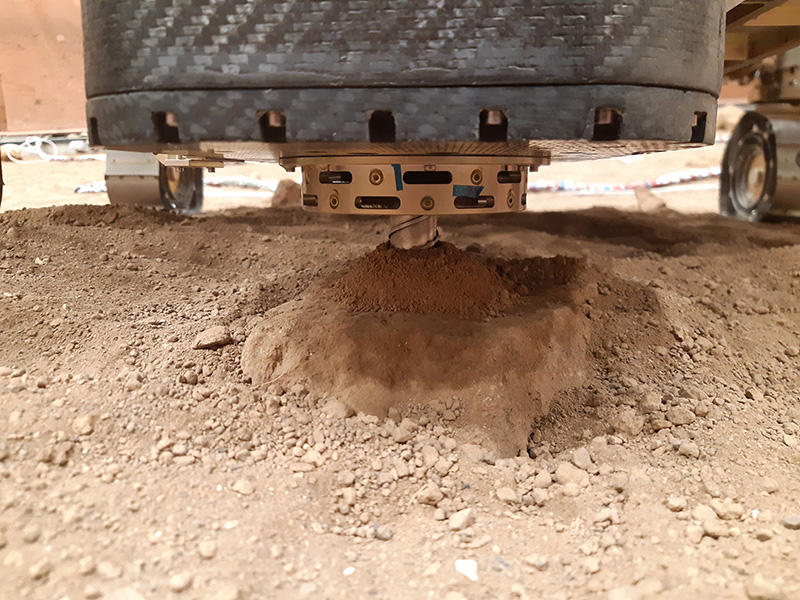
The Rosalind Franklin rover’s drill, pictured here in simulated Mars terrain, can reach up to two meters beneath Mars’s surface, deeper than attempted by any other rover on the Red Planet. It will provide samples for the rover’s mass spectrometer to investigate for signs of life.CREDIT: ESA / THALES ALENIA SPACE
The look of life
MOMA will help scientists look for telltale signs of life on Mars by sifting through molecules in search of patterns that are unlikely to be formed any other way. For instance, lipids — compounds that include building blocks of cell membranes — have a preponderance of even numbers of carbon atoms in nearly all living things, while nonliving chemistry produces a more equal mix of even and odd numbers of carbon atoms. Finding a set of lipids with carbon atoms that are multiples of a number — rather than a random assortment — is a potential signature of life.
Similarly, amino acids — the building blocks of proteins — can be created either by life or by non-biological chemistry. They come in two forms that are mirror images of each other but are otherwise identical, like left and right hands. On Earth, life overwhelmingly contains only left-handed amino acids. Nonliving chemistry makes both left- and right-handed varieties. In other words, a large excess of either left- or right-handed amino acids is more lifelike than a more even mixture.
More generally, scientists think that chemical distributions similar to these would be indicative of life even if the molecules exhibiting the patterns don’t exist in Earth biochemistry.
Previous Mars missions that included mass spectrometers ran into problems that hampered their ability to identify signs of life. Scientists took those hard-earned lessons and designed MOMA to overcome those hurdles, including one of the most troubling ones: the notorious molecule destroyer, perchlorate. Perchlorate, which also turns up in extreme Earth environments like South America’s Atacama Desert, can degrade organic molecules at high temperatures, obscuring potential signs of life.
In 2008, the Mars Phoenix lander discovered perchlorate ions in Mars soil. Two other missions, the Viking lander and the Curiosity rover, detected chlorinated hydrocarbons — possible byproducts of perchlorate reacting with Martian molecules in the high-temperature ovens of their mass spectrometers. This meant that perchlorate may have obscured any evidence of organic molecules that could indicate life.
MOMA cleverly circumvents the perchlorate problem with an ultraviolet laser. The laser vaporizes and ionizes samples in one go, with pulses of light lasting under two nanoseconds — too quick for perchlorate reactions to occur.
An ultraviolet laser vaporizes organic compounds in a sample of pulverized Martian surface, while also giving compounds an electrical charge. Both processes are essential for the compounds to be analyzed with mass spectrometry.
CREDIT: NASA’S GODDARD SPACE FLIGHT CENTER CONCEPTUAL IMAGE LAB
The laser has another benefit: It leaves molecules largely intact when giving them a charge to create ions. Viking and Curiosity generated ions by bombarding them with electrons. Those collisions didn’t preserve weak chemical bonds that can be important for determining the structures of molecules in a sample, whereas the laser keeps molecule fragmentation to a minimum. MOMA can then sort those relatively intact ions and deliberately fragment a single ion of interest in isolation, something neither Viking nor Curiosity could do. By analyzing the resulting puzzle pieces of that ion, it’s possible to determine the chemical structure of the original molecule from the Martian sample and thus identify what it is.
It will be the first time this laser technique goes to Mars, but tests on Earth suggest it will work. The prototype found traces of organic molecules even in the presence of more perchlorate than Phoenix detected in Martian soil, Brinckerhoff says. And in Mars-like samples collected in Yellowstone National Park, it detected lipids and other molecules that are more complex than ones picked up on previous Mars missions.
MOMA, like its predecessors, also has high-temperature ovens and scientists can still opt to use these instead of the laser to vaporize samples. If the laser turns up hints of amino acids, for instance, the oven option could provide information the laser cannot. When in oven mode, MOMA uses three chemical reagents that stabilize molecules to facilitate mass spectrometry. One of these, which has never before been used on Mars, is there to tell apart left- and right-handed amino acids, enabling it to make a case for living or nonliving origins in a way that prior missions could not.
Stay in the Know Sign up for the Knowable newsletter today
MOMA won’t be the last word on whether life ever existed on Mars. Even the most tantalizing results would have to be confirmed by repeated experiments and lines of evidence from the rover’s other instruments, Vago says. Some confirmatory work also could take place through other missions or even someday from analysis of Mars samples brought back to Earth. “We will need to build a case, because otherwise nobody’s going to believe us,” Vago says.
The international team of scientists that has been working on the mission knows what they need to build that case, but until the Rosalind Franklin Rover lands on the Red Planet’s surface, they can’t get started. All of those scientists shared the disappointment in March 2022 of seeing the long-stalled mission delayed once again.
But for Brinckerhoff, that disappointment is tempered with excitement: After all, the mission is still alive. “This thing is the best of all of us,” he says, “and just to see it operate on Mars is going to be career catharsis.”
10.1146/knowable-050323-1
Carmen Drahl is a freelance journalist and editor based in Washington, DC. Find her portfolio at carmendrahl.com and follow her on Twitter or Mastodon @carmendrahl.
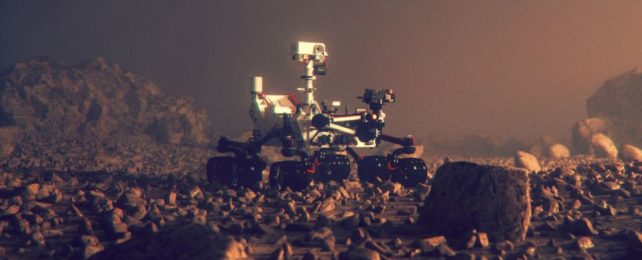
Without finding ways to improve detection, Mars rovers might miss signs of life. (gremlin/Getty Images)
Mars rovers tasked with hunting for traces of biology could roll over microscopic life forms without smelling a thing, simply because their instruments aren’t up to the task.
A new study carried out in Earth’s oldest desert shows how current technology can’t always spot the signatures of life on our own planet’s surface. Let alone on Mars’s.
The researchers behind the investigation argue without improving our ability to identify long-dead ‘microbial dark matter’, life on Mars will continue to elude us. Especially if the life we are searching for existed billions of years ago when the planet was warmer and wetter than it is today.
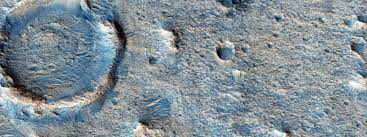
Chile’s Atacama Desert features an ancient delta called the Red Stone, which contains sand and rock rich in hematite and mudstone. Geologically, this region is quite similar to parts of Mars, which is why astrobiologists often use it as a model for the red planet.
When researchers in Chile tested the Red Stone’s mineralogy with the best instruments available today, they uncovered some mysterious signs.
Nearly 9 percent of the genetic sequences obtained using Next Generation Sequencing fell into the ‘unclassified’ category, whereas 40 percent of the remaining sequences could not be assigned to anything more specific than the highest of taxa, such as orders or domains.
Researchers from the Autonomous University of Chile (Universidad Autónoma de Chile) say their findings unveil “an unusual high degree of phylogenetic indeterminacy.”
The team has proposed a new concept to represent that uncertainty, what they call a “dark microbiome”. This term essentially refers to microorganisms that scientists can detect via genetic sequencing without knowing exactly what they are.
“Thus,” researchers write, “the Red Stone dark microbiome may be composed by truly novel extant species not found anywhere else on Earth, but it may also be the case that such dark microbiome in fact represents the relict community of microbial species which used to inhabit the Red Stone delta in the distant past, of which no extant relatives are to be found in the existing sequence databases.”
The Red Stone samples were also analyzed by testbed instruments used on Mars or destined for Mars, showing detection of microorganisms to be far more challenging, with limited or non-detection in most cases.
Last year, the Perseverance rover on Mars found ‘strong signs’ of organic matter when rolling through an ancient river delta.
In the years before that, the Curiosity rover picked up signs of organic molecules in both sand and dried-up mud.
Those are promising discoveries, but organic matter isn’t a sure sign of life. It’s still unclear if those molecules actually have biological origins.
“Our analyses by testbed instruments that are on or will be sent to Mars unveil that although the mineralogy of Red Stone matches that detected by ground-based instruments on the red planet, similarly low levels of organics will be hard, if not impossible to detect in Martian rocks depending on the instrument and technique used,” researchers in Chile conclude.
“Our results stress the importance in returning samples to Earth for conclusively addressing whether life ever existed on Mars.”
For years now, NASA has been planning to retrieve their samples from Mars to take a closer look. But that’s easier said than done. Going to Mars and back requires a space mission to go further than ever before.
The date for this historic moment is currently set for some time in the 2030s or 2040s. Hopefully by then our technology will be better equipped to take a proper look at what we have found.





 Without finding ways to improve detection, Mars rovers might miss signs of life. (gremlin/Getty Images)