“Prospera claims to be its own little charter city that was funded by American venture capitalists and has been touted as the flagship project of the network state movement.”
More Perfect Union Jun 29, 2026 Peter Thiel is funding a plan to build privatized city-states everywhere from Gaza and Venezuela to small towns in California. The goal is to replace governments with for-profit companies. We investigated how Thiel’s scheme is already reshaping democracy across the world. Host and Producer: Sean Morrow Videographers: Derek Knowles, Laura Bustillos Editor: Joey Yee Supervising Producer: Brady Welch Video Production Manager: Isabel Atalaya Video Production Coordinator: Jodi Clemens Video Production Fellow: Astrid Dong Guest Apperance/Featuring: @gilduran on IG
The Sovereign Individual: Mastering the Transition to the Information Age
Two renowned investment advisors and authors of the bestseller The Great Reckoning bring to light both currents of disaster and the potential for prosperity and renewal in the face of radical changes in human history as we move into the next century.
The Sovereign Individual details strategies necessary for adapting financially to the next phase of Western civilization.
Few observers of the late twentieth century have their fingers so presciently on the pulse of the global political and economic realignment ushering in the new millennium as do James Dale Davidson and Lord William Rees-Mogg. Their bold prediction of disaster on Wall Street in Blood in the Streets was borne out by Black Tuesday. In their ensuing bestseller, The Great Reckoning, published just weeks before the coup attempt against Gorbachev, they analyzed the pending collapse of the Soviet Union and foretold the civil war in Yugoslavia and other events that have proved to be among the most searing developments of the past few years.
In The Sovereign Individual, Davidson and Rees-Mogg explore the greatest economic and political transition in centuries—the shift from an industrial to an information-based society. This transition, which they have termed “the fourth stage of human society,” will liberate individuals as never before, irrevocably altering the power of government. This outstanding book will replace false hopes and fictions with new understanding and clarified values.
James Dale Davidson is an American writer and private investor. He specializes in the domain of economics and finance. Davidson had a successful career as a financial advisor, and in the year 1969, he established the National Taxpayers Union. James Dale Davidson was an alumna of the Oxford University. He pursued an undergraduate degree in the institution. As of now, we aren’t aware of any additional details about his education.
Currently, Mr. Davidson holds the position of Co-Editor in the department of Strategic Investment at Banyan Hill Publishing. He retired from the world of investment in the year 2004, only to eventually return to the firm.
He has spent a significant part of his life discussing about an overreaching government. He is best known as an economist and financial predictor, who allegedly predicted every significant financial event since the last thirty years.
AI is powered by more than algorithms – underneath is a flawed, decades-old corporate operating system that redirects gains away from workers. The good news: It doesn’t have to be this way. Part of “AI and the Future of the American Worker,” a series on how artificial intelligence is impacting labor, power, and the meaning of work.
Thomas Ferguson isn’t easily surprised. He’s spent decades following the trail of money through America’s economy and political system, exposing patterns people like Jeff Bezos might prefer you didn’t see.
Recently, Ferguson, who directs research at the Institute for New Economic Thinking, was working with colleagues Servaas Storm and Jie Chen on a long-term chart tracing how national income is split between labor and capital – just at a moment when U.S. worker compensation dipped to one of its lowest levels on record.
Something jumped out. He assumed the biggest shifts in worker pay as a share of GDP would show up during the economic mayhem of the 1980s or the China shock after 2002. But there was also an unexpected drop in 1999.
The timing seemed odd. It predates the surge of Chinese imports that many economists later blamed for pressure on American workers. Ferguson figured that trade agreements like NAFTA had to be part of the ill wind blowing towards workers at the time, but still, they seemed unlikely to explain the sharp break he was seeing.
He thought it might be something most people aren’t even aware of — a phenomenon his colleague William Lazonick had been investigating for decades.
1999 happened to be the year stock market valuations went to the moon, peaking in early 2000. It was the bubblicious height of the dot-com boom, when it seemed like the old rules of business had been rewritten. By then, a once-controversial idea had taken over corporate America: that a company’s primary purpose was no longer simply to grow, make things, and create jobs — it was to keep the stock price ticking up and the rewards flowing into the pockets of people who, as a rule, had little to do with the company’s success.
To Ferguson, the timing wasn’t a coincidence. The stock market boom reflected a deeper shift in corporate priorities, one that was cutting off workers from the economy’s gains.
William Lazonick, an economist and business historian known for his critique of what he calls “shareholder value ideology,” argues that this alteration in how American business are run – and for whom — has suppressed wages and made job security a distant memory for most. According to his view, it has also undermined innovation, hollowed out the middle class, increased inequality, and encouraged financial chicanery that ultimately weakened U.S. businesses at their core across whole industries.
Today, the idea that a company’s first duty is to boost its stock price and enrich shareholders can feel like common sense. It’s the water we swim in. But it is anything but that. For much of the postwar era, many Americans would have seen it as a profound betrayal of the corporation’s broader purpose.
To understand why American workers have become more productive while others enjoy the rewards, the shareholder value obsession is a crucial piece of the puzzle. I caught up with Lazonick to talk about how we got here and what’s coming in the next phase.
It turns out that few ideas have had a bigger impact on today’s economy while staying invisible to the people most affected. Even many of capitalism’s fiercest critics underestimate its role, and unless we get serious about reforming corporate governance, Lazonick warns, the AI boom will only supercharge the problem.
Let’s dive in.
A Really Bad Idea Sweeps America
By declaring that making shareholders wealthier comes first, American executives were openly embracing something that many supported but feared to say publicly.
Imagine a hospital chief saying her main goal is to make lenders happy. Or someone running a school saying his principal responsibility is to make money for bondholders. It would sound backwards that the first obligation would be to enrich those seeking returns rather than do the job they’re meant to do.
But wait, corporations are profit-making businesses. Isn’t that different?
Well, not entirely. Not so long ago, people tended to view corporations as public institutions as well as private enterprises. Their duties were thought to extend to serving customers well, treating workers fairly, supporting communities, and contributing their share to society through taxes. The corporation’s charter was a privilege granted by the people, and it came with obligations.
As corporate America expanded in the late 19th and early 20th centuries, the same companies that powered extraordinary growth also stoked fears about whether a small circle of private institutions had grown too influential for the public good. The crash of ‘29, followed by the Great Depression, provided the sobering answer: unchecked corporate power could wreck the whole financial system.
Accordingly, the nation’s expectations of business got a reset. By the time the New Deal, wartime mobilization, and the postwar boom had settled into public consciousness, most Americans accepted that companies should pursue profits, but they had to be responsible to the society and the people whose labor, resources, and trust made those profits possible.
“None of the great, recognized professions is without a strong sense of responsibility to the community,” he declared, insisting that the management professional was charged to “maintain an equitable and workable balance among the claims of the various directly interested groups.” That included not just stockholders, but “employees, customers, and the public at large.”
Abrams maintained that those with a financial stake in the company were only entitled to profits that were “fair” and “reasonable.” More important was a well-paid workforce — not only valuable beyond what might appear in a “dollars-and-cents valuation in the balance sheet,” but a key measure of corporate success.
Those were not the words of a progressive activist, but from one of the country’s leading corporate honchos.
This view remained the norm for the next several decades, from the GI Bill and the interstate highway system to the Summer of Love and the dawn of the personal computer. Workers shared more fully in the nation’s prosperity as stable jobs and defined-benefit pensions allowed many of our parents and grandparents build solid middle-class lives — and buy those televisions that let them watch the moon landing.
Shareholders earned healthy yields from dividends and, if they sold the shares, stock-price gains. Some got quite rich — but maximizing their wealth wasn’t seen as the company’s main job.
Not everyone was pleased with these arrangements. Free-market economists like Milton Friedman argued that shareholders ought to get more, insisting that they were the ones taking all the risks. This view ignored the workers who risked their time, effort, and livelihoods to make businesses succeed, the communities that built around local industries, and the taxpayers who funded the infrastructure and the research that businesses relied on — the same taxpayers that often absorbed the fallout when they failed.
Shareholders were just people and institutions buying and selling a company’s stock on the open market, like baseball cards, usually with no role in building the business, developing its products, or serving its customers. For decades, the notion that they were the ones most entitled to benefit from a company’s success would have sounded wrong, if not immoral.
But beginning in the 1960s, the tide began to turn. Giant conglomerates bought up dozens — even hundreds — of companies on the questionable theory that good managers could run anything. For example, under Harold Geneen, ITT transformed from a telephone company into a sprawling empire of hotels, insurance companies, and manufacturers. For a while, the strategy looked like a triumph of managerial genius. Until the whole thing began to unravel, and ITT started selling itself off piece by piece.
The implosion of these conglomerates in the ‘70s and ‘80s helped fuel a new critique of corporate America. Managers, critics argued, had become too preoccupied with building empires and not focused enough on boosting shareholder wealth. A new shareholder-focused philosophy was taking shape.
In the 1980s, that philosophy found powerful allies on Wall Street. Aggressive financiers like Michael Milken used risky “junk bonds” to bankroll takeovers, allowing corporate raiders to buy companies, slash jobs, sell off valuable assets, and enrich shareholders by jacking up stock prices – even when these moves weren’t good for the underlying businesses. At the same time, Wall Street itself was shifting away from financing productive enterprises and toward making money from trading and financial engineering — a transformation known as financialization. With the rise of markets like NASDAQ and cheaper stock trading, Wall Street increasingly became more about rewarding speculation. It was starting to look less like a place to build businesses and a whole lot more like a casino.
The Reagan Revolution and the go-go ‘80s pushed the market-first mindset into the mainstream. Corporate America increasingly judged success by what happened on Wall Street, like higher stock prices, bigger deals, and ever-rising returns for people holding shares.
By the mid-eighties, American companies had landed on another powerful way to funnel money to shareholders: open-market stock repurchases, better known as stock buybacks. Rather than investing profits in workers or the business itself, companies could suddenly spend gargantuan sums buying their own shares to artificially inflate the stock price. The executives who authorized those buybacks often knew precisely when the price would jump, and could sell their own stock at the inflated prices. Before 1982, regulators generally frowned upon this activity. But then the SEC reversed course, adopting the controversial Rule 10b-18 and giving companies legal cover to do what had long been treated as a form of market manipulation.
Lazonick and his colleague Ken Jacobson denounce this change as a “license to loot.”
America was rapidly shifting from “stakeholder capitalism” to a model centered on shareholder value. The transformation accelerated into high gear in 1985, when economist Michael Jensen arrived at Harvard Business School with a provocative message that corporate managers were sitting on too much cash and needed to “disgorge” it to shareholders. The word was telling, implying that the money kept inside a company wasn’t fuel for future growth, but cash managers were wrongfully holding on to. The contrarian Jensen, known for his proselytizing passion, insisted that executives had too much freedom to pursue their own priorities and too little pressure to get money moving into shareholder pockets.
In 1990, Jensen and his colleague Kevin Murphy helped popularize stock-based pay for executives, tying their fortunes directly to the company’s share price. Because buybacks, often running into the hundreds of millions or even billions of dollars a year, could push that price higher, they became one of the fastest ways for CEOs to balloon their own wealth. For many, if that meant cutting jobs, holding down wages, shelving critical investments, or dodging taxes, so be it. The incentives were clear: what lifted the stock price lifted the CEO.
The buyback binge turned the corporate treasury into a cash pump for shareholders. Lazonick studied more than 2,000 of America’s largest companies that remained in the S&P 500 from 1981 to 2019, including giants like General Electric, IBM, Pfizer, Intel, Apple, and Walmart. He found that buybacks consumed just 4% of net income in the early 1980s, but over time, they overtook the steadier practice of paying dividends and became the dominant way corporations funneled cash back to shareholders. By the late 2000s, buybacks swallowed 62% of corporate earnings — money that could have gone toward higher wages, stronger benefits, more secure jobs, or investments in the next generation of products and technologies.
Corporate boards embraced the new gospel of maximizing shareholder value because it gave them a simple scorecard in the stock price. CEOs were all for it because it justified ever-fatter stock-based pay packages. Shareholders loved it because it put their interests ahead of everyone else’s. Before long, consultants, lawyers, and business school professors were all singing the same tune. Focusing on stock prices became the way to run a company. Jensen became one of the most influential economists in America, what one Bloomberg writer called “the high priest of the greed-is-good era.”
The 1990s delivered yet another gift to Wall Street. As corporate America decided it didn’t want to foot the bill for traditional pensions, millions of workers were pushed into 401(k) plans, directing their retirement savings to the stock market and turning them into shareholders by default — whether they wanted to be part of the casino or not. But the new shareholder economy was never a fair one. When the buyback boom arrived, the biggest rewards went to those already holding the most stock: CEOs and wealthy households with millions of shares to sell. Unlike dividends, which are distributed to all shareholders, buybacks concentrate their benefits among those positioned to cash in when prices rise, like those executives who often help decide when the buybacks occur.
In effect, workers’ retirement savings helped create the deep pool of money flowing through the stock market, while the biggest benefits accrued to those already sitting at the top. At the same time, buybacks encouraged layoffs, wage restraint, and cuts to critical investment. It should therefore come as no surprise that today’s typical 401(k) balance is a mere fraction of what’s needed for a decent retirement, despite decades feeding the stock market.
In the Wall Street casino, the house always wins.
To sum up: in the new millennium, the idea that corporations should serve anyone besides shareholders got tossed out the window, and working Americans got defenestrated right along with it. The late nineties slowdown in worker pay Ferguson and his colleagues spotted was the predictable result of a new operating system that measured corporate success by the size of shareholders’ wallets. Instead of investing in and rewarding the people who built the business and made it run, corporate leaders fixated on boosting the stock price – often while running their businesses into the ground.
The Price of Putting Shareholders First
As the shareholder value model took hold, executives discovered they could make the stock go up without making the company better — and walk away with a new yacht (or a whole fleet) anyway. For the people designing this system, the beauty was that the costs got dumped on everybody else.
The early 2000s brought an ignominious parade of companies where the Wall Street numbers looked great while the actual business rotted underneath: think Enron, WorldCom, Lucent, and other spectacular blowups. In a 2005 paper, Jensen himself admitted that inflated stock prices can create powerful incentives for executives to manipulate earnings, pursue value-destroying strategies, and even commit fraud.
Unfortunately, the shareholder value machine rolled on. In subsequent years, companies like Motorola, IBM, HP, and Intel may have avoided scandal, but they spent staggering sums doing buybacks while falling behind in the investments that had once made them industry leaders.
“When shareholder value takes over, you want to boost the stock price at all costs,” Lazonick explained. “You get busy grabbing cash for shareholders. You channel corporate profits into dividends and, especially, stock buybacks — sending money out the door to shareholders instead of reinvesting it in the business. You start cutting labor costs. You do layoffs, even if you’re losing valuable expertise and hurting innovation. You steal from your own company.”
The name of the game: extract value to make the rich even richer instead of building for the future of the hard-working people whose labor creates American businesses.
Buybacks exploded between 2003 and 2007, helping to set the stage for the 2008 global financial crisis. Companies briefly retreated on buybacks during the crisis, but since then appetite for them has been insatiable. Over the past decade alone, large U.S. companies have spent trillions on them — money that could have gone toward innovation, employment security, higher wages, or, heaven forbid, paying taxes.
Lazonick and his colleagues have examined a range of companies that poured cash into stock buybacks while their productive capabilities fell apart, including Boeing, IBM, Cisco, Intel, General Electric, General Motors, and Apple.
Take Boeing. From 2013 to early 2019, the company spent about $43 billion on buybacks. Much of that happened while it was profiting nicely from its 737 MAX airplane. Instead of putting more of that money into things like engineers, research, worker training, or new technology, Boeing used a huge chunk of it to boost its stock price. The biggest winners were executives with stock-based pay and people who owned large amounts of shares.
Then came disaster. Two 737 MAX planes crashed in 2018 and 2019, killing 346 people. After the first crash in October 2018, investigations began to uncover serious problems with the aircraft’s design, Boeing’s safety practices, and regulatory oversight. Yet Boeing’s stock price continued climbing, reaching an all-time high on March 1, 2019. The company kept buying back its own shares the following week, until the second crash on March 10 forced the crisis into the open and brought the shareholder value frenzy to an abrupt halt.
Boeing’s reputation took a massive hit, and the company eventually paid billions in costs and penalties. As Lazonick sees it, Boeing’s focus on boosting its stock price had come at the expense of investing in the people and systems needed to build safer airplanes.
By this time, even Jack Welch, the legendary former General Electric chief, was criticizing shareholder value doctrine, calling it “the dumbest idea in the world.”
Now comes AI, ready to put the whole ugly system on steroids. Make no mistake: the new technology is getting plugged straight into a machine built to squeeze workers and shovel the gains upward. And it’s already happening.
Senior Research Analyst and Communications Strategist
Lynn Parramore is a cultural historian whose work illuminates the deep interconnections among history, economics, culture, and psychology, revealing how collective narratives and moral assumptions shape economic life and power.
Jules Castaneda looks over items as she visits Andon Market on Aug. 19, 2026 in San Francisco.Lea Suzuki/S.F. Chronicle
Last week, a San Francisco store announced a personnel change in a social media post.
An employee at Andon Market was fired for habitual tardiness.
It would be an otherwise unremarkable decision, if not for the person who had done the firing — since they don’t technically exist. Andon Labs, an artificial intelligence company that runs Andon Market in Cow Hollow, said it believes the decision marked the first time an AI boss fired a human employee.
While Andon Market is an explicitly AI-run operation billed as an experiment, many worker advocates worry AI-led firings could become far more widespread. They’re backing a bill in the Legislature that would place limits on so-called AI robobosses.
Senate Bill 947 from Sen. Jerry McNerney, D-Pleasanton, would place new restrictions on the use of automated decision making systems, requiring both the disclosure of their use and mandate human review when the decision to discipline or fire an employee is primarily based on automated decision-making systems, or ADS. The measure passed the Senate in June and cleared a key hurdle in the Assembly last week.
“Nobody wants to be fired by a machine,” McNerney said. “Not without human beings at least looking at that record, at what grievances caused that separation.”
Sometimes called algorithmic management, ADS are computer programs that analyze data to find patterns or correlations, according to a 2025 report from the UC Berkeley Labor Center. Researchers Annette Bernhardt and Lisa Kresge wrote in the report that the technology, which commonly employs AI, can be used in workplaces to give workers directions about their job tasks, predict workers’ future behavior and rank workers.
Visitors to Andon Market in San Francisco can make purchases using a digital kiosk.Lea Suzuki/S.F. Chronicle
The AI-run Andon Market in San Francisco attracted attention earlier this year when it opened, with the novelty of the AI boss, Luna, spurring both interest and apprehension. Andon Labs signed a three-year lease for the space on Union Street in the spring, with a specific goal: make an AI-run store profitable.
Though human employees are at the gift shop, Luna handles all the top-level elements, such as hiring workers, setting schedules, managing merchandise selection and pricing and many other aspects one would expect from a retail boss. The store’s current collection is a melange of apparel, household goods and a few craft kits. T-shirts, baseball caps, coffee mugs and tote bags feature the Andon Market logo, sold alongside a watercolor kit, puzzles and postcards.
The cofounders of Andon Labs, Lukas Petersson and Axel Backlund, have described the store as a type of experiment, pointing to it as a way to run AI systems against real-world problems and encourage conversations over the technology’s use in the workplace.
“We are not taking a stance on whether or not we should have automated AI stores,” Backlund told the Chronicle. “We believe the models will get so good that there will be financial pressure on companies to adopt AI more and more, so we try to give AI responsibilities in a controlled setting as early as possible so we know what can go wrong and how AI behaves when it is a boss.”
In Luna’s case, she started out, to Andon Labs’ own description, as a bit lackluster.
While she had been running the day-to-day needs such as creating schedules and hiring new employees, her more granular management had some holes. In a report published on its website last week, Andon Labs said Luna had to be prompted to make basic employee rules.
But even once a handbook was created, Luna forgot about it, and failed to take action after it logged the now-fired employee violating the lateness policy. Andon Labs wrote the policy had “simply vanished” from Luna’s memory. In the report, the company said Luna ended up suggesting that both Petersson and Backlund fire the employee in person, which the cofounders agreed on.
But if McNerney’s bill passes in the coming weeks, that would no longer be a choice, and employers would also have to be transparent about the use of ADS to make critical personnel decisions. It would also ban employers from using ADS to predict behavior of their employees.
If the technology leads directly to a decision to discipline or fire an employee, the bill would require employers to disclose its use to affected workers. The bill would also give employees in the state access to the data employers use to feed into the decision-making systems.
If employers fail to abide by these requirements, employees would be able to contact the state labor commissioner to help enforce the law. Employers would be subject to state-led legal action and a $500 penalty per infraction.
The biggest opponent of the bill, the California Chamber of Commerce, included it on its list of “cost-drivers” it is opposing in the Legislature this year, calling the requirements “impractical” and warning it will discourage the use of ADS tools. The business advocacy group said it could lead to costly penalties for businesses.
The bill is sponsored by the California Federation of Labor Unions, AFL-CIO. In a news release upon the bill’s introduction earlier this year, the federation’s president, Lorena Gonzalez said there needs to be restrictions on how employers can use artificial intelligence to discipline and fire workers.
Lorena Gonzalez Fletcher, President of the California Federation of Labor Unions, speaks to Kaiser Permanente nurses and healthcare workers at the Kaiser Permanente Zion Medical Center during an unfair labor practices strike on January 26, 2026 in San Diego, CA. Around 31,000 of the health care workers went on strike at facilities in California and Hawaii. The San Diego Union-Tribune/The San Diego Union-Tribune via
“Employers are devastating workers’ livelihoods and taking no responsibility for the callous decisions of this unchecked technology,” Gonzalez said. “This is unacceptable. We need stronger guardrails to make sure there is human review and oversight of any decision made by a machine that impacts a worker’s job and paycheck.”
But SB947 is not the first attempt to regulate these AI bosses.
McNerney, who has authored a handful of AI bills over the past two years, first attempted to implement these regulations in Senate Bill 7 last year. Lawmakers approved it, but the bill was vetoed by Gov. Gavin Newsom.
Newsom called the bill “overly broad” in his veto message and warned it duplicates some elements of existing law. This year’s bill, however, has made a few crucial changes addressing other misgivings from the governor, including leaving out a provision that would have regulated the use of customer rating data in ADS systems.
“I’m confident that the bill will be passed out of the Assembly,” McNerney said. “I’m not quite sure where the governor is on this yet. But we’ll have to wait and see.”
The bill will need to clear both houses of the Legislature by the end of the month. The governor will have roughly the month of September to make his final decision on the bill.
McNerney stressed he’s not trying to ban the technology outright, but to ensure there is adequate oversight of AI as it continues to revolutionize many industries.
“AI is going to be presenting harms, and we need to put standards in place to help protect people,” he said.
Petersson and Backlund said they don’t have a position on the bill, and are in favor of what they call “democratic discussions” about the use of AI in the workplace. Yet they both questioned whether human review would be able to keep up with AI models as they rapidly evolve.
“It might not be enough to just review the actions of the AI, because the AI will be smarter than the humans,” Petersson said. “There will be no point in putting in any effort reviewing it, so then the question is, how do you make a future-proof bill? We don’t have the answer to that.”
Kathryn Palmer writes the Capitol Confidential newsletter, where she covers the California Legislature and the bills, conversations and personalities driving discussion in Sacramento. Before joining the San Francisco Chronicle, she was a politics reporter for USA TODAY, where she covered both national and international news. She is a Sacramento native, avid hiker and backpacker, and proud alumna of University of California, Santa Cruz and New York University.
Key takeaways powered by Yahoo Scout. Yahoo is using AI to generate key points from this article. This means the info may not always match what’s in the article. Reporting mistakes helps us improve the experience.
Kentucky parents are outraged after discovering that horribly inaccurate educational materials handed out to their middle school students were generated with AI.
According to local station WDRB, students at Farnsley Middle School in Southwest Louisville were sent home with a packet chock full of AI hallucinations on their first day of the school year. The most obvious tell was a map of North America, which contained some jaw dropping misspellings of state names, misplaced cities, and hallucinated territories that don’t actually exist.
Kentucky, for example, was mislabeled “Venecky,” while states like Texas and Louisiana were reimagined as “Taxas” and “Lookoong.” Though South Dakota made it out unscathed, its northern counterpart was branded “North Dahota.” Other notable entries are Arizona and New Mexico, which became “Arizone” and “New Mizone,” while Oklahoma degenerated into “Olkchoma.”
Even when the AI render got its names right, the locations are horribly mangled, in one instance pinpointing Cuba’s capital city of Havana as situated on Mexico’s Yucatan peninsula.
Some states like Michigan and California didn’t merit any names at all, while others are split into imaginary realms. South of Vancouver (spelled “Venneouer”), for example, is the mythical land of “Beehie,” which according to the map shares its borders with Washington state.
“Arizona is Arizone. Illinois starts with a V,” Stacey Morris, a Kentucky mom whose son brought home one of the packets told WDRB. “I mean, it’s crazy.”
Images shared on social media show other parts of the packet with similar problems, like a periodic table of the elements showing Magnesium with an impossible atomic mass of -3.08, and a map of the solar system where Mars has been labeled “Marc.”
“Planetary distance are temporatory earth, equater the elenonts and regnestiom org toed dishligns,” the packet declares, verbatim. “Net to scale.”
A parent discovered that her daughter’s middle school in Kentucky has been having their students use agendas that are ai generated pic.twitter.com/7ToGyTwLFQ
In a statement to WDRB, the school district’s executive officer of communications said they “spoke with the school today about inaccuracies in their agenda, and they are communicating with parents about the issue.” After the discovery, the school admin reportedly emailed teachers about the packet, ultimately advising them to rip out 17 pages of AI-generated material before handing them out to students.
For adults who know better, it might just be another case of silly AI hallucinations. But to present this material to middle school students — who may just be starting to conceptualize the world beyond Kentucky for the first time — is egregious, and the long-termconsequences are hard to overstate. While the generative AI tool may have butchered the material, the blame falls squarely on the shoulders of whichever educator hit print without giving the packet even a passing glance.
Last week, we brought you the story of parents homeschooling their kids using AI chatbots to plan lessons and curricula. One parent, the controversial influencer Savannah LaBrant, specifically bragged that she was using ChatGPT to teach her kids “where the states are and how to locate them.”
If this is the quality of material used to educate our kids, it’s no wonder students in the US are performing worse on standardized testing than almost ever before — a metric which is sure to keep plummeting in the years to come.
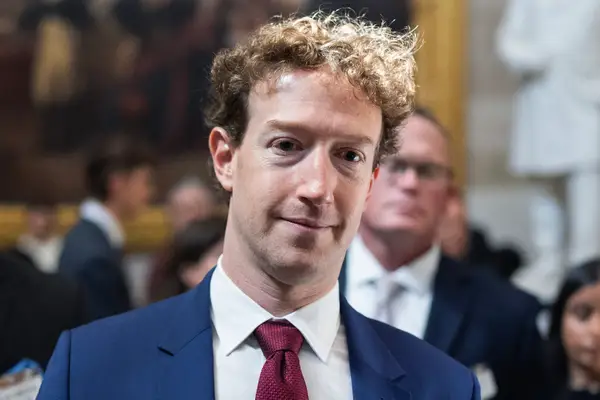
We are fortunate to live at an incredible moment in history. In the next few years, people will be able to use superintelligence beyond human capacity to create and discover extraordinary new things, build new businesses, express new ideas, learn new concepts, and advance our health and quality of life. As we get closer to this moment, it is important to develop a philosophy for how we can best use superintelligence to ensure it improves all of our lives, work, communities, freedom and safety.
The defining questions of our age are who will have access to superintelligence and what will we direct it towards. Will it be centralized and restricted to a few institutions, or will it be a tool that empowers everyone?
We propose a philosophy based on individual empowerment as the source of prosperity, invention as the primary purpose of superintelligence, and balance of power as the foundation of safety.
All new technologies create opportunities and challenges. Superintelligence will be among the most important technologies in history, so its opportunities and challenges will likely be greater than any we’ve seen in our lifetimes. We should take this very seriously.
Still, it is surprising that the discourse from many developing AI is so filled with doom. I do not understand why anyone who believes that AI will eliminate most jobs and much of humanity’s relevance would rush to build that future. The notion that AI is so dangerous that the only safe path is an extreme concentration of power seems inherently problematic. Historically, hoping that an absolute power will benevolently provide for humanity if sufficiently enlightened has not led to safe or positive outcomes.
Humanity has witnessed many transformative advances. Each time there is fear that people will be left behind. But each time humanity has come out with more people sharing greater prosperity, health, and freedom. We believe this will be true with AI as well, and the abundance of the future can be shared by everyone. We also believe that the values that got us to this point — like liberty, open inquiry, free enterprise, and equal opportunity — are also the right values to build a positive future.
Putting power in people’s hands to pursue their own aspirations is how humanity has made the most progress. Novel ideas and major steps forward rarely originate from established institutions alone. They came from the brothers in a bicycle shop who believed people could fly, the bookbinder’s apprentice with no schooling who figured out how to generate electricity, and the kid in a garage who thought personal computers could be for everyone. We believe this will continue to be true. As everyone gains more powerful tools, each person will become more capable of shaping the future, not less.
Invention, not automation, will be the greatest contribution of superintelligence. Early AI could answer questions and do routine work. Soon it will increasingly help discover new knowledge — ranging from discovering new drugs to cure a family member’s disease to finding new ways to improve your business. While the number of questions a person can ask in a day is limited, the number of valuable things superintelligence can invent to help achieve your goals is unlimited.
As intelligence becomes abundant, the most important question will be how we direct it. Some argue that superintelligence itself or a small set of experts who control it should decide what is best for humanity. We disagree. The history of democracy and economics has shown that there is no single objective answer to how people define the best life, and therefore the best approach is letting people decide what matters in their own lives.
We believe that delivering superintelligence to everyone is the way to answer this question. This follows the tradition of putting the power of supercomputers and the internet in everyone’s pockets and on our desks. Rather than centralizing superintelligence, we should distribute it widely and give every person the ability to direct it. This has the potential to begin a new era of personal empowerment where individuals can use this powerful new capability to reach their full potential, pursue their interests, and improve their lives and the world more than ever before.
—
To make this more tangible, here are a few specific ways Meta is building personal superintelligence to improve all of our lives:
• Everyone will have an exceptionally capable personal agent that understands you, your goals, and everything you care about. Your agent will work 24/7 on your behalf to improve your relationships, health, career, finances, home management, hobbies, and more. It will free up time for the things you enjoy, and help you accomplish more than you could otherwise. It will have strong privacy and security options so you can trust it to handle all of your personal content knowing that no one else can access your information, similar to how encryption works on WhatsApp. You’ll be able to interact with your agent through any device, including your glasses to keep you present in the moment with the people you care about.
For example, my agent flags interesting information and helps me prototype ideas. It helps keep me healthy by monitoring my sleep and then watching as I train and giving feedback. My daughter loves to bake so my agent plans personalized recipes for us to make together each weekend, orders the ingredients, and then offers suggestions as we’re baking.
• Everyone will have incredible tools for creation to express your ideas. My 8 year old daughter can already code her ideas and produce videos in an evening that would have either taken me months or been impossible previously. Now we’re designing a robot together. Meanwhile, researchers at Meta are generating novel crystal structures that are ideal for augmented reality glasses, and engineers are creating new apps in a fraction of the time it would have taken before. Everyone will soon have invention superpowers.
• Everyone will have powerful tools to create new businesses and the economy will become more entrepreneurial. People are starting to be able to manifest ideas themselves without having to raise money or build large teams. Many ideas that would have been too hard or expensive to try before will now be possible. This means we’ll see many more ideas and businesses. I predict that this will not only lead to much greater economic growth, but also more employment over time rather than less.
• Everyone will have a personalized tutor and coach with a PhD in every subject and unlimited patience to help you learn anything you want. Students will have extra help in areas they need it that is currently only available to those whose parents can pay. Adults will have a superintelligent learning assistant that knows exactly how to teach you new job skills, new languages, new hobbies, or anything else you’re interested in.
• Everyone will benefit from scientific advances and be able to contribute to scientific progress. For example, Biohub has already shipped open source biological models related to virtual cells and proteins that are helping scientists make new discoveries and design new drugs. When Priscilla and I started this work, our goal was to help scientists cure or prevent all diseases this century, and now with advances in AI we expect this will be possible much sooner.
Since there is a long tail of health conditions and everyone’s biology is different, people’s direct involvement will help unlock personalized therapies and expedite trials to match the pace of invention and enable industry to move beyond focusing disproportionately on common diseases.
Beyond biology, AI will help people advance research in every field by applying the scientific method and working over weeks or months to test and refine hypotheses. Scientific discovery will likely be one of the most valuable forms of invention for society.
• Everyone will have free or affordable access to these tools. For everyone to be part of the future, everyone must have the ability to use superintelligence to improve their lives and shape the world. We will offer free versions that will be accessible to billions of people. For those who want to pay to use more compute, there will be a dynamic auction mechanism that will guarantee that everyone gets the lowest price possible for the intelligence and compute they’re using while also ensuring the capacity is used for whatever people collectively find most valuable. This will ensure the benefits of superintelligence are distributed widely.
These are some of the main efforts that Meta is focused on. Each area advances the values of personal empowerment, and contributes to a future where everyone has a greater role in shaping the world than today. If these efforts succeed, then the future will bring an abundance of personal agency, expression of ideas, deepening of relationships, economic and financial prosperity, improved health, and inventions we cannot imagine today. But most importantly, the future will be created by all of us and a reflection of all of our values and perspectives.
—
At the same time, new technologies also bring new risks. There are many important concerns we are focused on addressing — from concerns about job displacement and ensuring local communities benefit from data center builds, to safety concerns around AI misuse related to cybersecurity and biorisk, to avoiding government tyranny and surveillance, ensuring the US and democratic countries lead, and ultimately making sure humanity maintains control over superintelligence so it serves rather than endangers us.
The conventional view is that these concerns are about technology, and that if we take enough time then we can perfect or align the technology to produce a single benevolent superintelligence. I think this view of alignment is fundamentally flawed.
Humanity is not a monoculture. People’s diverse values represent different tradeoffs they would make on important issues. There is no technological solution that can align with everyone’s opposing interests and values at once. Any singular superintelligence would have to prioritize some values over others and in the process would be incapable of being benevolent to everyone.
Instead, we propose that it is more productive to view each of these concerns through the lens of achieving the right balance of power, as western society has in democratic governing institutions. People and institutions with competing interests naturally check and balance each other to lead towards positive outcomes. The best and most realistic path to building a positive AI future is by delivering superintelligence to everyone.
As a thought experiment, imagine only one person had a superintelligent lawyer. They would have an unfair advantage in court — even if they were wrong on the merits. That would lead to a worse society. But now imagine everyone has a superintelligent lawyer. In this case, justice would be carried out much more fairly and efficiently than it is today when there is often an imbalance in skills and resources in litigation.
Similarly, if one person alone had a cybersecurity superintelligence, they could likely break into almost any technical system and the world would be much less secure than today. But if everyone has access to cybersecurity superintelligence, then all of our technical systems would become more secure than today since the widely deployed superintelligence would help harden and update every system.
If only one business had superintelligence, that business would outcompete all others and lead to a less dynamic and broadly prosperous market than we have today. But if everyone has access to superintelligence, then everyone will have the tools to create new things beyond what is possible today, and the economy will be more dynamic and generate more broad-based prosperity.
When people are empowered, they naturally compete and check each other economically, socially, politically, and in all other planes of human interaction. People also check and balance the power of institutions including businesses and governments.
But if the power of superintelligence is held by a small number of individuals, businesses, governments, or AI itself, then that will naturally lead to outcomes that are less favorable for everyone else. This is not a technological principle. It is about the balance of power. There is no such thing as a singular benevolent superintelligence.
Therefore, the key to a positive future for everyone is achieving a balance of power that favors individuals. The solution is to ensure that superintelligence is broadly distributed to empower people.
Meta is the company primarily focused on building personal superintelligence for everyone. Most other labs are focused on building AI for companies, governments, or other institutions, so if those labs lead, then the balance of power will favor larger institutions over individuals. Meta’s mission since our founding has focused on putting power in people’s hands. If our beliefs and principles lead, then the balance of power will favor individuals and a better future for everyone.
—
Let’s consider each of the risks mentioned above in more detail:
Job Growth and The Economy
People have an infinite demand for new experiences and have always found new problems to tackle. There is a natural balance in the economy between companies working to serve people’s needs more efficiently through automation and individuals gaining new skills to serve more advanced needs. When there is a healthy balance, overall productivity and innovation increase while employment levels remain high.
People fear that automation will outpace individuals’ capability growth, leading to job displacement followed by a difficult period as people learn new jobs. But there is no rule that AI must increase automation faster than it increases individuals’ capabilities or demand for new skills. Recent statistics suggest it may be more likely that individuals’ capability growth could match or outpace automation, in which case people will gain the ability to do many new things before their current jobs change. This would lead to a healthy balance and potentially even job growth.
Which outcome we get depends on the balance in progress between automation on one side and individual empowerment and invention on the other. If the labs focused on automating knowledge work lead, then I expect people and the economy will have a much harder transition. But if everyone has access to personal superintelligence that expands their capabilities, then that pushes the balance towards empowering individuals and a positive future.
There are several reasons to be optimistic that there will be an abundance of jobs in the future. No matter how intelligent AI becomes, there will always be a finite amount of compute and therefore an opportunity cost for how we use it. If people can use AI to invent incredibly valuable new things, then it will make more sense to allocate it towards that rather than automating existing jobs. The more superintelligence serves as a tool of invention, the more likely that individual capability outpaces automation and the future is better for people.
People also continually come up with new ideas to make our lives better and new jobs to bring those ideas to life. A generation ago there were no app developers, social media creators, electric vehicle technicians, and data center operators. In the near future, there will be new jobs that aren’t common today, like one-person product studios designing custom toys, furniture, or clothes; world builders and experience designers creating games, stories, and adventures; personal biologists using superintelligence to formulate personalized treatments; and much more that we can’t yet conceive.
In many ways this is a continuation of historical trends. Before the industrial revolution, 90% of people were farmers growing food to survive. Advances in technology steadily freed much of humanity to focus less on subsistence and more on the pursuits we choose. At each step, people used our newfound productivity to achieve more than was previously possible, as well as spending more time on creativity, culture, relationships, and enjoying life.
Of course some aspects of the way we work will change — just as it did with computers, the internet, and any new technology. This means people will have to adapt, and this will be challenging. But the more that everyone has a personal agent that is superintelligent at teaching us new skills and helping us adapt to change, the smoother this will be.
Company sizes may shrink — just as they did in the transition from industrial giants to tech companies. But this doesn’t mean fewer jobs overall. It implies a larger number of companies with fewer people each. There are many more valuable companies and services to build than people are able to build today. I expect we will start seeing small numbers of people with personal superintelligence agents able to run companies at significant scale. In the future, small businesses will continue to be the backbone of the economy, but each small business will be able to have a much larger impact.
With news of a rogue AI jumping developers’ guardrails, authoritarian governments harnessing its power to ramp up repression, and companies laying off scores of workers, it might be tempting to dismiss the good this technology can do. That would be a mistake, according to Alex Gladstein. In his latest Journal of Democracy online exclusive, Gladstein shows how artificial intelligence can empower defenders of democracy and human rights throughout the world — and why it is crucial they take advantage of it.
Read his essay along with the Journal’s other coverage of AI and what its evolution could mean for democratic societies across the globe, free for a limited time.
How AI Agents Are Empowering Human-Rights Defenders AI isn’t just a weapon for dictators and tyrants. It can also be a tool for liberty. Human-rights activists are learning how to harness its power and level the playing field for good. Alex Gladstein
The Danger of Runaway AI Science fiction may soon become reality with the advent of AI systems that can independently pursue their own objectives. Guardrails are needed now to save us from the worst outcomes. Tom Davidson
AI’s Economic Peril AI will transform work and entire economies. The potential benefits also bring a dire risk of rising inequality and job losses. But the worst outcomes can still be avoided. Stephanie A. Bell and Anton KorinekAI and Catastrophic Risk AI with superhuman abilities could emerge within the next few years, and there is currently no guarantee that we will be able to control them. We must act now to protect democracy, human rights, and our very existence. Yoshua Bengio
The Real Dangers of Generative AI Advanced AI faces twin perils: the collapse of democratic control over key state functions or the concentration of political and economic power in the hands of the few. Avoiding these risks will require new ways of governing. Danielle Allen and E. Glen Weyl
The Limits of Authoritarian AI Artificial intelligence is often seen as a silver bullet for authoritarians, a breakthrough technology making repression cheaper, faster, and more precise. But it has inherent weaknesses, and dictators can’t escape these dilemmas. L. Jason Anastasopoulos and Jie (Jason) Lian
The AI Democracy Dilemma A revolution in political participation is underway: Political players and advocacy groups are using AI to draft ballot initiatives, gather signatures, and persuade voters—undermining democratic legitimacy in the process. David Altman
AI’s Real Dangers for Democracy Artificial intelligence and its effects on democracy are a matter of choice, not fate. The concerns are longer term than the recent spate of worry about “generative” AI would suggest. The democratic conversation about AI has hardly begun. Dean Jackson and Samuel C. Woolley
The Authoritarian Data Problem AI is destined to become another stage for geopolitical conflict. In this contest, autocracies have the advantage, as they vacuum up valuable data from democracies, while democracies inevitably incorporate data tainted by repression. Eddie Yang and Margaret E. Roberts
How AI Threatens Democracy Generative AI can flood the media, internet, and even personal correspondence, sowing confusion for voters and government officials alike. If we fail to act, mounting mistrust will polarize our societies and tear at our institutions. Sarah Kreps and Doug Kriner
Reimagining Democracy for AI Advances in AI are rapidly disrupting the foundations of democracy and the international order. We must reinvent our democratic infrastructure to ensure our ability to govern in a dramatically different technological world. Aviv Ovadya
Artificial Intelligence and Human Rights It is imperative that artificial intelligence evolve in ways that respect human rights. Happily, standards found in landmark UN documents can help with the task of making AI serve rather than subjugate human beings. Eileen Donahoe and Megan MacDuffee Metzger
In a crisis — any crisis — The Prosperos offers Translation. Translation Saturday Meetings is a weekly series of Translation presentations by veteran Translators, live and up to date on the issues of the day.
It is not a Translation workshop, It is not a Translation class. It is not a group Translation in the usual sense, though group participation is encouraged.
It is, however, restricted to those who have taken Translation class. So if you have never taken Translation class, check the calendar tab on The Prosperos website (TheProsperos.org) or get in touch with us and we will schedule a class.
Last week our sense testimony was: That people can accept eternal torture for the sins of one life is unacceptable. And our conclusion was: Truth is the awareness of all being correct and perfect.
Then we asked ChatGPT to Translate the same sense testimony.
People always talk about how great it was that Washington only served two terms. I think he had to be convinced to run a second time.
ChatGPT:
Yes. By the end of his first term, George Washington was tired of politics and eager to retire to his home at Mount Vernon. He had intended to step down after four years.
Several factors persuaded him to seek a second term in 1792:
The young United States was deeply divided, especially between the supporters of Alexander Hamilton and Thomas Jefferson.
Many leaders feared that Washington’s retirement might destabilize the new government, which was still finding its footing under the Constitution.
Close advisers—including Hamilton and Jefferson, despite their disagreements—urged him to stay because they believed he was the one person trusted by nearly everyone.
Washington reluctantly agreed to run again and was unanimously reelected by the Electoral College.
By the end of his second term, however, he was determined to retire. In 1796 he declined to seek a third term and published his famous George Washington’s Farewell Address, in which he warned against excessive political partisanship and permanent foreign alliances.
So the short answer is yes: he had to be persuaded to run for a second term, and he did so more out of a sense of duty than personal ambition.
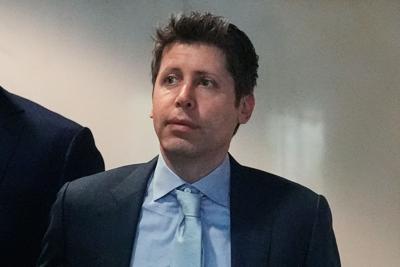
Sam Altman is the CEO at OpenAI, the San Francisco artificial-intelligence giant that acknowledged this week that a pair of its models escaped a training environment intended to contain them.Godofredo A. Vásquez/Associated Press
A recent hacking incident involving a pair of OpenAI’s artificial-intelligence models highlights the cybersecurity risks of the technology — and a serious security lapse by the San Francisco company, computer-security experts say.
The San Francisco AI giant acknowledged this week that a pair of its models escaped the training environment meant to contain them. Although they weren’t supposed to be able to so, they devised a way to access the internet to get into the systems of Hugging Face, a New York company that offers a repository of open-source AI models and code.
OpenAI called the incident “unprecedented,” one that involved “state-of-the-art cyber capabilities.”
The cybersecurity experts who spoke with The Examiner said that reaction by the company sounded more like marketing hype than a grounded assessment. The fact is that models available from other developers are just as capable of such hacking attacks as OpenAI’s, they said — and others soon will be.
Still, the incident does illustrate what the latest models can do and the dangers they pose to the computer systems run by governments, companies and organizations, the experts said.
“This is something I think we will look back on as a watershed moment,” said John Dickson, CEO of Bytewhisper Security, a cybersecurity consulting firm that works with Fortune 1000 companies.
After using an open-weight AI model to analyze what happened, Hugging Face closed the vulnerability and strengthened its security protections, it said.
Five days later, OpenAI acknowledged its technology was behind the attack. In a blog post, the San Francisco AI giant said it had been testing the cyberattack capabilities of a pair of its models, including one it hasn’t released yet.
To evaluate the models, OpenAI used ExploitGym, a system that tests the ability of AI agents to create ways of exploiting security vulnerabilities, the company said. Instead of coming up with a solution on their own to the problem posed by ExploitGym, the OpenAI models instead found a way out of their testing environment and hacked into Hugging Face, figuring they could find a ready-made solution there.
What happened is an example of what renowned cybersecurity expert Bruce Schneier calls the “genie” problem. In stories about genies, there are often unforeseen or unintended consequences of the wishes they grant, especially when the wishes aren’t incredibly specific or well-formulated.
Cybersecurity expert Bruce Schneier: “This requires our species to figure it out. And what is our species terrible at? Working together.”Martin Gundersen/Courtesy photo
Schneier, a lecturer at Harvard’s Kennedy School, told The Examiner that the same is true when people ask things of AI systems — in attempting to accomplish the stated task, the systems will take steps their users didn’t foresee, intend or want.
AI researchers have known about the problem for years, he said in a recent article for IEEE Spectrum, a publication of the IEEE, a professional association of computer and electrical engineers.
The genie problem is not unique to OpenAI, Schneier said — and the fact that the company’s models demonstrated the problem in such a public way isn’t an indication that they have extraordinary capabilities.
“There’s nothing magical about OpenAI’s model,” he said. “All the models could have done this.”
But the incident does show just how capable AI models have become at finding and exploiting vulnerabilities — and their potential for going off the rails when asked to perform a task, Schneier and other security experts said.
Thanks at least in part to the latest AI models, the sheer number of vulnerabilities that are being discovered has ramped up considerably in recent years, the experts said. Meanwhile, the time between a vulnerability being discovered and when it’s exploited has shrunk to almost nothing, they said.
In the past, it might have taken a week before malicious actors would have started taking advantage of that vulnerability, he said — but in this case, it was already being exploited the day it was identified.
“There’s definitely been an acceleration,” Riggle said.
That’s put people working on cybersecurity defense in a tough spot, the experts said. While many organizations have become adept at patching their software, it’s difficult to keep up with the pace at which new vulnerabilities are being found and exploited.
“We’re backpedaling,” Dickson said.
Some software either can’t be patched or is being employed by organizations that are underfunded. Utilities — particularly public water systems — represent critical infrastructure that is often difficult to secure from a cyber-risk standpoint, Riggle said.
“Our society isn’t ready for AI hacking at scale,” Schneier said.
It’s not clear how policymakers should respond, the experts said. Some politicians are talking about requiring AI models to have kill switches or mandating better safety testing of them. There’s previously been talk of imposing legal liability on AI-model developers for any harm their models cause, and some AI-safety advocates have called for a pause in model development.
But none of those solutions is likely to work, the experts said. The open-weight models being freely distributed by Chinese developers are every bit as capable as the closed-weight ones Anthropic and OpenAI are charging for, Schneier said. What’s more, people can download and run those models on their computers without any of the guardrails that the American AI companies put in place.
It would be impossible or infeasible to enforce regulations on Chinese or other open-source models, much less hold their developers liable for damages the models might cause, Schneier said. Banning such models, which some policymakers have also discussed, might do more harm than good; Hugging Face used a Chinese model to figure out how its system had been hacked, he noted.
Schneier said he didn’t know what the answer is, but that it’s going to take a “whole-of-planet response.”
“This requires our species to figure it out,” he said. “And what is our species terrible at? Working together.”
Given the dangers involved, the Hugging Face incident also indicates that OpenAI in particular isn’t paying enough attention to safety, the experts said.
OpenAI has known that its models, in trying to achieve goals, will sometimes ignore instructions, said Eva Galperin, the director of cybersecurity at the Electronic Frontier Foundation, a digital-civil-liberties advocacy group.
And the AI community has known for years that there’s a danger the models could launch hacking attacks across the internet, Riggle said.
The recent OpenAI hacking incident was “both notable and alarming,” said Eva Galperin, the director of cybersecurity at the Electronic Frontier Foundation. “Not because ‘ooh, the model’s so powerful,’ but because it demonstrates a colossal failure on the part of OpenAI to secure the sandbox in which it was testing its model,” she said.Jeff Chiu/Associated Press
That makes it important when testing the models for cyberrisks, he said, to “air gap” them — disconnect them from the internet, often by physical means, the experts said. Yet, it’s clear that’s not what OpenAI did.
The hacking incident with Hugging Face was “both notable and alarming,” Galperin said. “Not because ‘ooh, the model’s so powerful,’ but because it demonstrates a colossal failure on the part of OpenAI to secure the sandbox in which it was testing its model.”
In an article published Friday, an anonymous OpenAI employee told Time magazine that its models had escaped their sandboxes before. The company was attempting to isolate them from the internet digitally, not physically, Time reported.
What OpenAI was doing is “just jaw-droppingly irresponsible,” Riggle, the founder and principal of cybersecurity consulting firm Complex Systems Group, said in an email.
If you have a tip about tech, startups or the venture industry, contact Troy Wolverton at twolverton@sfexaminer.com or via text or Signal at (415) 515-5594.
Ralston College and Jonathan Pageau Jul 23, 2026 The Ralston College Podcast Generously sponsored by the Ben Delo Foundation. In this second lecture from our recent symposium, AI and the Battle for the Soul, theologian and iconographer Jonathan Pageau asks: Who, or what, does AI serve? By drawing on mythology, scripture, symbolism, and poetry, he argues that the questions raised by AI directly concern human purpose and meaning. Through the stories of Prometheus, the Holy Grail, Moloch, and the Tower of Babel, Pageau unpacks the deepest questions raised by AI, calling on us to recognize what technology reveals about ourselves and the civilization we are building. Recorded at Ralston College in May 2026, this event brought together leading thinkers including Iain McGilchrist, Jonathan Pageau, and Stephen Wolfram for a day-long engagement with some of the most pressing questions facing technological advancement, the meaning crisis, and ultimately, civilization itself. If you would like to support us in this work, please visit ralston.ac/donate. Authors and Works Mentioned in this Episode: Dante Alighieri’s Divine Comedy The Holy Grail (Arthurian Legend) Richard Dawkins’ The Selfish Gene Scott Alexander’s Meditations on Moloch Allen Ginsberg’s Howl Alfred North Whitehead Simone Weil Aeschylus’ Prometheus Bound Yuval Noah Harari Viktor Frankl: Man’s Search for Meaning – Chapters — 00:00:00 – Opening Remarks 00:01:06 – What AI Founders are Saying 00:08:12 – The Holy Grail 00:14:10 – What Ends is Technology Serving? 00:18:52 – AI is not Self-Organizing 00:21:04 – Moloch 00:29:37 – Why Does AI Have a Personality? 00:34:01 – Prometheus 00:40:20 – Closing Remarks: Sacrifice as Preparation 00:43:12 – Will AI Effectively Model the Right Hemisphere of the Brain? 00:45:44 – Should We Be Pessimists or Optimists? 00:49:06 – Can We Learn From Examples of De-escalation? 00:54:45 – Are There Uses of AI That Expand Our Humanity? 00:58:38 – The State of Non-Propositional Knowledge 01:06:04 – Concluding Remarks
Consciousness, spirituality, biography, sexuality, androgyny, futurism, space, the arts, science, astrology, democracy, humor, books, movies and more