
The Astrology Podcast Jul 30, 2025 Monthly Astrology Forecasts A look at the astrological forecast for August of 2025, with astrologers Chris Brennan and Austin Coppock of The Astrology Podcast! We spend the first hour of the episode talking about the astrology of news and events that have occurred since our last forecast, and then in the second hour we transition into talking about the astrology of August, starting at 1 hour and 12 minutes into the episode. The three main alignments this month are a Mars-Saturn opposition, Venus-Jupiter conjunction, and Mercury stationing direct opposite Pluto. Then in the final days of the month we begin to head into eclipse season. Since this is the episode after the 500th episode we also spend some time reflecting on that, and on 10 years of doing forecast episodes together. This is episode 501 of The Astrology Podcast! United Astrology Conference 2026 https://uacastrology.com Hellenistic Astrology Course https://theastrologyschool.com Austin’s Website https://austincoppock.com Patreon for Elections and Bonus Content / astrologypodcast Timestamps 00:00:00 Introduction 00:00:54 August quick overview 00:03:35 News segment 01:07:21 UAC 2026 01:12:02 August forecast 01:23:46 Election for August 01:29:29 August forecast continued 02:25:59 Wrapping up 02:33:04 Credits United Astrology Conference
Monthly Archives: July 2025
Study: Only 40% Of Mice Have Little Welcome Mat, Doorway Leading To Tiny Home Inside Wall

Published: March 21, 2018 (TheOnion.com)
CAMBRIDGE, MA—In a troubling revelation concerning the living conditions of millions nationwide, a Harvard University study confirmed Wednesday that only 40 percent of mice in the continental U.S. have a little welcome mat and doorway leading to a tiny home inside a wall. “Our research shows that, disturbingly, less than half of American mice can afford their own home, defined for this purpose as a space entered through the wainscoting where they sit at a table made from a spool of thread, eat off bottle-cap dishes, and sleep in an adorable sardine-can bed,” said lead researcher Susan Lord, adding that only the top 15 percent of rodents are able to decorate their residence with framed photos of cheese, beer-coaster area rugs, and wee “Home Sweet Home” signs hanging over their doors. “Moreover, only 25 percent of these creatures occupy a place big enough to house a hairbow-bedecked wife with large eyelashes and their children. Unfortunately, only the wealthiest 7 percent own a set of matching nightcaps for their darling family to wear while snoring in unison at night.” Lord went on to say that 90 percent of these mice have such inadequate living spaces that the rollicking chases that constitute the bulk of their workdays usually conclude with the pursuing cat having its face stuck inside their doorways.
George Bernard Shaw on the unreasonable man

(Image from nobelprize.org)
“The reasonable man adapts himself to the world: the unreasonable one persists in trying to adapt the world to himself. Therefore all progress depends on the unreasonable man.”
~ G.B.Shaw
George Bernard Shaw, known at his insistence as Bernard Shaw (July 26, 1856 – November 2, 1950), was an Irish playwright, critic, polemicist and political activist. His influence on Western theatre, culture and politics extended from the 1880s to his death and beyond. Wikipedia
Tom Lehrer and Mort Mintz, RIP

Tom Lehrer (via Wikipedia.org)
| Kuttner on TAP July 30, 2025 (Prospect.org) |
| Both challenged American smugness, one with satire and the other with great journalism. |
| Two of the heroes of my youth died this past week, one at 97 and the other at 103. The youngster was Tom Lehrer. A math genius who wrote and performed naughty patter songs with elegant rhyming schemes, Lehrer was a kind of Cole Porter for young subversives. For adolescents in the late 1950s, it was stunning to appreciate that there were adults who could mock everything our parents and teachers were instructing us about good behavior and do it with scathing wit. Lehrer was one such young adult. The other was the gang at Mad magazine. Long before the protests of the 1960s, my generation was primed to be subversive. Lehrer performed his ditties for his Harvard classmates while in his teens, cut a record at home in 1953, and was surprised when it found a national audience and ultimately sold half a million copies. I must know most of Tom Lehrer’s songs by heart. An emblematic one is “Be Prepared,” supposedly the Boy Scout Marching Song. Be prepared, to hide that pack of cigarettes Don’t make book, if you cannot cover bets. … Don’t solicit for your sister, that’s not nice Unless you get a good percentage of her price. Lehrer, who once spent a summer working at Los Alamos, had this to say about Wernher von Braun, the Nazi rocket scientist who went to work for the Americans after the war: “Once the rockets are up, who cares where they come down? / That’s not my department!” says Wernher von Braun. “Lobachevsky,” about an actual Russian mathematician, contained advice for the young researcher, sung in a Russian accent: Plagiarize, plagiarize Let no one else’s work evade your eyes Remember why the good Lord made your eyes So don’t shade your eyes But plagiarize, plagiarize, plagiarize Only be sure always to call it please research. He also wrote wicked songs aimed at more sophisticated adults, of which the most luscious is “Alma,” an anthem to Alma Mahler, who managed to bed the composer Gustav Mahler, the architect Walter Gropius, and the author Franz Werfel. She had many other lovers, including the heartbroken painter Oskar Kokoschka, whom she jilted. Oskar didn’t even make the song. (Rhyming with “Kokoschka” must have been a challenge even for Lehrer.) Set to a Viennese waltz of course: Alma, tell us All modern women are jealous Which of your magical wands Got you Gustav and Walter and Franz? Lehrer spent the last 30 years of his career teaching math at the University of California, Santa Cruz, with stints at Harvard and MIT as well. Writing and performing naughty patter songs was a sideline. I once met Lehrer. I asked him why he stopped performing while still in his forties. He explained that one of his last concerts was a benefit to help pay off George McGovern’s 1972 campaign debt, and added, “I figured that any country that can elect Richard Nixon twice is beyond parody.” One can only imagine Lehrer on Donald Trump. His obituary in The New York Times carries the byline of Richard Severo, who died in 2023. Lehrer outlived his obituary writer. He would have enjoyed that. |

Morton Mintz in the 1970s, when he was a reporter for The Washington Post covering consumer fraud and corporate corruption.Credit…Gerald Martineau/The Washington Post
| MORTON MINTZ, WHO DIED ON MONDAY at 103, is a name that may not be familiar to many younger readers. He was the great investigative journalist of his era. He was not a Woodward/Bernstein-style investigator. Mort went after the evils of capitalism, when that brand of muckraking was out of fashion. One of his most important contributions was helping to spare Americans the mutilations of the drug thalidomide. In July 1962, he wrote an extensive profile of Frances Kelsey, the FDA pharmacologist who had withstood industry pressures to allow thalidomide in the United States, despite evidence from Europe that the drug, marketed as a morning sickness medication for pregnant women, had caused thousands of birth defects. His piece catalyzed a movement for stronger drug regulation, culminating in new FDA legislation signed by President Kennedy that October. When I reported for work at The Washington Post in 1974, as the youngest writer on the national staff, I was put into a four-desk carrel with three great journalists a decade or two my senior. They were Bill Greider, later the Post’s national editor, Jack MacKenzie, who covered the Supreme Court, and Mort Mintz. On my first day on the job, Mort asked if I could do him a favor. Mort was covering the effort to keep alive a government entity called the Renegotiation Board. During World War II, when there was crash production of supplies for the military, defense contractors profited handsomely from cost-plus contracts. The Renegotiation Board was created to conduct audits after the fact. If profits turned out to be excessive, the contractor had to repay the government. The Board saved taxpayers tens of billions of dollars. Miraculously, it had survived from the early 1940s into the 1970s. But now Nixon appointees at the Board and their defense contractor allies were on the verge of shutting it down. Mort had developed some sources on the Board, who kept him apprised of the infighting, and he had a major piece about to run in the next day’s Post. He had gotten hold of a staff list of the Board with phone numbers, and he had devised a plan to protect his sources. Bob, he said, you and I are going to divide up this list. You call each number, and you say, “Hello, this is Bob Kuttner from The Washington Post. I’m doing a story on the Renegotiation Board. Can I talk with you?” They will of course say no. Try to keep them on the phone for a little while, then call the next one. That way, Mort continued, when my story runs tomorrow and they interrogate the staff to find the treacherous leaker who talked to the Post, there is a record that they all did. I don’t recall if my jaw literally dropped, but I was gobsmacked by Mort’s ingenuity. I must have made 60 phone calls. I still smile when I imagine the meeting where the whole staff is asked, “Who’s the SOB who talked to the Post?” Working with Mort was like having a world-class personal journalism coach. To this day, one of the things I teach young reporters is the importance of protecting sources. Mort remained the scourge of some of the most evil industries, including pharmaceuticals, tobacco, and the auto companies. One of his notable scoops, in 1966, was on GM’s campaign to intimidate Ralph Nader. The result was congressional hearings and an apology and financial settlement of $425,000 from GM that funded the first “Nader’s Raiders.” He also helped expose and drive out an early IUD, the Dalkon Shield, which caused infertility. Mort embodied the spirit of the great muckraking journalists of nearly a century earlier. It is to the disgrace of modern American journalism that most of what passes for investigation today is taking leaks and counter-leaks about political maneuvering rather than probing the deeper politics of capitalism. If journalism were doing its job, Mort Mintz would be remembered as one of many, not as a special hero. |
| ~ ROBERT KUTTNER |
The Edge: Change is Coming

 In This Issue
- Indigenous Leaders Meet With King Charles III at King’s Foundation’s Harmony Summit at Highgrove — Mindahi Bastida, Rutendo Ngara
- Beyond 2030: Consciousness, Science and Spirit for an Ethical Future at the United Nations
- Intergenerational Approaches to Sustainable, Inclusive, Science and Evidence-Based Solutions — Tezikiah Gabriel
- Sunrise Ranch Recognized as a Colorado Historic Landmark
- HeartMath Tools for Reducing Stress and Staying Balanced – Free Download
- Global Meditation for Planetary Harmony, Aug. 1,1 2pm PT, 3pm ET, 8pm BST – Sister Jenna and Tatiana Speed
- Interfaith Justice Revival – Aug. 1, 11am, Virginia and Online – Laura M. George
- Dreaming Great Dreams – August 1, 11am PT / 2pm ET – Shamini Jain
- Nuclear Disarmament For Humanitarian Needs: Empowering Individuals & Cities, August 4, 10:00 AM ET, Online, Free – Tezikiah Gabriel
- Live From Hiroshima, USA August 5, 7-9pm Eastern/Japan August 6, 8-10am, Online, Free – Fumi Johns Stewart
- Heaven on Earth: Life Lessons for the Eternal Soul, August 8-10 — Karen Lazzarini Noé
- Fields of Healing “Meeting in the Middle,” August 9-14 — Paulette Pipe
- Infinite Celestial Bloom, August 11 — Hope Fitzgerald
- Bliss on the Bay, September 27-28 — Omashar, Alan Steinfeld, Tanjila
- Journey to the Heart of Antarctica, November 8-17 — Deepak Chopra
- Lori Leyden Honored by Ukrainian Academy of Mediation
- Wolf’s Message Documentary Receives Two Awards at Cannes — Suzanne Giesemann
- The First Year of the One Home Journey 2024-2030 – Rama Mani and Alexander Schieffer
- Daring to Embrace Intimacy in a Fractured World — Thomas Hübl
- Metaphysical Mysteries Podcast — Oscar Miro-Quesada
- A Heartfelt Goodbye: Reflections on Life, Legacy & What’s Next — Jack Canfield
- From Mind to Media: The Power of Transformational Storytelling — Téana David, Ky Dickens
- World Peace Gathering in Ireland — Chief Phil Lane, Jr.
- Cleaning up Water Around the World with NASA Scientist James Osugi — Mitchell J. Rabin
- Extraordinary Minds – “The Gifted Ones” – Alan Steinfeld
- Transforming Turbulence into Conscious Social Evolution – Elena Mustakova
- Nonduality & The Science of Consciousness – Peter Russell
- Gregg Braden: Discovering the Quantum Human – Adam C. Hall
- Where the Spirit Still Speaks — Rootsdawtah
- Sacred Dinners for Deep Friendship – Charles Vogl
- Rewriting the Rules of Our Energy – Nate Zeleznick
- From Independence to Interbeing — Teresa Collins
- Is Humanity Waking Up? — Michael Ben-Eli
- The Sacred Paradox — Tammy Scarlett
- The Symbiotic Age Has Begun: What If Love Was the Blueprint for Society? — Richard Flyer
- A Glitch in the Matrix: The Moment You Stop Negotiating with Old Identities — Yasmeen Turayhi
- The Window of Consciousness: A Soul Dialogue Beyond Mind and Machine — Ralph Wilms
- Why Prayer Works: A Vibrational Truth — Ivy Shadiah Hylton
- Love Note From Beyond the Grave – Diane L. Haworth
“Our Moment of Choice”
We Answered THE CALL
Visit the Evolutionary Leaders YouTube Channel
Invest in Synergy to Power a Transformed World
Trump Examined By Doctor After Acknowledging Existence Of Suffering

Published: July 30, 2025 (TheOnion.com)
WASHINGTON—Following reports that the president was “troubled” and “disturbed” by images coming out of Gaza, White House press secretary Karoline Leavitt told reporters that Donald Trump was examined by a doctor after he acknowledged the existence of suffering earlier this week. “It’s possible that his statement recognizing starving children in Gaza was just a case of the jet-lagged president mixing up his words,” said Leavitt, adding that Trump was rushed from his meeting in Scotland with U.K. Prime Minster Keir Starmer to a nearby medical facility where a doctor confirmed the president still possessed the cruelty of a 27-year-old Manhattan real estate developer. “Despite what the fake New York Times may say, our president remains as callous as ever. He is currently in excellent condition, denying any compassion for other living beings, and his vitals show he’ll be back to his old rage-filled self in no time at all.” At press time, Leavitt released a contradictory statement dismissing the brief show of empathy as a typical symptom of the president’s dementia.
Necessary Losses: The Life-Shaping Art of Letting Go
By Maria Popova (themarginalian.org)

“The art of losing isn’t hard to master,” Elizabeth Bishop wrote in one of the great masterpieces of poetry. “Every mortal loss is an Immortal Gain,” William Blake wrote two centuries before her in his beautiful letter to a bereaved father.
We dream of immortality because we are creatures made of loss — the death of the individual is what ensured the survival of the species along the evolutionary vector of adaptation — and made for loss: All of our creativity, all of our compulsive productivity, all of our poems and our space telescopes, are but a coping mechanism for our mortality, for the elemental knowledge that we will lose everything and everyone we cherish as we inevitably return our borrowed stardust to the universe.
And yet the measure of life, the meaning of it, may be precisely what we make of our losses — how we turn the dust of disappointment and dissolution into clay for creation and self-creation, how we make of loss a reason to love more fully and live more deeply.
“Broken/hearted” by Maria Popova. (Available as a print.)
That is what Judith Viorst explores in her 1987 consolation of a book Necessary Losses (public library) — an inquiry into the profound and far-reaching relationship between our losses and our gains, revealing renunciation as a fulcrum of growth. She paints the vast landscape of loss upon which life plays out:
When we think of loss we think of the loss, through death, of people we love. But loss is a far more encompassing theme in our life. For we lose not only through death, but also by leaving and being left, by changing and letting go and moving on. And our losses include not only our separations and departures from those we love, but our conscious and unconscious losses of romantic dreams, impossible expectations, illusions of freedom and power, illusions of safety — and the loss of our own younger self, the self that thought it always would be unwrinkled and invulnerable and immortal.
[…]
These necessary losses… we confront when we are confronted by the inescapable fact… that we are essentially out here on our own; that we will have to accept — in other people and ourselves — the mingling of love with hate, of the good with the bad;… that there are flaws in every human connection; that our status on this planet is implacably impermanent; and that we are utterly powerless to offer ourselves or those we love protection — protection from danger and pain, from the in-roads of time, from the coming of age, from the coming of death; protection from our necessary losses.
These losses are a part of life — universal, unavoidable, inexorable. And these losses are necessary because we grow by losing and leaving and letting go.
As a sculpture is shaped by what is chiseled off from the block of stone, so too are we shaped by what we lose — by choice, with all the complexities and difficulties of letting go, or by the scythe of chance, which takes away as impartially as it gives. Viorst writes:
Art by Giuliano Cucco from Before I Grew Up — a soulful illustrated elegy for loss and our search for light
We enter the realm of loss the moment the umbilical cord is cut to sever what Viorst calls the “blurred-boundary bliss of mother-child oneness” — the primal loss that sets off the ongoing task of becoming ourselves. From this origin point, she traces the lifelong vector of losses and gains:
In a sentiment the poet Mark Doty would echo — “you need to both remember where love leads and love anyway,” he wrote in his beautiful reckoning with love and loss — she adds:
Complement Necessary Losses, which goes on to explore the many regions of loss in human life and how they can become frontiers of growth, with Hannah Arendt on learning how to live with the fundamental fear of loss, Thoreau on living through a loss, and Alan Watts on learning not to think of gain and loss, then explore two uncommon lenses on loss: fractals and chlorophyll.
Understanding Money with Darryl R. Schoon
New Thinking Jul 29, 2025 Darryl Robert Schoon is a financial analyst famous for having predicted the 2008 market crash. He is author of Light in a Dark Place: The Prison Years. He has also written a novel titled You Can’t Always Get What You Want. He is a minister with the Temple of Universality in Tucson, Arizona. Here he explains the origin of paper money in China in the year 1024, and how it impacted Chinese politics. In the seventeenth century, paper money spread to England. Its use was instrumental in the expansion of the British empire. The discussion includes interest rates, business cycles, central banking, and warfare. Schoon emphasizes his belief that the economic downturns of 1990, 2000, and 2008 have been building up to an economic crisis of much larger proportions. New Thinking Allowed host, Jeffrey Mishlove, PhD, is author of The Roots of Consciousness, Psi Development Systems, and The PK Man. Between 1986 and 2002 he hosted and co-produced the original Thinking Allowed public television series. He is the recipient of the only doctoral diploma in “parapsychology” ever awarded by an accredited university (University of California, Berkeley, 1980). He is also the Grand Prize winner of the 2021 Bigelow Institute essay competition regarding the best evidence for survival of human consciousness after permanent bodily death. He is Co-Director of Parapsychology Education at the California Institute for Human Science. (Recorded on October 31, 2019)
Conversations with Ghosts with Callum Cooper
New Thinking Allowed with Jeffrey Mishlove Jul 30, 2025 Callum Cooper, PhD, is a lecturer in psychology at the University of Northampton in the United Kingdom. He is author of Telephone Calls From the Dead. He is coeditor, with Steven Parsons, of Paracoustics: Sound and the Paranormal. And, he is coauthor (with Alex Tanous) of Conversations With Ghosts. Here he describes the remarkable career of Alex Tanous (1926 – 1990) who worked for twenty years as a research subject and an investigator with the American Society for Psychical Research. Tanous was extensively and successfully tested for his out-of-body abilities. He was also known for documented instances of bilocation. He was particularly interested in investigating apparition and poltergeist cases. He developed a therapeutic model for causing the disturbing psychokinetic symptoms of such cases to abate. New Thinking Allowed host, Jeffrey Mishlove, PhD, is author of The Roots of Consciousness, Psi Development Systems, and The PK Man. Between 1986 and 2002 he hosted and co-produced the original Thinking Allowed public television series. He is the recipient of the only doctoral diploma in “parapsychology” ever awarded by an accredited university (University of California, Berkeley, 1980). He is also the Grand Prize winner of the 2021 Bigelow Institute essay competition regarding the best evidence for survival of human consciousness after permanent bodily death. He is Co-Director of Parapsychology Education at the California Institute for Human Science. (Recorded on September 3, 2019)
Bio: Fredy Hirsch
Bringing LGBTQ+ history to life through the voices of the people who lived it.
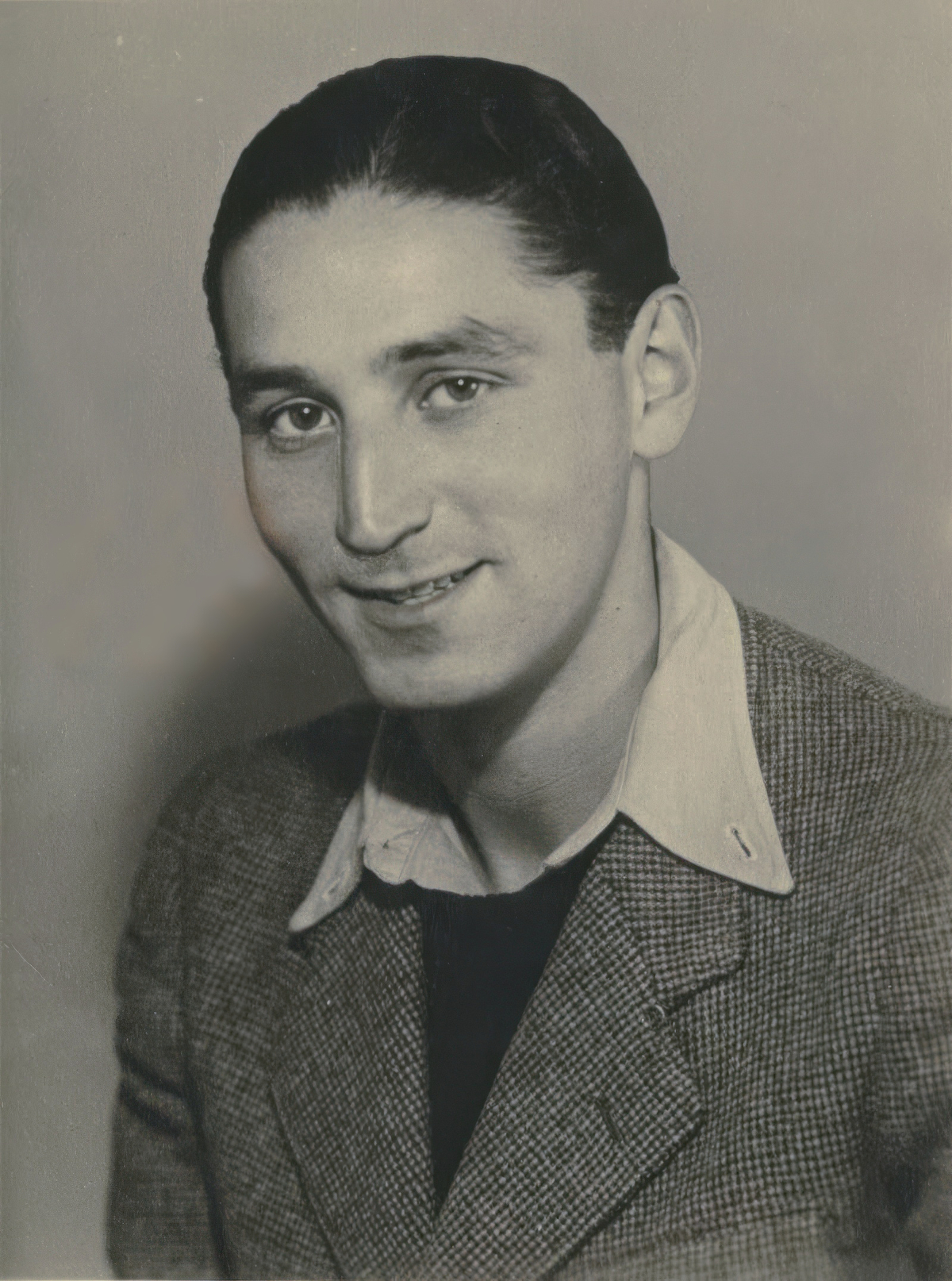
 Undated photo of Fredy Hirsch. Credit: Beit Theresienstadt, Kibbutz Givat Haim-Ihud, Israel.https://playlist.megaphone.fm/?e=CAD6560046601
Episode Notes
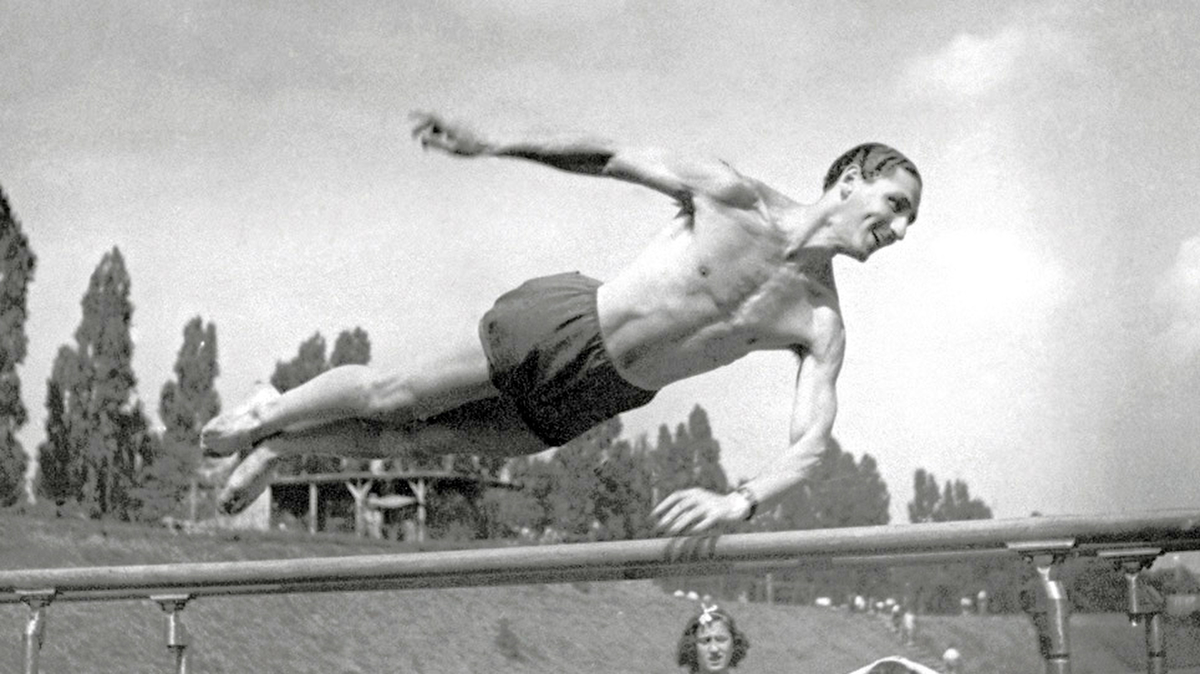
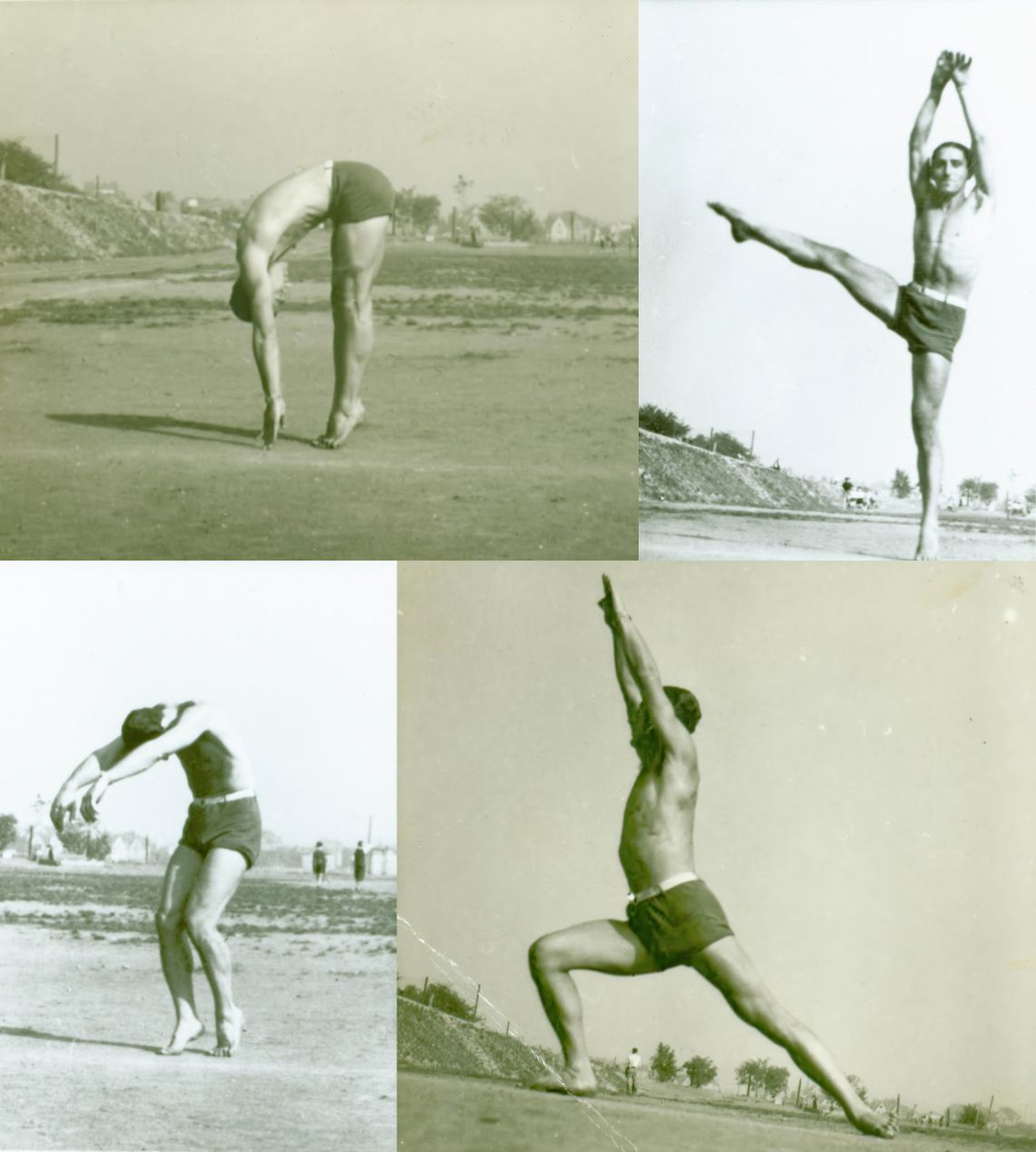
Charismatic German Jewish athlete Fredy Hirsch dedicated himself to inspiring and protecting children imprisoned by the Nazis. In this episode, survivors of Theresienstadt and Auschwitz whose lives were made tolerable, sometimes even joyful, thanks to his selfless efforts share their memories.
Episode first published April 3, 2025.
———
Archival Audio Sources
-The following interview segments are from the archive of the USC Shoah Foundation – The Institute for Visual History and Education:
- Dina Gottliebova-Babbitt, © 1998 USC Shoah Foundation
- Michael Honey, © 1997 USC Shoah Foundation
- Peter Mahrer, © 1998 USC Shoah Foundation
- Helga Ederer, © 1997 USC Shoah Foundation
- Yehudah Bakon, © 1996 USC Shoah Foundation
- Melitta Stein, © 1996 USC Shoah Foundation
- Eva Gross, © 1996 USC Shoah Foundation
- Chava Ben-Amos, © 1997 USC Shoah Foundation
For more information about the USC Shoah Foundation, go here.
-The following interview segments are from the United States Holocaust Memorial Museum Collection, Washington, D.C., courtesy of the Jeff and Toby Herr Foundation:
- RG-50.030.0488, oral history interview with Ursula Pawel
- RG-50.477.0497, oral history interview with John Steiner, gift of Jewish Family and Children’s Services of San Francisco, the Peninsula, Marin and Sonoma Counties
- RG-50.106.0061, oral history interview with Rene Edgar Tressler
For more information about the United States Holocaust Memorial Museum, go here.
-The Rudolf Vrba audio was drawn from footage created by Claude Lanzmann during the filming of Shoah. Used by permission of the United States Holocaust Memorial Museum and Yad Vashem, the Holocaust Martyrs and Heroes’ Remembrance Authority, Jerusalem.
———
Resources
For general background information about events, people, places, and more related to the Nazi regime, WWII, and the Holocaust, consult the online Holocaust Encyclopedia of the U.S. Holocaust Memorial Museum (USHMM).
- For an overview of Fredy Hirsch’s life and his efforts to improve the lives of the children in Theresienstadt and Auschwitz, read this Holocaust.cz article.
- Hirsch is the subject of Heaven in Auschwitz, a 2016 documentary directed by Aaron Cohen that’s available to rent on Vimeo (where you can also watch the trailer). It features several of the people whose voices you can hear in our podcast episode.
- A 2017 documentary by Rubi Gat titled Dear Fredy also explores Hirsch’s life. You can watch the trailer here; the film can be streamed for free in the U.S. here.
- For a glimpse into Hirsch’s private life, read Dr. Anna Hájková’s “Fredy Hirsch’s Lover” (Tablet, May 2, 2019).
- For a deep dive into life in Theresienstadt: Hájková is also the author of The Last Ghetto: An Everyday History of Theresienstadt (Oxford University Press, 2020).
- This Holocaust.cz page provides additional context about the Czech family camp in Auschwitz-Birkenau.
———
Episode Transcript
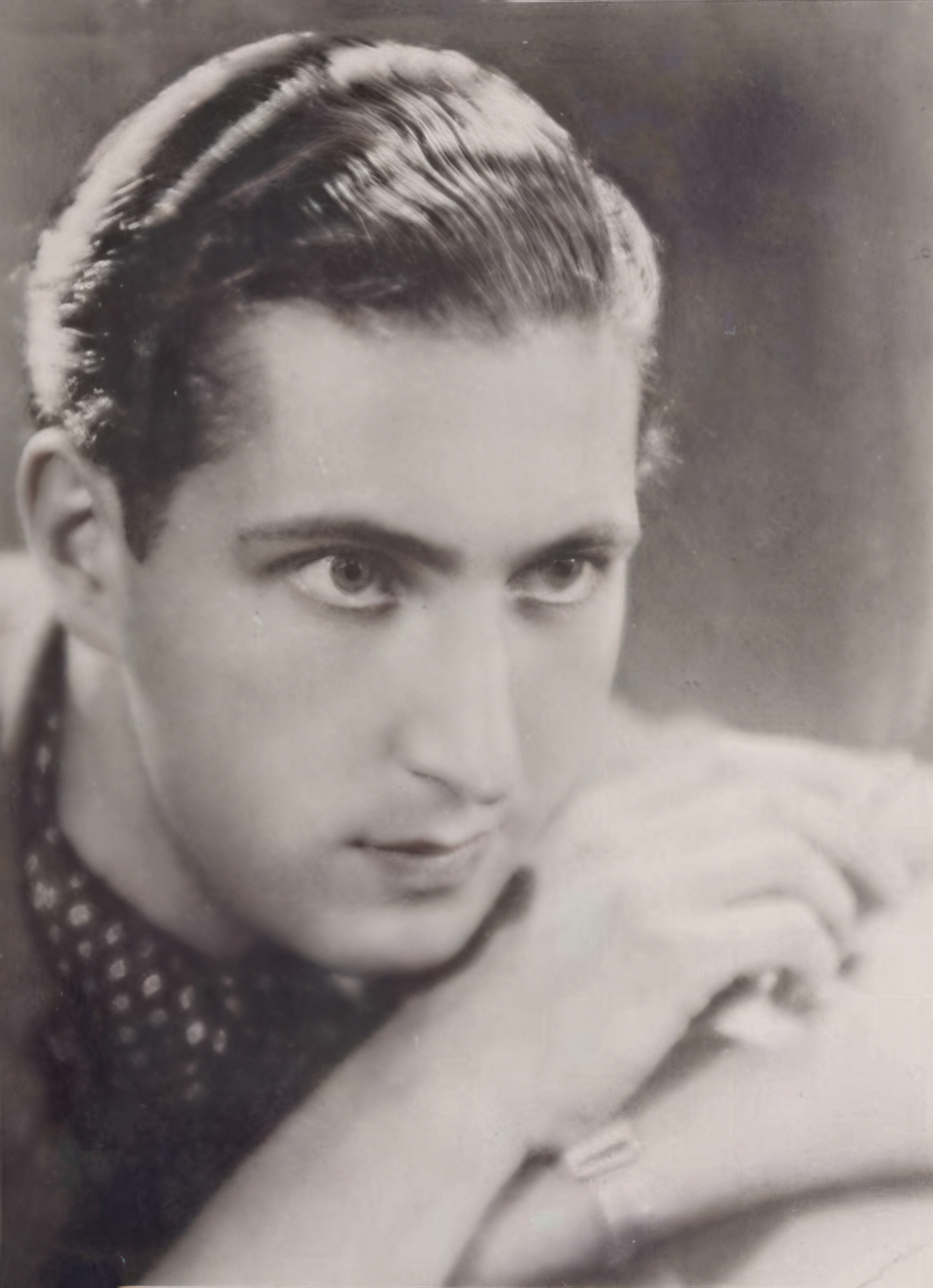
Dina Gottliebova-Babbitt: Fredy Hirsch was a young man who came to Brno at first fleeing Hitler. He was the epitome of tall, dark, and handsome. He looked like a toothpaste advertisement. He had this, uh, shiny black, slick black hair, very handsome face, and an incredible grin with white, white teeth.
Michael Honey: Well, Fredy Hirsh was quite an extraordinary man. A, a tremendous gymnast. Laughter was around him always.
Ursula Pawel: He was, you know, the—some people, you can’t analyze what makes this guy be appreciated and respected by everybody, what makes him a leader. And that was Fredy Hirsch.
DG: He was gay, which, we didn’t know and didn’t care. He was just one of us. And, uh, the reason I mention it now that he was gay is because he was a wonderful, wonderful man, and he did a lot of good things in very difficult situations for children, mainly. And because very often gays are maligned and spoken of badly, I think it’s important that if we know somebody that great—and he was great—who happened to be gay, that we say so, you know. I mean, it, it should be known, I think.
———
Eric Marcus Narration: I’m Eric Marcus and this is Making Gay History: the Nazi Era.
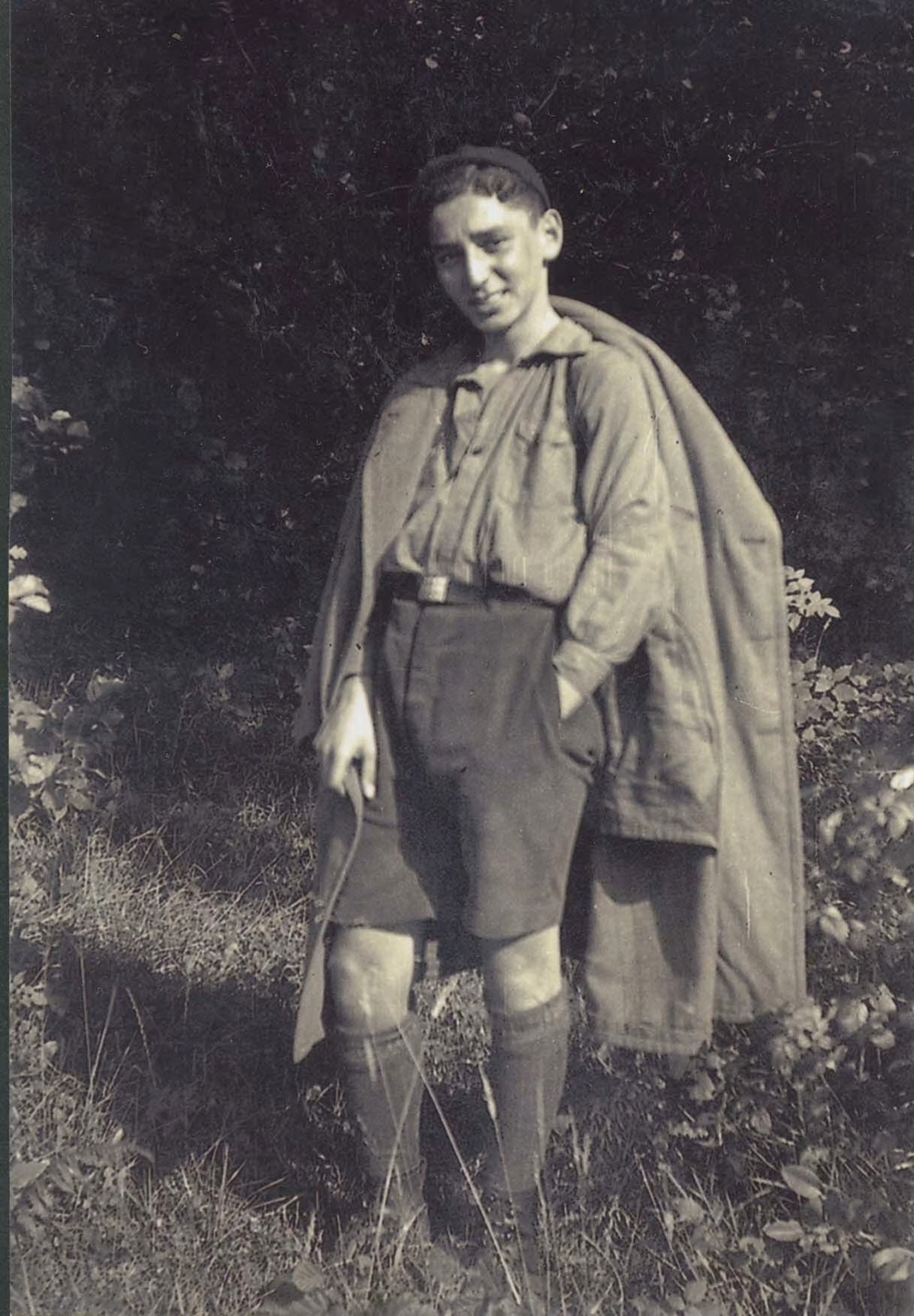
Fredy Hirsch was born in 1916 in Aachen, Germany. As a teenager, he was a leader in local Jewish youth movements. Fredy fled Nazi Germany in 1935 and moved to Czechoslovakia. He settled in Prague, where he worked for the Zionist youth movement Maccabi Hatzair, organized sports competitions, and helped Jewish teenagers prepare for immigration to Palestine.
To tell his story, we’re relying on the memories of people who knew him. We begin in 1939, after the Nazis invaded Prague.
———
MH: There were two leaders who shared the national leadership of Maccabi Hatzair, Fredy Hirsch and my brother Shraga. Um, and they had to decide who will go to Palestine and who will lead the movement in, uh, in occupied Czechoslovakia. And, uh, they did it by, you know, drawing the matches; they broke a match and whoever got the broken match stayed. And my brother got the, uh, he chose the right match.
———
EM Narration: Fredy drew the short stick and stayed behind to lead the youth movement. Czech Jews soon became subject to the same treatment as Jews in Germany. In 1939, fascist forces attacked Jews and synagogues; Jewish doctors, lawyers, and business leaders were banned from working in public institutions; Jewish businesses were seized.
———
Rene Tressler: Even the Jewish school after a while got closed. The only thing they, the Germans allowed us to do—the, I’m, I’m talking about the youth, the kids, you know—were, there was a sport club in Prague, a very famous one. The name is Hagibor.
And they allowed that sport stadium to be in the hands of the Jewish community in Prague, and the Jews—the Jewish kids and even adults—were allowed to go there and play, and play sports and exercise and so forth.
Fredy Hirsch, he was also the leader put in charge of that sports stadium during the Hitler-occupied time. And, uh, so we went there and we played soccer and we had a gorgeous soccer team.
He, uh, also advocated for us to exercise and to learn discipline and to be physically fit and mentally fit. And that was his, his way of teaching us, you know, which we hated, cause we wanted to play soccer and he couldn’t stand it. He just exercised, and so, and scouting, you know, and discipline and military and marching. Uh, but, uh, we found out later that it was pretty good for us and that he was doing the right thing.
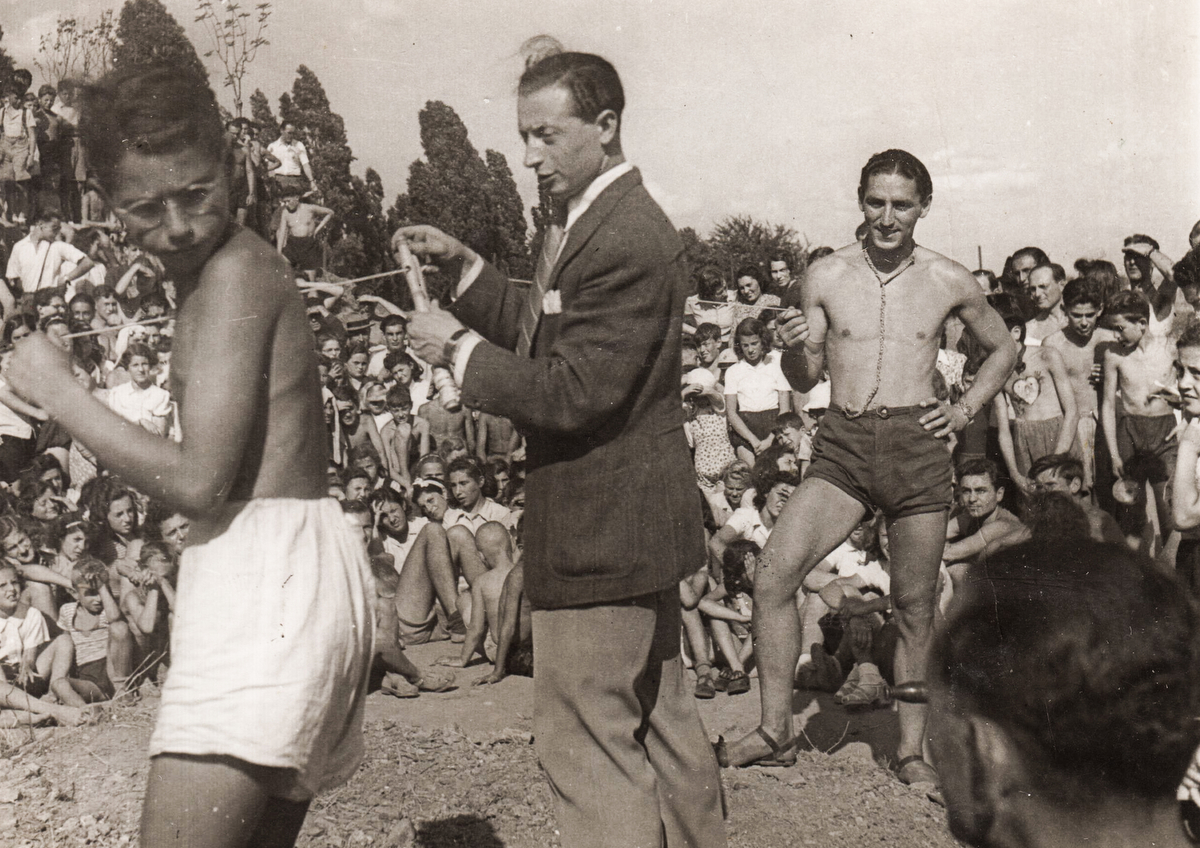
Peter Mahrer: The Jewish life was rapidly disappearing because the transports from Prague, uh, started. So every week there were a thousand people, uh, who disappeared and really, uh, the life in that part, in these couple of years, uh, just revolved about who’s going in the next transport and, uh, how do we help them.
Uh, I had been working with a group of, uh, uh, young men who were helping, uh, the Jews who were put into the transports that went first to Theresienstadt and eventually, uh, to Auschwitz. They were allowed, uh, one or two suitcases, and many of them were elderly and couldn’t, uh, couldn’t carry that. So we as youngsters went out in the morning with, usually in a horse-drawn carriage, and, uh, helped these people with their luggage and took it to the, to the assembly center. And this was organized by, uh, Fredy Hirsch.
John Steiner: Fredy understood the tremendous trauma of all the people who had the notification to go to the assembly places and be without any sort of support system, because so many people are old, didn’t have any relatives, no one to help. So he, under his leadership and with the help of kids like myself, we had special permission from the Gestapo to pick up the people from the places where they were to be deported, and help them to go to the assembly center, uh, and, and see to it that they would come there in one piece. Now, well, that may not have been viewed in retrospect as a great, uh, favor, you see, but on the other hand, we, uh, tried to avoid that the Gestapo would come and use force.
———
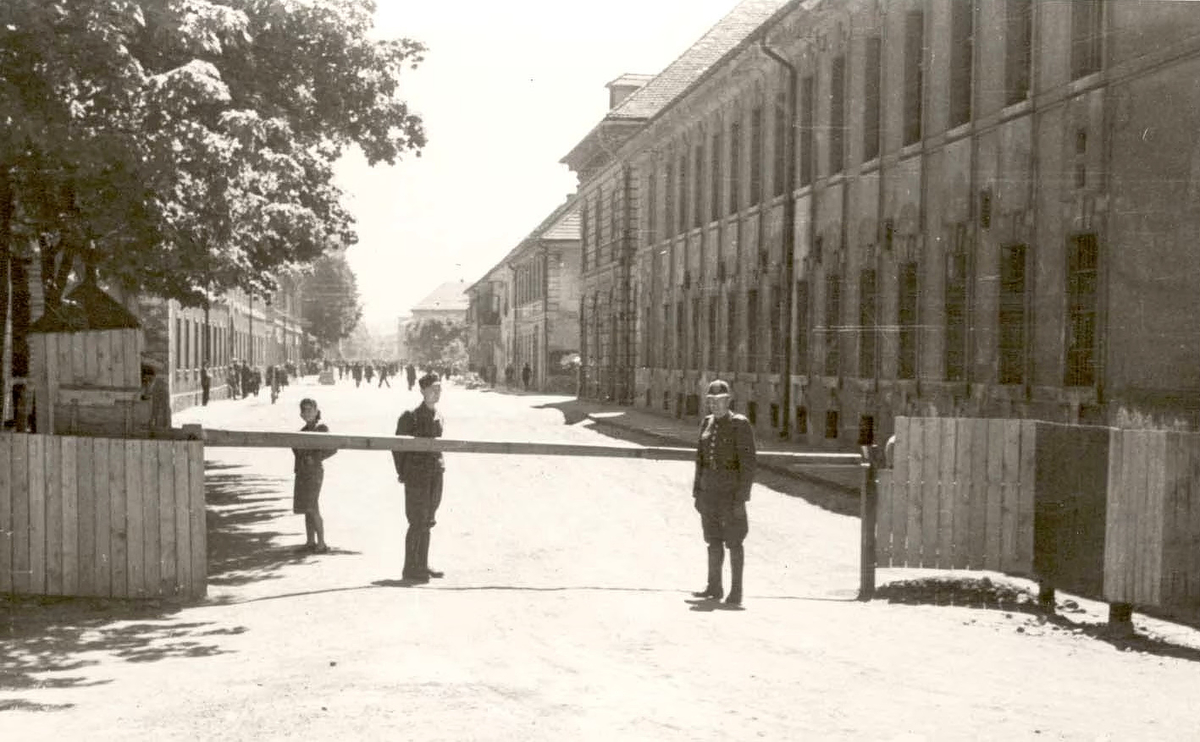
EM Narration: Fredy himself was deported to the Theresienstadt ghetto in December 1941. The Jewish functionaries who administered the ghetto put him and another man in charge of Youth Welfare. In the coming months, thousands more Jewish families were imprisoned in Theresienstadt.
———
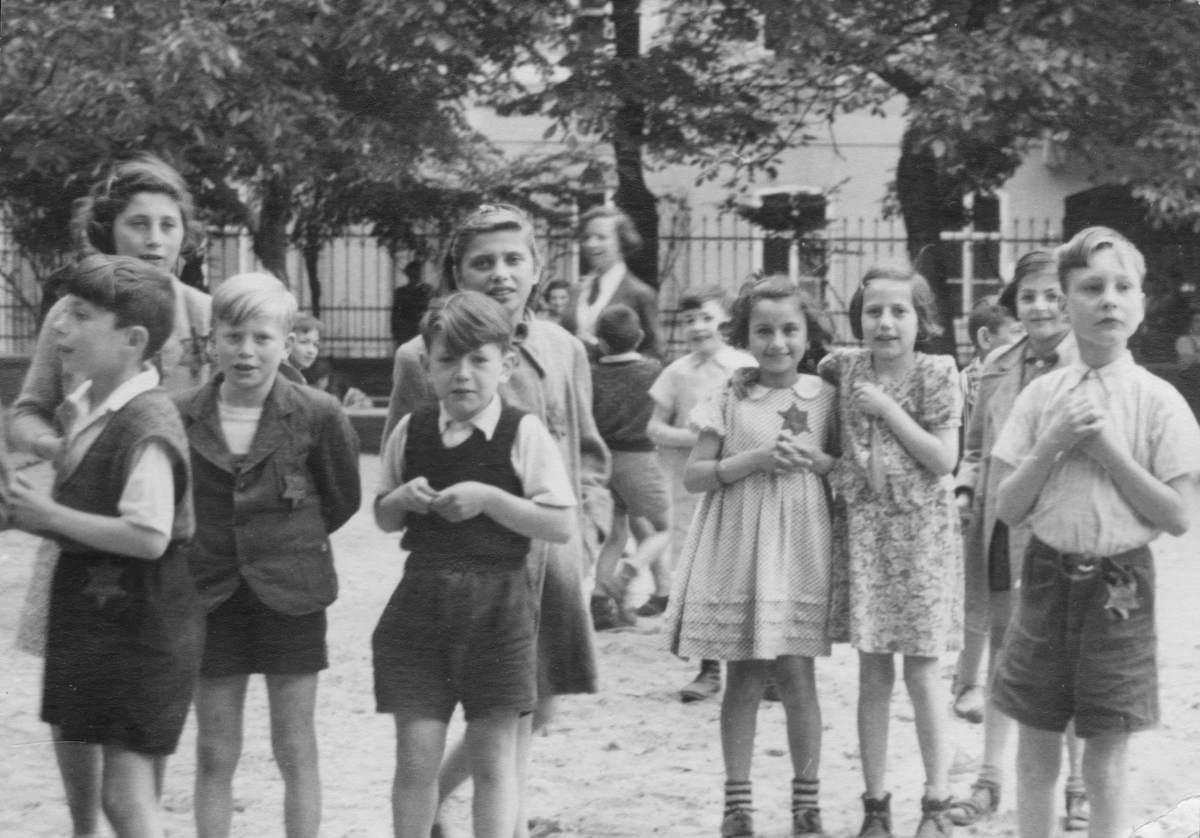
Helga Ederer: I was put into a girls’ children’s home. It was bunk beds in, in three tiers, and, um, girls of approximately the same age together. And, um, I stayed in the girls’ home for some time, but, um, I picked up all the illnesses there were, I had everything that was going. What was nice about it, we were taught something about Jewish history—although real teaching was strictly forbidden, but it, it went in form of stories and dances and so on. Our self-consciousness was, uh, uh, uh, increased manyfold and, uh, it did raise our hope and our strength.
I do remember the leading personality, uh, who was always, um, in charge of all youth activity was Fredy Hirsch, who was a German Jew. His, his Czech was atrocious. But by speaking German and dressing more or less like a Nazi, which was funny—he always had high polished boots and riding britches—and I suppose, uh, that was one thing which, which the Germans appreciated, that, uh, he, he was on the same level and therefore got their ear very often. And that’s how we were allowed to have little squares where we could play and dance, and I don’t know how we managed to get some balls to play games and so on. We had quite a good time when we weren’t ill.
Yehuda Bakon: He arranged a place for me in the youth or the children house L 417. Not all children were lucky and came into this children home. This children home were designed for children about 12 and about 15 or so. As I was a gifted child, I got all the encouragement through Fredy Hirsch. I could meet all the artists who supported me with pencils, paper, and, uh, critic, and teaching.
JS: He was very, very helpful to me, very specifically, for example. We had a particular job in Theresienstadt to, uh, get the belongings of the deceased and bring them to a particular part of, uh, a warehouse. Now I knew what was happening to these, uh, things, you know, all the, the, the power elite took it and, and, and enjoyed it. And I say, hey, you know, I’m going to get a piece of action here. And, and so I took some piece of soap and, and some books. And someone—some sort of big wheel or whatever, small wheel—saw it out the window and, and, and, and, and stopped us and called the, the ghetto police and whatever. And we went into terrible trouble. And Fredy Hirsh got us out of the trouble and said, “I’m going to see to it that they’ll be punished.” And he punished—so we had to clean the toilets, big deal. And other than that, we would’ve been in terrible trouble. I mean, you know, deportation possibly, this, you name it. That was Fredy Hirsch.
Melitta Stein: In 1943, the regular transports to Auschwitz started because now people came, the Jews from almost entire occupied Europe, came to Theresienstadt and it was filling up and it didn’t have that capacity. In order to fulfill Hitler’s dream to get rid of all Jews, they started these transports to Auschwitz, where there were gas chambers.
Eva Gross: Fredy went with the, with the September transport—Fredy Hirsch, who was important in all our lives and who did an awful lot of good. He went, he was gone.
———
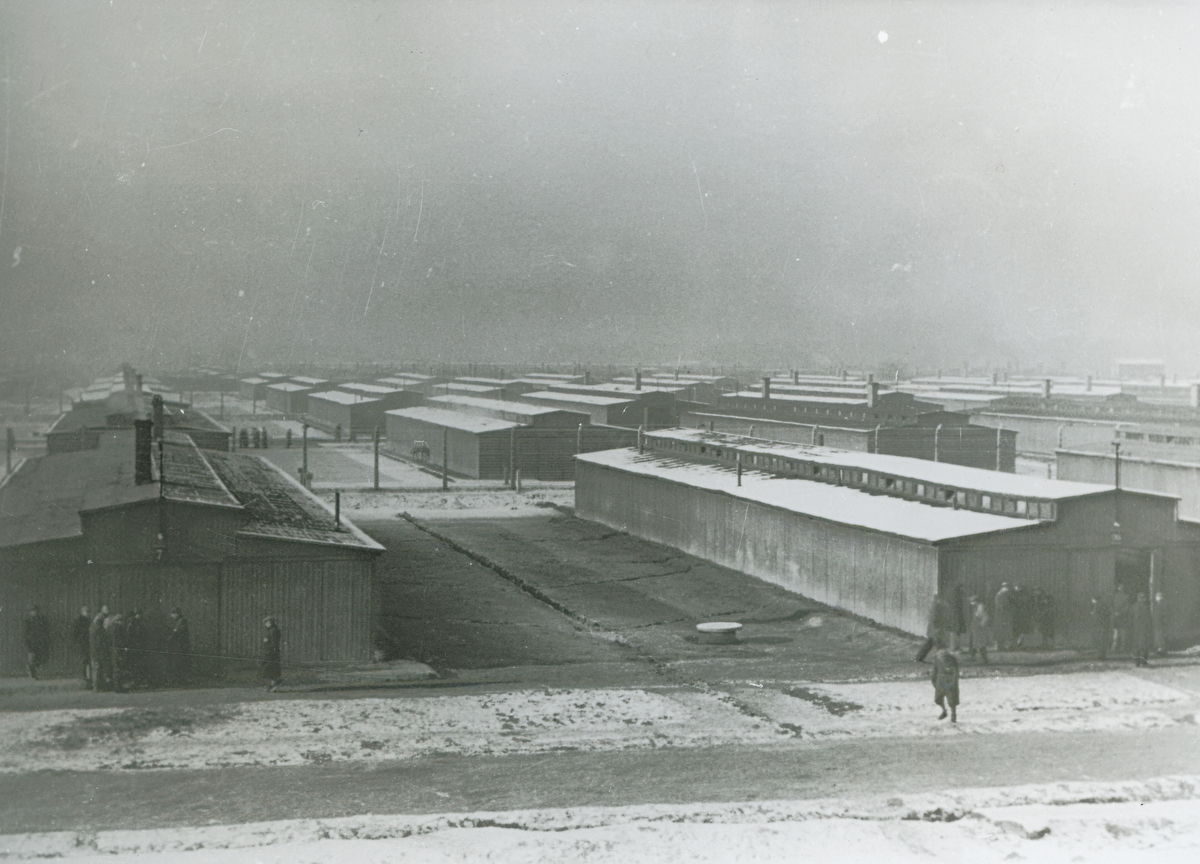
EM Narration: Fredy arrived at Auschwitz-Birkenau in September 1943 with five thousand mostly Czech Jews transported from Theresienstadt. Unlike the vast majority of Jewish prisoners in Auschwitz, they weren’t subject to selection upon arrival—meaning the elderly, children, and the sick were not singled out to be gassed immediately. Instead, the entire group was housed in Lager BIIb, or what came to be known as the Czech family camp.
Conditions in the family camp were slightly better than in other parts of Auschwitz, though many of the adults were forced to perform slave labor and died doing so. Fredy persuaded the SS to create a daytime children’s barracks and to let him oversee it.
Three months after Fredy’s transport arrived, another transport of five thousand Czech Jews from Theresienstadt was brought to the family camp.
———
MH: I was taken to a Jugendheim and who, who should be running the Jugendheim but Fredy Hirsch. So Fredy laughs, you know, it’s a big joke, and he says, “Ah, du bist schon da.” Like, “At last, you’re here,” you know, “I’ve been waiting for you.” And everybody’s laughing, you know, because—and this was his, his method to prevent the children from being afraid.
In this godforsaken place, he somehow got permission to get all the small children into a Jugendheim, and he did in Auschwitz-Birkenau, in the family camp, what he did in Theresienstadt. He took the children into a space where the space wasn’t prison. They started drawing paintings on the wall, and they were divided into groups, and each group had a madrich. And they were told stories and they were singing songs and there was a choir.
EG: I got dysentery and I was out. The first Appell, when we stood in, uh, ice cold, I fainted, and luckily I was, uh, taken in, into the barracks and they counted me in. And when I became feeling better, I remember suddenly Fredy Hisch standing near me, pulling me out, and said, “Come on,” and taking me to what was a children’s barracks—without beds, but lots of tables, and there were children, children, children, and I was so relieved and immediately much better.
RT: Very soon after I arrived, we, I started to work in that children’s barrack that Fredy, uh, got for the children. Some of them were, I think, four years old, uh, five years, seven, ten. I don’t think they were aware what’s actually happening. And I think the allowed age was 16, up to 16. Anybody over 16 was considered an adult, right?
But since, uh, Fredy knew me and since, uh, I was just close over 16 only, he wanted to spare us kids us, of my age of, from the normal adult life there, which was, uh, very, very difficult and horrifying, really. And so he let me, like, work in the children’s barrack, although the only thing I did was that I was carrying the barrels with the children’s soup at lunchtime back and forth from the kitchen, and the rest of the day I was just joining the kids like everybody else.
Uh, we were trying to do some singing groups, some theater groups, some reading groups. Fredy also, uh, got some allowance of books—children’s books, fairytales and things like that.
Chava Ben-Amos: It was a Familienlager. It wasn’t food, it wasn’t fun. But what we did have was some kind of an education. We would sit on the heating thing. They divided us by age groups or something, and people would teach us. And I learned about poetry, I learned about music. Somebody told us how movies are made. I remember in, in smallest detail what they taught us there. We also had all kinds of competitions between the children, like you were not allowed to speak for three days at all. Not one word. I remember that I lost the game because I woke up one morning and said “Good morning” to somebody.
They tried to keep us busy and Fredy Hirsch was coming and organizing it. I also remember that he called all the children at one time out, outside, and he was teaching up, us about self-hypnosis. He was lecturing us that if we suffer from anything, if something hurts, if we are hungry, we can help ourselves by telling us, telling ourselves it isn’t so. If we have pain, we say the pain is going away, it’s going away, it’s going, and it’s gone. If I was hungry, I was telling myself I wasn’t—it’s going away, it’s going away. I was doing it—I can still do it today.
YB: Now the organization of our daily life was much better because of Fredy Hirsch, and slowly he managed to got many better condition. One of them, the formidable thing is that we could have our so-called Appell, counting, inside the block. The normal way was twice a day counting, which was a terribly torture—we were put out in, in all conditions. Anyhow, he arranged for us to be counted in the block, which saved us from many death. Secondly, he got better treatment for us. Better food, special rations.
RT: He in Auschwitz got the courage to talk back to the Germans, which was unheard of and, I mean, crazy thing to do. But he did it and he succeeded with that, because he spoke to them as they spoke to him, in a military way, and they very much liked that. You know, that impressed the Germans really.
YB: His way of education, to keep us trained, to make, um, exercises. And if we were a bit dirty, he looked in our nails, and he, um, forced us to wash ourselves, even with snow. And I remember, we had not a towel—a group of 20 children had a handkerchief. There was hardly any water running. But his drilling in a way saved our life. Because in Auschwitz, the people had a better chance to survive if they looked more or less still human.
If you looked, starting to be what we called a Muselmann, or you had a little rash, that would mean you go to the gas chambers on the next—or you got much worse treatment than somebody who still looked half-human. And that’s thanks to Fredy. One of the many reasons why we survived is because he drilled us to keep fit even in these circumstances. Because who wanted in Auschwitz to wash himself with snow?
———
EM Narration: That winter, many of the children’s parents and grandparents died of hunger, disease, and exhaustion.
In the early months of 1944, a rumor circulated that the prisoners in the family camp were going to be moved to a work camp called Heydebreck.
But Auschwitz had a resistance movement that had access to the Nazis’ files, and they had reason to believe that the Czech families were actually destined for the gas chambers. Hoping to incite a revolt, the resistance sent a go-between to the family camp to relay their suspicions.
———
Rudolf Vrba: I was given the task to inform the resistance movement within the family camp that the possibility of them being gassed on the March 7 is perfectly real, although not yet fully confirmed. I was supposed to transfer this information, this possibility is real. I contacted Fredy Hirsch, who was sort of a potential for a leader of a revolt.
Where the attack should take place was not so clearly formulated because it was not yet clear if they are going to be gassed. But the whole possibility of an uprising within the camp was first time seriously considered. It was explained to those Czechs that they are going possibly to die.
So, uh, Fredy Hirsch, uh, objected. Uh, he, uh, was very reasonable. He said that it doesn’t make sense to him that the Germans would keep them for six months and feeding the children with milk and white bread in order to gas them after six months. And after all this, uh, personal relationship, which he managed to struck up with a number of the officers. And, and that they wouldn’t allow it because there was already a personal relationship between the SS, uh, and, and those children.
JS: Then came the terrible thing that all a sudden certain people with certain numbers had to go, uh, and be, uh, uh, be separated, taken away so that all the people, they went and control people with certain numbers—which was just exactly the number of Fredy Hirsch.
———
EM Narration: On March 7, Fredy and the other surviving Jews from the first transport were moved from the family camp to the adjacent quarantine camp.
———
CB: When they took the transports of the children that he was most involved with, they gave him the option of not going with them. He went because he didn’t want to leave them alone. We all were completely flabbergasted because we heard that he was allowed not to.
MS: We were witnesses as they were rounded up, taken by trucks to a neighboring camp, where we could see them because it was only wires that divided the camps. We could see them, but we couldn’t do anything.
RV: On the next day I got the message, again from the resistance, that it is sure that they’re going to be gassed, that the Sonderkommando already received the call for burning the transport. Everything was organized. I mean, this was not just a disorganized sort of, uh, uh, sort of slaughterhouse. It was an organized slaughterhouse, and that was, the organizations were made for this particular transport.
So now my task was again to explain to Fredy Hirsch the situation. So I explained to him that as far this transport is concerned, included him, they are going to be gassed on the next 48 hours. And that, uh, the situation being what it is, it is necessary to hit now. This is a chance which doesn’t, never occurred before, to have such an informed group in front of the gas chambers.
So he suddenly started to worry. He said, “What happens to the children if we start the uprising?”
UP: Fredy knew when the Familienlager was going to be eliminated. And they went through this terrible agony, whether they should inform everybody and fight back in some way, and, you know, and cause a tremendous disruption. All you could do is cause a disruption, because you had machine guns from all corners—I mean nobody could have any illusion that they could survive.
Fredy and some of the other people came to the conclusion that if they will do so, they would cause such bedlam and such fear, and nobody was going to be saved anyway, and the children, instead of going into the gas not knowing where they were going, they were going to be, you know, like hunted animals.
HE: So he refused to lead the, uh, um, revolt, which was planned. And I do know that there was some kind of resistance was planned because I remember seeing one man with, with, uh, wire cutters and, and, uh, lots of people getting together talking about possible resistance, but nothing came of it.
———
EM Narration: Shortly after Fredy received confirmation from the resistance that his entire transport would be murdered, he was found in a coma. It’s not clear whether he overdosed by accident on tranquilizers, was poisoned by doctors who feared for their own lives if he led a revolt, or whether he tried to kill himself. That same night, the SS carried out its plans.
———
EG: They loaded them up on trucks and they took them over to the crematorium. By then they of course knew what was happening and three—they sung. They were singing. They were going to their death singing, one group singing the Czech anthem, one group singing the “Hatikvah,” and the third one “The Internationale.”
RT: They loaded them on trucks, you know, and they disappeared. And we learned that they were gassed. The whole transport was gassed. All half of our camp—children, adults, everything—half were gassed.
———
EM Narration: Fredy and about three thousand seven hundred other Jews, including many of the children who’d been in Fredy’s care, died on March 8, 1944.
In July, the Czech family camp was closed. Four thousand people were put to death. The remaining three thousand were sent to work camps. Among them were some of the people you heard in this episode:
Dina Gottliebova-Babbitt, Michael Honey, Ursula Pawel, Rene Tressler, Peter Mahrer, John Steiner, Helga Ederer, Yehudah Bakon, Melitta Stein, Eva Gross, and Chava Ben-Amos. Rudolf Vrba was the Auschwitz resistance go-between.
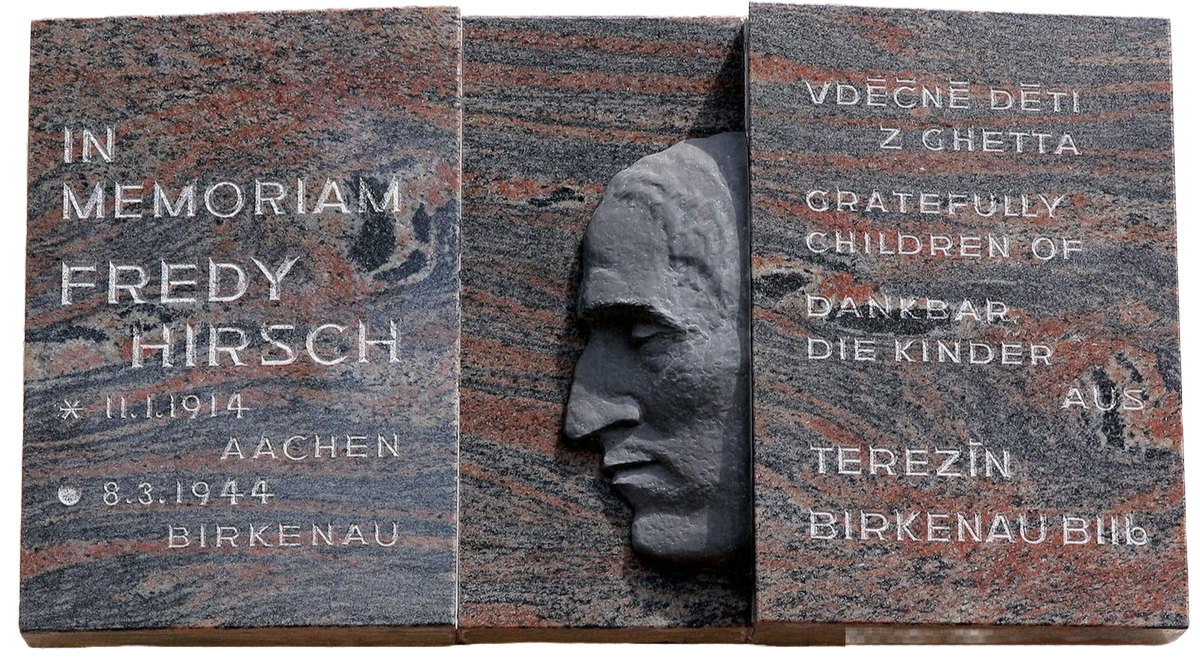
In 1996 a group of survivors of Theresienstadt and Auschwitz-Birkenau arranged for a stone plaque to be installed in Fredy’s memory in Theresienstadt. They gathered for a ceremony to honor the young man who died in Auschwitz at the age of 28. The plaque reads, “In Memoriam: Fredy Hirsch. Gratefully, The children of Terezín, Birkenau BIIb.”
———
Up next: the epilogue to our “Nazi Era” series.
———
This episode was produced by Nahanni Rous, Inge De Taeye, and me, Eric Marcus. Our audio mixer was Anne Pope. Our studio engineer was Elvira Gutierrez at CDM Sound Studios. Our theme music was composed by Fritz Myers.
Thank you to our photo editor Michael Green, our founding editor and producer, Sara Burningham, and our founding production partner, Jenna Weiss-Berman.
The segments of the interviews with Dina Gottliebova-Babbitt, Michael Honey, Peter Mahrer, Helga Ederer, Yehudah Bakon, Melitta Stein, Eva Gross, and Chava Ben-Amos are from the archive of the USC Shoah Foundation—The Institute for Visual History and Education.
The oral history excerpts of Ursula Pawel, John Steiner, and Rene Edgar Tressler are from the United States Holocaust Memorial Museum Collection. The Pawel testimony is provided courtesy of the Jeff and Toby Herr Foundation; the Steiner testimony is a gift of the Jewish Family and Children’s Services of San Francisco, the Peninsula, Marin and Sonoma Counties.
The Rudolf Vrba audio was drawn from footage created by Claude Lanzmann during the filming of Shoah and was used by permission of the United States Holocaust Memorial Museum and Yad Vashem, the Holocaust Martyrs and Heroes’ Remembrance Authority in Jerusalem.
To learn more about the people and stories featured in our episodes, please visit makinggayhistory.org, where you’ll find links to additional information and archival photos, as well as full transcripts.
This special series on the experiences of LGBTQ people during the rise of the Nazi regime, World War II, and the Holocaust is a production of Making Gay History, in partnership with the Fortunoff Video Archive for Holocaust Testimonies at Yale University.
I’m Eric Marcus. Until next time.