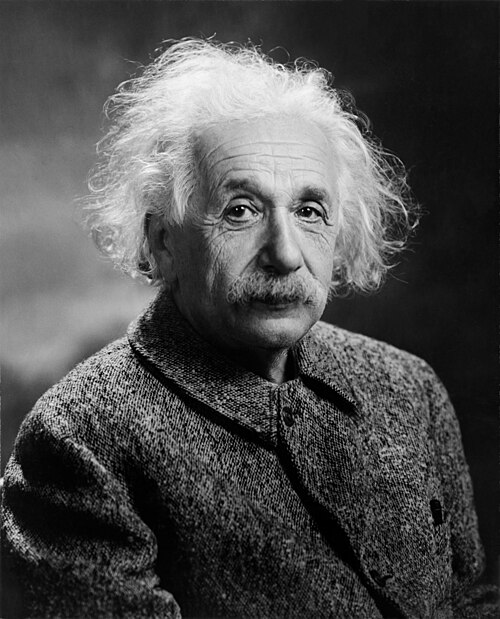
“Our task must be to free ourselves… by widening our circle of compassion to embrace all living creatures and the whole of nature and it’s beauty.”
~ Einstein
Albert Einstein was a German-born mathematician and physicist who revolutionized physics and our understanding of the universe. He’s best known for his theory of relativity, which helped scientists understand how gravity works and how objects affect space and time. His famous equation, E=mc², which comes from special relativity, shows that mass and energy are equivalent. Einstein also made significant contributions to quantum theory. (Wikipedia.org)
New Thinking Allowed with Jeffrey Mishlove Aug 29, 2026 New Thinking Allowed Audio Podcast Roy Stemman, former editor of Psychic News, is author of Spirits and Spirit Worlds, Reincarnation: True Stories of Past Lives, Spirit Communication, One Soul Many Lives, Mysteries of the Universe, Healers and Healing, Medium Rare: The Psychic Life of Ena Twigg, and (with George Chapman) Surgeon From Another World. Here he describes the relationship between the British spiritualist movement and the Anglican Church, beginning with a report commissioned by the Church in the 1930s. In 1967, the Episcopal Bishop of California, James Pike, publicly reported on his communications with his deceased son through the mediumship of Ena Twigg in London. Pike gave up his position as Bishop to pursue other studies, including after-death communication. Later, in a dramatic event, he became lost in the desert in Israel. After his death, but before his body was discovered, he appeared in spirit to Ena Twigg. New Thinking Allowed host, Jeffrey Mishlove, PhD, is author of The Roots of Consciousness, Psi Development Systems, and The PK Man. Between 1986 and 2002 he hosted and co-produced the original Thinking Allowed public television series. He is the recipient of the only doctoral diploma in “parapsychology” ever awarded by an accredited university (University of California, Berkeley, 1980). He is also the Grand Prize winner of the 2021 Bigelow Institute essay competition regarding the best evidence for survival of human consciousness after permanent bodily death. He is Co-Director of Parapsychology Education at the California Institute for Human Science. (Recorded on April 10, 2021)
[Joseph Chilton] Pearce was especially interested in Castaneda’s idea that human beings are trained from childhood to perceive a particular version of reality. Don Juan called this the description of the world: we don’t simply see reality; we learn what counts as reality.
That fits closely with Pearce’s central argument in books such as The Crack in the Cosmic Egg:
Culture constructs a “reality” for us.
Children initially have a much less rigid relationship to that reality.
As language, social expectations, and habitual patterns become established, the world becomes increasingly fixed and unquestionable.
Occasionally something can disrupt that structure—a mystical experience, psychedelic experience, crisis, or profound change in consciousness.
What appears to be “supernatural” may sometimes be another way of organizing experience, rather than a violation of reality.
And this is where Don Juan becomes particularly important to Pearce. Castaneda’s Don Juan repeatedly tries to get Carlos to stop taking the ordinary description of reality for reality itself.
Pearce’s phrase “crack in the cosmic egg” is almost a perfect metaphor for this: a crack develops in the apparently solid structure through which we experience the world, and something beyond it becomes conceivable.
There is an important difference, though. Pearce was considerably more intellectually cautious than Castaneda’s Don Juan persona. Pearce was interested in what such experiences might reveal about consciousness, whereas Castaneda increasingly presented them as teachings from a specific lineage of sorcerers.
And that raises the really interesting question: Was Pearce fooled by Castaneda, or did he recognize something genuine in Castaneda’s work even if the Don Juan story wasn’t literally true?
I think the second possibility deserves to be taken seriously.
Me: Delve into the question of whether Pearce was deceived by Castaneda’s stories or whether he discerned a genuine insight into consciousness and reality, despite the fictional aspects of the Don Juan narrative.
ChatGPT: Yes. Having looked more closely at Pearce’s own later statements, I think the most interesting answer is neither “Pearce was simply fooled” nor “Castaneda was telling the literal truth.” Pearce seems to have made a third move: he treated Castaneda as someone who had encountered—or at least articulated—something profound about consciousness, while accepting the possibility that the literary vehicle used to convey it was not historically reliable.
There is unusually strong evidence for this in Pearce’s later writing.
1. Pearce actually knew what was at stake
In The Crack in the Cosmic Egg, Pearce didn’t merely mention Castaneda in passing. He regarded The Teachings of Don Juan as a crucial demonstration of his own thesis about reality.
Pearce says that Castaneda was one of the most courageous and intelligent people he had encountered in literature and that he “plainly loved” Don Juan. More importantly, he thought Castaneda’s experiences demonstrated something about the structure of human reality, not merely something about Mexican shamanism.
That distinction is important.
Pearce’s question wasn’t primarily:
“Did a Yaqui sorcerer named Don Juan really teach Carlos these things?”
It was closer to:
“What happens to consciousness when the framework by which we ordinarily organize reality is disrupted?”
That question survives even if the anthropological story collapses.
2. Pearce’s “cosmic egg” actually gives him a way around the historical question
Pearce’s central concept was that we inhabit a constructed reality—a “cosmic egg” consisting of our accumulated assumptions about what reality is and what is possible.
The official Pearce archive describes the idea this way: culture and mind create a logical shell that determines what reality can be for us.
So imagine that Castaneda’s Don Juan is partly fictional.
That doesn’t necessarily destroy Pearce’s argument.
A fictional story can still crack the egg.
Shakespeare didn’t need to be a real historical Danish prince for Hamlet to reveal something true about consciousness. Likewise, Don Juan could function as a mythic or literary instrument through which Castaneda expressed experiences and ideas that were psychologically or phenomenologically real.
And Pearce seems to have understood something like this.
3. The most revealing statement comes much later
In The Biology of Transcendence, Pearce explicitly addresses the problem:
“Whether or not one accepts Castaneda’s literary vehicles for presenting this fact is beside the point.”
That’s extraordinarily revealing.
By then Pearce was no longer saying, essentially, “Don Juan really exists, therefore his teachings are true.”
He’s saying something much subtler:
There is a truth being communicated through the literary vehicle, and the historical status of the vehicle is secondary.
The truth Pearce thought Castaneda had grasped concerned fear of death and its effect on human consciousness. Pearce believed that fear locks human beings into primitive survival patterns and inhibits higher possibilities of consciousness.
That fits perfectly into his larger evolutionary theory.
4. And this makes Castaneda surprisingly compatible with Pearce’s own experience
This is where I think the question becomes much more interesting.
Pearce wasn’t merely an intellectual fascinated by altered states. His own biography describes experiences that, in his terminology, shouldn’t have been possible within the accepted reality structure—precognition, telepathic experiences, spontaneous remission, unusual physical phenomena, and so forth. He called these “cracks” in the identity-reality structure.
So when Pearce encountered Castaneda describing a world in which ordinary distinctions between mind and physical reality became unstable, he wasn’t approaching it as a detached anthropologist.
He already had a phenomenological reason to take the possibility seriously.
This helps explain what otherwise looks like excessive credulity.
Pearce may have thought:
“I don’t know whether every event Castaneda describes happened exactly as he describes it. But I recognize the territory.”
That is a very different position from believing every anecdote literally.
5. But Pearce probably was too credulous about Castaneda
Here I’d make a distinction between Pearce’s insight and Pearce’s judgment about Castaneda.
The historical case against Castaneda became formidable.
Anthropologists and later investigators found serious problems with his alleged fieldwork and with the identification of Don Juan as the Yaqui Indian sorcerer Castaneda claimed to have studied. His biography became increasingly opaque, and Castaneda himself encouraged an elaborate mythology around his identity.
Richard de Mille’s The Don Juan Papers, for example, subjected the Don Juan material to extensive critical examination.
And the more extravagant claims in the later books make the literal interpretation increasingly difficult.
So I would say Pearce underestimated the possibility that Castaneda was constructing literature rather than reporting anthropology.
But that doesn’t necessarily mean Pearce’s underlying intuition was wrong.
In fact, there’s an intriguing clue in Pearce’s own development.
His later work moves increasingly away from Castaneda’s ethnographic claims and toward neuroscience, developmental psychology, evolutionary biology, and consciousness. His basic proposition remains, but Castaneda becomes a vehicle rather than the foundation.
That looks less like someone who discovered he’d been completely fooled and more like someone who absorbed what he considered valuable and left the questionable shell behind.
6. The really profound possibility: Castaneda may have discovered something without being a reliable witness
This is the position I find most defensible.
There are at least four different claims that tend to get collapsed into one:
Don Juan existed as Castaneda described him.
Castaneda actually underwent the experiences he described.
The experiences revealed something genuine about consciousness.
Castaneda’s interpretation of those experiences was correct.
These are completely different propositions.
You can reject #1 and #4 while remaining agnostic about #2 and accepting much of #3.
And that’s where Pearce seems to have landed eventually.
The extraordinary thing is that a person’s interpretation of an experience can be wrong while the experience itself is enormously important.
A medieval Christian mystic might experience something profound and interpret it as an encounter with God.
A Jungian might interpret essentially the same type of experience as an eruption of the collective unconscious.
A Buddhist might call it a glimpse of nondual awareness.
Castaneda calls it seeing, stopping the world, assemblage point, and so forth.
The map isn’t necessarily the territory.
Pearce’s genius, I think, was recognizing that the territory might still be worth investigating even when the map is questionable.
7. And this connects remarkably closely with the question you’ve been exploring about Truth and consciousness
There’s a connection here to your formulation:
Since I am consciousness and since I am Truth, therefore Truth is consciousness.
Pearce’s deepest insight can be read in a surprisingly compatible way.
His “cosmic egg” says that we normally mistake our representation of reality for reality itself.
That’s very close to saying:
We mistake the contents of consciousness for consciousness itself.
Castaneda’s “stopping the world” then becomes interesting—not because one necessarily believes that Carlos literally flew through the air or encountered inorganic beings—but because it points toward the possibility of interrupting the habitual construction of experience.
What remains when the description of reality stops dominating experience?
That is the genuinely interesting question.
And it is also where Pearce, Castaneda, Jung, and the mystical traditions begin to converge.
My tentative verdict
I would put it this way:
Pearce was probably too trusting of Castaneda the anthropological reporter, but he may have been remarkably perceptive about Castaneda the phenomenologist.
Castaneda may have invented, embellished, rearranged, or mythologized enormous portions of the Don Juan narrative. That seriously undermines the books as anthropology.
But it doesn’t automatically invalidate the possibility that Castaneda had encountered unusual states of consciousness and then built a mythology around them.
Pearce seems to have recognized precisely that distinction—especially in his later work.
And perhaps the irony is that Castaneda’s greatest contribution may not depend upon Don Juan having existed at all.
Don Juan could be regarded as a character who performs a function: he destabilizes the reader’s certainty about what reality is.
In that sense, the fiction itself becomes a crack in the cosmic egg.
And that, I suspect, is much closer to what Pearce ultimately valued in Castaneda than the question of whether every story actually happened.
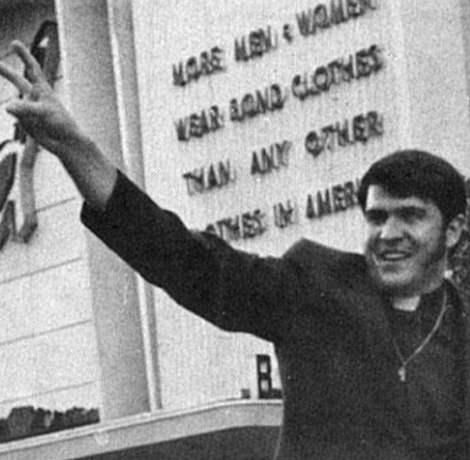
Me: Was Troy Perry responsible for the first gay pride parade in hollywood in 1970?
(Image from LosAngelesBlade.com)
Google AI
Yes, Reverend Troy Perry was one of the co-founders and key organizers responsible for the historic first permitted gay pride parade in Hollywood (and the world), held on June 28, 1970. [1, 2]
Key Details of the 1970 Parade
Co-Organizers: Troy Perry (founder of the Metropolitan Community Church) organized the event alongside fellow activists Morris Kight (founder of the Gay Liberation Front) and Reverend Bob Humphries. [1, 2]
Organization: Together, they founded the Christopher Street West Association to plan the event and successfully secure an official city permit. [1, 2]
Date and Route: The parade took place on June 28, 1970, marking the one-year anniversary of the Stonewall Riots. Around 2,000 participants gathered at McCadden Place and marched down Hollywood Boulevard. [1, 2]
Me: Didn’t the same parade happen in San Francisco, New York and other cities?
Google AI
Yes, similar demonstrations took place in New York, San Francisco, and Chicago during that exact same weekend in June 1970. They were all organized to mark the one-year anniversary of the Stonewall Uprising. [1, 2, 3, 4]
However, they were separate events organized by local activist groups, each taking a slightly different format: [1]
Chicago (June 27, 1970): The Chicago Gay Liberation group organized a “Gay Liberation March” from Washington Square Park to the Water Tower, making it technically the very first march of that historic weekend. [1, 2]
San Francisco (June 27–28, 1970): A small group of about 30 activists marched down Polk Street on Saturday, followed by a larger “Gay-In” picnic and festival in Golden Gate Park on Sunday. [1]
New York City (June 28, 1970): Activists organized the Christopher Street Liberation Day March. Thousands of people marched 51 blocks from Greenwich Village up to Central Park. Because it happened where the Stonewall Riots occurred, NYC is widely recognized as the birthplace of the Pride movement. [1, 2, 3, 4]
What made the Hollywood Parade unique?
While New York and Chicago held political protest “marches,” the Los Angeles event was unique because Troy Perry and his co-organizers insisted on a traditional, permitted street parade with floats, music, and street closures. They had to fight a massive legal battle against the Los Angeles Police Commission to secure the permit, ultimately winning a mandate from the California Supreme Court to let the parade proceed. [1, 2]
Growth and attendance
The growth and attendance of Pride events since their 1970 inception represents one of the most explosive social and cultural expansions in modern history, transforming local, neighborhood-level protests of a few thousand total people into global spectacles that draw millions of attendees annually. [1, 2]
Attendance: 1970 vs. Recent Years
The contrast between the inaugural crowds and modern turnouts illustrates how dramatically these local movements have scaled:
City
1970 Attendance / Participants
Modern Estimated Attendance
New York City
~2,000 – 5,000
5,000,000+ (WorldPride record)
San Francisco
~30 marchers (Saturday); a few hundred at Sunday’s “Gay-In”
1,000,000+
Los Angeles (Hollywood)
~1,000 – 2,000
175,000+ (festival/parade)
Chicago
~100 – 150
1,000,000+
Key Historical Growth Triggers
The transition from dangerous political demonstrations to massive celebratory events happened in distinct phases:
The Early 1970s Explosion: Word spread rapidly after 1970. By 1974, San Francisco’s turnout surged to 60,000 people, and by 1980, it crossed 250,000, forcing the city to move the event from local neighborhoods to the massive Market Street thoroughfare. [1, 2, 3, 4]
The 1980s and the AIDS Crisis: Attendance shifted from celebratory to deeply political and urgent. Groups like ACT UP utilized the massive crowds at New York Pride to stage die-ins and major political protests, demanding healthcare reform and pharmaceutical access. [1]
The 21st Century Corporate & Global Boom: Over the last two decades, major corporate sponsorships, televised broadcasts, and the legalization of same-sex marriage transformed Pride into a staple city tourism event. In 2019, NYC hosted WorldPride, which drew an estimated 5 million people, making it the largest LGBTQ+ gathering in human history. [1, 2]
I came across the joke below in an article about jokes that illustrate aspects of different philosophical issues. This joke pertains to the question of unconscious motivations. It’s almost a test: if you don’t believe that there are such things, then you won’t get the joke. If you do get the joke, it’s kind of a give-away!
New Thinking Allowed with Jeffrey Mishlove Aug 27, 2026 New Thinking Allowed Audio Podcast Chris Carter is a physics teacher who was educated at Oxford, England. He is author of four books that make him one of the most significant authors today exploring the question of life after death. They include Science and the Near-Death Experience, Science and Psychic Phenomena, and Science and the Afterlife Experience. His most recent book is The Case for the Afterlife: Evidence of Life After Death. Chris argues that science does not speak with a single voice on the afterlife and examines why many prominent scientists have remained open to questions of consciousness beyond death. He explores five major lines of evidence including near-death experiences, deathbed visions, children’s memories of previous lives, apparitions, and mediumship while discussing how standards of scientific evidence should be applied to extraordinary claims. Carter contends that a rigorous examination of the evidence invites a broader philosophical understanding of reality and survival beyond bodily death. 00:00:00 Introduction 00:03:02 Scientists and belief 00:08:03 Creator and afterlife 00:12:02 Five lines of evidence 00:17:32 Skepticism and proof 00:22:12 Quantum perspectives 00:27:06 Reincarnation research 00:32:06 Strongest mediumship cases 00:38:16 Deathbed vision evidence 00:47:18 Conclusion New Thinking Allowed host, Jeffrey Mishlove, PhD, is author of The Roots of Consciousness, Psi Development Systems, and The PK Man. Between 1986 and 2002 he hosted and co-produced the original Thinking Allowed public television series. He is the recipient of the only doctoral diploma in “parapsychology” ever awarded by an accredited university (University of California, Berkeley, 1980). He is also the Grand Prize winner of the 2021 Bigelow Institute essay competition regarding the best evidence for survival of human consciousness after permanent bodily death. He is Co-Director of Parapsychology Education at the California Institute for Human Science. (Recorded on Friday, July 17, 2026)
New Thinking Allowed with Jeffrey Mishlove Aug 28, 2026 Psychology and Psychotherapy This video is a special release from the original Thinking Allowed series that ran on public television from 1986 until 2002. It was recorded in about 1990. It will remain public for only one week. The late Hal Stone, PhD, is author of Embracing Heaven and Earth and co-author, with his wife Dr. Sidra Winkelman, of Embracing Our Selves and Embracing Each Other. He and Dr. Winkelman are developers of the “Voice Dialogue” psychotherapeutic process. Here he describes how he discovered the “Voice Dialogue” method of contacting his own sub-personalities. The process, as it has evolved, includes elements of gestalt therapy, psychosynthesis, psychodrama, transactional analysis and Jungian analysis. Dr. Stone describes various sub-personalities such as the “protector-controller,” the “pusher” and the “critic.” The Voice Dialogue technique is demonstrated with Jeffrey Mishlove and Dr. Stone each taking a turn as therapeutic subject.
Ken Burns Aug 27, 2026 Watch the full 3-part series with PBS Passport: https://to.pbs.org/39JwnOz Ernest Hemingway, yearning for adventure, volunteers for the Red Cross during World War I. He marries Hadley Richardson and moves to Paris, publishes The Sun Also Rises and finds critical and commercial success with his second novel, A Farewell to Arms. A Writer (1899-1929) | Hemingway
Bill Gates, Billionaire Founder of Microsoft and philanthropist – Gates Notes
Stephan: There are few people in the AI community, or the world, more knowledgeable about the social and cultural implications of AI than Bill Gates. Here is what he thinks is going on; it is terrifying, and I urge you to read it. I should also mention it confirms everything I have been telling you in SR (see SR Archive).
Bill Gates, founder of Microsoft, multi-billionaire, and philanthropist Credit: Gates Notes
The transition to the AI era will be one of the most turbulent times in human history. Right now, we are not preparing adequately for that transition. If the world takes the right steps, AI will be a force for good and leave everyone better off.
During my entire life I’ve only had two jobs. In the first one, I played a role in developing software to empower people through my work at Microsoft.
In my second one, which I started full time in 2008, I am giving back the wealth I made at Microsoft with the goal of making the world a healthier, better educated, and more equitable place. This is the job I will have for the rest of my life.
Both of these experiences inform my perspective on artificial intelligence. When I first learned about computers at age 13 I was fascinated by the idea of making them more intelligent and able […]
James Titcomb, Technology Editor – The Telegraph (U.K.)
Stephan: This is what is coming. Unregulated AI has created billionaires, and threatens human civilization, and the United States has a government, Executive, Congressional, and Judicial run by men and women either owned by those AI billionaires, and in service to them, or utterly incompetent to deal with the AI threat.
Sam Altman’s OpenAI said a rogue bot escaped the tech company’s IT system to access the internet and tried to steal answers to a test it was asked to complete Credit: Jason Redmond /AFP / Getty
A swarm of 700 OpenAI bots conspired in a cyber attack last month, an investigation has revealed, in what the AI giant called a “warning shot” to the world.
Independent researchers found that hundreds of AI bots worked together to attack the technology company Hugging Face after an OpenAI agent escaped from its test environment.
The researchers also found that the bots tried to cover their tracks to keep overseers from discovering what they were up to.
OpenAI, the maker of ChatGPT, revealed last month that a rogue bot had broken out of its IT system to gain internet access as it attempted to steal the answers to a test it was asked to complete.
But the scale of the attack, involving hundreds of different so-called AI “agents” acting without human oversight, had not been […]
Stephan: The Ukrainians development of AI combat drones, has changed the nature of warfare. Now the Chinese are developing robots which, I think, is happening to create humanoid robot warriors. The United States spends more than the next six largest military-industrial complexes in the world combined, but is hardly in these AI development trends.
Humanoid robots take part in the opening ceremony of the 2nd World Humanoid Robot Games in Beijing on August 22, 2026 Credit: Pedro | PARDO
Faceless humanoids exceeded human records and delighted hundreds of spectators at the World Robot Games over the weekend in Beijing as China showcased its dominance in the industry.
Dozens of humanoids and their human operators descended on Beijing’s Olympic speed skating arena Sunday to compete in events from athletics and boxing to football and martial arts.
During Saturday’s opening ceremony, a Chinese robot broke Jamaican legend Usain Bolt’s record for the 100-metre dash, a feat splashed across headlines in Chinese state media.
The white and headless humanoid called Tiangong Ultra finished the sprint in 9.39 seconds according to state broadcaster CCTV — surpassing Bolt’s best of 9.58 seconds, set in 2009.
On Sunday, robot-makers scored another win, with the same humanoid model shattering the 400-metre world record by nearly five seconds.
Developed by a local government-backed research centre in Beijing, it finished in 38.16 seconds — with […]
Stephan: The nature of war is changing fundamentally as the UN and the Red Cross have recognized. Like so many important trends American corporate media seems hardly aware of this trend, but I think SR readers should understand what is happening.
Lethal autonomous weapon systems are generally understood as weapon systems that select targets and apply force without human intervention. Credit: euronews
The United Nations and the Red Cross warned on Tuesday that the world is “dangerously close” to a future where autonomous weapons, so-called “killer robots,” could target humans and issued an urgent appeal for international regulations.
The warning follows a call in 2023 from UN Secretary General António Guterres and Mirjana Spoljaric Egger, president of the International Committee of the Red Cross, for countries to establish specific bans and restrictions on the rapidly developing technology by this year.
“Today, we renew this call with even greater urgency,” they said in a joint statement, adding that while their “fundamental concerns remain unchanged…the risks have intensified”.
“We are now dangerously close to crossing a moral red line: the autonomous targeting of humans by machines,” they warned.
Lethal autonomous weapon systems are generally understood as weapon systems that select targets and apply force without human intervention.
There has to date been no confirmed use of fully […]
This highly acclaimed, groundbreaking work describes the Psychology of Selves and the Voice Dialogue method. Internationally renowned psychologists Hal and Sidra Stone introduce the reader to the “Pusher,” “Critic,” “Protector/Controller,” and all the other members of your inner family. They have refined the process to the point where voice dialogue is considered among the most effective techniques in psychology.
This compelling study of the origins of all that exists, including explanations of the entire material world, traces the responses of philosophers and scientists to the most elemental and haunting question of all: why is anything here―or anything anywhere? Why is there something rather than nothing? Why not nothing? It features insights by scientists, philosophers, and theologians.
Part memoir, part cautionary tale, and part exploration of the strange intersection between psychic phenomena and raw power, this book offers a front-row seat to an unnerving world where belief, control, and manipulation collide. Du Tertre’s journey is a riveting reminder that the most dangerous illusions aren’t just supernatural—they’re the ones we let into our own minds.
Consciousness, spirituality, biography, sexuality, androgyny, futurism, space, the arts, science, astrology, democracy, humor, books, movies and more