“Worry implies that we don’t quite trust God is big enough, powerful enough, or loving enough to take care of what’s happening in our lives. Stress says the things we are involved in are important enough to merit our impatience, our lack of grace towards others, or our tight grip of control. Basically, these two behaviors communicate that it’s okay to sin and not trust God because the stuff in my life is somehow exceptional. Both worry and stress reek of arrogance. They declare our tendency to forget that we’ve been forgiven, that our lives are brief … and that in the context of God’s strength, our problems are small, indeed.”
~ Francis Chan
Francis Chan is an American Protestant author, teacher, and preacher. He is the former teaching pastor of the nondenominational Cornerstone Community Church, an Evangelical church in Simi Valley, California founded by Chan in 1994. Wikipedia
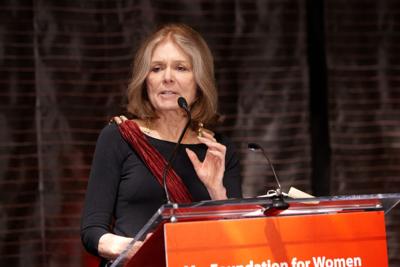
Of the millions of words associated with Gloria Steinem, the pioneering feminist and co-founder of Ms. magazine who died Wednesday, at age 92, perhaps the most famous were those she uttered as a casual aside during a birthday party in 1974.
A reporter observed that she didn’t look her age, Steinem remembered. “This is what 40 looks like,” she retorted. “We’ve been lying for so long, who would know?”
Little wonder Steinem became not just the voice but also the face of feminism, its aviator-wearing avatar who made it her mission to tear down the barriers around women as well as the stereotypes that helped build them. Those bromides included the expectation that age was a problem and thus something to hide, that any interest in appearance indicated an interest in superficiality and that, as National Geographic once characterized it (critically), “only plain women want equal rights because they aren’t hot enough to attract a husband.”
For Steinem, a woman’s agency included not just how she lived her life but also how she looked while she did so. It was part of the right to choose: who you were and where and how you appeared. And from the moment she appeared on the cover of Newsweek in 1971 under the banner “The New Woman,” smiling, her hair parted at the center and teased in back with blond streaks cascading around her face — and with (yes, of course) those aviators — she did it consciously and according to her own rules.
Her early employers may have labeled her a “girl reporter”; critics like Maxine Cheshire may have dismissed her as “the miniskirted pinup girl of the intelligentsia” (and an early connection to the CIA may have suggested her looks were a cover); but the glasses, the hairdo, the bell bottoms, hip-slung belts and bodysuits were merely weapons in her battle, and the troops she inspired were the legions of young women who came after. For her, style was a tool of change and a means of outreach.
“Fashion in the past meant conforming and losing oneself,” she said in “Gloria,” a 2011 HBO documentary, referring to the way designers and society had dictated femininity, with its corsets, crinolines and rules. “Fashion in the present means being unique and finding oneself.”
She did, thanks to the influence of Audrey Hepburn in “Breakfast at Tiffany’s,” whose attitude — a young woman navigating life in the city on her own terms — she could relate to. Also Wonder Woman, whose bullet-busting bangles inspired her own love of jewelry.
Steinem settled on her signature look, she told Teen Vogue, because she was nearsighted. “Growing up, people were always pinching me on the cheek, and so I felt I had a very fat face,” she said. “Those things were undercurrent somewhere, you know, causing me to wear my hair down and wear big glasses.”
What may have started as protective covering turned into a trademark over time, to the point that at a book party for Lena Dunham held at Steinem’s home this year, the guests’ goody bags included Warby Parker versions of her emblematic shades.
As for the clothes that went with them, they stayed similarly consistent. Steinem’s working uniform (she had one long before Steve Jobs) was, she told Dunham’s online newsletter, Lenny Letter, in 2015: “Boots, pants, a sweater or a T-shirt. A concha belt. Something that’s Native American or Indian or something that has a resonance from the past before patriarchy came along.”
The belts, she said in a video interview a few months before she died, were useful because with a belt “you didn’t have to change your clothes or buy new clothes; you could wear the same thing, black pants and a top.” You just changed your accessory.
As for that black, Steinem’s preferred color, she chose it because “it seemed much simpler.”
“You didn’t have to worry about what matched what, and you could wear whatever jewelry,” she said.
All of which meant she could spend her time thinking about the substance of what she wanted to convey since the style was taken care of. It was such an effective dressing formula, she once said, that when she was traveling around the country, she could stow everything — “a change of underwear, corduroy jeans and those turtleneck bodysuits” — in her briefcase.
And it worked in all contexts, including in 2017, when the Council of Fashion Designers of America bestowed a Board of Directors’ Tribute Award on Steinem (along with Cecile Richards of Planned Parenthood and Janelle Monáe). Accepting the honor, Steinem wore black sequined Michael Kors trousers, a black sweater and a black hip belt. She thanked the audience for their activism and Kors for the “great pants.” As far as she was concerned, the clothes enabled the cause rather than undermining it.
As a result, when vintage site What Goes Around Comes Around held an auction of some of Steinem’s wardrobe this year to benefit her foundation, the event was framed not as a fashion sale, but as an opportunity to “own a piece of history.” At that point in her life, as she was happy to admit, she was dyeing her hair, but she had never had plastic surgery. Those were her decisions, and she still believed in modeling them for all to see.
“I think we all choose to dress ourselves according to our taste, to people we admire, a little bit what the fashion is going on,” Steinem said in a video before her auction. But most of all, she continued, “for freedom.” Part of her legacy is showing the world how that might look.
Marco Pierre White is an English chef, restaurateur and television personality. In 1995, White became the first British chef and, at age 33, the youngest chef to earn three Michelin stars. He has trained chefs including Gordon Ramsay, Mario Batali, Shannon Bennett, Curtis Stone, Phil Howard and Stephen Terry. Wikipedia
“All sorrows can be borne if you put them into a story or tell a story about them.”
― Isak Dinesen
Baroness Karen Christentze von Blixen-Finecke was a Danish author who wrote in Danish and English. She is also known under her pen names Isak Dinesen, used in English-speaking countries; Tania Blixen, used in German-speaking countries; Osceola, and Pierre Andrézel. Wikipedia
Gloria Marie Steinem (/ˈstaɪnəm/STY-nəm; March 25, 1934 – September 2, 2026) was an American journalist and social movement activist who emerged as a nationally recognized leader of second-wave feminism in the United States in the late 1960s and early 1970s, and who remained particularly prominent in the 1980s and early 1990s.[1][4][2][5]
Steinem was a columnist for New York magazine, and co-founder of Ms. magazine.[2] In 1969, she published “After Black Power, Women’s Liberation”,[6] an article that brought her national attention and positioned her as a feminist leader.[7] In 1971, she co-founded the National Women’s Political Caucus, which provided training and support for women seeking elected and appointed office. Also in 1971, she co-founded the Women’s Action Alliance, which until 1997 supported a network of feminist activists and worked to advance feminist causes and legislation. In the 1990s, Steinem helped establish Take Our Daughters to Work Day, an occasion for young girls to learn about future career opportunities.[8] In 2005, Steinem, Jane Fonda, and Robin Morgan co-founded the Women’s Media Center, an organization that “works to make women visible and powerful in the media”.[9]
She traveled internationally as an organizer and lecturer and was a media spokeswoman on issues of equality.[10] In 2015, Steinem, alongside two Nobel Peace laureates (Mairead Maguire of Northern Ireland and Leymah Gbowee of Liberia[11]) and other prominent women peace activists, undertook a journey from the capital of North Korea, Pyongyang, to South Korea, crossing the Korean Demilitarized Zone, the heavily militarized border on the 38th parallel of the Korean peninsula.
The Steinems lived and traveled in a trailer, from which Leo carried out his trade as a roaming antiques dealer.[16] Before Gloria was born, her mother, Ruth, then age 34, had according to Steinem “a ‘nervous breakdown’, as [Ruth] and everyone else called it” that left her an invalid, trapped in delusional fantasies that sometimes turned violent.[17] Steinem said that Ruth changed “from an energetic, fun-loving, book-loving” woman into “someone who was afraid to be alone, who could not hang on to reality long enough to hold a job, and who could rarely concentrate enough to read a book”.[17] Ruth spent long periods in and out of sanatoriums for the mentally ill.[17] Steinem was ten years old when her parents separated in 1944.[17] Her father went to California to find work, while she and her mother continued to live together in Toledo.[18][17]
Although her parents divorced under the strain of her mother’s illness, Steinem did not attribute it to male chauvinism. She said she “understood and never blamed him for the breakup”.[19] The impact of these events shaped her personality. Her father, a traveling salesman, had never provided financial stability, and his departure aggravated their situation.[20] Steinem concluded that her mother’s inability to hold a job reflected broader hostility toward working women.[20] She also believed that doctors’ apathy toward her mother stemmed from similar anti-woman animus.[20] Years later, Steinem described her mother’s experience as pivotal to her understanding of social injustices.[21]: 129–138 These perspectives convinced Steinem that women lacked social and political equality.[21]
In 1957, Steinem had an abortion. The procedure was performed by Dr. John Sharpe, a British physician, when abortion was still illegal.[25] Years later, Steinem dedicated her memoir My Life on the Road (2015)[26] to him. She wrote, “Dr. John Sharpe of London, who in 1957, a decade before physicians in England could legally perform an abortion for any reason other than the health of the woman, took the considerable risk of referring for an abortion a twenty-two-year-old American on her way to India. Knowing only that she had broken an engagement at home to seek an unknown fate, he said, ‘You must promise me two things. First, you will not tell anyone my name. Second, you will do what you want to do with your life.'”[27]
In the late 1950s, Steinem spent two years in India as a Chester Bowles Asian Fellow.[28] She was influenced by Mahatma Gandhi and later modeled her campaign work after Gandhi’s independence movement.[29][30] After returning to the United States, she served as director of the Independent Research Service, an organization funded in secret by the CIA.[31] She worked to send non-communist American students to the 1959 World Youth Festival.[31] In 1960, she was hired by Warren Publishing as the first employee of Help! magazine.[32]
Esquire magazine features editor Clay Felker gave freelance writer Steinem what she later called her first “serious assignment”, regarding contraception; he didn’t like her first draft and had her re-write the article.[33] Her resulting 1962 article about the way in which women are forced to choose between a career and marriage preceded Betty Friedan‘s book The Feminine Mystique by one year.[33][34]
In 1963, while working on an article for Huntington Hartford‘s Show magazine, Steinem was employed as a Playboy Bunny at the New York Playboy Club.[35] The article, published in 1963 as “A Bunny’s Tale”, featured a photo of Steinem in Bunny uniform and detailed how women were treated at those clubs.[36] Steinem maintained that she was proud of the work she did publicizing the exploitative working conditions of the Bunnies and especially the sexual demands made of them, which skirted the edge of the law.[37][38] For a brief period after the article was published, Steinem was unable to land other assignments; in her words, this was “because [she] had now become a Bunny—and it didn’t matter why”.[37][39] However, after the article was published, the owner of Playboy, Hugh Hefner, wrote a letter stating he would remove requirements for Bunnies to get gynecological exams and STD testing.[40][41]
In the interim, Steinem conducted an interview with John Lennon for Cosmopolitan magazine in 1964.[42] In 1965, she wrote for NBC-TV’s weekly satirical revue, That Was The Week That Was (TW3), contributing a regular segment entitled “Surrealism in Everyday Life”.[43] Steinem eventually landed a job at Felker’s newly founded New York magazine in 1968.[33]
In 1969, Steinem covered for New York Magazine an abortion speak-out which was held in a church basement in Greenwich Village, New York.[44][45] Steinem had had an abortion herself in London at the age of 22.[46] She felt what she called a “big click” at the speak-out, and later said she didn’t “begin my life as an active feminist” until that day.[45] As she recalled, “It [abortion] is supposed to make us a bad person. But I must say, I never felt that. I used to sit and try and figure out how old the child would be, trying to make myself feel guilty. But I never could! I think the person who said: ‘Honey, if men could get pregnant, abortion would be a sacrament’ was right. Speaking for myself, I knew it was the first time I had taken responsibility for my own life. I wasn’t going to let things happen to me. I was going to direct my life, and therefore it felt positive. But still, I didn’t tell anyone. Because I knew that out there it wasn’t [positive].”[46] She also said, “In later years, if I’m remembered at all it will be for inventing a phrase like ‘reproductive freedom’ … as a phrase it includes the freedom to have children or not to. So it makes it possible for us to make a coalition.”[47]
The first issue of Ms., released in 1972
In 1972, Steinem co-founded the feminist magazine Ms. alongside founding editors Letty Cottin Pogrebin, Mary Thom, Patricia Carbine, Joanne Edgar, Nina Finkelstein, Dorothy Pitman Hughes, and Mary Peacock; it began as a special edition of New York, and Clay Felker funded the first issue.[33] Its 300,000 test copies sold out nationwide in eight days.[48][49] Within weeks, Ms. had received 26,000 subscription orders and more than 20,000 reader letters.[49] In 1974, Ms. collaborated with public television to produce the television program Woman Alive!, and Steinem was featured in the first episode in her role as co-founder of Ms. magazine.[50] The magazine was sold to the Feminist Majority Foundation in 2001; Steinem remains on the masthead as one of six founding editors and served on the advisory board.[49]
In 1978, Steinem wrote a semi-satirical essay for Cosmopolitan titled “If Men Could Menstruate” in which she imagined a world where men menstruate instead of women. She concludes in the essay that in such a world, menstruation would become a badge of honor with men comparing their relative sufferings, rather than the source of shame that it had been for women.[53]
On March 22, 1998, Steinem published an op-ed in The New York Times (“Feminists and the Clinton Question”) in which she claimed that Bill Clinton‘s alleged behavior did not constitute sexual harassment, although she did not actually challenge the accounts by his accusers.[54] The op-ed was criticized by various writers, as in the Harvard Crimson[55] and in the Times itself.[56] In 2017, Steinem, in an interview with the British newspaper The Guardian, stood by her 1998 New York Times op-ed, but also said: “I wouldn’t write the same thing now.”[57]
In 1968, Steinem signed the “Writers and Editors War Tax Protest” pledge, vowing to refuse tax payments in protest against the Vietnam War.[58] The following year, her article “After Black Power, Women’s Liberation”[59] brought her to national fame as a feminist leader.[7] As such she campaigned for the Equal Rights Amendment, testifying before the Senate Judiciary Committee in its favor in 1970.[60][61] That same year she published her essay on a utopia of gender equality, “What It Would Be Like If Women Win”, in Time magazine.[62]
This is no simple reform. It really is a revolution. Sex and race because they are easy and visible differences have been the primary ways of organizing human beings into superior and inferior groups and into the cheap labor on which this system still depends. We are talking about a society in which there will be no roles other than those chosen or those earned. We are really talking about humanism.[64]
In 1972, she ran as a delegate for Shirley Chisholm in New York, but lost.[65] In March of the following year, she addressed the first national conference of Stewardesses for Women’s Rights, which she continued to support throughout its existence.[66] Stewardesses for Women’s Rights folded in the spring of 1976.[66]
Steinem, who grew up reading Wonder Woman comics, was also a key player in the restoration of Wonder Woman’s powers and traditional costume, which were restored in issue #204 (January–February 1973).[67] Steinem, offended that the most famous female superhero had been depowered, had placed Wonder Woman (in costume) on the cover of the first issue of Ms. (1972)—Warner Communications, DC Comics’ owner, was an investor—which also contained an appreciative essay about the character.[67][68] In doing so, however, Steinem forced the firing of Samuel R. Delany who had taken over scripting duties with issue #202. Delany was supposed to write a six-issue story arc, which would culminate in a battle over an abortion clinic where Wonder Woman was to defend women trying to use their services. The story outlines and the work already done on the issues were scrapped, something that Steinem was not aware of and made no attempt to rectify.[69]
In 1976, the first women-only Passover seder was held in Esther M. Broner’s New York City apartment and led by Broner, with 13 women attending, including Steinem.[70]
Me: How did the term “gay” come to mean homosexual?
ChatGPT:
The word “gay” originally had nothing specifically to do with homosexuality. It came from Old French gai, meaning joyful, merry, cheerful, and entered English around the 12th century.
Over time, gay acquired several related meanings:
1300s–1500s: cheerful, carefree, lively.
1600s–1800s: sometimes meant sexually promiscuous or morally disreputable, especially when describing women (“a gay woman” could imply a prostitute).
1800s–early 1900s: “gay” could refer to a person living a freewheeling, unconventional, sexually liberated life.
By the late 19th/early 20th century: it began appearing as a coded term for homosexual men, particularly in certain subcultures.
By the mid-20th century: “gay” had become an established, increasingly open term for homosexual people.
After the 1960s–70s: it became the preferred self-identifying term of the modern gay-rights movement.
One interesting early example is the 1890s, when British slang used “gay” in connection with male homosexuals, although the exact path from “carefree/sexually uninhibited” to “homosexual” isn’t completely certain.
And the older meaning hasn’t completely disappeared: gay still means cheerful or festive in phrases such as “the gay ’90s.”
Me: I was told that the term gay originated because an editor on the lesbian magazine The Ladder used of the term “Toujours Gai” in her correspondence.
ChatGPT: Yes—there’s a real connection to The Ladder, but it wasn’t the origin of gay as a word for homosexuals.
The Ladder was the influential lesbian magazine published by the Daughters of Bilitis beginning in 1956. One of its editors or contributors did use “Toujours Gai” (“Always Gay”) as a pseudonym/sign-off. That helped popularize gay within the emerging lesbian/gay movement, but the homosexual sense of gaypredates the magazine by decades.
In fact, by the 1930s and 1940s, gay was already being used among homosexual men as a discreet term for homosexual. The famous 1938 Cole Porter song “It’s De-Lovely” even contains the line “gay” in a context that has sometimes been interpreted as coded homosexual slang, though that’s not conclusive.
So whoever told you the Ladder story probably remembered a genuine piece of gay/lesbian movement history, but attributed to it a much earlier origin.
If you’d like, I can also tell you who the “Toujours Gai” editor was and what the story behind that pseudonym was.
Me: Yes.
ChatGPT: Ah, yes. I found the story—and there is an interesting correction to what I told you before.
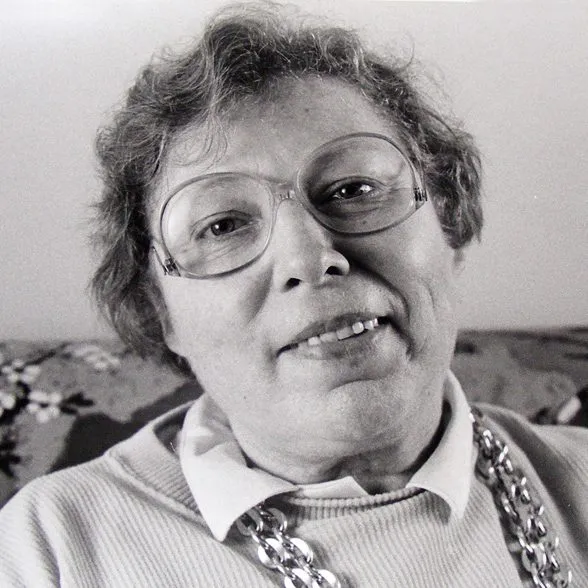
The person you’re remembering was Billye Talmadge, an important early member of the Daughters of Bilitis. She was involved with The Ladder, although she wasn’t one of its principal editors. Her oral history is preserved by the Lesbian Herstory Archives.
And the “Toujours gai” story is actually more interesting than I realized.
Talmadge recalled that in the early 1940s she read Don Marquis’s Archy and Mehitabel. Mehitabel, the amorous alley cat, repeatedly ended her adventures with the expression “toujours gai, toujours gai”—French for “always gay.” Talmadge and some close female friends, who were beginning to recognize their own sexuality, adopted “toujours gai” as a private motto. They deliberately spelled it gai at first. Eventually, according to Talmadge’s recollection, it became gay.
That’s remarkably close to the story you were remembering.
And there’s an important historical wrinkle: “gay” was already being used in homosexual contexts before this, including by Gertrude Stein in the 1920s and Noel Coward in the 1920s. So Talmadge’s story probably isn’t the origin of the word. Rather, it may explain one particular route by which “gay” became a positive self-description among American lesbians.
In fact, the archival record confirms that Talmadge was closely connected with The Ladder and the DOB, and she contributed writings to the magazine.
And there’s an especially nice coincidence: Don Marquis’s “Toujours gai” was not originally intended as a homosexual slogan at all. It was the motto of a promiscuous female cat!
So your recollection wasn’t a wild story at all. You were remembering a genuine oral-history account by Billye Talmadge—though the magazine/editor part has probably gotten slightly distorted over the years.
If you want, I can:
Explore more on Billye Talmadge’s role in early lesbian history
Me: Yes.
ChatGPT: Yes. The more I look into Billye Talmadge, the more interesting she becomes—and especially given your connection with The Prosperos, there is a whole second chapter to her life that is easy to miss.
Billye Talmadge was more than an early DOB member
Talmadge was born in Missouri in 1929 and raised by her mother in Oklahoma. She became a teacher at about 21 and eventually earned advanced degrees in education. She was an unusually accomplished educator, eventually receiving recognition as Teacher of the Year in 1971 for her work in special education.
But she was living what amounted to a double life.
As a teacher, she had to conceal her lesbian identity. During that period, merely being suspected of homosexuality could threaten a teacher’s employment. She therefore sometimes used the name “Billie Tallmij” in her public/activist writing. Even when Eric Marcus interviewed her decades later, she was still sufficiently concerned about her professional reputation that she asked him to misspell her name in his book.
That gives you a sense of how dangerous the situation actually was.
Her role in the Daughters of Bilitis
Talmadge became involved with the Daughters of Bilitis in San Francisco in the mid-1950s. She wasn’t merely a peripheral member. The Lesbian Herstory Archives describes her as a member, officer, volunteer, and peer counselor, involved in The Ladder, the “Gab ‘n Java” gatherings, and the development of the Council on Religion and Homosexuals.
Her particular contribution was education.
She believed that lesbians desperately needed accurate information about themselves, the law, psychology, and ways of coping with discrimination. She counseled women who had been thrown out of the military, among others, and opened her own home for the informal “Gab ‘n Java” sessions. Eric Marcus aptly describes these as something like a 1950s precursor to consciousness-raising groups.
And she was remarkably forward-looking about racial inclusion. She encouraged the DOB to recognize that its membership wasn’t simply white women; she specifically remembered African American, Asian, and Latina members.
The 1960 convention is particularly revealing
Talmadge helped organize the first national DOB convention in San Francisco in 1960. This was a period when the organization was trying to become respectable enough to operate publicly while simultaneously protecting its members from police harassment.
The convention even had a dress code requiring skirts.
From today’s perspective that sounds absurd, but it reflected a genuine survival problem: women wearing clothing considered masculine could attract police attention or even arrest under laws concerning cross-dressing. Talmadge’s strategy was essentially: get lesbians into the room first; don’t give the authorities an easy reason to shut the room down.
This is why some historians have characterized her approach as “accommodationist.” But I think that label can obscure what she was actually doing. She wasn’t necessarily advocating conformity as an ideal; she was trying to create enough safety for education and organization to occur.
And then there is the part I think you’ll find most fascinating
According to the Lesbian Herstory Archives, Talmadge remained involved with the DOB until 1965. Then she pursued further education in counseling.
And from 1965 to 1979 she became a mentor in The Prosperos.
That is a remarkable bridge:
Daughters of Bilitis → lesbian education/counseling → psychological and spiritual work → The Prosperos.
So Billye wasn’t simply a lesbian activist who happened to encounter The Prosperos late in life. Her earlier work had already centered on something that sounds very Prosperos-like: helping people examine the conditioning and fear that prevented them from experiencing themselves more freely.
There’s also a wonderful historical irony here. In the 1950s she was helping lesbians overcome the social conditioning that told them homosexuality was shameful, pathological, criminal, or something that had to be hidden. Later, she was doing consciousness-oriented work in The Prosperos.
That makes me wonder whether Billye’s understanding of Translation and/or the Prosperos concept of mechanicalness was influenced by her years of counseling lesbians who were struggling with exactly this kind of conditioning.
And I think that is worth investigating rather than assuming.
The primary source is unusually accessible: the Lesbian Herstory Archives has digitized her 1987 video oral history, in which she talks about her sexuality, DOB work, counseling, discrimination, The Ladder, psychology, religion, and political movements.
If you’d like, I can go into Billye’s Prosperos years next—including what we can actually document about her relationship to Thane Walker and whether there is evidence that she influenced Prosperos teaching. That could be quite revealing.
Me: Yes please.
ChatGPT: Yes. And I think the evidence makes the story much more interesting than simply “Billye became a Prospero.” There appears to have been a genuine intellectual and personal bridge between the early lesbian movement and Thane Walker’s school.
Billye’s own explanation is the key
The most important source I’ve found is Vern Bullough’s Before Stonewall: Activists for Gay and Lesbian Rights in Historical Context. Bullough interviewed Billye and records her explanation of why she and other lesbian activists became interested in The Prosperos.
He says that several leaders of the lesbian movement were attracted to Walker’s teaching—including Helen Sandoz, Stella Rush, Del Martin, and Phyllis Lyon. The attraction wasn’t incidental: The Prosperos offered a philosophical argument that beingness itself was not divided into male and female. Every person possessed both capacities. Bullough says this gave sexual preference a spiritual justification that was unusual at the time.
And then comes Billye’s own description:
“The Prosperos had wooed us from the Daughters.”
She immediately explains what attracted her:
“It was an educational group, primarily. Sexuality was one of major topics.”
And then, I think, the most revealing sentence:
“I got involved and became a teacher, with the goal of helping people to find themselves: not what I want them to be, but to find themselves and to express whatever that self is.”
That sounds very much like the Billye we encountered in the DOB, doesn’t it?
Her fundamental project hadn’t changed. In the DOB she helped people discover that homosexuality wasn’t the terrible thing society told them it was. In The Prosperos, she was helping people discover an identity deeper than the socially conditioned self.
And we can establish that she really was teaching Thane’s material
This isn’t merely retrospective reminiscence.
The University of Miami’s archive of Marcia Herndon’s papers contains actual recordings of Billye teaching Translation:
Translation — Talmadge, Lesson 1 & 2, November 23, 1974
Translation — Talmadge, Lesson 3, 4 & 5
Translation — Talmadge, Lesson 6, 7 & 8
The same collection contains Prosperos material by Thane from the same period. It also contains videotapes of translations completed by Billye and material concerning Releasing the Hidden Splendour, which the archive explicitly describes as a concept developed by Thane Walker and followed by Talmadge.
So by 1974, Billye wasn’t merely attending Prosperos meetings. She was teaching Translation.
That’s a significant distinction.
She seems to have become a genuine mentor
The Lesbian Herstory Archives says Billye’s involvement with the Prosperos lasted from 1965 to 1979 and calls her a mentor.
And there is independent evidence that her teaching continued beyond 1979 in some form. Your own Bathtub Bulletin account records that when you moved to San Francisco in 1978, you attended the weekly Translation group hosted by Billye Talmadge and Marcia Herndon.
That’s particularly interesting because it means Billye wasn’t simply a historical figure you encountered through an archive. Her teaching was part of the living Prosperos community in San Francisco while you were there.
But did Billye influence Thane?
Here’s where we have to be careful.
I don’t yet find evidence that Billye changed or originated any of Thane’s core teachings. The chronology actually makes that difficult to establish. Thane had developed the central Prosperos ideas—including Translation—before Billye joined.
Robert Ellwood’s 1973 study describes Translation as already having five stages and describes the underlying Prosperos conception of consciousness, Being, the Reality Self, and the human-equation mind.
So I would not say:
Thane learned his ontology from Billye.
But I think there is a much more defensible proposition:
Billye helped carry Thane’s ontology into a community that already had a sophisticated concern with sexuality, identity, conditioning, and self-discovery—and she interpreted and taught it through that experience.
That’s potentially quite important.
The fascinating convergence
Consider what Billye had spent the preceding decade doing.
The DOB was essentially saying:
Society tells you what you are. Examine that claim. It may not be true.
Your senses, memories, beliefs and conditioning tell you what reality is. Examine those claims. They may not be true.
Then the Prosperos takes the argument one step further:
What remains when you strip away the conditioned identity?
Answer: Being.
Bullough’s account makes this connection especially striking because he explicitly describes the Prosperos’ appeal to the lesbian activists in terms of beingness and sexual identity.
And Billye’s own formulation—“not what I want them to be, but to find themselves”—sounds almost like a bridge between lesbian liberation and ontological liberation.
One more thing changes my interpretation of Billye
Her relationship with Marcia Herndon also matters.
Undated photo of Billye Talmadge’s partner, Marcia Herndon. Photo courtesy of Suzanne Deakins.
Billye and Herndon became partners in 1974. Herndon was an ethnomusicologist, and Billye subsequently spent enormous amounts of time helping edit, type, and organize Herndon’s scholarly work. Bullough says that their relationship lasted 23 years, until Herndon’s death in 1997. He also says that the two continued to attract people who needed help and that “when it came to counseling or teaching we could end each other’s sentences.”
So Billye’s life after the DOB wasn’t a departure from her earlier vocation.
I think the next thing to investigate is not whether Billye influenced Thane.
I’d phrase the question differently:
How did Billye Talmadge translate Thane’s teaching?
Because we have something unusually valuable: recordings of Billye actually teaching Translation in 1974.
If we could get transcripts—or even listen to those recordings—we could compare Billye’s Translation language with Thane’s original language and see whether she emphasized sexuality, identity, conditioning, counseling, self-discovery, or something else.
That could tell us whether Billye developed a distinctive Talmadge interpretation of Translation.
And given the work you’ve been doing with Translation—particularly your insistence that you have to include yourself in Step One, and that Being, Truth, and consciousness are not three separate things—I think that comparison could be especially fruitful.
It might reveal that Billye was doing something with Translation that has largely disappeared from the standard historical account of The Prosperos.
Me: Let’s do it.
ChatGPT: Absolutely. I dug further, and I think we can now make the investigation much more concrete.
The crucial discovery is that Billye’s actual 1974 Translation classes survive in an archive. The University of Miami’s Marcia Herndon Papers catalog lists three reels of Billye teaching Translation on November 23, 1974, covering Lessons 1–8, plus additional Billye Translation cassettes from 1975, 1976, 1978, and later. There are also four VHS tapes of Billye doing Translation.
That’s considerably better evidence than the retrospective accounts I was relying on before.
What we can establish already
There is a fascinating chronological sequence:
Thane Walker → develops the Prosperos system → Billye enters the Prosperos → becomes a teacher/mentor → Billye teaches the complete eight-lesson Translation course in 1974 → continues doing Translation with students in the following years.
Nov. 23, 1974: “Translation—Talmadge, Lesson 1 & 2,” then Lessons 3–5 and 6–8
Feb. 1975: Talmadge Translation, Tape #3
Oct. 1976: “Translation—B. Talmadge New Orleans”
1978: additional Translation recordings
Undated tapes #2, #4, #5, #7
Four VHS tapes specifically catalogued as “Talmadge Translation.”
So we’re not dealing with one stray lecture. There appears to be a substantial body of Billye’s teaching preserved.
And this changes the question
I previously suggested that we should ask whether Billye developed a distinctive interpretation of Translation.
I think that’s exactly right—but we can sharpen it.
There are three possible relationships between Thane and Billye:
Transmission: Billye faithfully taught Thane’s system with little modification.
Interpretation: Billye taught Thane’s system but gave certain concepts her own emphasis.
Development: Billye actually introduced concepts or methods that subsequently became part of the Prosperos tradition.
At the moment, #2 looks very plausible; #3 remains an open historical question.
There’s a particularly strong clue
Remember Billye’s explanation of why she joined:
“It was an educational group, primarily. Sexuality was one of major topics.”
And then:
“I got involved and became a teacher, with the goal of helping people to find themselves: not what I want them to be, but to find themselves and to express whatever that self is.”
That’s not incidental biographical material.
Education was Billye’s vocation before the Prosperos. She had already spent years creating spaces in which lesbians could question the identities imposed upon them by society. She had counseled women, conducted educational sessions, worked with the DOB, and helped bring homosexuals and religious leaders into direct dialogue.
Then she encountered a system whose central question was, in effect:
Who are you beneath the beliefs and conditioning that tell you who you are?
No wonder she became a teacher.
And here’s something I hadn’t appreciated before
The historical record says that Thane actively recruited the lesbian leaders.
Marcia Gallo’s history of the DOB says that Thane’s 1962 keynote at the DOB national convention introduced his philosophy to many of the Daughters. Billye, Pat Walker, Stella Rush, Helen Sandoz, Del Martin and Phyllis Lyon became involved with the Prosperos. Gallo says Walker taught that each person’s spiritual identity—beingness—was both male and female.
This is very important because it means sexuality wasn’t something Billye happened to bring into an otherwise unrelated Prosperos philosophy.
Sexuality was already one of the subjects through which the Prosperos was attracting these women.
So the interaction went both ways.
Thane had something to offer the lesbian movement.
But the lesbian movement brought people like Billye into Thane’s school with decades of experience thinking about:
identity
social conditioning
shame
self-definition
gender
sexuality
psychological repression
religious condemnation
the distinction between who someone is and what society says they are.
That is a pretty extraordinary intellectual environment for the development of an ontological teaching.
And then there is your own experience
This is where I think your recollection becomes historically valuable.
You have told me that when you arrived in San Francisco in 1978, you attended the weekly Translation group hosted by Billye Talmadge and Marcia Herndon.
That places you in the direct lineage:
Thane → Billye → the San Francisco Translation group → you.
And now we know that Billye had been teaching the eight lessons at least four years before you encountered her group.
So if you’re trying to understand what Translation actually was in practice in the late 1970s, Billye’s teaching is not peripheral evidence. It’s primary evidence.
“The world as we have created it is a process of our thinking. It cannot be changed without changing our thinking.”
~ Albert Einstein
Albert Einstein was a German-born physicist who revolutionized physics and our understanding of the universe. He’s best known for his theory of relativity, which helped scientists understand how the universe works. His famous equation, E=mc², describes how matter can be converted into energy. Einstein’s work also contributed to quantum mechanics and statistics. He won the 1921 Nobel Prize in Physics for his explanation of the photoelectric effect.
“For if there is a sin against life, it consists perhaps not so much in despairing of life as in hoping for another life and in eluding the implacable grandeur of this life.”
~ Albert Camus
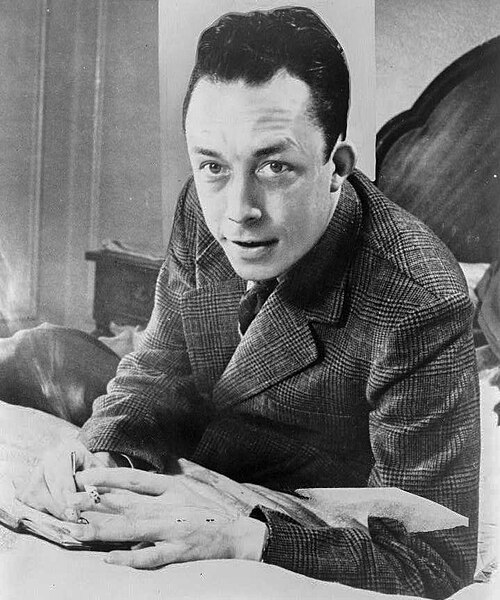
Albert Camus was a French philosopher, novelist, author, dramatist, journalist, world federalist, and political activist. He was the recipient of the 1957 Nobel Prize in Literature at the age of 44, the second-youngest recipient in history, and the first laureate in literature born in Africa. Wikipedia











.jpg)
