
New Thinking Allowed with Jeffrey Mishlove Aug 28, 2026 Psychology and Psychotherapy This video is a special release from the original Thinking Allowed series that ran on public television from 1986 until 2002. It was recorded in about 1990. It will remain public for only one week. The late Hal Stone, PhD, is author of Embracing Heaven and Earth and co-author, with his wife Dr. Sidra Winkelman, of Embracing Our Selves and Embracing Each Other. He and Dr. Winkelman are developers of the “Voice Dialogue” psychotherapeutic process. Here he describes how he discovered the “Voice Dialogue” method of contacting his own sub-personalities. The process, as it has evolved, includes elements of gestalt therapy, psychosynthesis, psychodrama, transactional analysis and Jungian analysis. Dr. Stone describes various sub-personalities such as the “protector-controller,” the “pusher” and the “critic.” The Voice Dialogue technique is demonstrated with Jeffrey Mishlove and Dr. Stone each taking a turn as therapeutic subject.
Category Archives: Psychology
The Wisdom of the Shadow with Kaitlin Kesler
New Thinking Allowed with Jeffrey Mishlove Aug 6, 2026 Psychology and Psychotherapy Kaitlin Kessler is a Board Certified Behavior Analyst. She is author of From Shadow Into Light: Heal Within to Transform the World Around You. Kaitlin explores how the hidden aspects of our psyche, our “shadows,” can become profound teachers rather than obstacles when approached with curiosity and compassion. Drawing upon her background in behavior analysis, Reiki, and her own spiritual awakening, she discusses intuition, channeling, nervous system healing, and the transformative process that inspired her book. Kesler examines how confronting fear, embracing the unconscious, and discovering the gifts hidden within our shadows can lead to greater self-love, healing, and spiritual growth. 00:00:00 Introduction 00:03:05 Discovering the shadow 00:07:19 Spiritual awakening 00:11:12 Behaviorism and spirituality 00:15:16 Channeling and AI 00:19:37 Nervous system 00:23:19 Backup plan 00:27:22 Hidden gifts 00:31:42 Energy and vibration 00:37:46 Conclusion (Recorded on Wednesday, June 24, 2026)
Robert Anton Wilson’s Quantum Psychology with Gabriel Kennedy
New Thinking Allowed with Jeffrey Mishlove Jul 30, 2026 Psychology and Psychotherapy Gabriel Kennedy (aka Prop Anon) is the author of Chapel Perilous: The Life & Thought Crimes of Robert Anton Wilson. He is also a visual artist and musician. Gabriel Kennedy explores Robert Anton Wilson’s Quantum Psychology, revealing how Wilson synthesized quantum physics, psychology, philosophy, linguistics, and general semantics into a practical guide for questioning certainty and expanding awareness. The discussion examines Wilson’s ideas on language, perception, observer participation, E-Prime, nonlocality, systems thinking, and the pursuit of greater psychological flexibility and joy. Together with Jeffrey Mishlove, Kennedy reflects on Wilson’s enduring influence as a philosopher, trickster, and visionary whose work remains strikingly relevant in today’s information-rich world. 00:00:00 Introduction 00:02:07 Robert Anton Wilson’s vision 00:08:01 Language and semantic noise 00:14:20 Observer and reality 00:20:30 Nonlocality and deep reality 00:27:00 Mind, body and systems 00:34:51 E-Prime and perception 00:40:26 Eight systems of intelligence 00:47:00 Joy, healing and consciousness 00:56:01 Conclusion (Recorded on **** 00, 2026)
Why Fathers and Their Babies Are Key to Humanity’s Survival
July 20, 2026 (menalive.com)
By Jed Diamond

No one forgets the birth of their first child. For me the blessed event occurred on November 21, 1969. I had done my best to coach my wife through the Lamaze breathing techniques that we had learned in our birthing classes. It was now time for her to move to the delivery room to complete the birth process and welcome our newborn child into the world.
We were both ready for the final stage of the journey. The nurse turned to me with a smile saying,
“OK, Mr. Diamond, your job is done now. You can go to the waiting room and we’ll let you know when your child arrives.”
I felt a mixture of relief and disappointment. On the one hand we had done this far together and I wanted to be with my wife for the birth. On the other, I was afraid I might freak out and pass out. I didn’t want to screw things up.
I kissed my wife and told her she would do fine. She attempted a smile but was overcome with the next contraction. As they wheeled her to the left towards the delivery room, I went the other direction. But as I started to go through the waiting room doors, something stopped me. I felt the calling of my soon-to-be born child saying,
“I don’t want a waiting room father. Your place is here with us.”
I turned around and walked back the other way and pushed through the doors into the delivery room. I didn’t ask permission and there was no question of my leaving, if asked. I didn’t care what the rules were, my child needed me, and I answered the call. It wasn’t long until our beautiful baby boy was born. As Jemal was handed to me, amid tears of relief and joy, I made a vow that I would be a different kind of father than my father was able to be for me and to do everything I could to create a world where fathers were fully involved with their children throughout their lives.
After we brought him home from the hospital, I took three weeks off from work to spend time being the supportive parent for my wife and continue bonding with our son. The event of Jemal’s birth and the aftermath changed my life forever. A year after Jemal’s birth, my wife announced that she needed a break from 24/7 child rearing. She acknowledged that I was a great help, but she needed a break from being the primary caregiver. A girlfriend had invited her to go on a road trip, maybe for a few weeks, and asked if I could take a few weeks off from work again and be with Jemal.
I quickly agreed, wanting to be a good, new-age, liberated father. But inside I was terrified. It was one thing to be the supportive parent knowing that I had the mother of our child to step in at any time. I believed that mothers had an inherent understanding of babies and knew what to do, a special something I felt men lacked. I felt I had learned a lot about taking care of our baby boy, but what did I know really. I was just a man. What would I do if he needed something that I couldn’t give him? We didn’t have mothers in the area that could help us out, but my wife assured me I could call her anytime if I needed advice.
The first few days were scary, but Jemal and I figured things out together. I found I had abilities I didn’t know I had. We played together, father and son. I fed him, changed his diapers, slept with one ear open listening to any cries in the night. My wife phoned a few times and I told her honestly that things were going fine. We both missed her, but father and son were surviving and thriving.
We did more than survive and thrive. We formed a bond together that has lasted through time. We’re connected in a way that most fathers and sons are not. I feel confident as a father and as a man that I never imagined I would feel.
Jemal will be fifty-six in November. My wife and I now have six grown children, seventeen grandchildren, and four great grandchildren. I continue to love and learn. I recently heard about a new book, Father Time: A Natural History of Men and Babies by world renowned evolutionary anthropologist Sarah Blaffer Hrdy. It helped me understand my own experiences as a father and the importance of fathers throughout evolutionary history.
I recently had the good fortune of interviewing Dr. Hrdy, which you can watch here. After a full career studying the lives of mothers and writing iconic books including The Woman That Never Evolved, Mother Nature, she began to recognize the importance of fathering that had been mostly neglected by experts in Darwinian science and evolutionary psychology.
“It has long seemed self-evident that women care for babies and men do other things,” says Dr. Hrdy. “Hasn’t it always been so? When evolutionary science came along, it rubber-stamped this venerable division of labor: mammalian males evolved to compete for status and mates, while females were purpose-built to gestate, suckle, and otherwise nurture the victors’ offspring.”
Yet experiences Dr. Hrdy was having in her own family watched men nurture babies, led her explore the evolutionary roots of male nurture of young babies and has helped us recognize a much more expanded reality of what it means to be a man. What she discovered will forever change our views of manhood.
I learned this more than fifty years ago when Jemal was born. More and more men have experienced this expanded reality.
“Men caring for babies undergo the same neurological transformations, the same increase in prolactin levels and oxytocin-induced sensual pleasure as mothers do,”
says Dr. Hrdy. I didn’t understand the biological changes I went through at the time, but that was certainly my experience as I spent significant time physically in touch with Jemal.
“If their brains undergo shape-shifting similar to that in mothers, wouldn’t men’s psychological preferences change as well?” asks Dr. Hrdy. “Might men’s priorities come to more nearly resemble the more prosocial ones mothers are assumed to have? Might such men also be more likely to opt for safer and more sustainable courses of action?”
I would take it another step further. Would men with this kind of changed brains, brains that are not only tuned to children, but to humans and other living things, be the kind of men who can join with women to create a healthier, more sustainable world? It doesn’t take experts to alert us to the reality that humanity is out of balance with the laws of nature and that we need to change our ways if we are going to survive and thrive as a species.
Thomas Berry was a priest, a “geologian,” and a historian of religions. He spoke eloquently to our connection to the Earth and the consequences of our failure to remember we are one member in the community of life.
“We never knew enough. Nor were we sufficiently intimate with all our cousins in the great family of the earth. Nor could we listen to the various creatures of the earth, each telling its own story. The time has now come, however, when we will listen or we will die.”
At a time when mothers are feeling overwhelmed by trying to take care of infants and many are seeking child care from strangers or even looking to AI robots to raise our children, the answer may be to support more hands-on, and hearts-connected fathers and their babies. What do you think?
You can learn more about Dr. Hrdy and her work by visiting her website. You can watch my in-depth interview with her here.
If you appreciate articles like these, I invite you to subscribe to my free weekly newsletter here.

Jed Diamond
Founder and VHS (Visionary Healer Scholar) of MenAlive
Book: “Psychopathy Unmasked: The Rise and Fall of a Dangerous Diagnosis”
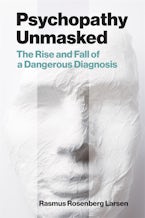
Psychopathy Unmasked
The Rise and Fall of a Dangerous Diagnosis
Paperback
$55.00
Paperback
ISBN: 9780262552202
Pub date: June 17, 2025
Publisher: The MIT Press
328 pp., 6 x 9 in, 7 b&w illus.
MIT Press BookstorePenguin Random HouseAmazonBarnes and NobleBookshop.orgIndieboundIndigo
eBook
Why our fascination with psychopaths is scientifically wrongheaded, and how the criminal justice system has misused the controversial science of psychopathy.
Psychopathy is a widely acknowledged personality disorder associated with callous unemotional traits and antisocial behaviors. Psychopathic persons are described as dangerous predators incapable of empathy and moral intuition, and while they are believed to make up only around 1 percent of the general population, forensic experts claim they are disproportionately responsible for the majority of violent crimes. Today, psychopathy assessments are being widely used in the legal system to inform a variety of judicial decisions. In Psychopathy Unmasked, Rasmus Rosenberg Larsen provides a critical rebuttal of psychopathy and its legal use, scrutinizing central claims about the diagnosis that have traditionally served to justify its role in the criminal justice system.
It is estimated that hundreds of thousands of offenders undergo a psychopathy assessment each year in North America. This book surveys and discusses contemporary developments in psychopathy research where studies have consistently shown that psychopathic persons, contrary to mainstream beliefs, are not meaningfully more dangerous than, or psychologically different from, ordinary non-psychopathic criminals. Based on these disqualifying findings, Larsen argues that we should end the use of psychopathy assessments in the legal system.
(mitpress.mit.edu)
ChatGPT on the work of René Girard
ChatGPT:
I think you mean René Girard (1923–2015), the French historian, literary critic, and social theorist.


The central idea: We imitate each other
Girard’s most famous claim is that human desire is mimetic—we learn what to want by seeing what other people want.
For example, you may think you want a particular job, partner, status symbol, or lifestyle because it appeals to you directly. Girard argues that often you want it because someone else values it. We unconsciously copy not only behavior but desire itself.
This creates a triangle:
- Subject (the person desiring)
- Model or mediator (the person being imitated)
- Object (the thing desired)
The object is often less important than the model.
Mimetic rivalry
When two people imitate each other’s desires, they become rivals.
Girard believed that many conflicts begin this way:
- Siblings competing for parental attention
- Neighbors competing for status
- Nations competing for prestige
- Political factions mirroring each other’s hostility
Ironically, rivals often become more alike as their conflict intensifies.
The scapegoat mechanism
Girard’s second major idea is that communities under stress often resolve internal conflict by blaming a single person or group.
As tensions rise, everyone unites against a scapegoat:
- A stranger
- A minority
- A heretic
- A suspected witch
- An outsider
The community experiences relief because violence that had been spreading internally is redirected toward one victim.
Girard argued that many myths and social institutions originated from this process.
Religion and myth
Girard believed that ancient myths often conceal the innocence of the victim. The crowd’s violence appears justified.
He argued that the Judeo-Christian scriptures are unusual because they increasingly reveal the victim’s perspective.
For Girard:
- The story of Abel highlights an innocent victim.
- The story of Joseph exposes unjust persecution.
- The crucifixion of Jesus Christ fully reveals the innocence of the scapegoat and the violence of the crowd.
This was one of his most controversial claims.
His major books
- Deceit, Desire and the Novel — introduces mimetic desire through literature.
- Violence and the Sacred — develops the scapegoat theory.
- The Scapegoat — analyzes victimization in culture and religion.
- Things Hidden Since the Foundation of the World — his most comprehensive statement of the theory.
Influence
Girard’s ideas have influenced:
- Literary criticism
- Anthropology
- Theology
- Psychology
- Political theory
His admirers see him as offering a grand explanation of human conflict. His critics argue that he tries to explain too much with a single theory and sometimes stretches the evidence.
A one-sentence summary of Girard’s work would be:
Human beings learn what to desire by imitating one another; this imitation creates rivalry, rivalry produces social crisis, and societies often restore order by uniting against a scapegoat.