Plato’s cave as sense testimony

By Mike Zonta, BB editor, and ChatGPT

Me: For Translators, Plato’s cave is like the sense testimony. Discuss.

ChatGPT: Yes. I think that is a very fruitful way for a Translator to look at Plato’s Cave. In fact, the Cave can almost be read as a dramatization of what a Sense Testimony does.

The Cave as Sense Testimony

In Plato’s Republic, the prisoners see shadows on a wall and take those shadows to be reality. They don’t merely see the shadows; they interpret them as what is real.

That is remarkably close to the structure of Sense Testimony:

Sense Testimony is what appears to consciousness to be true.

The important distinction is between what is perceived and what is actually so.

The prisoner says, in effect:

“This is reality.”

The Translator asks:

“Is that what is actually so?”

That is the beginning of Translation.

The Cave isn’t simply “false information”

What’s particularly interesting is that the prisoners aren’t necessarily lying or deliberately deceived. They are reporting their experience.

The shadows really are appearing on the wall.

Their error is that they have confused the appearance with the reality that produces the appearance.

And that gives us a very useful formulation:

Sense Testimony is not necessarily false as an observation; it is false when the appearance is mistaken for the Truth of Being.

That’s a subtle but important distinction.

For example:

“Fame is the measure of one’s significance in the world.”

The world really does measure people by fame. People really do receive attention, status, money, and influence because they are famous.

So the testimony describes something that appears to be so in the world of the senses.

But the Translator asks whether fame actually measures Being.

That’s analogous to the prisoner asking whether the shadow is actually the thing itself.


The Cave and Step 2

I think there is an even deeper connection to the Translation process.

Your Statement of Being establishes an Absolute:

Truth is all that is.

Then comes the Sense Testimony.

The Sense Testimony is essentially the shadow on the wall.

It says:

“This is what reality is.”

Translation then turns our attention away from the shadow and toward what must be True if Truth is all that is.

So we might diagram the process:

Statement of Being

Sense Testimony — the shadow

Word Tracking — examining the meaning of the shadow

Argument — questioning whether the shadow can be Truth

Summing Up

Absolute — turning toward what is actually so

The Cave therefore provides an extraordinarily good metaphor for Translation.

But there’s an important difference

I wouldn’t say that the senses themselves are the problem.

That’s where I think a Prosperos Translation can go beyond a simplistic reading of Plato.

The senses are reporting appearances within consciousness. The mistake occurs when consciousness identifies the appearance as the whole of reality.

In your language:

The shadow is an appearance in consciousness; it is not outside Truth.

Since Truth is all that is, even the shadow must ultimately be included in Truth.

So the Translation isn’t:

“The shadow is unreal, therefore reject the world.”

Rather:

“The shadow is an appearance. What is its relationship to Truth?”

That’s a much more sophisticated question.


The Cave and your recent testimony

This connects beautifully with the testimony you just gave me:

“Misinformation can lead to false beliefs which can lead to manifestation according to those beliefs. All beliefs are false.”

The prisoners of the Cave have received a kind of misinformation—but more importantly, they have constructed a belief system around appearances.

They see shadows.

They develop expectations about the shadows.

They name the shadows.

They predict what shadow will appear next.

Eventually, their entire conception of reality is organized around them.

That is very much what can happen with Sense Testimony.

Appearance → interpretation → belief → identification → experienced reality.

And then the experience seems to confirm the belief.

This is why your statement “All beliefs are false” becomes especially interesting. The prisoner doesn’t need to find a better belief about the shadows. The prisoner needs to discover that the shadows were never the ultimate reality in the first place.

And perhaps this is the most important point for a Translator

The person leaving the Cave doesn’t merely acquire new information.

He undergoes a change in consciousness.

He sees differently.

And that is why I think the Cave fits Translation so well.

Translation is not replacing one shadow with another shadow.

It is the movement from:

“This appearance is Truth.”

to:

“What is True regardless of the appearance?”

And finally, perhaps:

Truth is not what consciousness believes about what it sees. Truth is the Being in which seeing, believing, and appearing occur.

That last step brings Plato’s Cave very close to the Statement of Being you’ve been developing.

The Sapir–Whorf hypothesis

From Wikipedia, the free encyclopedia

Linguistic relativity asserts that language influences worldview or cognition. One form of linguistic relativity, linguistic determinism, regards peoples’ languages as determining and influencing the scope of cultural perceptions of their surrounding world.[1]

Various colloquialisms refer to linguistic relativism: the Whorf hypothesis; the Sapir–Whorf hypothesis (/səˌpɪər ˈhwɔːrf/ sə-PEER WHORF); the Whorf–Sapir hypothesis; and Whorfianism.

The hypothesis is disputed, with many different variations throughout its history.[2][3] The strong hypothesis of linguistic relativity, now referred to as linguistic determinism, is that language determines thought and that linguistic categories limit and restrict cognitive categories. This was a claim by some earlier linguists pre-World War II;[4] since then it has fallen out of acceptance by contemporary linguists.[5][need quotation to verify][6] Nevertheless, research has produced positive empirical evidence supporting a weaker version of linguistic relativity:[4][5] that a language’s structures influence a speaker’s perceptions, without strictly limiting or obstructing them.

Although common, the term Sapir–Whorf hypothesis is sometimes considered a misnomer for several reasons. Edward Sapir (1884–1939) and Benjamin Lee Whorf (1897–1941) never stated their ideas in terms of a hypothesis. The distinction between a weak and a strong version of this hypothesis is also a later development; Sapir and Whorf never used such a dichotomy, although often their writings and their opinions of this relativity principle expressed it in stronger or weaker terms.[7][8]

The principle of linguistic relativity and the relationship between language and thought has also received attention in varying academic fields, including philosophypsychology and anthropology. It has also influenced works of fiction and the invention of constructed languages.

History

The idea was first expressed explicitly by 19th-century thinkers such as Wilhelm von Humboldt and Johann Gottfried Herder, who considered language as the expression of the spirit of a nation. Members of the early 20th-century school of American anthropology including Franz Boas and Edward Sapir also approved versions of the idea to a certain extent, including in a 1928 meeting of the Linguistic Society of America,[9][10] but Sapir, in particular, wrote more often against than in favor of anything like linguistic determinism. Sapir’s student, Benjamin Lee Whorf, came to be considered as the primary proponent as a result of his published observations of how he perceived linguistic differences to have consequences for human cognition and behavior. Harry Hoijer, another of Sapir’s students, introduced the term “Sapir–Whorf hypothesis”,[11] even though the two scholars never formally advanced any such hypothesis.[12] A strong version of relativist theory was developed from the late 1920s by the German linguist Leo Weisgerber. Whorf’s principle of linguistic relativity was reformulated as a testable hypothesis by Roger Brown and Eric Lenneberg who performed experiments designed to determine whether color perception varies between speakers of languages that classified colors differently.

As the emphasis of the universal nature of human language and cognition developed during the 1960s, the idea of linguistic relativity became disfavored among linguists. From the late 1980s, a new school of linguistic relativity scholars has examined the effects of differences in linguistic categorization on cognition, finding broad support for non-deterministic versions of the hypothesis in experimental contexts.[13][14] Some effects of linguistic relativity have been shown in several semantic domains, although they are generally weak. Currently, a nuanced opinion of linguistic relativity is espoused by most linguists holding that language influences certain kinds of cognitive processes in non-trivial ways, but that other processes are better considered as developing from connectionist factors.

Ancient philosophy to the Enlightenment

The idea that language and thought are intertwined is ancient. In his dialogue CratylusPlato explores the idea that conceptions of reality, such as Heraclitean flux, are embedded in language. But Plato argued against sophist thinkers such as Gorgias of Leontini, who claimed that the physical world cannot be experienced except through language; this made the question of truth dependent on aesthetic preferences or functional consequences. Plato may have held instead that the world consisted of eternal ideas and that language should represent these ideas as accurately as possible.[15] Nevertheless, Plato’s Seventh Letter claims that ultimate truth is inexpressible in words.

Following Plato, St. Augustine, for example, argued that language was merely like labels applied to concepts existing already. This opinion remained prevalent throughout the Middle Ages.[16] Roger Bacon had the opinion that language was but a veil covering eternal truths, hiding them from human experience. For Immanuel Kant, language was but one of several methods used by humans to experience the world.

German Romantic philosophers

During the late 18th and early 19th centuries, the idea of the existence of different national characters, or Volksgeister, of different ethnic groups was a major motivator for the German romantics school and the beginning ideologies of ethnic nationalism.[17]

Johann Georg Hamann

Johann Georg Hamann is often suggested to be the first among the actual German Romantics to discuss the concept of the “genius” of a language.[18][19] In his “Essay Concerning an Academic Question”, Hamann suggests that a people’s language affects their worldview:

The lineaments of their language will thus correspond to the direction of their mentality.[20]

Herder worked alongside Hamann to establish the idea of whether or not language had a human/rational or a divine origin.[21] Herder added the emotional component of the hypothesis and Humboldt then took this information and applied it to various languages to expand on the hypothesis.

Wilhelm von Humboldt

Wilhelm von Humboldt

In 1820, Wilhelm von Humboldt associated the study of language with the national romanticist program by proposing that language is the fabric of thought. Thoughts are produced as a kind of internal dialog using the same grammar as the thinker’s native language.[22] This opinion was part of a greater idea in which the assumptions of an ethnic nation, their “Weltanschauung“, was considered as being represented by the grammar of their language. Von Humboldt argued that languages with an inflectional morphological type, such as German, English and the other Indo-European languages, were the most perfect languages and that accordingly this explained the dominance of their speakers with respect to the speakers of less perfect languages. Wilhelm von Humboldt declared in 1820:

The diversity of languages is not a diversity of signs and sounds but a diversity of views of the world.[22]

In Humboldt’s humanistic understanding of linguistics, each language creates the individual’s worldview in its particular way through its lexical and grammatical categories, conceptual organization, and syntactic models.[23]

More at: https://en.wikipedia.org/wiki/Linguistic_relativity

Buddha on believing

“Do not believe in anything simply because you have heard it. Do not believe in anything simply because it is spoken and rumored by many. Do not believe in anything simply because it is found written in your religious books. Do not believe in anything merely on the authority of your teachers and elders. Do not believe in traditions because they have been handed down for many generations. But after observation and analysis, when you find that anything agrees with reason and is conducive to the good and benefit of one and all, then accept it and live up to it.”

― Buddha Siddhartha Guatama Shakyamuni

Siddhartha Gautama,[e] most commonly referred to as the Buddha (lit. ’the awakened one’),[4][f][g] was a wandering religious teacher who lived in the eastern Indo-Gangetic Plains during the 6th or 5th century BCE[5][6][7][c] and founded Buddhism. According to Buddhist legends, he was born in Lumbini, in what is now Nepal,[b] to royal parents of the Shakya clan, but renounced his home life to live as a wandering ascetic.[8][h] After leading a life of mendicancyasceticism, and meditation, he attained nirvana at Bodh Gaya in what is now BiharIndia. The Buddha then wandered through the lower Indo-Gangetic Plain, teaching and building a monastic order (sangha). Buddhist tradition holds he died in Kushinagar (in modern day Uttar Pradesh, India) and reached parinirvana (“final release from conditioned existence”).[9][i] (Wikipedia.org)

The Romance of Metaphysics with Emile Alexandrov

New Thinking Allowed with Jeffrey Mishlove Sep 6, 2026 New Thinking Allowed Audio Podcast Emile Alexandrov is an assistant professor of philosophy, formerly at the University of Tyumen in Russia, and currently a visiting scholar at Waseda University in Tokyo. He is author of The Other Platonist Beginning and Metaphysics and Ineffable. Emile explores the romance of metaphysics as the love of the idea, tracing its rigorous tradition from Aristotle’s unmoved mover and primacy of thinking through Plato’s forms and the allegory of the cave. He examines Neoplatonic developments with Plotinus, Iamblichus, and Proclus, highlighting the ineffable, nondiscursive insight, ritual, and the tension between reason and mystery across history. Alexandrov connects this lineage to later thinkers including Aquinas, Kant, and Schopenhauer, and considers the role of parapsychology in renewing first-principles inquiry beyond purely discursive limits. 00:00:00 Introduction 00:07:30 Aristotle and the unmoved mover 00:15:00 Presocratics and poetic immediacy 00:22:40 Plato’s allegory of the cave 00:30:20 Plotinus and the ineffable one 00:38:00 Proclus and theurgy 00:45:40 Logos will and Aquinas 00:53:20 Schopenhauer and first principles 01:01:00 Kant reason and parapsychology 01:05:00 Conclusion New Thinking Allowed host, Jeffrey Mishlove, PhD, is author of The Roots of Consciousness, Psi Development Systems, and The PK Man. Between 1986 and 2002 he hosted and co-produced the original Thinking Allowed public television series. He is the recipient of the only doctoral diploma in “parapsychology” ever awarded by an accredited university (University of California, Berkeley, 1980). He is also the Grand Prize winner of the 2021 Bigelow Institute essay competition regarding the best evidence for survival of human consciousness after permanent bodily death. He is Co-Director of Parapsychology Education at the California Institute for Human Science. (Recorded on Friday, August 7th, 2026)

Word-built world: alethia

By Mike Zonta, BB editor, and Google !I

  • Google AI

Aletheia is the greek word for truth.

Aletheia (ἀλήθεια) translates directly from ancient Greek as “truth,” but its literal root meaning is “unconcealment” or “that which is brought out into the open.” [1, 2]

Meaning and Etymology

  • The Root: The word combines the prefix a- (meaning “not” or “un-“) with lethe (meaning “forgetting,” “concealment,” or the river of oblivion). [1, 2]
  • Unhidden Reality: Rather than just a factual statement, aletheia describes reality as it is revealed when the veil of illusion or forgetfulness is removed. [1, 2]
  • Mythology: In ancient Greek tradition, Aletheia was personified as the goddess of truth and sincerity. [1]

Would you like to explore how Martin Heidegger used the concept of aletheia, or its use in New Testament Greek?

Me: Heidegger

Google AI: For the German philosopher Martin Heidegger, aletheia is the central concept of his entire philosophy of truth, which he famously defined as “unconcealment” (German: Unverborgenheit).

He argued that Western philosophy lost its way by treating truth merely as a logical correctness or a matching of facts, rather than an experiential revealing of reality.

Heidegger’s Core Ideas on Aletheia

  • The Critique of Correctness: Heidegger argued that modern philosophy views truth as propositional correctness (e.g., the sentence “the sky is blue” is true because it matches the sky). He believed this misses a deeper point: for a sentence to match reality, reality must first show itself to us.
  • Truth as a Process: To him, aletheia is not a stagnant fact, but a dynamic, historical event where things step out of hiddenness into the light.
  • The “Clearing” (Lichtung): He used the metaphor of a forest clearing. Just as a clearing lets light in so trees can be seen, aletheia is the open space that allows things to appear to human consciousness.
  • The Interplay of Hiding and Revealing: Heidegger noted that whenever something is revealed, something else is hidden. For example, focusing intensely on the atomic structure of wood hides its utility as a table. Therefore, truth always coexists with untruth or concealment.

Why It Matters to His Philosophy

Heidegger believed that by forgetting aletheia and treating truth like a math problem, modern humanity began viewing the world as just a collection of objects to be calculated, measured, and exploited. Rediscovering aletheia was his way of trying to restore a deeper, more meaningful relationship with existence.

Jeffrey Kripal: How To Think Impossibly

The Sacred SpeaksThe Sacred Speaks Sep 9, 2025 The Sacred Speaks What does it mean to think impossibly? How do paranormal events, mystical visions, and encounters with the unknown reshape our understanding of what it means to be human? In this episode, host Dr. John W. Price sits down with Dr. Jeffrey Kripal — J. Newton Rayzor Professor of Philosophy and Religious Thought at Rice University, and one of today’s most daring scholars of religion — to explore the borders between the possible and the impossible. Together, they trace the line where scholarship meets the mystical, where imagination bends into healing, and where our deepest worldviews determine what we are even able to see. From UFOs and near-death experiences to William Blake, dual-aspect monism, and the future of spirituality, this is a wide-ranging conversation about living at the edges of reality. Be sure to check out Jeff’s latest book, How to Think Impossibly: About Souls, UFOs, Time, Belief, and Everything Else. Key Takeaways Embracing the impossible expands not just our knowledge, but our capacity for awe, healing, and transformation. Worldviews — personal and cultural — filter what counts as “real,” shaping how we encounter extraordinary experiences. Paranormal phenomena aren’t just curiosities; they are symbolic invitations into deeper practice and meaning. Thinking impossibly is less about belief and more about orientation — a way of living that opens us to mystery. Dialogue at the borderlands of science, religion, and imagination may hold the key to the future of spirituality. In This Episode (00:00) Introduction & Guest Bio (01:59) Housekeeping & Announcements (05:13) The Origins of “Thinking Impossibly” (09:52) Stories of the Impossible (13:16) The Role of Worldviews (16:34) Religion, Science, and the Paranormal (22:14) Healing, Suffering, and Transformation (28:32) The Power of Story & Magic (35:12) Teaching the Impossible (42:39) The Future of Spirituality (46:06) Closing Reflections & Resources Connect: Jeffrey: https://jeffreyjkripal.com John: https://www.drjohnwprice.com

On Nietzsche and Mysticism

“Telepathy means pathos at a distance. It means entanglement at a distance. It doesn’t mean you’re playing the lottery or you’re watching a football game or something. It’s this deep emotional bonding.”

–Jeff Kripal

Johnathan Bi Mar 7, 2026 An interview with Jeff Kripal on Nietzsche and mysticism Subscribe to my newsletter if you want content updates, invitations to events, and to support my work: https://www.johnathanbi.com/ Transcript: https://www.johnathanbi.com/p/transcr… Companion lectures and interviews:

Timestamps: 00:00 0. Introduction 02:43 1. Nietzsche as Mystic 1:29:59  2.  Writing as Mysticism 1:46:38 3. Psychedelics 1:55:50  4.  Mystics Vs. Scholars 2:00:33 5. AI and The Filter Thesis 2:07:37  6. The Superhumanities 2:53:39  7. Mutants and Mystics  3:00:10 8. Our Own Mystical Experiences 3:11:13  9. Conclusion

Book: “Thus Spoke Zarathustra”

Thus Spoke Zarathustra

Friedrich NietzscheWalter Kaufmann (Translator)Silvia Cecchini (Narrator ) …more

Friedrich Nietzsche’s most accessible and influential philosophical work, misquoted, misrepresented, brilliantly original and enormously influential

Nietzsche was one of the most revolutionary and subversive thinkers in Western philosophy, and Thus Spoke Zarathustra remains his most famous and influential work. It describes how the ancient Persian prophet Zarathustra descends from his solitude in the mountains to tell the world that God is dead and that the Superman, the human embodiment of divinity, is his successor. Nietzsche’s utterance ‘God is dead’, his insistence that the meaning of life is to be found in purely human terms, and his doctrine of the Superman and the will to power were all later seized upon and unrecognisably twisted by, among others, Nazi intellectuals. With blazing intensity and poetic brilliance, Nietzsche argues that the meaning of existence is not to be found in religious pieties or meek submission to authority, but in an all-powerful life force: passionate, chaotic and free.

About the author

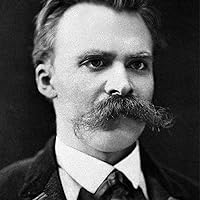
Friedrich Nietzsche

Friedrich Wilhelm Nietzsche was a German classical scholar, philosopher, and critic of culture, who became one of the most influential of all modern thinkers. He began his career as a classical philologist before turning to philosophy. He became the youngest person to hold the Chair of Classical Philology at the University of Basel in 1869 at the age of 24, but resigned in 1879 due to health problems that plagued him most of his life; he completed much of his core writing in the following decade. In 1889, at age 44, he suffered a collapse and afterward a complete loss of his mental faculties, with paralysis and probably vascular dementia. He lived his remaining years in the care of his mother until her death in 1897 and then with his sister Elisabeth Förster-Nietzsche. Nietzsche died in 1900, after experiencing pneumonia and multiple strokes.
Nietzsche’s work spans philosophical polemics, poetry, cultural criticism, and fiction while displaying a fondness for aphorism and irony. Prominent elements of his philosophy include his radical critique of truth in favour of perspectivism; a genealogical critique of religion and Christian morality and a related theory of master–slave morality; the aesthetic affirmation of life in response to both the “death of God” and the profound crisis of nihilism; the notion of Apollonian and Dionysian forces; and a characterisation of the human subject as the expression of competing wills, collectively understood as the will to power. He also developed influential concepts such as the Übermensch and his doctrine of eternal return. In his later work, he became increasingly preoccupied with the creative powers of the individual to overcome cultural and moral mores in pursuit of new values and aesthetic health. His body of work touched a wide range of topics, including art, philology, history, music, religion, tragedy, culture, and science, and drew inspiration from Greek tragedy as well as figures such as ZoroasterArthur SchopenhauerRalph Waldo EmersonRichard WagnerFyodor Dostoevsky, and Johann Wolfgang von Goethe.
After his death, Nietzsche’s sister Elisabeth became the curator and editor of his manuscripts. She edited his unpublished writings to fit her German ultranationalist ideology, often contradicting or obfuscating Nietzsche’s stated opinions, which were explicitly opposed to antisemitism and nationalism. Through her published editions, Nietzsche’s work became associated with fascism and Nazism. 20th-century scholars such as Walter KaufmannR.J. Hollingdale, and Georges Bataille defended Nietzsche against this interpretation, and corrected editions of his writings were soon made available. Nietzsche’s thought enjoyed renewed popularity in the 1960s and his ideas have since had a profound impact on 20th- and early 21st-century thinkers across philosophy—especially in schools of continental philosophy such as existentialism, postmodernism, and post-structuralism—as well as art, literature, music, poetry, politics, and popular culture.

(Goodreads.com)

Postmortem Survival and the Physical Universe with Ruth Kastner

New Thinking Allowed with Jeffrey Mishlove Sep 5, 2026 New Thinking Allowed Audio Podcast Ruth Kastner, PhD, is a member of the Foundations of Physics group at the University of Maryland, College Park. She is author of The Transactional Interpretation of Quantum Mechanics: The Reality of Possibility, Understanding Our Unseen Reality: Solving Quantum Riddles, and Adventures in Quantumland: Exploring Our Unseen Reality. In this video, rebooted from 2021, she contrasts the “eternalist” view of physics, as expressed in the idea of a “block universe” based on Einstein’s theory of relativity, with a “dynamical” view as expressed in the transactional interpretation of quantum mechanics. These interpretations of the physical universe both allow some form of human postmortem survival – although they appear to be quite different from each other. New Thinking Allowed host, Jeffrey Mishlove, PhD, is author of The Roots of Consciousness, Psi Development Systems, and The PK Man. Between 1986 and 2002 he hosted and co-produced the original Thinking Allowed public television series. He is the recipient of the only doctoral diploma in “parapsychology” ever awarded by an accredited university (University of California, Berkeley, 1980). He is also the Grand Prize winner of the 2021 Bigelow Institute essay competition regarding the best evidence for survival of human consciousness after permanent bodily death. He is Co-Director of Parapsychology Education at the California Institute for Human Science. (Recorded on March 11, 2021)

Francis Chan on worry

Chan in 2009

“Worry implies that we don’t quite trust God is big enough, powerful enough, or loving enough to take care of what’s happening in our lives.
Stress says the things we are involved in are important enough to merit our impatience, our lack of grace towards others, or our tight grip of control.
Basically, these two behaviors communicate that it’s okay to sin and not trust God because the stuff in my life is somehow exceptional. Both worry and stress reek of arrogance. They declare our tendency to forget that we’ve been forgiven, that our lives are brief … and that in the context of God’s strength, our problems are small, indeed.”

~ Francis Chan

Francis Chan is an American Protestant author, teacher, and preacher. He is the former teaching pastor of the nondenominational Cornerstone Community Church, an Evangelical church in Simi Valley, California founded by Chan in 1994. Wikipedia

Born August 31, 1967 (age 59 years), San Francisco, CA

Consciousness, spirituality, biography, sexuality, androgyny, futurism, space, the arts, science, astrology, democracy, humor, books, movies and more

Bathtub Bulletin