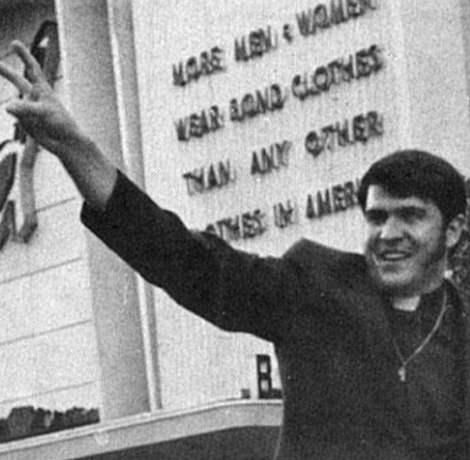
Me: Was Troy Perry responsible for the first gay pride parade in hollywood in 1970?
(Image from LosAngelesBlade.com)
Google AI
Yes, Reverend Troy Perry was one of the co-founders and key organizers responsible for the historic first permitted gay pride parade in Hollywood (and the world), held on June 28, 1970. [1, 2]
Key Details of the 1970 Parade
Co-Organizers: Troy Perry (founder of the Metropolitan Community Church) organized the event alongside fellow activists Morris Kight (founder of the Gay Liberation Front) and Reverend Bob Humphries. [1, 2]
Organization: Together, they founded the Christopher Street West Association to plan the event and successfully secure an official city permit. [1, 2]
Date and Route: The parade took place on June 28, 1970, marking the one-year anniversary of the Stonewall Riots. Around 2,000 participants gathered at McCadden Place and marched down Hollywood Boulevard. [1, 2]
Me: Didn’t the same parade happen in San Francisco, New York and other cities?
Google AI
Yes, similar demonstrations took place in New York, San Francisco, and Chicago during that exact same weekend in June 1970. They were all organized to mark the one-year anniversary of the Stonewall Uprising. [1, 2, 3, 4]
However, they were separate events organized by local activist groups, each taking a slightly different format: [1]
Chicago (June 27, 1970): The Chicago Gay Liberation group organized a “Gay Liberation March” from Washington Square Park to the Water Tower, making it technically the very first march of that historic weekend. [1, 2]
San Francisco (June 27–28, 1970): A small group of about 30 activists marched down Polk Street on Saturday, followed by a larger “Gay-In” picnic and festival in Golden Gate Park on Sunday. [1]
New York City (June 28, 1970): Activists organized the Christopher Street Liberation Day March. Thousands of people marched 51 blocks from Greenwich Village up to Central Park. Because it happened where the Stonewall Riots occurred, NYC is widely recognized as the birthplace of the Pride movement. [1, 2, 3, 4]
What made the Hollywood Parade unique?
While New York and Chicago held political protest “marches,” the Los Angeles event was unique because Troy Perry and his co-organizers insisted on a traditional, permitted street parade with floats, music, and street closures. They had to fight a massive legal battle against the Los Angeles Police Commission to secure the permit, ultimately winning a mandate from the California Supreme Court to let the parade proceed. [1, 2]
Growth and attendance
The growth and attendance of Pride events since their 1970 inception represents one of the most explosive social and cultural expansions in modern history, transforming local, neighborhood-level protests of a few thousand total people into global spectacles that draw millions of attendees annually. [1, 2]
Attendance: 1970 vs. Recent Years
The contrast between the inaugural crowds and modern turnouts illustrates how dramatically these local movements have scaled:
City
1970 Attendance / Participants
Modern Estimated Attendance
New York City
~2,000 – 5,000
5,000,000+ (WorldPride record)
San Francisco
~30 marchers (Saturday); a few hundred at Sunday’s “Gay-In”
1,000,000+
Los Angeles (Hollywood)
~1,000 – 2,000
175,000+ (festival/parade)
Chicago
~100 – 150
1,000,000+
Key Historical Growth Triggers
The transition from dangerous political demonstrations to massive celebratory events happened in distinct phases:
The Early 1970s Explosion: Word spread rapidly after 1970. By 1974, San Francisco’s turnout surged to 60,000 people, and by 1980, it crossed 250,000, forcing the city to move the event from local neighborhoods to the massive Market Street thoroughfare. [1, 2, 3, 4]
The 1980s and the AIDS Crisis: Attendance shifted from celebratory to deeply political and urgent. Groups like ACT UP utilized the massive crowds at New York Pride to stage die-ins and major political protests, demanding healthcare reform and pharmaceutical access. [1]
The 21st Century Corporate & Global Boom: Over the last two decades, major corporate sponsorships, televised broadcasts, and the legalization of same-sex marriage transformed Pride into a staple city tourism event. In 2019, NYC hosted WorldPride, which drew an estimated 5 million people, making it the largest LGBTQ+ gathering in human history. [1, 2]
On the last day of Pride Month, the New York Times published an op-ed that argues gay people need to whitewash their existences for the comfort of conservative Christians.
Thanks for the offer, but we’re gonna have to decline.
The writer, Matthew Vines, declares that he’s “gay, not queer,” and that “it matters.” The author of a book called God and the Gay Christian: The Biblical Case in Support of Same-Sex Relationships, Vines grew up in a regressive evangelical church in Wichita, Kansas. Now an adult, it’s apparent he still harbors self-shame and resentment.
Like many conservative gay men–and they are almost always men–Vines blames eroding support for same-sex marriage on the LGBTQ+ movement’s alleged excesses. In particular, he fixates on the word “queer.” Vines says “gay” and “queer” are not interchangeable, despite “progressive activists,” organizations and media outlets like this one using “queer” as an umbrella term.
“The broader trend of casting the queer net ever wider has muddled a once-clear public message about who gay people are,” he writes. “Being gay begins to look less like an inborn trait and more like a chosen ideology or aesthetic.”
A new poll shows support for gay marriage is dropping dramatically. But the findings are likely an outlier..
Though Vines prattles on for 1,269 words, his argument can be boiled down to this simplistic thesis: “if we stop calling ourselves queer, then homophobes will like us.”
The problem is, the conservative Christians Vines so desperately wants to win over have never accepted gay people as we are. They came to tolerate a sanitized, hetero-normalized version of queerness that doesn’t challenge their views.
Andrew Sullivan’s conservative case for gay marriage lays out this very point. He says that marriage is a traditional institution, and promotes monogamy opposed to promiscuity. Last Pride season, Sullivan wrote an essay in the Times blaming a “radicalized gay rights movement” for the resurgence in anti-LGBTQ+ sentiments. He claims that advocacy orgs conjured up the issue of gender identity to pad their coffers in the wake of Obergefell. “This huge increase in funding was no longer primarily about gay, lesbian and transgender civil rights,” he writes, “because almost all had already been won.”
Much like Sullivan, Vines seems to believe that marriage equality should represent the end point of the gay rights movement. He refers to marriage as a “core biblical idea” that reflects “God’s self-giving love for humanity through the sacrificial love of spouses for each other.”
While that may be Vines’ idea of marriage, it is a narrow definition. He leaves no room for non-monogamous relationships, or any arrangement that doesn’t embody the 1950s nuclear family ideal.
When recounting his coming out story, Vines says he found great comfort in the idea that there’s “nothing inherently radical or subversive about being gay.” He fails to mention who cleared the way for him to feel so inoffensive: radical queer and trans activists who confronted the country’s indifference towards AIDS.
Due to its adversarial roots, Vines allows that it was appropriate for activists to use the word “queer” during the AIDS epidemic. With the AIDS crisis over, he says the term’s “us-versus-them” nature no longer applies.
Through the entire op-ed, Vines’ privilege shines through. The AIDS crisis may be over for him, and other upscale white men with access to affirming healthcare. But HIV rates for Black and brown men remain disproportionally high, and the Tr*mp admin continues to scale back funding for HIV research.
For Vines, who married his husband at a Baptist church in Texas, the struggle for gay rights is over. Now, he doesn’t want to disrupt the status quo.
In doing so, he ignores all of the LGBTQ+ people who don’t enjoy that luxury.
Sign up for the Queerty newsletter to stay on top of the hottest stories in LGBTQ+ entertainment, politics, and culture.
Alex Reimer is an Assistant Editor at Queerty who writes about sports and fitness, politics and irreverent gay things. In a previous life, he was a talk radio loudmouth in Boston. He currently lives in Chicago.
Mr. Vines is the author of “God and the Gay Christian: The Biblical Case in Support of Same-Sex Relationships.
It’s been 11 years since same-sex marriage was legalized nationwide, and for most of that time, its place in American life has seemed settled. That sense of security is starting to erode. Support for same-sex marriage has dropped by 18 percentage points among Republicans since 2022, and conservative activists and lawmakers are mounting an increasingly aggressive campaign to overturn Obergefell v. Hodges, the Supreme Court case that established marriage equality as a right.
I do not take these efforts lightly. The right that some conservative Christian activists are seeking to undo is the reason I was able to marry my husband four years ago at a Baptist church in Texas — albeit one that had broken away from the traditionalist Southern Baptist Convention. Since then, the broad support that made marriage equality possible has grown more vulnerable. This is in part because a key message behind it — that being gay is not a choice — is being undermined by those who argue that same-sex orientation is better thought of as a part of a wider rebellion against social norms.
This worldview is best expressed in one word: “queer,” which is often used interchangeably with “gay” these days. The two words don’t mean the same thing. And in that difference lies a danger for our hard-fought equality.
I came out as gay in 2010 after being raised in an evangelical church in Wichita, Kan., where homosexuality was considered a sinful choice. Two things helped me change my mind. First was a painstaking study of Scripture. All six of the Bible’s references to same-sex relations are negative, but the lustful and exploitative same-sex practices those passages describe differ fundamentally from same-sex marriages today that are based on lifelong love and commitment.
The other thing that shaped my view was the public argument for gay rights at the time. The message from leading marriage equality advocates was simple and clear: Being gay is neither chosen nor changeable, and gay people deserve the same legal protections and chance at happiness as everyone else.
The faithful relationships highlighted by the campaign for marriage equality helped me see that same-sex love could be just as profound and enduring as heterosexual love. They were in keeping with a core biblical idea about marriage: that it is a covenant designed to reflect God’s self-giving love for humanity through the sacrificial love of spouses for each other.
This is, I admit, a far from radical vision of gay relationships. Which brings me to “queer.”
The shift toward “queer” has been remarkable and has coincided with a broader shift toward polarization in our society over the past 15 years. In 2009 a majority of gay men and lesbians reported negative feelings about “queer,” with only about one in five gay men viewing it positively. As a result, gay rights leaders and allies largely avoided it. But in 2025, 48 percent of L.G.B.T.Q. people said they thought of themselves as queer, including nearly 60 percent of those under 30. Progressive activists, organizations and major media outlets now routinely use “queer people” as an umbrella label for everyone who isn’t heterosexual, often paired with “trans” to encompass the broader L.G.B.T.Q. population.
What’s in a word? It’s more than just a shift in linguistic fashion. “Queer” carries an adversarial charge that “gay” does not, and that charge has a specific intellectual lineage. In 1990 an activist group called Queer Nation published a manifesto exhorting gay people to call themselves “queer.” Its rationale was that “gay” was “a much brighter word” and that “queer” better conveyed the anger and disgust they felt at how society treated gay people: as marginal others whose deaths barely mattered. That sentiment had an understandable resonance at the height of the AIDS epidemic, but the us-versus-them posture it represented has outlived that crisis.
This oppositional framing of “queer” achieved its most enduring influence through the rise of queer theory. In that academic context, “queer” did not simply mean “gay or bisexual.” It meant “anti-normative” in a sweeping sense. As the queer theorist David Halperin wrote, “Queer is by definition whatever is at odds with the normal, the legitimate, the dominant.” By that standard, same-sex relationships could be queer, but so could open marriages, prostitution and public sex, even when heterosexual.
To be fair, “queer” has certain advantages. It is more economical than “L.G.B.T.Q.I.A.+,” and its openness can feel freeing to those ill at ease with the binary nature of “gay” and “lesbian.” I have friends who are transgender, or are married to someone who is, who find “queer” a more comfortable fit for that reason.
But the capaciousness that makes “queer” appealing to some also makes the term remarkably easy for anybody — regardless of orientation — to adopt as a kind of radical chic identity label. Because the word “queer” can describe any departure from social norms, it becomes an open door through which almost anyone can walk. Polyamorous? Queer. Vaguely uncomfortable with gender expectations? Possibly queer, too.
That elasticity has helped fuel a sharp rise in young people identifying as something other than straight, even if they are unlikely to ever pursue a same-sex relationship. Some of this increase represents people who were previously closeted but are now free to be honest about their sexual orientation, which is a welcome development. But the broader trend of casting the queer net ever wider has muddled a once-clear public message about who gay people are. Being gay begins to look less like an inborn trait and more like a chosen ideology or aesthetic.
Subsuming the fixed reality of gayness under the much more malleable banner of queerness undermines a core premise behind gay rights: that sexual orientation isn’t chosen. And polling suggests that premise is, indeed, being weakened; the share of Americans who believe people are born gay has declined over the past decade.
In a time of backlash, this is not a confusion that gay people can afford, especially those of us who live in red states and religious communities. In my work with the Reformation Project, which advocates the acceptance of same-sex relationships in the church, I have watched conservative Christians grow noticeably more guarded in recent years. Even those who had, however reluctantly, made their peace with same-sex marriage being legal have become increasingly alarmed by their sense that the L.G.B.T.Q. movement lacks clear limiting principles. And while the sharp recent drop among Republicans in support for marriage equality is only part of a larger ramping up of culture-war populism, losing the clarity and moderation of the message that once appealed to a majority of them cannot have helped.
As a 19-year-old, I found freedom by coming to understand that there is nothing inherently radical or subversive about being gay. Watching committed same-sex couples be welcomed into the institution of marriage transformed my sense of self-worth, allowing me to envision for the first time a dignified future as an openly gay person. It showed me that something never before possible for gay people now was for me: I could fall in love and build a life with someone without being confined to the closet or shunted to the margins of society.
The gay rights movement changed the world — and changed my life — by showing that being gay is not a rebellion against ordinary life. It is simply one way of living it, every bit as dignified and human as being straight. As support for gay rights begins to wane, we urgently need to regain the clarity of that simple, transformational message.
Matthew Vines is the executive director of the Reformation Project and the author of “God and the Gay Christian: The Biblical Case in Support of Same-Sex Relationships.”
The Times is committed to publishing a diversity of letters to the editor. We’d like to hear what you think about this or any of our articles. Here are some tips. And here’s our email: letters@nytimes.com.
“Because thou hast done this, thou art cursed above all cattle, and above every beast of the field.” With those words in Genesis, God condemns the serpent for tempting Adam and Eve, and the serpent has shouldered the blame ever since. But how would the study of religion change if we looked at the Fall from the snake’s point of view? Would he appear as a bringer of wisdom, more generous than the God who wishes to keep his creation ignorant?
Inspired by the early Gnostics who took that startling view, Jeffrey J. Kripal uses the serpent as a starting point for a groundbreaking reconsideration of religious studies and its methods. In a series of related essays, he moves beyond both rational and faith-based approaches to religion, exploring the erotics of the gospels and the sexualities of Jesus, John, and Mary Magdalene. He considers Feuerbach’s Gnosticism, the untapped mystical potential of comparative religion, and even the modern mythology of the X-Men.
Ultimately, The Serpent’s Gift is a provocative call for a complete reorientation of religious studies, aimed at a larger understanding of the world, the self, and the divine.
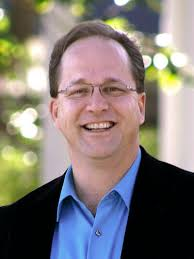
Jeffrey J. Kripal, Ph.D. (History of Religions, The University of Chicago, 1993; M.A., U. Chicago; B.A., Religion, Conception Seminary College, 1985), holds the J. Newton Rayzor Chair in Philosophy and Religious Thought at Rice University, where he serves as Associate Dean of Humanities, Faculty and Graduate Studies. He also has served as Associate Director of the Center for Theory and Research of the Esalen Institute in Big Sur, California.
(Goodreads.com)
Consciousness, spirituality, biography, sexuality, androgyny, futurism, space, the arts, science, astrology, democracy, humor, books, movies and more