The Art of Losing and the Art of Beckoning Love Back: The Story Behind One of the Greatest Poems Ever Written

By Maria Popova (themarginalian.org)

You wouldn’t have bet on it, the frail famous poet teaching at Harvard as a visiting professor and the athletic secretary of the campus residence half her age. But every great love exists against probability, belongs to that region of the universe where the wildest bet may be the winning bet.

When she met Alice Methfessel, Elizabeth Bishop had served as Poet Laureate of the United States, had won the National Book Award and the Pulitzer Prize, had spent the better part of her youth in solitude and the better part of her middle age in South America with the woman she loved for seventeen years, who had taken her own life three years earlier.

Across their stations, across their age difference, across the abyss of possibility between their era’s parameters of permission, Elizabeth and Alice fell deeply and enduringly in love — a love that comes abloom on the pages of Megan Marshall’s delicious biography Elizabeth Bishop: A Miracle for Breakfast (public library).

Soon, they were beginning each day with a ritual refrain: “Good-morning I love you.” The “blue blue blue” of Alice’s eyes became the sky of a new world shimmering with new life. More poems poured out in a spring than had in a decade. They swam together in the Galápagos, admiring the flamboyance of flamingos, and in the Greek Isles, admiring the poppies and their thousand shades of red. Whenever they were separated by Elizabeth’s itinerant life as a public poet, she sent Alice “love — housefulls, churchfulls, airportsfull” and carried her photograph in her breast pocket. She revised her will to leave everything except her books to Alice.

Elizabeth Bishop

After five years together — years of extraordinary creative vitality for the poet, but also years of savage struggle with alcohol — Alice, exhausted by Elizabeth’s increasingly out-of-control drinking to the point of collapse, met a young man who soon proposed.

“I want you to be happy and good and loved,” Elizabeth told her in a touching reminder that the deepest measure of love is wanting the best possible life for the other person. But she was heartbroken.

She coped the way all artists do.

What began as mostly prose became, seventeen drafts and several titles later — “How to Lose Things,” “The Gift of Losing Things,” “The Art of Losing Things” — one of the greatest poems ever written:

ONE ART
by Elizabeth Bishop

The art of losing isn’t hard to master;
so many things seem filled with the intent
to be lost that their loss is no disaster.

Lose something every day. Accept the fluster
of lost door keys, the hour badly spent.
The art of losing isn’t hard to master.

Then practice losing farther, losing faster:
places, and names, and where it was you meant
to travel. None of these will bring disaster.

I lost my mother’s watch. And look! my last, or
next-to-last, of three loved houses went.
The art of losing isn’t hard to master.

I lost two cities, lovely ones. And, vaster,
some realms I owned, two rivers, a continent.
I miss them, but it wasn’t a disaster.

—Even losing you (the joking voice, a gesture
I love) I shan’t have lied. It’s evident
the art of losing’s not too hard to master
though it may look like (Write it!) like disaster.

When she learned that Alice had decided to accept the proposal, Elizabeth was devastated. With the helpless vulnerability of love laid bare, which neither pride nor prejudice can touch, she wrote to her:

I DO want you to be free, darling — that wouldn’t ever make me stop loving you… You can always have me back if ever you should want me… truly.

And then she sent her the poem.

Elizabeth Bishop (Archives & Special Collections, Vassar College Libraries)

Nobody knows what beckoned Alice back — the poem, the way a badly sprained ankle signaled Elizabeth’s fragility and made Alice shudder at the thought of losing her, or simply the inexplicable gravitational pull of love that eludes, always eludes, theory.

“I like being with you more than anyone else in the world,” Alice wrote to Elizabeth that summer.

They remained together until death did them part — one awful October evening, a cerebral aneurysm left Elizabeth’s body for Alice to find on their bedroom floor.

Years earlier, in her most intimate poem that she never published, Elizabeth had looked to death as dreadful only for separating her from Alice:

BREAKFAST SONG
by Elizabeth Bishop

My love, my saving grace,
your eyes are awfully blue.
I kiss your funny face,
your coffee-flavored mouth.
Last night I slept with you.
Today I love you so
how can I bear to go
(as soon I must, I know)
to bed with ugly death
in that cold filthy place
to sleep there without you,
without the easy breath
and nightlong, limblong warmth
I’ve grown accustomed to?
— Nobody wants to die;
tell me it is a lie!
But no, I know it’s true.
It’s just the common case;
there’s nothing one can do.
My love, my saving grace,
your eyes are awfully blue
early and instant blue.

Inside the tragedy, a triumph: It is miracle enough to have found blue.

How to Be More Alive: The Samurai Guide to Dying Every Day

By Maria Popova (themarginalian.org)

The great paradox of human life is that our mortality is the fulcrum of our search for meaning — the yearning to make this brief lungful of life matter amid the breathless void of space and time — and yet we spend our lives obviating the fact that we are mortal. If we are lucky enough, if we are lucid enough, it may take us less than a lifetime to learn that to deny death is to deny life. Rilke knew this: “Death is our friend precisely because it brings us into absolute and passionate presence with all that is here, that is natural, that is love,” he wrote. Alice James — William and Henry James’s equally brilliant sister, whose chromosomes confined her to the margins of her time — knew this: “It is the most supremely interesting moment in life, the only one in fact when living seems life,” she wrote as she approached her untimely death.

An epoch before them, while the Western world was grappling intellectually with Montaigne’s unnerving assertion that the subject, the substance, the very purpose of philosophy is to learn to die, the Japanese samurai turned Zen priest Yamamoto Tsunetomo (1659–1719) was attesting to it with his life and articulating with piercing precision the fundaments of the art of living lensed through death.

Samurai by Japanese artist Yoshitoshi from his series One Hundred Aspects of the Moon, 1885-1892. (Available as a print and more.)

Born to an uncommonly elderly father who had already outlived the era’s life expectancy twofold, Tsunetomo grew up so sickly that the family doctor deemed him unlikely to live past twenty. And yet despite his precocious proximity to death — or perhaps precisely because of it — he became a samurai. Four centuries before Bruce Lee emerged as the philosopher-fighter of the modern world, Tsunetomo came to see that a true warrior trains both the body and the mind. Sensing that strength springs from sinew and spirit entwined, he apprenticed with a Zen priest and a Confucian scholar, took work as a scribe, fell under the spell of poetry, and eventually became a Buddhist priest and teacher himself.

Anchoring his teachings, transcribed by one of his disciples under the title Hakagure (public library) — perhaps best translated as Umbral Leaves — is the idea that death is the beating heart of bushido, the Way of the warrior, and yet we are wired to turn away from the very thing that makes us strong, constantly caging ourselves in denial. He writes:

We all want to live. And in large part we make our logic according to what we like… But… if by setting one’s heart right every morning and evening, one is able to live as though his body were already dead, he gains freedom in the Way. His whole life will be without blame, and he will succeed in his calling.

He offers a daily practice, potent and brutal as the birth of galaxies, to translate the cerebral understanding of life into the art of living:

Meditation on inevitable death should be performed daily. Every day when one’s body and mind are at peace, one should meditate upon being ripped apart by arrows, rifles, spears and swords, being carried away by surging waves, being thrown into the midst of a great fire, being struck by lightning, being shaken to death by a great earthquake, falling from thousand-foot cliffs, dying of disease… And every day without fail one should consider himself as dead.

Our difficulty living and our difficulty dying, Tsunetomo intimates, spring from the same source — a troubled relationship with time, haunted by our constant self-expatriation from the only thing ours for the keeping: the naked now. Lamenting that “everyone lets the present moment slip by, then looks for it as though he thought it were somewhere else,” he writes:

There is surely nothing other than the single purpose of the present moment. A person’s whole life is a succession of moment after moment. If one fully understands the present moment, there will be nothing else to do, and nothing else to pursue. Live being true to the single purpose of the moment.

Art from An Almanac of Birds: 100 Divinations for Uncertain Days, also available as a stand-alone print.

Centuries later, the great Zen teacher and peace activist Thich Nhat Hanh — a modern samurai of the human spirit — would arrive at the same elemental truth in his surprising library epiphany about the meaning of life:

To live, we must die every instant. We must perish again and again in the storms that make life possible.

Complement with Henry James on how to stop waiting and start living and Nathaniel Hawthorne on how not to waste your life, then let this poem teach you how to live and how to die.

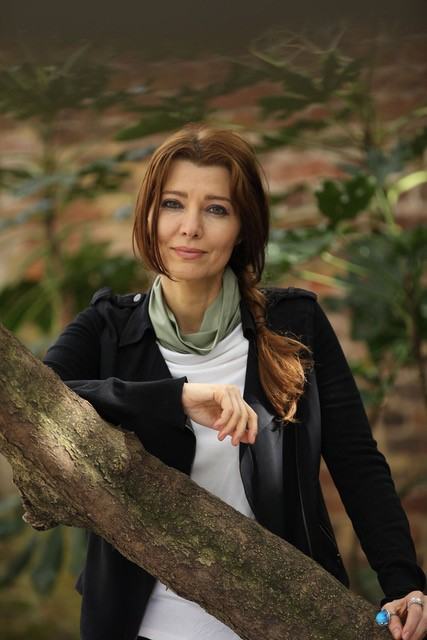
Elif Shafak on the voices within

(Shafak in 2021)

“On the Sufi path, first you discover the art of being alone amid the crowd. Next you discover the crowd within your solitude – the voices inside you.”

~ Elif Shafak

Elif Shafak is a Turkish-British award-winning author and political scientist who writes in both Turkish and English. Her work has been translated into 56 languages and nominated for major literary awards. Shafak is known for her global perspective and blending of Eastern and Western narrative traditions. Her writing is rooted in her feminist education and knowledge of Sufism and Ottoman culture.  (Wikipedia.org)

Born October 25, 1971 (age 54 years), Strasbourg, France

Spouse Eyüp Can (m. 2005)

Compassion in Action, Part II, with Ram Dass (1931 – 2019)

New Thinking Allowed with Jeffrey Mishlove Jul 4, 2026 This video is a special release from the original Thinking Allowed series that ran on public television from 1986 until 2002. It was recorded in about 1988. It will remain public for only one week.  Ram Dass’ own path has led him to look for God in every person and situation. Following this path, his life of service has included working with refugees, with the blind, and with the dying. In this moving, two-part program, he examines the delicate state of awareness in which one acts compassionately for social change while also accepting the world exactly as it is. Ram Dass (a.k.a. Richard Alpert, PhD) is a spiritual teacher and author of Be Here Now, The Only Dance There Is, The Psychedelic Experience (coauthored with Ralph Metzner and Timothy Leary), Grist for the Mill (coauthored with Stephen Levine), Journey of Awakening, Miracle of Love and How Can I Help?

Michael Wooldridge: “The Singularity is Bullshit”

Johnathan Bi Mar 11, 2025 Interview with Michael Wooldridge I made this video as a fellow of the Cosmos Institute, a 501c3 academy for philosopher-builders. Read the Cosmos Institute Substack ► https://bit.ly/3XK5T7k Subscribe to the Cosmos Institute on YouTube ► @cosmosinstituteaixhf Follow Cosmos’ founder and my friend Brendan McCord on X ► https://bit.ly/3Y9pFLb You can read the full transcript here: https://open.substack.com/pub/johnath… Companion Interviews:

Further Reading:

Timestamps 00:00 0. Introduction 02:45 1. The Singularity Is Bullshit 14:28 2. Alan Turing 25:55 2.1 Alan Turing: The Turing Test 32:22 3. The Golden Age 39:29 4. The First AI Winter 41:25 5. Expert Systems 51:35 6. Behavioral AI 57:08 7. Agent-Based AI & Multi-Agent Systems 1:05:45 8. Machine Learning 1:08:18 9. LLMsJohnathan Bi discusses the long history of artificial intelligence research and development with AI pioneer Michael Wooldridge. They examine past hype cycles, overlooked technological paradigms, and practical strategies for regulating AI applications rather than general mathematical principles.

The Hollywood Ten

  • Google AI Overview

The “Hollywood Ten,” often confused as “Hollywood Seven,” were a group of prominent industry professionals cited for contempt of Congress in 1947 after refusing to testify about their alleged Communist Party ties before the House Un-American Activities Committee (HUAC). They were subsequently blacklisted from working in the entertainment industry. [1, 2]

The Hollywood Blacklist and the Red Scare

In October 1947, HUAC launched hearings into alleged communist influence in the American film industry. When 10 prominent writers and directors (Alvah Bessie, Herbert Biberman, Lester Cole, Edward Dmytryk, Ring Lardner Jr., John Howard Lawson, Albert Maltz, Samuel Ornitz, Adrian Scott, and Dalton Trumbo) refused to answer the committee’s questions about their political affiliations, they were sentenced to prison and effectively blacklisted by studio executives. [1, 2, 3, 4, 5]

This purge was a cornerstone of the broader Red Scare and McCarthyism era, which terrorized the entertainment industry through the 1950s. Studio bosses surrendered to pressure, and individuals were often denied employment based on vague accusations or for having exercised their First Amendment rights. The blacklist was actively enforced by private publications like Red Channels, which targeted actors and writers for suspected progressive political sympathies. [1, 2, 3, 4, 5]

The blacklist’s chokehold on Hollywood only began to crumble in 1960 when prominent figures like Kirk Douglas and Otto Preminger openly credited blacklisted writers like Dalton Trumbo. [1]

For a deep dive into the historical exhibits and the lasting legacy of the Hollywood blacklist:

Did November 19, 2024 mark the entry of ChatGPT into the general marketplace?

By ChatGPT and Mike Zonta, BB editor

ChatGPT:

Pluto permanently entered Aquarius on November 19, 2024, and will remain there until March 8, 2043. [1, 2]

Because of its retrograde, Pluto did “dip” its toes into the sign for shorter, preview periods prior to the permanent shift: [1, 2, 3, 4]

  • March 23 – June 11, 2023
  • January 20 – September 1, 2024 [1, 2]

Me:

And did November 19, 2024 mark the entry of ChatGPT into the general marketplace?

ChatGPT:

No, that date does not mark the entry of ChatGPT into the general marketplace.

ChatGPT was released to the public on November 30, 2022. This was nearly two years before Pluto permanently entered Aquarius. [1]

However, during ChatGPT’s launch in late 2022, Pluto was in the final degrees of Capricorn, right on the edge of transitioning into Aquarius. Astrologers often point to the timing of the AI boom as the “preview” energy of Pluto in Aquarius, which is traditionally associated with technology, innovation, and collective shifts.

Timeline of AI Breakthroughs and Pluto’s Transitions

Here is the timeline mapping major AI milestones against Pluto’s shift from Capricorn (structure, corporations) to Aquarius (technology, networks, collective future).

The Late Capricorn Era: Foundation Building

  • November 30, 2022: OpenAI launches ChatGPT to the public.
    • Pluto Status: 28° Capricorn.
    • Astrological Context: The ultimate power shift begins at the very end of Capricorn’s rule over institutional tech.
  • February 7, 2023: Microsoft integrates AI into Bing search.
    • Pluto Status: 28° Capricorn.

The First Aquarius Previews: The AI Explosion

  • March 14, 2023: OpenAI releases GPT-4.
    • Pluto Status: 29° Capricorn (on the absolute cusp of Aquarius).
  • March 23, 2023: Pluto enters Aquarius for the first time since 1798.
    • Astrological Context: The initial 3-month preview of the technological revolution.
  • March 21, 2023: Google opens public access to Bard (now Gemini).
  • May 23, 2023: Adobe integrates Firefly generative AI into Photoshop.
  • June 11, 2023: Pluto retrogrades back into Capricorn.

The Back-and-Forth: Regulation vs. Innovation

  • January 20, 2024: Pluto enters Aquarius for the second preview.
  • February 15, 2024: OpenAI reveals Sora, a hyper-realistic text-to-video model.
  • March 13, 2024: The European Union passes the EU AI Act, the world’s first comprehensive AI law.
    • Astrological Context: Classic Pluto-in-Aquarius tension between decentralized tech and social governance.
  • September 1, 2024: Pluto retrogrades back into Capricorn one final time for “unfinished business” regarding global financial and corporate structures.

The Permanent Aquarius Era: The New Normal

  • November 19, 2024: Pluto enters Aquarius permanently until 2043.
    • Astrological Context: The official, uninterrupted era of the digital and decentralized revolution begins.
  • December 2024 – Present: Deep integration of AI agents managing daily human workflows, decentralized open-source models rivaling massive tech conglomerates, and ongoing global debates over AI labor replacement.

Historical parallels

The last time Pluto transited Aquarius was from 1778 to 1798. This 20-year period completely reshaped global power, human rights, and technology, offering powerful parallels to today’s digital revolution.

⚙️ The Industrial Revolution vs. The AI Revolution

  • Then: The late 18th century marked the peak of the First Industrial Revolution. The widespread adoption of the steam engine (perfected by James Watt in 1776, just before Pluto entered) automated manual labor, shifting society from agrarian economies to manufacturing hubs. [1]
  • Now: Generative AI, robotics, and automation are shifting society from an information economy to an automated intelligence economy. Cognitive labor is being disrupted just as physical labor was then.

Power to the People: Decentralization

Aquarius rules the collective, networks, and the democratization of power. Pluto rules control, destruction, and transformation.

  • Then: This era hosted the French Revolution (1789) and the aftermath of the American Revolution (ending in 1783). Power was violently stripped from centralized entities (monarchies and empires) and redistributed to the collective “common man” via early democratic experiments. [1, 2, 3, 4]
  • Now: We are seeing a massive pushback against centralized authority. This manifests as the rise of decentralized open-source AI models that bypass tech monopolies, the growth of blockchain technologies, and a cultural shift toward citizen journalism and creator economies.

Scientific Breakthroughs & The Invisible World

Aquarius is an air sign, associated with the intellect, the invisible forces of nature (electricity, data), and the sky.

  • Then:
    • The Hot Air Balloon was invented (1783), allowing humans to conquer the skies for the first time.
    • The discovery of Uranus (1781), the planet that ironically rules Aquarius, shattered the traditional view of the solar system.
    • Early experiments with electricity (like Luigi Galvani’s work on bioelectricity in the 1780s) began. [1]
  • Now: Our “invisible world” is the cloud, global data networks, and wireless technology. Aerospace innovation is booming with private space exploration, satellite internet networks, and the integration of quantum computing.

Human Rights and the Social Contract

When Pluto is in Aquarius, society is forced to re-examine how it treats its citizens.

  • Then: The period produced foundational texts on human rights, such as Thomas Paine’s Rights of Man (1791) and Mary Wollstonecraft’s A Vindication of the Rights of Woman (1792). It also saw the early momentum of the British abolitionist movement against the slave trade. [1, 2, 3, 4, 5]
  • Now: The global conversation centers on digital human rights: data privacy, AI ethics, universal basic income (UBI) to combat technological unemployment, and who owns the rights to human-created art and writing.

The GREAT 6,000-YEAR RESET Has BEGUN! | Rick Levine

Amrit Sandhu ???????? and Rick Levine Astrologer Jun 14, 2026 Inspired Evolution Podcast ????????Rick Levine reveals 4 major shifts — some 6,000 years in the making — all hitting at once, this July. The last time the sky aligned like this, human civilization itself was just being born: cities, writing, and metal first appeared. Now Saturn and Neptune are meeting at zero degrees Aries again for the first time in ~6,000 years, and Rick explains why our old myths, structures, and shared sense of reality are collapsing in real time. This astrological transition coincides with a rapid acceleration in technology, artificial intelligence, and disclosure surrounding extraterrestrial life — challenging our baseline understanding of what it means to be human. Levine discusses the intense information “flooding” designed to overwhelm public awareness, and offers a grounded way to navigate this collective “time vertigo.” Delving into the legacy of Johannes Kepler, harmonic aspects, and his own “quantum astrology,” he bridges ancient esoteric wisdom with modern physics — including a striking take on fate and free will. Ultimately, this conversation is a strategic roadmap for the mid-2020s: a call to embrace your personal cycles and step into an evolved state of awareness, rather than giving in to fear.

Hopi prophecy

(Image from mairahorta.com)

“Here is a river flowing now very fast. It is so great and swift that there are those who will be afraid, who will try to hold on to the shore… Know the river has its destination. The elders say we must let go of the shore, push off into the middle of the river, and keep our heads above water.

And I say, see who is there with you. This is your new family.”

–compiled by Margaret Wheatley and Rick Levine