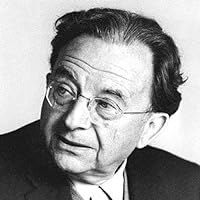
“Love isn’t something natural. Rather it requires discipline, concentration, patience, faith, and the overcoming of narcissism. It isn’t a feeling, it is a practice.”
~ Erich Fromm
Erich Seligmann Fromm (March 23, 1900 – March 18, 1980) was a German-American social psychologist, psychoanalyst, sociologist, humanistic philosopher, and democratic socialist. He was a German Jew who fled the Nazi regime and settled in the United States.
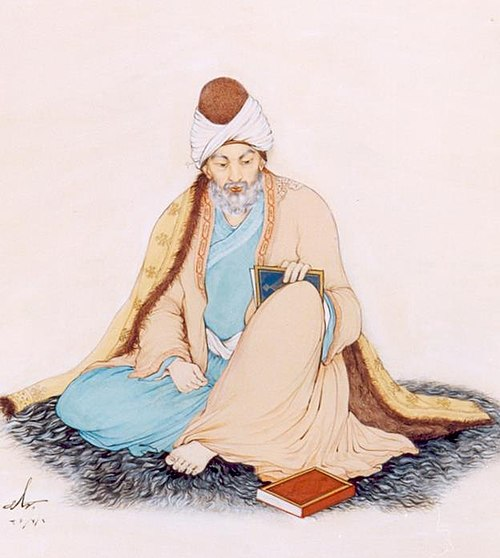
“There came one and knocked at the door of the Beloved. And a voice answered and said, ‘Who is there?’ The lover replied, ‘It is I.’ ‘Go hence,’ returned the voice; ‘there is no room within for thee and me.’ Then came the lover a second time and knocked and again the voice demanded, ‘Who is there?’ He answered, ‘It is thou.’ ‘Enter,’ said the voice, ‘for I am within.”
~ Rumi
Jalāl al-Dīn Muḥammad Rūmī, commonly known as Rumi, was a Sufi mystic, poet, and founder of the Islamic brotherhood known as the Mevlevi Order. His family hailed from Balkh. Rumi is an influential figure in Sufism, and his thought and works loom large both in Persian literature and mystic poetry in general. Wikipedia
You wouldn’t have bet on it, the frail famous poet teaching at Harvard as a visiting professor and the athletic secretary of the campus residence half her age. But every great love exists against probability, belongs to that region of the universe where the wildest bet may be the winning bet.
When she met Alice Methfessel, Elizabeth Bishop had served as Poet Laureate of the United States, had won the National Book Award and the Pulitzer Prize, had spent the better part of her youth in solitude and the better part of her middle age in South America with the woman she loved for seventeen years, who had taken her own life three years earlier.
Across their stations, across their age difference, across the abyss of possibility between their era’s parameters of permission, Elizabeth and Alice fell deeply and enduringly in love — a love that comes abloom on the pages of Megan Marshall’s delicious biography Elizabeth Bishop: A Miracle for Breakfast (public library).
Soon, they were beginning each day with a ritual refrain: “Good-morning I love you.” The “blue blue blue” of Alice’s eyes became the sky of a new world shimmering with new life. More poems poured out in a spring than had in a decade. They swam together in the Galápagos, admiring the flamboyance of flamingos, and in the Greek Isles, admiring the poppies and their thousand shades of red. Whenever they were separated by Elizabeth’s itinerant life as a public poet, she sent Alice “love — housefulls, churchfulls, airportsfull” and carried her photograph in her breast pocket. She revised her will to leave everything except her books to Alice.
Elizabeth Bishop
After five years together — years of extraordinary creative vitality for the poet, but also years of savage struggle with alcohol — Alice, exhausted by Elizabeth’s increasingly out-of-control drinking to the point of collapse, met a young man who soon proposed.
“I want you to be happy and good and loved,” Elizabeth told her in a touching reminder that the deepest measure of love is wanting the best possible life for the other person. But she was heartbroken.
What began as mostly prose became, seventeen drafts and several titles later — “How to Lose Things,” “The Gift of Losing Things,” “The Art of Losing Things” — one of the greatest poems ever written:
ONE ART by Elizabeth Bishop
The art of losing isn’t hard to master; so many things seem filled with the intent to be lost that their loss is no disaster.
Lose something every day. Accept the fluster of lost door keys, the hour badly spent. The art of losing isn’t hard to master.
Then practice losing farther, losing faster: places, and names, and where it was you meant to travel. None of these will bring disaster.
I lost my mother’s watch. And look! my last, or next-to-last, of three loved houses went. The art of losing isn’t hard to master.
I lost two cities, lovely ones. And, vaster, some realms I owned, two rivers, a continent. I miss them, but it wasn’t a disaster.
—Even losing you (the joking voice, a gesture I love) I shan’t have lied. It’s evident the art of losing’s not too hard to master though it may look like (Write it!) like disaster.
When she learned that Alice had decided to accept the proposal, Elizabeth was devastated. With the helpless vulnerability of love laid bare, which neither pride nor prejudice can touch, she wrote to her:
I DO want you to be free, darling — that wouldn’t ever make me stop loving you… You can always have me back if ever you should want me… truly.
And then she sent her the poem.
Elizabeth Bishop (Archives & Special Collections, Vassar College Libraries)
Nobody knows what beckoned Alice back — the poem, the way a badly sprained ankle signaled Elizabeth’s fragility and made Alice shudder at the thought of losing her, or simply the inexplicable gravitational pull of love that eludes, always eludes, theory.
“I like being with you more than anyone else in the world,” Alice wrote to Elizabeth that summer.
They remained together until death did them part — one awful October evening, a cerebral aneurysm left Elizabeth’s body for Alice to find on their bedroom floor.
Years earlier, in her most intimate poem that she never published, Elizabeth had looked to death as dreadful only for separating her from Alice:
BREAKFAST SONG by Elizabeth Bishop
My love, my saving grace, your eyes are awfully blue. I kiss your funny face, your coffee-flavored mouth. Last night I slept with you. Today I love you so how can I bear to go (as soon I must, I know) to bed with ugly death in that cold filthy place to sleep there without you, without the easy breath and nightlong, limblong warmth I’ve grown accustomed to? — Nobody wants to die; tell me it is a lie! But no, I know it’s true. It’s just the common case; there’s nothing one can do. My love, my saving grace, your eyes are awfully blue early and instant blue.
Climbing the Andes one windy January afternoon, watching peak after peek emerge on the horizon like giant mounds of moss, I found myself wondering about the clear line toward the top where the green ends and the reddish-brown of the barren rock begins, wondering how the trees and shrubs know when to stop, how far to keep pushing, where the point is past which the conditions become too inhospitable for growth, for flourishing, for survival.
This may be the hardest equation to balance in all of existence: when to keep trying and when to stop. Nowhere is it more confounding, because nowhere is the calculus of reason more haunted by emotion, than in our intimate relationships. There, all the variables are too charged with feeling to be weighed accurately; there, the most vulnerable part of the ego keeps factoring itself into the arithmetic. Because time is something we can measure and tenderness is not, we keep trying to ward off the singular sense of personal failure that the loss of love can bring by measuring the success of a relationship by quantity of time rather than quality of being, only to find ourselves on barren rock.
Kurt Vonnegut (November 11, 1922–April 11, 2007) was twenty-two and just home from his wartime duty in Europe, where he had been held as a prisoner of war in Dresden and barely survived the Allied bombing of the city, when he married his college classmate Jane Marie Cox — two young people not yet having become themselves, unformed and unhealed, trying to be together.
They loved each other, but as they grew up, they grew apart, grew askance. And yet, dragged by the momentum of culture, they had a son, then a daughter, then another as Vonnegut struggled to make a living as a writer.
Vonnegut at 33 with his family.
When his sister died of cancer two days after her husband was killed in a train accident, he adopted their three young sons. In that way life has of denying us any alternative experimental condition but our lived experience, no one knows what might have become of the couple in an experimental design other than a small house pattered by six hungry children. They fought more and more, until even the most mundane conversation couldn’t but become an argument.
Vonnegut tried to take refuge in writing, but his twin peaks of bills and rejection slips came to tower over his dream. Middle-aged and penniless, he was about to give up when he received an unexpected offer to teach at the prestigious Iowa Writers’ Workshop, procured through the kindness of a single reader touched by the work of this obscure unhappy writer. It was a lifeline both professional and personal. Vonnegut packed his bags and headed to Iowa, knowing in his heart, though he was not yet ready to allow the thought, that this was the end of his life with Jane.
Two years into teaching, as his writing was finally beginning to receive recognition, he was awarded a Guggenheim Fellowship and used the prize money to travel back to Dresden, only to find much of the city still in ruins. I wonder if he thought about love then, how it too is a world that can be left in ruins beyond repair if the warfare is too brutal or too long.
Suddenly catapulted into public success — after five novels and countless short stories, Vonnegut was lauded as an overnight success with Slaughterhouse-Five — he remained lodged in the pit of personal failure. He and Jane had been together for a quarter century, happy for only a fraction of it. Torn between his emotional inability to hold on to the relationship and his cerebral unwillingness to give up, he began drowning his discontent in drink.
In the last year of his forties, he moved out and headed for New York, but couldn’t bring himself to end the marriage. Taking solace in Margaret Mead’s assurance that “a couple which has had children has an irreversible and undissolvable relationship,” he wrote to Jane:
We hurt each other back and forth so much, almost absent-mindedly, that it was common sense for us to separate, if only to break the rhythm.
He shaded in this stark contour in a letter to a friend, painting a haunting portrait of a dead relationship:
I myself am living alone in two rooms and a garden in New York, attempting to draw useful electricity from the millions of milling strangers around me. I am no longer living with Jane for this reason, as nearly as I can tell: We are no longer capable of conducting amiable conversations. When we try to talk, to amuse each other and pass the time, our words are wooden, stilted, queer, distant, and — finally — quietly bitter. That is too bad, and many people regard me as heartless for leaving her. But the hours and days and years dragged so. I am happier now, though far from hilarious and proud. I have achieved a sort of Limbo, which is a distinct improvement over what I had before. I am beginning to write again. That had stopped for a while. I do not wish to marry again. I’m not in love with anybody else.
Kurt Vonnegut at 50.
Writing remained his one oasis of sanity amid the limbo of his Middle Passage. Some part of him — that wise part that lives in each of us, whispering what we don’t want to but need to hear — knew that he had to reimagine his life if he were not to squander it. But he was not ready. So he reimagined his writing, taking the skeleton of a play he had written fifteen years earlier and enfleshing it anew. Happy Birthday, Wanda June ran for five months to mixed reviews, but the world was finally paying attention.
Having documented Martin Luther King, Jr.’s historic speech during the March on Washington and worked as a war photographer in Vietnam, Jill Krementz was unperturbed by the cantankerous writer whose process she was hired to capture for a magazine profile. She immediately felt both Vonnegut’s brilliance and his brokenness, felt the sharp edge on which his own heart was breaking, saw to the roiling core of his wounded tenderness. He immediately decided he didn’t like her. (“There is no terror like that of being known,” Emerson shuddered at the discomposing intimacy that bloomed between him and Margaret Fuller.)
Within months, they were living together.
Just before he moved in with Jill, Vonnegut wrote to his seventeen-year-old daughter Nanette:
Dear old Nanny —
You certainly deserve a letter from me. A hundred letters would be more like it, I love you so.
I will be home from time to time to see you. But I will not stay for long. I still love your mother, but we can’t be together much without fighting. We have tried to do things about this, but nothing helps, and each fight hurts more than the last one.
I wasn’t stolen away by another woman. I don’t think people can steal other people. I simply went away because the fighting was making everybody so unhappy. I’ve done that several times before. Going to Iowa was an example. Every time I went away I simply went to aloneness. There was never any other woman beckoning me to come.
This time, for instance, I couldn’t make myself come home after the play opened, and I was alone. I hardly knew Jill at all, and I didn’t like her much, and whatever happened between us happened long after I’d decided home was too uncomfortable for me.
Eighteen years his junior but in many ways his spiritual elder, Jill enveloped him in a kindness so entirely new he didn’t know what to do with it, a love he hadn’t thought possible. He tried to fight with her, out of reflex, but she simply loved him, and so he slowly unbraced the oppositional stance that had become his default, slowly stopped self-medicating. He grew healthy, grew happy, grew himself.
Still, it took him six years to meet the emotional truth of his failed marriage with the hard fact of divorce. When he finally decided to do it, he wrote to Nan:
As for the divorce: I will always love your mother, as must have been evident on Sunday. But we could never live together again. Our conversations go so badly. Also: I want to be fair to Jill, who saved me from knocking myself off or turning into an alcoholic. I will not marry Jill, but I will stop asking that she live with a married man. And Jane, who is fond of marriage, should have the chance to marry again. I am not pursuing happiness through divorce. I am permanently damaged by the break-up of marriage. Those wounds will never heal. I am simply trying to make the best of an unpleasant situation. Let me say again, too, that Jill did not break the marriage. It was broken long before that — about the time I went to Iowa. There was no other woman beckoning me to Iowa. Later on, there was no woman beckoning me to New York City. I arrived both places in total solitude, and feeling simply awful.
There will be no acrimonious argle-bargle about divorce this time. We will not make the mistake of hiring two strangers to fight each other on our behalf. Jane and I will arrive at some sort of division of property, and some scheme for my sending her money regularly. She already owns the Cape house and some stocks and a large savings account in cash. I will add to that treasure, so she won’t have much to worry about as long as I’m popular and productive. Then Don Farber will draw up a simple agreement, and that will be that. The legal steps will be brief formalities, without any arguments to be made before a judge.
It took him another two years to formalize his relationship with Jill. By the time they decided to marry, he was fifty-seven and one of the most beloved authors in America. His daughter was the first person he told:
Dearest Nanny —
I want you to be the first person in our family to find this out: That Jill and I have decided to marry each other in November, probably a couple of days after Thanksgiving. Jill will then be three months shy of being forty, and we will have lived together about nine years. The first years of the relationship were tempestuous. Much of the tempest was my fault, surely. I was in a frenzied state of mourning and dismay over the failure of my once good marriage to Jane. Jill had nothing to do with that failure, but she was handy to blame. Be that as it may, Jill and I behave most affectionately and reasonably toward each other now, and unselfishly. We are in love. Our heads are clear. We are working and playing most cheerfully.
I do not endorse serial marriage for anyone. I myself have always wished to be as monogamous as a swan. I was monogamous with your mother until the very end, and will be so with Jill.
After a rough sketch of the wedding (“It will be very private. We don’t want our pictures in the paper.”), he added:
I sympathize fully with the mixed loyalties you and all the rest of my children would feel on such an occasion. So I of course invite you all, and hope you all will come. If the ceremony and party are going to cause you pain, you should not subject yourself to that pain. Your coming or staying away will not be a vote for or against anything.
Mostly, dear Nanny, I want you to know how happy I am just now, and that I have every reason to look forward to some very good years ahead.
Kurt Vonnegut and Jill Krementz a decade into their love. (Photograph: Adam Scull.)
Kurt and Jill remained together until his death, thirty-six years after they met. It was there, in the safety and sweetness of their love, that he discovered the simple secret of happiness.
It seems odd, wrong even, that “patience” and “passion” — the twin roots of love — should share a root in pāti, Latin for “to suffer.” But anyone who has lived, who has loved unskillfully or loved the unskilled, knows that the experience can be our sharpest instrument of suffering. We say we “fall” in love precisely because we know we can get bruised, know that the trap door it opens beneath our feet hurls us into depths we are entirely unprepared to fathom.
The interesting question, the transformative question, is what happens after the fall.
“It is a subject in which neither intuition nor the behaviour of others will help the philosopher to the truth,” Robert Louis Stevenson (November 13, 1850–December 3, 1894) writes in his long, passionate, searching essay on falling in love. “There is probably nothing rightly thought or rightly written on this matter of love that is not a piece of the person’s experience.” He is writing out of his own experience: Twenty-seven and struggling to make a name for himself as a writer, he had fallen painfully in love with the radical Fanny Obsourne — ten years his senior, still married to the philandering husband she left, attending art school in Paris with her daughter. They would eventually marry and magnify each other’s lives beyond all imagination. (“Without Fanny’s influence,” Camille Peri writes in her excellent biography of the two, “Louis might now be a forgotten man of letters instead of one of the greatest voices in Scottish literature.”)
Fanny and Robert Louis Stevenson
Love, Stevenson argues, is the only experience that truly astonishes us, jolt us awake from the slumber of preconception and expectation. And when it does, “it is not without something of the nature of dismay” that we look upon our new position — discomposed, disoriented, out of control. He writes:
Falling in love is the one illogical adventure, the one thing of which we are tempted to think as supernatural, in our trite and reasonable world.
That feeling, Stevenson reflects, infuses one’s sense of being with “a very supreme sense of pleasure in all parts of life — in lying down to sleep, in waking, in motion, in breathing, in continuing to be.” And yet at the center of something so concrete, so palpable, is a mystery:
It is a subject in which neither intuition nor the behaviour of others will help the philosopher to the truth. There is probably nothing rightly thought or rightly written on this matter of love that is not a piece of the person’s experience. The effect is out of all proportion with the cause. Two persons, neither of them, it may be, very amiable or very beautiful, meet, speak a little, and look a little into each other’s eyes. That has been done a dozen or so of times in the experience of either with no great result. But on this occasion all is different. They fall at once into that state in which another person becomes to us the very gist and centrepoint of God’s creation, and demolishes our laborious theories with a smile; in which our ideas are so bound up with the one master-thought that even the trivial cares of our own person become so many acts of devotion, and the love of life itself is translated into a wish to remain in the same world with so precious and desirable a fellow-creature.
What makes love astonishing is precisely the way it blindsides us, the way it cannot be willed or achieved or won on merit. He writes:
There are many matters in which you may waylay Destiny, and bid him stand and deliver. Hard work, high thinking, adventurous excitement, and a great deal more that forms a part of this or the other person’s spiritual bill of fare, are within the reach of almost any one who can dare a little and be patient. But it is by no means in the way of every one to fall in love… Many lovable people miss each other in the world, or meet under some unfavourable star. There is the nice and critical moment of declaration to be got over. From timidity or lack of opportunity a good half of possible love cases never get so far, and at least another quarter do there cease and determine.
And yet love is not a matter of persuasion. In a sense, the declaration of it becomes superfluous when the fact of it is self-evident and mutual. It is, Stevenson observes, something we must simply show up for, with passion and patience entwined. He outlines the discovery, the deepening, the development of love past “the simple accident of falling in love”:
Love should run out to meet love with open arms. Indeed, the ideal story is that of two people who go into love step for step, with a fluttered consciousness, like a pair of children venturing together into a dark room. From the first moment when they see each other, with a pang of curiosity, through stage after stage of growing pleasure and embarrassment, they can read the expression of their own trouble in each other’s eyes. There is here no declaration properly so called; the feeling is so plainly shared.
To remain in love, Stevenson argues in another essay, two people “must bring kindness and goodwill” to life beyond the fall. He considers the single most important element of lasting love, which is also the greatest kindness we can give each other and the most durable gesture of goodwill:
Veracity to sentiment, truth in a relation, truth to your own heart and your friends, never to feign or falsify emotion — that is the truth which makes love possible… With our chosen friends… and still more between lovers (for mutual understanding is love’s essence)… we must strive and do battle for the truth.
A century later, Adrienne Rich would sharpen this sentiment in her timeless definition of love as “a process, delicate, violent, often terrifying to both persons involved, a process of refining the truths they can tell each other.”
“Love rests in certainty. Only uncertainty can be defensive. And all uncertainty is doubt about yourself.”
~ ACIM
A Course in Miracles is a 1976 book by Helen Schucman. The underlying premise is that the greatest “miracle” is the act of simply gaining a full “awareness of love’s presence” in a person’s life. Schucman said that the book had been dictated to her, word for word, via a process of “inner dictation” from Jesus Christ. Wikipedia


 ONE ART


 We hurt each other back and forth so much, almost absent-mindedly, that it was common sense for us to separate, if only to break the rhythm.


 Falling in love is the one illogical adventure, the one thing of which we are tempted to think as supernatural, in our trite and reasonable world.