Be Here Now Network Jun 17, 2026 Jack Kornfield – Heart Wisdom Help us celebrate 10 years of Be Here Now Network and support the next chapter of Ram Dass Here and Now. Gifts are matched dollar for dollar through June 30. Learn more and give at: BHNN 10th Birthday Fundraiser: https://beherenownetwork.com/10years Beginning with reflections on global crises and personal difficulty, Jack reminds us that while suffering is inevitable, how we respond is what shapes our lives. This time on Heart Wisdom, Jack Kornfield explores: *Responding to difficulty without becoming overwhelmed *Living in the present moment instead of fear-based thinking *The power of intention and deep listening *Becoming an “island of peace” in chaotic times *Trusting uncertainty and the mystery of life This episode was originally filmed for the April 2026 Spirit Rock Meditation Center Monday Night Talk and Guided Meditation. “In difficulty, the mind goes into survival—trying to protect and fix. Thank it, let it soften, and return to the present. As Ram Dass reminds us—you can be here now.” –Jack Kornfield About Jack Kornfield: Jack Kornfield trained as a Buddhist monk in the monasteries of Thailand, India, and Burma, studying as a monk under the Buddhist master Ven. Ajahn Chah, as well as the Ven. Mahasi Sayadaw. He has taught meditation internationally since 1974 and is one of the key teachers to introduce Buddhist mindfulness practice to the West. Jack co-founded the Insight Meditation Society in Barre, Massachusetts, with fellow meditation teachers Sharon Salzberg and Joseph Goldstein and the Spirit Rock Center in Woodacre, California. His books have been translated into 20 languages and sold more than a million copies. Jack is currently offering a wonderful array of transformational online courses diving into crucial topics like Mindfulness Meditation Fundamentals, Walking the Eightfold Path, Opening the Heart of Forgiveness, Living Beautifully, Transforming Your Life Through Powerful Stories, and so much more. Sign up for an All Access Pass to explore Jack’s entire course library. If you would like a year’s worth of online meetups with Jack and fellow community, join The Year of Awakening: A Monthly Journey with Jack Kornfield.
U.S. President Donald Trump sits at his desk, behind a hat that reads “America is back” at the White House in Washington, D.C., on February 3, 2026. Evelyn Hockstein/Reuters
Eighteen states have turned their complete voter files over to the Trump Justice Department, including the driver’s license numbers and Social Security numbers of every registered voter in them. That count comes from Protect Democracy, which names all eighteen; Texas, Florida, and Ohio are among them. Together those eighteen states have 148 US House seats, 36 US Senate seats, and 184 electoral college votes, roughly two thirds of what it takes to control the House, the Senate, and the presidency. The question in the headline has an answer, and it is fewer than eighteen.
Since early 2025, the Trump administration has been trying to take control of voter rolls, mail ballots, and registration rules away from the states and hand it to the federal executive branch.
A March 2025 executive order demanded changes to state voting procedures and ordered federal election money withheld from states that refused. Courts blocked parts of it, and on June 24, 2026, a federal judge permanently barred key provisions. The Justice Department demanded voter registration data from all 50 states and the District of Columbia, including driver’s license numbers and Social Security numbers. The Department of Homeland Security rebuilt a database called SAVE so states could submit their voter rolls to it for citizenship checks.
A second executive order, issued March 31, 2026, ordered federal agencies to build lists of United States citizens and send them to the states before every election, ordered the Postal Service to create a list of approved mail voters, and told the Postal Service to refuse to deliver ballots from anyone not on that list.
DHS has also written new grant conditions, obtained by CNN and expected to go out to the states, that would make states change their election procedures and run their full voter rolls through SAVE to receive homeland security grants from a program worth more than one billion dollars this fiscal year. States that refuse would lose 20 percent of the money. As of this writing DHS has not formally announced the conditions. Maine Secretary of State Shenna Bellows said that cutting the funds of refusing states “endangers American lives and democracy itself.”
Most states said no. The Justice Department answered with 31 federal lawsuits against 30 states plus Washington DC to force the data handover, and so far no court, trial or appellate, has ruled in the department’s favor. On June 22, a federal judge ruled that the rebuilt SAVE system broke three federal laws: the Privacy Act, the Social Security Act, and the Administrative Procedure Act. That judge, Sparkle Sooknanan, wrote that the federal government had “knowingly trampled on the privacy rights of American citizens.” Two days later, the Sixth Circuit became the first appeals court to rule on the data lawsuits, upholding the dismissal of the case against Michigan. And on June 25, a federal judge in Boston blocked the core of the mail voting order for the November 2026 election in a lawsuit brought by 23 Democratic-led states and DC. The judge, Indira Talwani, wrote that “The Constitution does not grant the President any specific powers over elections.”
News stories about these rulings count the states that refused and the rulings the administration lost. Every one of those stories is accurate. They still measure the wrong thing, because a count of refusing states only means something if each state’s choice stays inside that state’s borders. It does not, for two reasons.
The first reason: once voter data leaves a state, the federal government keeps it, and every new state adds to the same federal database. That database works as soon as one state hands over its records, no matter how many others refuse.
Twelve of the eighteen had handed over complete files, driver’s license and Social Security numbers included, by early April; the other six complied partly or later. Texas alone accounts for a large share of the affected voters: it signed an agreement with DHS in March 2025 and ran its more than 18 million registered voters through SAVE. Separately, the DHS agency that handles citizenship began building a registry that combines its own records with data from the Social Security Administration and the State Department.
The Justice Department also asked states to sign a confidential agreement along with the data handover. Under its reported terms, a state that signs agrees to remove any voter the department flags as ineligible within 45 days. Two states signed: Alaska and Texas. Mississippi, South Dakota, and Tennessee handed over their rolls but refused to sign. A state that signs has given the federal executive branch ongoing control of its voter roll.
A court ruling issued after a transfer does not bring the data back. On May 12, 2026, the Office of Legal Counsel issued a written opinion saying federal law lets the Attorney General force states to produce their voter lists and share them with DHS. Losing individual court cases does not erase that opinion.
The second reason is geography. Control of the House and Senate will be decided in a small number of competitive districts and states, and several cooperating states hold those races, including Texas, Ohio, Florida, Iowa, and North Carolina. At least 25 states have run their rolls through SAVE since April 2025, 60 million registrations in a year, plus another 7.4 million from North Carolina, where Republicans control the state election board.
The court wins protect mostly the governments that sued. The June 25 injunction covers the 23 suing states and DC, and the administration told the courts this week that it is moving ahead with the system in the remaining states. Postmaster General David Steiner told the Senate on June 24 that under the proposed rule the Postal Service would refuse to deliver mail ballots in states that do not send their voter lists to the federal government. A voter in Houston or Columbus gets nothing from the injunction, because that voter’s state government joined the federal programs instead of fighting them. One ruling reaches further: in a separate case brought by the NAACP, U.S. District Judge Emmet Sullivan found the plan to deliver ballots only to preapproved voters broke a 2021 agreement with the Postal Service, and his ruling applies nationwide. That ruling protects ballot delivery. It does not touch the data collection, the purge agreements, or the state purge laws. So the court protection concentrates in states whose governments already refused to cooperate. In the cooperating states that hold the races deciding control of Congress, only the ballot delivery ruling applies.
The 60 million registration checks flagged about 24,000 possible noncitizens, and officials also flagged several hundred thousand registrations of people who may have died. Those totals only show how many people the government has flagged so far. It can flag as many as it chooses, and no one has to prove a flagged voter is ineligible before the registration is canceled; the voter has to prove they are eligible. That arrangement is a devastatingly powerful voter disenfranchisement tool.
In Texas, flagged voters got a letter, and if the county heard nothing within 30 days, the registration was canceled; some who did answer turned out to be citizens. A new Ohio law makes local election boards promptly cancel the registrations of people the secretary of state flags as noncitizens in checks he must run at least monthly. That secretary, Frank LaRose, defends the law on the ground that flagged voters can “immediately restore their registration status” by showing proof of citizenship.
The system also discourages people from registering at all, separate from the cancellations. A federal official confirmed that people flagged by SAVE are referred to DHS for possible criminal investigation, and the judge who reviewed the system wrote that a centralized federal database like this would discourage registration because citizens could fear misuse of their personal information. In races decided by hundreds or a few thousand votes, losing voters from only one side, and mostly from one party, can change the result even when the national numbers stay small.
The administration has also arranged its litigation so that losing in court still produces something useful. After losing the voter data cases in California, Michigan, and Oregon, the Justice Department filed emergency appeals warning that the security and sanctity of elections in those states would be questioned without quick rulings, and its filings say that without a final court decision there is “no other process to ensure a fair election in 2026.”
Stated plainly, months before the election, the department put into official court documents the claim that results in refusing states should be treated as doubtful. If a state cooperates, the government gets its data and a purge process. If a state refuses, the government gets a written reason to challenge that state’s results in November. Either way, the administration gains something it can use. David Becker, executive director of the Center for Election Innovation and Research and a former Justice Department voting section attorney, said of the department’s conduct, “There’s so much lawyering from the DOJ here that is raising ethical questions.”
The same approach is underway with the mail voting order. Within a week of the June 25 injunction, the administration appealed to the First Circuit, asked the district judge to lift her order by July 6, and warned in its filings that the injunction will make it impossible for the Postal Service to build the new ballot delivery system before November even if the administration wins the appeal. Those filings put in writing, ahead of time, a federal reason to call November mail ballots compromised.
Collecting the names of individual election workers and threatening officials with prosecution discourages people from doing that work whether or not charges are ever filed.
President Trump is also pressing Congress to pass the SAVE America Act, which would make people show citizenship papers to register, limit mail voting to reasons such as illness, disability, military deployment, and travel, and make states submit their voter rolls to DHS and remove anyone the system flags. In March he said of the bill, “It will guarantee the midterms.”
Between June 22 and June 29, federal courts ruled the SAVE overhaul unlawful, permanently barred parts of the 2025 executive order, upheld the dismissal of the Michigan data case on appeal, blocked the mail voting order for 23 states and DC, and upheld Mississippi’s ballot deadline law at the Supreme Court. Those rulings stop specific legal mechanisms.
They do not bring back data already handed over, automatically restore wrongly canceled registrations, reassure naturalized citizens who now connect registering with a federal investigation, protect election workers whose names have been demanded, erase the department’s written claims that elections in refusing states cannot be presumed fair, or stop the grant conditions waiting to go out.
So, how many states is enough? To steal an election, the infrastructure needs only three things: enough voter data, cooperation from states that hold the competitive races, and an official reason to dispute the results everywhere else. Texas alone supplied the first two: 18 million records handed over, a signature on the 45 day removal agreement, citizens with canceled registrations, and competitive House seats inside its borders. The Justice Department’s own court filings supplied the third. The answer is one, and it has already happened.
Want to do something about it? Well it’s our job at the Existentialist Republic to address exactly the issue this article outlines and then hand people tools to make change because when the federal government and a large fraction of states have abandoned fairness, freedom, and democracy, we need a plan.
Just so you know, it’s 10 people like yourself, 10 activists per article who subscribe by clicking the button below, that fund all of this. All 3 free books, all 12 booklets, the 4 pieces of model legislation, and the 20-40 articles per month.
Don’t let this be the reason you miss a meal or are late on rent.
But if this helps you and you can become a subscriber, you’re one of the 10 that makes it all possible.
At the bottom of this article you will find resources that are all available as physical items for purchase, as well as free downloadable PDFs for everything.
Not a day goes by without our being called upon to help one another —at home, at work, on the street, on the phone…. We do what we can. Yet so much comes up to complicate this natural response: “Will I have what it takes?” “How much is enough?” “How can I deal with suffering?” “And what really helps, anyway?”
Here is a book involving alien contact, ancient Egyptian religion, and an interesting metaphysical premise — consistent with the mystical teachings of every age — that we are connected intimately with the whole universe. This is material that fascinated the late parapsychologist Andrija Puharich, and has been discussion previously on New Thinking Allowed.
The extraordinary mystic Neville Goddard (1905-1972) is one of today’s most influential metaphysical voices — and spiritual writer Mitch Horowitz is widely acknowledged as the leading interpreter of the teacher’s ideas and life story. Now, in an unparalleled effort, Mitch combs through Neville’s extensive body of work to distill the master’s most practical and effective methods and techniques for operating the creative powers of your mind.
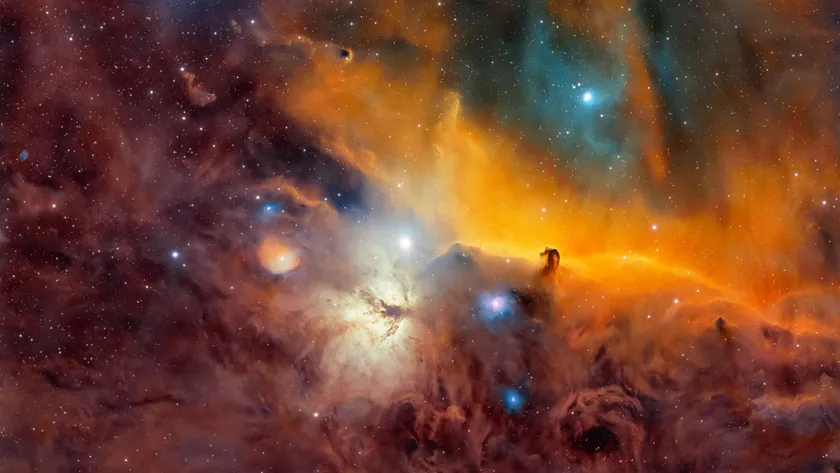
The Horsehead Nebula (Barnard 33) rises from a cloud of dust and hydrogen some 1,600 light-years from Earth. Illuminated by nearby stars, its familiar silhouette reminds us that form and meaning often emerge together. Through different instruments, the horse may vanish, yet the underlying reality remains—inviting us to see anew. (from New Thinking Allowed)
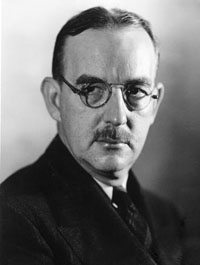
Joseph Wood Krutch was an American author, critic, and naturalist who wrote nature books on the American Southwest. He is known for developing a pantheistic philosophy. Wikipedia
From the archive, an Independence Day message from the Founder of The Prosperos.
Introduced by Heather Williams
Recorded July 5, 1981 Approximately 44:00 minutes
Thane explores the philosophical / religious underpinnings of the American revolution and the founders and identifies challenges of his day – the opening year of the Reagan administration – with insights that resonate in our own time.
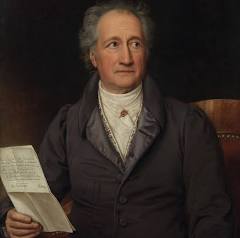
Sturm und Drang (literally “storm and stress”) is a late 18th-century German literary and artistic movement. It rebelled against the strict rationalism of the Enlightenment by exalting raw, subjective emotion, individualism, and the power of nature. Today, the phrase is commonly used in English to describe any period of turmoil, upheaval, or intense emotional conflict. Merriam-Webster +4
History and Philosophy
Emerging in the late 1760s and peaking in the 1770s, Sturm und Drang took its name from a 1776 play by Friedrich Maximilian Klinger. Instead of prioritizing logic, reason, and neoclassical order, writers and artists—most notably Johann Wolfgang von Goethe and Friedrich Schiller—believed that the most profound human truths could only be reached through passion, instinct, and intense feeling
. The movement celebrated the rebellious individual who fought against oppressive societal norms, often leading to tragic ends. Wikipedia +5
Legacy in Art and Music
Though it was fundamentally a literary movement, its philosophy quickly spread to other mediums, paving the way for the broader Romantic movement: Metropolitan Opera +1
Literature: Masterpieces like Goethe’s The Sorrows of Young Werther set social trends, deeply influencing the European imagination through its themes of unrequited love, personal despair, and the beauty of the natural world.
Music: Composers began writing with stark dramatic tension, minor keys, and sudden, intense shifts in volume and tempo. You can hear this emotional extremity in the early symphonies of Joseph Haydn and Wolfgang Amadeus Mozart. Metropolitan Opera +3
Visual Arts: Paintings shifted toward depicting the terrifying, awe-inspiring aspects of nature, such as stormy seas, jagged landscapes, and nightmarish visions. Metropolitan Opera
For a quick breakdown of how this intense, emotion-driven movement functioned within the broader context of Romanticism:
In Island, his last novel, Huxley transports us to a Pacific island where, for 120 years, an ideal society has flourished. Inevitably, this island of bliss attracts the envy and enmity of the surrounding world. A conspiracy is underway to take over Pala, and events begin to move when an agent of the conspirators, a newspaperman named Faranby, is shipwrecked there. What Faranby doesn’t expect is how his time with the people of Pala will revolutionize all his values and—to his amazement—give him hope.
Aldous Leonard Huxley was an English writer and philosopher. His bibliography spans nearly 50 books, including non-fiction works, as well as essays, narratives, and poems.
Born into the prominent Huxley family, he graduated from Balliol College, Oxford, with a degree in English literature. Early in his career, he published short stories and poetry and edited the literary magazine Oxford Poetry, before going on to publish travel writing, satire, and screenplays. He spent the latter part of his life in the United States, living in Los Angeles from 1937 until his death. By the end of his life, Huxley was widely acknowledged as one of the foremost intellectuals of his time. He was nominated for the Nobel Prize in Literature nine times, and was elected Companion of Literature by the Royal Society of Literature in 1962.
Huxley was a pacifist. He grew interested in philosophical mysticism, as well as universalism, addressing these subjects in his works such as The Perennial Philosophy (1945), which illustrates commonalities between Western and Eastern mysticism, and The Doors of Perception (1954), which interprets his own psychedelic experience with mescaline. In his most famous novel Brave New World (1932) and his final novel Island (1962), he presented his visions of dystopia and utopia, respectively.
Opening with a lightning-bolt Mars-Uranus conjunction and ending with a high-stakes Lunar Nodes ingression, the most striking signature of the month is the outer planets’ synchronization at 4 degrees in their signs.
Even for skeptics, with all the outer planets (+ Jupiter) aligned at the same degree – 4° – this cannot not feel like highly orchestrated cosmic choreography. This is so rare that I don’t recall anything like this happening before, at least not since I’ve been tracking transits.
Now – does that mean something significant will happen in everyone’s lives? Not necessarily. Or better said, not in a way that will be immediately clear to us.
Slow-moving planets are the architects behind the scenes. They dictate the larger trends, set the foundations, and prepare the conditions for what’s eventually going to emerge.
But the key word is “architects”.
Before a building becomes visible, it is designed and engineered in abstract form. So what is being set in motion now is, by no means, insignificant. Quite the opposite. It may be incredibly significant BUT not in ways that will be completely obvious to every single one of us.
That is, unless your chart is particularly activated by this 4-degree geometry.
Then, you will know. And if that’s you, we’d love to hear from you – leave a comment and tell us what’s unfolding.
July 4th, 2026 – Mars Conjunct Uranus
On July 4th, 2026, Mars and Uranus meet at 3° Gemini. This is our first Mars-Uranus conjunction in Gemini since Uranus entered the sign.
Our minds are literally short-circuited with the new possibilities Uranus has awakened since it ingressed into Gemini.
Mars conjunct Uranus in Gemini is a signature of breakthrough and clarity. However, our mind might still struggle to accept the information download because it is so far outside the normal script.
This conjunction is also important because it activates the outer planetary alignment – the 4-degree Cradle configuration that unfolds mid-month. Once the possibility is ignited in the mind, everything that follows is the domino effect of that first spark.
July 9th, 2026 – Venus Enters Virgo
On July 9th, 2026, Venus enters Virgo and immediately conjuncts the North Node, now in its last stretch of the sign.
This ingress might come with a final recognition of what actually matters to us – not just in a superficial “I like this”, but in the sense of a deeper calling of the soul.
For the rest of the transit, Venus in Virgo will do what she knows best: refine, improve, attune to the physical world, take care of the seemingly small but “make all the difference” details, and just be the high-discernment, low-tolerance-for-nonsense goddess that she is.
July 13, 2026 – Mercury Conjunct Sun In Cancer
On July 13th, Mercury is conjunct the Sun at 20° Cancer. When Mercury retrograde conjuncts the Sun (a cazimi), we have the initiation of a brand-new 4-month Mercury cycle.
All new Mercury cycles are important, but this one feels particularly significant since it also coincides with the New Moon – so we have 2 brand-new synodic cycles beginning almost at the same time, joining forces for a major personal reset in the Cancer area of our chart.
For some of us, this might speak to literal Cancer themes like home, family, belonging, roots, or emotional safety. For others, the reset will be more specific to the house Cancer rules in the natal chart.
July 14th, 2026 – New Moon In Cancer
On July 14th, 2026, we have a New Moon at 21° Cancer conjunct Mercury retrograde. The New Moon invites us to plunge into the deepest waters of our inner world.
Occurring just after the new Mercury cycle, New Moon in Cancer initiates a reset that begins with listening more closely to what our inner world has been trying to tell us.
July 15th-July 25th, 2026 – Uranus, Neptune, Pluto and Jupiter 4° Activation
Between July 15th and July 25th, all the outer planets and Jupiter align at 4° of their signs.
Aries, Gemini, Leo and Aquarius are all shaking hands, plotting their agenda for the next – maybe decades? – of our collective reality.
On July 15th, Uranus sextiles Neptune at 4° Gemini/Aries
On July 18th, Uranus trines Pluto at 4° Gemini/Aquarius
On July 20th, Jupiter trines Neptune at 4° Leo/Aries
On July 20th, Jupiter opposes Pluto at 4° Leo/Aquarius
On July 21st, Jupiter sextiles Uranus at 4° Leo/Gemini
On July 25th, Neptune sextiles Pluto at 4° Aries/Aquarius
Neptune, Uranus, Jupiter and Pluto form a Cradle configuration, which means that 4 successive same-polarity signs draw the focus to one part of the chart.
While these planets will activate different houses depending on our own natal configuration, at a mundane level, Aries, Gemini, Leo and Aquarius are all outward-moving, self-defining signs. The focus now is on building a type of life that feeds who we really are deep inside.
The missing yang signs – Libra, with its partnership focus, and Sagittarius, with its social rules, beliefs and larger vision – will have to adapt to what’s emerging from this powerhouse of individuality, creativity, and future-oriented will.
A detailed report about the Cradle and the 4-degree activation will follow closer to the date.
July 22nd, 2026 – Sun Enters Leo
On July 22nd, the Sun enters Leo. Happy b-day to all Leos out there! The holidays and fun season can officially start now.
Leo, ruled by the Sun, is the heart – what makes us feel alive. And while we usually associate Leo with fun, leisure and play, Leo can also be the entrepreneurial passion that keeps us 16 hours in front of the computer.
What Leo really needs is to feel ALIVE, and whatever it is that makes us feel alive is invited into the spotlight during this time of the year.
July 23rd, 2026 – Mercury Goes Direct
On July 23rd, Mercury goes direct at 16° Cancer.
The Mercury retrograde confusion is officially over on July 23rd, when Mercury completes its 3-times-a-year rumination phase.
In Cancer, the scope of the review has been our emotional undercurrents – helping us face the realities of our inner world, our family patterns, and attachments. The assessment is now complete. You now know what you need to do.
July 27th, 2026 – North Node Enters Leo, South Node Enters Aquarius
On July 27th, the Lunar Nodes change signs – the North Node enters Leo, and the South Node enters Aquarius.
Nodal shifts are huge because they shift the evolutionary focus to an entirely different axis of the chart.
The Nodes are where the collective compass tends to gravitate at any given time – not in the in-your-face way that a Saturn or Uranus transit operates, but more like a vortex that restructures our identities, clears karmic entanglements, and helps us align with our true path.
If in the past 18 months the focus was on the Virgo/Pisces area of our chart, now the focus will gravitate around the Leo/Aquarius polarity.
July 29th, 2026 – Full Moon in Aquarius
On July 29th, we have a Full Moon at 6° Aquarius. This is a powerhouse Full Moon conjunct Pluto and opposite Jupiter in Leo.
The writing is on the wall, and you are being officially warned: at the Full Moon, things will burst out of whatever pressure cooker has been containing them.
Fortunately, the Full Moon also trines Uranus, so the release might be surprisingly liberating.
A detailed report about this supercharged Full Moon will follow closer to the date.
French support for the American Revolution began well before the Declaration of Independence on July 4, 1776. King Louis XVI saw the rebellion in North America as an opportunity to weaken his British rival and avenge past defeats. FRANCE 24 looks back at how European colonial rivalry and Enlightenment ideals forged a decisive alliance between the nascent United States and its “oldest ally”.
Issued on: 03/07/2026 Modified: 04/07/2026 – France24.com
On July 4, 1776, 13 British colonies in North America broke with the British Crown and declared their independence in a momentous act of rebellion that would change the course of history. As the United States celebrates its 250th birthday, FRANCE 24 looks back at France’s decisive – and often overlooked – role in the American Revolution.
Behind the fight for independence lies another story: that of a long-standing rivalry between Great Britain and France, the two great European powers at the time. When the Thirteen Colonies proclaimed their independence, they were still a long way from winning the war. Across the Atlantic, France watched the brewing rebellion with increasing interest.
For the young King Louis XVI, the dispute between American colonists and the British government represented an opportunity to exact revenge on France’s historic rival. Far from being a spontaneous show of support for a democratic revolution, France’s support was rooted in decades of conflict with its neighbour from across the Channel.
France and Britain had been competing for control of North America, the Caribbean, the Indies and trade routes since the 17th century. The French monarchy had colonised territory spanning from the Gulf of Saint Lawrence in the north, in modern-day Canada, to the Gulf of Mexico in the south.
“France held nearly half the territory east of the Mississippi,” said Steven Ekovich, professor emeritus of politics and history at the American University of Paris. “For both monarchies, America was part of a much wider global conflict between the English and the French.”
The rivalry between the two powers did not prevent trade. As early as the 17th century, steady commerce developed between the British colonies of New England and the French West Indies. Timber, supplies, livestock, and construction materials all regularly crossed the Atlantic Ocean. These early economic ties between French and American colonists were well established before independence.
A break between the colonists and the mother country was unimaginable at this time. “The Americans were Englishmen in America above all, and they wished to remain so,” said Ekovich. The Thirteen Colonies and their 2.5 million inhabitants thus far did not consider themselves as citizens of a single nation.
New York: French air force soars over Statue of Liberty
The Seven Years’ War (1756 to 1763), pitting England and Prussia against France, Austria and Russia, changed everything. The global conflict fuelled by colonial rivalries ended with the Treaty of Paris, which forced France to cede several of its territories to the British: including Canada, part of Louisiana, parts of the West Indies, Senegal and most of its territory in India – except for a few trading posts such as Pondicherry and Chandernagore (now Chandannagar).
The French defeat was perceived as a national humiliation. The court in Versailles became obsessed with one idea: preventing England from becoming the dominant power. But Louis XVI, a pacifist at heart, remained cautious at first. His kingdom had emerged significantly weakened from the conflict and needed to rebuild its navy.
“France had only one objective on its mind: reclaiming its territory and undermining the English,” said Émilie Mitran, a historian specialising in the United States and the author of Des Américains en France,1776–1792 (Americans in France, 1776-1796). “If Britain lost part of its empire, it would be proper payback from the French point of view following its own humiliation of 1763.”
Britain was also under financial pressure after the Seven Years’ War, which had cost a colossal fortune. To compensate, it imposed new taxes on its colonies – specifically on sugar, tea and stamped papers through the infamous Stamp Act, which applied to all printed documents. Since the colonists had no representatives in the British Parliament, they refused to pay and angrily chanted, “No taxation without representation.”
Supporting the rebels without encouraging a revolution
France’s newly appointed foreign minister Charles Gravier, count of Vergennes, watched from the sidelines as tensions continued to simmer between the British Empire and the Thirteen Colonies. The friction evolved into the American War of Independence in the spring of 1775, with the first clashes between insurgents and British troops in Lexington, Massachusetts.
It was a historic opportunity for Vergennes. His plan was to exploit the crisis to the fullest while holding back from entering the conflict prematurely.
For an absolute monarchy like that in France, support for insurgents revolting against their king was a striking paradox. Louis XVI could not officially condone the rebellion. Yet unofficially, every British setback served French interests.
“It was initially a matter of political realism,” said Ekovich. “France wanted to use the Americans against its hereditary enemy. (…) French support was primarily driven by the logic of realpolitik.”
Enlightenment ideas also guided French supporters of the Thirteen Colonies. For decades, Parisian salons were the setting for philosophers like Montesquieu, Voltaire and Rousseau as they launched debates on liberty, the separation of powers and popular sovereignty. American leaders picked up these concepts while fighting for their independence.
“Two sets of logic coexisted from the beginning,” said Ekovich. “The king acts against Great Britain, while a portion of the French elite supports the Americans out of conviction.”
This duality was embodied by two figures: Louis XVI, who pursued a strategic objective, and the Marquis de Lafayette, a French aristocrat who later became the most famous French figure of the American War of Independence. The latter viewed the American struggle as a just cause driven by Enlightenment ideals.
Shadow diplomacy
Versailles opted for discretion before initiating any formal alliance. On May 2, 1776, Louis XVI authorised Vergennes to covertly send arms, ammunition and supplies to the insurgents through Pierre-Augustin Caron de Beaumarchais, who used a shell company known as Rodrigue Hortalez et Compagnie as a cover for the transactions.
“Beaumarchais became an irreplaceable secret agent for Louis XVI,” said Mitran. “He made it possible to fund the rebels as long as France refused to commit officially.”
France’s caution was based on several imperatives. “No one knew whether the insurgents would declare independence or if they could withstand British military might,” she said. “For France to commit prematurely meant running the risk of another financial and diplomatic disaster.”
The break between the British Crown and the Thirteen Colonies was finally sealed two months later with the adoption of the Declaration of Independence on July 4, 1776. The young nation’s name went from the “United Colonies” to the “United States of America”.
Fighting between Britain and the colonists continued. British troops captured New York in September 1776. For the representatives of the American colonies who had just declared their independence, finding reinforcements became urgent.
Eager to forge a bond with France, the American Congress dispatched a new diplomat named Benjamin Franklin to Paris. His mission was to persuade France to openly support the American rebels. Soon after arriving in France in December 1776, he became a celebrity.
“Benjamin Franklin captivated the French as much with his inventions as with his personality,” said Mitran. “He visited the salons, mastered their social codes and incarnated the new ideals arriving from America for the French.”
Despite the successful charm offensive, Vergennes remained cautious. He continued to wait for the right moment before transforming France’s covert support into an open alliance. That moment did not arrive until October 1777, when George Washington’s troops inflicted a decisive blow on the British at Saratoga, forcing 6,000 soldiers to surrender.
This military success finally convinced Versailles that the rebels could prevail. A few months later, France signed an alliance with the United States and officially entered the war against Great Britain – a decision that would profoundly alter the course of the conflict.