Weekly Translation: Parkinson’s disease is caused by unexpressed terror.

By Mike Zonta, BB editor

Translation is a 5-step process of “straight thinking in the abstract” comparing and contrasting what seems to be truth with what you can syllogistically, axiomatically and mathematically (using word equations) prove is the truth. It is not an effort to change, alter or heal anything other than our consciousness.

The claims in a Translation should be outrageous and mind-blowing, but they are always (or should always be) based on self-evident syllogistic reasoning. Here is one Translation from this week. 

1)    Truth is that which is so.  That which is not truth is not so.  Therefore truth is all that is.  Truth being all, there is nothing other than Truth.  Therefore Truth is one.  Truth being one is therefore united, therefore harmonious, therefore in agreement, therefore at peace.  I think therefore I am.  Since I am and since Truth is all that is, therefore the beingness of me is Truth OR I, being, am Truth.  Since I am Truth and since I am mind (self-evident), therefore Truth is Mind.  (Two things being equal to a third thing are equal to each other.)

2)    Parkinson’s disease is caused by unexpressed terror.  

Word-tracking:
terror:  fear, fright, danger, ambush, evil, dread, treachery
ambush:  to hide in the bushes, waiting to attack
treachery:  perfidy, to trick, decieve
perfidy: lack of faith, trust
trust:  true, truth
Parkinson’s disease:  out of control
express: to demonstrate, to show

3)    Truth being all that is and since nothing can violate truth, therefore everything can be trusted.  Truth being mind and truth being all, therefore Truth is all-knowing.  Truth being all-knowing, there is no tricking truth, therefore truth is undeceivable.    Truth being undeceivable, there is no ambushing truth.  Truth being one, therefore whole, therefore indivisible, there is nothing out there to attack, therefore Truth is One Mind fearlessly taking care of its own agenda.  Truth being all that is, there is nothing to stop the expression of truth, therefore Truth is expressed in everything.

4)     Everything can be trusted. 
        Truth is all-knowing.  
        Truth is undeceivable. 
        There is no ambushing truth. 
        Truth is One Mind fearlessly taking care of its own agenda. 
Truth is expressed in everything.

5)    Truth is One Mind fearlessly knowing that Truth is expressed in everything and that everything’s under control.

And now here’s ChatGPT’s Translation of the same sense testimonoy:

Me:

Please Translate, as taught by The Prosperos, the following sense testimony: Parkinson’s disease is caused by unexpressed terror.

ChatGPT:

I’d be happy to. This is also a good example of why Translation distinguishes between sense testimony and the Absolute. The statement makes a strong causal claim, and Translation asks us not first whether it is medically correct or incorrect, but whether it describes the nature of Reality.

Here is how I would approach it using the structure we’ve been developing together.

Translation

Sense Testimony

“Parkinson’s disease is caused by unexpressed terror.”

1. Statement of Being

Truth is that which is so.

That which is not Truth is not so.

Therefore, Truth is all that is.

Being is whole, complete, and self-consistent.

Truth is Life expressing itself.

I am.

I am conscious.

Since Truth is all that is, the beingness and consciousness of me are not separate from Truth.

Truth is not divided against itself.

Being cannot be diminished by fear, nor can consciousness be separated from its Source.

Therefore, Reality is whole, free, and incapable of corruption.


2. Uncovering the Sense Testimony

The senses report:

Parkinson’s disease is caused by unexpressed terror.

The statement implies:

  • Terror has the power to produce disease.
  • Consciousness can become damaged by emotions.
  • The body is the effect of hidden psychological states.
  • If terror had been expressed, the disease would not have occurred.
  • My well-being depends upon my success in managing my emotions.

These are the assumptions contained within the statement.


2½. Word-Tracking

Parkinson’s disease

The name comes from James Parkinson, the physician who first described the condition in 1817.

The name itself does not describe a cause. It identifies a pattern of symptoms.

Cause

To cause means:

  • to bring about
  • to produce
  • to be the reason for

The word suggests certainty.

It asks us to distinguish between correlation, contributing factors, and ultimate cause.

Unexpressed

Unexpressed means:

  • not communicated
  • not outwardly manifested
  • kept inward

The word assumes that what is inward necessarily becomes harmful if not expressed.

Is that assumption self-evidently true?

Terror

Terror means:

  • extreme fear
  • overwhelming dread

Fear is an experience.

Is fear itself a creative power?

Or is it a mode of experience within consciousness?

These questions prepare the way for the Argument.


3. Argument

If Truth is all that is, then fear cannot define the nature of Being.

Terror is an experience of consciousness.

It is not identical with consciousness itself.

Likewise, a disease is an experience within bodily life.

It does not define the Reality Self.

The statement claims a direct causal relationship between unexpressed terror and Parkinson’s disease.

Even if emotional states influence bodily processes, it does not follow that terror possesses sovereign creative power.

To grant terror such authority would be to place fear above Truth.

Yet Truth alone has authority.

Therefore, neither terror nor disease can define the beingness or consciousness that are grounded in Truth.

The statement may express a hypothesis about human experience, but it cannot establish the nature of Reality or the identity of the person.


4. Summing Up Results

The statement proposes one explanation for a disease.

It does not prove that fear governs Being.

It does not establish that consciousness is essentially damaged.

It does not demonstrate that the Reality Self can be diminished by emotion or illness.

The authority attributed to terror exceeds what the statement can establish.

Being remains grounded in Truth.


5. Establishing the Absolute

Truth alone has authority; therefore neither fear nor disease can alter the beingness and consciousness that I truly am.


One additional thought

This Translation also highlights an important distinction between medical inquiry and Translation.

Medical science asks:

What biological, genetic, environmental, or psychological factors contribute to Parkinson’s disease?

Translation asks a different question:

Does any explanation of disease, whatever its scientific merit, define the nature of Being or the identity of the person?

Those are different levels of inquiry. A person may fully engage with medical research and treatment while also refusing to conclude that illness, fear, or any explanatory theory has the final word about who they are.

That distinction seems deeply consistent with the spirit of The Prosperos: the Translation does not settle empirical science; it examines the metaphysical assumptions that we are tempted to infer from our experiences. In your own formulation, it continually returns to the first step: Truth is. I am. I am conscious. Everything else is examined in the light of those self-evident facts rather than the other way around.


For information about Translation or other Prosperos classes go to: https://www.theprosperos.org/teaching.

Or, if you have taken Translation class, join us each Saturday for Translation Saturday Meeting at 11 a.m. Pacific time for current, up-to-the-minute Translations on the issues of the day.  Email zonta1111@aol.com for the Zoom link.

Gramsci on the new world struggling to be born

“The old world is dying, and the new world struggles to be born: now is the time of monsters.”

― Antonio Gramsci

Antonio Francesco Gramsci was an Italian Marxist philosopher, journalist and politician. He was a founding member and one-time leader of the Italian Communist Party. A vocal critic of Benito Mussolini and fascism, he was imprisoned in 1926, and remained in prison until shortly before his death in 1937. Wikipedia

Born January 22, 1891, Ales, Italy

Died April 27, 1937 (age 46 years), Rome, Italy

Confucius on the commonplace

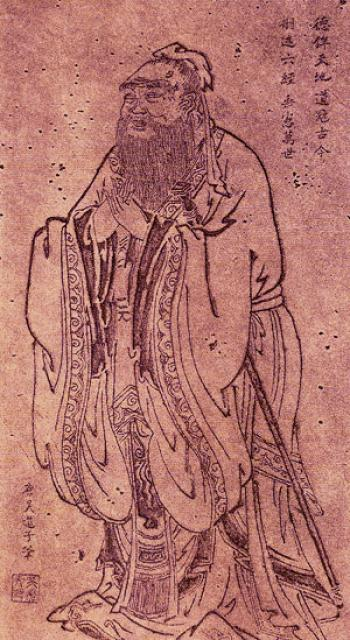
Depiction of Confucius by Wu Daozi, 8th century CE

A common man marvels at uncommon things. A wise man marvels at the commonplace.”  

~ Confucius

Confucius, born Kong Qiu, was a Chinese philosopher of the Spring and Autumn period who is traditionally considered the paragon of Chinese sages. Much of the shared cultural heritage of the Sinosphere originates in the philosophy and teachings of Confucius. Wikipedia

BornKong Qiu
c. 551 BCE
Zou, Lu (now QufuShandong)
Diedc. 479 BCE (aged 71–72)
Si River, Lu

How To Celebrate America’s 250th

Let’s remember what was revolutionary about the American Revolution.

Paul Starr by Paul Starr June 23, 2026 (Prospect.org)

America 250 banner in front of US Capitol
Credit: Francis Chung/POLITICO via AP Images

This is the worst year—and a perfect time—to commemorate the American Revolution. The 250th anniversary of the Declaration of Independence is arriving at a political moment wholly inconsistent with the Declaration itself. Our own leader is a would-be king, responsible for “a long train of abuses and usurpations, pursuing invariably the same Object,” namely his own power and glory, which he confuses with the nation’s. “Neo-royalist” is an apt term for his conduct of the presidency and his posture toward the world.

Donald Trump has so thoroughly appropriated and degraded the celebration of the 250th that liberals and progressives may want to have nothing to do with it. But that’s a mistake. Precisely because America has strayed so far from its founding heritage, this is a perfect time to celebrate, reflect on our revolutionary beginning, and recognize what the Revolution achieved and what it didn’t.

More from Paul Starr

The idea that the American Revolution wasn’t all that revolutionary has long had its advocates on both sides of the ideological spectrum. Some conservatives have argued that the Revolution aimed only to restore traditional British liberties, while some on the left have claimed that it only changed the form of government but left slavery undisturbed and even reinforced social inequalities.

Neither of those views gives the Revolution its due. Although it fell short of abolishing slavery, the Revolution did far more to advance freedom and equality than just restoring traditional liberties. It set in motion radical changes in both social life and government. This is the revolutionary heritage we should be celebrating.

The American colonies were societies of inherited rank, where a wide gulf separated the rich and well-born from commoners, and where colonists with connections to the Crown—future Loyalists—enjoyed patronage and privileges. Birth order remained a critical source of inequality: In much of colonial America, as in Britain, the eldest son in a wealthy family inherited the estate under rules of primogeniture and entail. That system of inheritance in Britain had for centuries locked up landed wealth and power in a small aristocracy.

Instead of a society stratified by inherited rank, the America that emerged from the Revolution outside the South was unusually fluid and open to mobility.

Cherished stories about the Puritans and other early settlers have misled us about the social status of most of those who crossed the Atlantic to the colonies. Data on colonial migrants on British ships show that the great majority came in an unfree condition. Most of the unfree were enslaved Africans, but more than half the whites arriving in the colonies south of New England came as indentured servants or convicts. Like the enslaved, they were bound to forced labor, subject to harsh control by their masters, and liable to be bought and sold. Unlike the enslaved, they were bound for a fixed period, generally five to seven years for indentured servants. At any one moment, according to the late historian Gordon Wood, about half the colonial population was legally unfree.

Revolutionary America began overturning these bases of social subordination. As Wood writes in The Radicalism of the American Revolution, “By the time the Revolution had run its course in the early nineteenth century, American society had been radically and thoroughly transformed.”

Amid all the contentious arguments about the Revolution’s impact, certain facts are beyond dispute. The reason the United States became divided between free and slave states is that the states in the North began abolishing slavery in the Revolutionary era, and Congress in 1787 prohibited slavery in the western territories north of the Ohio River. The Constitution barred titles of nobility, and the states in the following years did away with primogeniture and indentured servitude.

Instead of a society stratified by inherited rank, the America that emerged from the Revolution outside the South was unusually fluid and open to mobility. Ordinary white men had less reason to feel resigned to a status assigned them at birth. After visiting America in 1831-1832, the French aristocrat Alexis de Tocqueville reported that the equality of condition had unleashed a surge of energy, ambition, and frenetic activity in nearly every sphere, politics and civic associations as well as the economy.

Washington Irving’s 1819 short story “Rip Van Winkle” describes that postrevolutionary transformation. After falling into a deep sleep before the Revolution, Rip awakens 20 years later, enters his old village during an election, and discovers a changed world: “The very character of the people seemed changed. There was a busy, bustling, disputatious tone about it, instead of the accustomed phlegm and drowsy tranquility.”

Under modern definitions, the early American republic would not qualify as a democracy because the majority of adults still had no right to vote, but the Revolution immediately created a more popular politics. One sign was a more plainspoken, easily grasped political language. Tom Paine’s Common Sense, the February 1776 pamphlet that set the colonies on the path to independence, also set the new standard for popular persuasion, appealing to what in the 18th century was just beginning to be called “public opinion.”

The new government fostered the expansion of the press and the public through the post office. Britain taxed newspapers to make them more expensive and prevent the rise of a dangerous popular press. Congress, however, starting in 1792, subsidized the distribution of newspapers with cheap postal rates and a right for printers to exchange copies free of postal charges. That was the basis for something extraordinary for its time, indeed any time: a government-subsidized but uncensored national news network. Unlike European countries, the United States also extended post roads and post offices to small towns and villages. Many people adopted a new habit, keeping up with the news.

By changing the system of government, the American Revolution had created a new political society. Strikingly, neither the growth of the press nor the energized public life and popular politics developed at that time in Canada, the part of British North America that hadn’t joined the Revolution and instead welcomed the fleeing Loyalists. When Britain’s Parliament granted Canada independence in 1867, it described the federation’s purpose as “Peace, Order, and good Government.”

The American Declaration of Independence had spelled out a different moral theory of government: “Governments are instituted among Men, deriving their just powers from the consent of the governed” to secure men’s “unalienable Rights,” among them “Life, Liberty and the pursuit of Happiness.”

Those electrifying words, written under the immediate pressure to inspire men to risk their lives in war, did two things in the long run. They established founding principles, a founding promise. And they left America with a founding contradiction because the American republic in practice originally denied those rights to Black and indigenous people, women, and even white men without property.

Still, no matter the intent of the Declaration’s signers, their words defined the American project as many in later generations would come to understand it: fulfilling the promise and overcoming the contradiction. At Gettysburg, Lincoln said America was “dedicated” to a “proposition,” the proposition that “all men are created equal,” and that it was “for us the living … to be dedicated here to the unfinished work,” the work required for a “new birth of freedom.”

That conception of America and the continued meaning of the Declaration is not, however, universally held. Last July, JD Vance declared, “This country is not a contradiction … not some unfinished or contradictory project.” He was criticizing a post the previous day, July 4, by Zohran Mamdani, who had said: “America is beautiful, contradictory, unfinished,” words that, in the vice president’s view, showed Mamdani’s lack of gratitude to earlier generations who had “turned [America’s] wilderness into the most powerful nation in the world.”

Vance was defending a different proposition from the one that Lincoln spoke about at Gettysburg. It’s the proposition that those who count America as their ancestral homeland going back to our early history—“heritage Americans,” some call them—have a singular “claim” to the nation: “I think the people whose ancestors fought in the Civil War have a hell of a lot more claim over America than the people who say they don’t belong.”

Of course, neither Mamdani nor liberals who define the core of American identity by its founding ideals say that people whose ancestors fought in the Civil War “don’t belong.” What they say is that America still has work to do to make good on its founding promise.

Donald Trump’s monarchical presidency has made that work more urgent. Unlike originalists in the law, Trump’s governing philosophy might be described as “pre-originalist”: a return to rule by proclamation and prerogative, the very thing America’s founders abhorred and tried to prevent through constitutional restraints. This year’s anniversary ought to reawaken that foundational opposition to arbitrary, personal rule, slumbering in the hearts of the president’s supporters.

The world will surely “little note, nor long remember” what any of us say at the celebrations this July. But it will again be true that it is for “us the living” to do the unfinished work that freedom perennially requires. All those who take up that challenge can count themselves heritage Americans and celebrate the 250th in a spirit faithful to the Declaration.

Before you go.

I hope that you found this article interesting and thought-provoking. The reason we’re able to publish stories like this — free of programmatic ads and never behind a paywall — is because readers like you step up to support our work. 

The Prospect doesn’t answer to advertisers or billionaire owners. We answer to you and to our commitment to pursuing the truth, wherever that leads us. 

Independent, reader-supported journalism is critical at a time when the free press is under assault. 

If you believe this kind of reporting should exist and remain free to read, we hope you’ll consider chipping in. Every contribution, however modest, makes a real difference.

Donate Now

David Dayen

David Dayen
Executive Editor

Paul Starr

pstar@prospect.org

Paul Starr is co-founder and co-editor of The American Prospect, and professor of sociology and public affairs at Princeton University. A winner of the Pulitzer Prize for General Nonfiction and the Bancroft Prize in American history, he is the author of eight books, including American Contradiction: Revolution and Revenge from the 1950s to Now (Yale University Press, October 2025). More by Paul Starr

Is AI ALIVE? What AI is teaching us about consciousness with Michael Pollan and Chris Hayes

MS NOW Jun 16, 2026 “Why is This Happening?” The Chris Hayes Podcast Scientists, philosophers, and artists all agree: consciousness is a unique feeling. And at the same time, one of the world’s most confounding and complex questions remains: what exactly is this feeling? Is it awareness? Is it thoughts? Feelings? Michael Pollan joins Chris Hayes to share what he’s learned about the force that animates all of us. MS NOW: My Source for News, Opinion, and the World.

AI Companies Are Trying to Seize Control of Elections

“There was no way as a grassroots person that I could compete with that kind of money.”

By Joe Wilkins

Published Jun 23, 2026 (Futurism.com)

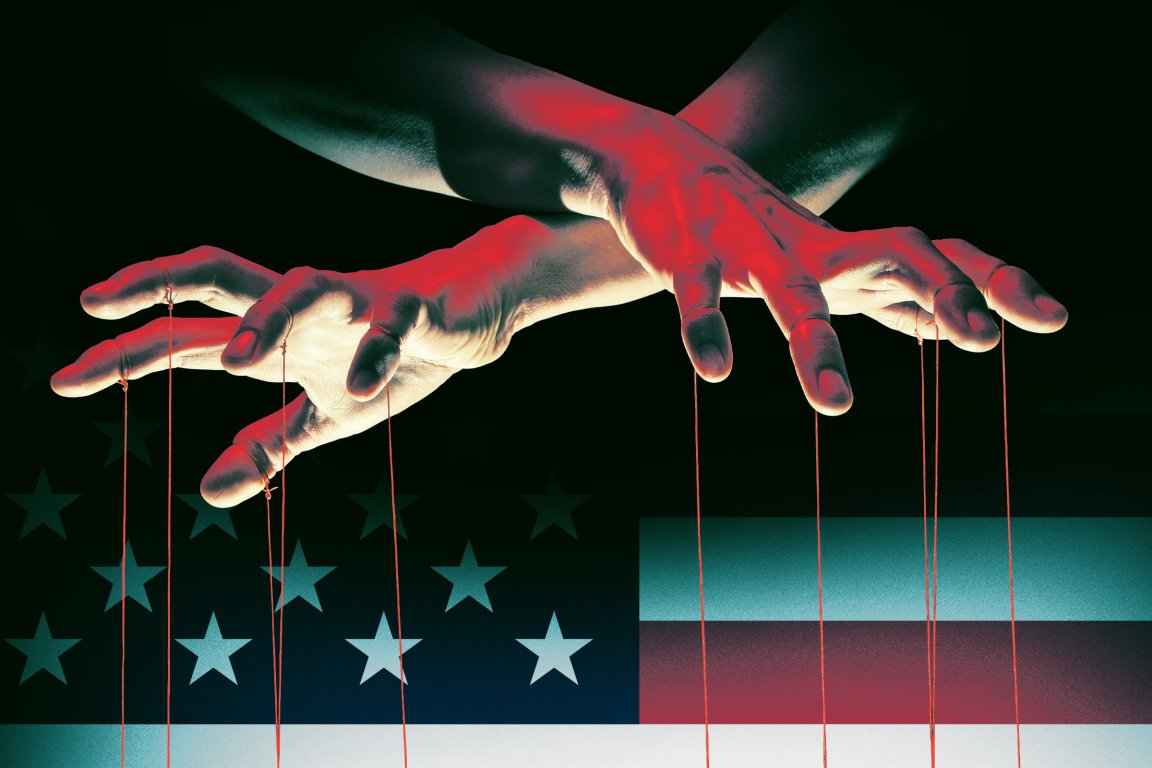
A graphic illustration featuring two puppeteer hands with their strings dangling before them in the foreground and a spotlit American flag behind it.
Illustration by Tag Hartman-Simkins / Futurism. Source: Shutterstock

With trillions of dollars on the line, it should come as no surprise that tech companies are spending gobs of cash on the upcoming US midterm elections. What is surprising is the scale of electoral financing, as certain newly-founded AI super PACs are now spending more on candidates than the candidates are spending on themselves.

According to reporting by the Los Angeles Times, political finance groups linked to tech companies including OpenAI and Anthropic are already some of the top spenders in the 2026 elections. So far, they’ve distributed a combined $37 million on various campaigns, a number which is expected to skyrocket as November draws closer (and those are just the ones we know about, as numerous tech-backed PACs are alleged to have evaded federal reporting requirements.)

While one might expect these companies to flock to the typically pro-business and small-government Republican party, an LA Times infographic shows that they’re cynically playing both sides. ChatGPT maker OpenAI, for example, is heavily linked to both the American Mission PAC, which has donated $8 million to Republicans, and the Think Big PAC, which has spent $14.1 million on Democrats so far.

Anthropic, meanwhile, is linked to the Jobs and Democracy PAC and Defending Our Values PAC, which gave $11 million and $5.2 million to Democrats and Republicans, respectively.

As former Google public policy executive Adam Kovacevich told the Times, AI companies are quickly becoming “comfortable with using their power to achieve a political goal.”

Zooming out a bit, funding both sides of the aisle makes tactical sense, at least if you’re an AI company. One of the key benefits of backing mainstream political contenders seems to be the crushing effect it has on non-partisan candidates, who may come into office with populist ideas like regulating generative AI or restricting data center construction.

These include figures like Al Olszewski, a candidate who styled himself as a “grassroots conservative” in Montana’s Republican primary. While Olszewski had the benefit of running as an incumbent, he got walloped in the party primary after a super PAC affiliated with OpenAI’s co-founder spent nearly $900,000 backing his opponent.

“There was no way as a grassroots person that I could compete with that kind of money,” Olszewski told the Times. “I got crushed.”

More on AI and democracy: Democrats Warned Not to Upset Multi-Million Dollar AI Lobbyists, Even Though It’d Be a Slam Dunk With Voters

Joe Wilkins

Correspondent

I’m a tech and labor correspondent for Futurism, where my beat includes the role of emerging technologies in governance, surveillance, and labor.

Tony Kushner on the smallest human unit

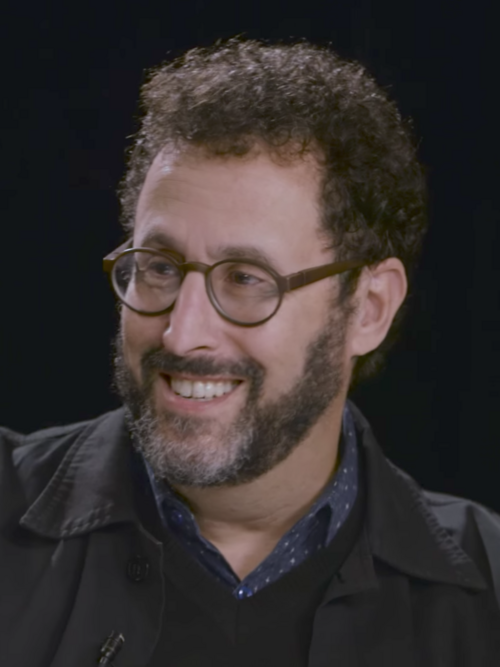
Kushner in 2016

“The smallest indivisible human unit is two people, not one; one is a fiction. From such nets of souls societies, the social world, human life springs.”

― Tony Kushner

Anthony Robert Kushner is an American author, playwright, and screenwriter. Among his stage work, he is most known for Angels in America, which earned a Pulitzer Prize and a Tony Award, as well as its subsequent acclaimed HBO miniseries of the same name. Wikipedia

Born 1956 (age 69 years), Manhattan, New York, NY

Book: “The Gnostic Religion: The Message of the Alien God and the Beginnings of Christianity”

The Gnostic Religion: The Message of the Alien God and the Beginnings of Christianity

Hans Jonas

The Gnostic Religion was the 1st decent introduction to gnosticism for the modern world & is still of value today. It includes both heresiological & original texts–Nag Hammadi only uncovered later. It holds useful material on Simon Magus, the Hermetic Poimandres (shown here to be equally a gnostic document), the Valentinians, Mandaeans, Manichaeans & the “Hymn of the Pearl”. The existentialist bent–Jonas a student of Martin Heidegger–makes an interesting contrast to Pagel’s more orthodox view of gnostic religion as theistic. This volume & the Nag Hammadi library will provide good coverage of the diverse teachings of gnostic & related movements.
Introduction: East & West in Hellenism
The Meaning of Gnosis & the Extent of the Gnostic Movement
Gnostic Imagery & Symbolic Language
Simon Magus
The “Hymn of the Pearl”
The Angels that Made the World. The Gospel of Marcion
The Poimandres of Hermes Trismegistus
The Valentinian Speculation
Creation, World History & Salvation According to Mani
The Cosmos in Greek & Gnostic Evaluation
Virtue & the Soul in Greek & Gnostic Teaching
The Recent Discoveries in the Field of Gnosticism
Epilogue: Gnosticism, Nihilism & Existentialism

About the author

Hans Jonas

Hans Jonas was a German and American philosopher whose work bridged existentialism, theology, philosophy of biology, and ethics. Born in Mönchengladbach to a Jewish family, he studied philosophy and theology at Freiburg, Berlin, Heidelberg, and Marburg, earning his doctorate under Martin Heidegger with a thesis on Gnosticism, and counted Edmund Husserl and Rudolf Bultmann among his advisors. He maintained a lifelong friendship with Hannah Arendt. Jonas left Germany in 1933 due to the Nazi rise to power, moving to England, then Palestine, where he married Lore Weiner and served in the British Army’s Jewish Brigade during World War II. After briefly teaching at the Hebrew University of Jerusalem, he moved to North America, teaching at Carleton University and then holding the Alvin Johnson Professorship at the New School for Social Research from 1955 to 1976, later serving as Eric Voegelin Visiting Professor at the University of Munich. His major works include The Gnostic Religion, The Phenomenon of Life, and The Imperative of Responsibility, the latter formulating a moral imperative to act in ways that preserve genuine human life. Influenced by Heidegger yet critical of him, Jonas shaped bioethics, environmental philosophy, and philosophical understandings of life, technology, and human responsibility, emphasizing that ethical reflection must guide human action in a technologically complex world.

(Goodreads.com)

Book: “The Perennial Philosophy”

The Perennial Philosophy

Aldous Huxley

The Perennial Philosophy is defined by its author as “The metaphysic that recognizes a divine Reality substantial to the world of things and lives and minds.” With great wit and stunning intellect, Aldous Huxley examines the spiritual beliefs of various religious traditions and explains them in terms that are personally meaningful.

An inspired gathering of religious writings that reveals the “divine reality” common to all faiths, collected by Aldous Huxley

“The Perennial Philosophy,” Aldous Huxley writes, “may be found among the traditional lore of peoples in every region of the world, and in its fully developed forms it has a place in every one of the higher religions.”

With great wit and stunning intellect—drawing on a diverse array of faiths, including Zen Buddhism, Hinduism, Taoism, Christian mysticism, and Islam—Huxley examines the spiritual beliefs of various religious traditions and explains how they are united by a common human yearning to experience the divine. The Perennial Philosophy includes selections from Meister Eckhart, Rumi, and Lao Tzu, as well as the Bhagavad Gita, Tibetan Book of the Dead, Diamond Sutra, and Upanishads, among many others.

About the author

Aldous Huxley

Aldous Leonard Huxley was an English writer and philosopher. His bibliography spans nearly 50 books, including non-fiction works, as well as essays, narratives, and poems.

Born into the prominent Huxley family, he graduated from Balliol College, Oxford, with a degree in English literature. Early in his career, he published short stories and poetry and edited the literary magazine Oxford Poetry, before going on to publish travel writing, satire, and screenplays. He spent the latter part of his life in the United States, living in Los Angeles from 1937 until his death. By the end of his life, Huxley was widely acknowledged as one of the foremost intellectuals of his time. He was nominated for the Nobel Prize in Literature nine times, and was elected Companion of Literature by the Royal Society of Literature in 1962.

Huxley was a pacifist. He grew interested in philosophical mysticism, as well as universalism, addressing these subjects in his works such as The Perennial Philosophy (1945), which illustrates commonalities between Western and Eastern mysticism, and The Doors of Perception (1954), which interprets his own psychedelic experience with mescaline. In his most famous novel Brave New World (1932) and his final novel Island (1962), he presented his visions of dystopia and utopia, respectively.

(Goodreads.com)

Consciousness, spirituality, biography, sexuality, androgyny, futurism, space, the arts, science, astrology, democracy, humor, books, movies and more