
“Perpetual inspiration is as necessary to the life of goodness, holiness and happiness as perpetual respiration is necessary to animal life.”
–William Law
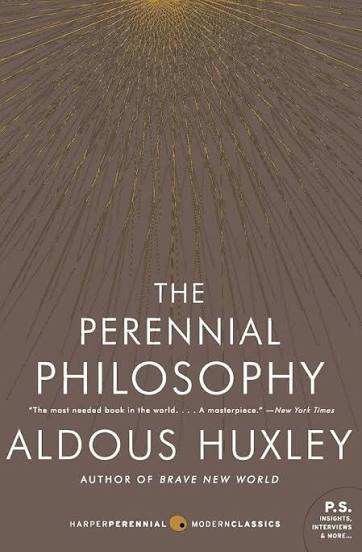
(Image from Amazon.com)
[H]ow significant it is that in the Indo-European languages . . . the root meaning “two” should connote badness. The Greek prefix dys- (as in dyspepsia) and the latin dis- (as in dishonorable) are both derived from “duo.” The cognate bis-gives a pejorative sense to such modern French words as bévue (“blunder,” literally “two-sight”). Traces of that “second which leads you astray” can be found in “dubious,” “doubt” and Zweifel--for to doubt is to be double-minded. . . . Obscurely and unconsciously wise, our language confirms the findings of the mystics and proclaims the essential badness of division–a word, incidentally, in which our old enemy “two” makes another decisive appearance.
“When Bayazid was asked how old he was, he replied, ‘Four years.’ They said, ‘How can that be?’ He answered, ‘I have been veiled from God by the world for seventy years, but I have seen Him during the last four years. The period during which one is veiled does not belong to one’s life.'”
“For my part, I think the chief reason which prompted the invisible God to become visible in the flesh and to hold converse with men was to lead carnal men, who are only able to love carnally, to the healthful love of his flesh, and afterwards, little by little, to spiritual love.” –St. Bernard
“Your enjoyment of the world is never right till every morning you awake in Heaven; see yourself in your Father’s palace; and look upon the skies, the earth and the air as celestial joys; having such a reverend esteem of all, as if you were among the Angels. The bride fo a monarch, in her husband’s chamber, hath no such causes of delight as you.
“You never enjoy the world aright till the sea itself floweth in your veins, till you are clothed with the heavens and crowned with the stars; and perceive yourself to be the sole heir of the whole world, and more than so, because men are in it who are every one sole heirs as well as you.
“Till you can sing and rejoice and delight in God, as misers do in gold, and kings in sceptres, you can never enjoy the world. Till your spirit filleth the whole world, and the stars are your jewels; till you are as familiar with the ways of God in all ages as with your walk and table; till you are intimately acquainted with that shady nothing out of which the world was made; till you love men so as to desire their happiness with a thirst equal to the zeal of your own; till you delight in God for being good to all; you never enjoy the world.
“Till you more feel it than your private estate, and are more present in the hemisphere, considering the glories and the beauties there, than in your own house; till you remember how lately you were made, and how wonderful it was when you came into it; and more rejoice in the palace of your glory than if it had been made today morning.
“Yet further, you never enjoyed the world aright, till you so love the beauty of enjoying it, that you are covetous and earnest to persuade others to enjoy it. And so perfectly hate the abominable corruption of men in despising it that you had rather suffer the flames of hell than willingly be guilty of their error.” –Thomas Traherne
“Therefore I give you still another thought, which is yet purer and more spiritual. In the Kingdom of Heaven all is in all, all is one, and all is ours.” –Eckhart
“Love is infallible; it has no errors, for all errors are the want of love.”
–William Law
Love is a mode of knowledge.
[M]an’s obsessive consciousness of, and insistence on being, a separate self is the final and most formidable obstacle to the unitive knowledge of God.
“The sect of lovers is distinct from all others; Lovers have a religion and a faith all their own.” –Jalal-uddin Rumi
“Temperance is love surrendering itself wholly to Him who is its object; courage is love bearing all things gladly for the sake of Him who is its object; justice is love serving only Him who is its object, and therefore rightly ruling; prudence is love making wise distinction between what hinders and what helps itself.” –St. Augustine
“Our kingdom go” is the necessary and unavoidable corollary of “Thy kingdom come.”
“The rout and destruction of the passions, while a good, is not the ultimate good; the discovery of Wisdom is the surpassing good. When this is found, all the people will sing.” –Philo
It is by losing the egocentric life that we save the hitherto latent and undiscovered life which, in the spiritual part of our being, we share with the divine Ground. This new-found life is “more abundant” than the other, and of a different and higher kind. Its possession is liberation into the eternal, and liberation is beatitude [happiness].
Continue reading Excerpts from Aldous Huxley’s “The Perennial Philosophy”
 New Thinking Allowed with Jeffrey Mishlove