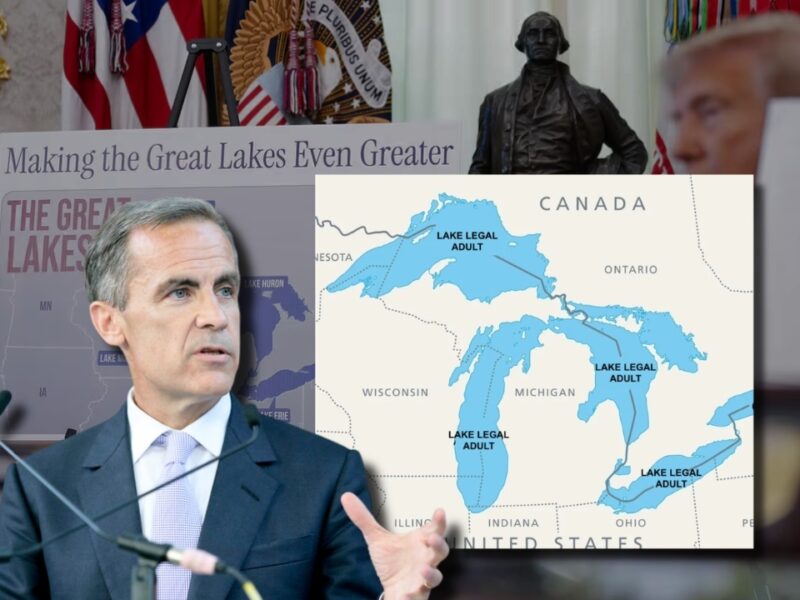
OTTAWA – After Donald Trump signed an executive order renaming Lake Ontario “Lake America,” Prime Minister Mark Carney announced he would preemptively rename the rest of the Great Lakes as “Lake Legal Adult” in order for the president to immediately lose interest in touching them.
“Our friendship with the United States has been in almost as much peril as an underage girl around their president, but going after Lake Ontario was just too much,” said Carney, displaying a map he’d created showing the remaining four lakes filled in with a pattern of the Canadian flag.
“So my team and I brainstormed the scariest, least attractive thing Trump could imagine, and took immediate action to protect the rest.”
Carney also stated that other potential Trump-repelling name changes included “Lake My Father’s Love,” “Lake Eric,” and “Lake Consent,” but his team felt that they didn’t quite hold the same amount of sheer repulsiveness to the president.
“While I understand that naming all four lakes the same name will be confusing to Canadians for a while, it will be worth the temporary inconvenience to ensure that President Trump no longer has any desire to even look at them anymore,” assured Carney.
“In fact, I have just received word from Canada’s Ambassador to the US, Mark Wiseman, that Mr. Trump can no longer even see that any of the Lake Legal Adults exist on a map.”
“For if there is a sin against life, it consists perhaps not so much in despairing of life as in hoping for another life and in eluding the implacable grandeur of this life.”
~ Albert Camus
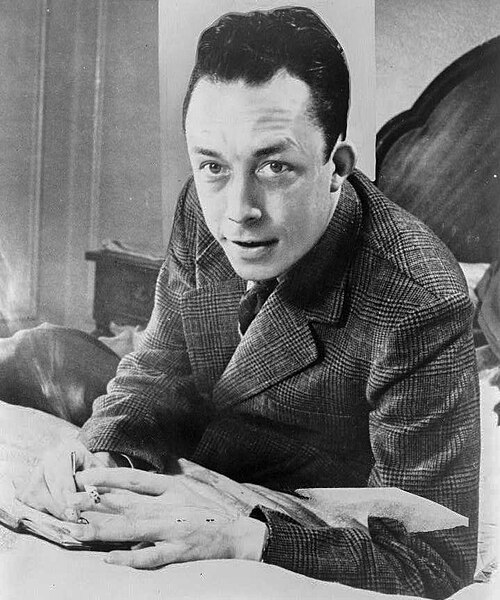
Albert Camus was a French philosopher, novelist, author, dramatist, journalist, world federalist, and political activist. He was the recipient of the 1957 Nobel Prize in Literature at the age of 44, the second-youngest recipient in history, and the first laureate in literature born in Africa. Wikipedia
Language is the chalice we lift to our lips to taste our own experience — a vessel that constrains what it contains by giving it its own shape. The more complex our experience, the more muddled the emotions that comprise it, the more it spills outside what language can hold. And yet we live in language — narrative is the neurocognitive pillar of personhood and emotions are how the brain interprets bodily sensations, an interpretation achieved largely by naming. We also live in culture — encoded in each language are a culture’s parameters of what it is permissible to feel, which we internalize as the parameters of what it is possible to feel.
It helps, then, to have a larger lexicon of emotion — larger than our given language, in order to take back the expansiveness of our experience by liberating it from the constraints of culture.
That is what cultural historian Tiffany Watt Smith offers in The Book of Human Emotions: An Encyclopedia of Feeling from Anger to Wanderlust (public library) — a linguistic ledger of feeling exploring the cultural histories and psychosocial nuances behind the words we use to name our most confounding, complex, yet common experiences, partway between The Dictionary of Obscure Sorrows (that lovely lexicon of invented words for real things we feel but cannot name based on real etymologies from around the world) and David Whyte’s Consolations (that passionate unfastening of everyday words to reveal the deeper strata of their emotional nuances).
Punctuating the entries in English, from anger to loneliness to delight, are some wonderfully untranslatable words from around the world for very specific affective states and emotional reactions with no equivalent in English — partly because our culture holds no space for them, partly because our model of human nature factors out the reality and dignity of those experiences, partly simply because the English language is not pliant enough to mold itself around such irregularly shaped objects of feeling.
Here are ten of my favorites:
ABHIMAN Sanskrit
The literal meaning of abhi-man is “self-pride.” Abhiman evokes the pain and anger caused when someone we love, or expect kind treatment from, hurts us. Sorrow and shock are at its root, but it quickly flourishes into a fierce, bruised pride. To recognize abhiman as an inevitable part of our emotional life is to know that breaking the unspoken contracts of love and respect between families and allies is an extremely serious betrayal.
ACEDIA Greek
A distracting, creeping feeling. Like the tickle of a gnat crawling up your arm. A short-lived but disastrous emotional crisis, usually striking between 11AM and 4PM. Its first signs are listlessness and irritability, but it doesn’t take long to turn into desolation and despair.
AMAE Japanese
The sensation of temporary surrender in perfect safety when you crumple into the arms of a loved one to be coddled and comforted. In Japan, amae is commonly acknowledged as part of all kinds of relationships, felt not only between family members, but with friends and in the workplace too. According to the Japanese psychologist Takeo Doi, amae is “an emotion that takes the other person’s love for granted,” there when we depend on another’s help with no obligation to be grateful in return. You can even be encouraged to show amae to yourself. For Doi, surrendering to amae is important because it represents a return to the indulgences and unconditional nurturing of infancy. It’s the glue which allows stable relationships to flourish, an emblem of the deepest trust… this combination of vulnerability and belonging.
BASOREXIA 20th-century English derivative of Latin and Greek
The sudden urge to kiss someone.
GRENG JAI Thai
The feeling of being reluctant to accept another’s offer to help because of the bother it would cause them.
KAUKOKAIPUU Finnish
Feeling homesick for a place you’ve never been to. From kauko — faraway, and kaipuu — a yearning.
MALU Indonesian
The sudden experience of feeling constricted, inferior and awkward around people of higher status.
SAUDADE Portuguese
A melancholic yearning for someone, or something, which is far away or lost. It’s always there, pulsing between the surface with its hopefulness tinged with grief. There is a vague yearning, yet it is interlaid with resignation and the pleasure of remembering past joys.
VIRAHA Sanskrit
Viraha is usually translated as longing or the particular kind of love felt during separation or abandonment. An aspect of sringara rasa (erotic and romantic love), one of the nine rasas or themes that shape human experience, viraha is a feeling of incompleteness without a loved one, and a fixation on the ecstasy of the longed-for reunion. Viraha recalls the formulations of romantic infatuation, not only the erotic — the poetry of the Occitan troubadours, or the inconsolable longing expressed in Portuguese fado music. The difference is that viraha is also a religious feeling — the soul’s quest to find it’s spiritual home. [See John Donne’s “Batter My Heart”.]
ŻAL Polish
Żal (pronounced jal) is melancholy felt at an irretrievable loss. This is not straightforward dejection. Żal is fickle, and shifts its shape, one moment resigned, the next rebellious. It combines the disappointment, regret and even violent fury which comes when some part of our lives has been taken away for good. It is most of all a kind of anger at recognizing the end of things.
The climate crisis won’t be solved with lifestyle choices but through political pressure and bold collective action.
Thousands of protesters convene at the “Rise for Climate, Jobs, and Justice” march on September 8, 2018, in San Francisco, California. Source: Flickr
By: Leah C. Stokes
August 31, 2026 (thereader.mitpress.mit.edu)
The first time my newborn’s eyes saw the sky, it was a dull gray. The first time her lungs breathed outdoor air, it was filled with smoke. On the morning she came home from the hospital, a wildfire burned just miles up the coast from Santa Barbara.
Leah C. Stokes is the author of “The Carbon Wave,” from which this article is adapted.
It was October 14, 2021, the day before her due date and 75 long nights after her birth. She’d spent that time inside a NICU incubator. But that evening, my baby slept in her bassinet for the first time, reunited with her twin sister who’d come home a few weeks earlier. The next morning, our family woke up under one roof. I’d anticipated this day for the past nine months. To mark the occasion, we were going to sing, eat chocolate cake, and celebrate.
The twins were not all that I’d been growing over that long year. I was having a strange, high-risk pregnancy, gestating policy ideas and babies. During this time, I was working with a team of fellow climate advocates on an ambitious plan to rapidly expand clean electricity and slash fossil fuel use. The idea began as a line in Jay Inslee’s 2020 presidential campaign platform pledging 100-percent carbon-free electricity by 2035. It grew into a policy paper, spawned a network of advocates, and eventually became a bill introduced in Congress. Along the way, we’d even managed to get President Joe Biden to commit to our plan. Now it was part of a major climate package, the biggest in history, slowly winding its way through Congress.
But both the policy and pregnancy proved precarious. There were weeks when my future children looked like they might die, while the policy seemed destined to pass. And other weeks, I was sure the babies would live, while the policy would crumble. I desperately wanted everything to work out, but often that felt impossible.
That jarring feeling hit me again on October 15, 2021, my due date. Just as we were about to sit down for our first dinner under the same roof, I checked my email. When I saw a message from Coral Davenport, my heart sank. As one of the longest-serving climate journalists at The New York Times, Coral was often the first to get the scoop. She wanted to talk as soon as possible. I immediately knew why.
Ten days earlier, as my baby was growing healthy enough to finally come home, I began to hear that the clean energy policy I’d poured so much into was dying. Rumors of its demise grew daily. On one of our last nights at the hospital, my friend Sonia Aggarwal, who worked at the White House, called. It was dinner time, and I needed to drive to the hospital before visiting hours ended, but I also knew I had to pick up the phone.
As one of my closest friends and allies in this work, Sonia said she wanted to be the one to tell me that the policy’s prognosis was not good. She would keep pushing, and so should I, but the case increasingly seemed terminal. Senator Joe Manchin from West Virginia had hardened against the idea. He held the pivotal 50th vote in the Senate and could veto anything he opposed. A man who’d made a fortune in coal could not support a rapid transition away from dirty fossil fuels. That night, surrounded by the incessant beeping and alarms of the NICU, I held my tiny daughter and wept.
One week later, with both of my children now home, I picked up the phone and Coral’s voice came over the line: “I’ve got the story. I know the policy is dead.” She wanted a quote, to explain why this mattered in simple terms, but I couldn’t find the words. “Can I call you back in five minutes?” was all I could manage.
The larger climate package was still on the table, but the clean electricity plan was on the chopping block. Without it, I feared we wouldn’t be able to cut pollution fast enough to hit Biden’s 80 percent clean energy target. Its loss would blow a giant hole through the bill. My first instinct was despair — but despair is contagious. Plus, there were many other policies left in the package, policies worth saving.
With just a small window of time, I reached out to three colleagues I’d worked with over the past nine months. Each one held a different view, leaving me feeling like I was running through the stages of grief in rapid succession. One person was stuck in denial: “It’s not dead yet. Do not confirm it. Keep pushing.” Another wanted to bargain: “Maybe we can still fix this. There must be something else we can do.” The third counseled acceptance: “It’s gone. We need to move on and focus on everything we can still save.”
With these conflicting voices in my head, I tried to compose a brief comment. Coral had the story right; she’d heard it from multiple sources. There was no point in denying or trying to change the facts. I also knew the loss was too big to accept quietly. Instead, I would try to communicate the gravity of the situation while leaving space for hope. I wrote down, word for word, what I intended to say and practiced it aloud to my husband, who was sitting on our bed watching.
All I felt was the overwhelming feeling that I had failed the world, and perhaps most acutely, failed my children.
When I called Coral back, I did my best to stick to my lines. But I found myself saying more than I meant to. Emotion came spilling out of me. My voice trailed off, “It’s pretty sad… it’s so sad.”
My husband, noticing I’d gone off script, signaled that I needed to stop talking. When I hung up, I reassured him, “Oh, the part about me being sad? Don’t worry, she won’t use that.”
That night, we still sat down for dinner. We still sang. We still ate cake. I did my best to hold the grief and the joy simultaneously. I’d found myself in the middle of my life, in the middle of a policy fight, in the middle of the climate crisis. In my brief 35 years, polluters had pumped out more than half of all carbon emissions in human history. Even on that happy day, the crisis was still there, casting a shadow. It had already made the air too smoke-filled to take my newborns outside.
The next morning, I walked to the corner store to pick up a copy of The New York Times and found the article on the front page above the fold: “Crucial element of climate plan likely to be cut: Manchin blocks effort.” It opened with a sober reading of the facts. “The most powerful part of President Biden’s climate agenda — a program to rapidly replace the nation’s coal- and gas-fired power plants with wind, solar and nuclear energy — will likely be dropped from the massive budget bill pending in Congress, according to congressional staffers and lobbyists familiar with the matter.”
Manchin’s staff all but confirmed it. The White House wouldn’t comment. And then, halfway down the page, were my words: “This is absolutely the most important climate policy in the package. We fundamentally need it to meet our climate goals. That’s just the reality. And now we can’t. So this is pretty sad.”
They say you should choose your words carefully. That you shouldn’t say something you wouldn’t want to read on the cover of the newspaper. Because words can have consequences you can’t predict. In the coming days, young people would begin a hunger strike outside the White House, staffers would find new ways to cut pollution, and pressure would grow on Congress to act. But that was all in the future. That Saturday, all I felt was the overwhelming feeling that I had failed — failed the world, and perhaps most acutely, failed my children.
Ifirst heard about climate change two decades earlier, in 2001. At the time, I was in high school, where my geography teacher — a brilliant British man with thick white hair — would draw fluffy clouds on the chalkboard to show how mountains create rain shadows and deserts. He was lighthearted and kind, and encouraged students to speak up. Plus, he had a funny ritual of closing each lecture by saying: “From the bottom of my heart, and the depths of my conviction: get lost.” I took every class he taught.
But one morning, he brought up global warming, saying it was an unproven theory. Just because temperatures were rising alongside carbon dioxide, he posited, did not mean humans were to blame. Correlation was not causation, after all. Despite my admiration for him, this lesson struck me as misguided. I don’t know why at the time, but I knew he was wrong.
During my four years at the University of Toronto, I became immersed in climate change through coursework and extracurriculars. One evening in the winter of 2007, a few months before graduation, I walked towards the University’s Convocation Hall.
Until we get rid of fossil-fuel infrastructure in every corner of our society, individual behavioral changes are mere nibbles at the edges of the problem.
It was here, surrounded by fellow climate activists, that I watched Al Gore give his famous slideshow. In Toronto, he was like a rockstar — when ticket sales for the event went live, the website crashed. After the talk ended, my friends and I were invited to attend a reception. I even got to shake Al Gore’s hand.
Gore’s documentary, “An Inconvenient Truth,” had been released nine months earlier, creating widespread public awareness of climate change for the first time. In it, he presents the same slideshow I saw live. Just four days after this talk, it would win best documentary at the Oscars.
When I think back on that film two decades later, strangely, the thing I remember most vividly is the credits. After all the charts and facts came a black screen and a series of messages appeared. “The climate crisis can be solved. You can reduce your carbon emissions. In fact, you can even reduce your carbon emissions to zero.”
These words appeared before me, like a sacred text. And then the answer came: “Buy efficient appliances and light bulbs…Recycle.”
The idea that individuals could solve climate change on their own was ubiquitous at the time. It was 2007, and “carbon footprints” were all the rage. The claim was that we were each responsible for producing a certain amount of emissions, and we each needed to work relentlessly to reduce them. It felt like everyone I knew was calculating how much pollution their “lifestyle” created.
As a psychology major, I was susceptible to this argument. In college, I ran campaigns to get students to change their behavior and save energy. For my first job after graduation, I conducted carbon audits for a nonprofit. Once I figured out exactly how big the problem was, the proposed solution was to buy carbon offsets, which funded things like reforestation and carbon capture projects. What else could we do? No one seemed to know. It was counting for counting’s sake.
During the same period, I joined 50 million people across the globe and sat in the dark for “Earth Hour,” a global campaign aimed at demonstrating the world’s commitment to climate action. In Toronto, the iconic CN Tower switched off its lights, alongside hundreds of other buildings, instantly dropping energy use by 9 percent. But as that dark hour passed, I began to wonder: How would turning off the lights solve the climate crisis?
When I think back now on the closing credits of “An Inconvenient Truth,” I can see they simply weren’t true. Until we get rid of fossil-fuel infrastructure in every corner of our society, individual behavioral changes are mere nibbles at the edges of the problem.
Of course, this was not Al Gore’s fault — as usual, fossil fuel executives were to blame. In 2004, the fossil fuel company BP put a carbon footprint calculator on its website, encouraging people to estimate how much their behaviors, such as food choices and commutes, affected the planet. For the next three years, they spent upwards of $100 million a year promoting the idea. The phrase “carbon footprint” was unfamiliar at first, but by the time “An Inconvenient Truth” hit theaters in 2006, it was everywhere. No wonder it became the film’s framework for action.
It took me a decade to understand why my brilliant high school teacher had spread climate denial. Beginning in 1998, the American Petroleum Institute funded online curricula that promoted fossil fuels and cast doubt on climate science. These dirty industries were doing everything they could to delay policy action and protect their profits. The longer I worked on climate change, the more I realized there were villains in this story.
Whether or not a baby is born, our world will keep churning out pollution.
The carbon footprint paradigm didn’t just shame people for driving to work or not recycling — it also discouraged having children. Academicarticles suggested that the number one way to reduce your impact was to forgo having a child. According to this perspective, the average American is responsible for 16 tons of carbon pollution every year — including every baby. If you don’t have that kid, theoretically the world makes less pollution.
My whole life, I struggled with whether to have children. Typically, when people ask if it’s moral to have a child with climate change accelerating, they are asking two things at once. They want to know if it’s okay to bring a child into a doomed world. And they want to know if the kid would only make the crisis worse. To me, both of these questions are fundamentally flawed: We are not doomed, and everyday people — let alone newborn babies — are not responsible for our dirty energy system.
We have too easily accepted the idea that we’re all to blame for the climate crisis. Whether or not a baby is born, our world will keep churning out pollution. Everyone alive today was born into a society that runs on fossil fuels. That’s even true for my grandparents, born almost a century ago. But it doesn’t have to be this way. We’ve jumped from climate denial to climate despair without pausing to consider a third option: actually doing something about the problem. Our dirty energy system is not inevitable. This is the work, regardless of whether or not someone chooses to have a child.
When we start thinking this way, the question shifts from minimizing our impact on the planet to maximizing it.
For that reason, I suggest that we replace the carbon footprint with a new idea: the carbon wave. Rather than thinking of a single person leaving a footprint in the sand, think of waves in the ocean. These waves are made by strong, sustained winds blowing in the same direction. Over generations, these waves are built as thousands of people work together to create change, adding to the efforts of those before them. And just as waves wash away footprints on a beach, our carbon waves can erase our carbon footprints. Whatever negative impacts we have on the planet from living in a fossil-fuel society can be offset by our activism if we join with others to change it. Working together, we can make waves.
Of course, waves are less controllable than footprints. The waves we make alongside others will have less certain impacts. But their potential is orders of magnitude larger.
The waves we make now will determine our future. The American public wants climate action — they have for decades. We must keep pushing our governments, corporations, and communities to act. We can break the cycle and refuse to pass our dirty energy system to yet another generation.
Leah C. Stokes is Anton Vonk Associate Professor of Environmental Politics at UC Santa Barbara. As a leading climate advocate, she has championed climate policy in the United States at all levels of government and was selected for Time Magazine’s Time100 Next list and Business Insider’s top 30 global climate leaders. She is the author of “The Carbon Wave,” from which this article is adapted.
Posted on Aug 31
The MIT Press is a mission-driven, not-for-profit scholarly publisher. Your support helps make it possible for us to create open publishing models and produce books of superior design quality.
A team of neurosurgeons in London have used AI to help them operate on a man’s brain.
The AI tool analyzed live footage of the operation and flagged key brain structures like nerves and blood vessels as surgeons removed a large tumor on the patient’s pituitary gland, according to The Guardian, ensuring that they didn’t poke around where they shouldn’t be.
The surgery, performed at the National Hospital for Neurology and Neurosurgery in May, saved the eyesight of the patient, 48-year-old Rhys Hibbert. Details of the procedure, though, were kept under wraps until now.
“When I came round… I could see everything in the room clearly,” Hibbert told The Guardian. Before the surgery, he couldn’t walk on his own without glasses or walking sticks.
The pituitary gland is an especially delicate part of the brain to operate on, located right next to the arteries that bring blood to the brain and the optic nerves that control vision. “Going a millimeter wrong can make a critical difference,” health officials said, per the newspaper, possibly leading to blindness, stroke, and death.
Unearthing a tumor there, at the base of the brain hidden from view, posed an even greater challenge. The surgeons would have to cut a precise path to get to the benign growth without damaging the brain.
That’s where the AI tool proved useful. Trained on hundreds of surgical videos of pituitary tumor removals, the AI system “has been exposed to a breadth of surgical examples that would take a surgeon many years to encounter,” Sophia Bano, an associate professor in robotics and AI at University College London and the technical lead for the AI tool, told The Guardian. During its training, researchers manually drew around the vessels and nerves in each video so the AI could get an accurate idea of where they are.
The human doctors remained in control of the entire procedure, but the AI tool played a critical role in guiding their work. Analyzing the procedure through a camera planted in the base of the skull via the nose, it tracked the doctors’ surgical instruments in real time, identified where hidden vessels and nerves were most likely to be, and highlighted safe areas to extract the tumor, according to the BBC, which compared it to facial recognition tech for hidden anatomy.
“From a patient safety perspective, I can see absolutely the benefit. There are no road signs inside our head,” Hibbert told the BBC.
For surgeries like a pituitary tumor removal, a surgeon typically studies brain scans so they intimately know each patient’s unique anatomy before going in, the BBC noted. Experts worry, though, that doctors may become too dependent on AI tools, especially as a new generation of med students are being raised on using them.
Hibbert knows where he stands.
“It’s given me my life back,” he said of the surgery.
I’m a tech and science correspondent for Futurism, where I’m particularly interested in astrophysics, the business and ethics of artificial intelligence and automation, and the environment.
Nested between two giant cedars in the remote old-growth forest where I live much of the year are the rusted remains of boxy car. A tree root has seized one of the rear wheels. A sapling has growth through the glassless windshield. Bright orange fungi have colonized the driver’s seat. Lichen and moss cover nearly every inch of the chipped blue body. It is a living, wildly alive metaphor for the fate of every civilization, for the sinuous tenacity by which nature always prevails.
The story opens with the bucolic scene of a child climbing a tree on a river bend while across the shore sheep are grazing at the foot of rising scaffolding. As you turn the page to find the exact same frame of space but with the house now a village and the child a gaggle of children, you realize this is the river of time.
With each page, the growth of so-called civilization — this enterprise of collective conscience born on the banks of rivers — subsumes the tree, which nonetheless keeps also growing. Horse-carts become trains become cars, medieval fortresses morph into copper-capped industrial towers into neon-lit metropolises, the river quietly meandering through the monstrosity all along.
We come then to see the cruel equivalence — the tree slowly becomes denuded of leaves amid the concrete jungle, boughs down, begins dying.
But when the city goes the way of every civilization, when the ruins of cisterns and spires come to rise from the bog around the bend, a single acorn drops from the dying tree. The river takes it and carries it down to plant a sapling at the next bend, and somehow Borges rushes to mind: “Time is a river which sweeps me along, but I am the river.”
The last page opens into a bucolic landscape once more, the stump of the old tree in the background, the young tree blazing green in a lush meadow with no trace of beast-built monuments to waste and want — a silent, all-telling reminder that a river is not only alive but a life-force greater than that of anything we can make, for it is a fractal of the mystery that made us.
In early 1934, a twenty-four-year-old graduate student at Columbia Teachers College took an internship teaching drama and producing student plays at PS 24 in Harlem. Among her young charges at that “dreadful ancient New York schoolhouse,” as she would later recall, was a ten-year-old boy she was astonished to find reading, like her, Dickens. Their conversations quickly made her realize that “here was an exceptional and brilliant boy.”
Her name was Orilla Miller, though he called her Bill. His name was Jimmy, though to the world he would become James Baldwin.
Bill started giving Jimmy more books. He devoured them. Although he would recall that he loved her “absolutely, with a child’s love,” she discussed them with him like a peer. Suddenly, the bookishness and sensitivity that had rendered him strange to others were not only accepted but encouraged, cherished, held in kinship.
His father — a storefront church preacher who preached that white people were the Devil and who banned all books but the Bible from his house — didn’t like it one bit when Bill walked Jimmy home to ask permission to take him to the theater, which was also banned in the Baldwin household. But, like an ice-capped volcano, David Baldwin gave his consent with seething politeness.
“My first conscious calculation as to how to go about defeating the world’s intentions for me,” Baldwin would later write of his first cultural outing with Bill, “began on that Saturday afternoon.”
The defeat was total and triumphant. Baldwin was still in his twenties when his first novel catapulted him into celebrity. The novels and essays that followed established him as one of the most urgent yet enduring literary voices of his century, reverberating with that rare combination of passion and rigor by which writing survives the fads, formulas, and moral fashions of its time to touch the future, to shape it into being.
James Baldwin with Orilla and her husband Evan, 1976.
In the spring of 1963, at the peak of his fame which was also the peak of his heartbreak, that slow-burning acceptance of the dissolution of a great love, Baldwin traveled to Los Angeles for a series of lectures he had committed to give for CORE — the Congress for Racial Equality. There in the crowded hall was Bill, with her husband Evan.
They hadn’t seen each other in seventeen years.
Shyly, she made her way to him through the sea of people after the talk just as his press team was shepherding him onward to another appearance. “But she’s my teacher,” he protested, “don’t you understand? She’s my teacher!” They didn’t, whisking him away before Bill reached him.
Across the infinite abyss of that short distance, she found herself, like everyone, impressed by his intellect and eloquence, but moved by something else — the simple recognition that her dear “sweet boy” had become “a sweet man.”
A few days later, in a lovely mirror-image to the tender letter of gratitude Albert Camus wrote to his childhood teacher shortly after becoming the second-youngest laureate of the Nobel Prize, she sent him a letter quoted in Nicholas Boggs’s altogether magnificent biography Baldwin: A Love Story (public library):
May 15, 1963
James,
I want to tell you that the promise of the wonderful child has been fulfilled in the man. I am not referring alone to the development of your writing ability, the incisive use of your intelligence in social commentary. I am referring to the moral you — in the broad sense of one’s individual relationship to man around him. That Evan and I had a small part in your life adds to the value of ours. I also say, thank you, that there is this James Baldwin in America in the year 1963
Two days later, LIFE Magazine published Baldwin’s most personal and passionate interview. In it, he insisted that the emotional and spiritual role of the artist is “is to make you realize the doom and glory of knowing who you are and what you are.” This, too, is the role of every great teacher. And of every true friend.
Jeff Taisch, a DJ who performs at Burning Man, seen at his home studio in The City on Tuesday: “The costs have increased, and that’s real. But there’s still something there for people whose inner child is not yet dead.”Craig Lee/The Examiner
San Francisco native Jeff Taisch said he’s been a burner since 1996, when a buddy of his from high school told him about some rave in the desert.
Taisch said they piled into his friend’s mom’s Volvo and made the trek out to Black Rock Desert in Nevada with no clue what to expect.
“There was like zero infrastructure,” he said of the event’s seventh year in the desert. “I don’t know if we had tickets. I don’t know if they required tickets.”
Between getting caught in a sandstorm, cramming into a single tent with 15 people, and meeting a naked guy carrying around a baby Redwood tree who would become a lifelong friend, Taisch would be forever changed by the experience.
He would go on to perform DJ sets for thousands of people, with his vinyl records melting in the heat; host a flash-mob pizza party with the musician Diplo; and eat sushi flown in by helicopter that day, among other things.
In the past 30 years, he said, he’s only missed Burning Man a few times, for various reasons. This year, he’s missing out again due to “parental duties.”
But as the notorious desert party turns 40, he reflected on how much things have changed about it over the decades, how much has stayed the same, and how it might change in the future.
“Not only do you have influencers and content producers out there, but you have their support crews running around with reflectors and various extra elements to make their productions,” he said. “That exists. The costs have increased, and that’s real. But there’s still something there for people whose inner child is not yet dead.”
Burning Man was created 40 years ago in San Francisco when a group gathered on Baker Beach, and founders Larry Harvey and Jerry James built and burned a giant wooden sculpture of a man.
The event (attendees dislike the term festival) has taken place in the Black Rock Desert since 1990, expanding into a temporary city covering nearly six square miles. It’s known for art installations, music and all things creative — all while fostering human connection.
Taisch said that despite the location, it’s still a San Francisco event through and through. That much is noticeable every year as The City empties out during the week it takes place.
“The burners have left the building,” he said.
This year’s theme is “Axis Mundi,” referring to a center point of existence or “a celestial column connecting us to powers greater than ourselves,” according to an informational flyer created by organizers. Other topics highlighted this year include sustainability, global impact and looking ahead to the next generation.
“The connection, creativity, and leadership opportunities that Burning Man offers are a timely remedy for next-generation leaders,” the statement said.
When asked about the milestone, organizers told The Examiner on Friday in a statement that the ethos of Burning Man is very much intact, and that as “a creative culture at its core, Burning Man has always changed and evolved.”
“Every generation of participants brings new ideas, new challenges, and new ways of expressing creativity, community, and ways to participate,” they said. “In Black Rock City alone, about a third of participants every year are new.”
While the chaotic weeklong event has seen accidents and worse over the decades, Burning Man still claims the devotion of longtime attendees and inspires fascination in newcomers every year. This year, as the event officially becomes middle-aged, more than 75,000 people are expected to descend upon the desert.
Joana Ayala said she’s one of the thousands going, and this year is her first time.
“It’s just been a matter of time,” she said.
Ayala said she’s been living in intentional communities, groups who choose to live together, for the past eight years, so she has long felt that her lifestyle is “Burning Man-adjacent.” But despite having received invitations to go in the past, it hadn’t been the right time — until now.
She said that after speaking with other friends who’ve attended, she found that’s a common sentiment.
“They say when it’s your time to go, you’ll know,” she said.
Ayala said that while she’s excited about the music and the art, she’s most looking forward to experiencing the type of human connection that Burning Man fosters among attendees. She said she’s joining a camping group with a work connection, but otherwise doesn’t know most of the people she’ll be living with.
“I’m curious to see how people really take in the values and principles of Burning Man and embody them,” she said. “I’m really excited to be with other humans in this other culture that’s co-created.”
Ayala said she works in business operations at an arts nonprofit and an investing firm focused on creativity. But her third gig is as a “sound practitioner,” which includes leading workshops on sound improvisation and meditation. She said she plans on leading at least one such workshop while out on the playa, as the desert — which is actually a dry prehistoric lake bed — is known.
“I love sharing my love of sound and voice with people,” she said.
She said she’s a little nervous about experiencing her first sandstorm, but otherwise is optimistic about the week.
“I’m going with the intent to connect with humans and see what comes from there,” Ayala said.
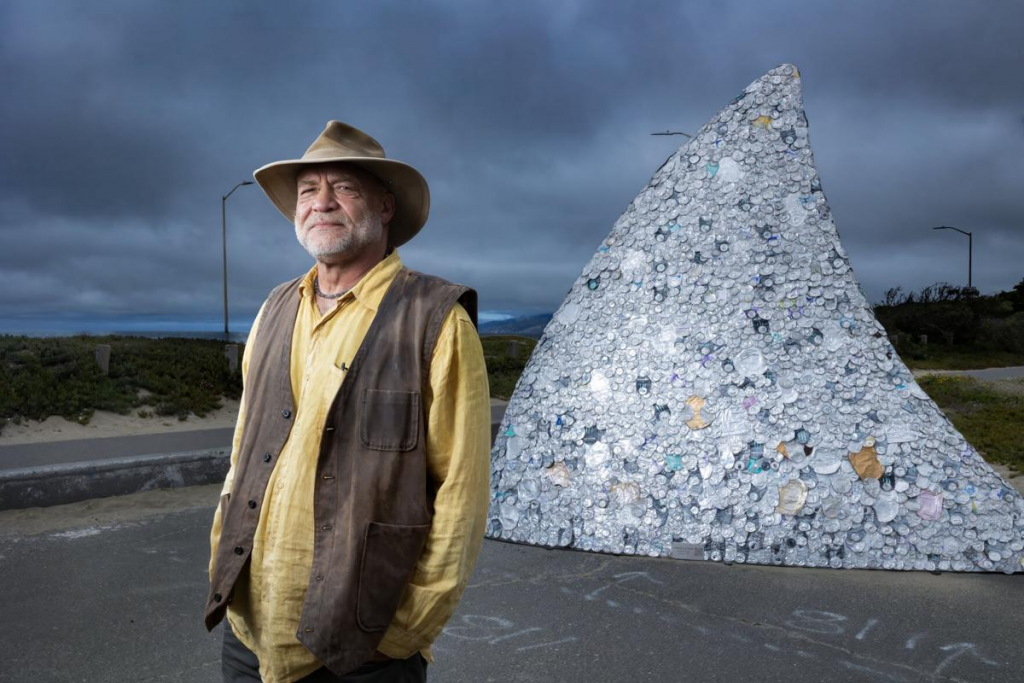
Oleg Lobykin had a bit more work to do before setting out for the desert this week. The sculptor said he’s been a burner for the past 17 years, unveiling a new piece for the event each year.
He was mum about what this year’s piece will look like, but did share that it was eight feet wide and eight feet tall, and he’d be calling it “Diamond Heart.”
“It’s going to be a brilliant work,” he said.
Burning Man artist and sculptor Oleg Lobykin, seen beside his sculpture, “Unsafe to Swim” near Ocean Beach: “Burning Man actually is pretty much about interactive art. When I make new work, I want to go and share it with people over there.”Craig Lee/The Examiner
Lobykin has made other works in the Bay Area, including a shark-fin sculpture beside Ocean Beach, on the former Great Highway, but has a special love of the pieces that he creates for Burning Man.
He declined to share much about his past “babies” that he’s brought to the event, but he said it’s where he gets a lot of his inspiration.
“Burning Man actually is pretty much about interactive art,” he said. “When I make new work, I want to go and share it with people over there.”
Lobykin said that in his first year at the event, he was “blown away” by the sheer creativity of everyone in attendance — what people wore, what they drove, the physical art.
Some of his favorite pieces over the years made by other people include a 20-foot-high sculpture made out of toys painted gold, spelling out the word “ego,” that was later set on fire.
Another was a “clumsy” three-foot-high sculpture of the phrase “you might die tomorrow” that kept coming back to him over the course of the week that year.
Lobykin said that while there’s some truth to some of the criticism leveled against Burning Man in recent years, with the influx of influencers and others who might not be as committed to the message of the event, burners still welcome everyone who wants to attend.
“There’s even a category — they’re called observers,” he said. “But many of those observers come back, and later they actually transform into participants.”
Every year, he said, he has friends who gripe about all the trouble it takes to go and resolutely say they won’t be coming back. But every year, they’re drawn in again.
“You’re stuck in line for six or nine hours, and it’s hot, and everybody’s tired, everybody wants to go home,” Lobykin said, of the snarling traffic jam that develops annually during the mass exodus from the playa at the end of the event. “And I’m saying, ‘Oh, no more next year. I’m not coming. I need to skip.’”
“Then I have a project, and that’s it,” he said. “I have a project. I must go to Burning Man. That’s how it is this year for me.”
No matter how much time has passed, or how much the event has changed, it’s always going to be meaningful to him and the other burners, Lobykin said.
“I’ll still be home after all these years,” he said.
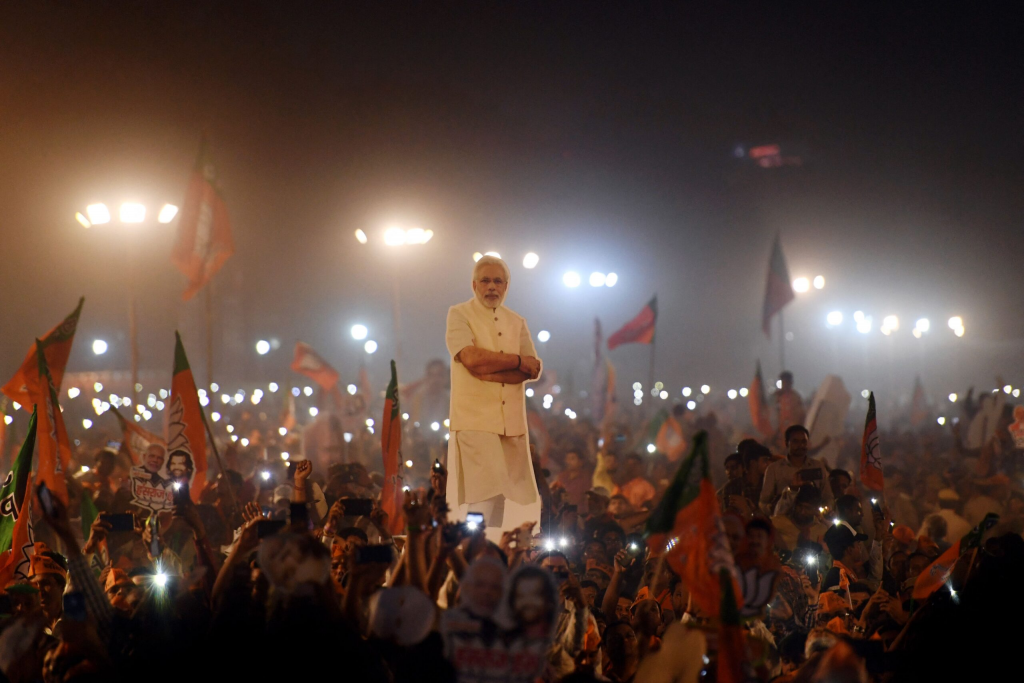
When India’s chief justice compared unemployed young people to “cockroaches,” he did not expect them to embrace the name. The satirical Cockroach Janta Party has quickly evolved from an online joke into a massive youth uprising, forcing the first cabinet resignation of Narendra Modi’s twelve years in power. But with government promises still unmet and the unrest spreading, the movement is set to return to the streets on September 5.
The following Journal of Democracy essays examine India’s democratic decline under the BJP — and what the students’ revolt reveals about the spaces still open for citizens to fight back. Free to read for a limited time.
Inside Modi’s Assault on Academic Freedom Narendra Modi and his ruling BJP have developed the textbook attack on India’s universities and centers of free thought. It offers a vital warning for other countries where higher education is in danger. Nandini Sundar
Why India’s Democracy Is Dying Under Narendra Modi, India is maintaining the trappings of democracy while it increasingly harasses the opposition, attacks minorities, and stifles dissent. It can still reverse course, but the damage is mounting. Maya Tudor
How to Stop India’s Authoritarian Slide The BJP is ruling with a heavier hand than ever before, attacking opponents and silencing critics. Ironically, these may be the ideal conditions for a democratic revival—if the opposition seizes the moment. Rahul Mukherji
How India’s Ruling Party Erodes Democracy The BJP has won two successive national elections, but it refuses to respect the rights of Muslims. Is democracy on a collision course with liberalism? Ashutosh Varshney
The Rise of India’s Second Republic While he did not achieve the sweeping victory many predicted, Narendra Modi led his ruling coalition to a third consecutive victory. In so doing, he is laying the foundation for a new political order in which India is simultaneously more democratic and more illiberal. Milan Vaishnav
The Journal of Democracy is published quarterly in January, April, July, and October. Subscribe now for full access to our archives.
As a marriage and family counselor for more than fifty years, I have a long-time interest in improving the love lives of men and women. I am also a leader in the emerging field of gender-specific health care and specialize in working with men and their families. I first learned about the work of Dr. Leonard Sax in 2005 when I read his book Why Gender Matters: What Parents and Teachers Need to Know About the Emerging Science of Sex Differences.
Dr. Sax also wrote the book Boys Adrift in 2007 with a revised edition in 2016. I was excited when I was sent a copy of his 2026 edition. What he shares in the book can not only help us understand the growing epidemic of unmotivated boys and underachieving young men, but the ways unhealed males impact the lives of girls and young women. More importantly, he offers practical tools for reversing this dangerous trend and helps men and women to become true and equal partners in marriage and in life.
I recently interviewed Dr. Sax who has an unusual background and skill set. He is a board-certified family physician with many years’ experience helping children and adults. He is also a PhD psychologist who has helped youth and adults with mental, emotional, and relational health problems. He has also visited more than 500 schools over the past 25 years listening and talking with students and teachers.
He shares two stories in his book that, for me, capture the essence of problem we are facing today:
“One teacher at a high school I recently visited asked the girls in his class, ‘What words come to mind when you hear the word ‘male’? He wrote the words on the whiteboard as the girls called them out.
The first word a girl called out can’t be printed here, but it begins with the letter ‘A’ and ends with ‘hole’
‘Immature,’
‘Mean’
‘Self-centered’
‘Disrespectful’
‘Unhygienic’
‘Not emotionally connected.’”
The second story involved a young woman Dr. Sax had seen as a physician from the time she was a child and was now a 20-year-old mother of two little toddlers of her own. When he encountered her on the street one day he said,
“I bumped into Brett the other day, and he was just going on and on about how great you are, and how funny you are, and how pretty you are. He told me he’s asked you to marry him. Twice… Lynda, how come you don’t want to marry the father of your two children?”
Her answer was short and succinct and spoke to an issue I have heard many times from other women.
“Dr. Sax, I already got two babies at home. I don’t need a third,” she answered.
In the work I have been doing in recent years as a marriage and family counselor I hear from many single or divorced women who say,
“I want real lasting love with a good man, but there aren’t any out there. I’m ready to give up.”
I tell the women that there are many good men out there, but they can be difficult to find. Men are equally discouraged,
“I’m busting my butt trying to be a good man, but women are impossible to please and they piss me off.”
I tell the guy I understand their frustration and encourage them to improve their lives and become the kind of man who the woman they want won’t be able to resist.
For anyone who has visited my website, MenAlive, they see my welcome video, “Confessions of a Twice-Divorced Marriage Counselor.” Finding a partner and having a passionate, long-lasting marriage isn’t easy, even for experts. People also hear that my present wife, Carlin, and I have been married for forty-six years, and our relationship gets better through the years.
When I thought I had written my last book (number sixteen), Carlin challenged me to write at least one more.
“With all the conflict these days between women and men, you need to write a book that tells guys what you’ve learned about how to become a man of value.”
The result is my book, 12 Rules for Good Men which follows my previous book, The Enlightened Marriage: The 5 Transformative Stages of Relationships and Why the Best is Still to Come.
Dr. Sax and I are kindred spirits. In his new edition of Boys Adrift he says,
“Across the board, women are looking to marry men who are at least as accomplished and ambitious as they are, and there are no longer enough good men to go around.”
Dr. Sax goes on to offer some disturbing statistics:
Nearly 1 in 5 young men 25 to 34 years of age is now still living at home with a parent, compared to fewer than 1 in 8 women.
1 in 3 American men with only a high school degree is not working and not looking for work; that’s 10 million American men who are not even in the labor force.
It isn’t just that modern mores have changed and young people are “coupling” without formalizing it with a marriage ceremony. The trend is the same for those married as well as those living together and it is not limited to the U.S.
“Looking around the world,” says Dr. Sax, “we see a marked decline in both coupling and in the total fertility rate from the 1990s through the 2020s, in countries as diverse as Finland, Mexico, Peru, South Korea, Thailand, Tunisia, and Turkey.”
Dr. Sax says,
“Healthy marriages are fundamental to a healthy society.”
He goes on to offer the reasons that so many young women now find the prospect of partnering with a young man unappealing.
“As a family doctor, I heard from a young woman who said, ‘I don’t mind so much that he earns less money than I do. But he’s just a bum. He expects me to make all the meals, clean up after him. He’s not a child. I’m not his mother.”
The Six Factors That Parents, Boys, and Young Men Need to Know to Fulfill Their Potential
In previous editions of the book, Dr. Sax described the following five factors which I will detail briefly before addressing the most recent factor that is both surprising and frightening.
Changes in the education system with schools becoming more unfriendly to boys.
The ubiquity of video games.
Over-medicating boys for ADHD.
Endocrine disruptors in the water affecting males.
The loss of male role models to teach boys what it means to be a good man.
The new factor: Pornography, AI Girlfriends, and the Manosphere
Pornography is nothing new, but what boys and men can view freely now is more addicting and violent than anything we’ve previously seen. Dr. Sax says,
“I’m talking about digital, streaming, online pornography, pornography generated by artificial intelligence, of the kind that didn’t really exist before 2010 or in some cases 2020.”
Dr. Sax goes on to say,
“Researchers recently found that 45% of the most popular videos on Pornhub include at least one act of physical aggression against women. Spanking, gagging, slapping, hair pulling, and choking were the most popular.”
AI girlfriends create such realistic “sex partners” that boys and men can become hooked and find they can no longer get turned on by real encounters with real women.
The Manosphere is driven by equally compelling “influencers” that draw young men in and sell them false hope for fame and fortune that supposedly will make them irresistible to women.
Is it any wonder that many boys and young are drifting further away and girls and women are checking out of the dating and mating game? Dr. Sax says,
“A 16-year-old girl told me how her 17-year-old boyfriend asked for anal sex. She said no. He said that all the girls in the porn videos love anal sex. She said, ‘You idiot, those are actresses. They are being paid. They are pretending. How about we shove something hard up your behind and see how much you like it?’ The relationship ended soon after.”
Fortunately, healing is not only possible, but things are changing for the better. We all have a part to play. We invite you to join us.
Learn More Here
To learn more about Dr. Leonard Sax, his books, and his work, visit him at:
If you would like to read more articles like these, I invite you to subscribe to my free weekly newsletter at MenAlive.com: https://menalive.com/email-newsletter/
Best Wishes,
Jed Diamond
Founder and VHS (Visionary Healer Scholar) of MenAlive
Consciousness, spirituality, biography, sexuality, androgyny, futurism, space, the arts, science, astrology, democracy, humor, books, movies and more



 ABHIMAN




 May 15, 1963