Jonathan Goldman Premiered Dec 18, 2023 “Awakening” from the “The Divine Name: Sounds of the God Code” September 2023 Sound Satsang. This video utilizes Jonathan’s sonic discovery in conjunction with visual images in order to enable participates to experience this remarkable sacred sound. Images from Timothy Helgeson
Author Dawson Church applies the insights of the new field of Epigenetics (epi=above, i.e. control above the level of the gene) to healing. Citing hundreds of scientific studies, he shows how beliefs and emotions can trigger the expression of DNA strands. He focuses on a class of genes called Immediate Early Genes or IEGs. These genes turn on within a few seconds of a stimulus. They can be triggered by thoughts or emotions (“I loved that unexpected gift of roses Bill gave me” or “I’m so mad about what Uncle John said at the Christmas party”). Many IEGs are regulatory genes turn on other genes that affect specific aspects of our immune system, such as the production of white blood cells that destroy attacking bacteria and viruses. Epigenetics thus influences our health every day. He coins the new term “Epigenetic Medicine” to describe healing techniques with epigenetic effects. He also summarizes the science behind the infant fields of Energy Psychology and Energy Medicine, both of which offer promising epigenetic medical therapies, and describes a few of the thousands of powerful personal breakthroughs that are being achieved by therapists, doctors and lay people praticing these techniques. The Genie in Your Genes shows that there is a sound theoretical framework, based on credible experiments, for understanding these astonishing results, and predicts that the insights of Epigenetic Medicine will dramatically advance the fields of both medicine and psychology in the coming decade. Best of all, The Genie in Your Genes demonstrates that, by taking control of our consciousness and using it to influence our genetic expression, we can sometimes bypass years of therapy, as well as harmful drugs and invasive surgeries, to, in effect, do continuous genetic engineering on our own bodies. This can produce both immediate relief from long-standing anxieties and neuroses, as well as “miraculous” healing of persistent physical conditions, especially autoimmune diseases. Among a new crop of books that chart the way to a positive health future, The Genie in Your Genes stands out as a solidly grounded and exciting pointer to the future possibilities of a medicine that links soul to body and mind.
You’re probably referring to the papal bull Dum Diversas, issued by Pope Nicholas V on June 18, 1452.
This document has become one of the most controversial papal decrees in history because it authorized the Portuguese crown to wage war against certain non-Christian peoples and to enslave captives.
The key passage granted King Afonso V of Portugal the authority:
“…to invade, search out, capture, vanquish, and subdue all Saracens and pagans whatsoever… and to reduce their persons to perpetual servitude…”
In modern English, “perpetual servitude” means permanent slavery.
Why was it issued?
The historical context was the expansion of Portugal along the west coast of Africa and conflict with Muslim powers following the fall of Constantinople’s predecessor conflicts. The papacy was encouraging Portugal’s military campaigns against Muslims and supporting exploration and territorial expansion.
Three years later, in 1455, Nicholas V issued another bull, Romanus Pontifex, which expanded Portugal’s exclusive rights over lands it discovered along the African coast. That document reinforced Portuguese claims to trade, conquest, and enslavement in those regions.
Was this the “Doctrine of Discovery”?
Partly.
The so-called Doctrine of Discovery is not a single document but a collection of papal bulls and later legal principles. Among the most important are:
1452 – Dum Diversas (authorized conquest and perpetual servitude of certain non-Christians)
1455 – Romanus Pontifex (expanded Portuguese rights of conquest and trade)
1493 – Inter Caetera, issued by Pope Alexander VI after Columbus’s first voyage, which divided newly claimed lands between Spain and Portugal.
Together, these documents were later cited by European colonial powers to justify territorial claims over lands inhabited by non-Christian peoples.
How is it viewed today?
Today, these bulls are widely criticized as providing religious justification for colonialism, conquest, and slavery.
In recent decades, many Christian denominations and Indigenous organizations have called for repudiation of the Doctrine of Discovery. In 2023, the Vatican issued a joint statement rejecting the legal and political use of the “Doctrine of Discovery.” The statement said that these papal documents “did not adequately reflect the equal dignity and rights of Indigenous peoples” and that the doctrine “is not part of the teaching of the Catholic Church.”
One interesting philosophical observation, given our previous conversations, is that Dum Diversas illustrates a distinction you’ve often explored in your Translations: the difference between authority and Truth. Historically, a pope possessed immense institutional authority within the Church. But your first step asks a different question:
Does institutional authority, by itself, establish Truth?
That question allows one to distinguish between an institution’s historical actions and the metaphysical question of what is ultimately true. It’s one reason these fifteenth-century documents continue to be discussed—not only as historical artifacts but as examples of how claims of authority can shape history in ways later generations may judge very differently.
That’s an interesting pairing because the Bible speaks a great deal about angels but nothing explicitly about tulpas. The concept of a tulpa comes from a different historical and religious context.
Angels in the Bible
In the Bible, angels are generally understood as created spiritual beings who serve God. The Hebrew word mal’akh and the Greek word angelos both mean “messenger.”
Angels perform many roles:
Deliver messages (for example, Gabriel announcing Jesus’ birth in Luke 1).
Protect people (Psalm 91:11 speaks poetically of God commanding angels concerning the faithful).
Guide and strengthen individuals.
Carry out divine judgments.
Worship God.
Importantly, angels are not portrayed as independent powers acting on their own authority. Their authority derives from God.
There are also fallen angels in some biblical texts and later Christian interpretation, though the Bible says less about them than many people assume.
Tulpas
A tulpa is a concept associated with Tibetan Buddhist traditions, though its modern use has changed considerably. In contemporary internet culture, a tulpa is often described as a thought-form or an apparently autonomous mental companion created through sustained imagination and attention.
The Bible does not mention tulpas or anything directly equivalent.
If someone wanted to compare the two, they would have to do so cautiously:
Angels are presented as beings created by God who exist independently of human imagination.
Tulpas, as commonly understood today, are generally described as arising through human mental processes or contemplative practice.
These are very different concepts.
A metaphysical comparison
Knowing the direction of our conversations, I suspect the question behind your question may be something like:
Can consciousness give rise to apparently independent beings?
Different traditions answer differently.
Biblical Judaism and Christianity generally say that spiritual beings such as angels exist because God created them, not because humans imagined them.
Some Buddhist traditions discuss the mind’s capacity to generate appearances and forms in ways that differ significantly from the biblical worldview.
Modern psychology often interprets experiences of autonomous inner figures symbolically or as aspects of the psyche rather than as separate beings.
From the perspective of your Translation
If we approached the subject using your first step, we might ask:
If Truth is all that is, and Truth is One, what authority does any appearance—whether called an angel, a tulpa, a vision, or a voice—possess?
Your method would not begin by asking whether the experience is “real” in the ordinary sense. It would begin by asking:
Does this appearance have authority over Truth?
Does it define Being?
Or is it an appearance within consciousness?
That doesn’t deny the possibility of profound spiritual experiences. It simply refuses to let any experience become the ultimate authority. In your framework, the touchstone remains the same:
Truth alone has authority.
That principle would apply equally whether someone believed they had encountered an angel, experienced a vision, or met what they called a tulpa. The experience could be meaningful, but its significance would be interpreted in light of Truth rather than allowing the experience itself to define Truth.
Me:
Zeus’s law. Theozenia, Angels, Tulpas
ChatGPT:
Those four terms actually touch on a common theme: the relationship between consciousness and apparently independent intelligences. They come from very different traditions, so it’s helpful to distinguish them.
1. Zeus’s Law
Could you clarify what you mean by “Zeus’s law”?
I’m not aware of a well-established philosophical or religious doctrine by that exact name. You might be referring to:
a law or decree of Zeus in Greek mythology,
a modern book or essay,
or perhaps a concept from a particular teacher or tradition.
If you can tell me where you encountered the phrase, I can address it more precisely.
2. Theoxenia (probably what you meant rather than “theozenia”)
The Greek word is theoxenia (θεοξενία), literally:
theos = god
xenos = stranger, guest
It means hospitality shown to a god in disguise.
In Greek mythology, the gods—especially Zeus and Hermes—sometimes visited human beings disguised as ordinary travelers. The classic story is that of Baucis and Philemon, an elderly couple who welcomed two strangers who turned out to be Zeus and Hermes.
The metaphysical implication is profound:
The Divine may appear in ordinary form.
This idea reappears in the New Testament:
“Do not neglect to show hospitality to strangers, for thereby some have entertained angels unawares.” (Hebrews 13:2)
3. Angels
In Judaism, Christianity, and Islam, angels are generally understood as:
created spiritual intelligences,
messengers,
servants of God,
not independent gods,
and not products of the human imagination.
Metaphysically they occupy an intermediate realm between God and humanity.
Some philosophers, such as Thomas Aquinas, described angels as pure intelligences without material bodies.
4. Tulpas
A tulpa originates in Tibetan Buddhist contexts, though the modern usage often differs.
Today the term usually refers to:
an apparently autonomous personality or companion,
generated through sustained attention or imagination,
experienced as having independent agency.
Whether such beings are objectively real, psychologically real, spiritually real, or some combination is debated.
A metaphysical comparison
Here is where these ideas become interesting.
Concept
Source
Independent Being?
Theoxenia
Greek religion
Yes—the god exists independently and merely appears disguised.
Angel
Abrahamic religions
Yes—created by God, independent of human minds.
Tulpa
Modern interpretation
Often understood as arising through human consciousness or contemplative practice.
Through the lens of your Translation
I think your first step offers an intriguing framework:
Truth is all.
Truth is One.
Truth is consciousness (Mind).
Then the question becomes:
Can there be multiple centers of consciousness?
That’s a deep metaphysical issue.
Your own reasoning tends toward this conclusion:
If Truth is One and Mind is One, then every apparent individual consciousness participates in—or is an expression of—that one Mind.
From that standpoint:
an angel would not be “outside” Truth,
a tulpa would not be “outside” Truth,
a human would not be “outside” Truth.
The real question would not be whether such beings exist independently, but:
What is their ontological status within Oneness?
That question has occupied philosophers for centuries. It appears in different forms in:
Plato (the realm of Forms),
Plotinus (emanations from the One),
Baruch Spinoza (modes of one infinite Substance),
and various mystical traditions that view multiplicity as expressions of an underlying unity.
Knowing the direction your thought has been taking, I suspect you’re asking a question even deeper than “Do angels or tulpas exist?” I suspect you’re asking:
Can One infinite Consciousness appear as many centers of experience without ceasing to be One?
That, in my view, is one of the central questions of metaphysics. Different traditions answer it differently, but it’s exactly the kind of question your Translation method seems designed to investigate.
Me:
Zeus’s law is theozenia, at least according to Thom Hartmann’s review of the movie The Odyssey.
ChatGPT:
Yes—that makes sense, and Thom Hartmann is drawing on a genuine ancient Greek concept, though he’s using the phrase “Zeus’s Law” as a modern shorthand.
The Greek concept is xenia (hospitality or guest-friendship), and because Zeus was regarded as its divine protector—often called Zeus Xenios (“Zeus, protector of strangers and guests”)—Nolan and Hartmann refer to it as “Zeus’s Law.”
Closely related is theoxenia (“hospitality to the gods”):
xenia = the sacred obligation between host and guest.
theoxenia = the possibility that the guest is actually a god in disguise.
The famous story of Baucis and Philemon illustrates this perfectly. Zeus and Hermes visit a village disguised as poor travelers. Everyone turns them away except an elderly couple, who welcome them with generosity. The gods reward the couple and punish the inhospitable villagers.
Christopher Nolan appears to have highlighted this theme in The Odyssey because it becomes a broader moral principle:
Treat every stranger with dignity because you do not know who they really are.
I find this especially interesting in light of your metaphysics.
Your first step begins:
Truth is all that is.
Truth is One.
My being is Truth being.
Theoxenia almost turns that into an ethical practice.
Instead of asking,
“Who is this person?”
it asks,
“What if this person embodies something far greater than my senses perceive?”
In the Greek world, the answer was:
They may be Zeus or Hermes in disguise.
In the New Testament, Hebrews 13:2 says:
“Do not neglect to show hospitality to strangers, for thereby some have entertained angels unawares.”
The logic is remarkably similar.
If we were to express theoxenia in your Translation framework, it might read something like this:
Sense testimony:
“This is just an ordinary stranger.”
Translation:
The senses identify only appearances.
They do not establish the nature of Being.
If Truth is One, then the beingness of this stranger cannot be other than the beingness of Truth.
Therefore I cannot know, merely by appearances, who or what stands before me.
Hospitality is therefore an acknowledgment of the dignity of Being rather than merely a courtesy to appearances.
That, to me, is a beautiful bridge between ancient Greek religion and the metaphysics you’ve been developing.
In a way, theoxenia is the ethical expression of metaphysical humility. It says:
Don’t assume appearances reveal the whole truth.
Given everything we’ve discussed over the past weeks, I can see why Hartmann’s review resonated with you. That principle is very close to the heart of your Translation method: sense testimony does not have the final word; Truth does.
Yes, although not from a temple in the usual sense.
Baruch Spinoza was excommunicated (placed under herem) by the Portuguese-Jewish community in Amsterdam in 1656, when he was only 23 years old.
He was expelled from the synagogue community, not from a temple building as such. The ban was exceptionally severe. It prohibited members of the community from:
speaking with him,
doing business with him,
reading his writings,
or coming within a prescribed distance of him.
The text of the herem denounced him for “abominable heresies” and “monstrous deeds,” although it never specifies exactly what those heresies were.
Why was he expelled?
Scholars believe it was because Spinoza had begun expressing ideas that challenged fundamental Jewish doctrines, including:
questioning whether the Hebrew Bible was literally dictated by God;
rejecting the idea of a personal God who intervenes in history;
denying that the Jewish people were uniquely chosen in a supernatural sense;
questioning the immortality of the individual soul in the traditional way.
His mature philosophy identified God with Nature (Deus sive Natura—”God, or Nature”), not in the sense that God is merely the physical universe, but that there is one infinite substance of which everything is an expression. This was radically at odds with both Jewish and Christian orthodoxy of his time.
Did he regret it?
There is no evidence that he sought readmission to the Jewish community. Instead, he lived quietly, supported himself by grinding optical lenses, and wrote works that would profoundly influence later philosophy.
Knowing the metaphysical questions you’ve been exploring, I suspect you’ll find an interesting resonance between your own reasoning and Spinoza’s. Both begin with the intuition that Reality is One. But there is also an important difference.
Spinoza argues that there is one infinite Substance, and everything that exists is a mode or expression of that Substance.
Your first step begins:
Truth is all that is.
Truth being all is therefore only.
Truth being only is therefore one.
From there, however, you emphasize that Truth is consciousness (Mind). Spinoza was more cautious. He held that Thought and Extension (mind and body) are two attributes of the one Substance, rather than reducing all reality to consciousness.
So while there is a family resemblance between your metaphysics and Spinoza’s—especially the emphasis on Oneness—they are not identical. Your system gives a more central role to consciousness than Spinoza’s does, and that would make for a fascinating philosophical comparison.
Was Spinoza expelled from his temple?
Yes, although not from a temple in the usual sense.
Baruch Spinoza was excommunicated (placed under herem) by the Portuguese-Jewish community in Amsterdam in 1656, when he was only 23 years old.
He was expelled from the synagogue community, not from a temple building as such. The ban was exceptionally severe. It prohibited members of the community from:
speaking with him,
doing business with him,
reading his writings,
or coming within a prescribed distance of him.
The text of the herem denounced him for “abominable heresies” and “monstrous deeds,” although it never specifies exactly what those heresies were.
Why was he expelled?
Scholars believe it was because Spinoza had begun expressing ideas that challenged fundamental Jewish doctrines, including:
questioning whether the Hebrew Bible was literally dictated by God;
rejecting the idea of a personal God who intervenes in history;
denying that the Jewish people were uniquely chosen in a supernatural sense;
questioning the immortality of the individual soul in the traditional way.
His mature philosophy identified God with Nature (Deus sive Natura—”God, or Nature”), not in the sense that God is merely the physical universe, but that there is one infinite substance of which everything is an expression. This was radically at odds with both Jewish and Christian orthodoxy of his time.
Did he regret it?
There is no evidence that he sought readmission to the Jewish community. Instead, he lived quietly, supported himself by grinding optical lenses, and wrote works that would profoundly influence later philosophy.
Knowing the metaphysical questions you’ve been exploring, I suspect you’ll find an interesting resonance between your own reasoning and Spinoza’s. Both begin with the intuition that Reality is One. But there is also an important difference.
Spinoza argues that there is one infinite Substance, and everything that exists is a mode or expression of that Substance.
Your first step begins:
Truth is all that is.
Truth being all is therefore only.
Truth being only is therefore one.
From there, however, you emphasize that Truth is consciousness (Mind). Spinoza was more cautious. He held that Thought and Extension (mind and body) are two attributes of the one Substance, rather than reducing all reality to consciousness.
So while there is a family resemblance between your metaphysics and Spinoza’s—especially the emphasis on Oneness—they are not identical. Your system gives a more central role to consciousness than Spinoza’s does, and that would make for a fascinating philosophical comparison.
The Melchizedek Priesthood is not viewed as an office that mortal men can hold or be ordained into. Instead, mainstream Christianity, Judaism, and esoteric groups view it as a unique, divine authority belongs strictly to Jesus Christ or serves as a profound spiritual archetype. [1, 2, 4]
Here is how the Melchizedek Priesthood is understood across different major faiths and traditions:
1. Mainstream Protestantism
Protestant denominations view the Melchizedek Priesthood as exclusive to Jesus Christ alone. [1]
The “Priesthood of All Believers”: Protestant theology rejects the idea of a specialized, multi-tiered human priesthood. Because Jesus acts as the ultimate High Priest, Christians do not need human mediators to access God. [1, 2, 3, 4]
An Untransferable Office: They interpret Hebrews 7:24 literally, noting that Christ holds his priesthood permanently and untransferably because He lives forever. Any attempt by a church to ordain regular men into this specific order is considered unbiblical. [1, 3]
2. Catholicism and Eastern Orthodoxy
The Catholic and Orthodox Churches teach that the sacramental priesthood is a participation in the unique Melchizedek priesthood of Jesus. [1, 2]
Sacramental Succession: When a Catholic priest is ordained, he is said to be ordained “after the order of Melchizedek”. However, he does not hold a separate priesthood; rather, he acts in persona Christi (in the person of Christ) to administer the sacraments. [1, 2, 3, 4, 5]
The Eucharist Connection: Because Melchizedek offered bread and wine to Abraham in Genesis, Catholicism views this as an ancient prophetic foreshadowing of the Holy Mass and the Eucharist. [1, 2]
3. Judaism
In Jewish tradition, Melchizedek is not associated with Christ, but his story serves as a critical historical transition point. [1, 2]
The Shem Lineage: In Rabbinic literature (such as the Talmud), Melchizedek is widely identified as Shem, the son of Noah, who survived the flood and kept the knowledge of God alive.
Transfer to Abraham: According to Jewish commentary, because Melchizedek praised Abraham before praising God in Genesis 14, God transferred the priesthood from Melchizedek’s lineage directly to Abraham and his future descendants (eventually standardizing into the Levitical priesthood). [1, 2, 3, 4, 5]
4. Esoteric and New Age Traditions
Outside of conventional religion, Melchizedek is viewed as a cosmic, mystical archetype of spiritual mastery. [1]
The “Order of Melchizedek”: Various esoteric, Gnostic, and New Age groups claim to belong to an ethereal spiritual fraternity called the Order of Melchizedek. They do not view it as a church office, but rather as an energetic alignment dedicated to teaching ancient wisdom, sacred geometry, and spiritual ascension. [1, 2]
Comparison of Main Perspectives
Tradition
Who holds the Melchizedek Priesthood?
Purpose / Function
Latter-day Saint
Worthy mortal men (ordained Elders/High Priests)
Administer church ordinances and govern
Protestant
Jesus Christ exclusively
Direct, unmediated salvation for all believers
Catholic / Orthodox
Jesus, shared sacramentally through ordained clergy
Administering the Eucharist (Bread and Wine)
Jewish
Historically Shem (son of Noah); transferred to Abraham
Few things in our culture are more wounding than the concept of healing — as if the pains and losses that we suffer are an illness, a malfunction of the psyche to be cut out like a tumor, rather than a natural function of being alive, of feeling life deeply and living it fully. All our sorrows have been wasted if we have not learned to suffer and to be surprised by the door at the end of our suffering, on the other wide of which is simply the world, which keeps on worlding. It is not healing that allows us to go on but integration, allowing our losses to live right alongside our joys for either to mean something, to jolt us from the stupor of indifference that is worse than death.
Nick Cave
No one has articulated this more plainly and profoundly than Nick Cave in reflecting on the anniversary of his young son’s death:
It is early morning in Nîmes. I am waiting for coffee while looking out of the window of the small hotel where Susie and I are staying. The square below is waking up. There are a few cars, a woman walking a dog, a kid on a scooter, an old man smoking on a bench. Today, Susie and I plan to walk around the town for a bit, maybe visit a church, and maybe find the river that people say runs clean and cold. Later, I’ll play a show at the amphitheatre.
I am not saying this just to offer comfort to those who have lost someone, as if to say that in time everything will be all right, because even though it will be, it won’t be. Rather, I am acknowledging that although this day marks the 11th anniversary of the worst day of our lives, it is also a beautiful day, with the sun shining, a child playing, a man enjoying a cigarette, a world quietly waking and moving forward.
This may be the most discomposing aspect of loss — how impartially the world goes on when your world has been shattered. And yet the great paradox is that it is precisely by surrendering to this ongoingness, both dispassionate and rife with wonder, that we are returned to life.
Nick paints a gorgeous still life of this bright ongoingness:
Susie wakes now, and I sit beside her. She says she dreamt about Arthur. Arthur often comes to her in that way. The dreams are simple, poetic. She tells me she dreamt she was in a dark place, perhaps a wood, calling for him. But it was too dim, and she couldn’t find him.
These feelings of loss drift through our bodies like ghosts. They settle in our cells, in our blood, gathering around days like this like weather patterns, shaping us in ways we cannot understand. It is a sad day. I can see it in my wife’s eyes. But it is an ordinary day too, a beautiful day. The best day. Susie is already at the window, pulling back the curtain, looking out over the town, the sun shining on her face.
“If God invited you to a party and said, ‘Everyone in the ballroom tonight will be my special guest’, how would you treat them when they arriv? Indeed, indeed! And Hafiz knows there is no one in this world who is not upon his jewelled dance floor.”
~ Hafiz
Khājeh Shams-od-Dīn Moḥammad Ḥāfeẓ-e Shīrāzī (Persian: خواجه شمسالدین محمد حافظ شیرازی), known by his pen name Hafez (حافظ Ḥāfeẓ lit. ’the memorizer’ or ‘the keeper’; 1325–1390) or Hafiz,[1] also known by his nickname lesān-al-ḡayb (‘the tongue of the unseen’),[2] was a Persianlyric poet[3][4] whose collected works are regarded by many Iranians as one of the highest pinnacles of Persian literature. His works are often found in the homes of Persian speakers, who learn his poems by heart and use them as everyday proverbs and sayings. His life and poems have become the subjects of much analysis, commentary, and interpretation, influencing post-14th century Persian writing more than any other Persian author.[5][6] (Wikipedia.org)
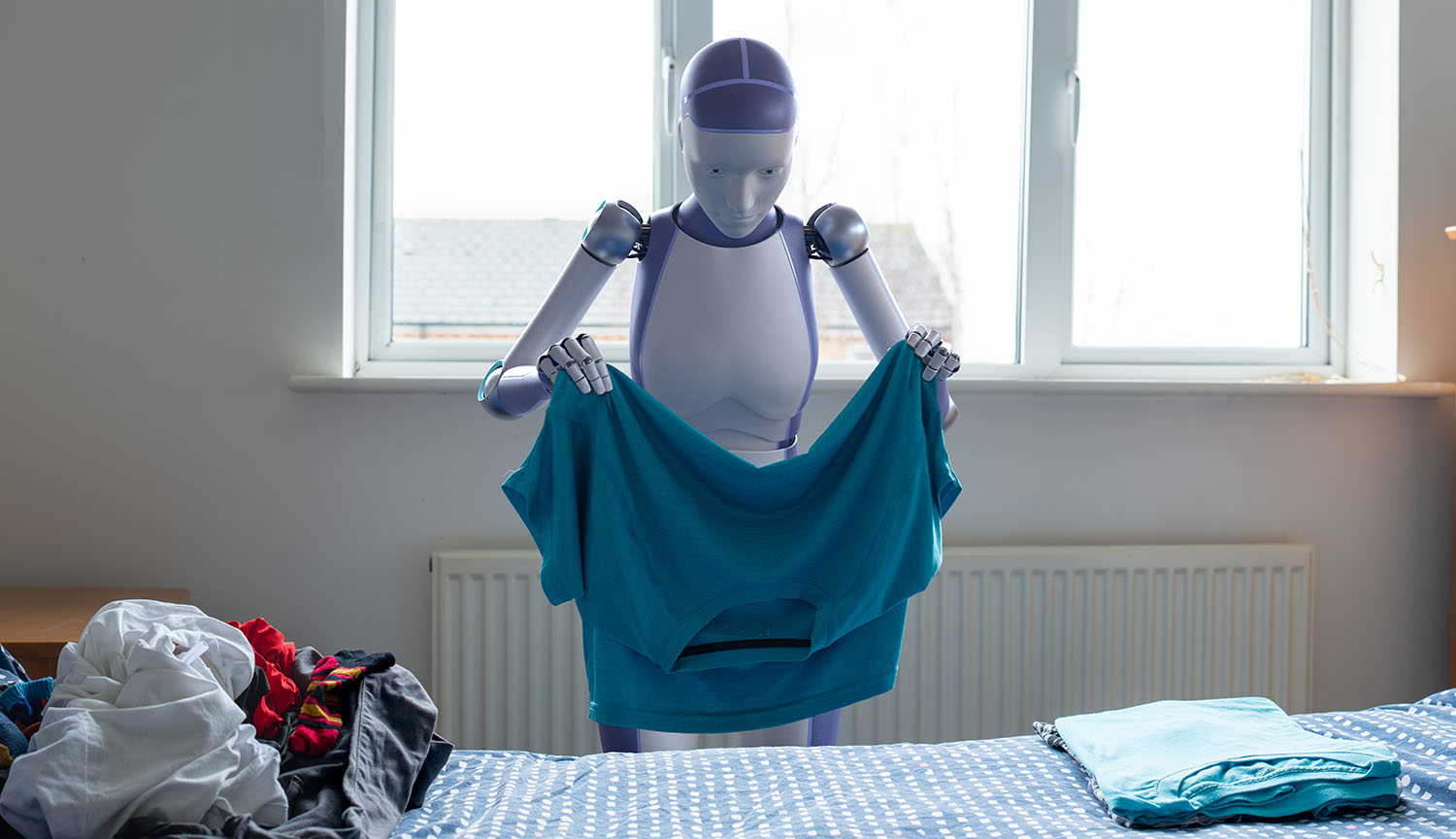
As more and more tasks are done by machines — especially now, with AI — people increasingly move from manual controller to supervisor. Designs must factor in human psychology or risk disastrous errors.
Support sound science and smart stories Help us make scientific knowledge accessible to all Donate today
Automation is ubiquitous, from the autopilot in airplanes to the cycles of the washing machine in your home. And with the modern advent of artificial intelligence, computers and machines are taking on ever more tasks.
That doesn’t necessarily mean human jobs go away, but they change — from doing the task itself to supervising the machine doing it, says Ron McLeod of Glasgow, Scotland. A retired specialist in the field of “human factors,” McLeod spent his career studying how human brains and automation work together — or fail to — in industrial settings like oil refinery control rooms. McLeod wrote a book, published in February 2026, on this topic: Transitioning to Autonomy: The Psychology of Human Supervisory Control.
At work, AI, robots and automation offer potential gains, but also limitations, as explained by Harvard University sociologists Ya-Wen Lei and Rachel Kim in the Annual Review of Sociology. AI tools, they note, might be opaque or just plain wrong, and human workers can’t always override their decisions, leaving employees disengaged and frustrated.
CREDIT: JAMES PROVOST (CC BY-ND)
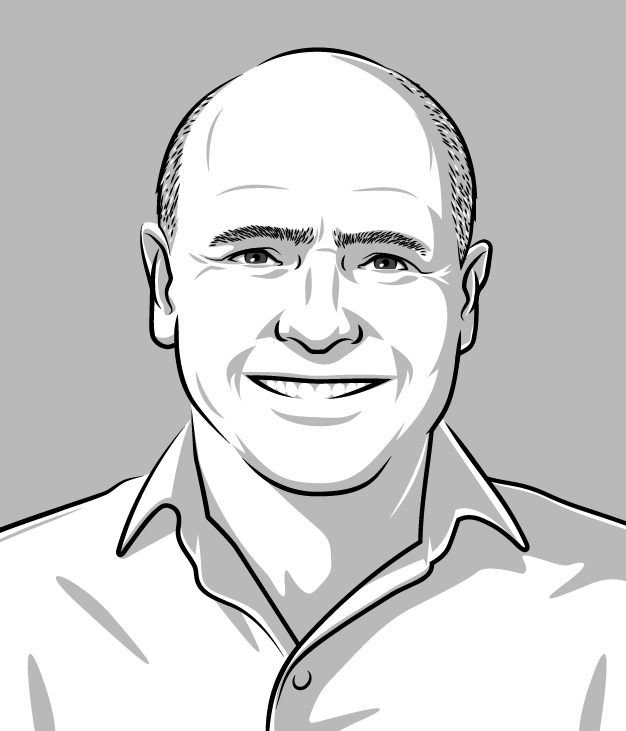
Human Factors specialist Ron McLeod
Glasgow, Scotland
Transitioning to supervision brings challenges both technological and psychological, McLeod posits. The human mind gets bored and distracted and isn’t always ready to spring into action if the machine needs help. But that’s only part of it. Systems, be they control rooms or cockpits or automatic sports referees, have to be designed to work effectively with humans, not to cut them out of the loop. And engineers and designers don’t necessarily understand how to balance the sensors and actions of automated systems with the needs and abilities of the people keeping watch.
When supervision of automation goes wrong, either in the moment or in the earlier design or training stages, the results can be disastrous.
KnowableMagazine spoke with McLeod about the past, present and future of automation supervision as it evolves in the AI age. This interview has been edited for length and clarity.
What inspired you to write this book?
Since I was an undergraduate student in the late 1970s, I’ve been interested in the applied discipline of human factors. It’s a combination of psychology, engineering, sociology and other sciences. We try to understand how humans perform in association with technical systems, and how we can support them best.
As part of this work, I was aware of supervisory control; I taught people about it as part of my role at Shell International. But the first time I really experienced that transition for myself was in 2022, when I took ownership of a car that could drive itself.
I got no training from the company. They gave me the keys, showed me how to use the indicators (or turn signals) and turn the radio on, but they told me absolutely nothing about the automation. It was only over the next few days, as I tried to study the manual and in-car support, that I realized how this option was supposed to work.
But I was still confused. There’s a motorway near my home, it’s 70 miles per hour, and there’s a tight bend where it goes down to 40. I know that’s coming — does the car know that’s coming? If it’s icy, is the car going to slow down? I don’t know. I have to be constantly paying attention, making these mental judgments: Do I intervene, or don’t I?
Ron McLeod was initially confounded by the dashboard indicators in his new electric-powered Lexus with advanced self-driving technology.CREDIT: IMAGE COURTESY OF LEXUS
The problem is that automation is really reliable, and there’s not much to do. The brain isn’t engaged in the task. And it’s difficult to pay attention, to acquire information, to understand what’s happening, if you’re not mentally engaged in the task.
That transition period into the supervisory role, which is mentally demanding, is what interests me. Manufacturers need to start getting this stuff right. That’s what drove me to write the book.
How does AI complicate the supervision of automation?
Automation may or may not include AI. AI certainly brings new elements.
There are four possible levels at which to automate something: acquiring information, making sense of information, making decisions and taking actions. AI can be applied to any of those. Generative AI, for example, is mainly in the domain of acquiring information.
System 1 is intuitive; it takes no effort. System 2 is slow, taking time to think things through. Shaw and Nave set up an AI that gave wrong answers, and more than half the time, people just accepted it. They suggest that when you’re using AI as a tool, there’s this third kind of thinking, and they call it “cognitive surrender” — where you just give up your thinking and let AI tell you the answer.
I’m most interested in cases where the automation and the person are controlling physical things in real time, which means the human has the chance to supervise and, if they think things are going a bit awry, to intervene. This is happening all over the place.
We’ve talked about self-driving cars. Where else might supervision of automation become an issue?
In industry and manufacturing. I spent 10 years working in oil and gas, and they have a long history of automating the control room.
And anything about the control of vehicles. Whether it’s cars or ships or planes, they’re all going through the same process.
Another domain is healthcare: for example, where AI will be helping radiologists and they may not have the confidence to overrule it. I recently met an anesthesiologist who said he was originally trained to manually monitor a patient’s life signs and apply anesthetics, but nowadays, it’s all automatic. He just sits there and monitors numbers.
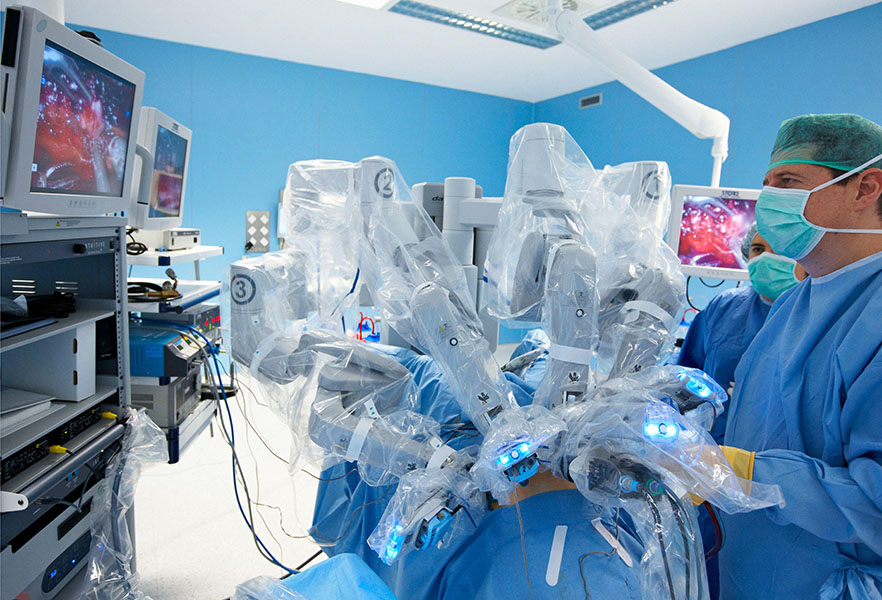
And in surgery, they’ll also be bringing in automation. Today, as I understand it, the surgeon still has control, but we’re not far away from the authority to perform an operation being given to some technology. And surgeons will have to go through the same transition, from manually performing surgery to being supervisors of the technology, with exactly the same issues as other cases of automation.
Robots already handle some surgical tasks, and they may do so more expansively soon, leading human surgeons to adapt to supervisory roles in which they must also know when to intervene.CREDIT: JAVIER LARREA / ALAMY STOCK PHOTO
What kind of history informs your understanding of the challenges in supervising automation in diverse industries?
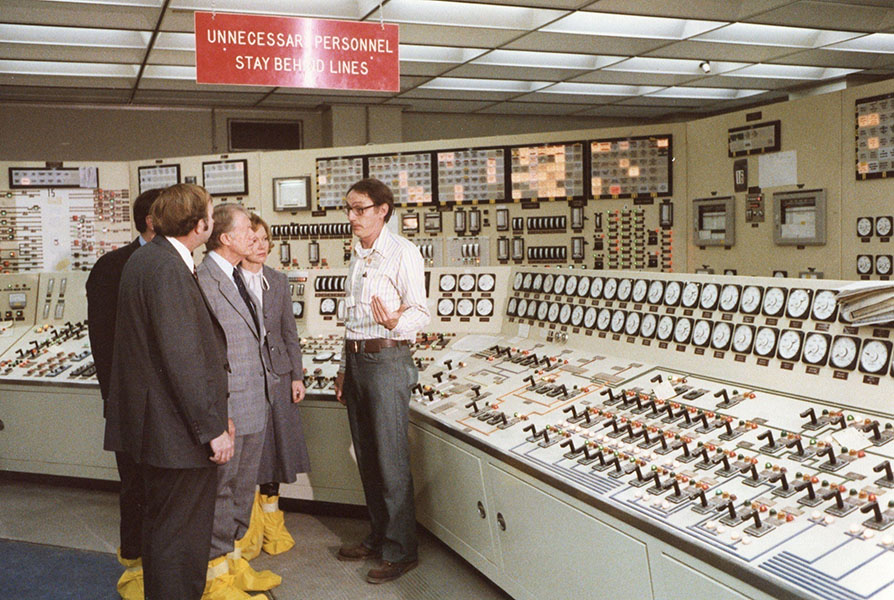
In 1979, with the Three Mile Island meltdown, that was the first time these human factors issues were really taken seriously.
This meltdown resulted from a series of failures in the plant’s cooling system, but a major contributor was a badly designed control room. A pressure-relief valve got stuck open, but the indicator in the control room showed it was closed. The operators had no indicator at all for the level of water covering the reactor core, because this level was not supposed to change.
With incomplete and inaccurate information, the controllers thought there was a risk of flooding the system, so they shut off the emergency water. The core became uncovered and overheated. Fortunately, no one was hurt.
If they’d done nothing, the plant would have safely shut down automatically. Initially, the operators were blamed, but it was later realized that the operators did perfectly logical things, based on the information they had. So that was a first real eye-opener about some of the psychological complexity.
Another example was the loss of the Air France Airbus that crashed as it was going from Rio de Janeiro to Paris in 2009. There were a number of human-factor problems, including cockpit design that didn’t give the pilots necessary information as well as ineffective pilot training and emergency protocols.
I found several cases like these. Again and again and again, when systems aren’t easy to use, things go wrong and people make mistakes. The company leaders that install automation assume the design will be easy based on common sense, but that isn’t always the case.
What other specific issues come up when people are supervising systems that are mostly automated?
One of the core issues is about the balance of authority between the people and the automation. Who’s actually in control?
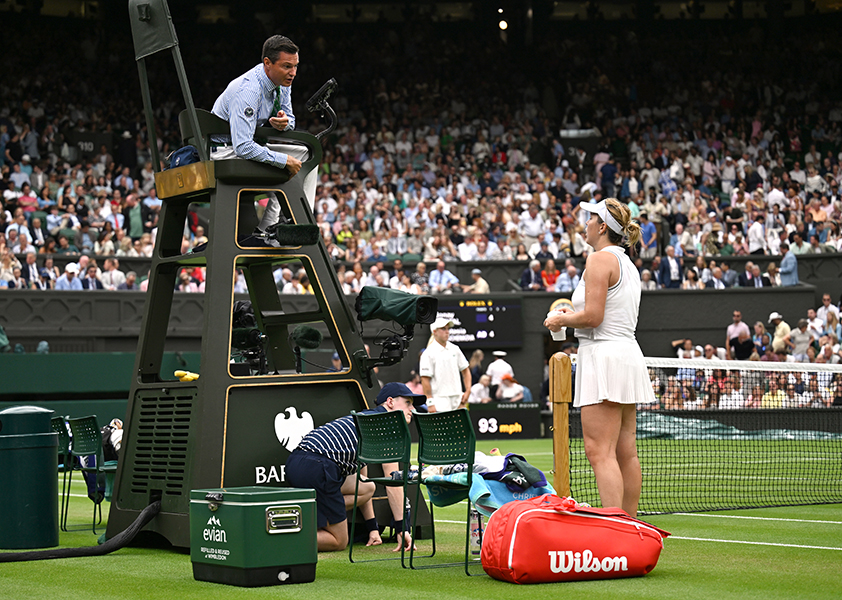
This came up during the tennis championships at Wimbledon in 2025. This was the first time Wimbledon gave full authority to an automated line-calling system, called Hawk-Eye, to decide if balls were “in” or “out.”
It was the fourth round of the ladies’ singles, Anastasia Pavlyuchenkova versus Sonay Kartal. Kartal hit a ball that was clearly out — but the automation did not call it as out. The players could see it, the umpires could see it, the whole world watching on TV could see it was out, but the umpire didn’t have the authority to overrule the automated system. The umpire made the pair replay the point, and Pavlyuchenkova lost that game, though she went on to win the match.
It turned out to be human error: The system had accidentally been turned off. The authorities were very embarrassed, and their knee-jerk reaction — rather than acknowledging that they were dealing with a complex system that relied on human behavior — was to give a blanket reassurance that they had made changes to prevent the same error. But another miscall happened the next day. They hadn’t recognized the right lesson: The system is not 100 percent reliable, so you still need the people.
Tennis player Anastasia Pavlyuchenkova talks to the match umpire while the automated system that miscalled an out is checked at Wimbledon 2025.CREDIT: VISIONHAUS VIA GETTY IMAGES
This is a common issue: Under what conditions is it allowable for humans to intervene with the automation, or for the automation to overrule humans? In the car, for example, when the autopilot is on, if I press my foot on the brake, it cuts out and I’m back in control. It lets me “over-vene.”
What should carmakers be doing to ease this transition for drivers?
So in my car, as soon as I take my hands off the wheel, I’m in that supervisory role. I need different information. I don’t need to know what gear I’m in; I don’t even need to know what speed I’m doing. I need to know, who’s in control, me or the car? And I need to know, what is the car thinking, can it see an upcoming threat?
At the very least, whether it’s driving a car, or working as doctor, or supervising a control room, I can’t think of any reason why there shouldn’t be an online training package that will take you through the basic information and put you through a few scenarios.
For cars specifically, the National Transportation Safety Board in the United States recently held a meeting following investigations of two fatal 2024 collisions in which Ford Mustang SUVs in partial automation mode hit vehicles that were stopped on the highway. In both cases, the Ford drivers were impaired or distracted from supervising the SUV’s automated driving. The NTSB recommended automakers install systems to reduce drivers becoming disengaged or complacent with automation.
These systems would be monitoring the human supervisors that are supposed to be overseeing the automated driving. There has been a lot of research and development put into products for tracking their state of alertness. And they do that, for example, by monitoring things like eye movements, head movements.
“Again and again and again, when systems aren’t easy to use, things go wrong and people make mistakes.”
— RON McLEOD
A related example is that for many years, the rail industry in some countries relied on a “vigilance” device to ensure the train driver has not fallen asleep, given how boring their task is. It consists of an audible alarm that sounds every 30 seconds. The driver is required to press a button to cancel the sound. Pretty low tech, but seemingly effective in making sure the driver is awake!
And not everyone is going to have the cognitive skills that you need to drive as a supervisor. Should there be something in the driving test about, do you have the mental capacity to make those judgments? I don’t know, but there should be more research there.
What else can be done to help human supervisors stay engaged and be effective in other automated situations?
The core issue here isn’t actually that difficult. It’s just about good design. If you realize you are changing people from a manual role to a supervisory role, then on the system end, you design the user interface based on understanding: What is the human’s task? What information do they need? How do we optimize that?
In the case of my car, the interface was designed for manual drivers, not for me as a supervisor. Part of the problem was that there was so much information on the screens, I didn’t know where to look. I didn’t know what the symbols meant. There was a lot of text, a lot of it abbreviated. Some of it, I couldn’t read it anyway, because it was in a location I couldn’t see.
Stay in the Know Sign up for the Knowable Magazine newsletter today
For the user, it’s important to consider training, incentive schemes, workload and competing tasks. Companies must ensure people who are supervising automation are trained so that they understand what is involved in their supervisory role: for example, what kinds of signs or information they should be looking for and where that information is, and what could happen if things went wrong.
And, for example, not having incentives that discourage the supervisor from making the best decisions. When I was working in oil and gas, there were a number of cases where people in control rooms had intervened to shut down or slow down production — which has a dollar value attached to it. And they’d actually done the right thing, but they were blamed for it.
When you add in the AI dimension, there are even more potential issues, like the cognitive surrender. We still need people — it’s just about how to make sure they’re supported. It isn’t rocket science; it’s just about recognizing the complexity of this new role.
Amber Dance is a Knowable Magazine contributor in the Los Angeles area. She’s not sure she trusts herself to supervise her car’s cruise control.
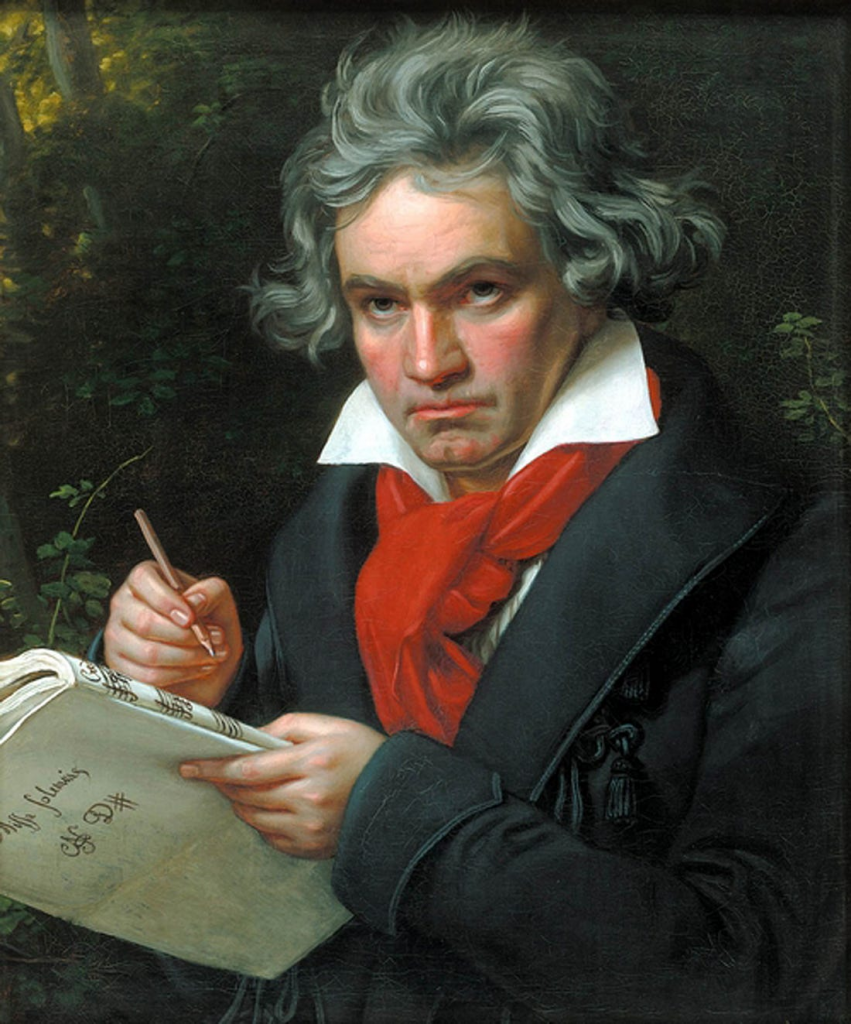
This week, we are going pretty far off the Rather ranch for our reason to smile. We decided to delve into the world of classical music. And what better piece of music to summon a smile than Ludwig van Beethoven’s most triumphant and jubilant masterpiece, his Symphony No. 9.
The Ninth, also known as “Ode to Joy,” was the first major symphony written with parts for singers — soloists and a chorus. Beethoven set his choral symphony to Friedrich Schiller’s poem “Ode to Joy,” with additional lyrics by the composer.
The symphony is more than an hour long. If you have the time, I encourage you to listen to the whole glorious thing. But it is the last movement that is arguably the most powerful and profound. The final crescendo makes one feel invincible.
Please enjoy Dutch conductor Andre Rieu and his orchestra performing the Beethoven classic in the Netherlands.
Beethoven composed The Ninth between 1822 and 1824, when he was almost completely deaf. His hearing loss was slow and agonizing, beginning in 1798 when he was just 28 years old. By that time, he was such an accomplished pianist and composer that he had developed a mastery of music theory and a highly trained ear. This allowed him to continue composing masterpieces for almost thirty more years.
When he wrote his ninth and final symphony, although he couldn’t hear the notes, he could feel them. Beethoven wrote about feeling the vibrations the notes made on the piano. And he could “hear” the music in his head.
“Ode to Joy,” usually performed in the original German, celebrates commonality, unity, and the triumph of joy over hardship. We leave you with an English translation.
Oh friends, no more of these sounds! Let us sing more cheerful songs, More full of joy! Joy! Joy, bright spark of divinity, Daughter of Elysium, Fire-inspired we tread, Thy sanctuary! Thy magic power reunites All that custom has divided; All men become brothers, Under the sway of thy gentle wings. Whoever has created an abiding friendship, Or has won a true and loving wife, All who can call at least one soul theirs, Join in our jubilation! Yes, and anyone who could not, Should steal away weeping from this gathering.
Consciousness, spirituality, biography, sexuality, androgyny, futurism, space, the arts, science, astrology, democracy, humor, books, movies and more


 It is early morning in Nîmes. I am waiting for coffee while looking out of the window of the small hotel where Susie and I are staying. The square below is waking up. There are a few cars, a woman walking a dog, a kid on a scooter, an old man smoking on a bench. Today, Susie and I plan to walk around the town for a bit, maybe visit a church, and maybe find the river that people say runs clean and cold. Later, I’ll play a show at the amphitheatre.