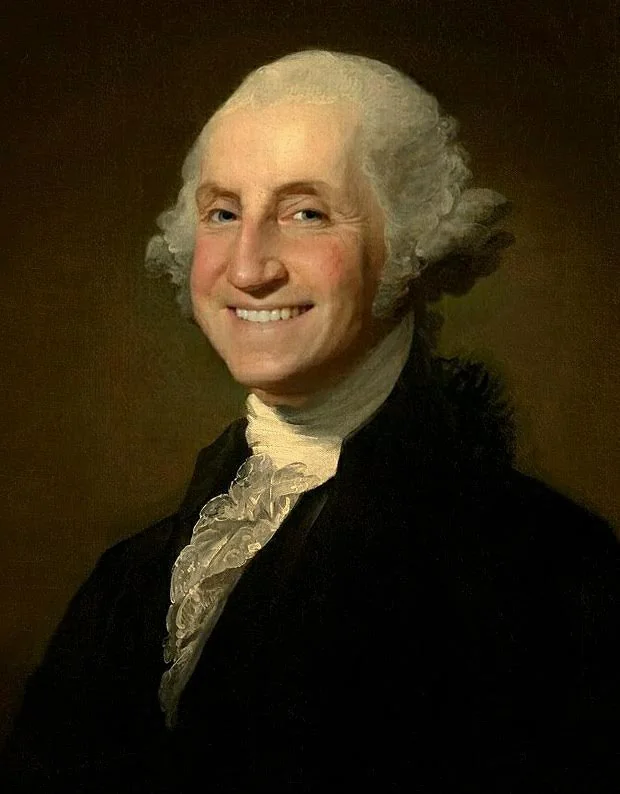
People always talk about how great it was that Washington only served two terms. I think he had to be convinced to run a second time.
ChatGPT:
Yes. By the end of his first term, George Washington was tired of politics and eager to retire to his home at Mount Vernon. He had intended to step down after four years.
Several factors persuaded him to seek a second term in 1792:
The young United States was deeply divided, especially between the supporters of Alexander Hamilton and Thomas Jefferson.
Many leaders feared that Washington’s retirement might destabilize the new government, which was still finding its footing under the Constitution.
Close advisers—including Hamilton and Jefferson, despite their disagreements—urged him to stay because they believed he was the one person trusted by nearly everyone.
Washington reluctantly agreed to run again and was unanimously reelected by the Electoral College.
By the end of his second term, however, he was determined to retire. In 1796 he declined to seek a third term and published his famous George Washington’s Farewell Address, in which he warned against excessive political partisanship and permanent foreign alliances.
So the short answer is yes: he had to be persuaded to run for a second term, and he did so more out of a sense of duty than personal ambition.
New Thinking Allowed with Jeffrey Mishlove Aug 5, 2026 James Tunney, LLM, is an Irish barrister who has lectured on legal matters throughout the world. He is a poet, a scholar, and author of The Mystery of the Trapped Light: Mystical Thoughts in the Dark Age of Scientism plus The Mystical Accord: Sutras to Suit Our Times, Lines for Spiritual Evolution. His website is http://www.jamestunney.com. In this video from 2021, he describes the many threads woven into the intense cultural neighborhood near the British Museum in London. The discussion centers on the literary and artistic endeavors of the Bloomsbury Group, the spiritualist movement and psychical research, publishing, esoteric and occult groups, and the scientistic effort to suppress the realm of spirit. The interview concludes with James’ poem about Russell Square. New Thinking Allowed host, Jeffrey Mishlove, PhD, is author of The Roots of Consciousness, Psi Development Systems, and The PK Man. Between 1986 and 2002 he hosted and co-produced the original Thinking Allowed public television series. He is the recipient of the only doctoral diploma in “Parapsychology” ever awarded by an accredited university (University of California, Berkeley, 1980). He is also the Grand Prize winner of the 2021 Bigelow Institute essay competition regarding the best evidence for survival of human consciousness after permanent bodily death. He is Co-Director of Parapsychology Education at the California Institute for Human Science. (Recorded on February 15, 2021)
I wonder if epidemiologists will ever take into account the state of mind of people with certain diseases like Louise Hay did in her book “Heal Your Body”.
Google AI:
Epidemiologists already study the connection between state of mind and disease, but through a different framework than Louise Hay’s.
While Louise Hay’s book Heal Your Body popularized the idea that specific emotional thoughts or metaphysical outlooks directly cause specific physical ailments, modern epidemiology relies on measurable data and biological pathways. However, science heavily investigates how mental state affects physical health through several established fields. [1]
How Science Tracks Mind and Body
Psychoneuroimmunology (PNI): This field studies how your brain, emotions, and nervous system directly impact your immune system. Epidemiologists use PNI data to track how conditions like chronic stress or depression elevate cortisol and trigger inflammation, which can make individuals more vulnerable to physical diseases. [1, 2, 3]
The Biopsychosocial Model: Modern public health operates heavily under the Biopsychosocial Model. Rather than looking strictly at biological pathogens, epidemiologists actively track psychological factors (like anxiety or trauma) and social factors (like isolation) to understand disease trends and recovery rates. [1, 2, 3, 4]
Social Epidemiology: This branch measures how population-level mental strains, such as systemic stress, discrimination, or financial insecurity, correlate with physical diseases like heart disease, strokes, and immune dysfunction. [1, 2]
The Key Difference
The core difference lies in causation vs. correlation. Louise Hay suggested a direct, predictable metaphysical link (e.g., “resentment causes cancer”). Epidemiologists do not look for spiritual or symbolic meanings behind an illness. Instead, they study mental health as a major risk factor or co-morbidity that chemically alters body chemistry, lowers immunity, and changes health behaviors, thereby influencing how diseases spread and progress. [1, 2]
“Group Dynamics OR Group-Centered Leadership: They’re not the same thing.”
Come join Mike in exploring the ideas of Edwin Rutsch, who created Empathy Circles; the Knights of the Round Table; Kurt Lewin, who coined the term “group dynamics”; the “leaderless” efforts of Occupy Wall Street; and the teachings of Thane as they pertain to Group-Centered leadership.
Find out how we can all become group-centered leaders in every aspect of our lives.
During the AIDS crisis, Mike Zonta founded the Metaphysical Alliance which sponsored “AIDS Survivors and Thrivers” forums. He is also co-founder and editor of the daily online newsletter called the Bathtub Bulletin, named after Archimedes “Eureka” moment while bathing.
Call In Information: +16699006833,,85882863391# US (San Jose) +13462487799,,85882863391# US (Houston) Dial by your location +1 669 900 6833 US (San Jose) +1 346 248 7799 US (Houston) +1 301 715 8592 US +1 312 626 6799 US (Chicago) +1 929 205 6099 US (New York) +1 253 215 8782 US
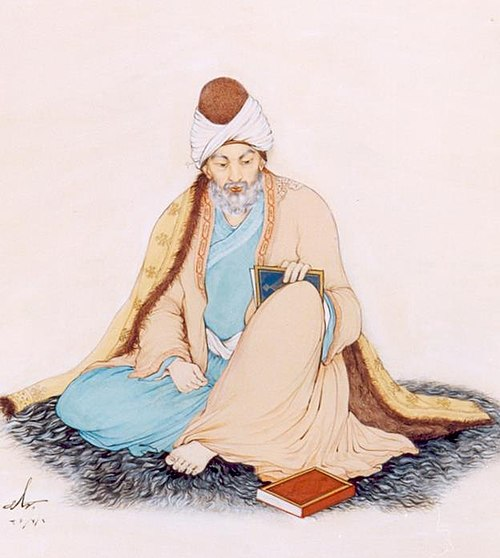
“Knock, And He’ll open the door Vanish, And He’ll make you shine like the sun Fall, And He’ll raise you to the heavens Become nothing, And He’ll turn you into everything.”
~ Rumi
Jalāl al-Dīn Muḥammad Rūmī, commonly known as Rumi, was a Sufi mystic, poet, and founder of the Islamic brotherhood known as the Mevlevi Order. His family hailed from Balkh. Rumi is an influential figure in Sufism, and his thought and works loom large both in Persian literature and mystic poetry in general. Wikipedia
Latin American Coming-Of-Age Celebration Dates Back To Triassic Period
Published: August 4, 2026 (TheOnion.com)
BOZEMAN, MT—Upending long-held beliefs about how the prehistoric reptiles commemorated a juvenile female’s transition into adulthood, new evidence published Thursday by researchers at Montana State University suggests that dinosaurs had quinceañeras. “As we examined fossilized footprints in a traditional waltz pattern at dig sites across multiple continents, it became clear that dinosaurs did in fact throw lavish 15th birthday parties for their female offspring, usually with friends and extended family members present,” said paleontologist Edwin Scanlon, who cited the prevalence of petrified las últimas muñecas in sedimentary rock layers and observed that the practice of holding a Catholic mass to mark the 15-year-old’s emergence into Mesozoic society appears to have been common among tyrannosaurs, diplodocuses, and other dinosaurs. “There is a quite well-preserved specimen of a young female iguanodon in a tiara and an elegant dress that features floral appliqué, sequins, and lace. She appears to have been dancing with her father at the moment they were both buried in volcanic ash 125 million years ago.” The discovery follows a study published last year that revealed how dinosaurs evolved the complex vocal cords necessary to chant Torah portions at their bar mitzvahs.
For those of you in your sixties and seventies and even beyond:
You may periodically get messages like the following, either subliminally or directly: “Your becoming is finished. What remains is arrangement. Tidy your affairs. Downsize. Distill your wisdom into digestible anecdotes for the young, who won’t listen anyway. Make your peace.”
I’m here to tell you that this is all a lie.
Here’s what’s true instead: You have more compost than anyone, 60 or 70 years of it. All of it has been breaking down in you this whole time, becoming the richest soil: every failure you metabolized, every love that ended oddly, every job that hollowed you out, every belief you had to abandon—plus all the glorious, gorgeous, generous stuff, too: the masterpieces you’ve crafted in the realms of art, intimacy, learning, and rigorous, vigorous living.
You’re not running out of material. You’re standing on a mountain of it.
And you now possess a power that younger people don’t have access to: You have less to lose.
The career or reputation or vocation you’ve been nurturing and protecting has already given you a lot of what it’s going to give you. The people whose approval you were angling for are either dead, irrelevant, or revealed as ordinary. The long apprenticeship in being palatable is over.
You are free.
Not free in some vague, inspirational-poster sense. Free in the specific, dangerous, operational sense of having little that you need to bargain away.
You can say the true thing at the dinner table. You can start the affair with the mandolin or the tide pools or the god you stopped believing in at 19.
You can become the disreputable elder who shows up with the wildest sign at the protest, who tells the family secret, who dyes their hair a color not found in nature, who falls in love at 74 with a preposterous intensity that embarrasses everyone but you.
Elders with nothing left to prove are a subversive force that our culture needs. That’s why the culture works hard to convince elders that they’re done.
I won’t insult you with the fantasy that your body isn’t changing. It is. Things hurt that didn’t used to. Maybe the dead have started to outnumber the living in your address book. You have looked directly at the fact of your ending, and you didn’t flinch.
Good. Now you know what a 25-year-old can’t know: that the ending is real, and therefore this exact Tuesday and this specific slant of light isn’t a rehearsal for something later. There is no later that isn’t also this. Mortality isn’t the thief of the present moment. It’s the reason the present moment is worth so much.
So no: The story isn’t over and you’re not in the epilogue. You’re in the part of the book where the protagonist has lost things they thought they needed and is finally, at long last, free to do ALL of what they came here to do.
You are still magnificently unfinished. You have simply been unfinished longer, and better, than everyone else.
The image is from the cover of a book by Eugene C. Bianchi: Elder Wisdom: Crafting Your Own Elderhood
Intellectual Deep Web May 29, 2020 James Hillman’s keynote lecture at a conference organized by the Center for Process Studies at Claremont University Center (1983). “The difficulty of philosophy is the expression of what is self-evident.” ― A. N. Whitehead The Archetypal Process: Self and Divine in Whitehead, Jung, and Hillman, ed. by David Ray Griffin: https://amzn.to/3gEa1PR
Vietnam War U.S. troops wading through a marsh in the Mekong delta, South Vietnam, 1967. Brittanica.com
By Mike Zonta, BB editor (and ChatGPT)
Me:
In Vietnam, is it true that soldiers would throw a grenade into the tents of officers who had “lost it”?
ChatGPT:
Yes. There is solid historical evidence that this occurred during the Vietnam War, although it was relatively uncommon and should not be thought of as a routine practice.
The phenomenon became known as “fragging,” from the use of fragmentation grenades.
Fragging referred to the deliberate killing or attempted killing of a superior officer or noncommissioned officer by one of his own troops. Although shootings and other methods were also used, fragmentation grenades were especially associated with the practice because they were difficult to trace to a specific individual.
Why did it happen?
Several factors converged during the later years of the war (roughly 1969–1972):
Some soldiers believed certain officers were recklessly endangering their men through poor leadership or aggressive tactics.
Morale in many units had deteriorated as the war became increasingly unpopular.
Many soldiers were draftees who did not want to be there.
Racial tensions, drug use, and declining discipline affected some units.
In some cases, merely threatening to frag an officer was enough to change that officer’s behavior.
How common was it?
The U.S. Army officially recorded hundreds of suspected fragging incidents during the Vietnam War, with dozens of deaths and many injuries. Historians caution, however, that not every reported “fragging” was actually an intentional attack on an officer; some incidents were accidents or could not be conclusively solved.
Most officers were never attacked by their own men. Many were respected and admired. Fragging became notorious because it represented a profound breakdown of trust and military discipline, not because it was the norm.
The broader significance
Many historians see fragging as a symptom of the Army’s deteriorating cohesion during the final years of the Vietnam War. Military sociologist Charles C. Moskos and others have argued that it reflected the collapse of confidence in leadership in some units, combined with the unique stresses of that conflict.
The U.S. military took the problem very seriously, and after Vietnam it implemented significant changes in leadership training, unit cohesion, and the transition to the all-volunteer force.
So the basic claim you’ve heard is true: there were documented cases in Vietnam where soldiers threw fragmentation grenades into the quarters or tents of officers they believed had “lost it” or were endangering the unit. But it was an exceptional and highly illegal act, not a standard or widespread practice across the Army.
Consciousness, spirituality, biography, sexuality, androgyny, futurism, space, the arts, science, astrology, democracy, humor, books, movies and more