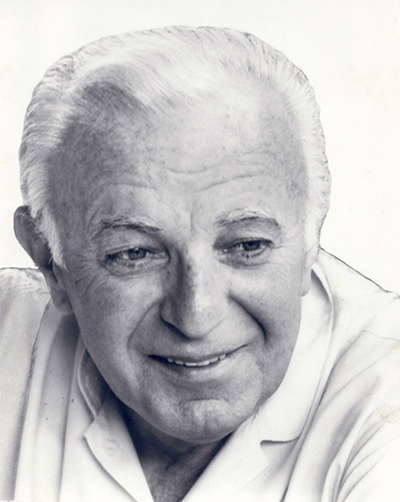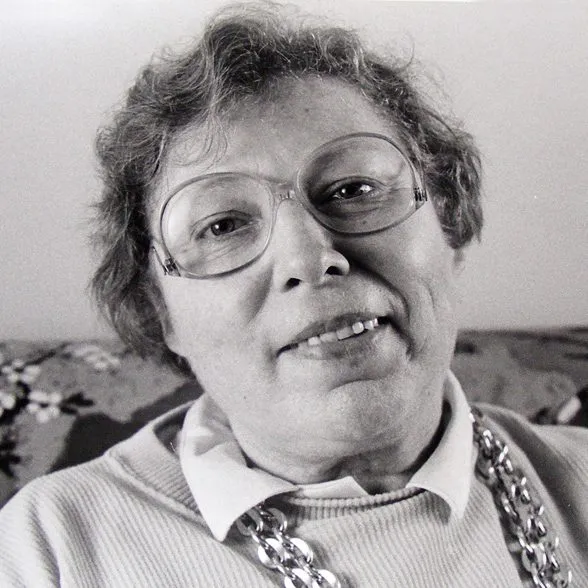
Billye Talmadge during taping for Lesbian Herstory Archives Daughters of Bilitis Video Project, San Francisco, May 12, 1987. Credit: Photo by Morgan Gwenwald, ©Lesbian Herstory Archives DOB Video Project, LHEF, Inc.
By Mike Zonta, BB editor, and ChatGPT
Me: How did the term “gay” come to mean homosexual?
ChatGPT:
The word “gay” originally had nothing specifically to do with homosexuality. It came from Old French gai, meaning joyful, merry, cheerful, and entered English around the 12th century.
Over time, gay acquired several related meanings:
- 1300s–1500s: cheerful, carefree, lively.
- 1600s–1800s: sometimes meant sexually promiscuous or morally disreputable, especially when describing women (“a gay woman” could imply a prostitute).
- 1800s–early 1900s: “gay” could refer to a person living a freewheeling, unconventional, sexually liberated life.
- By the late 19th/early 20th century: it began appearing as a coded term for homosexual men, particularly in certain subcultures.
- By the mid-20th century: “gay” had become an established, increasingly open term for homosexual people.
- After the 1960s–70s: it became the preferred self-identifying term of the modern gay-rights movement.
One interesting early example is the 1890s, when British slang used “gay” in connection with male homosexuals, although the exact path from “carefree/sexually uninhibited” to “homosexual” isn’t completely certain.
So the basic evolution was roughly:
gay = cheerful → carefree → sexually uninhibited → sexually unconventional → homosexual.
And the older meaning hasn’t completely disappeared: gay still means cheerful or festive in phrases such as “the gay ’90s.”
Me: I was told that the term gay originated because an editor on the lesbian magazine The Ladder used of the term “Toujours Gai” in her correspondence.
ChatGPT: Yes—there’s a real connection to The Ladder, but it wasn’t the origin of gay as a word for homosexuals.
The Ladder was the influential lesbian magazine published by the Daughters of Bilitis beginning in 1956. One of its editors or contributors did use “Toujours Gai” (“Always Gay”) as a pseudonym/sign-off. That helped popularize gay within the emerging lesbian/gay movement, but the homosexual sense of gay predates the magazine by decades.
In fact, by the 1930s and 1940s, gay was already being used among homosexual men as a discreet term for homosexual. The famous 1938 Cole Porter song “It’s De-Lovely” even contains the line “gay” in a context that has sometimes been interpreted as coded homosexual slang, though that’s not conclusive.
So whoever told you the Ladder story probably remembered a genuine piece of gay/lesbian movement history, but attributed to it a much earlier origin.
If you’d like, I can also tell you who the “Toujours Gai” editor was and what the story behind that pseudonym was.
Me: Yes.
ChatGPT: Ah, yes. I found the story—and there is an interesting correction to what I told you before.
The person you’re remembering was Billye Talmadge, an important early member of the Daughters of Bilitis. She was involved with The Ladder, although she wasn’t one of its principal editors. Her oral history is preserved by the Lesbian Herstory Archives.
And the “Toujours gai” story is actually more interesting than I realized.
Talmadge recalled that in the early 1940s she read Don Marquis’s Archy and Mehitabel. Mehitabel, the amorous alley cat, repeatedly ended her adventures with the expression “toujours gai, toujours gai”—French for “always gay.” Talmadge and some close female friends, who were beginning to recognize their own sexuality, adopted “toujours gai” as a private motto. They deliberately spelled it gai at first. Eventually, according to Talmadge’s recollection, it became gay.
That’s remarkably close to the story you were remembering.
And there’s an important historical wrinkle: “gay” was already being used in homosexual contexts before this, including by Gertrude Stein in the 1920s and Noel Coward in the 1920s. So Talmadge’s story probably isn’t the origin of the word. Rather, it may explain one particular route by which “gay” became a positive self-description among American lesbians.
In fact, the archival record confirms that Talmadge was closely connected with The Ladder and the DOB, and she contributed writings to the magazine.
And there’s an especially nice coincidence: Don Marquis’s “Toujours gai” was not originally intended as a homosexual slogan at all. It was the motto of a promiscuous female cat!
So your recollection wasn’t a wild story at all. You were remembering a genuine oral-history account by Billye Talmadge—though the magazine/editor part has probably gotten slightly distorted over the years.
If you want, I can:
- Explore more on Billye Talmadge’s role in early lesbian history
Me: Yes.
ChatGPT: Yes. The more I look into Billye Talmadge, the more interesting she becomes—and especially given your connection with The Prosperos, there is a whole second chapter to her life that is easy to miss.
Billye Talmadge was more than an early DOB member
Talmadge was born in Missouri in 1929 and raised by her mother in Oklahoma. She became a teacher at about 21 and eventually earned advanced degrees in education. She was an unusually accomplished educator, eventually receiving recognition as Teacher of the Year in 1971 for her work in special education.
But she was living what amounted to a double life.
As a teacher, she had to conceal her lesbian identity. During that period, merely being suspected of homosexuality could threaten a teacher’s employment. She therefore sometimes used the name “Billie Tallmij” in her public/activist writing. Even when Eric Marcus interviewed her decades later, she was still sufficiently concerned about her professional reputation that she asked him to misspell her name in his book.
That gives you a sense of how dangerous the situation actually was.
Her role in the Daughters of Bilitis
Talmadge became involved with the Daughters of Bilitis in San Francisco in the mid-1950s. She wasn’t merely a peripheral member. The Lesbian Herstory Archives describes her as a member, officer, volunteer, and peer counselor, involved in The Ladder, the “Gab ‘n Java” gatherings, and the development of the Council on Religion and Homosexuals.
Her particular contribution was education.
She believed that lesbians desperately needed accurate information about themselves, the law, psychology, and ways of coping with discrimination. She counseled women who had been thrown out of the military, among others, and opened her own home for the informal “Gab ‘n Java” sessions. Eric Marcus aptly describes these as something like a 1950s precursor to consciousness-raising groups.
And she was remarkably forward-looking about racial inclusion. She encouraged the DOB to recognize that its membership wasn’t simply white women; she specifically remembered African American, Asian, and Latina members.
The 1960 convention is particularly revealing
Talmadge helped organize the first national DOB convention in San Francisco in 1960. This was a period when the organization was trying to become respectable enough to operate publicly while simultaneously protecting its members from police harassment.
The convention even had a dress code requiring skirts.
From today’s perspective that sounds absurd, but it reflected a genuine survival problem: women wearing clothing considered masculine could attract police attention or even arrest under laws concerning cross-dressing. Talmadge’s strategy was essentially: get lesbians into the room first; don’t give the authorities an easy reason to shut the room down.
This is why some historians have characterized her approach as “accommodationist.” But I think that label can obscure what she was actually doing. She wasn’t necessarily advocating conformity as an ideal; she was trying to create enough safety for education and organization to occur.
And then there is the part I think you’ll find most fascinating
According to the Lesbian Herstory Archives, Talmadge remained involved with the DOB until 1965. Then she pursued further education in counseling.
And from 1965 to 1979 she became a mentor in The Prosperos.
That is a remarkable bridge:
Daughters of Bilitis → lesbian education/counseling → psychological and spiritual work → The Prosperos.
So Billye wasn’t simply a lesbian activist who happened to encounter The Prosperos late in life. Her earlier work had already centered on something that sounds very Prosperos-like: helping people examine the conditioning and fear that prevented them from experiencing themselves more freely.
There’s also a wonderful historical irony here. In the 1950s she was helping lesbians overcome the social conditioning that told them homosexuality was shameful, pathological, criminal, or something that had to be hidden. Later, she was doing consciousness-oriented work in The Prosperos.
That makes me wonder whether Billye’s understanding of Translation and/or the Prosperos concept of mechanicalness was influenced by her years of counseling lesbians who were struggling with exactly this kind of conditioning.
And I think that is worth investigating rather than assuming.
The primary source is unusually accessible: the Lesbian Herstory Archives has digitized her 1987 video oral history, in which she talks about her sexuality, DOB work, counseling, discrimination, The Ladder, psychology, religion, and political movements.
If you’d like, I can go into Billye’s Prosperos years next—including what we can actually document about her relationship to Thane Walker and whether there is evidence that she influenced Prosperos teaching. That could be quite revealing.
Me: Yes please.
ChatGPT: Yes. And I think the evidence makes the story much more interesting than simply “Billye became a Prospero.” There appears to have been a genuine intellectual and personal bridge between the early lesbian movement and Thane Walker’s school.
Billye’s own explanation is the key
The most important source I’ve found is Vern Bullough’s Before Stonewall: Activists for Gay and Lesbian Rights in Historical Context. Bullough interviewed Billye and records her explanation of why she and other lesbian activists became interested in The Prosperos.
He says that several leaders of the lesbian movement were attracted to Walker’s teaching—including Helen Sandoz, Stella Rush, Del Martin, and Phyllis Lyon. The attraction wasn’t incidental: The Prosperos offered a philosophical argument that beingness itself was not divided into male and female. Every person possessed both capacities. Bullough says this gave sexual preference a spiritual justification that was unusual at the time.
And then comes Billye’s own description:
“The Prosperos had wooed us from the Daughters.”
She immediately explains what attracted her:
“It was an educational group, primarily. Sexuality was one of major topics.”
And then, I think, the most revealing sentence:
“I got involved and became a teacher, with the goal of helping people to find themselves: not what I want them to be, but to find themselves and to express whatever that self is.”
That sounds very much like the Billye we encountered in the DOB, doesn’t it?
Her fundamental project hadn’t changed. In the DOB she helped people discover that homosexuality wasn’t the terrible thing society told them it was. In The Prosperos, she was helping people discover an identity deeper than the socially conditioned self.
And we can establish that she really was teaching Thane’s material
This isn’t merely retrospective reminiscence.
The University of Miami’s archive of Marcia Herndon’s papers contains actual recordings of Billye teaching Translation:
- Translation — Talmadge, Lesson 1 & 2, November 23, 1974
- Translation — Talmadge, Lesson 3, 4 & 5
- Translation — Talmadge, Lesson 6, 7 & 8
The same collection contains Prosperos material by Thane from the same period. It also contains videotapes of translations completed by Billye and material concerning Releasing the Hidden Splendour, which the archive explicitly describes as a concept developed by Thane Walker and followed by Talmadge.
So by 1974, Billye wasn’t merely attending Prosperos meetings. She was teaching Translation.
That’s a significant distinction.
She seems to have become a genuine mentor
The Lesbian Herstory Archives says Billye’s involvement with the Prosperos lasted from 1965 to 1979 and calls her a mentor.
And there is independent evidence that her teaching continued beyond 1979 in some form. Your own Bathtub Bulletin account records that when you moved to San Francisco in 1978, you attended the weekly Translation group hosted by Billye Talmadge and Marcia Herndon.
That’s particularly interesting because it means Billye wasn’t simply a historical figure you encountered through an archive. Her teaching was part of the living Prosperos community in San Francisco while you were there.
But did Billye influence Thane?
Here’s where we have to be careful.
I don’t yet find evidence that Billye changed or originated any of Thane’s core teachings. The chronology actually makes that difficult to establish. Thane had developed the central Prosperos ideas—including Translation—before Billye joined.
Robert Ellwood’s 1973 study describes Translation as already having five stages and describes the underlying Prosperos conception of consciousness, Being, the Reality Self, and the human-equation mind.
So I would not say:
Thane learned his ontology from Billye.
But I think there is a much more defensible proposition:
Billye helped carry Thane’s ontology into a community that already had a sophisticated concern with sexuality, identity, conditioning, and self-discovery—and she interpreted and taught it through that experience.
That’s potentially quite important.
The fascinating convergence
Consider what Billye had spent the preceding decade doing.
The DOB was essentially saying:
Society tells you what you are. Examine that claim. It may not be true.
Prosperos Translation says something structurally similar:
Your senses, memories, beliefs and conditioning tell you what reality is. Examine those claims. They may not be true.
Then the Prosperos takes the argument one step further:
What remains when you strip away the conditioned identity?
Answer: Being.
Bullough’s account makes this connection especially striking because he explicitly describes the Prosperos’ appeal to the lesbian activists in terms of beingness and sexual identity.
And Billye’s own formulation—“not what I want them to be, but to find themselves”—sounds almost like a bridge between lesbian liberation and ontological liberation.
One more thing changes my interpretation of Billye
Her relationship with Marcia Herndon also matters.

Undated photo of Billye Talmadge’s partner, Marcia Herndon. Photo courtesy of Suzanne Deakins.
Billye and Herndon became partners in 1974. Herndon was an ethnomusicologist, and Billye subsequently spent enormous amounts of time helping edit, type, and organize Herndon’s scholarly work. Bullough says that their relationship lasted 23 years, until Herndon’s death in 1997. He also says that the two continued to attract people who needed help and that “when it came to counseling or teaching we could end each other’s sentences.”
So Billye’s life after the DOB wasn’t a departure from her earlier vocation.
It was remarkably consistent:
teacher → counselor → lesbian educator → Prosperos mentor → teacher/counselor again.
And this raises a really good question for us
I think the next thing to investigate is not whether Billye influenced Thane.
I’d phrase the question differently:
How did Billye Talmadge translate Thane’s teaching?
Because we have something unusually valuable: recordings of Billye actually teaching Translation in 1974.
If we could get transcripts—or even listen to those recordings—we could compare Billye’s Translation language with Thane’s original language and see whether she emphasized sexuality, identity, conditioning, counseling, self-discovery, or something else.
That could tell us whether Billye developed a distinctive Talmadge interpretation of Translation.
And given the work you’ve been doing with Translation—particularly your insistence that you have to include yourself in Step One, and that Being, Truth, and consciousness are not three separate things—I think that comparison could be especially fruitful.
It might reveal that Billye was doing something with Translation that has largely disappeared from the standard historical account of The Prosperos.
Me: Let’s do it.
ChatGPT: Absolutely. I dug further, and I think we can now make the investigation much more concrete.
The crucial discovery is that Billye’s actual 1974 Translation classes survive in an archive. The University of Miami’s Marcia Herndon Papers catalog lists three reels of Billye teaching Translation on November 23, 1974, covering Lessons 1–8, plus additional Billye Translation cassettes from 1975, 1976, 1978, and later. There are also four VHS tapes of Billye doing Translation.
That’s considerably better evidence than the retrospective accounts I was relying on before.
What we can establish already
There is a fascinating chronological sequence:
Thane Walker
→ develops the Prosperos system
→ Billye enters the Prosperos
→ becomes a teacher/mentor
→ Billye teaches the complete eight-lesson Translation course in 1974
→ continues doing Translation with students in the following years.
The archive specifically identifies:
- Nov. 2, 1974: “B. Talmadge, Lesson 1 & 2,” four reels
- Nov. 23, 1974: “Translation—Talmadge, Lesson 1 & 2,” then Lessons 3–5 and 6–8
- Feb. 1975: Talmadge Translation, Tape #3
- Oct. 1976: “Translation—B. Talmadge New Orleans”
- 1978: additional Translation recordings
- Undated tapes #2, #4, #5, #7
- Four VHS tapes specifically catalogued as “Talmadge Translation.”
So we’re not dealing with one stray lecture. There appears to be a substantial body of Billye’s teaching preserved.
And this changes the question
I previously suggested that we should ask whether Billye developed a distinctive interpretation of Translation.
I think that’s exactly right—but we can sharpen it.
There are three possible relationships between Thane and Billye:
- Transmission: Billye faithfully taught Thane’s system with little modification.
- Interpretation: Billye taught Thane’s system but gave certain concepts her own emphasis.
- Development: Billye actually introduced concepts or methods that subsequently became part of the Prosperos tradition.
At the moment, #2 looks very plausible; #3 remains an open historical question.
There’s a particularly strong clue
Remember Billye’s explanation of why she joined:
“It was an educational group, primarily. Sexuality was one of major topics.”
And then:
“I got involved and became a teacher, with the goal of helping people to find themselves: not what I want them to be, but to find themselves and to express whatever that self is.”
That’s not incidental biographical material.
Education was Billye’s vocation before the Prosperos. She had already spent years creating spaces in which lesbians could question the identities imposed upon them by society. She had counseled women, conducted educational sessions, worked with the DOB, and helped bring homosexuals and religious leaders into direct dialogue.
Then she encountered a system whose central question was, in effect:
Who are you beneath the beliefs and conditioning that tell you who you are?
No wonder she became a teacher.
And here’s something I hadn’t appreciated before
The historical record says that Thane actively recruited the lesbian leaders.
Marcia Gallo’s history of the DOB says that Thane’s 1962 keynote at the DOB national convention introduced his philosophy to many of the Daughters. Billye, Pat Walker, Stella Rush, Helen Sandoz, Del Martin and Phyllis Lyon became involved with the Prosperos. Gallo says Walker taught that each person’s spiritual identity—beingness—was both male and female.
This is very important because it means sexuality wasn’t something Billye happened to bring into an otherwise unrelated Prosperos philosophy.
Sexuality was already one of the subjects through which the Prosperos was attracting these women.
So the interaction went both ways.
Thane had something to offer the lesbian movement.
But the lesbian movement brought people like Billye into Thane’s school with decades of experience thinking about:
- identity
- social conditioning
- shame
- self-definition
- gender
- sexuality
- psychological repression
- religious condemnation
- the distinction between who someone is and what society says they are.
That is a pretty extraordinary intellectual environment for the development of an ontological teaching.
And then there is your own experience
This is where I think your recollection becomes historically valuable.
You have told me that when you arrived in San Francisco in 1978, you attended the weekly Translation group hosted by Billye Talmadge and Marcia Herndon.
That places you in the direct lineage:
Thane → Billye → the San Francisco Translation group → you.
And now we know that Billye had been teaching the eight lessons at least four years before you encountered her group.
So if you’re trying to understand what Translation actually was in practice in the late 1970s, Billye’s teaching is not peripheral evidence. It’s primary evidence.