Intellectual Deep Web May 29, 2020 James Hillman’s keynote lecture at a conference organized by the Center for Process Studies at Claremont University Center (1983). “The difficulty of philosophy is the expression of what is self-evident.” ― A. N. Whitehead The Archetypal Process: Self and Divine in Whitehead, Jung, and Hillman, ed. by David Ray Griffin: https://amzn.to/3gEa1PR
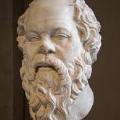
Socrates’ daemon (or daimonion) was his famous personal inner voice or “divine sign”. Unlike a malevolent demon, it acted as an infallible guide—always warning him against taking the wrong actions, such as making a speech or fleeing Athens. It never told him what to do, just what to avoid. [1, 2, 3]
Socrates referred to this phenomenon in Plato’s dialogues (like the Apology and Phaedrus) as an adjectival “divine something” rather than a specific god, and trusted it implicitly. It has been interpreted by philosophers and historians in various ways: [1, 2]
Conscience: A highly developed internal moral compass.
Intuition: Subconscious, rapid processing of situations.
Divine Guardian: An intermediary spirit connecting him to higher, divine wisdom. [1, 2, 3]
You can read more about its historical and philosophical context in this breakdown by TheCollector or review the exact references on Wikipedia. [1, 2]
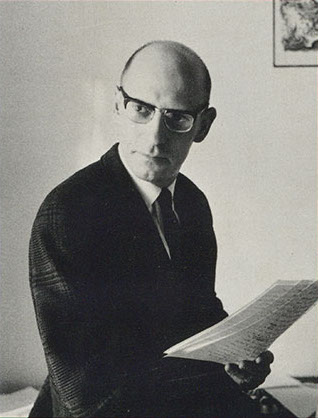
In English, this concept from Foucault is typically translated as: “The hospital… creates disease by means of the enclosed, pestilential domain that it constitutes.” [1]
This observation is found in his 1963 book, The Birth of the Clinic. Foucault argued that early hospitals—intended to protect and heal—actually spread and multiplied illness by enclosing sick people in concentrated environments. [1, 2]
Explore Foucault’s broader ideas on the history of medicine through this overview on Wikipedia or read a breakdown of the text on the University of North Carolina discussion page. [1]
The Medical Gaze (Le Regard Médical)
In The Birth of the Clinic, Michel Foucault introduces the “medical gaze.”
This concept describes a fundamental shift in how doctors look at patients. In the late 18th century, medicine stopped asking “What is the matter with you?” and started asking “Where does it hurt?”
The Patient as a Case: The medical gaze separates a patient’s body from their personal identity.
The Body as a Machine: Doctors began viewing patients as biological puzzles to be solved.
The Power of Knowledge: This gaze gives doctors absolute authority, turning the patient into a passive object.
The Spatialization of Disease: Illness was no longer seen as a abstract force, but as a localized problem hidden inside the flesh.
Carceral Institutions: Prisons and Asylums
Foucault saw the hospital as just one part of a larger network of institutions designed to control human bodies. He explored this in his other major works, including Madness and Civilization (1961) and Discipline and Punish (1975).
The Asylum: Mental illness was historically integrated into society. Foucault argues that the modern asylum was created to isolate the “mad” from the sane, defining sanity by what it excludes.
The Prison: Punishment shifted from public, physical torture to private, psychological discipline. The goal became “re-educating” the soul rather than breaking the body.
The Panopticon: Foucault popularized this prison design where inmates might always be watched from a central tower. Because prisoners never know when they are being watched, they control their own behavior.
Biopolitics: The Ultimate Goal
Ultimately, Foucault argues that hospitals, prisons, and schools all serve biopolitics—the state’s management of populations through public health, hygiene, and social order. These institutions do not just punish or cure; they train individuals to become docile, productive citizens.
Buridan’s donkey (or Buridan’s ass) is a philosophical thought experiment about a hypothetical donkey that is equally hungry and thirsty, placed exactly halfway between a pile of hay and a pail of water. Because the animal cannot rationally choose between the two equally good options, it starves and dies of thirst. Wikipedia
The dilemma illustrates the paralyzing effects of indecision and is used to critique theories of free will and moral determinism. If a purely rational agent requires a concrete, logical reason to make a choice, and all options are perfectly balanced, the agent is left paralyzed. Wikipedia +2
The Origins
Named after the 14th-century French philosopher Jean Buridan, the paradox was actually created by his critics to satirize his views on moral determinism. Buridan argued that a person faced with two equal choices should suspend judgment until circumstances change, as the will cannot break the deadlock
His critics pushed this idea to its extreme—arguing that, under this logic, a creature faced with identical choices would inevitably starve. Wikipedia +2
The roots of the concept go even further back:
Aristotle: Proposed an early version involving a man who is equally hungry and thirsty and stuck between food and drink.
Al-Ghazali: A 12th-century Persian philosopher used a similar story involving a man caught between two identical dates. Wikipedia +2
In Modern Context
Today, the concept is frequently applied to psychology, behavioral economics, and daily life to describe the phenomenon of “analysis paralysis.” When faced with too many equally attractive options (like identical breakfast cereals at the grocery store or multiple great job offers), people often become so overwhelmed trying to determine the absolute optimal choice that they make no decision at all. YouTube·In Search of Self +1
For a deeper dive into how this logical paradox translates to modern decision-making struggles and how it can be used to understand human psychology:
New Thinking Allowed with Jeffrey Mishlove Jun 29, 2026 Philosophy Mervat Nasser, MD, MPhil, FRCPsych, is a graduate of Cairo Medical School and fellow of the Royal College of Psychiatrists, London. She holds a Master’s degree in Philosophy and a doctorate in psychiatry from London University. She took an early retirement from her job as a consultant psychiatrist and senior lecturer at King’s College London in 2007 and returned to Egypt to pursue her dream of establishing the project of New Hermopolis. She is author of The Path to the New Hermopolis: The History, Philosophy, and Future of the City of Hermes. Her website is https://www.newhermopolis.org/ Here she points to the Egyptian Blue Lotus as a metaphor embodying the philosophy of hope. It is a beautiful flower that grows out of stagnant and muddy water. She notes that some of the most hopeful philosophers, psychotherapists, and poets emerged from the first half of the twentieth century, which was one of the darkest periods in human history. She expresses her appreciation for the work of Ernst Bloch, Walter Benjamin, Victor Frankl, Rainer Maria Rilke, Gene Gebser, Rudolf Steiner, and others. She explains how their work relates to ancient Hermetic philosophy and how it impacts her work with the community of New Hermopolis. New Thinking Allowed host, Jeffrey Mishlove, PhD, is author of The Roots of Consciousness, Psi Development Systems, and The PK Man. Between 1986 and 2002 he hosted and co-produced the original Thinking Allowed public television series. He is the recipient of the only doctoral diploma in “parapsychology” ever awarded by an accredited university (University of California, Berkeley, 1980). He is also the Grand Prize winner of the 2021 Bigelow Institute essay competition regarding the best evidence for survival of human consciousness after permanent bodily death. He is Co-Director of Parapsychology Education at the California Institute for Human Science. (Recorded on January 4, 2021)
Feb 8, 2025An Interview with Berkeley’s GRF Ferrari Subscribe to my newsletter if you want content updates, invitations to events, and to support my work: johnathanbi.com Transcript: https://www.johnathanbi.com/p/transcr… If you want a chance to attend my lectures and be kept up to date on all my content subscribe to my newsletter: greatbooks.io Companion lectures and interviews: