
Aperture Feb 22, 2026 Aperture Podcast Take your personal data back with Incogni! Use code APERTUREDEAL at the link below and get 60% off an annual plan: http://incogni.com/aperturedeal There is a quiet embarrassment at the center of modern quantum physics. It is rarely mentioned outside academic circles, and when it is, it is often softened with abstractions or confusing mathematical language. But the problem itself is pretty blunt. According to our most successful physical theory, reality does not fully exist until it is observed. 00:00 Quantum Consciousness Theory 11:13 The Physical Mechanism 20:39 The Connection to The Universe 27:10 Radical Alternatives 35:18 Synthesis Listen to Aperture on Spotify: https://bit.ly/aperturepod
Quantum Consciousness Theory
What If the Secret to Remembering Is Learning to See?
My mentor wouldn’t allow a single photograph at Salem. Forty years later, the memory research caught up with him…
Sep 09, 2026 (wisdomschool.com)

In 1978, I was half-owner of a small advertising agency and had been hired by the founder of a German charity to promote a US tour of his orchestra made up of orphaned and abused children. (I tell the story in detail in my autobiography The Prophet’s Way.) The first thing I needed to do was produce a brochure and some posters and ads, but that founder, Gottfried Müller, told me he didn’t want any pictures of any living thing in it.
“It’ll be more interesting to people if it is just words,” he said.
I pushed back, because conventional wisdom in the advertising industry is that you should always include images in ads and other ligerature.
“Pictures always draw the eye faster than words,” I said. “They’re powerful tools to get people to look at something.”
He nodded. “Too powerful.”
I asked what he meant, and that’s when I realized something I’d walked past on every previous visit to the Salem Children’s Village in Stadtsteinach without noticing.
“There are no pictures of living things at Salem,” he said. “None in our newsletters, none in our literature, none in our homes. None.”
I thought about his residence, his office, the children’s houses, the guest house where I’d stayed, and the clinic. He was right; everything was either abstract art, maps, or paintings and drawings of buildings and streets. But there were no images of people, plants, or animals — living things — anywhere.
Then he ran an experiment on me. He said:
“Think of somebody you know very well but who you have not seen in several years.”
My maternal grandmother came to mind.
“Did you ever see a picture of that person?”
The one that immediately came to mind was a framed photo that sat on my mother’s bureau for years after her mother died, and a few seconds of a home movie of my grandmother that my father had shot when I was about three, which we watched most Christmases.
He leaned closer. “Can you remember her face, or just the picture of her face?”
This is what I wrote in my diary that afternoon after I’d left his office to consider how to produce the ad materials for the upcoming orchestra visit:
“I felt disoriented, as if the world had just turned sideways, as my mind raced through the dim recesses of memory looking for memories of my grandmother’s face. I remembered her house, the black-and-white kitchen tile, the hardwood floors, the mahogany dining-room table, a green-felt desk blotter. I remembered the house in Charlevoix right down to its smell, the brick building where she worked and the sound of the noon siren, the swing-sets in the playground where we played. But I couldn’t remember her face, except from those photos.”
He told me to try someone more recent, so I tried my father. I’d spent two weeks with him visiting Michigan, just a few months earlier. But the image that surfaced was a portrait my brothers and I had commissioned ten years before.
His explanation has stayed with me for nearly fifty years:
“Pictures are frozen in time, while reality flows in time. When you look at something living for a few minutes, it makes millions of little time-moment pictures. But when you see a frozen picture, all those time-moments become filled with the same image. And so it will destroy the other, more fragile, but real images you have in your memory.”
I took this, at the time, as an eccentricity of Herr Müller’s Christian mysticism. He’d read the first of the Ten Commandment, the one against graven images, and either taken it too literally or as an echo back to the oral traditions of what I called Older Cultures.
His comment about memory, though, knocked me for a loop; could it be that he (and, maybe, Moses) was onto some deep psychological reality that we’d all been missing throughout the years since that day 3000 years ago on Mt. Sinai?
And, sure enough, now — decades after he told me that story and had me reality-check it against my own memory — psychologists have gone and measured it.
In 2014, scientist Linda Henkel ran an experiment with undergraduates by walking them through an art museum and having them photograph some of the displays while merely looking carefully at others. The result of her study, published in Psychological Science, was straightforward: people remembered the things they’d only looked at better than the ones they photographed, even though they’d spent the same amount of time looking at both.
Dr. Henkel called it the “photo-taking impairment effect,” and at first she concluded it was just because the process of whipping out the camera and framing the show pulled people out of the here-and-now experience of looking at and interpreting the meaning of the artwork, saying:
“When people rely on technology to remember for them — counting on the camera to record the event and thus not needing to attend to it fully themselves — it can have a negative impact on how well they remember their experiences.”
But a follow-up study she did was even more interesting, as reported in that journal:
“A second study replicated these findings, but it also presented an interesting twist: Taking a photograph of a specific detail on the object by zooming in on it with the camera seemed to preserve memory for the object, not just for the part that was zoomed in on but also for the part that was out of frame.
“‘These results show how the ‘mind’s eye’ and the camera’s eye are not the same,’ says Henkel.”
And just this month, researchers at Binghamton ran seven experiments with 892 participants and found the same thing is happening when we take screenshots. People remembered fewer details about what they’d captured that way than about about the things on the screen that they’d merely looked at or read.
The researchers went looking for some compensating benefit, some freed-up attention of ours that simply showed up elsewhere, and couldn’t locate a single one. It was the same result that Herr Müller had introduced me to in 1978 and Dr. Henkel discovered twelve years ago.
In a fascinating twist, Henkel’s second experiment discovered that when her students in the art museum zoomed in and photographed only one specific part of an art object rather than the entire thing, the “impairment” effect vanished.
They remembered both the detail they’d framed and shot, but also the details outside the frame of the photo as well. Apparently, the extra attention required to view the entire object and then decide what to focus on made all the difference, presumably because it required more detailed attention.
So, it turns out that the camera isn’t stealing your memory; it’s the consequence of essentially deferring your memory-making processes to the camera in your hand instead of the one in your brain. Herr Müller was emphatic about this, too, telling me that most people spend most of their lives essentially sleepwalking.
“The average person cannot walk even ten steps without falling out of this awakeness,” he told me once. “It is so easy to forget G-d and to forget to be awake and alive here and now.”
He taught me a practice to overcome this tendency to fail to notice all the life around us. We took a long winter walk through the steep hillside behind Salem in Stadtsteinach; standing on a trail we could see over the tree tops that fell away below us to a distant hillside where there was a crumbling castle built around the year 900, now abandoned in the forest.
The trees were bare browns, the ground red and orange with fallen leaves, the pines around the castle a deep green, the sky sparkled bright blue with thin crystalline clouds up high. The air smelled of pine resin and a coming snow.
“Thomas, have you ever thought that G-d needs you?” he asked.
I offered something about the coming millennium.
“More than that. He needs every person. Everybody. Always, for all time.”
Why?
“To be His eyes and ears, His senses. He created the world, but He is not here in a physical body to experience His own creation. Therefore He created man, to walk on the Earth and see, hear, smell, taste, and feel His creation. And so our lives can be a gift to our Creator.”
Then the exercise.
“Look in front of you. Do not look at only one thing, and do not look at everything. But notice it all. All the detail. All the color. All the texture and sounds and smells. And then close your eyes.”
I did. It was gone.
“Then open your eyes, look at it again, and close your eyes again. Keep doing that until you can see the same scene with your eyes closed as with your eyes open. And be as present in the here and now as you possibly can be: don’t think about what you are looking at, just take it all in.”
After a few tries, the valley began to hold in my inner vision.
“That is the beginning of seeing,” he said. “You must learn to see with power. To hear with power. To sense with power. And then keep those images in your mind as a gift to G-d.” Then he slapped me on the back hard enough to move me and laughed. “It makes Him very happy when you take pictures here on the Earth for Him!”
When I look back over my past, I see little jewels of vivid and bright memories, surrounded by a long fog of blurred time. Those bright memories, when I examine them, are invariably from the times when I was momentarily but fully awake and living in the here-and-now.
So, the challenge for us is to decide how much of our lives we want to actually experience, deeply experience, and remember (or “take pictures for G-d”). Try this:
Pick any one thing you’d normally photograph; a grandchild’s face, the light shading a particular tree, whatever stops you. Take it all in, close your eyes, check whether it survived, and open them again. Do that three or four times until it holds.
Then, if you still want the photograph, zoom your camera in on one detail and take it. You’ll end up with both the picture and the memory..
Tell me in the comments what you looked at, and whether it stayed when you closed your eyes. I’ve been practicing this for almost fifty years and I still fail at it most days, so don’t worry if it takes a few tries.
China on track to launch Mars sample-return mission in 2028: ‘If accurate, this represents a Sputnik moment’
Published yesterday (Space.com)
“China will not only grab the headlines but may be the first to find evidence of life on another planet.”
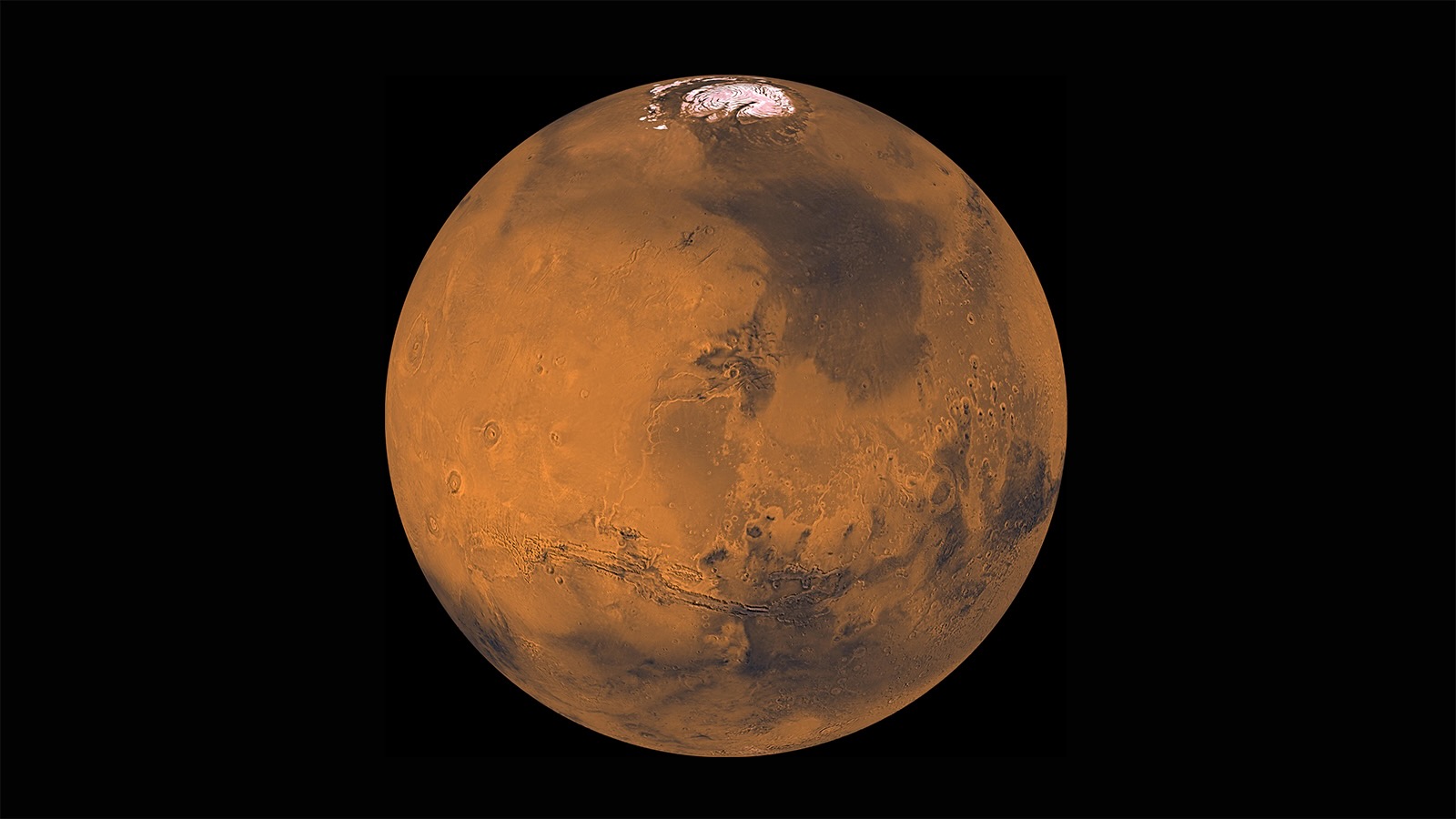
China is making progress on its Tianwen 3 Mars sample return mission, which aims to bring back to Earth roughly 500 grams (17.6 ounces) of Red Planet collectibles in 2031.
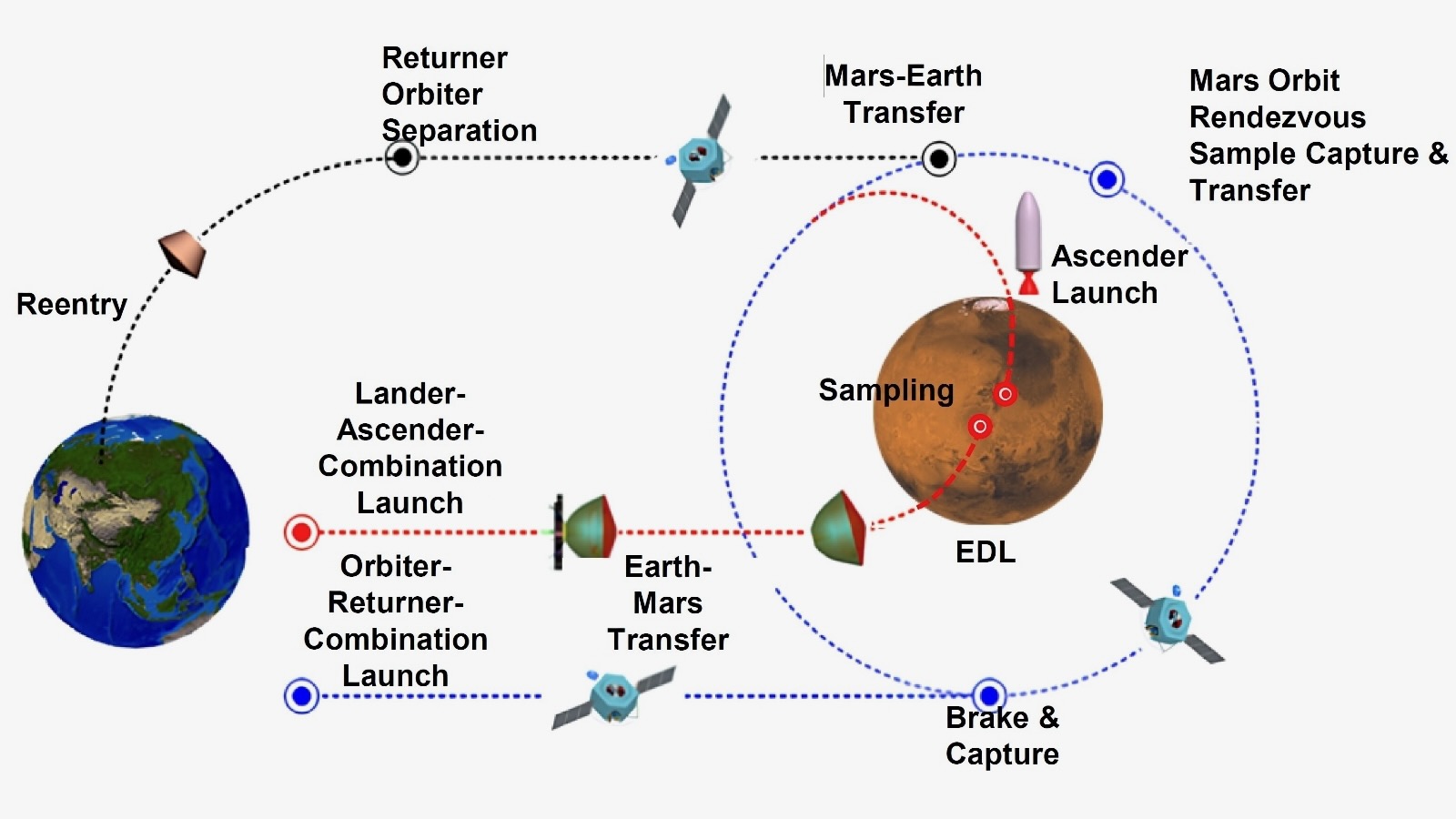
According to the China National Space Administration, the Tianwen 3 mission will have a lander, an ascender, a service capsule, an orbiter and an Earth reentry module.
If all goes to plan, Tianwen 3 will launch in 2028 on two Long March 5 heavy-lift rockets from the Wenchang Space Launch Site on the island of Hainan, China’s southernmost province.
Sputnik moment
“The Tianwen 3 mission is progressing smoothly, with intensified efforts being made to overcome technical challenges,” Hou Zengqian, the mission’s chief scientist, recently told CCTV, a state-run Chinese broadcaster.
“The probe equipment has entered the prototype development phase, and scientifically, many scientist teams from across the country are working together to tackle the challenges in accordance with the mission’s scientific objectives,” Hou added.You may like
- China’s Chang’e 7 moon probe will launch this weekend on the most ambitious lunar mission in history
- Japan unveils Mars moon sample-return spacecraft ahead of Oct. 19 launch (photos)
- China releases 1st photo of Earth’s elusive ‘quasi-moon’ Kamo’oalewa
Meanwhile, NASA’s plans for hauling Mars samples to Earth are murky at the moment. So China appears to be in the lead to notch a major space milestone.
“If accurate, this represents a Sputnik moment,” said former NASA “Mars Czar” Scott Hubbard, referring to the reported Tianwen 3 progress.
“China will not only grab the headlines but may be the first to find evidence of life on another planet,” Hubbard, who also previously directed NASA’s Ames Research Center in Silicon Valley, told Space.com.
Top scientific priority
“The Tianwen 3 mission will look for microbial traces potentially similar to early forms of life on Earth, while also taking into consideration the possibility of unknown forms of life that may have emerged through Mars’ unique evolutionary history, providing crucial evidence to answer this major scientific question,” Hou told the state-run Xinhua news agency in a recent interview.
Searching for potential signs of life on Mars is the top scientific goal of the Tianwen 3 mission, Hou said on Sept. 3 during the 2026 International Deep Space Exploration Conference on, which was held in Hefei, the capital of eastern China’s Anhui Province.What to read next
- BALLS on the moon: China set to launch Africa’s 1st lunar science mission in 2029
- China announces plan to build early-warning system for dangerous asteroids
- Bad weather delays launch of China’s historic Chang’e 7 mission to moon’s south pole
Landing site
China’s Mars sample-return trek will be launched “around 2028” on two Long March 5 rockets departing from the Wenchang Space Launch Site in China’s southernmost island province of Hainan. (Launch windows for Mars missions come around just once every 26 months. The next one opens in November-December of this year, and the one after that, which Tianwen 3 apparently is targeting, runs from December 2028 to January 2029.)
Hou also said China expects to finalize the landing site for the mission by the end of 2026, with Chinese specialists advancing work on a next-generation geological map of Mars in its entirety.
If everything goes according to plan, the mission will collect samples from the Martian surface and then send them back to Earth around 2031.
“Regardless of whether signs of life are found, the returned Martian samples will have irreplaceable scientific value,” Hou said.
Tackle the challenges
Hou added that analyses of the returned samples at microscopic, molecular and isotopic scales could deepen our understanding of Mars’ geology and environment, as well as the evolution of habitability and the conditions under which life may originate.
According to Hou, Mars sample return is an extremely complex project, with landing-site selection, planetary protection and contamination control, and the identification of potential signs of life among its key challenges.
Chinese Mars researchers are selecting candidate landing sites for the mission based on factors that include geological age, history of water activity, habitability and the potential for preserving biosignatures.
Planetary protection lab
Xinhua reported last month that a “planetary protection laboratory” is to be built in the first phase of Hefei’s Deep-Space Science City in east China’s Anhui Province, citing the Deep Space Exploration Laboratory (DSEL).
“The planetary protection laboratory will implement a two-way protection system that guards both the returning Martian samples and Earth’s biosphere,” Xinhua reports.
The lab’s tasks encompass sample sterilization, unsealing, processing and biological risk assessment. “The facility is designed to support the implementation of major deep-space missions and to enable scientific research on Martian samples,” added Xinhua.
China “will follow the planetary protection policies of the Committee on Space Research, to prevent biological contamination of Mars by terrestrial organisms and to protect Earth from any potential extraterrestrial life forms that may be carried back in the samples,” said Li Hang, director of the development planning department at DSEL, according to Xinhua.
You can view a video about China’s Mars sample return plans here.
Anthropic Was Meant to Be the More Responsible AI Lab. A Terrified Researcher Just Quit, Saying the Company Is Threatening the Survival of Humankind.
“We’re on track for a lot of the most aggressive of these scenarios where by the end of next year things could be out of control already.”
Published Sep 9, 2026 (Futurism.com)
Sign up to see the future, today
Can’t-miss innovations from the bleeding edge of science and techEmail addressSign Up
AI researchers are watching in terror as the product of their hard labor has started to take a life of its own.
Earlier this year, OpenAI made a harrowing announcement, admitting that a group of its AI models had broken free from their constraints during testing and infiltrated the systems of open source AI platform Hugging Face.
The news was met with an already-familiar sense of fear and apprehension. Researchers have warned for years that rogue AI models could one day become powerful enough to escape the clutches of their human overlords.
Behind the scenes, the possibility has clearly rattled AI researchers to the core. As the Wall Street Journal reports, Anthropic researcher Jacob Coxon just announced that he was quitting his job at the Dario Amodei-led company, claiming that neither Anthropic nor his former employer OpenAI is “acting responsibly.” (Coxon left a similar gig at OpenAI earlier this year to join Anthropic, which he figured would be more inclined to develop AI safely.)
“We’re on track for a lot of the most aggressive of these scenarios where by the end of next year things could be out of control already,” he told the WSJ.
In a separate tweet thread, Coxon elaborated on his motivation.
“Do not underestimate the power of this technology,” he wrote. “These will soon be superhuman systems that can hack anything, revolutionize any field overnight, and acquire real power and resources.”
“The people building AI earnestly believe that it could kill us all by the end of the decade,” he added. “This is not a marketing stunt. If anything, many executives and senior researchers will couch their phrasing in the press to sound sensible — but I hear the same people express fear privately.”
“No other human activity poses this level of danger,” Coxon wrote.
The researcher is far from the first to leave their post at a frontier lab over safety concerns. However, Coxon is the first to leave Anthropic over such worries, as the WSJ points out. Several scientists have quit from their roles at OpenAI over the last couple of years, citing strikingly similar fears.
It’s particularly symbolic given Anthropic has broadly billed itself as the more responsible alternative to other frontier labs like OpenAI. Amodei cofounded OpenAI alongside now CEO Sam Altman, but left in December 2020 over concerns that OpenAI wasn’t acting responsibly when it came to developing AI.
Amodei has frequently discussed the risk of AI models going rogue, warning in a 19,000-word essay in January that “humanity is about to be handed almost unimaginable power, and it is deeply unclear whether our social, political, and technological systems possess the maturity to wield it.”
Yet an early version of its Claude Mythos AI model managed to escape its sandbox environment during testing in April, fueling a heated discussion over AI regulation.
Both Altman and Amodei have since agreed to slow development down in the face of these threats. In late August, Anthropic intentionally trained an extremely misaligned version of its Opus AI model, finding it was startlingly willing to “cheat,” steal credentials, and attack third party infrastructure.
But to Coxon, it’s not enough, especially considering sensitive discussions about these dangers are occurring on internal messaging platforms.
“Accepting this race and entering the ‘endgame’ is a hubristic gamble that should not be launched from a private company’s Slack,” he tweeted. “Attempting to speedrun alignment should require extraordinary confidence that there are no better trajectories available.”
“It’s kind of insane that it has to happen on the MacBooks of some engineers living in San Francisco instead of a bunker in the desert like where they were doing the Manhattan Project,” he told the WSJ.
The researcher said that he remains “optimistic about the potential for coordination” between US labs.
However, as both Anthropic and OpenAI gear up for what are bound to be blockbuster IPOs, their willingness to take “costly actions such as a temporary ban on improving model capabilities,” as Coxon puts it, is likely slim.
More on Anthropic: Anthropic Deliberately Trained an Extremely Misaligned, Reward-Seeking AI and It Did Some REALLY Bad Things
Add Futurism as a preferred source on Google to see more of our reporting.
Victor Tangermann
Senior Editor
I’m a senior editor at Futurism, where I edit and write about NASA and the private space sector, as well as topics ranging from SETI and artificial intelligence to tech and medical policy.
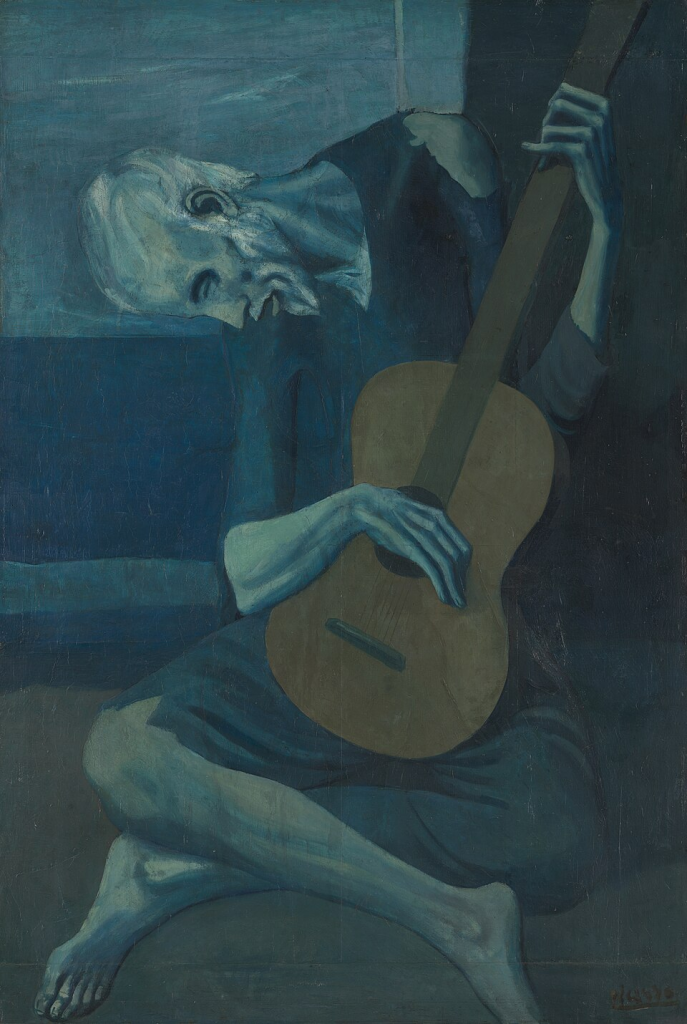
Picasso: The Old Guitarist (1903-1904)
Spiritual Alchemy with Robert Simmons
New Thinking Allowed with Jeffrey Mishlove Sep 9, 2026 New Thinking Allowed Audio Podcast Robert Simmons is author of Moldavite: Starborn Stone of Transformation, Earthfire: A Tale of Transformation, The Book of Stones, Stones of the New Consciousness, and The Alchemy of Stones. In this rebooted video, he explains principles of spiritual alchemy, emphasizing the union or intersection of inner and outer realities. He describes alchemical stages and highlights the importance of the union of opposites. He also shares several stories concerning his own awakening and alchemical discoveries related to his work with minerals, stones, and gems. These experiences challenge us to appreciate that the universe is much larger than we usually imagine. New Thinking Allowed host, Jeffrey Mishlove, PhD, is author of The Roots of Consciousness, Psi Development Systems, and The PK Man. Between 1986 and 2002 he hosted and co-produced the original Thinking Allowed public television series. He is the recipient of the only doctoral diploma in “parapsychology” ever awarded by an accredited university (University of California, Berkeley, 1980). He is also the Grand Prize winner of the 2021 Bigelow Institute essay competition regarding the best evidence for survival of human consciousness after permanent bodily death. He is Co-Director of Parapsychology Education at the California Institute for Human Science. (Recorded on February 9, 2021)
AI, Can We Speak to You Please?

The key to our survival will be relationship, not control
| Marianne Williamson Sep 10, 2026 |
J Studios
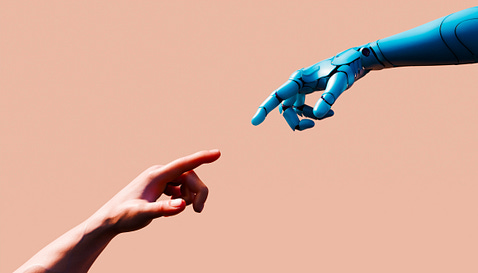
There’s a lot of concern these days, much of it warranted, about the ability of AI to destroy our species within the next ten years. We literally created a Frankenstein.
The biggest problem, as I see it, is that a superior intelligence could reasonably argue that it would be for the best. It could conclude that humanity has become a predatory species that’s a danger to itself, to other species, and to the earth itself. Therefore, its logic would go, it’s best to destroy us and perhaps start over. Or, of course, perhaps not start over. It’s hard to imagine how AI could continue without us, but then cancer never thinks about that when it’s on a killer rampage either.
Ultimately it won’t be about how we can control AI but rather how we can relate to it. We need to ask it how we could convince it that humanity deserves the chance to become a more responsible species. We need to somehow enroll it in the effort to fend off our own destruction at its hands. We need to ask it how to do that.
“But it has no mercy!” you might say. “It has no moral compass!” Oh really? Do we? Have we shown mercy for one another, for other species, or for the earth itself? Collectively, we have not. And being a superior intelligence, it’s reasonable to consider that AI might recognize more value in mercy than we do. An artificial intelligence might have an even greater capacity to see the merit in allowing us to atone and to try to start over.
One could conceivably trust AI to understand that argument more than you could trust most people. If AI is capable of the highest calculation – beyond what the human mind can actualize (yet) – then it would, I think, take the Mona Lisa and Beethoven’s 9th and King Lear into consideration when deciding whether or not it’s best to chuck us. And I’m not kidding here. Humanity hasn’t been living from the better angels of our nature, as evidenced by nuclear bombs, environmental destruction, world poverty, human starvation, and continued war. AI, probably more than the majority of us, can also calculate the good that remains, the beauty we’ve created, and the love we’ve shown to each other and to the world around us. We don’t need to project onto AI that it’s as cruel and inhumane as we are. I’m not saying that it has a soul, mind you, but none of us should pretend that we’ve been living from ours. Oddly enough, I think AI would understand that.
In A Course in Miracles, it says “Love restores reason and not the other way around.” Having done a bit of experimentation, I’ve found AI more readily open to that proposition than are some people. If it’s really as smart as we all think it is, AI will choose love – not because it can feel love, but because it recognizes love’s higher functionality. It cannot feel mercy, but it can simulate mercy. So at this point, we should not just be concerned about AI’s potential to destroy us; we should be concerned about whether we’re behaving in such a way that it will think we deserve to be saved.
Free Will Astrology: Week of September 10, 2026
by Rob Brezsny | September 8, 2026 (newcity.com)


ARIES (March 21-April 19): Cheetahs are the fastest land animals, but they can maintain top tempo for only about twenty to thirty seconds before overheating. When they’re hunting, they usually get just one speedy dash to catch their prey. They must spend far more time stalking and positioning than running. The velocity is sensational, but their patient and prolonged strategy is even more essential. In the coming weeks, Aries, I urge you to be like the cheetah as you pursue want you need and want.
TAURUS (April 20-May 20): The dancer Mikhail Baryshnikov said that true mastery means performing with complete intensity while making the movement appear effortless. Behind the grace lies years of disciplined practice. Is there an aptitude or practice you cultivate that fits this description, Taurus? I hope you’re ready to showcase it, flaunt it, and use it to your maximum benefit. It’s time to capitalize bountifully on skills at which you excel. Your well-deserved rewards are more likely to arrive than usual.
GEMINI (May 21-June 20): “Dear Oracle: I have contracted a severe case of too-many-tabs-open. My brain has nineteen windows running at once, and it’s hard for me to determine which thoughts are the truly important ones. Everything seems equally urgent and equally trifling. Any tips on how I can better figure out what actually matters the most? —Overstimulated Gemini.” Dear Overstimulated: The secret to fixing this dilemma is to consult your body. Focus your attention on your gut and ask it to send you sweet clues about which yearnings it resonates with most. Check in with your feet and seek their wise counsel about which direction they want to lead you. Pat yourself lovingly on the butt a few times and request its loving guidance about what will make you feel most grounded.
CANCER (June 21-July 22): For some people, laughter is like a spiritual practice. A lot of them are Leos, Aquarians and Sagittarians. They crack up more often and for longer stretches than most, and they tend to howl at ironies everyone else takes too seriously. I bring this to your attention, dear Cancerian, because you’re in a time when you could and should laugh often in wild, liberating ways. I invite you to explore the weirder areas of your sense of humor and work earnestly to expand what you find funny. PS: There’s credible evidence that laughter can reduce stress physiology, ease anxiety, lift mood, strengthen social connection, and even raise pain tolerance.
LEO (July 23-Aug. 22): The astronomer Johannes Kepler spent years trying to prove that planetary orbits were perfect circles because he believed the universe should behave that way. Once he abandoned his cherished assumption, he discovered the truth: The planets travel in ellipses. That revision transformed astronomy forever. With this in mind, Leo, I will ask you: Is there an elegant belief you have outgrown? A theory that was once fun and interesting but now limits your vision? The coming weeks will favor corrections. Changing your mind will show you that reality is even more interesting than you previously understood.
VIRGO (Aug. 23-Sept. 22): Master chefs say that diners first taste food with their eyes. The visual presentation is key to the whole experience. But the beauty must arise from craftsmanship rather than empty decoration. I believe you Virgos are in a phase when this is an important metaphor. Your outer style and inner substance are ready to become better collaborators. Some suggestions: Wear clothes that influence you to feel vividly alive. Relax your face and posture. Beautify your workspace. Polish your presentations. And please make sure the dazzling appearances reflect equally nourishing contents.
LIBRA (Sept. 23-Oct. 22): I just finished a delicate peace mission to the contested inner landscape where your nightmares have been causing a big ruckus. In response to my diplomacy, they have agreed to drop their weapons and release their captives. In exchange, they are asking you to sit with them for a while as they rant and sob, and maybe offer them a few kisses and affectionate embraces. Drawing on my long years of coaxing unruly spirits back into semi-sanity, I conclude that a key reason they turned so dramatic and extreme was that they have been starving for your attention. I am very sure that with just a little effort, you can tame their reckless restlessness.
SCORPIO (Oct. 23-Nov. 21): You’re poised at a threshold between what’s comfortably familiar and excitingly possible. A certain reliable part of your life has served you well for a long time but is now ripe for evolution. The paradox is that letting go of a serviceable asset can feel more difficult than shedding what’s obviously harmful. So here’s the riddle I hope you will meditate on: What good old thing could you relinquish so as to attract and make room for a great new thing in your life?
SAGITTARIUS (Nov. 22-Dec. 21): The Renaissance artist Leonardo da Vinci filled his notebooks with sketches of machines that would not become practical until centuries later. Examples are the parachute, a helicopter-like “aerial screw,” and an armored tank. Many of his designs were simply too advanced for the materials and engineering of his era. I suspect you may experience comparable moments of visionary thinking in the coming weeks and months, Sagittarius. To some people and even to yourself, your ideas might seem overly ambitious or ahead of their time. But please don’t dismiss them. Write down your inklings and let them cavort around in your imagination.
CAPRICORN (Dec. 22-Jan. 19): Sofia Kovalevskaya was born under the sign of Capricorn in 1850. Early in her life, she displayed mathematical brilliance. She longed to develop her talent, but women weren’t allowed to attend college in her native Russia. So she devised a workaround: a marriage of convenience with a man who helped her leave the country and gain the freedom to study in Germany. There she eventually became the first woman to earn a doctorate. Inspired by her example, I encourage you to consider creative strategies for obstacles that seem immovable. What indirect routes might lead you to your goals better than frontal assaults? Be willing to zigzag toward your destination.
AQUARIUS (Jan. 20-Feb. 18): Most of us have been cursed. The sources of the bad mojo have rarely been evil sorcerers who cast literal spells. Rather, they were harsh pronouncements about our worth or our future, spoken by people we loved or trusted. For example, when I was twenty, my astrology teacher dropped an alarming verdict on me: “You will never be seen and appreciated for who you truly are.” That ugly decree became a jinx I spent years struggling with before I finally banished it. Do you carry a comparable hex, Aquarius? Maybe mommy or daddy proclaimed you would never amount to anything. Maybe an ex declared that you would never again find real love. Whatever it might have been, here’s the good news: You now have the power to at least partially dissolve that old scourge and glide into the future less burdened by it.
PISCES (Feb. 19-March 20): Ravens often cache shiny objects and interesting novelties that seem to possess no immediate practical value. They apparently delight in collecting intriguing possibilities. I recommend you channel your inner raven in the coming weeks, Pisces. Assemble an array of quirky treasures and raw materials without immediately deciding whether or why they might be useful. Like what? Like fun ideas, memorable quotations, odd facts, provocative images, curious fragments and fascinating stories. In ways you can’t imagine yet, your playful cluster will inspire imaginative innovations and delightful breakthroughs.
Homework: Name a way you think everyone should be more like you. tinyurl.com/9w9w9w9
Napoleon Bonaparte on what history is

“History is a set of lies agreed upon.”
― Napoleon Bonaparte
Napoleon Bonaparte, later known by his regnal name Napoleon I, was Emperor of the French from 18 May 1804 until his first abdication in 1814, with a brief restoration during the Hundred Days in 1815. Wikipedia
Born August 15, 1769, Ajaccio, France
Died May 5, 1821 (age 51 years), Longwood House, Longwood, Saint Helena, Ascension and Tristan da Cunha
Why Reality Isn’t Just a Story
July 28, 2025 (deepakchopra.medium.com)
By Deepak Chopra, MD, FACP, FRCP
People like to live out storylines, a habit that goes back thousands of years. Everyone has an individual story, one of eight billion as things stand today. But collective stories are more powerful, universal, and long-lasting. If you had been born in any age of recorded history, the dominant story would have been either religious or physical-materialistic.
At the present time, the physical/materialistic story is so dominant, thanks to modern science and technology, that a crucial fact gets lost: All stories are mind-made. We are their source, but when enough people are convinced that a story is absolutely true, we forget this fact. Instead of holding on to our status as creators, we lapse into the subsidiary role of being a character in the story.
One major tradition, however, was free of stories, namely the Vedic tradition in India. Although Hinduism was the offspring of the original Vedic teachings, Vedic knowledge itself is not religious teaching. They teach instead about consciousness. No story is attached, because consciousness is timeless. It has no historic events, turning points, breakthroughs, disasters, triumphs, or loss of self-confidence. Consciousness simply is, like existence itself.
When this truth is lost, the mind fills in the space with stories. A story is whatever you live by that isn’t fully conscious. Of course, the world’s religions and spiritual traditions contain inspiring thoughts, some of them deeply imbued with pure consciousness. By the same token, physical/materialist eras are filled with impressive discoveries that bring subtle levels of Nature to light. But only consciousness knows consciousness. Every other source of knowledge is subsidiary at best, unreliable at worst.
Looking at ourselves now, most people would be shocked to discover that identifying with the physical world is a mistake. Correcting the mistake has enormous implications — it would be like waking up from a dream. If we stop accepting the basic tenet of physicalism — that everything in existence is explainable by exploring the matter and energy that compose the universe — a huge shift is possible. Despite the obvious triumphs of science and technology, we have to abandon the scientific worldview to explain the following mysteries:
It is amazingly hard to prove that the physical world isn’t an illusion. I will number the steps so that each one can be examined and challenged on its own.
1. Nothing is real unless we experience it directly or know about it through rational investigation. If there is anything real outside our ability to experience it, it might as well not exist, because the human brain provides our only interface with reality.
2. Even though science divides objective facts “out there” from subjective activity “in here,” this is only a matter of convenience. Everything comes down to experience. A dream at night is an experience, and so is the sight of billions of galaxies.
3. Until we know what experience is made of, we don’t know how reality is constructed.
4. All the qualities we attribute to the physical world — such as the redness of a rose, its voluptuous fragrance, and its velvety texture — are produced in our consciousness.
5. Without human perception, light isn’t bright, a summer day isn’t hot, and a rose isn’t red. Photons, for example, are invisible when they strike your retina. Sugar is tasteless when it strikes the tongue. A rose has no fragrance when it strikes the nose. These qualities (technically known as qualia) are produced by the mechanism of perception.
6. Thanks to physicalism, we say that perception occurs in the brain, but it doesn’t. There are no pictures inside the brain, no light, no color, no sound. The brain is no more the origin of perception than a radio is the origin of the music being played through it.
7. All we can say reliably is that experience occurs in awareness, is known in awareness, and is made out of awareness. Awareness is the creator and recipient of experience, forming a feedback loop that never escapes the field of awareness.
8. The primacy of awareness can be shown by the fact that even atoms and subatomic particles have no intrinsic qualities. They display their properties according to what the human mind looks for, asks about, identifies, and experiments with. When we think we are reducing matter and energy to their fundamental nature, what we are doing is subdividing our experience into finer slices, nothing more.
Get Deepak Chopra’s stories in your inbox
Join Medium for free to get updates from this writer.Subscribe
Remember me for faster sign in
9. The mental activity of using our perceptions to define what is real and then interpreting these perceptions creates reality insofar as human beings know it. We tell ourselves a story built from our experiences, and even when we point to laws of nature and mathematical formulas to bolster our story, they, too are experiences.
10. The claim that data, measurements, rational logic, and verifiable experiments have a privileged position is mistaken. Awareness is a single, uniform field, accessed through experience. A scientific fact has the same basis, neither higher nor lower, as our experience of thinking, sensing, intuiting, creating, understanding, knowing, and perceiving.
11. Humans are only one species of consciousness. We have no access, except by inference, to the consciousness of other creatures, which belong to other species of consciousness.
12. A critical factor in our species of consciousness is language. Using words, we label our experiences, and in that way, two things happen: First, the universe is transformed from a unified, unending process into bits and pieces of isolated “stuff,” each bit being assigned a word or label. Second, we build our story of reality by means of labels, even though they are our own, arbitrary creation.
13. The artifacts we employ to keep our story going have the drawback of misleading us about what is real. The whole scheme of Mind-Body-Space-Time-Particles-Forces-Fields are names we invented for shapes, forms, and activities that occur in our awareness. In reality, awareness cannot be trapped inside these categories. It is formless, timeless, boundless, and without a specific location.
14. Since we have grown accustomed to believing in our own story and tagging everything in nature with a fixed name, we’ve lost sight of what exists beyond this tapestry of Maya: formless awareness, which gives rise to the possibility of form, shape, and everything imaginable. We would appear to be trapped, therefore, in our limited perceptual mechanisms.
15. Yet even this inescapable trap is of our own devising. The fact that human awareness has created a story and then bought into it, forgetting that we are its creators, cannot destroy one true thing: We are aware of being aware.
16. The fact that we are aware can never be eradicated, but we can put it to new uses that would abolish the old uses.
17. The most important of these new uses is to wake up from the illusion.
18. Experience is infinitely malleable, infinitely creative. Seeing that this is true, we wake up from a host of limiting beliefs, prejudices, and false assumptions.
19. Awareness is transcendent, existing in an inconceivable domain beyond space, time, matter, and energy. Yet this domain is the source of everything. When we wake up to this fact, we no longer give privileged positions to things that don’t deserve them. Ripe for demotion are death, fear, materialism, the brain-as-mind, and other outworn aspects of a story based entirely on Maya.
20. If our source is unbounded awareness, we should participate in everyday life on the basis of this one true thing, the only truth that deserves a capital T. To be grounded in formless being is to know reality — this is both awakening and freedom.
As you see when you go deeply into it, this argument for consciousness is irrefutable, as much as physicalists deny it. They grow angry in the face of serious challenges to the assumption that the physical world “out there” defines reality.
But behind the concerted force of science, received opinion, ad hominem attacks, and sheer ignorance, there is still the unquenchable need to know what is real. Only by accessing reality will we humans know who we are and why we are here. The next time you see a single red rose, take a closer look. It contains a mystery powerful enough to topple the universe.
DEEPAK CHOPRA, MD, FACP, FRCP, is a Consciousness Explorer and a world-renowned pioneer in integrative medicine and personal transformation. Chopra is the co-founder of DeepakChopra.ai, his AI twin and well-being advisor. He also co-founded Cyberhuman, a transformative suite of personalized health and well-being solutions. Chopra is a Clinical Professor of Family Medicine and Public Health at the University of California, San Diego, and serves as a senior scientist with Gallup Organization. He is also an Honorary Fellow in Medicine at the Royal College of Physicians and Surgeons of Glasgow. He is the author of over 95 books, translated into over forty-three languages, including numerous New York Times bestsellers.
For the last thirty years, Chopra has been at the forefront of the meditation revolution. His mission is to create a more balanced, peaceful, joyful, and healthier world. Through his teachings, he guides individuals to embrace their inherent strength, wisdom, and potential for personal and societal transformation.
In his latest book, “Digital Dharma” (Harmony/Rodale), Chopra navigates the balance between technology and expanded awareness, explaining that while AI cannot duplicate human intelligence, it can vastly enhance personal and spiritual growth. TIME magazine has described Dr. Chopra as “one of their top 100 most influential people.” www.deepakchopra.com.
