Category Archives: Futurism

OpenAI Is Taking the “Crack Cocaine” Approach to Pricing

“They’ve kind of taken the crack approach to AI. Give it to people for free, get them hooked, then jack up prices.”

By Victor Tangermann

Published Jun 16, 2026 (Futurism.com)

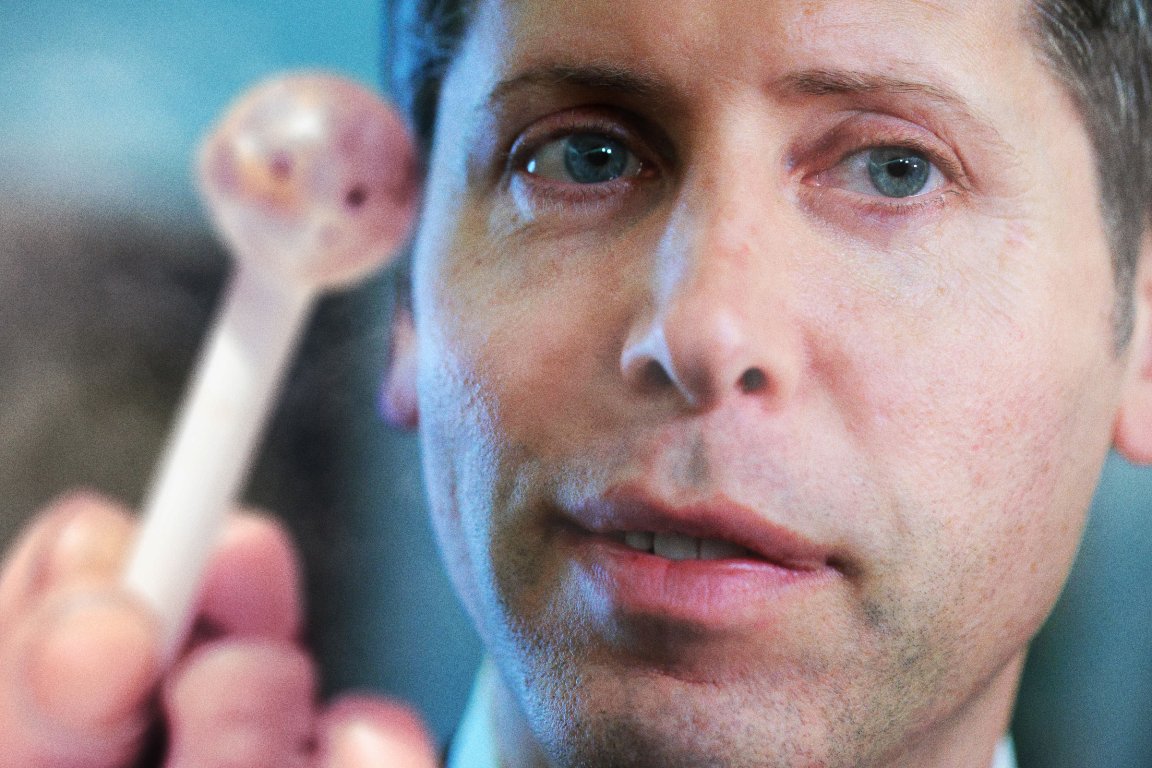
A comic photo illustration of OpenAI CEO Sam Altman appearing to hand the viewer a crack pipe.
Illustration by Tag Hartman-Simkins / Futurism. Source: Chip Somodevilla / Getty Images; Shutterstock

OpenAI burned through a staggering amount of money in 2025.

According to audited financial figures obtained by AI skeptic Ed Zitron, who shared them with The Financial Times, the net loss attributed to the ChatGPT maker soared from $5 billion in 2024 to a stunning $39 billion in 2025.

You can relitigate the numbers all day — a source familiar with situation told the FT that a lot of those 2025 losses are a “non-cash accounting charge linked to the company’s previous structure rather than its underlying operations — but the financial pressure does seem to be taking a toll. After years of giving users largely unfettered access to its models for a monthly fee, OpenAI and many of its competitors are now debating whether to boost prices dramatically by transitioning to a token-based billing system, charging users more directly for the amount of computing power they consume instead of an open-ended monthly subscription.

OpenAI currently offers both pay-as-you-go API access and monthly ChatGPT subscriptions. But how long the latter will stick around is looking increasingly uncertain. Earlier this month, OpenAI CEO Sam Altman argued that “we see a future where intelligence is a utility, like electricity or water, and people buy it from us on a meter.”

In other words, OpenAI’s behavior sounds an awful lot like a drug dealer who floods the market with addictive drugs, then jacks up the prices once users are dependent on them.

“They’ve kind of taken the crack approach to AI,” one Reddit user argued. “Give it to people for free, get them hooked, then jack up prices.”

It’s an insightful metaphor, considering where the majority of the AI industry’s biggest players appear to be headed. And as the costs of building out data centers and maintaining access to cloud compute come due, it’s likely we’ll see even more similar behavior.

The real costs behind AI subscriptions are staggering. According to a recent report by research company SemiAnalaysis, a $200 ChatGPT Pro subscription costs OpenAI as much as $14,000 if used to its maximum potential.

Spiking API prices have caught some power users off guard. According to Axios, an unnamed firm’s CFO accidentally racked up half a billion dollars in Claude usage fees in a single month.

The financial reality is hard to ignore, with CEOs starting to reverse course on AI adoption as prices for access to the tools spiral out of control.

“Fundamentally all of these AI providers are massively subsidizing token usage on these flat rate plans,” another Reddit user wrote. “It’s simply unsustainable.”

Even with soaring token-based API pricing, AI companies’ balance sheets are firmly in the red. And they could stay there, especially considering the burgeoning AI price war that could force them to lower — not raise — prices just to stay competitive.

More on OpenAI: OpenAI Execs Are Panicking

Victor Tangermann

Senior Editor

I’m a senior editor at Futurism, where I edit and write about NASA and the private space sector, as well as topics ranging from SETI and artificial intelligence to tech and medical policy.

Jeff Burningham and Marianne Williamson: “The Last Book Written by a Human”

Marianne Williamson May 29, 2026 Author and entrepreneur Jeff Burningham joined Marianne for a Substack Live where they discussed his book THE LAST BOOK WRITTEN BY A HUMAN: Becoming Wise in the Age of AI. JeffBurningham.com JeffBurningham.Substack.com Subscribe to Marianne’s Substack: MarianneWilliamson.Susbtack.com

Influential Tech Founder Says His Peers Are Suffering From Mass AI Psychosis

“CEOs are uniquely prone to AI psychosis because they’re sufficiently distant from the last mile of work that still has to happen to generate most value with AI.”

By Joe Wilkins

Published May 28, 2026 (Futurism.com)

A person sitting with their head in their hands, appearing distressed or overwhelmed. The image has a glitch effect with horizontal digital distortion and color separation, giving it a fragmented and intense visual style. The person is wearing a light-colored shirt and has short hair.
Shutterstock / Futurism

It’s no secret that many of the world’s top CEOs are obsessed with AI. By pursuing lofty goals of complete AI automation, these executives have created one of the largest financial bubbles in recent memory while transforming the job market into a barren wasteland, with little to show for their efforts so far.

As the top tech companies have yet to find a way to turn AI into a profitable venture, those decisions to go all-in on AI are looking increasingly delusional. According to Aaron Levie, CEO and founder of the massive cloud computing company Box, there’s a simple explanation for it: many of his colleagues are suffering from AI psychosis.

“CEOs are uniquely prone to AI psychosis because they’re sufficiently distant from the last mile of work that still has to happen to generate most value with AI,” Levie wrote on X-formerly-Twitter. Translation: AI-happy CEOs are out of touch with the rank-and-file workers tasked with making their AI ambitions come to life.

As an example, Levie offers cases in which corporate executives say “look I made this awesome product prototype” with an AI chatbot. “Yes but you didn’t have to review the code before it went into production and fix a bunch of issues,” he retorts.

Whether “AI psychosis” is the best metaphor for this concept is up for debate. Arguably the most common definition of AI psychosis is that it’s a phenomenon where extreme interactions with AI triggers or amplifies delusions or paranoia, sometimes already existing and sometimes seemingly newly cooked up with the AI. The symptoms can be extreme, with AI chatbots convincing victims that they’re communing with God-like entities, or have singlehandedly uncovered a grave threat to humankind.

There are indeed some executives who seem to fit the bill. Last year, Futurism reported that colleagues of Geoff Lewis, managing partner of the multi-billion dollar investment firm Bedrock, were concerned that he was suffering from a break with reality after spending too much time with ChatGPT (ironically, Bedrock was an early investor in OpenAI.) In that case, Lewis had claimed to be mapping an incomprehensible “non-governmental system” that was designed to disrupt his life.

That said, there’s a major gap between an exec believing they’re targeted by a vast conspiratorial network and an exec buying into AI hype. The phenomenon Levie is identifying might better fall under “organizational blindness,” a known phenomenon where leaders of a company find themselves disconnected from the reality of work on the ground. Coupled with a ravenous hunger for profit, this kind of tunnel vision seems to be exactly what we’re seeing in companies around the globe.

In today’s world, many executives and managers operate at an abstract level, working via spreadsheets, emails and Zoom meetings. This is different from concrete labor, meaning the specific, friction-heavy tasks that workers perform, like writing code or wiring server racks. When a board-room full of executives loses sight of this tangible labor — by failing to consider the kinds of tasks AI chatbots are actually good at, for example — it can certainly create a break from material reality, though one driven by social factors rather than psychological.

In other words, there are two possibilities: either the world’s CEOs are losing their minds, or they’re just succumbing to the latest manifestation of capitalism run amok. Occam’s razor probably suggests the latter.

More on AI and CEOs: 99 Percent of CEOs Are Preparing to Lay Off Workers and Replace Them With AI Within Two Years, Survey Finds

Joe Wilkins

Correspondent

I’m a tech and labor correspondent for Futurism, where my beat includes the role of emerging technologies in governance, surveillance, and labor.