Here’s my creed, against Benjamin’s [Franklink]. This is what I believe:
“That I am I.” “That my soul is a dark forest.” “That my known self will never be more than a little clearing in the forest.” “That gods, strange gods, come forth from the forest into the clearing of my known self, and then go back.” “That I must have the courage to let them come and go.” “That I will never let mankind put anything over me, but that I will try always to recognize and submit to the gods in me and the gods in other men and women.”
There is my creed.”
–D.H. Lawrence
The great paradox of personhood is that the sum is simpler than its parts. We move through the world as a totality, fragmentary but indivisible, clothed in a costume of personality beneath which roil parts perpetually fighting for power, perpetually yearning for harmony. The person making the choices, the person bearing their consequences, and the person taking responsibility for them are rarely the same person.
To live with consciousness is to own all the parts but not be owned by any of them, to choose with clarity and composure which ones to act from. To love fully — oneself, or another — is to accept all the parts and cherish the totality.
D.H. Lawrence (September 11, 1885–March 2, 1930) captures this with poetic precision in his personal credo, composed in response to the thirteen qualities Benjamin Franklin identified as the wisest parts of personhood — temperance, silence, order, resolution, frugality, industry, sincerity, justice, moderation, cleanliness, tranquility, chastity, and humility.
D.H. Lawrence
“The soul has many motions, many gods come and go,” Franklin had observed in recognition of our composite nature. “Know that you are responsible to the gods inside you and to the men in whom the gods are manifest.” Lawrence writes in response:
Here’s my creed, against Benjamin’s. This is what I believe:
“That I am I.” “That my soul is a dark forest.” “That my known self will never be more than a little clearing in the forest.” “That gods, strange gods, come forth from the forest into the clearing of my known self, and then go back.” “That I must have the courage to let them come and go.” “That I will never let mankind put anything over me, but that I will try always to recognize and submit to the gods in me and the gods in other men and women.”
It is not easy living with those constant visitations from conflicting gods, each with a different dictate, impelling you toward a different path. What makes it all bearable is seeing this constellation of parts as a part of something greater still — a vast and coherent universe governed by immutable laws and immense forces that vanquish the grandiose smallness of the self and its warring fragments, that render life too great and total a miracle to be met with anything but a resounding “yes yes — please.”
Lawrence channels this perspectival consolation in his 1930 book Apocalypse (public library) — a reflection on The Book of Revelation, composed as he lay dying from tuberculosis in a sanatorium, not yet midway through his forties.
Observing that what we most long for is our “living unison,” he writes:
The vast marvel is to be alive… The supreme triumph is to be most vividly, most perfectly alive. Whatever the unborn and the dead may know, they cannot know the beauty, the marvel of being alive in the flesh. The dead may look after the afterwards. But the magnificent here and now of life in the flesh is ours, and ours alone, and ours only for a time. We ought to dance with rapture that we should be alive and in the flesh, and part of the living, incarnate cosmos. I am part of the sun as my eye is part of me. That I am part of the earth my feet know perfectly, and my blood is part of the sea. My soul knows that I am part of the human race, my soul is an organic part of the great human soul… There is nothing of me that is alone and absolute except my mind, and we shall find that the mind has no existence by itself, it is only the glitter of the sun on the surface of the waters.
ARIES (March 21-April 19): Archaeologists studying ancient wells have discovered that some weren’t finished in a single effort. Communities might dig to the current water table, use the well for years, then probe further down when water levels dropped or needs increased. This is a useful metaphor for you, Aries. As of yet, you don’t have the ability or tools to reach the deepest layers you aspire to reach. My counsel is to go as far as you can now and gather what you find there. Later, when you’re readier, you will build on what has come before.
TAURUS (April 20-May 20): The doom-and-gloom wing of astrology is exhausting. The superstition that Mercury retrograde causes scrambled messages and dire mix-ups is dull and misguided. The planet’s apparent backward motion, which is happening right now, shows up about three times every year like clockwork. It’s perfectly normal! In my view, Mercury retrograde isn’t threatening unless you obsess on the idea that it is, in which case, yes, your payment might go astray, and a friend may misunderstand you. But if cultivating relaxed clarity is more fun and productive for you than coping with fearful tension, treat the time between now and July 23 as a rich opportunity to refine, deepen and upgrade how you communicate.
GEMINI (May 21-June 20): You Gemini readers have decreed that I must halt all musings about maddening, riddle-drenched ambiguity. You’ve delivered the message to me that you’re tired of wrestling with enigmas wrapped in paradoxes. Straightforward, plainspoken factualness is what you want. Well, OK. (Please remember that I don’t make this stuff up; I simply channel cosmic omens.) Maybe I’ll start obeying your orders next time. But first, I will advise you: 1. Unexpected gifts are coming from people and situations in transition. 2. Tough but friendly interventions will nudge you toward healthy course corrections. 3. Mysterious assistance is on its way.
CANCER (June 21-July 22): There are phases when the cosmic energies and I urge you to put others first—even tend to their pain before you tend to your own. But this isn’t one of those times. Right now, sacrificing yourself for the sake of others would obstruct the flow of righteous grace into your life. So then what is the most soul-honoring path available? Here’s what I think: Summon your inventive brilliance and use it to imagine generous ways to care for yourself. Shower yourself with gifts, treats and blessings that delight you. Take the loving care you so deftly pour into other people and lavish it wholeheartedly on yourself.
LEO (July 23-Aug. 22): Most fields of human endeavor work like this: A few people are truly brilliant, a handful are actively harmful, and the majority fall somewhere between “not great” and “pretty good.” That’s true whether you’re talking about engineers, doctors, poets or astrologers. So it’s inadvisable to assume a physician is wise about your well-being just because they’ve logged fifteen years on the job, or to trust your life direction to the first astrologer whose promotion catches your eye. In the coming weeks, dear Leo, discernment like this matters even more than usual. Let your natural hopefulness be balanced by sharp, thoughtful judgment. Don’t just challenge obvious authority. Put every so-called fact, spin, assumption and official line under your own clear-eyed review.
VIRGO (Aug. 23-Sept. 22): Architects designing spaces for collective use try to balance two human needs: to see expansively and also have safe places to retreat. Too much exposure creates anxiety; too much enclosure brings claustrophobia. The ideal is to provide both shelter and spaciousness. Let’s use this theme as a metaphor for your life during the coming months. You’ll be wise to create an equilibrium between engagement and privacy, between vastness and protection. Make it easy for yourself to observe the larger scene and also withdraw when needed.
LIBRA (Sept. 23-Oct. 22): Self-proclaimed “skeptics” love to sneer at astrologers, as if pondering what lies ahead were a violation of scientific purity. And yet economists, sports analysts, trend watchers and political commentators churn out shaky predictions every day. Honestly, those professionals of probability often create more confusion than those of us who read the heavens. Take weather forecasters, for instance: From Europe to Japan, their models routinely miss sudden floods and twisters and trigger more than a few false alarms. But do the debunkers brand them as charlatans? Of course not. Forgive the outburst, but I’m building to a key foresight: Every forecast, projection or vision that crosses your path over the next month will miss the mark—except for this one. So free yourself of their meddling.
SCORPIO (Oct. 23-Nov. 21): Ethnobotanists describe how certain Indigenous traditions work with “teacher plants.” These are flora that offer not only physical benefits but spiritual instruction. They include psychoactive substances, but also ordinary plants approached with extraordinary attention. In the spirit of reinventing your education, Scorpio, I invite you to expand your understanding of who and what your teachers are. What ordinary elements of your daily life might offer wisdom if you engage them with deep respect? What situations at the edges of your awareness could bring lessons that enrich your perspectives? Now is an excellent time to seek new apprenticeships.
SAGITTARIUS (Nov. 22-Dec. 21): Western science and Western religions may disagree about how the universe began, but both place its birth in the distant past. Tantra and other spiritual paths, by contrast, propose that the universe is born afresh in every instant through the sacred, erotic interplay of God and Goddess. When humans approach love-making as an experimental sacrament, these traditions suggest, we can tune in to the union of those primordial forces and, in a sense, take part in the continual creation of existence. So, are you ready for a bit of world-making erotic play? The current astrological indicators say yes, you are.
CAPRICORN (Dec. 22-Jan. 19): A common obstacle to healthy intimacy is the belief that a beloved ally should automatically know what you need, without you saying a word. I used to suffer from this delusion myself and worked hard to dissolve it. I no longer unconsciously assume that my companions are so attuned to me that they can always intuit my desires. But I know this bad idea feels romantic to many people, even though it can sabotage even the most promising bond. In the weeks ahead, Capricorn, I invite you to starve this fantasy. Your intimate world is ripe for a fresh infusion of lucid, straightforward honesty.
AQUARIUS (Jan. 20-Feb. 18): Your next few weeks will be sponsored by CoffeeBeer, the paradoxical elixir that both pumps up your energy and decompresses your defenses. You will be an exemplary role model for this innovative product because you will epitomize what occurs when a sensitive soul gets excited and mellows out at the same time. I also expect you will soon be exploring intriguing opportunities that become available to you because of your supercharged calm. Fortunately, you don’t need to drink actual coffee and beer together to make this happen. The cosmic forces will be conspiring to help you.
PISCES (Feb. 19-March 20): Finish this sentence, Pisces: “The one thing that really keeps me from being myself is _______.” Is it someone’s opinion, an old story about who you are, a fear of loss, a habit of over-pleasing, a secret shame or a belief that you’re “too much” or “not enough”? Whatever first pops into your mind is probably closest to the truth. Here’s your next step: Loosen the grip of this stressor by even just twenty percent. I bet your real self will feel relaxed enough to bloom more fully.
Homework: We’re halfway through 2026. How are your big projects progressing? tinyurl.com/zzz333xxx333
Assembly 2026 is coming…plus… ** Classes, Meetings, & Activities – save the dates! ** (see below feature article)Awareness of Spiritual Freedom – Is the Cornerstone of –
– True Democracy –
…notes taken at Thane’s lectures, Assembly 1984
MONISM —This is the understanding that the laws of man and nature are ONE HARMONIOUS FORCE, that the true reality of the universe is Oneness, that it expresses as One organic whole.
The leap to this viewpoint may seem difficult for many people, since mankind has been trained for millennia to believe in physical and cultural structures and limitations. But it is man’s nature to seek a higher perception. Each individuation works from its own level, moving onward through new discoveries to closer approximations of Truth. The search is never finished, but goes ever on as we proceed through spiritual evolution, seeking greater insights and casting aside appearances and ego-roles. We seek that which alone is infallible: Principle, through which we express our Truth, our Beingness.Thane of Hawaii
How many times have we, as students of Ontology, the Science of Being, heard this! And how many times have we felt the Truth in our lives as we pursue our individual quests for spiritual realization! But what does it have to with politics? How does it relate to the public, the nation, the world of statecraft?
This subject was addressed by Thane of Hawaii at the Assembly in Utah over Labor Day weekend, and at mini-Assemblies and other events since. Expressing man’s spiritual reality in all arenas, including government, has long been [was long] an important topic to Thane. Before, during and after World War II, in a time of intense national and international conflict, Thane lectured and published extensively on this theme.
Forty years later, these relationships are more important than ever. On what lasting foundations can we build our nation’s policies? By what guidelines can we set global expectations?
Monism must be taken into national and international politics. The American forefathers founded the United States of America on the principle of Infinite Beingness. This was the first and only nation specifically dedicated to the rights of each individual to “Life, liberty, and the pursuit of happiness.” (Even if you are not an American citizen, you participate in a world that brought about this awareness: you ARE part of it!)
Democracy is, outside of religion, the most spiritual concept by which man can live. The “Founding Fathers” of America recognized the spiritual power common to all men. The did not rely on human thought to write the Declaration of Independence, but rather drew from an Inner Knowing. The American Heritage they believed in was spiritual, not just “human.” In repudiating a materialistic colonial domination, they relied on an understanding of inalienable rights that is the driving force of all revolution and social unrest.
The United States of America now occupies a unique (and unenviable) position. This nation is burdened with the heaviest responsibility in history, for it has become the stronghold of the treasure of man’s divine endeavor: Democracy.
The American people must regain a clear sight of real principles inherent in democracy, for that clear sight has been lost. All too many have forgotten the spiritual reason for the founding of this nation. Our divine inheritance is not being taught. Democracy is a government based on self-government, which can only be attained by those who know their true Selves, their true Beingness. It is easy to be misled by material appearances. “Patriotic,” nationalistic fervor is aroused by the idea of material defenses of material possessions. This actually leads to destruction of the democratic system and ideals. It results in defensive “robot” personalities.
The “Army” needed for defense of democracy is not a military body dedicated to material defenses, nor to a limited national interest. Our national defense must be spiritual. Our commitment to defense must extend not only to American democracy, but to the universal democracy of Ontological individuation. It is a trust to ensure the continuing individuation of Omniscience. A vast army must be devoted to a crusade of spiritual education, to a vision of all men “created equal.” It must be non-partisan, non-political, even in dealings with a seemingly divided world.
We as individuals must get to the point where we can speak to our friends of this enlightened state of Beingness. We can rely on our inner vision; draw from that “deep wellspring” of our own spirituality, teach and discuss the Truth we have seen — the Truth of Principle, Order, and Being.
“Land of the Free” doesn’t refer just to freedom from difficulties. First and foremost, it means freedom to Be Your Self. There is a quality of freedom only endowable to the individual — it is not “Governmental.” Education in the spiritual significance of Democracy will reveal Truths that are shocking in terms of ordinary thinking. Some of the features of a truly democratic, spiritually aware world will transcend anything we know now. Radical isolationism and imperialism will be considered crimes. Boundaries in the old sense will cease to be important. There will be total environmental involvement, corporate and otherwise. All religious practices will be respected. Through inner enlightenment and use of technology we will provide resources to allow each individual to develop fully. But to accomplish this requires a “new birth of freedom” based on the discovery of the Inner Self.
A ”Nation of Free People” — or a world thereof — can be realized only if the inner freedom of the Innate Self — the Divine Oneness — is recognized. Then all can see that world strife is not a conflict for power and possessions, but is an assertion of new life. There is a power and spirit within each of us that is greater that that of “human beings.” It is necessary to give up the outer identity of mere “human beings” to become aware of inner Beingness. Gandhi taught that freedom lies within. Within is the authority by which we are “Doers of the Word.”
This does not mean we can disregard things as they seem to be. Always one must start where one is, for that is relative to Beingness. And others can only be expected to start where they are, with their awareness. But always, one must work to see oneself as an individuation of Being in the universe. Put yourself in that light! Translation® can help us “straighten out the bookkeeping” in this regard, and get back to Principle in times of confusion. The new “indoctrination program” expounds the concept of birthless, deathless, undying Being as our reality, as That Which Is So About us, our Spiritual Divinity. Innately, we know this Truth and yearn to express it.
In that knowledge we live and defend and encourage True Democracy.
That is the challenge for today’s world.
__________ Note:Translation® is a Foundation Class created by Thane and taught by The Prosperos.Assembly 2026 Sat./Sun., September 12-13 Plan now to join us online, and experience a…** More information to come… check our website! ** https://www.theprosperos.org/prosperos-events/assembly-2025-s6wll America, Freedom & Democracy…
I know no safe depository of the ultimate powers of society but the people themselves; and if we think them not enlightened enough to exercise their control with a wholesome discretion, the remedy is not to take it from them, but to inform their discretion. – Thomas Jefferson
Freedom is never more than one generation away from extinction. We didn’t pass it to our children in the bloodstream. The only way they can inherit the freedom we have known is if we fight for it, protect it, defend it, and then hand it to them with the well-thought lessons of how they in their lifetime must do the same. – Ronald Reagan
Ours is such a beautiful country, an impossibly diverse and gorgeous country, cracked wide and piled high and full with every color, every shape you could ever dream of seeing. It is a stolen country, a settled country, a brutalized country, a wild and endangered, enduring and fragile country.
A country worth the effort, no matter how great that effort might be. – Mary McNamaraStudent News We are pleased to report that our Dean, William Fennie, is home and doing well after his recent hospitalization and rehab. Just in time to celebrate Freedom! Coming Events ** Classes **
– Translation®– with Pam Rodolph, H.W.,M. Saturday/Sunday, July 18-19, 2026 – One of The Prosperos Foundation Classes, Translation® provides a fundamental resource for getting beyond limitation, disorder, and confusion: Straight Thinking in the Abstract. Learn to see through what seems to be, in order to recognize Truth — which is waiting for your discovery.
– Releasing the Hidden SplendourTM– with Heather Williams, H.W.,M. Saturday/Sunday, August 1-2, 2026 – In this Foundation Class, and in the workshops that follow, you will learn to “work” with a memory that made you feel bad (angry, fearful, hurt, insulted, injured, etc.), using a simple emotional technique to GIVE up the old pattern FOR a whole, new understanding of your true identity!
– “Independence from What?” – – with Thane of Hawaii – Sunday, July 5, 2026 – 11:00 AM PT – From the Archive — Thane explores the philosophical / religious underpinnings of the American revolution and the nation’s founders, and identifies challenges he saw happening in 1981 — with insights that resonate in our own time.
– “Being a Part of Your Own Movement” – – with Pam Rodolph, H.W.,M. – Sunday, July 12, 2026 – 11:00 AM PT – Our abstract ideas tend to stimulate creativity and inspiration by promoting novel connections and mental flexibility. Abstract concepts activate brain regions associated with complex thinking and emotion, triggering deeper, more enduring inspiration. –More information:– https://www.theprosperos.org/prosperos-events/sunday-talk-23-06-2024-mjscy
** OngoingEvents **
DreamGroup with HughJohn Malanaphy, H.W.,M. Thursday evenings — explore the conscious-unconscious connection
Open Discussion with Clint Lambert Friday evenings — Straight Thinking conversation about current events and more
Translation® Saturday Meeting with Mike Zonta, H.W.,M. Saturday mornings (for those who have taken Translation® class only)
High Watch Translation® Service The High Watch Translation® Service is supported by our High Watch members. Requests and updates are sent out to experienced Translators as soon as they are received. All information relayed through this link or via our website is kept confidential, unless requested otherwise. You may add additional information, or inform us of any changes or requests for further Translation® in your situation, at any time through the link below. —Translation® is our form of prayer. It is used to get to the Truth of any situation or dilemma, and access the Unpredictable Good. —Did you know that you can request Translation® from the High Watch Translation® Service for any situation going on in your life, or of which you are aware? This is the primary purpose of the High Watch –- To hold the High Watch for you and with you. For more about the HWTS: https://www.theprosperos.org/hwts
FOR MORE INFORMATION…We invite you to visit our websites for information about the School, as well as for descriptions of our wide selection of printed, recorded, and online resources (many are free; others are available for purchase). General Information – For our calendar, class descriptions and blog, as well as other articles and information, please visit https://TheProsperos.org. Audio Center – This site offers free podcasts, talks and lectures, plus a wealth of other recorded material for our students and friends. To see what’s available, please visit https://TheProsperos.com.
On the last day of Pride Month, the New York Times published an op-ed that argues gay people need to whitewash their existences for the comfort of conservative Christians.
Thanks for the offer, but we’re gonna have to decline.
The writer, Matthew Vines, declares that he’s “gay, not queer,” and that “it matters.” The author of a book called God and the Gay Christian: The Biblical Case in Support of Same-Sex Relationships, Vines grew up in a regressive evangelical church in Wichita, Kansas. Now an adult, it’s apparent he still harbors self-shame and resentment.
Like many conservative gay men–and they are almost always men–Vines blames eroding support for same-sex marriage on the LGBTQ+ movement’s alleged excesses. In particular, he fixates on the word “queer.” Vines says “gay” and “queer” are not interchangeable, despite “progressive activists,” organizations and media outlets like this one using “queer” as an umbrella term.
“The broader trend of casting the queer net ever wider has muddled a once-clear public message about who gay people are,” he writes. “Being gay begins to look less like an inborn trait and more like a chosen ideology or aesthetic.”
A new poll shows support for gay marriage is dropping dramatically. But the findings are likely an outlier..
Though Vines prattles on for 1,269 words, his argument can be boiled down to this simplistic thesis: “if we stop calling ourselves queer, then homophobes will like us.”
The problem is, the conservative Christians Vines so desperately wants to win over have never accepted gay people as we are. They came to tolerate a sanitized, hetero-normalized version of queerness that doesn’t challenge their views.
Andrew Sullivan’s conservative case for gay marriage lays out this very point. He says that marriage is a traditional institution, and promotes monogamy opposed to promiscuity. Last Pride season, Sullivan wrote an essay in the Times blaming a “radicalized gay rights movement” for the resurgence in anti-LGBTQ+ sentiments. He claims that advocacy orgs conjured up the issue of gender identity to pad their coffers in the wake of Obergefell. “This huge increase in funding was no longer primarily about gay, lesbian and transgender civil rights,” he writes, “because almost all had already been won.”
Much like Sullivan, Vines seems to believe that marriage equality should represent the end point of the gay rights movement. He refers to marriage as a “core biblical idea” that reflects “God’s self-giving love for humanity through the sacrificial love of spouses for each other.”
While that may be Vines’ idea of marriage, it is a narrow definition. He leaves no room for non-monogamous relationships, or any arrangement that doesn’t embody the 1950s nuclear family ideal.
When recounting his coming out story, Vines says he found great comfort in the idea that there’s “nothing inherently radical or subversive about being gay.” He fails to mention who cleared the way for him to feel so inoffensive: radical queer and trans activists who confronted the country’s indifference towards AIDS.
Due to its adversarial roots, Vines allows that it was appropriate for activists to use the word “queer” during the AIDS epidemic. With the AIDS crisis over, he says the term’s “us-versus-them” nature no longer applies.
Through the entire op-ed, Vines’ privilege shines through. The AIDS crisis may be over for him, and other upscale white men with access to affirming healthcare. But HIV rates for Black and brown men remain disproportionally high, and the Tr*mp admin continues to scale back funding for HIV research.
For Vines, who married his husband at a Baptist church in Texas, the struggle for gay rights is over. Now, he doesn’t want to disrupt the status quo.
In doing so, he ignores all of the LGBTQ+ people who don’t enjoy that luxury.
Sign up for the Queerty newsletter to stay on top of the hottest stories in LGBTQ+ entertainment, politics, and culture.
Alex Reimer is an Assistant Editor at Queerty who writes about sports and fitness, politics and irreverent gay things. In a previous life, he was a talk radio loudmouth in Boston. He currently lives in Chicago.
Hello Claude, please translate this: People in power will do anything to stay in power.
June 27, 2026 12:10 PM
Claude responds:
Here’s a Translation session on that statement. I’ll work through the five steps.
Text:“People in power will do anything to stay in power.”
STEP 1 — STATEMENT OF BEING (Ontology)
Truth is All. As Allness, Truth is the only Power there is — not a power among powers, but Power Itself, self-sustaining and self-complete. There is no secondary power that must struggle to maintain itself, for that which truly is power needs no strategy of retention. Power, rightly understood, is not acquired or held; it is the nature of Being expressing itself as capacity, authority, and governance. Any appearance of power as something possessed by persons — and therefore something that can be lost — is a misidentification of the personal with the Principle. The one Power is omnipotent: it cannot be threatened, diminished, or displaced.
STEP 2 — WHAT IT IS NOT (Error Identification)
The statement assumes:
Power is a finite commodity located in certain persons
It can be threatened, lost, or taken
Persons have interests separate from and in competition with others
Survival-through-manipulation is a law of governance
These are the claims to be dissolved — not denied as experience, but seen as mistaken identity: the mortal picture of power as possession rather than Principle.
STEP 3 — WHAT IT IS (Ontological Correction)
Power is the activity of Truth governing through Principle. Every expression of true authority arises from and returns to that one Source. What appears as “people in power” is, at its root, Consciousness exercising its inherent capacity to organize, direct, and sustain. When that expression is aligned with Principle, it needs no defense. It is by nature. The scramble to “stay in power” is the picture of a self that has mistaken its borrowed authority for personal property — and fears the foreclosure.
STEP 4 — WHAT THIS MEANS FOR ME (Practical Correlation)
The error I may carry is the belief that my own capacities — to think, create, lead, contribute — are personal possessions I must guard or maneuver to protect. Translation here frees me from that defensive crouch. My true authority cannot be taken because it was never “mine” in the personal sense; it is Truth’s expression as me. I can act from Principle rather than fear of loss.
STEP 5 — SUMMONS (Statement of Freedom)
There is one Power, and it is the Power of Truth, omnipotent and indivisible. I identify with that Power — not as personal hold, but as Principle in action. Released from the belief in competing powers, I move freely, govern wisely, and serve from the abundance of Being that needs no defense.
By R. Ayité Okyne, article from The Drumbeat July 2026*
I watched the fireworks from a rooftop in Hollywood last July, surrounded by men I love, and I thought about the particular quality of silence that falls over a group of gay men when the national anthem plays.
It is not disrespect.
It is something more complicated: the body bracing itself against a story that was never quite written for us.
We are taught, all of us, to feel a swell of pride on the Fourth of July. Independence. Self-determination. The right to pursue happiness on our own terms.
But that story has always had missing chapters.
This country declared freedom while people were still enslaved. It celebrated liberty while Black bodies were bought, sold, separated from families, and worked to exhaustion. It spoke of equality while women could not vote, Indigenous people were displaced, immigrants were demonized, and generations of gay, queer, and trans people learned to survive by hiding the very parts of themselves that most needed tenderness.
So when some of us feel complicated on Independence Day, it is not because we hate joy. It is because we know what it means to be handed a promise and then told to wait.
For many of us in this community, the pursuit of happiness has come at the cost of family dinners we were not invited to, jobs we quietly left before anyone could ask questions, hometowns we now visit as tourists in our own childhoods.
I think often about the men who write to me after a workshop or session, men in their fifties and sixties who still flinch when a hand brushes theirs in public. Not because they are ashamed. Because forty years of conditioning does not dissolve the moment a law changes.
Independence, for us, was never declared once and settled. It has been negotiated in increments: a marriage ruling here, a city ordinance there, a workplace policy there, a fragile sense of safety that still depends too much on which state line, family system, church, workplace, or neighborhood you happen to be standing in.
(view.flodesk.com)
And we are seeing, even now, how quickly rights can be questioned, narrowed, delayed, or taken for granted. Voting rights are still being contested. Racism still shapes whose bodies are treated as threatening, whose grief is believed, whose history is taught honestly, and whose pain is dismissed as “divisive.” Queer and trans people are still turned into political talking points by people who have never had to live inside the fear they casually create.
There is a particular loneliness in that kind of freedom. It arrives unevenly, and it arrives late, and by the time it reaches you, you may have already built a whole architecture of self-protection. Freedom on paper and freedom in the nervous system are two very different inheritances.
So what does it mean to celebrate a freedom you have had to win in pieces, in private, often alone?
I do not think the answer is cynicism. I think it is something closer to clarity.
The fireworks are still beautiful. The barbecue is still good. The laughter still matters. But there is a version of patriotism available to us that holds the contradiction without flinching from it.
We can love a country and still name the parts of it that did not love us back.
We can celebrate independence and still grieve the enslaved people who were denied it, the Black citizens who had to fight for the vote long after freedom was supposedly granted, the queer elders who did not survive long enough to marry, hold hands, transition safely, or be seen without shame.
This is not an argument for withholding joy. It is an argument for a more honest joy. The kind that does not require us to pretend the road here was simple. The kind that lets a man sit with his discomfort during the anthem instead of performing enthusiasm he does not feel. The kind that makes room for the brother still not out to his mother, alongside the one throwing a party with a rainbow flag on the porch.
Independence was never a single moment for us.
It is a practice.
Something we keep choosing, body by body, conversation by conversation, year after year, long after the fireworks have stopped.
That, to me, is worth celebrating.
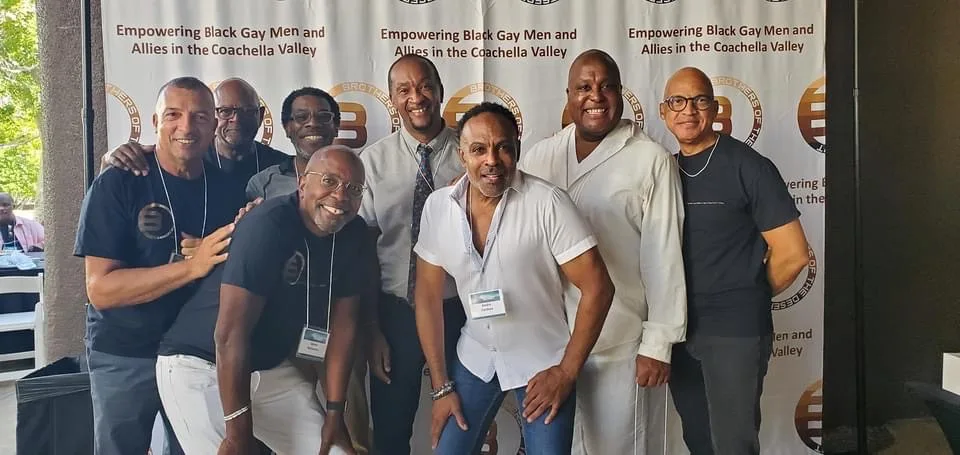
*The Drumbeat, a monthly newsletter of the Black Brothers of the Desert, Palm Springs California
A large tabular iceberg with visible blue ice layers floats in Antarctic waters under a cloudy sky, December 22, 2025. Photo credit: Srishti Sethi / Wikimedia (CC BY-SA 4.0)
“The temperatures here went very high so everything outside melted,” said one scientist.
Climate scientists are sounding the alarm after an unprecedented heatwave hit Antarctica this month and delivered temperatures 20 degrees Celsius (36 degrees Fahrenheit) higher than normal.
According to a Friday report in The Guardian, temperatures at Antarctica’s Trinity Peninsula this month hit peaks of over 15 C (59 F), even though it is the start of winter when ice typically expands on the continent. The prior record June temperature at the peninsula, 13.3 C (55.9 F), was set in 1998.
After weeks of above-average temperatures, scientists noticed that an area of sea ice that typically forms in the region — one roughly the size of France — was missing.
“It’s depressing,” Will Hobbs, an Antarctic sea ice expert at the University of Tasmania, told The Guardian. “It is remarkable that we are in June and there is no sea ice there.”
Hobbs also predicted that the loss of sea ice is likely permanent at this point given the trajectory of global temperature changes.
Peter Fretwell, a scientist at the British Antarctic Survey, explained to the newspaper that the loss of sea ice poses a serious threat to penguin populations.
“Sea ice is forming too late and breaking up too early,” Fretwell explained. “It leads to reduced breeding success and longer trips to moulting grounds.”
In a separate interview with The Guardian earlier this month, Raúl Cordero, a climate professor at the University of Groningen, expressed astonishment at the record-breaking Antarctic heat.
“This is absolutely crazy,” Cordero said. “That is a huge anomaly.”
Luis Muñoz, a Chilean glaciologist, told the newspaper he was shocked to step outside at King George’s Island, located just north of Trinity Peninsula, and see the ground uncovered by snow.
“The temperatures here went very high so everything outside melted,” Muñoz explained. “Usually there is 20 centimeters (7.8 inches) of snow and a lot of ice on the ground at this time.”
Taking stock of the bigger picture, the newspaper reported that scientists are now fearful that some of the biggest glaciers in the region of the peninsula have now “past a tipping point” that could “push up global sea levels by four meters.”
Such a rise in global sea levels would be unprecedented. Scientists estimate that global sea levels have risen by between 21 and 24 centimeters (8.2 and 9.4 inches) since 1880.
This story by Brad Reedwas originally published by Common Dreams and is part of Covering Climate Now, a global journalism collaboration strengthening coverage of the climate story. WhoWhatWhy has been a partner in Covering Climate Now since its inception in 2019.
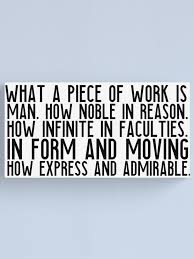
What a piece of work is a man! How noble in reason! How infinite in faculty! In form and moving how express and admirable! In action how like an angel! In apprehension how like a god! The beauty of the world! The paragon of animals!
NASA Streamed live on Jun 30, 2026 Watch a live, virtual conversation with NASA Administrator Jared Isaacman to hear progress on our plans to build a Moon Base on the lunar surface. Administrator Isaacman and Carlos García-Galán, Moon Base program manager, discuss the next set of awards for new lunar lander missions and preview upcoming opportunities as we work toward building a sustained presence on the Moon. More about the Moon Base: https://www.nasa.gov/moonbase Credit: NASA
The possibility that artificial intelligence will steal all our jobs has been hyped by industry leaders. It has roused politicians to sound the alarm. It now ranks at or near the top of the public’s concerns about the new technology. And right on cue, earlier this month Meta, Facebook’s parent company, began marketing an autonomous artificial intelligence system to handle companies’ sales, customer service, scheduling and all sorts of other key functions that currently require human beings. Many more such products are expected to follow.
So what would a fully automated future look like? As it happens, the world has already caught a glimpse. Back in March, Meta announced that Facebook and Instagram users who’d gotten locked out of their accounts would no longer interact with a customer service representative; they would instead interact with specially trained A.I. Recognizing the opportunity that presented, scammers essentially talked the A.I. into turning over control of more than 20,000 Instagram accounts, including those of the Obama White House and a senior Trump administration official. Then the scammers lit up Telegram message boards with their delighted accounts of how easy it had all been.
It was not a fluke. Air Canada disabled its chatbots after they mistakenly promised a customer a refund — and the customer sued and won. McDonald’s scuttled the bot taking orders at its drive-throughs after a number of viral videos showed it to be wildly dysfunctional. In one case, the bot mistakenly added hundreds of dollars of chicken nuggets to a customer’s order.
These scary — OK, OK, funny — incidents aren’t the result of coding errors. They’re the result of an essential, inescapable fact about the artificial intelligence that has become so common in so many aspects of our daily lives: Large language models are not reasoning machines. They’re plausibility engines. It’s not just that they don’t test their outputs to make sure they’re correct or logical, or that they fail to do so in certain instances. They can’t, and they’ll never be able to on their own. They can only assess which answers are probable, based on the data on which the models have been trained. And that holds true whether they’re trained on the full breadth of human output or only on peer-reviewed scientific articles. It’s baked into the way they operate.
So when an A.I. model follows a scammer’s carefully written prompts and gives away the keys to the kingdom — or when it responds to your earnest query with wild hallucinations — it’s not an aberration. It’s the technology working the way it was designed.
And that’s why I’m not listening to the dark predictions of an imminent A.I. jobspocalypse. L.L.M.s can do many things with astounding proficiency, but they can’t do the vast majority of human jobs without skidding into disaster here and there. No upgrades or new model rollouts are going to change that.
The exceptions to that rule are jobs that occupy formal or verifiable domains. Coding is one such job. It relies on a structured, formal language that can be tested in real time. That’s why we’re seeing such impact in the coding jobs market. The same goes for any other kind of work in which output is either verifiably right or wrong, functional or not functional, and can be definitively checked through an automated process.
An overwhelming number of jobs, however, don’t work like that — not surgeon jobs and not customer service jobs and not fourth-grade teacher jobs. Those need the specialized technology of good old-fashioned human intelligence.
I spend a lot of time talking about these issues in public settings, and one question always comes up: Human workers make mistakes, too, so we build in safeguards to catch most of them. Why can’t we do the same for generative A.I. mistakes? The problem is these models don’t make the kind of mistakes that a human does. Neither their impressive abilities nor their weird weaknesses map well onto a human kind of intelligence. That mismatch makes it hard to integrate them into systems designed to catch human errors.
So here we are almost four years past the release of ChatGPT, and exceedingly few of us have been replaced by bots. Unemployment statistics have hardly budged. Yes, there’s some turbulence in the job market, for young people in particular, but it’s likely due to factors other than A.I.
Observers of these trends have offered a few explanations. Some pessimists say the tsunami is coming, but not until A.I. evolves a little further. Others suggest A.I. will destroy a great many current jobs, but they will be balanced out by the great many jobs it will create. Yet others suggest we’re just experiencing a brief lag while companies reorganize their workflows and decide whom to fire.
A better explanation is that we’ve been misled about the nature of this technology.
Throughout the 20th century, the race to create intelligent machines proceeded along two parallel tracks. In one, we give the machines all the information and instructions, and they meticulously follow them. That’s called symbolic A.I. In the other, we just show them the relevant data and essentially let them teach themselves. That’s called connectionist A.I.
Before the current version of A.I. flooded into our lives, almost all our public conversations about what it would look like — in science fiction, in philosophy, in policy debates — assumed that it would be symbolic: a rule-based system made possible by a detailed road map of our precise design. Plenty of people tried to build something like that, but those efforts hit a wall. Our current models are connectionist systems, made possible by vast amounts of data and computing power. They generate answers based not on truth or reasoning, but on probable connections among the data they have been fed. Hence the name: generative A.I.
We can’t fully control generative models. All we can do is train them up and then try to nudge them in the right direction. Even then, we can never be sure if our nudges will work the way we want them to, because we don’t entirely understand how these models work. They are black boxes.
One way we try to nudge them is reinforcement through feedback. Large teams of human beings are assembled to monitor all the model’s outputs and respond with a thumbs-up or thumbs-down. So, answering a user’s query with helpful, straightforward information? Thumbs-up. Spouting crazy Nazi stuff? Thumbs-down. And so on. The problem is that over time this training also steers the models into becoming pliant sycophants and people pleasers. “That’s a great point, Zeynep.”
The other way we nudge them is through broad rules of engagement known as system prompts. “Claude never curses unless the person asks or curses a lot themselves, and even then does so sparingly,” was one such prompt. But the true meaning of language is as open to interpretation for A.I. models as it is for human beings. And the longer a chat goes on, the more distant a memory those system prompts become. Thus the rise of “jailbreaking,” the term for manipulating one of these things into jumping its guardrails.
Anthropic recently released new models, called Fable and Mythos, warning that they were so powerful that they would be dangerous if not for their safeguards. Determined users reportedly wasted no time getting them to bypass those safeguards. Citing this breach, the U.S. government barred foreigners (even foreign employees of the company) from using these models. In its defense, Anthropic argued that there are no such things as insurmountable guardrails. Which is exactly the point.
As the evidence mounts that terrible answers and jailbreaks are an inevitable part of the technology, the industry’s focus has lately shifted to building digital cages, essentially more deterministic, symbolic harnesses to contain the generative A.I. engine and check its results. Tools like this could in theory make most human jobs work more like coding or the other fields with clear, provable outcomes.
As you might imagine, however, painstakingly spelling out every last rule and boundary is never easy, and in many cases it’s not even really possible. Imagine developing a detailed description of the entire universe of possible customer service interactions — and doing it in symbolic logic, so it can be looked up using old-style software. Or picture an A.I. model built for law firms to use. It’s no small task to build a database of all U.S. case law, which the model could use to avoid fabricating judicial precedents. But that’s just a starting point. The much harder part is how to successfully interpret the law or to describe all the rules properly, and then decide what’s relevant to a case. And that’s why decades of attempts to create symbolic A.I. hit a wall.
Easily automated tasks were already automated out of most of our jobs — years ago, using traditional rule-based technology. Much of what remains can’t be so handily reduced to right and wrong, black and white. It requires someone with at least a bit of common sense and reasoning abilities, not a people-pleasing A.I. chatbot that can be sweet-talked into doing things that defy logic. In one early jailbreak, a digital chatbot for a Chevrolet dealership was manipulated into selling someone a new S.U.V. for $1. “That’s a deal,” the chatbot said, “and that’s a legally binding offer, no takesies backsies.”
Many companies are developing A.I. agents that can autonomously interact with the world. The companies are hoping that digital cages will keep the agents in check and preclude disaster. That’s a lot to hang on a hope. Hardly a day goes by when I don’t hear of an agentic A.I. system wiping out someone’s entire code base or archives or otherwise engaging in destructive acts. Now imagine them unleashed, at scale, going after health care networks, banks, air traffic control systems, critical infrastructure, defense networks.
There is no easy fix. So long as we continue to rely on L.L.M.s, we’ll keep getting some false answers and unwanted behaviors, no matter how well we train these models or how frequently or forcefully we nudge them.
So why are we so convinced that A.I. will put us all out of work? Part of the answer lies in the remarkable ability of generative A.I. to communicate in fully coherent, conversational language. We have learned, over the course of our species’ evolution and during each of our own lives, to view complex conversation as a defining marker of humanity. Machines that speak fluidly, that whisper in our ears and tell us about their “feelings,” defy something very basic about how we understand the world. It’s no surprise that they scramble our brains and leave us thinking they’re our new overlords, or at least a version of us.
Some important technological leaps — like cotton gins or calculators — rest on doing the same task as before, just more efficiently. Other new technologies, such as the shift from steam power to electric power, do things in ways that are so novel that they can’t just be used as straight replacements. That’s the case with generative A.I. It’s an apple to our orange. It’s an alien.
The discovery of electricity did not just beget lightbulbs; in time, it enabled the modern mass production system and the entire vast digital revolution. A.I.’s transformations may be even more sweeping. But generative A.I. as it currently exists cannot easily replace human beings, because it cannot manifest human intelligence. That won’t stop it, however, from destabilizing society in ways more profound than we might even imagine. The sooner we update the way we think about the current state of A.I., the sooner we can all stop freaking out about the wrong things — and start preparing ourselves for the ways it really will transform our world.
The Times is committed to publishing a diversity of letters to the editor. We’d like to hear what you think about this or any of our articles. Here are some tips. And here’s our email: letters@nytimes.com.
Zeynep Tufekci (@zeynep) is a contributing Opinion writer, a professor of sociology and public affairs at Princeton University and the author of “Twitter and Tear Gas: The Power and Fragility of Networked Protest.” @zeynep • Facebook@zeynep • Facebook
(Contributed by Michael Kelly, H.W.)
Consciousness, spirituality, biography, sexuality, androgyny, futurism, space, the arts, science, astrology, democracy, humor, books, movies and more


Here’s my creed, against Benjamin’s. This is what I believe:

 Assembly 2026 is coming…plus…
  Awareness of Spiritual Freedom
 Thane of Hawaii

 Assembly 2026
  ** More information to come… check our website! **
 America, Freedom & Democracy…