“None are so fallible as those who are sure they’re right.”
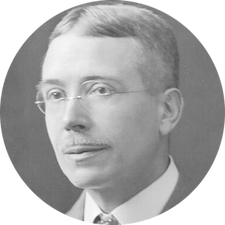
—William Strunk, Jr.
William Strunk Jr. was an American professor of English at Cornell University and the author of The Elements of Style. After his former student E. B. White revised and extended the book, The Elements of Style became an influential guide to writing in the English language, informally known as “Strunk & White”. Wikipedia
I have been a psychotherapist and marriage and family counselor for more than fifty years. I feel blessed to have a career where I can help men and women to live more fully authentic lives, to love deeply, and to make a positive difference in the world. Yet, the truth is much more personal and complicated.
I was born in deception, a story I never learned until I was an adult and had gone through two divorces and written a book about my conflicted love life — Looking For Love in All the Wrong Places: Overcoming Romantic and Sexual Addictions.
My mother and father met in 1928 in New York’s Greenwich Village. He was twenty-two and an aspiring actor. She had just turned twenty and longed to write the great American novel.
They told me stories of The Village when they arrived as a hub for artists, writers, and musicians. The area was alive with progressive ideas and radical politics, attracting artists and intellectuals of all kinds. Like my own growing up in San Francisco in the 1960s, experimental lifestyles and free love was in the air.
My mother told me there was another man in her life back then, a young newspaper reporter working for the New York Times. Long after my father and she were divorced, she admitted she had a number of lovers that she kept secret.
When people visit me at MenAlive they see my welcome video, “Confession of a Twice-Divorced Marriage Counselor.” In my book, Looking for Love in All the Wrong Places, I share the ways in which deception and addictions have impacted my love life. In my book, The Enlightened Marriage: The 5 Transformative Stages of Relationships and Why the Best is Still to Come, I share my healing journey.
The Honesty Crisis: Preserving Our Most Treasured Virtue in an Increasingly Dishonest World
I recently had the opportunity to interview Christian B. Miller, author of the book The Honesty Crisis: Preserving Our Most Treasured Virtue in an Increasingly Dishonest World. I asked him to give me a little background about himself and his work. Here’s what he told me:
“I live in Winston-Salem, North Carolina with my amazing wife and three children. I have been incredibly fortunate to spend the last twenty years at Wake Forest University, where I am now the A. C. Reid Professor of Philosophy. My research primarily has to do with virtue and moral character, and for ten years I was the leader of TheCharacter Project and The Honesty Project, two of the largest research projects in the world on these topics.
In addition to my academic writings, I have a new popular book forthcoming in May, The Honesty Crisis: Preserving Our Most Treasured Virtue in an Increasingly Dishonest World to go along with an earlier trade book, The Character Gap: How Good Are We? I was a science contributor for Forbes, and have written for The New York Times, Wall Street Journal, Dallas Morning News, Slate, The Conversation, Newsweek, Aeon, and Christianity Today.”
I found the book and Christian Miller’s work to be timely and important. He says that honesty is eroding at a frightening rate in many areas of society today, as we are confronted with a number of honesty crises:
The frequency of deepfakes has skyrocketed, now that they are simple to make and untraceable.
In education, many students are using AI to complete their writing assignments with little chance of detection.
In politics, social media helps with the dissemination of fake news, and polarization reduces our tendency to condemn political dishonesty if it aligns with our own views.
In public spaces, it is easier to become a celebrity than it has ever been in human history, and yet celebrity encourages greater dishonesty.
In religion, religious leaders are increasingly confronted by temptations to plagiarize sermon material from the Internet and AI.
In our relationships, with the easy availability of online pornography, anonymous chatrooms, and infidelity websites like Ashley Madison, cheating in a relationship has never been easier.
The section on relationships was particularly relevant to the work I do with clients. Miller says,
“If there is anything discussed in this book that has been around forever, it is infidelity, both sexual and emotional. Wherever there are exclusive romantic relationships, there is also the threat of cheating. But the rise of the Internet has changed things for the worse here.”
People long to have relationships that last through time, but they are becoming increasingly difficult. I feel fortunate to have learned what makes relationships last and how to keep them alive and well. My wife, Carlin, and I shared what we have learned in my book, The Enlightened Marriage: The 5 Transformative Stages of Relationships and Why the Best is Still to Come.
Entelechy (pronounced en-TEL-uh-kee) is the philosophical concept of realizing potential. Coined by Aristotle, it refers to the condition of a thing whose essence and potential have been fully actualized, or the internal driving force that transforms a mere possibility into a complete reality. [1, 2, 3, 4]
The Three Core Meanings
Actualization of Potential: The state of becoming what something is meant to be. For example, the entelechy of an acorn is a full-grown oak tree, bringing its dormant potential into physical reality. [1, 2, 3, 4]
The “Driving Force”: In some philosophies (particularly vitalism), it denotes an innate, vital agent or inner energy that directs the growth and purpose of an organism. [1, 2]
Wholeness and Completion: It represents a state of being where a thing is actively doing what it was designed to do, operating as a complete, harmonious whole. [1, 2, 3]
Etymology and Origin
The term originates from the ancient Greek word entelecheia. It breaks down into three root words: [1, 2, 3]
Together, it literally translates to “having one’s end within.” []
How It’s Used
Aristotelian Philosophy: Aristotle utilized the word to explain why things change. He posited that everything has an inherent “form” or “purpose” it strives for. He famously described the soul (psyche) as the entelechy of a living body—the active force that makes a body actually live rather than merely exist as a pile of matter. [1, 2]
Psychology: The concept is often translated into modern psychology and self-help as self-actualization—the drive to realize your utmost potential and become the best version of yourself. [1, 2]
Literature: In broader vocabulary, it describes the successful realization of a long-term goal. For example, a debut novel can be described as the entelechy of a writer’s lifelong passion. [1]
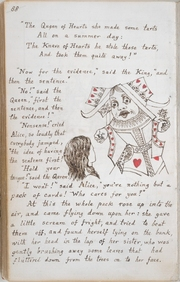
Page from Lewis Carroll’s handwritten and self-illustrated manuscript of Alice’s Adventures Under Ground (1864), the early version of Alice’s Adventures in Wonderland
The Diary Of A CEO and The Age Of Disclosure May 14, 2026 New Episodes He spent decades inside the world’s most classified intelligence circles…now quantum physicist Dr. Hal Puthoff and filmmaker Dan Farah reveal why the greatest cover-up in human history may finally be unravelling. Dr. Hal Puthoff is a quantum physicist who has worked with the NSA and CIA, advised the US government on UAP science, and served as chief science advisor to Robert Bigelow of Bigelow Aerospace. Dan Farah is the Director and Producer of The Age of Disclosure, a landmark documentary produced in secret over three and a half years, featuring testimony from US Secretary of State Marco Rubio, Navy fighter pilots, admirals, generals, and senior intelligence community leaders. They explain: ◼️How the US government has been covering up non-human intelligent life since the 1940s ◼️ Why crashed UAP craft have allegedly been recovered — with non-human bodies inside ◼️How a secret “Legacy Program” operated for decades outside of Congressional and White House oversight ◼️Why UAPs have been repeatedly spotted hovering over US nuclear weapons sites… and switching off missiles ◼️How the US is entered a covert technology race with China and Russia to reverse-engineer non-human craft ◼️What Trump’s historic declassification directive actually revealed (and what’s still being hidden) ◼️Why Elon Musk may know more than he’s legally allowed to say ◼️Why UAP is the most bipartisan issue in Washington right now 00:00:00 Intro 00:02:31 Answering the Biggest UAP Questions 00:06:08 Why A Former Insider Took UAP Claims Seriously 00:10:21 The Real Reason Officials Couldn’t Speak Publicly 00:14:04 What Allegedly Happened After Non-Human Craft Crashes 00:19:42 Are There Multiple Types Of Non-Human Beings? 00:22:34 What U.S. Presidents Are Actually Told About UAPs 00:24:17 Is The Public “Not Ready” For The Truth? 00:27:51 What Was Really Inside Trump’s UAP Report? 00:29:20 Why There Still Aren’t Clear iPhone Videos Of UAPs 00:38:09 Ads 00:40:12 If These Craft Are So Advanced, Why Do They Crash? 00:41:25 Does Elon Musk Know More Than He Admits? 00:45:44 Could All Of This Be A Massive Misinterpretation? 00:50:24 Why NASA Says UAPs Aren’t Aliens 00:56:42 The One Story That Convinced Him Something Real Exists 01:01:46 Ads 01:03:40 What Alien Life Would Mean For Religion And God 01:08:38 The CIA’s Remote Viewing Experiments Explained 01:14:26 Does The Stargate Program Still Exist Today? 01:18:20 Why Advanced Civilizations Might Still Use Pilots 01:22:03 Would Discovering Alien Life Change The Meaning Of Life? Follow Dan: X: @Dan_Farah (https://x.com/Dan_Farah) Instagram: @dan_farah ( / dan_farah ) Documentary website: www.theageofdisclosure.com
In 1703, the world’s most esteemed scientific journal published a surprising letter from an anonymous correspondent. (At the time, until well into the twentieth century, anonymity often meant the scientist writing was a woman, though the word “scientist” itself was more than a century away, to be coined for a woman.)
The letter reported an astonishing discovery in the roots of pond plants placed under a microscope, still a relative novelty: Adhering to the delicate aquatic stalks were “many pretty branches, compos’d of regular oblongs and exact figures… the longest side not exceeding 1/2 of a hair’s breadth” — mysterious beauties smaller than any life-form anyone had seen, and yet appearing to be more than inert matter. “They may be rather Plants than Salts,” the shy scientist speculated shyly, but concluded that “they being so very minute that no judgment can be made of them but by the Eye,” it is impossible to “determine any thing positively.”
These beguiling marvels — tiny stars and fans and ribbons organized along exquisite radial and lateral symmetries — confused Darwin when he encountered them a century and a half later in the dust of the Cape Verde Islands and in the face paint of the native inhabitants Tierra del Fuego. All he managed was to gasp that “few objects are more beautiful,” seemingly “created that they might be examined and admired under the high powers of the microscope.”
Modern micrograph of diatoms (NOAA)
Today, we know that diatoms — thousands of species of unicellular algae, each a living Noether theorem housed in a shell of opal — are not created for admiration but create the admirer: Every life-form on Earth depends on them. Tiny powerhouses of photosynthesis populating every body of water, these phytoplankton generate close to half of our planet’s oxygen, pillar its biomass, and absorb the atmospheric carbon dioxide that dissolves in the ocean.
To know of this extraordinary power makes the delicate beauty of diatoms all the more beguiling — nowhere more so than in Diatom Atlas by the German naturalist and clergyman Adolf Schmidt (1812–1899), who spent the better part of his life sampling cells from all over the world — Japan to Chile, Java to Barbados — to compose his pioneering portrait these miniature masterpieces of evolution.
Art from Diatom Atlas by Adolf Schmidt, 1890 edition. (Available as a print and more.)
Originally published in 1874 in black and white, the atlas was later reproduced on blue paper — a medium that originated in ancient China, then made its via the Middle East and Spain to Renaissance Italy to be used as a base for drawing and prints, giving two-dimensional artwork a hauntingly beautiful three-dimensional quality.
Art from Diatom Atlas by Adolf Schmidt, 1890 edition. (Available as a print and more.)
Art from Diatom Atlas by Adolf Schmidt, 1890 edition. (Available as a print and more.)
Art from Diatom Atlas by Adolf Schmidt, 1890 edition. (Available as a print and more.)
Art from Diatom Atlas by Adolf Schmidt, 1890 edition. (Available as a print and more.)
Art from Diatom Atlas by Adolf Schmidt, 1890 edition. (Available as a print and more.)
“I died for beauty,” Keats wrote with the requisite melodrama of the Romantics. Diatoms are a dazzling defiance of this aesthetic nihilism, urging us to remember that we are here to live with beauty. They could have remained mere producers of chemical energy no handsomer than a factory, and yet here they are, living jewels of the blue world. Pulsating beneath their shimmering shells and mathematically perfect symmetries is the elemental question: Why did the world have to be beautiful? And beneath that still, the eternal answer: No why; just is.
Art from Diatom Atlas by Adolf Schmidt, 1890 edition. (Available as a print and more.)
Climbing the Andes one windy January afternoon, watching peak after peek emerge on the horizon like giant mounds of moss, I found myself wondering about the clear line toward the top where the green ends and the reddish-brown of the barren rock begins, wondering how the trees and shrubs know when to stop, how far to keep pushing, where the point is past which the conditions become too inhospitable for growth, for flourishing, for survival.
This may be the hardest equation to balance in all of existence: when to keep trying and when to stop. Nowhere is it more confounding, because nowhere is the calculus of reason more haunted by emotion, than in our intimate relationships. There, all the variables are too charged with feeling to be weighed accurately; there, the most vulnerable part of the ego keeps factoring itself into the arithmetic. Because time is something we can measure and tenderness is not, we keep trying to ward off the singular sense of personal failure that the loss of love can bring by measuring the success of a relationship by quantity of time rather than quality of being, only to find ourselves on barren rock.
Kurt Vonnegut (November 11, 1922–April 11, 2007) was twenty-two and just home from his wartime duty in Europe, where he had been held as a prisoner of war in Dresden and barely survived the Allied bombing of the city, when he married his college classmate Jane Marie Cox — two young people not yet having become themselves, unformed and unhealed, trying to be together.
They loved each other, but as they grew up, they grew apart, grew askance. And yet, dragged by the momentum of culture, they had a son, then a daughter, then another as Vonnegut struggled to make a living as a writer.
Vonnegut at 33 with his family.
When his sister died of cancer two days after her husband was killed in a train accident, he adopted their three young sons. In that way life has of denying us any alternative experimental condition but our lived experience, no one knows what might have become of the couple in an experimental design other than a small house pattered by six hungry children. They fought more and more, until even the most mundane conversation couldn’t but become an argument.
Vonnegut tried to take refuge in writing, but his twin peaks of bills and rejection slips came to tower over his dream. Middle-aged and penniless, he was about to give up when he received an unexpected offer to teach at the prestigious Iowa Writers’ Workshop, procured through the kindness of a single reader touched by the work of this obscure unhappy writer. It was a lifeline both professional and personal. Vonnegut packed his bags and headed to Iowa, knowing in his heart, though he was not yet ready to allow the thought, that this was the end of his life with Jane.
Two years into teaching, as his writing was finally beginning to receive recognition, he was awarded a Guggenheim Fellowship and used the prize money to travel back to Dresden, only to find much of the city still in ruins. I wonder if he thought about love then, how it too is a world that can be left in ruins beyond repair if the warfare is too brutal or too long.
Suddenly catapulted into public success — after five novels and countless short stories, Vonnegut was lauded as an overnight success with Slaughterhouse-Five — he remained lodged in the pit of personal failure. He and Jane had been together for a quarter century, happy for only a fraction of it. Torn between his emotional inability to hold on to the relationship and his cerebral unwillingness to give up, he began drowning his discontent in drink.
In the last year of his forties, he moved out and headed for New York, but couldn’t bring himself to end the marriage. Taking solace in Margaret Mead’s assurance that “a couple which has had children has an irreversible and undissolvable relationship,” he wrote to Jane:
We hurt each other back and forth so much, almost absent-mindedly, that it was common sense for us to separate, if only to break the rhythm.
He shaded in this stark contour in a letter to a friend, painting a haunting portrait of a dead relationship:
I myself am living alone in two rooms and a garden in New York, attempting to draw useful electricity from the millions of milling strangers around me. I am no longer living with Jane for this reason, as nearly as I can tell: We are no longer capable of conducting amiable conversations. When we try to talk, to amuse each other and pass the time, our words are wooden, stilted, queer, distant, and — finally — quietly bitter. That is too bad, and many people regard me as heartless for leaving her. But the hours and days and years dragged so. I am happier now, though far from hilarious and proud. I have achieved a sort of Limbo, which is a distinct improvement over what I had before. I am beginning to write again. That had stopped for a while. I do not wish to marry again. I’m not in love with anybody else.
Kurt Vonnegut at 50.
Writing remained his one oasis of sanity amid the limbo of his Middle Passage. Some part of him — that wise part that lives in each of us, whispering what we don’t want to but need to hear — knew that he had to reimagine his life if he were not to squander it. But he was not ready. So he reimagined his writing, taking the skeleton of a play he had written fifteen years earlier and enfleshing it anew. Happy Birthday, Wanda June ran for five months to mixed reviews, but the world was finally paying attention.
Having documented Martin Luther King, Jr.’s historic speech during the March on Washington and worked as a war photographer in Vietnam, Jill Krementz was unperturbed by the cantankerous writer whose process she was hired to capture for a magazine profile. She immediately felt both Vonnegut’s brilliance and his brokenness, felt the sharp edge on which his own heart was breaking, saw to the roiling core of his wounded tenderness. He immediately decided he didn’t like her. (“There is no terror like that of being known,” Emerson shuddered at the discomposing intimacy that bloomed between him and Margaret Fuller.)
Within months, they were living together.
Just before he moved in with Jill, Vonnegut wrote to his seventeen-year-old daughter Nanette:
Dear old Nanny —
You certainly deserve a letter from me. A hundred letters would be more like it, I love you so.
I will be home from time to time to see you. But I will not stay for long. I still love your mother, but we can’t be together much without fighting. We have tried to do things about this, but nothing helps, and each fight hurts more than the last one.
I wasn’t stolen away by another woman. I don’t think people can steal other people. I simply went away because the fighting was making everybody so unhappy. I’ve done that several times before. Going to Iowa was an example. Every time I went away I simply went to aloneness. There was never any other woman beckoning me to come.
This time, for instance, I couldn’t make myself come home after the play opened, and I was alone. I hardly knew Jill at all, and I didn’t like her much, and whatever happened between us happened long after I’d decided home was too uncomfortable for me.
Eighteen years his junior but in many ways his spiritual elder, Jill enveloped him in a kindness so entirely new he didn’t know what to do with it, a love he hadn’t thought possible. He tried to fight with her, out of reflex, but she simply loved him, and so he slowly unbraced the oppositional stance that had become his default, slowly stopped self-medicating. He grew healthy, grew happy, grew himself.
Still, it took him six years to meet the emotional truth of his failed marriage with the hard fact of divorce. When he finally decided to do it, he wrote to Nan:
As for the divorce: I will always love your mother, as must have been evident on Sunday. But we could never live together again. Our conversations go so badly. Also: I want to be fair to Jill, who saved me from knocking myself off or turning into an alcoholic. I will not marry Jill, but I will stop asking that she live with a married man. And Jane, who is fond of marriage, should have the chance to marry again. I am not pursuing happiness through divorce. I am permanently damaged by the break-up of marriage. Those wounds will never heal. I am simply trying to make the best of an unpleasant situation. Let me say again, too, that Jill did not break the marriage. It was broken long before that — about the time I went to Iowa. There was no other woman beckoning me to Iowa. Later on, there was no woman beckoning me to New York City. I arrived both places in total solitude, and feeling simply awful.
There will be no acrimonious argle-bargle about divorce this time. We will not make the mistake of hiring two strangers to fight each other on our behalf. Jane and I will arrive at some sort of division of property, and some scheme for my sending her money regularly. She already owns the Cape house and some stocks and a large savings account in cash. I will add to that treasure, so she won’t have much to worry about as long as I’m popular and productive. Then Don Farber will draw up a simple agreement, and that will be that. The legal steps will be brief formalities, without any arguments to be made before a judge.
It took him another two years to formalize his relationship with Jill. By the time they decided to marry, he was fifty-seven and one of the most beloved authors in America. His daughter was the first person he told:
Dearest Nanny —
I want you to be the first person in our family to find this out: That Jill and I have decided to marry each other in November, probably a couple of days after Thanksgiving. Jill will then be three months shy of being forty, and we will have lived together about nine years. The first years of the relationship were tempestuous. Much of the tempest was my fault, surely. I was in a frenzied state of mourning and dismay over the failure of my once good marriage to Jane. Jill had nothing to do with that failure, but she was handy to blame. Be that as it may, Jill and I behave most affectionately and reasonably toward each other now, and unselfishly. We are in love. Our heads are clear. We are working and playing most cheerfully.
I do not endorse serial marriage for anyone. I myself have always wished to be as monogamous as a swan. I was monogamous with your mother until the very end, and will be so with Jill.
After a rough sketch of the wedding (“It will be very private. We don’t want our pictures in the paper.”), he added:
I sympathize fully with the mixed loyalties you and all the rest of my children would feel on such an occasion. So I of course invite you all, and hope you all will come. If the ceremony and party are going to cause you pain, you should not subject yourself to that pain. Your coming or staying away will not be a vote for or against anything.
Mostly, dear Nanny, I want you to know how happy I am just now, and that I have every reason to look forward to some very good years ahead.
Kurt Vonnegut and Jill Krementz a decade into their love. (Photograph: Adam Scull.)
Kurt and Jill remained together until his death, thirty-six years after they met. It was there, in the safety and sweetness of their love, that he discovered the simple secret of happiness.
Whenever there is a will, there are two things: a way and an obstacle in the way — that place midway between desire and destination where one’s will collides with the will of the world, with the parameters of permission for imagination we call reality. The triumph of life is turning that collision into a particle collider for possibility, turning the limitation into a creative constraint that challenges more imaginative forms of being into existence, right there in the interruptive middle. Because every life is shaped by the obstacles it has encountered and how it has responded to them, every life is in a sense a story that begins in the middle.
An obstacle is the richest, thickest, densest place in the universe. This is so because it is where things stop and often die, failing to continue on their way. It is where carcasses of hope rot into the ground, inadvertently fertilizing it. It is a place of desperation and longing and roaming ghosts… bursting with activity, with microbial adventures, with dancing generativity, with experiments into dis/continuity, with playful meanings and alchemical shifts, with eloquent invocations and stuttered words. When you meet something fierce, too strong to overcome, too high to climb, too eminent to sidestep, too dark to enlighten, don’t take it too personally — you have merely met an antibody, whose sacred task is to challenge you, discombobulate you, disfigure you, and introduce “you” to the strange vastness of your family. A larger commonwealth of becoming.
In a lovely antidote to the cult of achievement — that punitive denial of the most wondrous aspect of being alive: the fact that we are unfinished — he adds:
Obstacles are the universe’s hubs of unspeakable creativity, redeeming us from tired victories, from the banality of crossing the finish line, from the soundtrack of getting everything we want, and especially from the hubris of thinking we are in control.
The moment an obstacle bisects the trajectory of intent, it creates a natural midpoint that is both an end and a beginning, but also something else entirely, for it lives on a different plane from the strict linearity of the will as cause and its intended effect.
Akomolafe considers the singular fertility of these midpoints:
It is here, right here in the contested middle that we often learn that our maps, however elaborate, are not the whole picture or the terrain they pretend to represent. And that home is not simply the fixed dot at the end of dashed lines, motionless and given, awaiting the ones who come marching in… Everything begins in the middle. There are no beginnings that appear unperturbed, pristine and without hauntings. And there are no endings that are devoid of traces of the new, spontaneous departures from disclosure, and simmering events that are yet to happen. The middle isn’t the space between things; it is the world in its ongoing practices of worlding itself.
Part of our difficulty in inhabiting middles, in orienting to obstacles, lies in our two-dimensional model of this ongoingness — causality as an arrow from the point of action to the point of consequence. Everything changes, however, if we conceive of it as a locus of points on a three-dimensional sphere of time. Akolafe offers a model from West Africa’s ancient cosmogonies consonant with the double-slit experiments of quantum mechanics and their implications of retrocausality:
The Yoruba people speak of ayé, loosely translated into the one-tongue as “life” — a poor translation, if you ask me, for what they try to articulate is a mode of causation that is unwieldy, surprising, diffracted, multilinear, ecstatic, and sensuous: where… one cannot draw too straight a line from cause to effect. Indeed, one cannot even draw a sure unidirectional line from cause to effect, since effect can flow into cause, and — even more startlingly — also because time is not conceived as a single stream flowing from past to future but as a cycle… a muddy viscous puddle that means the past is amenable to reconfiguration.
Discus chronologicus — a German depiction of time from the early 1720s. (Available as a print and as a wall clock.)
A century after Virginia Woolf gasped in her profoundest epiphany that “behind the cotton wool is hidden a pattern… the whole world is a work of art… there is no Shakespeare… no Beethoven… no God; we are the words; we are the music; we are the thing itself,” he adds:
We — together with multiple others — are part of a web of life, not just stuck on it like a hapless fly-turned-spider-breakfast, but the very web itself in its fluctuations and rich complexity. And movement, the slightest gesture, sends tremors through the veins of our never-ending reiterative becomings.
Florida Gov. Ron DeSantis (R) | YouTube screenshot
Two Florida cities are standing up to Gov. Ron DeSantis‘ removal of their rainbow crosswalks by painting rainbow colors on two other highly visible public places.
At the start of Pride month, St. Petersburg painted the steps of its city hall in the colors of the Progress Pride flag.
“Losing the crosswalk was a huge hit to us, so making sure that we pop up more visual signs of inclusion was right in alignment,” said Dr. Byron Green-Calisch, president of the board of directors with St. Pete Pride, according to Bay News 9. “So, the fact we got to see it at the beginning of Pride Month was chef’s kiss.”
City Mayor Ken Welch said, “The Pride steps at City Hall are more than paint on concrete. They are a reflection of St. Petersburg’s values and a reminder that our city is strongest when everyone feels welcome, respected, and seen.”
The rainbow steps of St. Petersburg’s City Hall | Bay News 9 video screenshot
Last July 1, Transportation Secretary Sean Duffy wrote in a letter directing the nation’s governors to keep all non-freeway intersections and crosswalks “free from distractions.” In a subsequent X post, he said, “Taxpayers expect their dollars to fund safe streets, not rainbow crosswalks.”
In response, DeSantis signed a law directing the Florida Department of Transportation (FDOT) “to ensure compliance with FDOT’s uniform system for traffic control devices,” according to a July statement from a department spokesperson. The law effectively bans all pavement art and murals like rainbow crosswalks, regardless of their political message.
The city of Fort Lauderdale also recently installed a rainbow-colored “circle of love” at the Selene condominiums near Sebastian Street Beach, a popular LGBTQ+ beach. The city had been fighting DeSantis’ order in court to keep its rainbow street art, but it relented after his administration threatened to withhold local transportation funding. Because the new rainbow circle is located on private business property, current state law cannot force the business to remove it, WPEC reported.
“We are here today to not only say that we are going to never be erased, but we’re going to find a way to still be able to appreciate and embrace the diversity of our community,” Mayor Dean Trantalis said during the circle’s unveiling earlier this month. “Because if there’s anything that Fort Lauderdale represents, it’s diversity. People from all walks of life should be able to come here.”
Rep. Debbie Wasserman Schultz (D-FL), who also attended the unveiling, said, “This expression in the circle of love, with the city working with a developer in the city to make sure that there continues to be a very public display of support for equality and the LGBTQ+ community, is remarkable and I’m so proud of them.”
Subscribe to the LGBTQ Nation newsletter and be the first to know about the latest headlines shaping LGBTQ+ communities worldwide.
Daniel Villarreal is a longtime, award-winning journalist and editor who has written for NBC News, Newsweek, Vox, Slate, Vice News, The Seattle Stranger, The Dallas Voice and numerous other LGBTQ+ publications. He has spoken at SXSW, Creating Change, Netroots Nation, GaymerX, and is a graduate of GLAAD’s Voices of Color program and of the Poynter Institute’s 2024 Power of Diverse Voices seminar. He is also the founder of QueerBomb Dallas, an annual non-corporate Pride event; CinéWilde, the nation’s longest running monthly LGBTQ film series. He is available for interviews and educational talks.
West Side Story On Broadway May 11, 2020 “It is always hard to see the light at the end of a tunnel and even more so, that of a tunnel we’ve never been in before. ‘Something’s coming, something good!’ would be good to keep in mind looking to a much brighter time when all this is over.” Lead Trumpeter Dominic Derasse organized a very special digital rendition of “Something’s Coming” featuring Isaac Powell and the WEST SIDE STORY orchestra. “I saw this video as a special opportunity to credit all the orchestra members whose hard work you always hear, but whose faces you don’t often see” (Isaac Powell). www.westsidestorybway.com
Consciousness, spirituality, biography, sexuality, androgyny, futurism, space, the arts, science, astrology, democracy, humor, books, movies and more





 We hurt each other back and forth so much, almost absent-mindedly, that it was common sense for us to separate, if only to break the rhythm.


 Florida Gov. Ron DeSantis (R) | YouTube screenshot