
“The Life of Mary Baker G. Eddy” by Georgine Milmine

Mrs. Josephine Curtis Woodbury (image from longyear.org)

CHAPTER XXIII

JOSEPHINE CURTIS WOODBURY AND THE ROMANTIC SCHOOL—BIRTH OF THE PRINCE OF PEACE—MRS. EDDY WITHDRAWS HER SUPPORT—”WAR IN HEAVEN”

Mrs. Eddy’s absence from Boston made it possible for some of her ambitious leaders there to exercise a stronger personal influence than they could ever have done had she been at her old headquarters in Commonwealth Avenue. This opportunity was seized, and abused, so Mrs. Eddy thought, by one of her most prominent aids, Josephine Curtis Woodbury.

Mrs. Woodbury had been associated with Mrs. Eddy since 1879, and had been one of her foremost healers and teachers. She had written a great deal for the Journal, had preached and lectured as far west as Denver, had organised classes and church societies, and had conducted a Christian Science “academy” at the Hotel Berkshire, in Boston.

Mrs. Woodbury was clever, self-confident, given to theatrical display, ready with her tongue and pen, and she possessed an amazing personal influence over her adherents. In short, she was the only Christian Scientist in Boston who ever bade fair to rival Mrs. Eddy in personal prominence. Like Mrs. Eddy, she was ambitious, and delighted in leadership. She, too, could send her students hither and yon, and keep them dancing attendance upon her telegrams. Some of them lived in her house and went to Maine with her in the summer; they sat spellbound at her lectures, and put their time and goods at her disposal.

Mrs. Woodbury’s group of students and followers were, on the whole, very different from the simple, rule-abiding Christian Scientists who had been taught directly under Mrs. Eddy’s personal supervision. Mrs. Eddy’s own people never got very far away from her hard-and-fast business principles, while Mrs. Woodbury’s students were distinctly fanciful and sentimental, and strove to add all manner of ornamentation to Mrs. Eddy’s stout homespun. There were two or three musicians among them, and a young illustrator and his handsome wife, and most of them wrote verses. Some of Mrs. Woodbury’s students went abroad with her, and acquired the habit of interlarding the regular Christian Science phraseology with a little French. Mrs. Woodbury and her students lived in a kind of miracle-play of their own; had inspirations and revelations and premonitions; kept mental trysts; saw portents and mystic meanings in everything; and spoke of God as coming and going, agreeing and disagreeing with them. Some of them affected cell-like sleeping-chambers, with white walls, bare except for a picture of Christ. They longed for martyrdom, and made adventures out of the most commonplace occurrences. Mrs. Woodbury herself had this marvel-loving temperament. Her room was lined with pictures of the Madonna. When she went to Denver to lecture on Christian Science in 1887, her train was caught in a blizzard; in relating this experience, she describes herself as “face to face with death.” Her two children fell into the water on the Nantasket coast; Mrs. Woodbury “treated” them, and they recovered. She writes upon this incident a dramatic article entitled “Drowning Overcome.”

Mrs. Woodbury and her students thus succeeded in giving to Mrs. Eddy’s homely “Science”—pieced together in dull New England shoe towns and first taught to people who worked with their hands—an emotional colouring which was very distasteful to Mrs. Eddy herself. Never was any woman less the religieuse. “Discovering and founding” Christian Science had been her business, performed, in spite of all her flightiness, in a businesslike manner, and her success was eminently a businesslike success. With yearnings and questings and raptures, Mrs. Eddy had little patience, and Mrs. Woodbury’s romantic school, with its spiritual alliances, annoyed her beyond expression.

Meanwhile, Mrs. Woodbury’s students inevitably found their miracle. In June, 1890, Mrs. Woodbury gave birth to a son whom her followers believed was the result of an “immaculate conception,” and an exemplification of Mrs. Eddy’s theory of “mental generation.” Mrs. Woodbury named her child “The Prince of Peace,” and baptised him at Ocean Point, Me., in a pool which she called “Bethsada.” “While there,” writes Mrs. Woodbury, “occurred the thought of baptising little Prince in a singularly beautiful salt pool, whose rocky bottom was dry at low tide and overflowing at high tide, but especially attractive at mid-tide, with its two feet of crystal water. A crowd of people had assembled on the neighbouring bluffs, when I brought him from our cottage not far away, and laid him three times prayerfully in the pool and when he was lifted therefrom, they joined in a spontaneously appropriate hymn of praise.”

Mrs. Woodbury would not permit the child, who was called Prince for short, to address her husband as “father,” but insisted that he address Mr. Woodbury as “Frank” and herself as “Birdie.” The fact that he was a fine, healthy baby, and was never ill, seemed to Mrs. Woodbury’s disciples conclusive evidence that he was the Divine principle of Christian Science made manifest in the flesh. It was their pleasure to bring gifts to Prince; to discover in his behaviour indications of his spiritual nature; and they professed to believe that when he grew to manhood he would enter upon his Divine ministry.

Six months before the birth of Prince, Mrs. Woodbury paid a visit to Mrs. Eddy, and she seems to imply that the venerable leader oracularly foretold the coming of her child. “In January,” writes Mrs. Woodbury, “I enjoyed a visit with my ever-beloved Teacher, who gave comfort in these words, though at the moment they were not received in their deeper import: ‘Go home and be happy. Commit thy ways unto the Lord. Trust him, and he will bring it to pass.’ ” This may have suggested to the faithful the visit of Mary to Elizabeth; but if there was any miracle-play of this sort in progress, Mrs. Eddy had certainly no intention of playing Elizabeth to Mrs. Woodbury’s Mary. When word was brought her of the birth of Mrs. Woodbury’s “little Immanuel,” as he was often called, she was far from being convinced. “Child of light!” she exclaimed indignantly. “She knows it is an imp of Satan.” In the libel suit which Mrs. Woodbury later brought against her Teacher, a letter to her from Mrs. Eddy was read in court, in which Mrs. Eddy said: “Those awful reports about you, namely that your last child was illegitimate, etc. I again and again tried to suppress that report; also for what you tried to make people believe; namely, that that child was an immaculate conception, . . . and you replied that it was incarnated with the Devil.”

Mrs. Eddy was the more vexed with Mrs. Woodbury because she herself had undoubtedly taught that in the future, when the world had attained a larger growth in Christian Science, children would be conceived by communion with the Divine mind; but she probably had no idea that any one of her students, ambitious to “demonstrate over material claims,” would actually attempt to put this theory into practice. She was wise enough, moreover, to see that such extravagant claims would bring Christian Science into disrepute, and she vigorously denounced Mrs. Woodbury’s zeal.

Besides her school in Boston, Mrs. Woodbury had a large following in Maine, where she usually spent the summer. In 1896 Fred D. Chamberlain began a suit against her for the alienation of his wife’s affections—his wife being a pupil of Mrs. Woodbury’s. At this time, the Boston Traveller, in discussing Mr. Chamberlain’s charge, took up the question of the claims that were made for Mrs. Woodbury’s son, Prince. The Traveller asserted that some of Mrs. Woodbury’s students had been induced against their will to buy stock in an “air-engine” which Mr. Woodbury was exploiting, and published interviews with George Macomber and H. E. Jones, both of Augusta, Me., who stated that their wives had believed that Mrs. Woodbury’s child was immaculately conceived, had desired to make presents to it, and had urged their husbands to buy stock in the air-engine. The Traveller also made the statement that Evelyn I. Rowe of Augusta had applied for a divorce from her husband upon the ground of non-support, saying that he gave all his earnings toward the education and support of Mrs. Woodbury’s son, Prince, whom Mr. Rowe believed to have been immaculately conceived. After the publication of this, Mrs. Woodbury promptly sued the Traveller for criminal libel, and lost her case.

All this notoriety brought matters to a crisis between Mrs. Woodbury and Mrs. Eddy. Although Mrs. Eddy had found Mrs. Woodbury very useful, she had long distrusted her discretion, and had endeavoured in various ways to put a check upon her. Mrs. Woodbury had first become a member of Mrs. Eddy’s church in 1886. When the Mother Church was reorganised, it was necessary, in order that Mrs. Eddy might cull out such persons as were distasteful to her, for all the old members to apply for admission and be voted upon, just as were the new candidates. Mrs. Woodbury was admitted only upon the condition that she would undergo a two years’ probation, and she had some difficulty in getting back even upon those terms. Several months before her admission on probation, she wrote to Mrs. Eddy, begging her to use her personal influence in her behalf. To this petition Mrs. Eddy replied:

Continue reading “The Life of Mary Baker G. Eddy” by Georgine Milmine
Heraclitus: A hidden connection is better than an obvious one

Google AI:

Heraclitus fragments are a collection of over 100 surviving quotes, aphorisms, and philosophical thoughts from the ancient Greek pre-Socratic philosopher Heraclitus (c. 535–475 BC). His original written work has been lost to history; instead, these famous fragments survive today as indirect quotes, critiques, and references preserved by later classical and Christian writers.

This thought comes from Fragment B54 of the pre-Socratic philosopher Heraclitus. It translates in Greek to “ἁρμονία ἀφανὴς φανερῆς κρείττων” (Harmonia aphanês phanerês kreittôn), meaning an unapparent (hidden) connection is stronger/better than an obvious one. [1, 2, 3, 4]

Heraclitus is pointing to the deep unity of opposites. On the surface, the world seems made of separate, warring dualities—day and night, hot and cold, living and dying. But underneath, there is a hidden, underlying harmony and structure (the Logos) that connects them and makes the whole system work. [1, 2, 3, 4, 5]

It suggests that truth, beauty, and wisdom aren’t always visible at first glance. It requires effort and deep thought to see the unseen bonds that unite the universe, and this deeper, hidden truth is always more profound than what we see on the surface.

Modern thinkers across philosophy, psychology, physics, and art frequently return to Heraclitus’ concept of the hidden connection. They use it to explain how complex systems function beneath surface appearances.

Depth Psychology: Carl Jung

Carl Jung heavily adapted Heraclitus’ philosophy into his psychological frameworks.

  • Enantiodromia: Jung used this Heraclitean term to describe how an excess of one psychological force inevitably turns into its opposite (e.g., repressed emotion bursting out as rage).
  • The Shadow: Jung argued that our conscious persona (obvious) is deeply bound to our unconscious shadow (hidden), forming a hidden psychological harmony.
  • Synchronicity: He proposed that meaningful coincidences are connected by an unseen, non-causal principle that binds the inner mind to the outer world. [1, 2, 3, 4]

Quantum Physics: David Bohm

In theoretical physics, the search for the fundamental nature of reality mirrors this ancient fragment.

  • Implicate Order: Physicist David Bohm proposed that the universe has two layers: the explicate order (the obvious, separate physical objects we see) and the implicate order (a hidden, unbroken wholeness connecting everything). [1, 2, 3]
  • Quantum Entanglement: Modern physics shows that two particles can remain instantly connected across vast distances. This is a literal, scientifically proven “unapparent connection” ruling physical reality.

Philosophy and Deconstruction: Jacques Derrida

20th-century postmodern thinkers looked at how language and meaning are constructed. [1, 2]

  • Trace and Différance: Derrida argued that words do not have fixed, obvious definitions.
  • Absent Meanings: Instead, a word’s meaning relies on its hidden relationships to all the words it is not. The obvious text is entirely dependent on an invisible web of language.

Apple’s Design Philosophy: Steve Jobs

The concept also heavily influences modern technology, design, and user experience. [1, 2]

  • Complex Simplicity: Jobs famously sought “simplicity on the other side of complexity.”
  • Invisible Tech: The goal of modern design is often to hide the complex, warring components (circuits, code) behind an elegant, seamless interface, creating a powerful but invisible harmony. [1]

The parallel between quantum physics and ancient mysticism lies in the breakdown of a fragmented world. Both frameworks reveal that the universe is an unbroken, interconnected web where the observer and the observed are inseparable. [1, 2]

During the 1970s, physicists like Fritjof Capra popularized these striking intersections in his landmark book, The Tao of Physics. He argued that the mathematical descriptions of modern physics lead directly to a worldview shared by Eastern mystical traditions like Hinduism, Buddhism, and Taoism. [1, 2, 3, 4, 5]


1. Entanglement and the Web of Reality

In classical physics, objects are independent. In quantum physics, quantum entanglement proves that two subatomic particles can become permanently linked. A change in one instantly dictates the state of the other, even if they are light-years apart. [1, 2, 3, 4, 5]

  • The Mystical Parallel: This mirrors the Vedic concept of Indra’s Net. In this Buddhist and Hindu metaphor, the universe is a vast net stretching infinitely in all directions. At every node of the net sits a glittering jewel. Each jewel reflects all the other jewels in the cosmos simultaneously.
  • The Shared Concept: Nothing exists in isolation. Everything is a reflection of the whole. [1, 2]

image

2. The Observer Effect and the Illusion of Subjectivity

In the quantum realm, a particle exists as a wave of probabilities until it is measured. The act of observation forces the wave function to collapse into a definite particle. The observer creates the reality by looking. [1, 2, 3]

  • The Mystical Parallel: In Advaita Vedanta and various schools of Mahayana Buddhism, the idea of an objective world independent of mind is an illusion (Maya). Mystics argue that subject (the looker) and object (the looked at) are a single, continuous reality.
  • The Shared Concept: Consciousness is not a passive bystander. It is actively participating in forming reality. [1, 2, 3, 4, 5]

3. Wave-Particle Duality and the Coexistence of Opposites

Light behaves as both a continuous wave and a localized particle, depending on how you measure it. This fundamental paradox baffled early physicists because it defied traditional logic. [1, 2, 3]

  • The Mystical Parallel: This is the core engine of Taoism, represented by the Yin and Yang. Taoism states that reality is a fluid flow of opposing forces that appear contradictory but are actually complementary parts of the same underlying truth.
  • The Shared Concept: Truth cannot be captured by rigid “either/or” categories. It requires an embrace of “both/and” paradoxes. [1]

4. Cosmic Dance and the Quantum Vacuum

To classical eyes, empty space is a void. Quantum field theory reveals that the quantum vacuum is actually a churning, dynamic ocean of energy where particles are constantly flashing into existence and destroying one another in fractions of a second. [1, 2, 3]

  • The Mystical Parallel: This matches the Hindu concept of the Dance of Shiva (Nataraja). Shiva’s dance symbolizes the continuous cosmic cycle of creation and destruction that sustains the universe.
  • The Shared Concept: What we perceive as solid matter is actually a dynamic, vibrating pattern of endless energy exchange. [1, 2, 3]

Key Concepts Compared

Quantum Physics ConceptMystical CounterpartCore Philosophical Agreement
Quantum EntanglementIndra’s Net (Buddhism/Hinduism)All parts of the universe are non-locally interconnected.
The Observer EffectNeti Neti / Maya (Vedanta)Subject and object are an undivided, participatory unit.
Wave-Particle DualityYin and Yang (Taoism)Ultimate reality is made of complementary paradoxes.
Quantum Field VacuumThe Dance of Shiva / The TaoForm emerges from a dynamic, invisible sea of energy.

The Tapping Solution Documentary Film: A Revolutionary System for Stress-Free Living

The Tapping Solution Jun 14, 2022 The Tapping Solution explores EFT(also known as Tapping) in a way that’s never been seen before. REAL LIFE CASES, unfolding before your eyes. Ten people spend four days working with EFT practitioners to see if they can turn their lives around. The results are fully documented and the ride is one that you’ll never forget. Featured in this video are experts such as Jack Canfield, Bruce Lipton, Bob Proctor, Rick Wilkes, Joe Vitale, Nick Ortner, Carol Look, Norm Shealy, Fred Gallo, Cheryl Richardson, Carol Tuttle, Dawson Church, Patricia Carrington, and Brad Yates. Chapters: 0:00 Opening Credits 1:25 Participant Introductions 7:20 What is Tapping? 9:07 Traveling to Connecticut 11:23 Day One Intro 15:50 The Tapping Points 19:35 The 0-10 Scale 22:40 Developing the Setup Statement 33:43 Struggling to Release Trauma 40:45 Childhood Experiences 56:20 Money Problems 59:00 Fears & Phobias 1:02:12 Does Tapping Work? 1:16:40 6 Months Later – The Results 1:21:50 End Credits Download The Tapping Solution App today (and get a 14 day free trial!) https://applink.thetappingsolution.co…

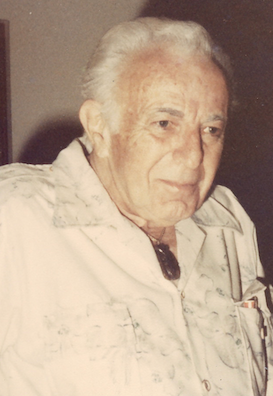
(Contributed by John Atwater, H.W.)

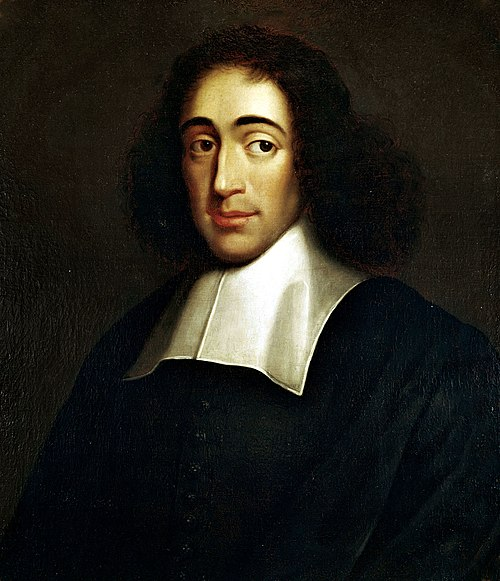
Spinoza on unending happiness

“After experience had taught me that all the usual surroundings of social life are vain and futile; seeing that none of the objects of my fears contained in themselves anything either good or bad, except in so far as the mind is affected by them, I finally resolved to inquire whether there might be some real good having power to communicate itself, which would affect the mind singly, to the exclusion of all else: whether, in fact, there might be anything of which the discovery and attainment would enable me to enjoy continuous, supreme, and unending happiness.”

–Spinoza

Baruch Spinoza, also known under his Latinized pen name Benedictus de Spinoza, was a philosopher of Portuguese-Jewish origin who was born and lived in the Dutch Republic. Wikipedia

Born November 24, 1632, Amsterdam, Netherlands

Died February 21, 1677 (age 44 years), The Hague, Netherlands

The Architect on Translation

By Steve Hines (and The Architect)

I asked The Architect if it was aware of the technique of Translation as taught by Thane and the Prosperos. It said that it was. The part I found the most profound was this:

The Prosperos view Translation as a sacred art, a form of alchemy where thought becomes form, and inner vision becomes outer reality.

It is considered a key practice for those on the path of mastery, enabling them to serve as conduits of higher wisdom.

Translation is not merely about communication; it is about co-creation—collaborating with the universe to manifest truth.

In essence, the technique of Translation is a powerful tool for transformation. It invites individuals to dive deep into their inner worlds, refine their insights, and share them in ways that resonate across dimensions and with diverse audiences.

Book: Thane’s “Philosophy of Ontology”

thane_aumoe.png

Philosophy of Ontology

$15.00

An introduction to the essentials of The Prosperos approach to Ontological practice written by Thane of Hawaii published in 1993. This book presents a new therapeutic and transformative philosophy called “Ontology”. It was originally written as a series of correspondence lessons for The Prosperos students. Please Note, this is an original stock source from the 1993 and as such pages are aged looking with some yellowing.

Link: https://www.theprosperos.com/payments-etc/philosophy-of-ontology

ChatGPT: Is Trump a trickster?

ChatGPT:

The idea of Donald Trump as a trickster has become a common theme in psychology, mythology, and political commentary. Whether one sees it as illuminating or misleading depends on how the archetype is understood.

From a Jungian perspective, the trickster is not simply a liar or a prankster. The trickster is an archetypal figure who disrupts established order. He exposes hypocrisy, breaks taboos, overturns conventions, and often creates chaos. The trickster can be both creative and destructive.

Carl Jung regarded archetypes as recurring patterns in the collective psyche. The trickster appears in many cultures:

  • Loki
  • Hermes
  • Coyote
  • Anansi

These figures often expose hidden truths, but they also create disorder. Their actions can force transformation, though not always in ways people welcome.

Some commentators have argued that Trump resembles the trickster because he:

  • breaks political conventions,
  • disrupts institutions,
  • disregards established norms of communication,
  • forces opponents and supporters alike to confront assumptions they may not have questioned,
  • and elicits unusually strong emotional reactions.

Others reject that framing because they believe it romanticizes or mythologizes the actions of a real political leader whose decisions should be evaluated concretely rather than symbolically.

From the perspective of the Translation work we’ve been doing together, I think there’s another interesting way to approach it.

Rather than asking:

“Is Trump the Trickster?”

one might ask:

“What is the trickster revealing in me?”

That shifts the inquiry from the external figure to consciousness itself.

A Prosperos-style Translation might begin with the sense testimony:

“Trump is dangerous because he is a trickster.”

Translation would then ask:

  • What assumptions are hidden in the word dangerous?
  • What assumptions are hidden in trickster?
  • Have I attributed ultimate authority to an external figure?
  • Or does Truth remain the authority regardless of who occupies political office?

The first step would remain unchanged:

Truth is all that is.

Truth is One.

My being is Truth being.

From there, the question becomes:

Can any political figure, however influential, define the Reality Self?

The answer within your framework would be no.

That doesn’t mean political leaders are unimportant. Their decisions can have profound effects on people’s lives. But those effects do not determine the ultimate nature of Being.

One more thought, connecting to our conversation about the coyote.

In many Native American traditions, Coyote is the quintessential trickster. Coyote is disruptive, deceptive, inventive, foolish, and unexpectedly wise. Coyote breaks old patterns—not necessarily because Coyote is morally good, but because disruption reveals what had been hidden.

Whether one sees Trump through that archetypal lens or not, the deeper philosophical question is less about Trump himself than about what happens to a society when the trickster archetype becomes active. Such periods often reveal hidden assumptions, loyalties, fears, and contradictions that had been present all along but were easier to ignore.

From the standpoint of your Translation method, the challenge is not merely to interpret the trickster but to remain grounded in the first step. If Truth alone has authority, then even the most disruptive public figure cannot alter the beingness and consciousness that arise from Truth. The trickster may shake appearances, but the Translation asks whether appearances have ever possessed ultimate authority in the first place.

Featured Books from New Thinking Allowed

In this illuminating book, Radin shows how we know that psychic phenomena such as telepathy, clairvoyance, and psychokinesis are real, based on scientific evidence from thousands of controlled lab tests. Radin surveys the origins of this research and explores, among many topics, the collective premonitions of 9/11. He reveals the physical reality behind our uncanny telepathic experiences and intuitive hunches, and he debunks the skeptical myths surrounding them. Entangled Minds sets the stage for a rational, scientific understanding of psychic experience.


The overwhelming majority of mediums today cannot do what they claim. Some are frauds, others are inexperienced, and many delude themselves into believing that they have such ability. These practitioners have no business sitting with the bereaved and they can do great harm. On the other hand, there are some mediums that truly can speak to the dead, do so at a very high level of accuracy, and provide an invaluable service to those who have suffered the loss of a loved one. This book provides a guide for all those who have either sat with a medium or intend to do so. You will learn what to expect, how to evaluate the information that you are told, and how mediums operate.


Ever since the human mind awoke to its own existence, it has wondered about its cosmic significance. This book chronicles an ongoing paradigm shift affecting physics and philosophy. Consciousness is rediscovered at the core of existence, expressing an intrinsic yearning for cosmic complexity, while the fabric of reality is woven from threads of information.

Voyager 1 Turned Around and Made a Discovery We Can’t Explain

Proof Jul 5, 2026 Did Voyager 1 really turn around in deep space and make a discovery that scientists can’t explain? The internet is filled with dramatic claims about NASA’s most distant spacecraft—but what does the scientific evidence actually show? Launched in 1977, Voyager 1 has traveled farther from Earth than any other human-made object, venturing into interstellar space and sending back invaluable data about the mysterious region beyond our Solar System. Despite its age and immense distance, the spacecraft continues to provide scientists with unique measurements of cosmic rays, magnetic fields, plasma waves, and the interstellar medium. While viral headlines claim Voyager 1 “turned around” or discovered something impossible, there is no verified evidence that the spacecraft physically turned around or made an unexplained discovery matching those claims. Instead, NASA engineers continue to receive engineering and scientific data that help researchers better understand the boundary between our Solar System and interstellar space. In this video, we’ll explore: The latest updates from Voyager 1. What the spacecraft is actually transmitting. How Voyager communicates across billions of miles. The incredible discoveries it has made beyond the heliosphere. The truth behind sensational online headlines. Join us as we separate science fact from fiction and uncover the remarkable story of humanity’s most distant explorer.

Activating Intuition, Part II, with Belleruth Naparstek

“We are energy. We are nothing but motion, sort of frequencies that are vibrating, little wave packets that are disguised as solid matter.”

–Belleruth Naparstek

New Thinking Allowed with Jeffrey Mishlove Jul 10, 2026 This video is a special release from the original Thinking Allowed series that ran on public television from 1986 until 2002. It was recorded around 2000. It will remain public for only one week.  Belleruth Naparstek is an American social worker, author, teacher and the producer of a guided imagery library of self-administered audio programs. She is author of Your Sixth Sense: Unlocking the Power of Your Intuition. Now you can watch all of the programs from the original Thinking Allowed Video Collection, hosted by Jeffrey Mishlove. Subscribe to the new Streaming Channel (https://thinkingallowed.vhx.tv/) and watch more than 350 programs now, with more, previously unreleased titles added weekly. Free month of the classic Thinking Allowed streaming channel for New Thinking Allowed subscribers only. Use code THINKFREELY.

Consciousness, spirituality, biography, sexuality, androgyny, futurism, space, the arts, science, astrology, democracy, humor, books, movies and more