19th-Century Blues: When Science Killed God and Made Some Englishmen Sad

Adrian McKinty on Richard Holmes’s The Boundless Deep

Adrian McKinty March 27, 2026 (LitHub.com)

With the Royal Navy ruling the waves, Queen Victoria safely on her throne, science explaining a confusing world, and British missionaries, explorers, and armies turning the map pink you’d think that the mid-19th-century English (or at least the upper classes) would be a reasonably happy lot. In his superb new book The Boundless Deep Richard Holmes shows that this was not the case. Using Alfred Tennyson as his fulcrum Holmes unpacks the many intellectual currents that began to completely unhinge Victorian optimism and the Whig interpretation of history as one of linear progress.

The Boundless Deep has received rave reviews but it isn’t an entirely new idea. There is a moment in Ian Watt’s brilliant, perhaps now largely forgotten, study of Joseph Conrad, Conrad in the Nineteenth Century (1979), when Watt reveals what he considers to be one of the keys to understanding Heart of Darkness, “Conrad derived from the facts of natural science a view of man’s situation very close to that of modern Existentialism.” Conrad had begun to reject ideas of progress and was deeply troubled by the “New Science.” He was not alone in this view.

Lord Kelvin’s discovery in the early 1850s of the second law of thermodynamics and the unavoidable “heat death of the universe,” together with the publication of Charles Darwin’s Origin of Species in 1859, led to a growing cult of Victorian pessimism that infected many of the society’s poets, politicians and intellectuals. As Watt explains, “the previous century has inferred a divine watchmaker from the perfection of the celestial machine, it was now discovered that not only was there no watchmaker, but the spring was running down.”

In The Boundless Deep Holmes explains how the rapid growth of scientific knowledge reshaped Victorian intellectual and cultural life, in particular the life of the young Alfred Tennyson and his circle. Holmes points out that new discoveries about the natural world, especially the oceans, atmosphere, and unseen forces of nature, expanded the boundaries of human understanding and challenged long held assumptions about humanity’s place in the universe.

Tennyson, who became Poet Laureate in 1850, lived during a period when traditional religious beliefs were increasingly challenged by these new scientific theories. Holmes highlights Tennyson’s personal struggles with grief and doubt after the death of his close friend Arthur Henry Hallam. These experiences shaped Tennyson’s engagement with emerging scientific ideas, particularly debates about geology and evolution. His famous poem In Memoriam A.H.H. reflects the tension between faith and scientific discovery, acknowledging the unsettling implications of nature “red in tooth and claw.”

The Boundless Deep portrays the 19th century as a transformative moment when science profoundly altered both intellectual thought and everyday experience.

Tennyson was deeply curious about contemporary science and maintained friendships with many notable scientists and intellectuals who influenced his thinking. Holmes convincingly articulates Tennyson’s attempts to incorporate these insights into a broader philosophical and poetic vision. Even Tennyson’s mystical, deliberately old fashioned, Arthurian poetry often reflects awe at the vastness and mystery of the natural world, an attitude that paralleled the expanding horizons of Victorian scientific exploration.

Holmes presents the growth of science as a gradual and collaborative process rather than a series of isolated breakthroughs. Advances in fields such as oceanography, meteorology, and geology allowed scientists to explore areas that had previously seemed mysterious or inaccessible. Improved instruments and ambitious expeditions revealed the complexity of ocean currents, weather systems, and marine ecosystems. These discoveries changed how Victorians understood nature: instead of a static creation, the natural world appeared dynamic, interconnected, and governed by discoverable laws. Holmes emphasizes the networks of correspondence, research societies, and public lectures that helped spread these ideas beyond specialist circles. Indeed it was a series of sensational popular penny pamphlets that lamented the coming “heat death of the universe” not William Thomson (Lord Kelvin)’s dry scientific papers.

Holmes’s excels in these sections which collide many of his interests. His portrait of the young Tennyson and his family is delightful and everything we would expect from one of our greatest critics of the English Romantics.

Holmes shows how the New Science shaped literature, public debate, and the emotional life of the period. Victorian society grappled with the implications of new knowledge while still searching for meaning and moral order. Through this interplay between discovery and culture, The Boundless Deep portrays the 19th century as a transformative moment when science profoundly altered both intellectual thought and everyday experience. Even as their missionaries penetrated “darkest Africa” the established church knew that it was in trouble. Attempts to mock and ridicule Darwin failed and he ended up being buried in Westminster Abbey next to Isaac Newton.

In the name of progress the Victorians built railways, bridges, hospitals, roads, sewage systems. They banned children from factories and made schooling mandatory. Life expectancy went up especially after the “hungry forties.” Acceptance of the germ theory of disease likely saved more lives than any other single development in the history of medicine. Throughout Eric Hobsbawm’s so called “Long Nineteenth Century” the British navy pacified the oceans and British diplomacy prevented large European wars. Whiggish optimism and Pax Britannica seemed to herald a steampunk End of History. Yet in London even as child mortality crashed and the River Thames stopped smelling like an open sewer a large clique of intellectuals including Tennyson and Conrad began to have serious doubts about the point of it all.

If Darwin killed God and Kelvin killed any point to doing anything where does that leave the artist or indeed the ordinary human being?

Tennyson was certainly aware of Schopenhauer, and German pessimism was a growing influence in English literature throughout the late 19th century. Conrad read Schopenhauer and Nietzsche and likely Nietzsche’s even more extreme compatriot Philipp Mainländer who cheerfully argued that not only was God dead but that he had committed suicide in disgust at the sorry state of his creation and that our universe had grown like a warped fungus from God’s decaying corpse.

If Darwin killed God and Kelvin killed any point to doing anything where does that leave the artist or indeed the ordinary human being? In a universe where all matter decays, all human achievement is for naught and the universe ends in a long, slow, silent death what should we do? Many Victorian intellectuals worried deeply about this and even today there are no easy answers.

It is a testament to Tennyson’s genius that he did actually come up with a sort of answer. Camus in Myth of Sisyphus suggested that we are to consider Sisyphus happy as he chases that stupid boulder down the hill. But happiness is perhaps too extravagant an emotion. Maybe just saying “fuck it” is enough.

This concept has long legs in our culture. Achilles returning to the fight in the Iliad, Macbeth choosing to go down swinging after he has been betrayed, tricked, and defeated by his own hubris and ambition. Fuck it is a powerful idea of acceptance and a rejection of inertia. You know you’ve lost and you’re gonna die but you’re not going to go out like a punk. Hollywood is replete with this notion, especially in Westerns. When William Holden just looks at Ernest Borgnine and Borgnine laughs at the end of Sam Peckinpah’s The Wild Bunch (1969) we know exactly what Holden and Borgnine are thinking. They are going to attempt to salvage their honour and go to their deaths with dignity.

Tennyson captures this idea in his still very popular poem Ulysses (1842). Odysseus, safely back in Ithaca for decades, is now aged and weary but he is determined to rouse his tired, old shipmates for one last voyage. This is the essence of “fuck it.” Here’s how the poem ends:

Death closes all: but ere the end,
Some work of noble note may yet be done,
Not unbecoming men that strove with Gods.
The lights begin to twinkle from the rocks:
The long day wanes: the slow moon climbs: the deep
Moans round with many voices. Come, my friends,
Tis not too late to seek a newer world.
Push off, and sitting well in order smite
The sounding furrows; for my purpose holds
To sail beyond the sunset, and the baths
Of all the western stars, until I die.
It may be that the gulfs will wash us down:
It may be we shall touch the Happy Isles,
And see the great Achilles, whom we knew.
Tho’ much is taken, much abides; and tho’
We are not now that strength which in old days
Moved earth and heaven, that which we are, we are;
One equal temper of heroic hearts,
Made weak by time and fate, but strong in will
To strive, to seek, to find, and not to yield.

Adrian McKinty

Adrian McKinty

Adrian McKinty was born and grew up in Belfast, Northern Ireland. He is the author of the DI Duffy series of detective novels and the 2020 NYT bestseller, The Chain.
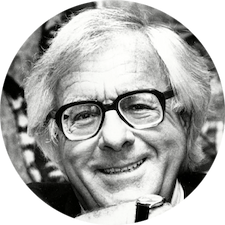
Ray Bradbury on magic and writing

“I had decided to be a magician well before I decided to be a writer. I was the little boy who would get up on-stage and do magic wearing a fake mustache, which would fall off during the performance. I’m still trying to perform those tricks. Now I do it with writing.”

–Ray Bradbury

Ray Douglas Bradbury was a celebrated American author and screenwriter who worked across genres like fantasy, science fiction, horror, and mystery. His unique style combined the poetic imagery of Thomas Wolfe with the crispness of Ernest Hemingway. Bradbury’s work explored themes like censorship, racism, technology, and the importance of imagination. He’s considered a significant figure in both American literature and science fiction. (Wikipedia.org)

Born August 22, 1920, Waukegan, IL

Died June 5, 2012 (age 91 years), Los Angeles, CA

If we lived in the 16th century, we could be fined for not attending the Sunday Meeting

By Mike Zonta, BB editor (and ChatGPT)

ChatGPT:

After the Reformation, England had laws requiring attendance at the established church. Under Elizabeth I, for example, the Act of Uniformity of 1559 required people to attend church on Sundays and major holy days. Failure to attend could result in fines.

The situation changed with the monarch:

  • Henry VIII: England broke with Rome, but Henry retained much traditional Catholic worship while making himself head of the English church.
  • Edward VI (1547–1553): England moved decisively toward Protestant worship.
  • Mary I (1553–1558): Catholicism was restored, and Protestant worship was suppressed.
  • Elizabeth I (1558–1603): Protestantism was restored, and attendance at the Church of England became legally compulsory.
  • James I (1603–1625): The requirement continued into Shakespeare’s lifetime.

But there’s an important distinction: being legally required to attend church didn’t mean everyone actually went. Enforcement varied considerably, and some people—especially Catholics and religious dissenters—deliberately refused to attend the established church and paid the penalties.

For Shakespeare’s England, therefore, church attendance wasn’t simply a matter of personal religious choice as we think of it today; it was also a legal and social obligation.

“The Nerd Reich”: Author Gil Durán on Big Tech Fascism, Peter Thiel, JD Vance & the War on Democracy

Democracy Now! Aug 17, 2026 Latest Shows Support our work: https://democracynow.org/donate/sm-de… A new book by longtime Bay Area journalist Gil Durán investigates “tech fascism” and its mounting influence on U.S. politics. The Nerd Reich: Silicon Valley Fascism and the War on Democracy follows the rise of Vice President JD Vance, the former venture capitalist whose “outsider” campaign for Senate was bankrolled by the billionaire co-founder of PayPal and Palantir, Peter Thiel. Durán traces the ideological lineage of the current Trump administration back from Vance to Thiel and the far-right-wing monarchist Curtis Yarvin, whose “right-libertarian” political theory has long made the rounds among Silicon Valley elite. “These guys were never libertarians,” says Durán. “Now that they are the government, we see their true face: They’re fascists, and they’re authoritarians.” Subscribe to our Daily Email Digest: https://democracynow.org/subscribe

“Resist Not Evil” with Paul Chek

New Thinking Allowed with Jeffrey Mishlove Aug 16, 2026 Paul Chek is a holistic health practitioner, wellness coach, corrective exercise specialist and educator. His journey began when he served on the US Army boxing team. He is the author of How to Eat, Move, and Be Healthy. He is the creator of the Spirit Gym and host of the Spirit Gym with Paul Chek podcast. Paul explores Jesus’ teaching to “resist not evil,” examining how trauma, consciousness, forgiveness, and spiritual maturity shape our response to conflict rather than retaliation. Drawing on his experience as a therapist, holistic health educator, former Army boxing trainer, and founder of Spirit Gym, Chek argues that true strength comes through healing wounded parts of ourselves instead of becoming what we oppose. Chek touches on psychology, Jung, Rudolf Steiner, nonviolent resistance, forgiveness, mythology, and practical spiritual development as pathways toward greater wisdom. 00:00:00 Introduction 00:02:13 Paul’s background and spiritual journey 00:07:19 Responding to evil without becoming it 00:13:02 Trauma, boxing and healing childhood wounds 00:20:05 Spirit Gym and holistic spiritual development 00:27:51 Can evil serve human growth? 00:35:21 Humanity as a school for evolving souls 00:43:01 Religion, consciousness and unconditional love 00:52:07 Nonviolent resistance and forgiveness 01:00:45 Conclusion New Thinking Allowed host, Jeffrey Mishlove, PhD, is author of The Roots of Consciousness, Psi Development Systems, and The PK Man. Between 1986 and 2002 he hosted and co-produced the original Thinking Allowed public television series. He is the recipient of the only doctoral diploma in “parapsychology” ever awarded by an accredited university (University of California, Berkeley, 1980). He is also the Grand Prize winner of the 2021 Bigelow Institute essay competition regarding the best evidence for survival of human consciousness after permanent bodily death. He is Co-Director of Parapsychology Education at the California Institute for Human Science. (Recorded on Tuesday, July 30, 2026)

Dr. Hew Len Clears Out A Criminally Insane Ward Without Therapy – Using Ho’oponopono

(soultransync.com)

Four years ago I discovered the story of Dr. Hew Len and how he cured an entire ward of criminally mentally ill patients using the simple ancient Hawaiian healing method of Ho’oponopono. Although this story changed my life, at first I was convinced that this story wasn’t true.

I have always been cynical of any faith healer. Watching these so-called men of God perform such apparent drama on television offended me. Even though the source of the allegation seemed credible, I decided to do my own investigation, researching this doctor and his unbelievable claims. It wasn’t easy getting documented proof of his story, but there was some irrefutable information available on this incident.

I first researched the Ho’oponopono movement. I learned that “Ho’oponopono” is defined in the Hawaiian dictionary as mental cleansing and setting things right through mutual restitution and forgiveness.

Preeminent Hawaiian scholar Mary Kawena Pukui wrote that was a practice in ancient Hawaiian mediation. Hawaiian documented a belief that illness was caused by breaking spiritual laws, and that the illness could not be cured until the sufferer atoned for this transgression. The practice was most often used to mediate unresolvable disputes between families. They healing could only come with complete forgiveness of the whole family.

I discovered that Dr. Hew Len was a student of Ho’oponopono and had worked at the Hawaii State Hospital in the high security ward for the criminally insane from 1983 to 1987. Many witnesses claim that Dr. Hew Len didn’t do any therapy on the patients. He would walk through the ward, and review the patients’ files, but not for the purpose of therapy.

This mental ward was supposably so chaotic that nurses reported that no day would end without a brawl among patients, the nurses, and the rest of the staff. The mental ward was so destructive and depressive that the staff would go on sick-leave a lot of times.

The way the story goes is the Dr. Hew Len would arrive in the office every morning with a cheerful and tranquil disposition. Dr. Hew Len never made personal visits to the inmates, but he would browse through their files from time to time. Strangely enough, things started to change in the mental ward.

The prisoners and staff gradually go along with each other. The inmates were less destructive and the mental ward employees made more initiative to make the ward a better place.

Dr. Hew Len worked in the the mental ward for almost four years, and during that period, prisoners were released and the staff performed their responsibilities dutifully again. Only a few inmates were left and eventually, they were transferred to other wards. The clinic was closed down because barely any inmates were left.

Dr. Hew Len says that Ho’oponopono is the process where we say to The Divine: “I love you” (unification), “I’m sorry” (repentance), “Please forgive me” (forgiveness), and “Thank you” (transmutation).

When he asked what caused the patients to change, his simple answer is always “I was simply healing the part of me that created them.” He believed that total responsibility for your life means that everything in your life – simply because it is in your life – is your responsibility. In a literal sense the entire world is your creation. If you take complete responsibility for your life, then everything you see, hear, taste, touch, or in any way experience is your responsibility because it is in your life.

Ho’oponopono teaches taking 100% responsibility in everything you see, feel, and experience is the only way to live a miraculous life. Everything we see and experience is nothing more than our individual and collective memories. Dr. Hew Len believes the miracle in the hospital was nothing more than him cleaning and cleaning the memories in him that were demonstrating in the hospital.

He believes that only The Divinity can reach down into the sub-conscious mind and take the problem memories and neutralize them, and then remove the memory into storage, and leave the mind blank.

Once the mind goes into this state of emptiness and peacefulness, Divinity comes through with inspiration, and as the inspiration comes in, the canceling/transmutation of memories takes place – which only The Divine can do.

The Ho’oponopono cleaning is profound because we are dealing directly with The Divine, and The Divine can do its job perfectly.

This is the big awareness that changed my life. Nothing exists except as projections from inside me. The problem isn’t with anything in the world, it’s with me, and to change any effect, I have to change me or at least my resistant beliefs of the world.

I know this is tough to grasp, let alone accept or actually live. Blame is far easier than total responsibility. But I began to realize that Ho’oponopono means loving myself, and that if I want to improve my life, I have to heal my life. If I want to cure anyone, even a mentally ill criminal I have to heal that through me.

Since leaving his practice at the state hospital, Dr. Hew Len has become a world renowned spiritual healer. He now travels the world teaching Ho’oponopono.

I am now a faithful student of this miracle practice. I use the practice throughout my day to let go of any resistance and open my consciousness for divine flow. I clean and release mind activity, forgiving misalignments and continually accepting what is. Cleaning and clearing is done to get the circumstances that are perfect and right for me. But I don’t know what that is. Only The Divine knows.

What are some of your thoughts on Ho’oponopono?

(Contributed by Steve Hines)

Where the Boat Lands

(oldnewmethod.com)

Where our school’s boat is destined to make land is not something we know. We are guided by glimpses and impressions rarely reducible to a plan. Wherever this boat lands, if you keep your fingers on the pulse of your own work and regularly review the question of aim — of Why am I here? — you are guaranteed a profit…

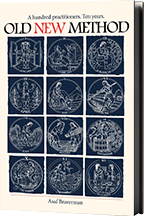
Old New Method book

Download the first chapterJoin our mailing list and receive the first chapter of our book

A question was recently raised in our Russian community: what is the aim and purpose of our school? Rather than answer it there alone, I want to open it to all communities because the answer influences every student directly or indirectly.

When we look back in time from where we stand, we see periods of Renaissance, that is, of the rebirth of certain ideas that had flowered before, had gotten lost, and were in need of rebirth. In some of the older accounts of this process that reach us, the administrators of this Renaissance seem to know their path from the outset. The Gospels, for example, are a revival of Judaism. Jesus — the administrator of this revival — is presented as all-knowing from the start, his mission a fulfillment of a predetermined blueprint. Muhammad, another administrator of a revival that occurs a few centuries after Jesus, also seems to act under the spell of a similar certainty.

But revivalists closer to our own time, whose lives are documented rather than mythologized, tell a different story. Trace Gurdjieff’s efforts from 1912 in Russia to his death in 1949 in France, and you find a man working in a cloud of unknowing: world wars, revolutions, borders closing without warning. He hoped to settle in England; he was refused residence and settled in France instead. He purchased a Chateau, went bankrupt, re-acquired it, tried again in America, was frustrated again by war — until age itself closed the window on building anything physical meant to outlast him. Such revivalists are as much in the dark as anyone. What distinguishes them, if anything, is not foreknowledge but a certain wakefulness brought to what befalls them; the capacity to meet circumstance not merely as survival, but as material for consciousness.

We are no different. Where our school’s boat is destined to make land is not something we know. We are guided by glimpses and impressions rarely reducible to a plan.

Ouspensky titled his account of his apprenticeship with Gurdjieff’s “Fragments of an Unknown Teaching.” Seventy-five years after its publication, this book is still considered the definitive presentation of the Fourth Way. The title carries two admissions: the teaching is incomplete, and its origin is unknown. Neither is a criticism of Gurdjieff or Ouspensky. In their presence, the material likely cohered. But on the page, it does not. The book overflows with ideas. Where does a student begin? What matters most, what can safely wait? The teaching that transpires from that book offers no scale or relativity. A newcomer drowns in ideas with no way to weigh them.

Luisa as Demeter

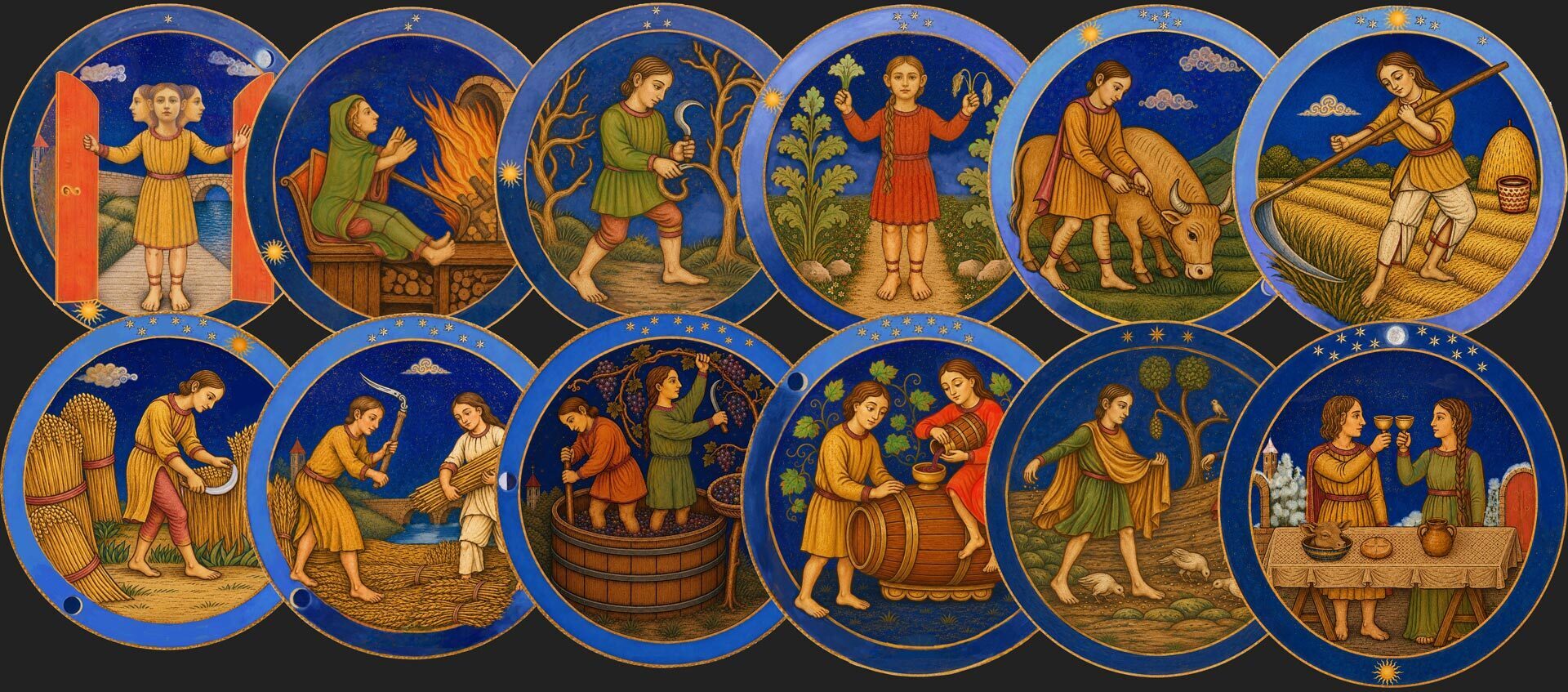
This is one area in which our school’s task has been clear. By organizing the teaching into twelve labors — a structure neither Gurdjieff nor Ouspensky’s writings supply — we answer the “fragment” aspect deliberately left open by Ouspensky. And by tracing each doctrine back to the ancient traditions it likely drew from, we answer the other open question, that of “unknown origin”. Our school’s first aim, then, has been a completion of what the twentieth-century Fourth Way left open.

There is, I believe, a second aim, further off. I have shared this with many of you before: I sense a further purpose past the codification of the teaching itself, which is the laying of ground for a new kind of community. Whether this comes to pass in our lifetimes, I don’t know. History suggests it rarely does. A teaching is a seed that usually needs generations before it germinates. Here too I find myself in Gurdjieff and Ouspensky’s position: allocating what resources we have, opening what possibilities we can, without knowing if or where they will take root.

Demeter and Demophoon

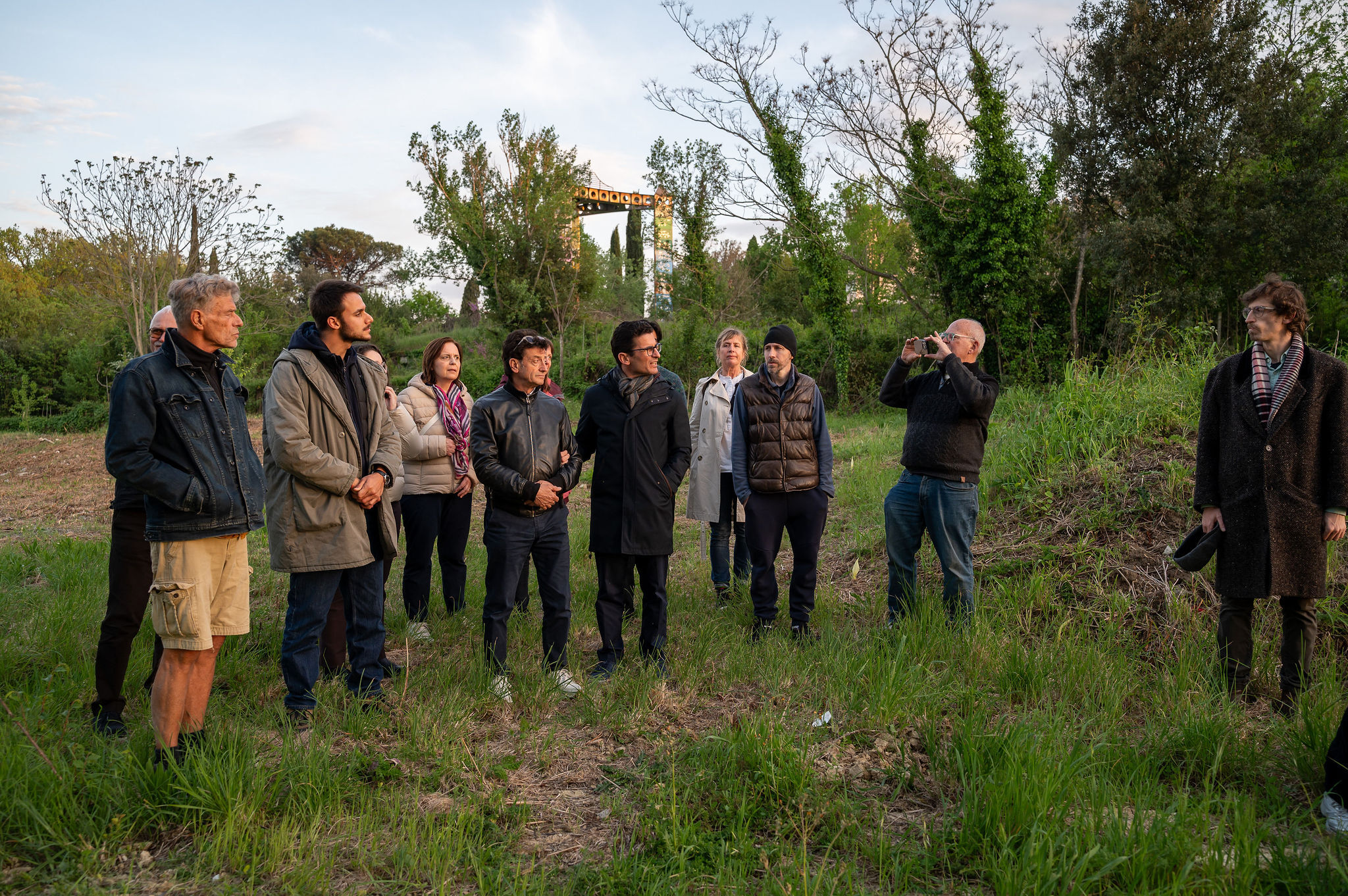
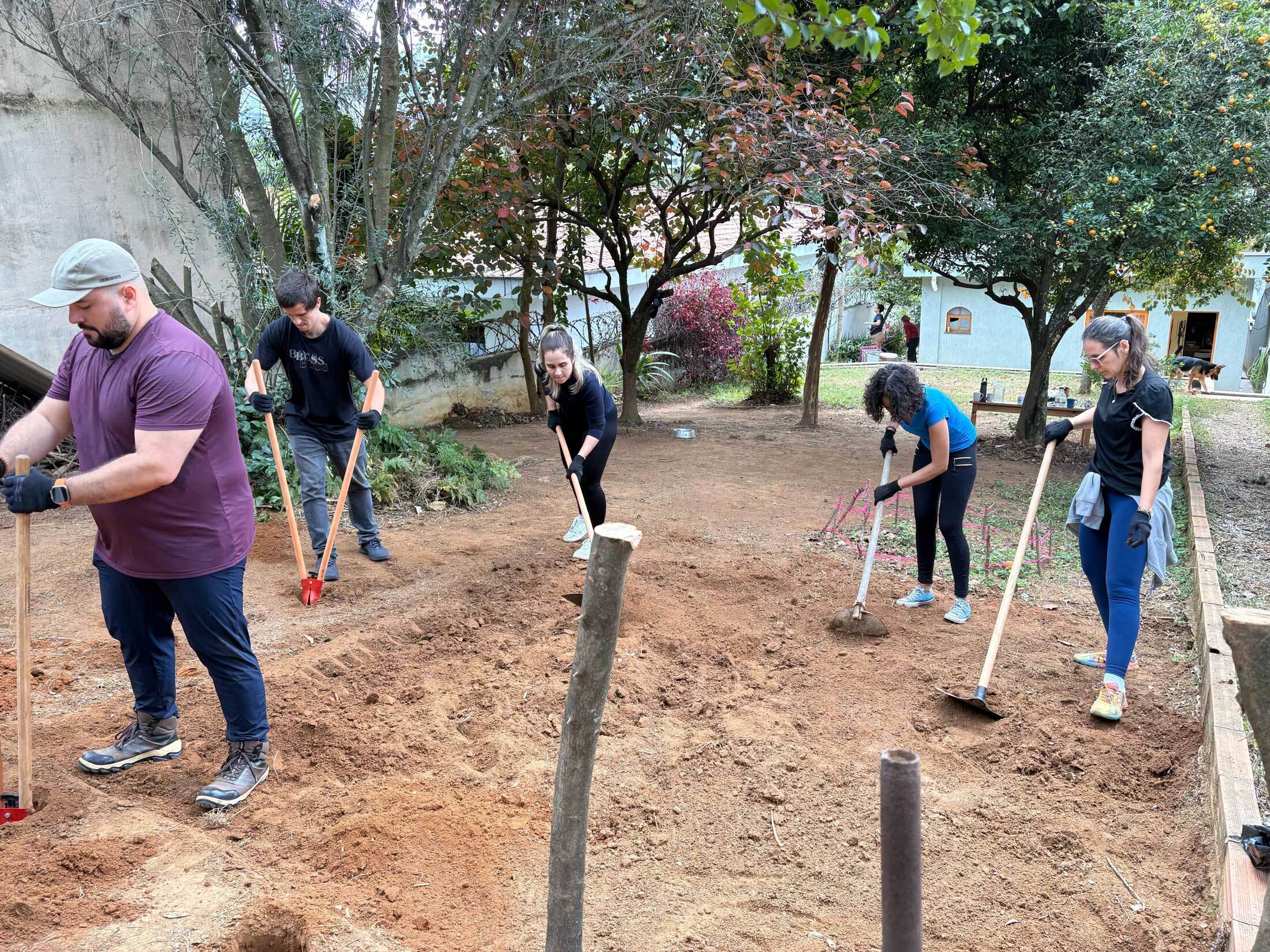
Our land in Benevento, the theater company beginning in São Paulo, the theatrical and farming experiments in France, and what may yet begin where I live in Mexico — these are the experimental labs of that possibility. The obstacles are formidable, the resources modest, and the whole prospect can look like imagination from where we stand. But circumstances shift. What looks distant now may not always remain so.

Whatever transpires of these outward prospects is secondary to why each of you is here. As students, you are here to know yourselves. This, the school already offers. We have now run long enough to have verified our teaching and methods produce real change in those who use them. Moreover, the school provides the necessary friction of working alongside other practitioners, as well as the crucial weight of serving something larger than oneself. Wherever this boat lands, if you keep your fingers on the pulse of your own work and regularly review the question of aim — of Why am I here? — you are guaranteed a profit.


ABOUT THE SCHOOL
Our projects are undertaken with the understanding that a school must give back. It must harness the talent and resources of its members to form an expression that can outlast them.Learn more about the School of the Old New Method

WATCH AN INTRODUCTORY WORKSHOP
Learn more about the Old New Method – Watch recordings of our online gatherings that introduce the knowledge and practical methods we use.Available through purchase. View Workshops

ABOUT THE FOUNDER
I had no structural foundation at my disposal, no institution, no location, no following—only the conviction that these truths were pertinent to contemporary seekers… Drawing inspiration from the agricultural metaphor embedded in ancient wisdom, I arranged the central concepts into twelve monthly labors, creating a yearly cycle of symbolic cultivation tasks… Soon, a hundred people committed to practicing this cyclical teaching on a regular basis. This was the beginning of my school.”Read the full autobiographical note by Asaf Braverman
ABOUT THE TEACHING
Nature develops us only up to a certain point and then leaves us unfinished, just as it creates wheat but not bread, milk but not butter, grapes but not wine…Learn more about our teaching

Copyright © 2026 School of the Old New Method All rights reserved

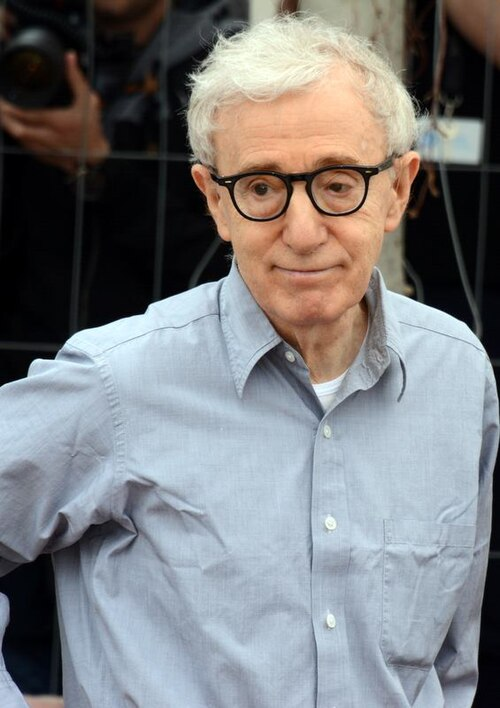
Woody Allen on falling in love

Woody Allen in 2016

“You will notice that what we are aiming at when we fall in love is a very strange paradox. The paradox consists of the fact that, when we fall in love, we are seeking to re-find all or some of the people to whom we were attached as children. On the other hand, we ask our beloved to correct all of the wrongs that these early parents or siblings inflicted upon us. So that love contains in it the contradiction: The attempt to return to the past and the attempt to undo the past.”

~ Woody Allen

Heywood “Woody” Allen, born Allen Stewart Konigsberg in 1935, is an American actor, comedian, writer, director, playwright, and author. His career spans over 50 years and includes iconic comedies like Bananas and Sleeper, as well as serious dramas like Interiors. Allen is known for his cerebral style that mixes humor and satire, and his neurotic, literate characters. (Wikipedia.org)

Born November 30, 1935 (age 90 years), Mount Eden Hospital

Consciousness, spirituality, biography, sexuality, androgyny, futurism, space, the arts, science, astrology, democracy, humor, books, movies and more