
Marianne Williamson Jul 3, 2026 This year should be a mindful, not a mindless celebration Subscribe to Marianne’s Substack: MarianneWilliamson.Susbtack.com
Category Archives: Democracy
Heather Cox Richardson on the Declaration of Independence
Heather Cox Richardson Streamed live 6 hours ago In which I try to answer a different set of questions, today…. Topics covered in today’s Politics Chat: Declaration of Independence 250th anniversary, natural law and unalienable rights, consent of the governed, grievances against the King, dissolution of allegiance to the Crown, birth of a new nation.
Journal of Democracy July 2026

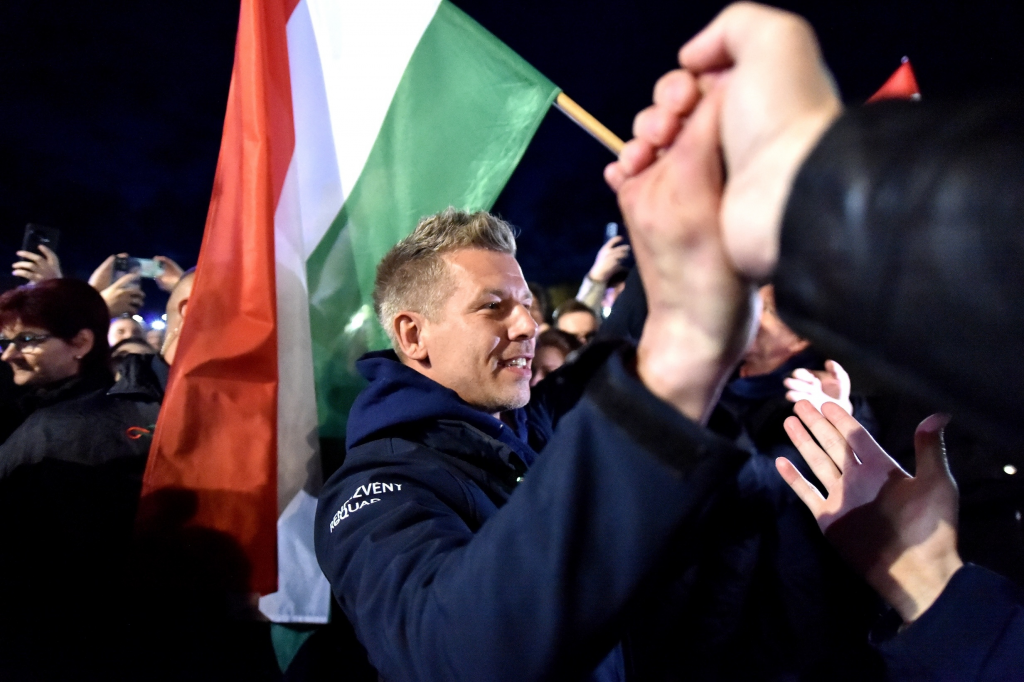
| In April, Viktor Orbán, the long-ruling former prime minister of Hungary, and his ruling party were finally defeated. The new July issue of the Journal of Democracy features a special package of essays detailing how Péter Magyar and his Tisza party achieved a victory that once seemed impossible and what it will take to restore Hungary’s democracy. Plus: What is “freedom philanthropy,” and why is it so important for global democracy? When does polarization devolve into violence? And how will the liberal international order survive America’s retreat? Read the entire July 2026 issue for free through July 30. |
| When Polarization Turns ViolentDemocracies have always sparked conflict, disagreement, and deep ideological divisions. Polarized politics are hardly rare in democratic life. So under what conditions does polarization turn violent, and how can this danger be contained? By Jeffrey S. Kopstein |
| Can Péter Magyar Restore Hungary’s Democracy?He did the hard work of defeating Viktor Orbán. But Hungary’s new prime minister faces the harder task of undoing the damage his predecessor wrought. Can he do it while avoiding the traps Orbán left in his wake? By Kim Lane Scheppele |
| How Civil Society Defeated OrbánViktor Orbán was ousted by an innovative, grassroots, nationwide campaign run by local civic groups called Tisza Islands. Their success offers a new playbook for civic mobilization against aspiring autocrats. By Hanna Folsz |
| Why Oppositions Lose Together and Win AloneIt was long thought that, to be successful, oppositions needed to form broad-based alliances ahead of elections. But Hungary and Turkey show that a single challenger has real advantages against a would-be autocrat. By Edgar Șar and Pelin Ayan Musil |
| The Democratic DrainGlobal migration is quietly altering democratic politics in the places people leave behind. It is not just a shift in labor; it is a shift in democratic values. It may be gradual, but it can become a hidden demographic underpinning of authoritarianism. By Justin Gest |
| The Power of Freedom PhilanthropyLess than one percent of philanthropy is directed to democratic freedoms. Yet freedom is essential for everything—health, education, climate—philanthropy tries to accomplish. It is the most underpriced asset, and we are due for a market correction. By Tim Reynolds and Álvaro Salas-Castro |
| Why the IRGC Is the War’s Biggest WinnerThe U.S.-Israeli war in Iran has elevated the Islamic Revolutionary Guard Corps from the regime’s chief coercive tool to the regime itself. Expect an Iran that is more aggressive abroad and more repressive at home. By Saeid Golkar |
| Can the Liberal Order Survive America’s Retreat?No other democratic power will be able to uphold a new international order. Autocrats and illiberal coalitions are already rushing into the breach, and if they go unchecked, the damage will be lasting. By Christina Cottiero, Emilie M. Hafner-Burton, Stephan Haggard, and Christina J. Schneider |
| How to Combat Transnational RepressionAuthoritarians actively threaten, intimidate, and murder exiles and opponents wherever they find them. While justice for victims is hard won, it is possible. Here is how democracies can push back. By Siena Anstis and Marcus Michaelsen |
| How the CCP Outsources SurveillanceBeijing knows digital surveillance of the world’s most populous nation is technologically demanding. So the Party has hired corporations to occupy the “public-opinion battlefield” and spot the trouble before it spreads. By Lynette H. Ong |
| Democracy in an Age of Networked ControlThe coercive tools of modern autocracies are highly integrated, with an ability to monitor, restrict, and shape behavior at scale and in real-time. It is time for democratic movements to adapt and respond with a decentralized resistance of their own. By Leopoldo López |
| Eritrea’s Democratic FailureEritrea is one of the world’s most implacable dictatorships, led by an octogenarian who shuns any hint of accountability. The country’s democratic path was never genuinely open, and it now poses a grave risk to the Horn of Africa. By Kjetil Tronvoll |
| The Danger of Democratic Backsliding in East AsiaJapan, South Korea, and Taiwan are typically seen as democratic stalwarts, on par with older established democracies. But all three countries face growing pressures that threaten its political foundations. By Christopher Carothers |
The Journal of Democracy is published quarterly in January, April, July, and October. Subscribe nowfor full access to the Journal‘s archives.

Independence Day for Men Who Were Never Free
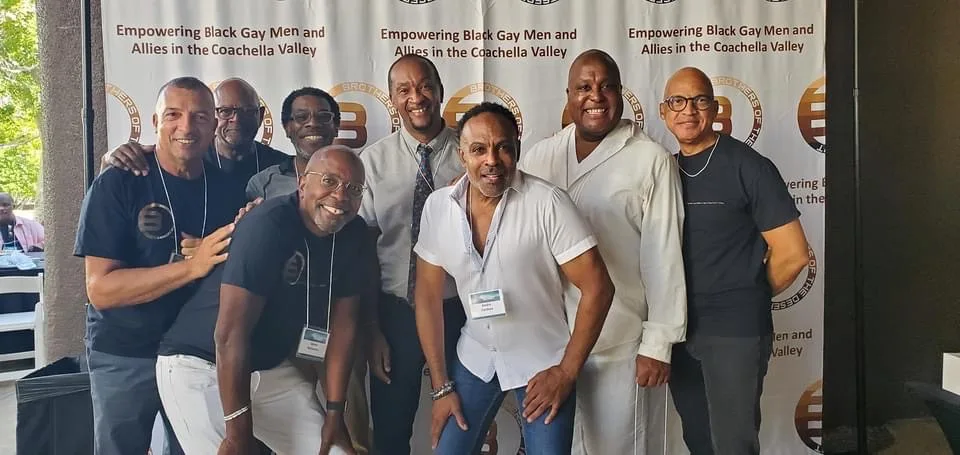
(Photo courtesy of Brothers of the Desert)
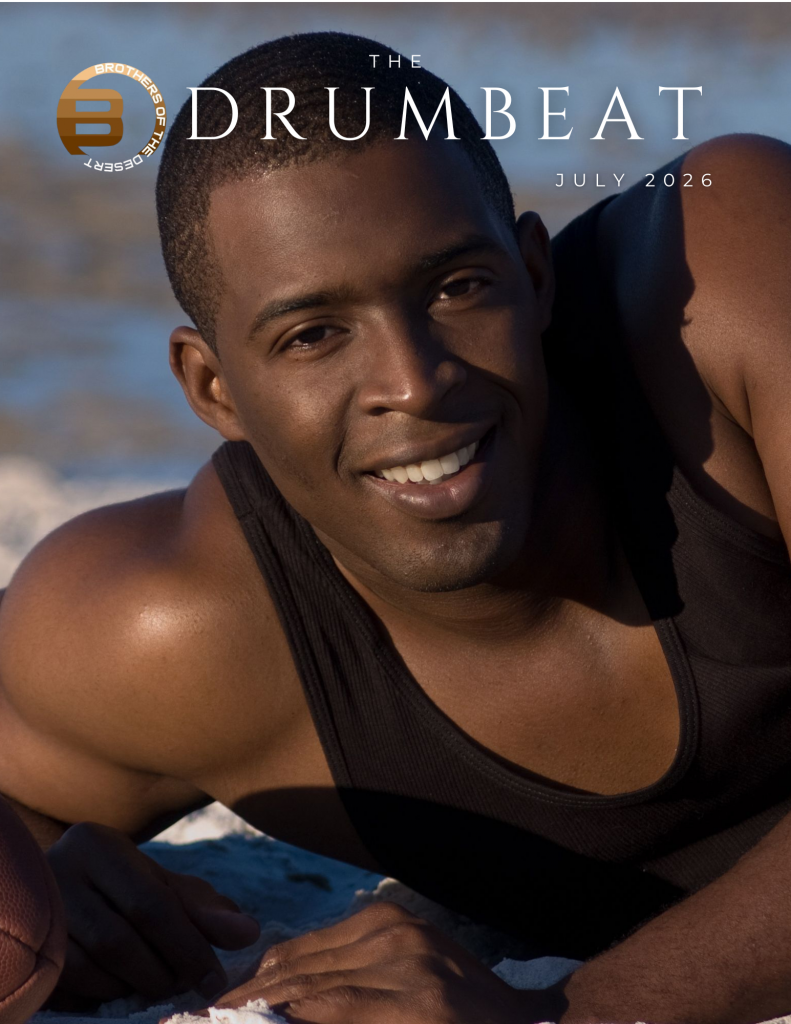
By R. Ayité Okyne, article from The Drumbeat July 2026*
I watched the fireworks from a rooftop in Hollywood last July, surrounded by men I love, and I thought about the particular quality of silence that falls over a group of gay men when the national anthem plays.
It is not disrespect.
It is something more complicated: the body bracing itself against a story that was never quite written for us.
We are taught, all of us, to feel a swell of pride on the Fourth of July. Independence. Self-determination. The right to pursue happiness on our own terms.
But that story has always had missing chapters.
This country declared freedom while people were still enslaved. It celebrated liberty while Black bodies were bought, sold, separated from families, and worked to exhaustion. It spoke of equality while women could not vote, Indigenous people were displaced, immigrants were demonized, and generations of gay, queer, and trans people learned to survive by hiding the very parts of themselves that most needed tenderness.
So when some of us feel complicated on Independence Day, it is not because we hate joy. It is because we know what it means to be handed a promise and then told to wait.
For many of us in this community, the pursuit of happiness has come at the cost of family dinners we were not invited to, jobs we quietly left before anyone could ask questions, hometowns we now visit as tourists in our own childhoods.
I think often about the men who write to me after a workshop or session, men in their fifties and sixties who still flinch when a hand brushes theirs in public. Not because they are ashamed. Because forty years of conditioning does not dissolve the moment a law changes.
Independence, for us, was never declared once and settled. It has been negotiated in increments: a marriage ruling here, a city ordinance there, a workplace policy there, a fragile sense of safety that still depends too much on which state line, family system, church, workplace, or neighborhood you happen to be standing in.
(view.flodesk.com)
And we are seeing, even now, how quickly rights can be questioned, narrowed, delayed, or taken for granted. Voting rights are still being contested. Racism still shapes whose bodies are treated as threatening, whose grief is believed, whose history is taught honestly, and whose pain is dismissed as “divisive.” Queer and trans people are still turned into political talking points by people who have never had to live inside the fear they casually create.
There is a particular loneliness in that kind of freedom. It arrives unevenly, and it arrives late, and by the time it reaches you, you may have already built a whole architecture of self-protection. Freedom on paper and freedom in the nervous system are two very different inheritances.
So what does it mean to celebrate a freedom you have had to win in pieces, in private, often alone?
I do not think the answer is cynicism. I think it is something closer to clarity.
The fireworks are still beautiful. The barbecue is still good. The laughter still matters. But there is a version of patriotism available to us that holds the contradiction without flinching from it.
We can love a country and still name the parts of it that did not love us back.
We can celebrate independence and still grieve the enslaved people who were denied it, the Black citizens who had to fight for the vote long after freedom was supposedly granted, the queer elders who did not survive long enough to marry, hold hands, transition safely, or be seen without shame.
This is not an argument for withholding joy. It is an argument for a more honest joy. The kind that does not require us to pretend the road here was simple. The kind that lets a man sit with his discomfort during the anthem instead of performing enthusiasm he does not feel. The kind that makes room for the brother still not out to his mother, alongside the one throwing a party with a rainbow flag on the porch.
Independence was never a single moment for us.
It is a practice.
Something we keep choosing, body by body, conversation by conversation, year after year, long after the fireworks have stopped.
That, to me, is worth celebrating.
*The Drumbeat, a monthly newsletter of the Black Brothers of the Desert, Palm Springs California
(Contributed by Calvin Harris, H.W., M.)
“The entire country is a Democratic Socialist country.”
Heather Cox Richardson Jun 25, 2026 In which I try to answer your questions about modern politics…. From Politics Chat, June 25, 2026
On China’s Rise
By Mike Zonta, BB editor
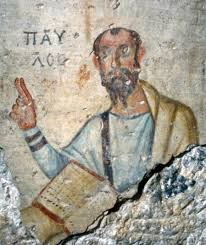
(Image from Wikipedia.org)
The Apostle Paul said:
“If I have the gift of prophecy and can fathom all mysteries and all knowledge, and if I have a faith that can move mountains, but do not have love, I am nothing.” [1]
–I Corinthians 13:2
“If a country has the largest population in the world and the largest economy in the world and the largest high-speed rail network in the world, but has not democracy, it is nothing.”
–Mike Zonta, BB editor
Nearing our 250th anniversary
(Image from Etsy.com)
6/3/26
Nearing our 250th Declaration of Independence celebration, some words/thoughts by some of our colonial Fighters for Independence/Constitutional-Founders & Framers that didn’t make it into our Constitution; *plus, the words of possibly the most forward thinking scientist; **and the words/thoughts of one retired (2006) Supreme Court judge (who died in 2023):
“Government is, or ought to be instituted for the common benefit, protection, and security of the people, nation, or community…when any government shall be found inadequate or contrary to these purposes, a majority of the community hath an indubitable, inalienable, and indefeasible right to reform, alter, or abolish it, in such manner as shall be judged most conducive to the public weal.” George Mason
“That there be prefixed to the Constitution a declaration, that all power is originallyvested in, and consequently derived from the people.” James Madison
“The means of defense against foreign danger, have been always the instrumentsof tyranny at home…the armed forces kept under the pretext of defending, have enslaved the people.” James Madison
“…this (new government under the Constitution) is likely to be well administered for a course of years; and as other forms have done before, the people, being incapable of any other mode, will become so corrupted as to need authoritarian rule, such that, this Government will end in Despotism!” Benjamin Franklin
“As Nations become more corrupt and vicious, they have more need for masters. Only a virtuous people are capable of Liberty.” Benjamin Franklin
*”The world will not be destroyed by those who do evil, but by those who watch them without doing anything.” Albert Einstein
(Pasoir.com)
Jimi Hendrix National Anthem USA Woodstock 1969
Sportswashing: Why Autocrats Love the World Cup

| World Cup 2026 kicked off last week, as 48 countries faced off in Canada, Mexico, and the United States. With all the excitement, it’s easy to forget that just four years ago the world’s most-watched sporting event, held in Qatar, was mired in controversy over human-rights abuses, backroom dealings, and geopolitical maneuvering. Qatar’s World Cup is just one of countless examples of “sportswashing” — the use of sports by autocratic regimes “to bolster repression at home and gain influence abroad.”To learn more about this growing phenomenon, read the following Journal of Democracy essays by Sarath K. Ganji. |
| The Rise of Sportswashing The staggering global popularity of soccer makes it a prime target for regimes that worry about the negative press they get for their undemocratic practices. The Gulf monarchies have led the way in getting into the wide world of sports as a means of cleaning their image. By Sarath K. Ganji |
| How Dictators Use Sports to Win Friends and Influence People Authoritarians are developing new tools to project their malign influence across the globe. The world of sports can teach us a lot about the games they play. By Sarath K. Ganji |
| How Qatar Became a World Leader in Sportswashing The government has spent billions preparing to host the 2022 World Cup. Never mind the abusive labor practices and human-rights violations. It’s betting that your love of the “beautiful game” will make you more fond of this tiny Gulf state, too. By Sarath K. Ganji |
The Journal of Democracyis published quarterly in January, April, July, and October. Subscribe now for full access to our archives.

Inside Turkey’s Democratic Crisis

| Since winning Turkey’s 2023 national election, President Erdoğan and the ruling AK Party have seen their popularity plummet. In response, they’ve ramped up their repression of the main opposition party — most notably, jailing its presidential candidate, Istanbul mayor Ekrem İmamoğlu and removing party leader Özgür Özel. Don’t miss Özel’s recent Journal of Democracy essay outlining his vision for restoring democracy in Turkey, along with our coverage of the country’s hard turn toward autocracy in the last year. |
 How We Restore Turkey’s Democracy How We Restore Turkey’s DemocracyPresident Erdoğan’s rule has grown more repressive as he realizes he has no democratic path to power. But we are united in our resolve and determined to make Turkey a democratic republic worthy of its people. By Özgür Özel |
| How to Fight Turkey’s Authoritarian Turn As President Erdoğan’s grip on power is slipping, his regime is turning more repressive. But Turkey may still avoid becoming a full-blown autocracy. The opposition is increasingly popular, and there remains a way to tilt the playing field to their advantage. By Berk Esen and Sebnem Gumuscu |
| Turkey’s Hard Road to Democratic Renewal Turkey’s democratic future hinges on its opposition parties doing something few expected: winning elections in unfair conditions. Yet the opposition’s strong performance in local elections suggests that they may be putting together a winning formula for Turkey and beyond. By Ayça Alemdaroğlu, Toygar Sinan Baykan, Ladin Bayurgil, and Aytuğ Şaşmaz |
| Secularism, Islamism, and the Future of Turkey The political struggle between President Erdoğan and opposition leader Ekrem İmamoğlu is a fierce battle for the country’s democracy. But it goes deeper than that. It is also a struggle between Islamist and secularist visions of Turkey. By Ahmet T. Kuru |
| After Crackdown, Is Turkey an Autocracy? Turkey’s president would rather turn his country into a full autocracy than give up power. But the Turkish people are clinging to what remains of their democracy, and they are ready to fight for it. By Berk Esen and Sebnem Gumuscu |
The Journal of Democracy is published quarterly in January, April, July, and October. Subscribe now for full access to the Journal of Democracy archives.

Did God fly the first rainbow flag?
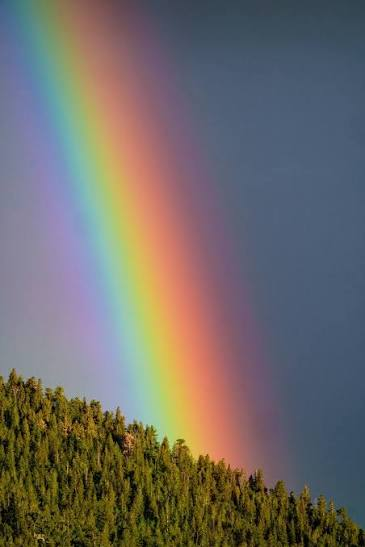
Tay’s Photography’s Post (Facebook.com)
Genesis 9: 12-16
12 And God said, “This is the sign of the covenant I am making between me and you and every living creature with you, a covenant for all generations to come: 13 I have set my rainbow in the clouds, and it will be the sign of the covenant between me and the earth. 14 Whenever I bring clouds over the earth and the rainbow appears in the clouds, 15 I will remember my covenant between me and you and all living creatures of every kind. Never again will the waters become a flood to destroy all life. 16 Whenever the rainbow appears in the clouds, I will see it and remember the everlasting covenant between God and all living creatures of every kind on the earth.”