

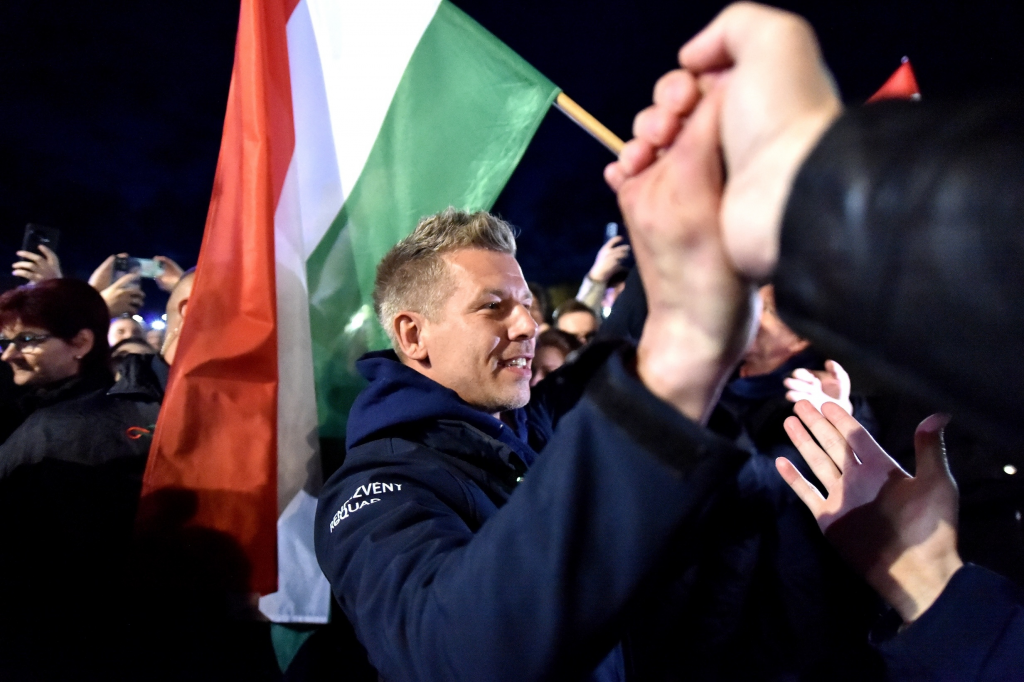
| In April, Viktor Orbán, the long-ruling former prime minister of Hungary, and his ruling party were finally defeated. The new July issue of the Journal of Democracy features a special package of essays detailing how Péter Magyar and his Tisza party achieved a victory that once seemed impossible and what it will take to restore Hungary’s democracy. Plus: What is “freedom philanthropy,” and why is it so important for global democracy? When does polarization devolve into violence? And how will the liberal international order survive America’s retreat? Read the entire July 2026 issue for free through July 30. |
| When Polarization Turns ViolentDemocracies have always sparked conflict, disagreement, and deep ideological divisions. Polarized politics are hardly rare in democratic life. So under what conditions does polarization turn violent, and how can this danger be contained? By Jeffrey S. Kopstein |
| Can Péter Magyar Restore Hungary’s Democracy?He did the hard work of defeating Viktor Orbán. But Hungary’s new prime minister faces the harder task of undoing the damage his predecessor wrought. Can he do it while avoiding the traps Orbán left in his wake? By Kim Lane Scheppele |
| How Civil Society Defeated OrbánViktor Orbán was ousted by an innovative, grassroots, nationwide campaign run by local civic groups called Tisza Islands. Their success offers a new playbook for civic mobilization against aspiring autocrats. By Hanna Folsz |
| Why Oppositions Lose Together and Win AloneIt was long thought that, to be successful, oppositions needed to form broad-based alliances ahead of elections. But Hungary and Turkey show that a single challenger has real advantages against a would-be autocrat. By Edgar Șar and Pelin Ayan Musil |
| The Democratic DrainGlobal migration is quietly altering democratic politics in the places people leave behind. It is not just a shift in labor; it is a shift in democratic values. It may be gradual, but it can become a hidden demographic underpinning of authoritarianism. By Justin Gest |
| The Power of Freedom PhilanthropyLess than one percent of philanthropy is directed to democratic freedoms. Yet freedom is essential for everything—health, education, climate—philanthropy tries to accomplish. It is the most underpriced asset, and we are due for a market correction. By Tim Reynolds and Álvaro Salas-Castro |
| Why the IRGC Is the War’s Biggest WinnerThe U.S.-Israeli war in Iran has elevated the Islamic Revolutionary Guard Corps from the regime’s chief coercive tool to the regime itself. Expect an Iran that is more aggressive abroad and more repressive at home. By Saeid Golkar |
| Can the Liberal Order Survive America’s Retreat?No other democratic power will be able to uphold a new international order. Autocrats and illiberal coalitions are already rushing into the breach, and if they go unchecked, the damage will be lasting. By Christina Cottiero, Emilie M. Hafner-Burton, Stephan Haggard, and Christina J. Schneider |
| How to Combat Transnational RepressionAuthoritarians actively threaten, intimidate, and murder exiles and opponents wherever they find them. While justice for victims is hard won, it is possible. Here is how democracies can push back. By Siena Anstis and Marcus Michaelsen |
| How the CCP Outsources SurveillanceBeijing knows digital surveillance of the world’s most populous nation is technologically demanding. So the Party has hired corporations to occupy the “public-opinion battlefield” and spot the trouble before it spreads. By Lynette H. Ong |
| Democracy in an Age of Networked ControlThe coercive tools of modern autocracies are highly integrated, with an ability to monitor, restrict, and shape behavior at scale and in real-time. It is time for democratic movements to adapt and respond with a decentralized resistance of their own. By Leopoldo López |
| Eritrea’s Democratic FailureEritrea is one of the world’s most implacable dictatorships, led by an octogenarian who shuns any hint of accountability. The country’s democratic path was never genuinely open, and it now poses a grave risk to the Horn of Africa. By Kjetil Tronvoll |
| The Danger of Democratic Backsliding in East AsiaJapan, South Korea, and Taiwan are typically seen as democratic stalwarts, on par with older established democracies. But all three countries face growing pressures that threaten its political foundations. By Christopher Carothers |
The Journal of Democracy is published quarterly in January, April, July, and October. Subscribe nowfor full access to the Journal‘s archives.
