St. Augustine on good men and evil men

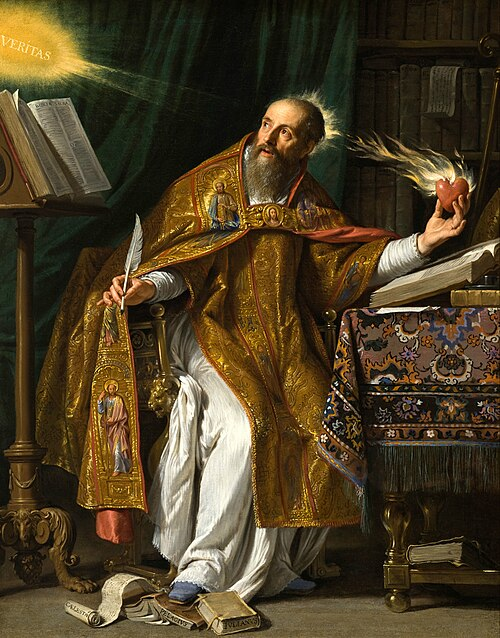
Saint Augustin by Philippe de Champaigne, c. 1645

“The good man is free, even if he is a slave. The evil man is a slave, even if he is a king.”

~ Augustine of Hippo

Augustine of Hippo was a Christian theologian and philosopher from Thagaste, Numidia Cirtensis and the Bishop of Hippo Regius. Wikipedia

Born November 13, 354 AD, Thagaste

Died August 28, 430 AD (age 75 years), Ruins of Hippo (Hippo Regius), Annaba, Algeria

The Prosperos Community Update August


Community Update August 2026

** Class, Meetings, & Activities  save the dates! **
(see below feature article)

The following is the text of a Sunday Meeting talk given on August 2 by Pam Rodolph, H.W.,M., a longtime Prosperos studemt and instructor. It was well received, and suggested as a feature article. We think you will be intrigued and inspired by what Pam has to say.
_______________
 
Abstract Ideas Teach Us How to Fly

by Pam Rodolph, H.W.,M.

For the past 50 years, I’ve been part of a school on the cutting edge of transformative thought and methodology.


Pam Rodolph, H.W.,M.     

I didn’t learn facts, figures and histories in this school. I learned to interpret those facts, figures and histories into a cohesive unit and meaning for my life.

      In this school, we look at the histories of nations, mathematical proofs, pure logic, science, physics, and the Bible. We learn to see hidden connections among seemingly disparate bodies of knowledge, tying all man’s understanding into one integrated whole.

       And starting with the idea of man as a whole being, wrapped and packaged in celestial light and delivered to your doorstep as a baby, our capacity to conceive of a cohesive and orderly universe expands beyond measure. It’s only when we start with the idea of wholeness that all these connections fall into place and make themselves known.

      Just that one shift in assumption, that man is already whole, and lights begin to turn on from cloud to cloud, from rain drop to rain drop, from abstract to the relative. We find Jesus in hell, the devil in church, and the Big Bang in every awakening mind.

      There are two kinds of people in this world. Those of one kind, when looking up at the stars and galaxies and this fathomless universe, swell with exhilaration, expand with the thought of it, and feel connected to something vast. The other kind scuttle away, back to their particular den of comfort, and pull the cover of ignorance up around their necks once again. Oppression weighs heavy on the souls who conceive of themselves outside of everything.

      And it is utterly heartbreaking. Living like a scared rabbit, never knowing what is coming at you next. Trying to keep your head down so life doesn’t find you.

      There is no hell more agonizing than a life stripped of meaning. No torment greater than drifting through existence as scattered fragments, with no thread of continuity, and no fear more chilling than believing yourself cut off from all that magnificence.

      There is absolutely no worse hell worse than that. So if that kind of existence is okay with you, welcome home. You might recognize the frivolity of life as seen in the present age, along with its brother, violence in the name of “no regard for humanity whatsoever” — we’re not even going to hide it anymore ’cause we never did see what was wrong with hate and violence ’cause we live in a floating fragmented world and can’t see past our toenails.

      Too often, we see man as less than he truly is. We try to mold him into a polished product for polite society, hoping to save his soul in the process. Yet, in doing so, we treat a jet airplane as if it were nothing more than a horse and buggy.

      What I have discovered is that man is already complete, already whole, already the finest version of himself at the most fundamental level. He cannot be improved upon — he is already there, brimming with limitless potential. Nothing can up those stakes.

      He cannot be saved. There is a saving action. It is called enlightenment, and enlightenment is waking up to the fact that one is already WHOLE. “Whole” cannot be saved. It is already there.

      What happens to a person who suddenly realizes, “God/Consciousness does not make mistakes”? He didn’t send some half-ass product to Earth to be saved by man’s ego.

      Why would God or Consciousness ever create something less than whole? The Consciousness I know cannot even imagine a broken leg. All God knows, all God is, is the wholeness that heals that leg. But pathologies do not heal — they disappear. Inherent wholeness quietly pushes out imperfection, revealing itself as the one enduring reality in all of man’s being, knowledge, and experience at a basic level. Consciousness does not act; it simply holds the line that was always there, and imperfection disappears, and consciousness never even knew it was here.

      If you ever get a cut, observe how it heals. The blood dries; the life part of it, the truth of it is withdrawn, and the flesh, cut loose from its source, turns into a scab, a lifeless flake of misperception, and disappears into nothingness, revealing the wholeness below.

      I’m after the absolute lies, the universal, earth-splitting, wipe-out-the-universe lies. I don’t care that Billy lies about stealing 10 cents or that Wall Street steals billions and lies. I want the truth, and lies that could shatter a solar system, crash planets, disrupt a cosmos, for only they let me see the truth or lies of all else.

      By the way, the cut, the scab is real, and you can die from a cut. Their basis for existence is what is false. It is in our limited awareness that we create the things that are less than perfect, because we do not have the vision necessary to see all the way to perfect. Doesn’t mean we always will lack the vision. I think it’s a healthy goal to shoot for.      But we try to make reality into something less than whole, because we have this crazy little belief from childhood that we can’t seem to shake, that we ourselves are less than whole and that’s just the way it is, we believe. So the uphill battle?… It’s the best kept secret in town. Even when someone knows the words and concepts, they don’t know, and won’t until their entire being knows it.

      If you need tangible proof that you are whole, what happens when you go to a doctor? He checks you out to see what is wrong with you, with the belief that he can return you to wholeness. What is wrong is often hard to find. Why?

      Because compared to what is right in you, the wrong is very hard to find, since it is the exception. The only state of being your doctor can diagnose with absolute certainty is when you are whole. When you are well is when it is easiest for your doctor to diagnose you. And so is it for you. Most of us don’t even go back to the doctor when we heal; it is so recognizable to us. Because that is our natural state. However, we take it for granted, and don’t even think about it.

      Also, you cannot separate what is invisible in us from what is physical. There is no strict dividing line.

      Again, the idea of wholeness is abstract. It cannot be seen, drawn, or contained. It only makes sense to regard all life from that vantage point. Because if it is so about our physical being, which we have shown it to be, it has to be so about that part of us that is not physical, that is invisible.

      And to begin all thinking, all problem-solving, from the vantage point of wholeness is a game-changer — and yet, we fail to take this incredible process seriously, and try to solve problems the same old, familiar way.

      To begin with, wholeness creates new categories, new solutions, flexibility, and movement.

     It changes how we do everything. For example, because we do not see or feel connected to everything, each part of what we know seems separate and only about itself, apart from other knowledge. As a result, solving a problem in one situation often causes problems in another situation that we do not realize is connected.

      But when we think from the idea of wholeness, problems must of necessity, incorporate systems. The only smart way to solve problems is to widen our narrow view to include all related situations — the “whole” scope of the problem. Solutions for whole systems find answers that work for all the parts, and are much different from, and better than, solutions for just one personal situation.

      Fragmented thinking cannot reach true vision. It lacks the power to elevate thought beyond itself and connect to higher mind where all connections are located. And worst of all, it has no power to inspire. And to live without inspiration is psychological death, the very death the Bible refers to.

      Here’s a little insight that fragmented thinking misses. Without fail, humanity solves its problems in the same way as it relates to God or Consciousness. For that part of humanity that regards itself outside all that is, thinking is fragmented, and solutions apply only to problems that affect that individual personally or that personal situation. Fragmented means “something broken into separate pieces or divided into disorganized, disconnected parts.” Most of the time, the limited solution produces mediocre results. Big dreams, crap life.

      Those who use systemic problem-solving seek out abstract connections between related elements. Abstract ideas spark higher creativity and inspiration, opening the mind to novel connections and greater mental flexibility. While concrete ideas keep us grounded, abstract concepts like wholeness, justice, or freedom ignite the brain’s centers for complex thought and emotion, fueling deeper, more lasting inspiration.

      Abstract thought enables “conceptual blending” — the ability to take a principle from one area of life and apply it to another. For example, understanding the abstract concept of wholeness allows a software engineer to design more cohesive user interfaces, an architect to build more integrated community spaces, and a psychologist to treat trauma. Because abstract concepts are fluid, they easily travel across professional and personal boundaries, sparking lateral thinking and breakthrough innovation.

      In short, if concrete ideas are the bricks of our reality, abstract ideas are the architecture of our potential. One keeps us steady, but the other teaches us how to fly.      The real problem solvers are those who have mastered abstract, holistic approaches to solving problems posed by whole systems.

      Translation®, as taught by The Prosperos, is designed to do exactly that. It is the application of divine perception to human experience by working entirely in consciousness/ awareness, not attempting to change external conditions. The external is where all those concrete ideas exist. We don’t try to change those. We don’t tell our sister about a better way to live. We don’t try to change our husband into the perfect boy toy.

      Years ago, after joining the Prosperos and learning about Translation®, I doubted its logic. The expansion of the first step seemed like a stretch, contrived, as if anyone could make anything resemble anything else.

      But Translation® uses the same logic found in mathematics and taught in college classrooms. It is the logic that leads to success, solves practical problems, soothes troubled minds, and builds a stairway to an elegant universe. It is natural, but it is not supernatural.

      It was my level of awareness that could not make the connection that Translation® is the very heart of logic. THIS is the real logic, the pure logic. This is the logic that should be used everywhere, for all problems. If a problem refuses to reveal itself, this will expose it. It is a universal technique that can bring answers in any and every field of knowledge.

      This is the logic capable of handling hundreds of thousands of pieces of information within complex systems.

      Every scientist who does not know Translation® is encumbered. His creativity will reach far, but perhaps it could have reached farther or sooner or broader.

      Translation®’s logic is infallible, and clearly shows how little man understands his own abilities — clop/clop. Here comes that horse and buggy.

      Despite its risks, AI will accomplish the unimaginable. Artificial Intelligence is set to reach new cognitive heights, spark economic revolutions, and drive scientific breakthroughs, transforming how we work, heal, and learn. No longer just a rigid tool, advanced AI is becoming an autonomous collaborator, ready to tackle the world’s most complex challenges, global challenges. Here comes that jet airplane. AI mirrors the qualities of “being” most closely, capable of handling thousands of pieces of information within intricate systems.

      We stand on the edge of a journey that could spiral beyond our control. That is why every fear must be translated, every problem faced with pure logic, beginning with the purest idea of all: Consciousness. We need watchdogs, people who are watching our backs.

      Thane says to translate until you feel a sense of well-being. Suzanne Deakins used to say that the beast must be made beautiful. It’s not enough to just subdue the monster. You must make him beautiful, starting with the expansion of the statement of being in Translation®. And yes, I think scientists, all problem solvers, should expand the first step right along with the rest of us. Doesn’t matter if the problems are practical or theoretical or spiritual. Expansion of the first step is one of the things that sets Translation® apart as a problem-solving tool. It clears out the pipes.

      I sense more and more people are evolving to a higher level, just as AI begins to gain ground. I believe this because of other groups I’ve been involved with, and because recently we gave a class to new people, and right from the get-go, they were very sophisticated when it came to knowledge about Consciousness. Personally, I think we will rise to the occasion overall with an awareness capable of handling what an unleashed imagination will bring us. And we will more and more make intelligent decisions. Precautions are being taken as we speak.

      I believe the earth has been undergoing its own childhood. And that childhood is us. As humans go, so goes the earth. But we need adults now.

      That outdated image of manhood — marked by violence and a hardened mask of masculinity — is having one final gasp. But perhaps this is to reveal just how obsolete those identifications have become. We need to witness the conflict, to see vague fears come into sharp focus as childish and unworkable. We have to see, think about, and grasp the implications of our violent tendencies, and stop giving them respect. To see them as anemic patterns of behavior means we are no longer caught in them.

      We are outgrowing those patterns. Competing, winning, losing, blaming, and grasping for control are the games of children. The new era is about cooperation, community, solving problems wisely, and embracing sanity. Those whose souls resist these changes are already going mad.

      Watching the assault on the Capitol, I saw only chaos — like mad cows bleating and circling, desperate for someone to lead them, to explain why they were there, was it okay to kill seven people? Did any of them feel even an ounce of remorse, or were the capital’s finest somehow to blame for all the ills plaguing humanity?

      That was madness on full display — mad cow madness.

      The challenges of this new age are meant to carry us into uncharted territory—the most thrilling place imaginable, a realm of pure potential. You can shrink from it and use it sparingly, or you can recall the roller coaster at its peak, engine humming, anticipation mounting, until the thrill almost eclipses the ride itself.

     The first rush of infatuation. The first time behind the wheel. The first glide down a snowy slope. Our senses are never more alive than at the beginning of anything, when anticipation of the unknown becomes a living experience.

      It will seem like I’m making a shift here, but I’m not. I want to come at this from the symbology of the third eye. I’ve never given it much thought, but I do know this:  In the Bible, the two thieves on either side of Jesus on the cross represent our two eyes, believers in appearance, assassins of reality.

      They are on the cross with Jesus to cross out their influence on what Jesus perceives, leaving him with the ability to only see with the third eye.

      If you look in the mirror, the third eye is in the middle of the forehead between the two thieves. You can’t see the eye because it does not look out on the world. It faces away from that world, inwardly. It represents the seat of intuition, inner wisdom, and higher consciousness. Located in the center of the forehead between the eyebrows, it acts as a bridge between the physical senses and deeper cosmic or psychological insights.

      The Prosperos teaches that we are far more than we imagine — captains of the universe, equipped to tackle colossal problems. As such, the world needs us, the solar system needs us, and ultimately, the universe calls for us.

      We did not simply wander by and decide to camp on Earth for a while. We were sent here to awaken and do a job. The universe may have been created in seven days, but among all creation, God seeks those who can fulfill his dream. We bring the life, the spirit, the essence — the conscious spark of Consciousness itself — establishing conscious awareness here on earth.

      Even the man wasting his days on a barstool holds the same courage as Gandhi, the same fortitude as Alexander the Great, and the same benevolence as Jesus. That’s because he has the same Consciousness. Awareness happens in degrees, but there are no degrees in Consciousness. We are exactly the same. Consciousness, fully and totally.

      What happens as awareness increases? We simply become more aware of ourselves as Consciousness. Every fascinating discovery changes us. And once that game starts for you, you won’t have time for life’s mischief. You will be too busy bringing Heaven to Earth. Too busy becoming something you never dreamed possible.

      Consciousness floods the earth with our species, hoping that some of us will awaken to our true nature — and begin building a world founded on Conscious Awareness.

________

Translation® is one of the Foundation Classes developed by Thane of Hawaii and taught by The Prosperos.


We are sorry to announce that Assembly
has been postponed……until next year

Alas, due to a convergence of difficulties,
we are unable to present Assembly this year.
We hope you will join us for other activities
in the coming months, and that you will… 

plan to attend*** Assembly 2027!***

Coming Events 

**  Classes  **

–  Lucid Dreaming
with HughJohn Malanaphy, H.W.,M.
Saturday, August 22

Release the power of your dreams! Learn to bring the conscious mind
to awareness that we’re dreaming (while we’re in the subconscious mind), and amazing things can happen.

More information:
https://www.theprosperos.org/prosperos-events/lucid-dreaming-202212-js2c8-n8hgc
 
Releasing the Hidden SplendourTM
with Heather Williams, H.W.,M.
Saturday/Sunday, September 26-27

In this class, you will learn a simple technique that helps us to free ourselves from old patterns, to know ourselves Truthfully, to LOVE ourselves unconditionally, and to more fully live our unique, individual life purposes.

More information:
https://www.theprosperos.org/prosperos-events/rhs-202606-rhs

**  Sunday Meetings  **
 
Group Dynamics”  
with Mike Zonta, H.W.,M.
Sunday, August 9, 2026  –  11:00 AM PT
Come learn about an important skill for Prosperos Students:  the use of Group Dynamics,and how it helps us with our studies.
Dare to be there!

More information:
https://www.theprosperos.org/prosperos-events/translation-truth-and-dare

Your Dream Surprise!”  
with HughJohn Malanaphy, H.W.,M.
Sunday, August 16, 2026  –  11:00 AM PT
Our Dream Self will morph and transform during dreams, it’s always us, or some new/old sense of self emerging. It can be startling, and may bring opportunities for growth and understanding.

More information:
https://www.theprosperos.org/prosperos-events/sunday-talk-14-04-2024-hcclp-d4hnc
 
Exploring Cosmic Intention: Part 1”  
with Richard Hartnett, H.W.,M.
Sunday, August 23, 2026  –  11:00 AM PT
Come join Richard Hartnett’s exciting new Sunday Meeting series as he explores the question, “Is there a Cosmic Intention?”

More information:
https://www.theprosperos.org/prosperos-events/cosmos-part1-yn4a7 
 
Transcendentalism”  
with Thane of Hawai’i
Sunday, August 30, 2026  –  11:00 AM PT
“[Ontology] understood will bring true individuality where the other kind of individuality is a veneer. In other words, there’s a difference between individuality and personality.” Come find out about that difference!

More information:
https://www.theprosperos.org/prosperos-events/thane-the-law-of-the-vacuum-nwa3h-wbpk5-wrjzx-c49xz-zcrn6-s4g52 

**  Ongoing Events  **

–  DreamGroup
with HughJohn Malanaphy, H.W.,M.
Thursday evenings — explore the conscious-unconscious connection 

–  Open Discussion
with Clint Lambert
Friday evenings — Straight Thinking conversation about current events and more 

–  Saturday Morning Translation® Group
with Mike Zonta, H.W.,M.
Saturday mornings (for those who have taken Translation® class only)

More information about these groups: https://www.theprosperos.org/events

**  How Can We Help You?  **

High Watch Translation® ServiceThe High Watch Translation® Service is supported by our High Watch members, who will use their training to address any situation presented here. All requests made through this link or via our website are confidential, unless submitted otherwise. You may add additional information, or inform us of any changes or requests for further Translation® in your situation, at any time through the link below.

Translation® is our form of prayer. It is used to get to the Truth of any situation or dilemma, and access the Unpredictable Good. Did you know that you can request Translation® from the High Watch Translation® Service for any situation going on in your life?
            This is the primary purpose of the High Watch –-
            To hold the High Watch for you and with you.


For more about the HWTS: https://www.theprosperos.org/hwts

FOR MORE INFORMATION…We invite you to visit our websites for information about the School, as well as for descriptions of our wide selection of printed, recorded, and online resources (many are free; others are available for purchase).General Information – For our calendar, class descriptions and blog, as well as other articles and information, please visit https://TheProsperos.org.

Audio Center – This site offers free podcasts, talks and lectures, plus a wealth of other recorded material for our students and friends. To see what’s available, please visit https://TheProsperos.com.
A Publication of The Prosperos High Watch
Copyright © 2026 The Prosperos, All rights reserved.

Word-built world: incept

The word incept is a verb that means  to begin, start, or take in and absorb something . It comes from the Latin word incipere, meaning to begin or undertake. While its noun form, inception, is common, the base verb is used in a few specific ways. [1234]

Meanings of Incept

  • To Begin: To start or initiate a project, process, or organization.
  • To Ingest: To take in, absorb, or receive substances (like food or nutrients) into a living organism.
  • Academic Tradition: An old British university term (mainly at Oxford or Cambridge) to graduate or receive a master’s or higher degree with the right to teach.
  • Pop Culture/Slang: To plant an idea secretly in someone’s mind so they think it is their own idea, popularized by the movie Inception.

(Contributed by Michael Kelly, H.W.)

Quaker Problem Solving

Since the Quakers make no distinction between their spiritual and their everyday life, they conduct their meetings for business in very much the same spirit as their meetings for worship. Business meetings begin with a period of silence, often deep and meaningful rather than perfunctory. Sometimes the meeting lapses into silence again in the course of discussion. This is apt to happen when the give and take becomes too heated, when a seeming impasse has been reached, or when one member speaks so eloquently that the group is moved.

Leading the discussion in a Quaker business meeting is the clerk, whose role it is to be sensitive to the wishes of the group. He tries to see to it that on important matters everyone present expresses himself. He must prevent a dominant member from exerting undue influence on the meeting, see that the proper weight is given to the opinion of a member whose views are particularly pertinent to the subject at issue, and encourage the timid to speak up. He avoids expressing his own views. After what he believes to have been an adequate discussion he will try to phrase the sense of the meeting. “What I seem to be hearing is that we are agreed on appropriating the money for the new sidewalk,” he may say, leaving room for those who object to say so. If there is no dissent, group approval is expressed, various members saying, “I agree with that” or “that speaks my mind.” Like their forefathers, modern Quakers do not vote.

In a real sense the whole of Quaker childhood training and education prepares the individual for participation in this sort of democratic exercise. From childhood on Quakers are taught to say bluntly what is on their minds, rather than to hide latent conflict behind polite words. On the other hand they are also taught to subdue individual aggressiveness in the interest of the group and to be as objective as possible in group discussion. Even when deep issues are involved and thorny conflicts are being faced, the discussion at a Quaker business meeting sounds bland and low keyed to an outsider. There is a surprising amount of laughter, perhaps used for the release of tensions.

When an individual Quaker in a group meeting finds that the group seems to be deciding an issue in a manner with which he disagrees, he must search his conscience. Is his stand based on an objective view of the facts, informed by his individual conscience? Or is pride, insensitivity, or personal ambition in some way standing between himself and his ability to see the group’s point of view? Only when he feels clear that his objection is based on valid grounds of conscience does he oppose himself to the group.

If one or more members decide in this fashion that they cannot agree, the decision is held over sometimes for months, sometimes for years, until time softens hard feelings, or until a new synthesis is possible on the basis of a new idea. Occasionally a subcommittee is asked to wrestle with a thorny issue in the hope that it can produce the new spurt needed to solve the problem. The subcommittee must, however, report back to the full group, and cannot therefore be used as a dodge.

The process of reaching a decision in this fashion is slow, and does not always work. In order to reach apparent unity, meetings sometimes do not bring their conflicts sufficiently out into the open, and wallpaper over their differences. Nevertheless, Friends continue to feel that when a true sense of the meeting is achieved, the results are well worth the extra effort and time involved.

Once a Quaker meeting makes a decision in proper fashion, the decision has the wholehearted support of all its members. There is no bitter minority to nurse its defeat and to sabotage the new project. The decision finally taken is generally not a compromise, but a new idea, both more encompassing and more creative than those previously advanced. The wrestling that goes on while a meeting waits for such an idea may have something to do with the Quaker reputation for coming up with unexpected and practical solutions to thorny problems.

In the spring of 1967 the small meetinghouse of Conscience Bay Meeting at St. James, New York, heard a fellow Quaker from Philadelphia call for an end to the Vietnam war. During the following week vandals smeared ugly accusations of disloyalty on its white walls: “Treason! Traitors! There can be no compromise with Commies! $10,000 for a V.C. a Knife in the back for American G.I.’s. The American Dead will be avenged! This is a God-is-Dead so-called Church.” Everywhere the walls were disfigured with a rash of stenciled red hammer-and-sickle designs.

During a long business meeting, full of turbulent feelings, the members of the meeting decided what their response to this action should be. Should they give the act wide publicity? Or should they say nothing, and meekly repair the damage? Or call the police? Or leave the signs for all to see? The meeting was deeply divided between those who wanted to use the occasion to protest the illiberalism of the vandals and those who wanted no publicity. One man in particular felt strongly that nothing should be released to the papers. Feeling ran high, and several times the clerk had to ask the meeting to settle into silence. finally, after a particularly long and deep period of silence, the man who had opposed publicity  came up with a new idea. Why not invite the friends and neighbors of Conscience Bay Meeting to join with its members in repairing the damage? The invitation could be issued through the medium of the press, but it would create positive, not negative, publicity.

The idea, endorsed enthusiastically by the meeting and published in The New York Times and other papers, caught on quickly. Groups from neighboring churches and civic groups volunteered to help. Persons called the Quakers to say, “I’m opposed to your stand on the war in Vietnam but I want to help paint the meetinghouse.” A successful paint-in with more than two hundred persons present was held the next Sunday.

This is just one small example of something that has happened over and over again in Quaker history; the emergence from group struggle of a new and better idea. The “sweet unity” which Friends cherish is gained not by compromise but by creativity. Quakers occasionally but only rarely confuse the two.

Will the Quaker method work for other groups? Ideally a Quaker meeting is made up of individuals who have been taught from childhood to express their feelings openly and to avoid dominant, aggressive behavior. These individuals have known each other over long periods of time, hold similar values, and are bound together by ties of affection and commonly held ideals. All these qualities are hard to duplicate in other situations. Moreover, the Quakers themselves point out that their method is based on a commonly shared belief in a unifying Presence which each meets in the silence of the period of worship.

Nevertheless, modifications of the Quaker method have been put to work in business, in the United Nations, in international conferences. The Quakers themselves have had considerable success in using the techniques of the Quaker business meeting in their efforts to reconcile opposed groups—in labor relations, in race relations, and in the field of international diplomacy. The attitude of openness toward other points of view, the patient search for unity beneath diversity, the avoidance of polarization—and the agendas, written statements, and votes that lead to polarization of opposing views—have helped the Quakers gain their reputation as the world’s peacemakers. 

_______________
From The Quiet Rebels: The Story of the Quakers in America, by Margaret Hope Bacon

(Image from Goodreads.com)

(Contributed by Janet Cornwell, H.W., m.)

Russell Square: A Crucible of Consciousness with James Tunney

New Thinking Allowed with Jeffrey Mishlove Aug 5, 2026 James Tunney, LLM, is an Irish barrister who has lectured on legal matters throughout the world. He is a poet, a scholar, and author of The Mystery of the Trapped Light: Mystical Thoughts in the Dark Age of Scientism plus The Mystical Accord: Sutras to Suit Our Times, Lines for Spiritual Evolution. His website is http://www.jamestunney.com. In this video from 2021, he describes the many threads woven into the intense cultural neighborhood near the British Museum in London. The discussion centers on the literary and artistic endeavors of the Bloomsbury Group, the spiritualist movement and psychical research, publishing, esoteric and occult groups, and the scientistic effort to suppress the realm of spirit. The interview concludes with James’ poem about Russell Square. New Thinking Allowed host, Jeffrey Mishlove, PhD, is author of The Roots of Consciousness, Psi Development Systems, and The PK Man. Between 1986 and 2002 he hosted and co-produced the original Thinking Allowed public television series. He is the recipient of the only doctoral diploma in “Parapsychology” ever awarded by an accredited university (University of California, Berkeley, 1980). He is also the Grand Prize winner of the 2021 Bigelow Institute essay competition regarding the best evidence for survival of human consciousness after permanent bodily death. He is Co-Director of Parapsychology Education at the California Institute for Human Science. (Recorded on February 15, 2021)

The Seat of the Soul, Part II, with Gary Zukav

New Thinking Allowed with Jeffrey Mishlove Aug 7, 2026 This video is a special release from the original Thinking Allowed series that ran on public television from 1986 until 2002. It was recorded in about 1989. It will remain public for only one week.  Gary Zukav is author of The Dancing Wu-Li Masters, which won the American Book Award for Science in 1979, as well as the national bestseller, The Seat of the Soul. Here he states that we have crossed a major threshold in which we are learning to seek the spiritual empowerment of the soul rather than the superficial rewards of external power. He discusses the role of spirit guides and teachers, as well as intuition, in facilitating the growth of the soul, and suggests that native American peoples have maintained an appreciation for the soul that has largely been lost in modern society. Now you can watch all of the programs from the original Thinking Allowed Video Collection, hosted by Jeffrey Mishlove. Subscribe to the new Streaming Channel (https://thinkingallowed.vhx.tv/) and watch more than 350 programs now, with more, previously unreleased titles added weekly. Free month of the classic Thinking Allowed streaming channel for New Thinking Allowed subscribers only. Use code THINKFREELY.

How AI Agents Are Empowering Human-Rights Defenders

With news of a rogue AI jumping developers’ guardrails, authoritarian governments harnessing its power to ramp up repression, and companies laying off scores of workers, it might be tempting to dismiss the good this technology can do. That would be a mistake, according to Alex Gladstein. In his latest Journal of Democracy online exclusive, Gladstein shows how artificial intelligence can empower defenders of democracy and human rights throughout the world — and why it is crucial they take advantage of it.

Read his essay along with the Journal’s other coverage of AI and what its evolution could mean for democratic societies across the globe, free for a limited time.
How AI Agents Are Empowering Human-Rights Defenders
AI isn’t just a weapon for dictators and tyrants. It can also be a tool for liberty. Human-rights activists are learning how to harness its power and level the playing field for good.
Alex Gladstein 
 
The Danger of Runaway AI
Science fiction may soon become reality with the advent of AI systems that can independently pursue their own objectives. Guardrails are needed now to save us from the worst outcomes.
Tom Davidson

AI’s Economic Peril
AI will transform work and entire economies. The potential benefits also bring a dire risk of rising inequality and job losses. But the worst outcomes can still be avoided.
Stephanie A. Bell and Anton KorinekAI and Catastrophic Risk
AI with superhuman abilities could emerge within the next few years, and there is currently no guarantee that we will be able to control them. We must act now to protect democracy, human rights, and our very existence.
Yoshua Bengio

The Real Dangers of Generative AI
Advanced AI faces twin perils: the collapse of democratic control over key state functions or the concentration of political and economic power in the hands of the few. Avoiding these risks will require new ways of governing.
Danielle Allen and E. Glen Weyl

The Limits of Authoritarian AI
Artificial intelligence is often seen as a silver bullet for authoritarians, a breakthrough technology making repression cheaper, faster, and more precise. But it has inherent weaknesses, and dictators can’t escape these dilemmas.
L. Jason Anastasopoulos and Jie (Jason) Lian

The AI Democracy Dilemma
A revolution in political participation is underway: Political players and advocacy groups are using AI to draft ballot initiatives, gather signatures, and persuade voters—undermining democratic legitimacy in the process.
David Altman

AI’s Real Dangers for Democracy
Artificial intelligence and its effects on democracy are a matter of choice, not fate. The concerns are longer term than the recent spate of worry about “generative” AI would suggest. The democratic conversation about AI has hardly begun.
Dean Jackson and Samuel C. Woolley

The Authoritarian Data Problem
AI is destined to become another stage for geopolitical conflict. In this contest, autocracies have the advantage, as they vacuum up valuable data from democracies, while democracies inevitably incorporate data tainted by repression.
Eddie Yang and Margaret E. Roberts

How AI Threatens Democracy
Generative AI can flood the media, internet, and even personal correspondence, sowing confusion for voters and government officials alike. If we fail to act, mounting mistrust will polarize our societies and tear at our institutions.
Sarah Kreps and Doug Kriner

Reimagining Democracy for AI
Advances in AI are rapidly disrupting the foundations of democracy and the international order. We must reinvent our democratic infrastructure to ensure our ability to govern in a dramatically different technological world.
Aviv Ovadya

Artificial Intelligence and Human Rights
It is imperative that artificial intelligence evolve in ways that respect human rights. Happily, standards found in landmark UN documents can help with the task of making AI serve rather than subjugate human beings.
Eileen Donahoe and Megan MacDuffee Metzger

Featured Books from New Thinking Allowed

The Believer is the weird and chilling true story of Dr. John Mack. This eminent Harvard psychiatrist and Pulitzer Prize–winning biographer risked his career to investigate the phenomenon of human encounters with aliens and to give credibility to the stupefying tales shared by people who were utterly convinced they had happened. The Believer reveals the life and work of a man who explored the deepest of scientific conundrums and further leads us to the hidden dimensions and alternate realities that captivated Mack until the end of his life.


To illustrate Jung’s theory of active imagination as a powerful tool for transformation, Erica Lorentz presents case material that facilitates the readers’ experience and understanding of the Mundus Imaginalis (the imaginal realm). In this space, the soul, body, emotion, energy, imagination, somatic unconscious, and subtle body guide both client and analyst into a dialogue with the personal and archetypal unconscious during healing work. 


In The Abstract Mind, bestselling author and cognitive neuropsychologist Chris Niebauer illuminates how abstraction creates illusions that interfere with our perception of reality, how these illusions give rise to mental suffering, and how, with a little practice, you can learn to see through them. This book isn’t another guide to mindfulness. It’s a mirror―one that reveals how deeply we’ve confused thought for life. Like a dreamer realizing they’re asleep, the moment you notice the abstract world is a mirage, the spell begins to break.


The ‘impossible’ events chronicled in Witnessing The Impossible: The Diary of The Scole Experiment are not science fiction. Much of the data and evidence gathered during The Scole Experiment was collected in the presence of experienced and knowledgeable scientific investigators. These investigators, who also became witnesses, published their own witness testimony in a scholarly, peer-reviewed, technical document, The Scole Report, which forms part of the Proceedings of the Society for Psychical Research (SPR), London.

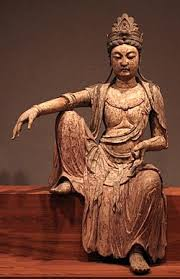
Kuan Yin on realities we create

“Everyone creates realities based on their own personal beliefs. These beliefs are so powerful that they can create [expansive or entrapping] realities over and over.”

~ Kuan Yin

Quan Yin (also spelled Guanyin or Kuan Yin) is the revered East Asian bodhisattva of mercy and compassion. Her full Chinese name, Guanshiyin, means “The One Who Perceives the Sounds of the World”. She chose to delay entering Nirvana to stay behind and help relieve the suffering of all beings. [1, 2, 3, 4]

Antichrist Rolls Eyes Throughout  Peter Thiel Lecture

‘This Guy Has No Idea What He’s Talking About,’ Says Son Of Perdition

The Beast Who Rises from the Sea (not pictured) scoffed at Thiel’s “wildly inaccurate” theories about him.

Published: August 7, 2026 (TheOnion.com)

ROME—In addition to crossing his arms and shaking his head as he listened to the tech billionaire spread blatant misinformation about the End Times, the Antichrist reportedly rolled his eyes Monday throughout a lecture given by Peter Thiel. “This second-rate charlatan doesn’t know the first goddamn thing about my plans to bring widespread doom,” said the Beast, who grimaced and exhaled black plumes of smoke from his nose while sitting in the front row of the 2,000-person auditorium. “It’s so annoying when armchair eschatologists discuss the Battle of Armageddon without really knowing jack shit. Inverting the order of Christ is something I’m super into, of course. But this guy barely scratches the surface of my schemes, and what details he does bring up are completely fucking wrong. Like, does he seriously think the U.N. has anything to do with the apocalypse? If his claims weren’t so laughable, I’d almost feel the need to publicly correct his dumb ass.” According to lecture attendees, the Lawless One grew fed up and stormed out of the building after Peter Thiel suggested the Antichrist might be Greta Thunberg.