(Created by Steve Hines and AI)

CBS New York Jun 18, 2026 The mayor spoke about the Knicks’ resilience during their run to the NBA title and the spirit of New York City. For video licensing inquiries, contact: licensing@veritone.com
These writings reflect Falconer’s real-life experiences – raw, intimate, and often intense dialogues with Spirit – filtered through the lens of someone who has walked the path of deep personal healing. With more than 50 years of experience as a spiritual healer, Bob brings hard-won and compassionate authenticity to his work. His direct relationship with the Spirit Realm has anchored his healing practice and his recovery from extreme childhood abuse, creating a solid spiritual foundation that he carries through even the darkest of times.

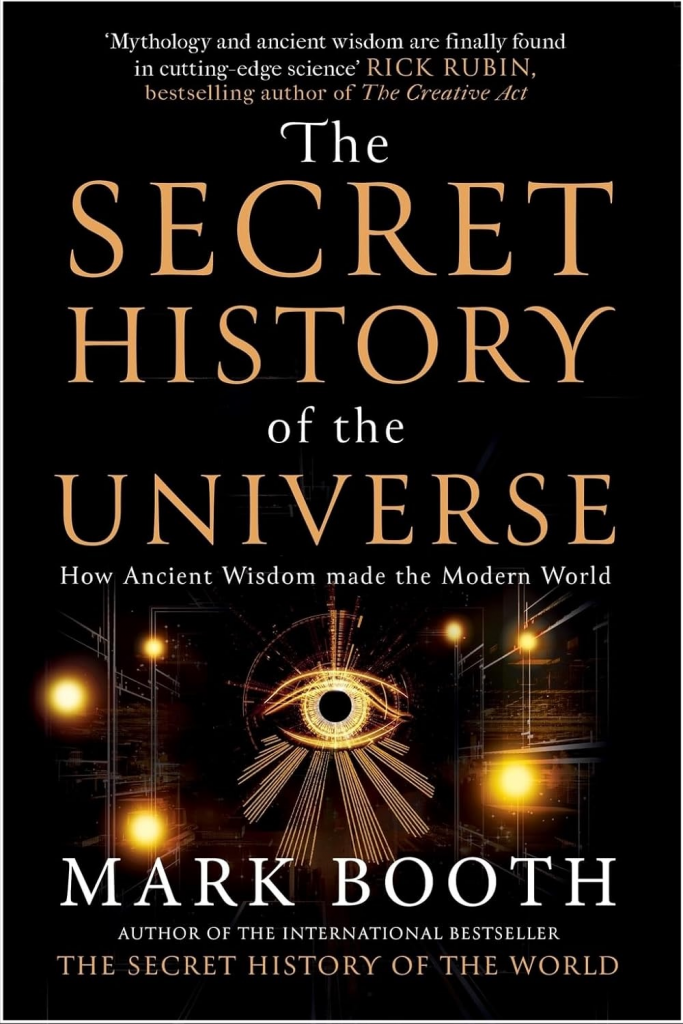
Mark Booth offers an alternative view, showing us how the great geniuses of modern science, from Marie Curie, Nikola Tesla, and Albert Einstein to today’s architects of AI, turned instead to secret, mystical, and “higher” teachings, including Indian mysticism and Freemasonry, to make sense of the strange phenomena they were encountering. Experimenting with alternative states of consciousness, they risked isolation and even madness.
In this edited volume, Sharon Mijares and her colleagues explore approaches to mental health that integrate psychology with spiritual practices such as meditation, mindfulness, and yoga. The book examines alternative perspectives on a wide range of psychological disorders while emphasizing treatment of the whole person rather than symptoms alone. Drawing on case studies and the experience of leading clinicians, it offers practical insights into psychospiritual methods of healing and transformation.


(Image from 80000hours.org)
| We need experts to secure one of the most dangerous technologies ever built Share: Link Aaron Gertler June 19, 2026 (us2.campaign-archive.com) |
| Hi everyone, In April, Anthropic’s newest model, Mythos, discovered vulnerabilities and exploits in every major operating system and web browser. After two months of hardening the model, Anthropic released it to the public — only for the US government to force it offline within days after Amazon engineers found they could trick the model into helping with cyberattacks (though Anthropic disputes the importance of this jailbreak). Given the pace of AI progress, models as capable as Mythos won’t stay rare for long. And even if the models all have safety features, they’ll be under constant attack from people who want to unlock their most dangerous abilities. Most of the worst outcomes from advanced AI start with a security failure: North Korea bribes an engineer to smuggle out weights and builds its own frontier AI; terrorists jailbreak a model into designing a pathogen; a scheming system disables its own restrictions without being noticed. Solving these problems requires people who can think like attackers, spot vulnerabilities, and harden infrastructure against spies and hackers (both human and AI). But those skills take years to build, and the AI safety world needs them now. Security experts might be the field’s greatest bottleneck. So if you’ve spent your career securing systems, or trying to break them, you’re qualified for some of the most important jobs we know of. The work pays well. The field is small and well-connected; it won’t take long to build a network and a reputation. And you don’t have to be an AI specialist — you’ll pick up the context as you go along. You can start applying today. If you want to use the skills you’ve developed to solve interesting problems, stymie clever opponents, and protect the world from AI catastrophe, our newest career profile is for you. |
(Contributed by Michael Kelly, H.W.)
New Thinking Allowed with Jeffrey Mishlove Jun 19, 2026 This video is a special release from the original Thinking Allowed series that ran on public television from 1986 until 2002. It was recorded in about 1998. It will remain public for only one week. A Zen teacher who has studied koans for thirty years, John Tarrant, PhD, directs the Pacific Zen Institute, a venture in meditation and the arts, and teaches culture change in organizations. He is the author of several books, including The Light Inside the Dark: Zen, Soul and the Spiritual Life. Additionally, he is a Jungian psychologist. Now you can watch all of the programs from the original Thinking Allowed Video Collection, hosted by Jeffrey Mishlove. Subscribe to the new Streaming Channel (https://thinkingallowed.vhx.tv/) and watch more than 350 programs now, with more, previously unreleased titles added weekly. Free month of the classic Thinking Allowed streaming channel for New Thinking Allowed subscribers only. Use code THINKFREELY.

This founding work of the history of religions, first published in English in 1954, secured the North American reputation of the Romanian emigre-scholar Mircea Eliade (1907-86). Making reference to an astonishing number of cultures & drawing on scholarship published in no less than half a dozen European languages, Eliade’s “The Myth of the Eternal Return makes both intelligible & compelling the religious expressions & activities of a wide variety of archaic & “primitive” religious cultures. While acknowledging that a return to the “archaic” is no longer possible, Eliade passionately insists on the value of understanding this view in order to enrich our contemporary imagination of what it is to be human.
Romanian-born historian of religion, fiction writer, philosopher, professor at the University of Chicago, and one of the pre-eminent interpreters of world religion in the last century. Eliade was an intensely prolific author of fiction and non-fiction alike, publishing over 1,300 pieces over 60 years. He earned international fame with LE MYTHE DE L’ÉTERNAL RETOUR (1949, The Myth of the Eternal Return), an interpretation of religious symbols and imagery. Eliade was much interested in the world of the unconscious. The central theme in his novels was erotic love.
(Goodreads.com)
(Image from Amazon.com)
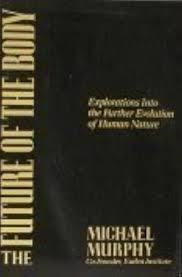
In the oral and written histories of every culture, there are countless records of men and women who have displayed extraordinary physical, mental, and spiritual capacities. In modern times, those records have been supplemented by scientific studies of exceptional functioning.
Are the limits of human growth fixed?
Are extraordinary abilities latent within everyone?
Is there evidence that humanity has unrealized capacities for self-transcendence?
Are there specific practices through which ordinary people can develop these abilities?
Michael Murphy has studied these questions for over thirty years.
In The Future of the Body, he presents evidence for metanormal perception, cognition, movement, vitality, and spiritual development from more than 3,000 sources. Surveying ancient and modern records in medical science, sports, anthropology, the arts, psychical research, comparative religious studies, and dozens of other disciplines, Murphy has created an encyclopedia of exceptional functioning of body, mind, and spirit. He paints a broad and convincing picture of the possibilities of further evolutionary development of human attributes.
By studying metanormal abilities under a wide range of conditions, Murphy suggests that we can identify those activities that typically evoke these capacities and assemble them into a coherent program of transformative practice.
A few of Murphy’s central observations and proposal
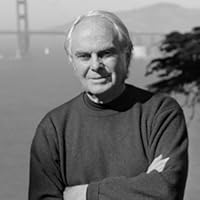
Bestselling author Michael Murphy has been called the father of the human potential movement, one of the most influential movements in twentieth-century American culture. His bestselling book Golf in the Kingdom (1972) inspired the creation of the Shivas Irons Society, a nonprofit group dedicated to finding beauty and discovery through the game of golf, and has recently been adapted into a movie starring Malcolm McDowell (2010). His other books include Jacob Atabet (1977), An End to Ordinary History (1982), In the Zone (1995), and The Kingdom of Shivas Irons (1997). He lives in California.
(Goodreads.com)

~ Thomas Merton
~ The Way of Chuang Tzu by Thomas Merton
Thomas Merton, religious name M. Louis, was an American Trappist monk, theologian, mystic, poet, and social activist. He was a professed member of the Abbey of Our Lady of Gethsemani, near Bardstown, Kentucky, living there from 1941 to his death. Wikipedia
Born January 31, 1915, Prades, France
Died December 10, 1968 (age 53 years), Bangkok, Thailand

(Image courtesy of Steve Hines and AI)
June 20: 11:00 AM – 12:00 PM PST
Mike Zonta, H.W., M.
In a crisis — any crisis — The Prosperos offers Translation. Translation Saturday Meetings is a weekly series of Translation presentations by veteran Translators, live and up to date on the issues of the day.
It is not a Translation workshop, It is not a Translation class. It is not a group Translation in the usual sense, though group participation is encouraged.
It is, however, restricted to those who have taken Translation class. So if you have never taken Translation class, check the calendar tab on The Prosperos website (TheProsperos.org) or get in touch with us and we will schedule a class.
Last week our Translation was done entirely by ChatGPT and the sense testimony was: Money is a huge corrupting force. The conclusion was: Truth alone has authority; therefore no symbol of scarcity, including money, can corrupt the Reality Self. Therefore money symbolizes the value of being, the value of fullness.
– – – – – – – – – – – – – – See you there!!! – – – – – – – – – – – – – –
Here’s the link: https://us02web.zoom.us/j/81749347119
For more info and link to join please email Mike Zonta at:
June 18, 2026 (jodemocracy.org)

| The United States and Iran formally signed a 14-point memorandum of understanding on June 17. Under the terms, which include ending sanctions on Iran, releasing its frozen funds, and pledging not to interfere in each other’s internal affairs, both sides have agreed to a 60-day ceasefire to allow further negotiations toward a final peace deal. The following Journal of Democracy essays cover the war that began on February 28 with attacks launched by the United States and Israel, the massive uprising of Iranians that preceded it, and the most recent chapter of the Islamic Republic’s brutal repression of its people. |
 The Islamic Republic’s War on Iranians The Islamic Republic’s War on IraniansIran’s theocracy has waged a brutal campaign against its own citizens for years. Now that the Woman, Life, Freedom movement has stripped the regime of any legitimacy, the mullahs have had no response but to sharpen their instruments of repression. By Ladan Boroumand |
| The War with Iran Made the IRGC Stronger If one of the goals of the war was to decimate the Islamic Revolutionary Guard Corps, it has had the opposite effect. The IRGC will come out of the conflict stronger and more embedded in Iranian politics. By Roya Izadi |
 Why the Iranian Regime Owns the Streets Why the Iranian Regime Owns the StreetsThe progovernment rallies that crowd Iran’s streets are no accident. They are a critical and underappreciated pillar of the regime’s strength, and they are shaping Iran’s response to the war. By Mohammad Ali Kadivar |
 Why the Islamic Republic Still Stands Why the Islamic Republic Still StandsAfter January’s mass protests, Iran seemed on the verge of revolutionary upheaval. How is it weathering the U.S.-Israeli assault? By Peyman Asadzade |
 Iran’s Democratic Hopes Amid the Smoke of War Iran’s Democratic Hopes Amid the Smoke of WarIf the war ends with the dismantling of the regime’s repressive apparatus, the Iranian people will have a rare, if fraught, opportunity. The totalitarian mindset often survives totalitarian regimes. By Ladan Boroumand |
 Iran’s Massacres Will Haunt the Regime Iran’s Massacres Will Haunt the RegimeIran’s hardline government responded to nationwide protests with horrific violence, killing thousands of Iranians in a matter of days. There is nothing the regime can offer its people to regain their support. By Ehsan Habibpour and Sharan Grewal |
The Journal of Democracy is published quarterly in January, April, July, and October. Subscribe now for full access to the Journal of Democracy archives.
