
BrianWilsonVEVO Jun 25, 2015 Brian Wilson – One Kind Of Love http://vevo.ly/cAVEcE New album “No Pier Pressure” now available and includes ‘One Kind of Love’ from Brian’s new film, Love & Mercy.
PsychoSpiritual Transformation with Sharon Mijares
New Thinking Allowed with Jeffrey Mishlove Jun 21, 2026 Psychology and Psychotherapy Sharon Mijares, PhD, is a core faculty member at the California Institute for Human Science. She is editor and contributor to a number of anthologies, including The PsychoSpiritual Clinician’s Handbook: Alternative Methods for Understanding and Treating Mental Disorders; The Revelation of the Breath: A Tribute to Its Wisdom, Power, and Beauty; and Modern Psychology and Ancient Wisdom: Psychological Healing Practices from the World’s Religious Traditions. She is the sole author of Fragmented Self, Archetypal Forces, and Embodied Mind. Sharon discusses the profound relationship between psychology, spirituality, mysticism, and personal transformation, drawing upon a lifetime of experiences that span Jungian psychology, Sufism, indigenous wisdom, and psychospiritual healing. She reflects on how suffering, trauma, mystical experiences, past-life memories, and encounters with diverse spiritual traditions contributed to her own journey from troubled beginnings to becoming a respected psychologist and educator. Mijares emphasizes individuation, the awakening of the divine spark within, the importance of balancing feminine and masculine energies, and the transformative power of mystical longing. 00:00:00 Introduction 00:03:17 Psychology and spirituality 00:07:29 Mysticism beyond religion 00:12:26 Reincarnation and transformation 00:15:21 Jung and individuation 00:21:21 Carmelite memories 00:28:21 Reincarnation and indigenous wisdom 00:35:19 Trauma as awakening 00:42:28 Living beyond labels 00:46:07 Conclusion New Thinking Allowed host, Jeffrey Mishlove, PhD, is author of The Roots of Consciousness, Psi Development Systems, and The PK Man. Between 1986 and 2002 he hosted and co-produced the original Thinking Allowed public television series. He is the recipient of the only doctoral diploma in “parapsychology” ever awarded by an accredited university (University of California, Berkeley, 1980). He is also the Grand Prize winner of the 2021 Bigelow Institute essay competition regarding the best evidence for survival of human consciousness after permanent bodily death. He is Co-Director of Parapsychology Education at the California Institute for Human Science. (Recorded on Thursday, May 28, 2026)
Book: “Dark Night of the Soul”

Dark Night of the Soul
John of the Cross, Edgar Allison Peers (Translator)
“The clearer and more manifest divine things are in themselves, the more they are naturally obscure and hidden from the soul. It is here like natural light: […] the more we want to stare directly at the sun, the more we dazzle the visual power and deprive it of light […]. Likewise, when this divine light of contemplation invests the soul which is not yet completely enlightened, it produces spiritual darkness in it, because not only does it exceed it, but because it deprives it of its natural intelligence. and obscures the act. »
On the mystical path, the experience of night is neither dark, nor dramatic, nor tragic. This magnificent poetic treatise shows, on the contrary, that she is the recipient of divine lessons. A major work of the negative path.
« Plus les choses divines sont en soi claires et manifestes, plus elles sont naturellement obscures et cachées à l’âme. Il en est ici comme de la lumière naturelle : […] plus on veut fixer le soleil en face, et plus on éblouit la puissance visuelle et on la prive de lumière […]. De même, quand cette divine lumière de la contemplation investit l’âme qui n’est pas encore complètement éclairée, elle produit en elle des ténèbres spirituelles, parce que non seulement elle la dépasse, mais parce qu’elle la prive de son intelligence naturelle et en obscurcit l’acte. »
Sur le chemin mystique, l’expérience de la nuit n’est ni noire, ni dramatique, ni tragique. Ce magnifique traité poétique montre au contraire qu’elle est réceptrice de leçons divines. Une œuvre majeure de la voie négative.
About the author
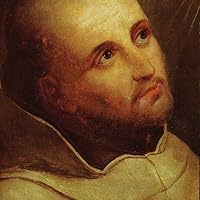
John of the Cross
St. John of the Cross (Spanish: Juan de la Cruz), born June 24 1542, Juan de Yepes Álvarez, was a major Counter-Reformation figure, a Spanish mystic, Catholic saint, Carmelite friar and priest. He was a reformer of the Carmelite Order and is considered, along with St Teresa of Ávila, as a founder of the Discalced Carmelites. He’s also known for his writings. Both his poetry & his studies on the growth of the soul are considered the summit of mystical Spanish literature & a peak of all Spanish literature. He was canonized as a saint in 1726 by Pope Benedict XIII. He is one of the 33 Doctors of the Church.
(Goodreads.com)
Did God fly the first rainbow flag?

Tay’s Photography’s Post (Facebook.com)
Genesis 9: 12-16
12 And God said, “This is the sign of the covenant I am making between me and you and every living creature with you, a covenant for all generations to come: 13 I have set my rainbow in the clouds, and it will be the sign of the covenant between me and the earth. 14 Whenever I bring clouds over the earth and the rainbow appears in the clouds, 15 I will remember my covenant between me and you and all living creatures of every kind. Never again will the waters become a flood to destroy all life. 16 Whenever the rainbow appears in the clouds, I will see it and remember the everlasting covenant between God and all living creatures of every kind on the earth.”
America celebrates its 250th birthday
Obama Foundation Streamed live on Jun 18, 2026 Livestream of the Grand Opening Ceremony of the Obama Presidential Center on June 18, 2026 in Chicago, IL. Featuring speeches from President Barack Obama, Michelle Obama and performances by Bruce Springsteen, Christina Aguilera, Common, Eddie Vedder, Guitars Over Guns, Illinois Army National Color Guard, Jennifer Hudson, John Legend, Marc Anthony, Stevie Wonder, Tems, The Roots, U2’s Bono and The Edge,. and Uniting Voices Chicago An invocation led by Pastor Joel Hunter and Joshua DuBois. Remarks and special appearances from Marsai Martin, Marty Nesbitt, and Valerie Jarrett.
Thomas Aquinas on loving those whose opinions we reject
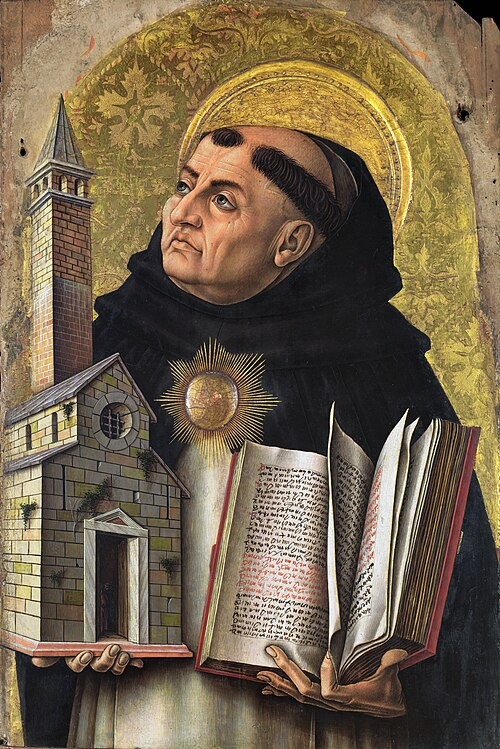
Panel of a 15th-century altarpiece
“We must love them both, those whose opinions we share and those whose opinions we reject, for both have labored in the search for truth, and both have helped us in finding it.”
~ Thomas Aquinas
Thomas Aquinas was an Italian Dominican friar and priest, theologian, and philosopher. He is considered one of the most influential thinkers in the history of Catholic theology and Western philosophy. Thomas was a proponent of natural theology and the father of a school of thought known as Thomism. Wikipedia
Born circa 1225 Roccasecca, Italy
Died March 7, 1274, Abbazia di Fossanova, Fossanova Abbey, Italy
Obama on democracy
MS NOW Jun 18, 2026 Former President Obama spoke at the opening of his Presidential Center in the South Side of Chicago. MS NOW: My Source for News, Opinion, and the World.
Book: “The Idea of the Holy”

The Idea of the Holy
Rudolf Otto, John Wilfred Harvey (Translator)
Since the English translation first appeared in 1923, Rudolf Otto’s volume has established itself as a classic in the field of religious philosophy. It offers an in-depth inquiry into the non-rational factor in the idea of the divine and its relation to the rational.
About the author
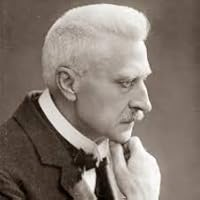
Rudolf Otto
74 books84 followersFollow
German theologian, philosopher, and historian of religion, who exerted worldwide influence through his investigation of man’s experience of the holy. Das Heilige (1917; The Idea of the Holy, 1923) is his most important work.
Book: “The Future of an Illusion”

The Future of an Illusion
Sigmund Freud, Peter Gay, James Strachey (Editor)
In the manner of the eighteenth-century philosopher, Freud argued that religion and science were mortal enemies. Early in the century, he began to think about religion psychoanalytically and to discuss it in his writings. The Future of an Illusion (1927), Freud’s best known and most emphatic psychoanalytic exploration of religion, is the culmination of a lifelong pattern of thinking.
About the author

Sigmund Freud
Dr. Sigismund Freud, M.D. (University of Vienna)—later changed to Sigmund—was a neurologist and the founder of psychoanalysis, who created an entirely new approach to the understanding of the human personality. He is regarded as one of the most influential—and controversial—minds of the 20th century.
In 1873, Freud began to study medicine at the University of Vienna. After graduating, he worked at the Vienna General Hospital. He collaborated with Josef Breuer in treating hysteria by the recall of painful experiences under hypnosis. In 1885, Freud went to Paris as a student of the neurologist Jean Charcot. On his return to Vienna the following year, Freud set up in private practice, specialising in nervous and brain disorders. The same year he married Martha Bernays, with whom he had six children.
Freud developed the theory that humans have an unconscious in which sexual and aggressive impulses are in perpetual conflict for supremacy with the defences against them. In 1897, he began an intensive analysis of himself. In 1900, his major work The Interpretation of Dreams was published in which Freud analysed dreams in terms of unconscious desires and experiences.
In 1902, Freud was appointed Professor of Neuropathology at the University of Vienna, a post he held until 1938. Although the medical establishment disagreed with many of his theories, a group of pupils and followers began to gather around Freud. In 1910, the International Psychoanalytic Association was founded with Carl Jung, a close associate of Freud’s, as the president. Jung later broke with Freud and developed his own theories.
After World War One, Freud spent less time in clinical observation and concentrated on the application of his theories to history, art, literature and anthropology. In 1923, he published The Ego and the Id, which suggested a new structural model of the mind, divided into the ‘id, the ‘ego’ and the ‘superego’.
In 1933, the Nazis publicly burnt a number of Freud’s books. In 1938, shortly after the Nazis annexed Austria, Freud left Vienna for London with his wife and daughter Anna.
Freud had been diagnosed with cancer of the jaw in 1923, and underwent more than 30 operations. He died of cancer on 23 September 1939.
(Goodreads.com)
Plato’s Warning Against Friends-with-Benefits | Democracy is Anarchy
Feb 8, 2025An Interview with Berkeley’s GRF Ferrari Subscribe to my newsletter if you want content updates, invitations to events, and to support my work: johnathanbi.com Transcript: https://www.johnathanbi.com/p/transcr… If you want a chance to attend my lectures and be kept up to date on all my content subscribe to my newsletter: greatbooks.io Companion lectures and interviews:
- GRF Ferrari on Plato’s Republic: • Democracy is Anarchy | Berkeley’s GRF Ferr…