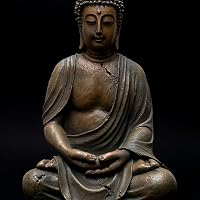
“Do not believe in anything simply because you have heard it. Do not believe in anything simply because it is spoken and rumored by many. Do not believe in anything simply because it is found written in your religious books. Do not believe in anything merely on the authority of your teachers and elders. Do not believe in traditions because they have been handed down for many generations. But after observation and analysis, when you find that anything agrees with reason and is conducive to the good and benefit of one and all, then accept it and live up to it.”
New Thinking Allowed with Jeffrey Mishlove Sep 6, 2026 New Thinking Allowed Audio Podcast Emile Alexandrov is an assistant professor of philosophy, formerly at the University of Tyumen in Russia, and currently a visiting scholar at Waseda University in Tokyo. He is author of The Other Platonist Beginning and Metaphysics and Ineffable. Emile explores the romance of metaphysics as the love of the idea, tracing its rigorous tradition from Aristotle’s unmoved mover and primacy of thinking through Plato’s forms and the allegory of the cave. He examines Neoplatonic developments with Plotinus, Iamblichus, and Proclus, highlighting the ineffable, nondiscursive insight, ritual, and the tension between reason and mystery across history. Alexandrov connects this lineage to later thinkers including Aquinas, Kant, and Schopenhauer, and considers the role of parapsychology in renewing first-principles inquiry beyond purely discursive limits. 00:00:00 Introduction 00:07:30 Aristotle and the unmoved mover 00:15:00 Presocratics and poetic immediacy 00:22:40 Plato’s allegory of the cave 00:30:20 Plotinus and the ineffable one 00:38:00 Proclus and theurgy 00:45:40 Logos will and Aquinas 00:53:20 Schopenhauer and first principles 01:01:00 Kant reason and parapsychology 01:05:00 Conclusion New Thinking Allowed host, Jeffrey Mishlove, PhD, is author of The Roots of Consciousness, Psi Development Systems, and The PK Man. Between 1986 and 2002 he hosted and co-produced the original Thinking Allowed public television series. He is the recipient of the only doctoral diploma in “parapsychology” ever awarded by an accredited university (University of California, Berkeley, 1980). He is also the Grand Prize winner of the 2021 Bigelow Institute essay competition regarding the best evidence for survival of human consciousness after permanent bodily death. He is Co-Director of Parapsychology Education at the California Institute for Human Science. (Recorded on Friday, August 7th, 2026)
Aletheia (ἀλήθεια) translates directly from ancient Greek as “truth,” but its literal root meaning is “unconcealment” or “that which is brought out into the open.” [1, 2]
Meaning and Etymology
The Root: The word combines the prefix a- (meaning “not” or “un-“) with lethe (meaning “forgetting,” “concealment,” or the river of oblivion). [1, 2]
Unhidden Reality: Rather than just a factual statement, aletheia describes reality as it is revealed when the veil of illusion or forgetfulness is removed. [1, 2]
Mythology: In ancient Greek tradition, Aletheia was personified as the goddess of truth and sincerity. [1]
Would you like to explore how Martin Heidegger used the concept of aletheia, or its use in New Testament Greek?
Me: Heidegger
Google AI: For the German philosopher Martin Heidegger, aletheia is the central concept of his entire philosophy of truth, which he famously defined as “unconcealment” (German: Unverborgenheit).
He argued that Western philosophy lost its way by treating truth merely as a logical correctness or a matching of facts, rather than an experiential revealing of reality.
Heidegger’s Core Ideas on Aletheia
The Critique of Correctness: Heidegger argued that modern philosophy views truth as propositional correctness (e.g., the sentence “the sky is blue” is true because it matches the sky). He believed this misses a deeper point: for a sentence to match reality, reality must first show itself to us.
Truth as a Process: To him, aletheia is not a stagnant fact, but a dynamic, historical event where things step out of hiddenness into the light.
The “Clearing” (Lichtung): He used the metaphor of a forest clearing. Just as a clearing lets light in so trees can be seen, aletheia is the open space that allows things to appear to human consciousness.
The Interplay of Hiding and Revealing: Heidegger noted that whenever something is revealed, something else is hidden. For example, focusing intensely on the atomic structure of wood hides its utility as a table. Therefore, truth always coexists with untruth or concealment.
Why It Matters to His Philosophy
Heidegger believed that by forgetting aletheia and treating truth like a math problem, modern humanity began viewing the world as just a collection of objects to be calculated, measured, and exploited. Rediscovering aletheia was his way of trying to restore a deeper, more meaningful relationship with existence.
The Sacred Speaks Sep 9, 2025 The Sacred Speaks What does it mean to think impossibly? How do paranormal events, mystical visions, and encounters with the unknown reshape our understanding of what it means to be human? In this episode, host Dr. John W. Price sits down with Dr. Jeffrey Kripal — J. Newton Rayzor Professor of Philosophy and Religious Thought at Rice University, and one of today’s most daring scholars of religion — to explore the borders between the possible and the impossible. Together, they trace the line where scholarship meets the mystical, where imagination bends into healing, and where our deepest worldviews determine what we are even able to see. From UFOs and near-death experiences to William Blake, dual-aspect monism, and the future of spirituality, this is a wide-ranging conversation about living at the edges of reality. Be sure to check out Jeff’s latest book, How to Think Impossibly: About Souls, UFOs, Time, Belief, and Everything Else. Key Takeaways Embracing the impossible expands not just our knowledge, but our capacity for awe, healing, and transformation. Worldviews — personal and cultural — filter what counts as “real,” shaping how we encounter extraordinary experiences. Paranormal phenomena aren’t just curiosities; they are symbolic invitations into deeper practice and meaning. Thinking impossibly is less about belief and more about orientation — a way of living that opens us to mystery. Dialogue at the borderlands of science, religion, and imagination may hold the key to the future of spirituality. In This Episode (00:00) Introduction & Guest Bio (01:59) Housekeeping & Announcements (05:13) The Origins of “Thinking Impossibly” (09:52) Stories of the Impossible (13:16) The Role of Worldviews (16:34) Religion, Science, and the Paranormal (22:14) Healing, Suffering, and Transformation (28:32) The Power of Story & Magic (35:12) Teaching the Impossible (42:39) The Future of Spirituality (46:06) Closing Reflections & Resources Connect: Jeffrey: https://jeffreyjkripal.com John: https://www.drjohnwprice.com
“Telepathy means pathos at a distance. It means entanglement at a distance. It doesn’t mean you’re playing the lottery or you’re watching a football game or something. It’s this deep emotional bonding.”
“I don’t think it’s about computers becoming conscious and taking over the world and killing us. That’s materialism, by the way.”
–Jeff Kripal
Johnathan Bi Mar 7, 2026 An interview with Jeff Kripal on Nietzsche and mysticism Subscribe to my newsletter if you want content updates, invitations to events, and to support my work: https://www.johnathanbi.com/ Transcript: https://www.johnathanbi.com/p/transcr… Companion lectures and interviews:
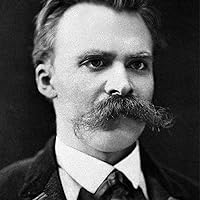
Friedrich Nietzsche’s most accessible and influential philosophical work, misquoted, misrepresented, brilliantly original and enormously influential
Nietzsche was one of the most revolutionary and subversive thinkers in Western philosophy, and Thus Spoke Zarathustra remains his most famous and influential work. It describes how the ancient Persian prophet Zarathustra descends from his solitude in the mountains to tell the world that God is dead and that the Superman, the human embodiment of divinity, is his successor. Nietzsche’s utterance ‘God is dead’, his insistence that the meaning of life is to be found in purely human terms, and his doctrine of the Superman and the will to power were all later seized upon and unrecognisably twisted by, among others, Nazi intellectuals. With blazing intensity and poetic brilliance, Nietzsche argues that the meaning of existence is not to be found in religious pieties or meek submission to authority, but in an all-powerful life force: passionate, chaotic and free.
Friedrich Wilhelm Nietzsche was a German classical scholar, philosopher, and critic of culture, who became one of the most influential of all modern thinkers. He began his career as a classical philologist before turning to philosophy. He became the youngest person to hold the Chair of Classical Philology at the University of Basel in 1869 at the age of 24, but resigned in 1879 due to health problems that plagued him most of his life; he completed much of his core writing in the following decade. In 1889, at age 44, he suffered a collapse and afterward a complete loss of his mental faculties, with paralysis and probably vascular dementia. He lived his remaining years in the care of his mother until her death in 1897 and then with his sister Elisabeth Förster-Nietzsche. Nietzsche died in 1900, after experiencing pneumonia and multiple strokes. Nietzsche’s work spans philosophical polemics, poetry, cultural criticism, and fiction while displaying a fondness for aphorism and irony. Prominent elements of his philosophy include his radical critique of truth in favour of perspectivism; a genealogical critique of religion and Christian morality and a related theory of master–slave morality; the aesthetic affirmation of life in response to both the “death of God” and the profound crisis of nihilism; the notion of Apollonian and Dionysian forces; and a characterisation of the human subject as the expression of competing wills, collectively understood as the will to power. He also developed influential concepts such as the Übermensch and his doctrine of eternal return. In his later work, he became increasingly preoccupied with the creative powers of the individual to overcome cultural and moral mores in pursuit of new values and aesthetic health. His body of work touched a wide range of topics, including art, philology, history, music, religion, tragedy, culture, and science, and drew inspiration from Greek tragedy as well as figures such as Zoroaster, Arthur Schopenhauer, Ralph Waldo Emerson, Richard Wagner, Fyodor Dostoevsky, and Johann Wolfgang von Goethe. After his death, Nietzsche’s sister Elisabeth became the curator and editor of his manuscripts. She edited his unpublished writings to fit her German ultranationalist ideology, often contradicting or obfuscating Nietzsche’s stated opinions, which were explicitly opposed to antisemitism and nationalism. Through her published editions, Nietzsche’s work became associated with fascism and Nazism. 20th-century scholars such as Walter Kaufmann, R.J. Hollingdale, and Georges Bataille defended Nietzsche against this interpretation, and corrected editions of his writings were soon made available. Nietzsche’s thought enjoyed renewed popularity in the 1960s and his ideas have since had a profound impact on 20th- and early 21st-century thinkers across philosophy—especially in schools of continental philosophy such as existentialism, postmodernism, and post-structuralism—as well as art, literature, music, poetry, politics, and popular culture.
New Thinking Allowed with Jeffrey Mishlove Sep 5, 2026 New Thinking Allowed Audio Podcast Ruth Kastner, PhD, is a member of the Foundations of Physics group at the University of Maryland, College Park. She is author of The Transactional Interpretation of Quantum Mechanics: The Reality of Possibility, Understanding Our Unseen Reality: Solving Quantum Riddles, and Adventures in Quantumland: Exploring Our Unseen Reality. In this video, rebooted from 2021, she contrasts the “eternalist” view of physics, as expressed in the idea of a “block universe” based on Einstein’s theory of relativity, with a “dynamical” view as expressed in the transactional interpretation of quantum mechanics. These interpretations of the physical universe both allow some form of human postmortem survival – although they appear to be quite different from each other. New Thinking Allowed host, Jeffrey Mishlove, PhD, is author of The Roots of Consciousness, Psi Development Systems, and The PK Man. Between 1986 and 2002 he hosted and co-produced the original Thinking Allowed public television series. He is the recipient of the only doctoral diploma in “parapsychology” ever awarded by an accredited university (University of California, Berkeley, 1980). He is also the Grand Prize winner of the 2021 Bigelow Institute essay competition regarding the best evidence for survival of human consciousness after permanent bodily death. He is Co-Director of Parapsychology Education at the California Institute for Human Science. (Recorded on March 11, 2021)
“Worry implies that we don’t quite trust God is big enough, powerful enough, or loving enough to take care of what’s happening in our lives. Stress says the things we are involved in are important enough to merit our impatience, our lack of grace towards others, or our tight grip of control. Basically, these two behaviors communicate that it’s okay to sin and not trust God because the stuff in my life is somehow exceptional. Both worry and stress reek of arrogance. They declare our tendency to forget that we’ve been forgiven, that our lives are brief … and that in the context of God’s strength, our problems are small, indeed.”
~ Francis Chan
Francis Chan is an American Protestant author, teacher, and preacher. He is the former teaching pastor of the nondenominational Cornerstone Community Church, an Evangelical church in Simi Valley, California founded by Chan in 1994. Wikipedia
In 1859, Harriet Wilson published Our Nig. This forgotten novel was the first book published by a Black woman in the United States. Wilson’s main character, Frado, is parentified too young and then becomes a mother too soon. This traumatic experience is widely caricatured in global literature, but then again misogynoir is older than the so-called democracies of the West.
Across the diaspora, Black women are desexualized and hypersexualized at every age. And as with most anti-Black racism in the United States, it stems from chattel slavery. During this same enslavement, Black midwives pioneered the field of obstetrics and gynecology, yet Black mothers still have the highest mortality rate in the nation, if not the world. With all this and more intersectional and systematic prejudice, the very existence of Black motherhood is a miracle.
Thankfully, more and more Black authors are challenging this dehumanization. They remind us that every Black mother is unique and that each of them has a story worth telling. For some daughters, their mother is their first friend. For some daughters, their mother is their first foe. For others still, their mother is both.
The latter is a pattern in our stories. It is worth noting that most of the authors in this article have experienced or do experience estrangement from their mothers or estrangement from their daughters. What is motherhood if not an act of dismembering; as in putting the whole into separate parts? And what is daughterhood if not an act of remembering; as in putting separate parts of the whole together again?
The tragedy and comedy of it all is that these members, be they mental or physical or spiritual, cannot be truly separate or truly whole again. As I continue to move through the complexities of Black daughterhood, I am grounded in my lifelong love of books. Beginning with the ancestors, these are books that resonate with me on this Mother’s Day.
“I think that being a mother is the cruelest thing in the world.” To describe the two biracial mothers in this 1929 novella as “complicated” is an oversimplification. In theory, both women could be black-presenting and white-presenting, but one makes the fateful choice to be white-passing as an adult. Their tense encounters, complete with homoerotic undertones, are explored against the backdrop of 1920s Harlem.
The 2021 film adaptation was poignantly shot in black-and-white and directed by Rebecca Hall. This controversial second book unjustly ended her career but made Nella Larsen the first Black woman to win a Guggenheim Fellowship.
“My mother’s gifts of courage to me were both large and small. The latter are woven so subtly into the fabric of my psyche that I can hardly distinguish where she stops and I begin.” In this 2013 New York Times bestseller memoir, Maya Angelou graciously offers an intimate portrait of her absent mother.
Much can be made of the mother who sends her children away to protect them from herself. They later reconnect, and this last book of hers is ultimately one of redemption. Maya Angelou was awarded the National Medal of Arts and the Presidential Medal of Freedom before she died in 2014.
“I don’t care what she is. Grown don’t mean a thing to a mother. A child is a child. They get bigger, older, but grown? What’s that supposed to mean? In my heart it don’t mean a thing.” This 1987 ghost story focuses on a formerly enslaved mother who is haunted by her dead daughter and her living daughter. The horrors of motherhood and daughterhood are dissected throughout the book.
This masterpiece was adapted into a 1998 film cast and a 2016 radio series. This novel eventually made Toni Morrison the first Black woman to win the Nobel Prize in Literature.
“all the girls were cheering when i went downstairs. i was / the one who told them to be tough, to stop believing / in their mother’s pain, that poison… / it wouldn’t hurt / like we’d been told. birth was beautiful if we believed / that it was beautiful and right and good!” This vulnerable poetry collection was published in 1983, and it chronicles the author’s experience with unplanned pregnancy and whirlwind marriage.
Toi Derricotte later co-founded Cave Canem in 1996 and won the 2020 Frost Medal from the Poetry Society of America.
“But one day when I was sitting quiet and feeling like a motherless child, which I was, it come to me: that feeling of being part of everything, not separate at all.” This 1982 novel examines a spectrum of relationships between women, including the spectrum of forced motherhood.
This epistolary epic was adapted into a 1985 film, a 2005 stage musical, a 2008 radio series, and a 2023 film musical. This novel made Alice Walker the first Black woman to win the National Book Award in Fiction, and to win the Pulitzer Prize in Fiction.
“All that you touch You Change. All that you Change Changes you.” This New York Times bestseller is arguably the most prophetic science fiction novel for our times. The heart of this novel and the sequel is a hyperempathetic prodigy turned revolutionary, but the sequel is unempathetically narrated by her daughter. Both books also explore adoptive motherhood and other forms of chosen family.
The Parables duology has been adapted into a 2015 opera and a 2020 graphic novel. The sequel won the Nebula Award, and Octavia Butler eventually became the first science-fiction writer to win a MacArthur Fellowship.
“When children arrive, the window closes. Wife, mother, age, and role model—the ‘respect’ that comes with these roles is the water they pour on your fire.” This multigenerational epic offers a sweeping view of the blessings and curses that daughters can inherit from their mothers.
Aside from cementing the author as the greatest writer in Buganda’s history, this 2020 novel is unique in its expansive definitions of family, and its tender affirmation of being raised by multiple mothers. It also happens to be my favorite book title of all time. Dr. Jennifer Nansubuga Makumbi won the Jhalak Prize for this classic.
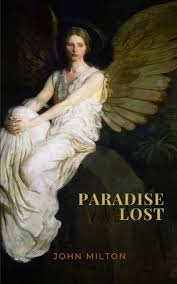
OF Mans First Disobedience, and the Fruit Of that Forbidden Tree, whose mortal tast Brought Death into the World, and all our woe, With loss of Eden, till one greater Man Restore us, and regain the blissful Seat, Sing Heav’nly Muse, that on the secret top Of Oreb, or of Sinai, didst inspire That Shepherd, who first taught the chosen Seed, In the Beginning how the Heav’ns and Earth Rose out of Chaos: or if Sion Hill Delight thee more, and Siloa’s brook that flow’d Fast by the Oracle of God; I thence Invoke thy aid to my adventrous Song, That with no middle flight intends to soar Above th’ Aonian Mount, while it pursues Things unattempted yet in Prose or Rhime. And chiefly Thou, O Spirit, that dost prefer Before all Temples th’ upright heart and pure, Instruct me, for Thou know’st; Thou from the first Wast present, and with mighty wings outspread Dove-like satst brooding on the vast Abyss And mad’st it pregnant: What in me is dark Illumin, what is low raise and support; That to the highth of this great Argument I may assert Eternal Providence, And justifie the wayes of God to men.
Say first, for Heav’n hides nothing from thy view Nor the deep Tract of Hell, say first what cause Mov’d our Grand Parents in that happy State, Favour’d of Heav’n so highly, to fall off From thir Creator, and transgress his Will For one restraint, Lords of the World besides? Who first seduc’d them to that foul revolt? Th’ infernal Serpent; he it was, whose guile Stird up with Envy and Revenge, deceiv’d The Mother of Mankind, what time his Pride Had cast him out from Heav’n, with all his Host Of Rebel Angels, by whose aid aspiring To set himself in Glory above his Peers, He trusted to have equal’d the most High, If he oppos’d; and with ambitious aim Against the Throne and Monarchy of God Rais’d impious War in Heav’n and Battel proud With vain attempt. Him the Almighty Power Hurld headlong flaming from th’ Ethereal Skie With hideous ruine and combustion down To bottomless perdition, there to dwell In Adamantine Chains and penal Fire, Who durst defie th’ Omnipotent to Arms. Nine times the Space that measures Day and Night To mortal men, he with his horrid crew Lay vanquisht, rowling in the fiery Gulfe Confounded though immortal: But his doom Reserv’d him to more wrath; for now the thought Both of lost happiness and lasting pain Torments him; round he throws his baleful eyes That witness’d huge affliction and dismay Mixt with obdurate pride and stedfast hate: At once as far as Angels kenn he views The dismal Situation waste and wilde, A Dungeon horrible, on all sides round As one great Furnace flam’d, yet from those flames No light, but rather darkness visible Serv’d onely to discover sights of woe, Regions of sorrow, doleful shades, where peace And rest can never dwell, hope never comes That comes to all; but torture without end Still urges, and a fiery Deluge, fed With ever-burning Sulphur unconsum’d: Such place Eternal Justice had prepar’d For those rebellious, here thir prison ordained In utter darkness, and thir portion set As far remov’d from God and light of Heav’n As from the Center thrice to th’ utmost Pole. O how unlike the place from whence they fell! There the companions of his fall, o’rewhelm’d With Floods and Whirlwinds of tempestuous fire, He soon discerns, and weltring by his side One next himself in power, and next in crime, Long after known in Palestine, and nam’d Beelzebub. To whom th’ Arch-Enemy, And thence in Heav’n call’d Satan, with bold words Breaking the horrid silence thus began.
If thou beest he; But O how fall’n! how chang’d From him, who in the happy Realms of Light Cloth’d with transcendent brightness didst out-shine Myriads though bright: If he whom mutual league, United thoughts and counsels, equal hope And hazard in the Glorious Enterprize, Joynd with me once, now misery hath joynd In equal ruin: into what Pit thou seest From what highth fall’n, so much the stronger prov’d He with his Thunder: and till then who knew The force of those dire Arms? yet not for those, Nor what the Potent Victor in his rage Can else inflict, do I repent or change, Though chang’d in outward lustre; that fixt mind And high disdain, from sence of injur’d merit, That with the mightiest rais’d me to contend, And to the fierce contention brought along Innumerable force of Spirits arm’d That durst dislike his reign, and me preferring, His utmost power with adverse power oppos’d In dubious Battel on the Plains of Heav’n, And shook his throne. What though the field be lost? All is not lost; the unconquerable Will, And study of revenge, immortal hate, And courage never to submit or yield: And what is else not to be overcome? That Glory never shall his wrath or might Extort from me. To bow and sue for grace With suppliant knee, and deifie his power, Who from the terrour of this Arm so late Doubted his Empire, that were low indeed, That were an ignominy and shame beneath This downfall; since by Fate the strength of Gods And this Empyreal substance cannot fail, Since through experience of this great event In Arms not worse, in foresight much advanc’t, We may with more successful hope resolve To wage by force or guile eternal Warr Irreconcileable, to our grand Foe, Who now triumphs, and in th’ excess of joy Sole reigning holds the Tyranny of Heav’n.
So spake th’ Apostate Angel, though in pain, Vaunting aloud, but rackt with deep despare: And him thus answer’d soon his bold Compeer.
O Prince, O Chief of many Throned Powers, That led th’ imbattelld Seraphim to Warr Under thy conduct, and in dreadful deeds Fearless, endanger’d Heav’ns perpetual King; And put to proof his high Supremacy, Whether upheld by strength, or Chance, or Fate, Too well I see and rue the dire event, That with sad overthrow and foul defeat Hath lost us Heav’n, and all this mighty Host In horrible destruction laid thus low, As far as Gods and Heav’nly Essences Can perish: for the mind and spirit remains Invincible, and vigour soon returns, Though all our Glory extinct and happy state Here swallow’d up in endless misery. But what if he our Conquerour, (whom I now Of force believe Almighty, since no less Then such could hav orepow’rd such force as ours) Have left us this our spirit and strength intire Strongly to suffer and support our pains, That we may so suffice his vengeful ire, Or do him mightier service as his thralls By right of Warr, what e’re his business be Here in the heart of Hell to work in Fire, Or do his Errands in the gloomy Deep; What can it then avail though yet we feel Strength undiminisht, or eternal being To undergo eternal punishment? Whereto with speedy words th’ Arch-fiend reply’d.
Fall’n Cherube, to be weak is miserable Doing or Suffering: but of this be sure, To do ought good never will be our task, But ever to do ill our sole delight, As being the contrary to his high will Whom we resist. If then his Providence Out of our evil seek to bring forth good, Our labour must be to pervert that end, And out of good still to find means of evil; Which oft times may succeed, so as perhaps Shall grieve him, if I fail not, and disturb His inmost counsels from thir destind aim. But see the angry Victor hath recall’d His Ministers of vengeance and pursuit Back to the Gates of Heav’n: the Sulphurous Hail Shot after us in storm, oreblown hath laid The fiery Surge, that from the Precipice Of Heav’n receiv’d us falling, and the Thunder, Wing’d with red Lightning and impetuous rage, Perhaps hath spent his shafts, and ceases now To bellow through the vast and boundless Deep. Let us not slip th’ occasion, whether scorn, Or satiate fury yield it from our Foe. Seest thou yon dreary Plain, forlorn and wilde, The seat of desolation, voyd of light, Save what the glimmering of these livid flames Casts pale and dreadful? Thither let us tend From off the tossing of these fiery waves, There rest, if any rest can harbour there, And reassembling our afflicted Powers, Consult how we may henceforth most offend Our Enemy, our own loss how repair, How overcome this dire Calamity, What reinforcement we may gain from Hope, If not what resolution from despare.
Thus Satan to his neerest Mate With Head up-lift above the wave, and Eyes That sparkling blaz’d, his other Parts besides Prone on the Flood, extended long and large Lay floating many a rood, in bulk as huge As whom the Fables name of monstrous size, Titanian, or Earth-born, that warr’d on Jove, Briareos or Typhon, whom the Den By ancient Tarsus held, or that Sea-beast Leviathan, which God of all his works Created hugest that swim th’ Ocean stream: Him haply slumbring on the Norway foam The Pilot of some small night-founder’d Skiff,
Deeming some Island, oft, as Sea-men tell, With fixed Anchor in his skaly rind Moors by his side under the Lee, while Night Invests the Sea, and wished Morn delayes: So stretcht out huge in length the Arch-fiend lay Chain’d on the burning Lake, nor ever thence Had ris’n or heav’d his head, but that the will And high permission of all-ruling Heaven Left him at large to his own dark designs, That with reiterated crimes he might Heap on himself damnation, while he sought Evil to others, and enrag’d might see How all his malice serv’d but to bring forth Infinite goodness, grace and mercy shewn On Man by him seduc’t, but on himself Treble confusion, wrath and vengeance pour’d. Forthwith upright he rears from off the Pool His mighty Stature; on each hand the flames Drivn backward slope thir pointing spires, and rowld In billows, leave i’th’midst a horrid Vale. Then with expanded wings he stears his flight Aloft, incumbent on the dusky Air That felt unusual weight, till on dry Land He lights, as if it were Land that ever burn’d With solid, as the Lake with liquid fire; And such appear’d in hue, as when the force Of subterranean wind transports a Hill Torn from Pelorus, or the shatter’d side Of thundring Aetna, whose combustible And fewel’d entrals thence conceiving Fire, Sublim’d with Mineral fury, aid the Winds, And leave a singed bottom all involv’d With stench and smoak: Such resting found the sole Of unblest feet. Him followed his next Mate, Both glorying to have scap’t the Stygian flood As Gods, and by thir own recover’d strength, Not by the sufferance of supernal Power. Is this the Region, this the Soil, the Clime, Said then the lost Arch-Angel, this the seat That we must change for Heav’n, this mournful gloom For that celestial light? Be it so, since he Who now is Sovran can dispose and bid What shall be right: fardest from him is best Whom reason hath equald, force hath made supream Above his equals. Farewel happy Fields Where Joy for ever dwells: Hail horrours, hail Infernal world, and thou profoundest Hell Receive thy new Possessor: One who brings A mind not to be chang’d by Place or Time. The mind is its own place, and in it self Can make a Heav’n of Hell, a Hell of Heav’n. What matter where, if I be still the same, And what I should be, all but less then he Whom Thunder hath made greater? Here at least We shall be free; th’ Almighty hath not built Here for his envy, will not drive us hence: Here we may reign secure, and in my choyce To reign is worth ambition though in Hell: Better to reign in Hell, then serve in Heav’n. But wherefore let we then our faithful friends, Th’ associates and copartners of our loss Lye thus astonisht on th’ oblivious Pool, And call them not to share with us their part In this unhappy Mansion, or once more With rallied Arms to try what may be yet Regaind in Heav’n, or what more lost in Hell?
So Satan spake, and him Beelzebub Thus answer’d. Leader of those Armies bright, Which but th’ Omnipotent none could have foyld, If once they hear that voyce, thir liveliest pledge Of hope in fears and dangers, heard so oft In worst extreams, and on the perilous edge Of battel when it rag’d, in all assaults Thir surest signal, they will soon resume New courage and revive, though now they lye Groveling and prostrate on yon Lake of Fire, As we erewhile, astounded and amaz’d, No wonder, fall’n such a pernicious highth. He scarce had ceas’t when the superiour Fiend Was moving toward the shoar; his ponderous shield Ethereal temper, massy, large and round, Behind him cast; the broad circumference Hung on his shoulders like the Moon, whose Orb Through Optic Glass the Tuscan Artist views At Ev’ning from the top of Fesole, Or in Valdarno, to descry new Lands, Rivers or Mountains in her spotty Globe. His Spear, to equal which the tallest Pine Hewn on Norwegian hills, to be the Mast Of some great Ammiral, were but a wand, He walkt with to support uneasie steps Over the burning Marle, not like those steps On Heavens Azure, and the torrid Clime Smote on him sore besides, vaulted with Fire Nathless he so endur’d, till on the Beach Of that inflamed Sea, he stood and call’d His Legions, Angel Forms, who lay intrans’t Thick as Autumnal Leaves that strow the Brooks In Vallombrosa, where th’ Etrurian shades High overarch’t imbowr; or scatterd sedge Afloat, when with fierce Winds Orion arm’d Hath vext the Red-Sea Coast, whose waves orethrew Busirus and his Memphian Chivalry, While with perfidious hatred they pursu’d The Sojourners of Goshen, who beheld From the safe shore thir floating Carkases And broken Chariot Wheels, so thick bestrown Abject and lost lay these, covering the Flood, Under amazement of thir hideous change. He call’d so loud, that all the hollow Deep Of Hell resounded. Princes, Potentates Warriers, the Flowr of Heav’n, once yours, now lost, If such astonishment as this can sieze Eternal spirits; or have ye chos’n this place After the toyl of Battel to repose Your wearied vertue, for the ease you find To slumber here, as in the Vales of Heav’n? Or in this abject posture have ye sworn To adore the Conquerour? who now beholds Cherube and Seraph rowling in the Flood With scatter’d Arms and Ensigns, till anon His swift pursuers from Heav’n Gates discern Th’ advantage, and descending tread us down Thus drooping, or with linked Thunderbolts Transfix us to the bottom of this Gulfe. Awake, arise, or be for ever fall’n.


 The Sacred Speaks