
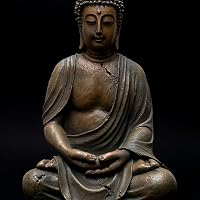
“Do not believe in anything simply because you have heard it. Do not believe in anything simply because it is spoken and rumored by many. Do not believe in anything simply because it is found written in your religious books. Do not believe in anything merely on the authority of your teachers and elders. Do not believe in traditions because they have been handed down for many generations. But after observation and analysis, when you find that anything agrees with reason and is conducive to the good and benefit of one and all, then accept it and live up to it.”
― Buddha Siddhartha Guatama Shakyamuni
Siddhartha Gautama,[e] most commonly referred to as the Buddha (lit. ’the awakened one’),[4][f][g] was a wandering religious teacher who lived in the eastern Indo-Gangetic Plains during the 6th or 5th century BCE[5][6][7][c] and founded Buddhism. According to Buddhist legends, he was born in Lumbini, in what is now Nepal,[b] to royal parents of the Shakya clan, but renounced his home life to live as a wandering ascetic.[8][h] After leading a life of mendicancy, asceticism, and meditation, he attained nirvana at Bodh Gaya in what is now Bihar, India. The Buddha then wandered through the lower Indo-Gangetic Plain, teaching and building a monastic order (sangha). Buddhist tradition holds he died in Kushinagar (in modern day Uttar Pradesh, India) and reached parinirvana (“final release from conditioned existence”).[9][i] (Wikipedia.org)