

Category Archives: Mysticism
On Nietzsche and Mysticism
“Telepathy means pathos at a distance. It means entanglement at a distance. It doesn’t mean you’re playing the lottery or you’re watching a football game or something. It’s this deep emotional bonding.”
–Jeff Kripal
Johnathan Bi Mar 7, 2026 An interview with Jeff Kripal on Nietzsche and mysticism Subscribe to my newsletter if you want content updates, invitations to events, and to support my work: https://www.johnathanbi.com/ Transcript: https://www.johnathanbi.com/p/transcr… Companion lectures and interviews:
- Masters vs. Slaves | Nietzsche’s Genealogy of Morality Explained: • Masters vs. Slaves | Nietzsche’s Genealogy…
Timestamps: 00:00 0. Introduction 02:43 1. Nietzsche as Mystic 1:29:59 2. Writing as Mysticism 1:46:38 3. Psychedelics 1:55:50 4. Mystics Vs. Scholars 2:00:33 5. AI and The Filter Thesis 2:07:37 6. The Superhumanities 2:53:39 7. Mutants and Mystics 3:00:10 8. Our Own Mystical Experiences 3:11:13 9. Conclusion
Book: “Thus Spoke Zarathustra”

Thus Spoke Zarathustra
Friedrich Nietzsche, Walter Kaufmann (Translator), Silvia Cecchini (Narrator ) …more
Friedrich Nietzsche’s most accessible and influential philosophical work, misquoted, misrepresented, brilliantly original and enormously influential
Nietzsche was one of the most revolutionary and subversive thinkers in Western philosophy, and Thus Spoke Zarathustra remains his most famous and influential work. It describes how the ancient Persian prophet Zarathustra descends from his solitude in the mountains to tell the world that God is dead and that the Superman, the human embodiment of divinity, is his successor. Nietzsche’s utterance ‘God is dead’, his insistence that the meaning of life is to be found in purely human terms, and his doctrine of the Superman and the will to power were all later seized upon and unrecognisably twisted by, among others, Nazi intellectuals. With blazing intensity and poetic brilliance, Nietzsche argues that the meaning of existence is not to be found in religious pieties or meek submission to authority, but in an all-powerful life force: passionate, chaotic and free.
About the author
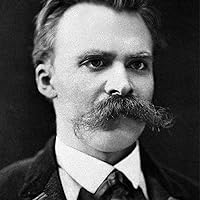
Friedrich Nietzsche
Friedrich Wilhelm Nietzsche was a German classical scholar, philosopher, and critic of culture, who became one of the most influential of all modern thinkers. He began his career as a classical philologist before turning to philosophy. He became the youngest person to hold the Chair of Classical Philology at the University of Basel in 1869 at the age of 24, but resigned in 1879 due to health problems that plagued him most of his life; he completed much of his core writing in the following decade. In 1889, at age 44, he suffered a collapse and afterward a complete loss of his mental faculties, with paralysis and probably vascular dementia. He lived his remaining years in the care of his mother until her death in 1897 and then with his sister Elisabeth Förster-Nietzsche. Nietzsche died in 1900, after experiencing pneumonia and multiple strokes.
Nietzsche’s work spans philosophical polemics, poetry, cultural criticism, and fiction while displaying a fondness for aphorism and irony. Prominent elements of his philosophy include his radical critique of truth in favour of perspectivism; a genealogical critique of religion and Christian morality and a related theory of master–slave morality; the aesthetic affirmation of life in response to both the “death of God” and the profound crisis of nihilism; the notion of Apollonian and Dionysian forces; and a characterisation of the human subject as the expression of competing wills, collectively understood as the will to power. He also developed influential concepts such as the Übermensch and his doctrine of eternal return. In his later work, he became increasingly preoccupied with the creative powers of the individual to overcome cultural and moral mores in pursuit of new values and aesthetic health. His body of work touched a wide range of topics, including art, philology, history, music, religion, tragedy, culture, and science, and drew inspiration from Greek tragedy as well as figures such as Zoroaster, Arthur Schopenhauer, Ralph Waldo Emerson, Richard Wagner, Fyodor Dostoevsky, and Johann Wolfgang von Goethe.
After his death, Nietzsche’s sister Elisabeth became the curator and editor of his manuscripts. She edited his unpublished writings to fit her German ultranationalist ideology, often contradicting or obfuscating Nietzsche’s stated opinions, which were explicitly opposed to antisemitism and nationalism. Through her published editions, Nietzsche’s work became associated with fascism and Nazism. 20th-century scholars such as Walter Kaufmann, R.J. Hollingdale, and Georges Bataille defended Nietzsche against this interpretation, and corrected editions of his writings were soon made available. Nietzsche’s thought enjoyed renewed popularity in the 1960s and his ideas have since had a profound impact on 20th- and early 21st-century thinkers across philosophy—especially in schools of continental philosophy such as existentialism, postmodernism, and post-structuralism—as well as art, literature, music, poetry, politics, and popular culture.
(Goodreads.com)
Music and Mysticism with Matthew Ingram
New Thinking Allowed with Jeffrey Mishlove Sep 1, 2026 New Thinking Allowed Audio Podcast Matthew Ingram is author of Retreat: How the Counterculture Invented Wellness. He hosts the Woebot blog. This stimulating conversation, recorded in 2021, explores the very nature of music and covers different music genres including blues, rock, gospel, jazz, new age, and even punk. Some of the many musicians discussed include John Coltrane, Alice Coltrane, Carlos Santana, Paul Horn, the Beatles, the Rolling Stones, Robert Johnson, Enya, Brian Wilson, Allen Ginsberg, Bob Dylan, and Karlheinz Stockhausen. The discussion also includes traditional religious music as well as the many gurus who have influenced different musicians. New Thinking Allowed host, Jeffrey Mishlove, PhD, is author of The Roots of Consciousness, Psi Development Systems, and The PK Man. Between 1986 and 2002 he hosted and co-produced the original Thinking Allowed public television series. He is the recipient of the only doctoral diploma in “parapsychology” ever awarded by an accredited university (University of California, Berkeley, 1980). He is also the Grand Prize winner of the 2021 Bigelow Institute essay competition regarding the best evidence for survival of human consciousness after permanent bodily death. He is Co-Director of Parapsychology Education at the California Institute for Human Science. (Recorded on February 6, 2021)
The Amazing Randi and American Skepticism with Mitch Horowitz
New Thinking Allowed with Jeffrey Mishlove Jun 15, 2026 Mitch Horowitz is the author of many books on esoterica, spirituality, mysticism and the occult. Among his titles are The Seeker’s Guide to the Secret Teachings of All Ages, The Miracle Club, One Simple Idea, and Occult America. His website is https://mitchhorowitz.com/. He recently wrote an article evaluating the legacy of James Randi that can be viewed at https://boingboing.net/2020/10/26/the…. Here he explains why, in his opinion, the sociologist Marcello Truzzi chose to label The Amazing Randi and others associated with the American “skeptical” movement as “pseudoskeptics”. He sheds light on the parallels between deliberate ignorance of facts in discussions of the paranormal and of politics. He points out how Randi and other “skeptics” have actually stifled scientific investigations into the paranormal. This activity actually resulted in Jeffrey Mishlove’s favorable lawsuit settlement in 1986. Articles about James Randi’s “million dollar challenge” as referenced in this video can be found at: https://psi-encyclopedia.spr.ac.uk/ar…https://www.dailygrail.com/2008/02/th… New Thinking Allowed host, Jeffrey Mishlove, PhD, is author of The Roots of Consciousness, Psi Development Systems, and The PK Man. Between 1986 and 2002 he hosted and co-produced the original Thinking Allowed public television series. He is the recipient of the only doctoral diploma in “Parapsychology” ever awarded by an accredited university (University of California, Berkeley, 1980). He is also the Grand Prize winner of the 2021 Bigelow Institute essay competition regarding the best evidence for survival of human consciousness after permanent bodily death. He is Co-Director of Parapsychology Education at the California Institute for Human Science. (Recorded on November 10, 2020)
Platonic Mysticism and Plotinus with Arthur Versluis
New Thinking Allowed with Jeffrey Mishlove Jun 14, 2026 Arthur Versluis is Professor of Religious Studies at Michigan State University. Among his many books are American Gnosis: Political Religion and Transcendence, American Gurus, Magic and Mysticism: An Introduction to Western Esotericism, The New Inquisitions: Heretic-Hunting and the Intellectual Origins of Modern Totalitarianism, Wisdom’s Children: A Christian Esoteric Tradition, American Transcendentalism and Asian Religions, and Alchemical Lightwork: A Guide to Creating Cultures of Light and Spiritual Awakening. He is the editor of JSR: Journal for the Study of Radicalism. He is also the founding president of Hieros, a nonprofit focused on spirituality and cultural renewal. This conversation is based on his book Platonic Mysticism. Arthur discusses the Platonic mystical tradition from Plato through Plotinus, Dionysius the Areopagite, Christian mysticism, and the American Transcendentalists. He explores the contemplative path of realizing truth, the concepts of transcendence, emanation, and the One, while examining how mystical traditions have been marginalized within modern academic culture. Versluis also considers the future of contemplative science and the possibility of integrating ancient wisdom with contemporary approaches to consciousness research. 00:00:00 Introduction 00:03:06 Platonic mysticism and the eclipse of Plato 00:10:43 Mystery traditions and the roots of neoplatonism 00:16:05 Contemplative practice and the via negativa 00:26:13 Emanation, archetypes and consciousness 00:35:32 Dionysius the Areopagite and Christian mysticism 00:46:07 The eclipse of mysticism in modern academia 00:51:10 Literature, art and the flowering of transcendence 00:58:44 Contemplative science and consciousness studies 01:05:34 Conclusion (Recorded on May 26, 2026)
He Studied Every Religion, This One Came Closest to Truth | Rice Professor Jeff Kripal
Johnathan Bi May 4, 2026 An interview with Jeff Kripal on comparative religion. Subscribe to my newsletter if you want content updates, invitations to events, and to support my work: https://www.johnathanbi.com/ Transcript: https://www.johnathanbi.com/p/transcr… Companion interviews: Uncovering the CIA’s Secret Weapon: Psychic Spies: • Uncovering the CIA’s Secret Weapon: Psychi… The Secret Religion of Nietzsche | On Mysticism: • The Secret Religion of Nietzsche | On Myst… Timestamps: 00:00 0. Introduction 04:07 1. Against Western Monotheism 33:58 2. Against Eastern Religion 52:50 3. Against Materialism 1:23:11 4. Fraudulent Miracles? 1:31:52 5. Dual Aspect Monism 1:49:47 6. The Historicity of Miracles 1:55:39 7. The Ethics of Mysticism