World Clap Day — August 16, 2026

Earth and planets

(worldclapday.com)

In Humanity We Clap.

Join the Clap

Be part of the biggest human moment in historyJoin the ClapI want to receive email updates about World Clap Day, including announcements and reminders. I can unsubscribe at any time.

or

Add to Google Calendar

Find Your Local Clap Time

Type your city to see when you should clap.

Examples: London, New York, Tokyo, Paris, Sydney, Mumbai, Lagos, Mexico City

Pacific time: 07:00 (7:00 AM), 16 August 2026

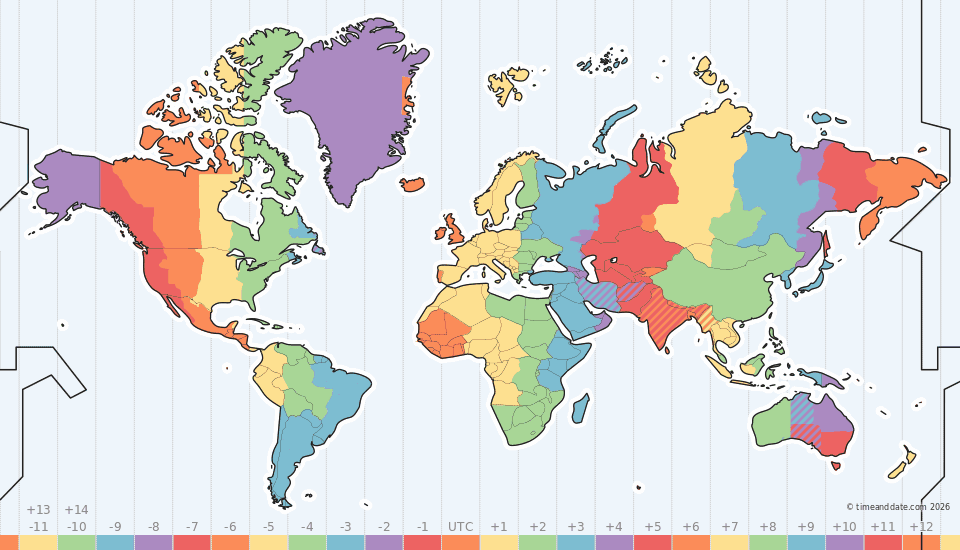
World Timezone Map

Wear the Movement

Every tote, shirt or cap helps more people discover World Clap Day.

World Clap Day Tote Bag

World Clap Day Tote Bag

World Clap Day T-ShirtWorld Clap Day Cap

View all World Clap Day Merch

Wall of Claps

The Wall of Claps is the permanent record of founding supporters. Every name is a clap. Every clap is a signal that we can unite.

August 16, 2026 · 10:00:00 AM New York (EDT) · Copyright © 2026 World Clap Day

We use essential cookies to operate this website and analytics cookies to understand how it’s used. You can accept or reject non-essential cookies.Accept AllReject Non-Essential

World Clap Day – A Global Moment of Unity

Our Mission

World Clap Day is a global event happening on August 16, 2026. At one exact coordinated moment, people all around the world will clap their hands for one second.

No politics. No religion. No agenda.

Just one simple, universal action done together.

It is a celebration of being alive. A reminder that beyond language, culture, or beliefs, we are human first.

For one second, the world moves as one.

The goal is not noise. The goal is unity.

Through the simplest action possible, we prove that billions of different people can synchronize, not because of tragedy or crisis, but simply to celebrate existence.

Our Vision

On August 16, 2026 all cities are invited.

In every country, people will meet in the main squares of their cities. Friends, families, strangers. Standing side by side.

This will be broadcast online and become real in the streets.

Before the synchronized clap, each city hosts its own celebration. Music. Food. Local artists. Conversations. A moment of community.

Then, at the exact coordinated second, everyone claps together. Not just imagining the world is connected, but knowing it is.

Large screens in the main squares broadcast the central live feed of the event. Cities see each other. Crowds see crowds. Continents see continents.

The synchronization becomes visible. Tangible. Undeniable.

And immediately after that one second, the silence breaks into a massive applause to celebrate humanity.

For what the world just proved it can do. A peaceful, voluntary, global coordination of joy.

This transforms the idea from a social media movement into a physical global gathering. From movement into experience.

August 16, 2026 · 10:00:00 AM New York (EDT) · Copyright © 2026 World Clap Day

We use essential cookies to operate this website and analytics cookies to understand how it’s used. You can accept or reject non-essential cookies.Accept AllReject Non-Essential

Our Mission – World Clap Day

Ram Dass on where there’s work to be done

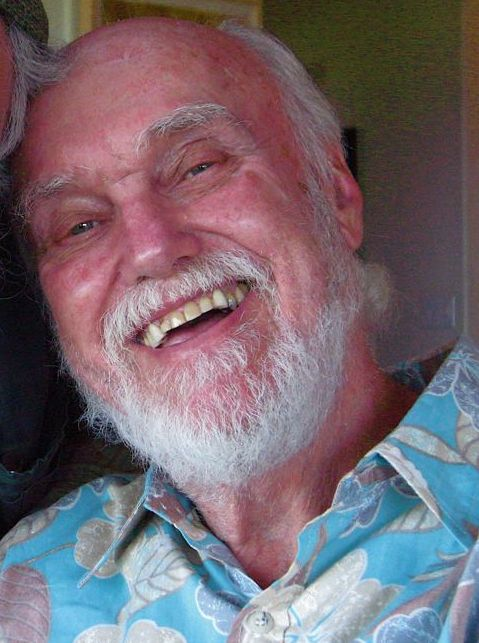
Ram Dass in 2008

“A feeling of aversion or attachment toward something is your clue that there’s work to be done.”

~ Ram Dass

Ram Dass, also known as Baba Ram Dass, was an American spiritual teacher, guru of modern yoga, psychologist, and writer. His best-selling 1971 book Be Here Now, which has been described by multiple reviewers as “seminal”, helped popularize Eastern spirituality and yoga in the West. Wikipedia

Born April 6, 1931, Boston, MA

Died December 22, 2019 (age 88 years), Maui, HI

18th Annual Tapping Summit

Tapping World Summit

Starts August 19th, 2026

Release Stress and Boost Your Health, Happiness and Confidence to Take Your Life to New Heights!

10 Days

100% Content

100% Free

18th Annual Tapping World SummitLimited Time Replay

Sign up now to reserve your spot.

Join 24 of the World’s Leading Personal Development and Health Experts

They’ll Show You Step by Step How to Use a Technique Known as “Tapping” to Improve Your Finances, Health, Emotions And Much More

See all 10 Days of Presentations

Discover Why EFT Tapping is Quickly Becoming the Most Talked About Wellness Technique

Jason Segel

Jason Segel

Actor, Producer, and Screenwriter

“Tapping has helped me break down walls that prevented good sleep, and limited my joy. With each session I feel more freedom from lifelong anxiety. It has changed my life.”

Carmit

Carmit

Multi-Platinum Recording Artist

“I was first introduced to Tapping when I experienced anxiety after having my daughter. It helped immediately and through practice I felt a shift.”

Tony Robbins

Tony Robbins

Author, Coach and Speaker

“Tapping is a breakthrough, research-backed technique that I’ve used in my life and seen people around the world get incredible results with. The Tapping Solution App is an easy and powerful way to get started.”

Limited Time Replay! Don’t Miss Out!

Starts August 19th, 2026

18th Annual Tapping World Summit, sign up now to reserve your spot

Register Now: https://summit.tappingworldsummit.com/lp/18/p/pre-event/reg/signup/?fbclid=IwY2xjawTsTM5wZG9mAWV4dG4DYWVtAjExAHNydGMGYXBwX2lkEDIyMjAzOTE3ODgyMDA4OTIAAR7skZFlRSel76j8SIOWyOMfmHXwvKXEpmI_tEH3WcKfU7DT-4V5kMIQY7R5kA_aem_XdfVjDnHLullE_Pmkyz9fw

* By submitting this form you agree to receive email updates from The Tapping Solution. Your email will NEVER be shared or sold and you can easily unsubscribe at any time

“Put away the skepticism, this really works. I have worked with Nick Ortner and had great results with Tapping in my own life”

Dr. Wayne W. DyerDr. Wayne W. Dyer

What is Tapping?

Tapping

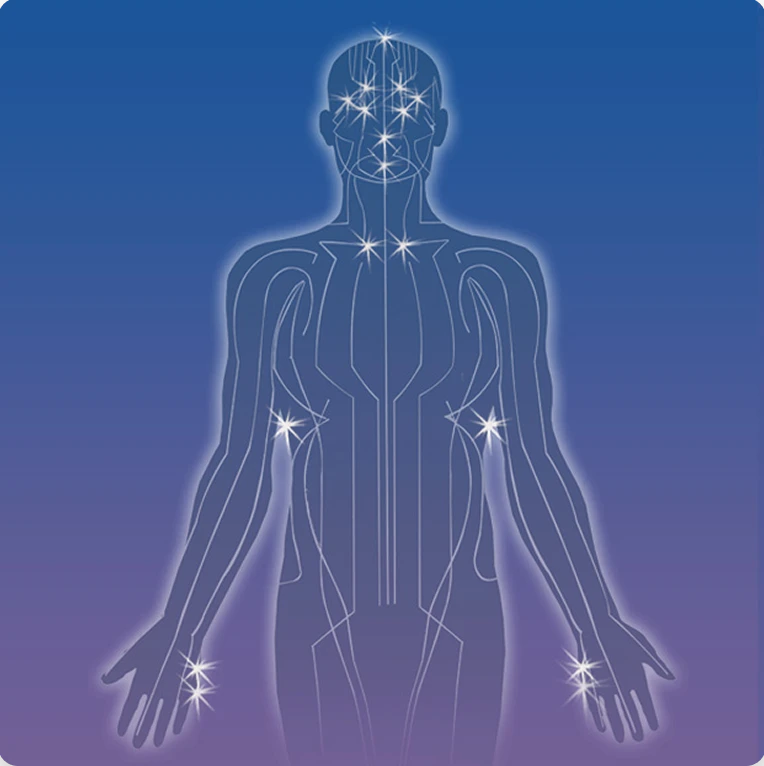
Tapping, also known as EFT (Emotional Freedom Techniques) is a powerful practice that helps millions worldwide reduce anxiety, process emotions, relieve physical discomfort, and create lasting transformation.

This scientifically-backed technique combines principles of cognitive therapy, exposure techniques, and stimulation of acupressure points. By tapping on specific acupressure points on your face and body while focusing on what’s bothering you, you send calming signals directly to your brain and rewire your stress response in real time.

It’s a tool you can use anywhere, anytime, to shift from stressed and reactive to calm and regulated – All within minutes.

Rewires Your Brain for Lasting Change

Rewires Your Brain for Lasting Change

Tapping interrupts outdated automatic loops and creates new neural pathways that support calm, clarity, and ease. Brain scans suggest Tapping changes how your brain processes stress and triggers, making you less reactive to what used to overwhelm you.

Backed by 300+ Scientific Studies

Backed by 300+ Scientific Studies

Tapping is one of the most proven interventions for emotional well-being available today. Its benefits have been documented in studies across the globe in diverse populations such as veterans, genocide survivors, chronic pain sufferers, and everyday people like you.

Fast, Simple Relief for Anxiety, Sleep, Pain & More

Fast, Simple Relief for Anxiety, Sleep, Pain & More

30+ million sessions show rapid relief for the real issues that impact your daily life, from anxiety and insomnia to food cravings, fear, self-doubt, pain, and more. For example, users report an average reduction in anxiety of 40% after a single 9-minute session.

I’ve brought together the world’s leading EFT Tapping experts to share their knowledge in 21 content-packed presentations!

All New Content

Here are the speakers and topics…

Day 1

The Awakening

Breaking Free From Autopilot

Why Do I Keep Overthinking, Worrying, and Doubting Myself-Even When I Know Better?

What You’ll Learn

What’s actually driving those mental loops that won’t quit

How to stop fighting your mind and start befriending it

Why Tapping is on the cutting edge of neuroscience

Why Do I Keep Doing the Same Old Thing Even When I Know Better?

What You’ll Learn

What self-sabotage is actually trying to tell you

The ‘motivation by misery’ trap — and why hating yourself never works

Why feeling great might secretly threaten your nervous system (and how to change that)

Day 2

Nervous System Breakthroughs

The New Science of Change

Will I Ever Stop Feeling Hurt By The Past, Or Can I Set Myself Free?

What You’ll Learn

Why old triggers still haunt you decades later — even when you ‘know better’

The fascinating science of memory reconsolidation, and how Tapping helps you ‘edit’ old memories

The ‘prediction error’ that rewires your brain, so you can finally feel differently about your past

How Do I Teach a Trauma-Shaped Nervous System to Finally Feel Safe, Strong, and Steady?

What You’ll Learn

The secret to calming down without collapsing, and getting energized without spiraling

Why responses like shutdown, bracing, and hypervigilance aren’t weaknesses — but your nervous system’s brilliant survival strategies

The 3 ‘rungs’ of your nervous system ladder — and why you can’t skip steps when climbing back up

Continue reading 18th Annual Tapping Summit

Wretched Outcast Woman With Combination Skin Forever Trapped Between Dry And Oily Worlds

Published: June 24, 2019 (TheOnion.com)

BROOKLYN—Doomed to wander the Earth imprisoned by a complexion requiring both mattifying and hydrating products, sources confirmed Monday that wretched outcast of a woman Hattie Jean was forever trapped between the realms of the dry and the oily due to her accursed combination skin. “No matter where I go, whether high-end makeup counter or local drugstore, I’ll never be truly greasy enough or purely flakey enough to truly belong,” said the 31-year-old who was cursed by a tragic accident of birth to spend the rest of her unbalanced cutaneous life marooned between moisturizing and exfoliating. “When I walk the skin care aisle, women gawk at the dull glisten of my T-zone and the angry red splotches of my cheeks, and they shudder in disgust. ‘Begone, afflicted freak!’ they hiss, as if I chose a life of needing to simultaneously absorb and produce the very oil of my face. Those who live with a foot in both worlds have no place to truly call home.” At press time, Jean was asked to leave Sephora for upsetting the other customers.

Organisms Living Inside Psychopaths Could Be Driving Bad Behavior, Scientists Claim

“To our knowledge, this is the first study to explore this association.”

By Victor Tangermann

Published Aug 13, 2026 (Futurism.com)

A color-treated photo of a man's silhouette holding an axe behind a plastic sheet.
Shutterstock / Futurism

In bound-to-be-controversial new research, scientists claim they’ve discovered a link between the specific balance of microflora in the gut and psychopathic behavior

As detailed in a yet-to-be-peer-reviewed study, a team of researchers led by University of Porto biomedical scientist Carolina Costa say they’ve found the first-ever evidence of how microbiota could influence traits linked to psychopathy — a controversial personality construct characterized by lack of empathy, poor behavior control, as well as antisocial and in extreme cases criminal behavior.

As Science Alert points out, previous research has found that psychopaths can share similar brain structures, including pathways in the prefrontal cortex. The latest paper, however, suggests those links could even extend into the microbiome.

“We hypothesized that the composition of the gut and oral microbiota may be associated with subclinical psychopathic personality traits,” the researchers wrote in the paper, an “unedited version” of which was shared by the journal Translational Psychiatry. “To our knowledge, this is the first study to explore this association.”

Costa and her colleagues examined the answers of 200 adult participants who filled out a questionnaire that was specifically designed to measure psychopathic traits. They also analyzed blood, saliva, and fecal samples from the participants for bacterial composition.

While the diversity of gut and oral microbes showed no clear links to psychopathic traits in itself, those who showed stronger psychopathic traits had a higher abundance of three kinds of bacteria when compared to those with weaker psychopathic traits.

AllisonellaPrevotella, and C. evryensis showed significant positive associations with psychopathy scores, while T. vincentii was negatively associated,” the researchers concluded. The roles of these microbacteria range from helping in digestion and other metabolic processes, to assisting in warding off infections.

The team suggests that Allisonella, in particular, has been linked to human diseases and has been found to promote inflammation, a “key factor in psychiatric disorders such as anxiety and depression,” thereby suggesting a “possible link to psychopathy.”

Prevotella has also been linked to “differences in brain regions responsible for emotional, attentional and sensory processing, leading to a deficit in specificity of encoding contextual details of incoming stimuli.”

The claims are certain to be controversial. For one, the sample size was on the smaller side and relied on self-reported findings, which could greatly skew results as they’re susceptible to bias. Results could also vary depending on geographic regions, the researchers point out.

“Finally, as findings are correlational, causality cannot be established, especially given the bidirectionality of microbiota-brain communication,” they concluded.

In other words, it may actually be an inverse relationship, with the balance of the gut microbiome being caused by psychopathic traits instead of the other way around.

“For instance, psychopathy-linked factors, such as eating behaviors and hormonal differences could be responsible for shaping gut microbiota composition,” the researchers wrote.

It’s nonetheless a fascinating investigation into the extremes of human behavior — though plenty of future research is needed to investigate more thoroughly.

More on the gut: How Your Gut Controls Your Mind and What to Do About It

Victor Tangermann

Senior Editor

I’m a senior editor at Futurism, where I edit and write about NASA and the private space sector, as well as topics ranging from SETI and artificial intelligence to tech and medical policy.

Translation Saturday Meeting August 15

(Image courtesy of Steve Hines and AI)

August 15:  11:00 AM – 12:00 PM PST

Mike Zonta, H.W., M.

In a crisis — any crisis — The Prosperos offers Translation.  Translation Saturday Meetings is a weekly series of Translation presentations by veteran Translators, live and up to date on the issues of the day.

It is not a Translation workshop,  It is not a Translation class.  It is not a group Translation in the usual sense, though group participation is encouraged.

It is, however, restricted to those who have taken Translation class. So if you have never taken Translation class, check the calendar tab on The Prosperos website (TheProsperos.org) or get in touch with us and we will schedule a class.

Last week our sense testimony was:  Work is the only way to get enough income.  And our conclusion was:   Truth is infinitely useful, the work of the One perfect synchronicity. 

Then we asked ChatGPT to Translate the same sense testimony.

– – – – – – – – – – – – – – See you there!!! – – – – – – – – – – – – – –

Here’s the link:  https://us02web.zoom.us/j/81749347119

For more info and link to join please email Mike Zonta at:

zonta1111@aol.com

Weekly Translation:  Claustrophobia results from a history of childhood entrapment.

By Mike Zonta, BB editor

Translation is a 5-step process of “straight thinking in the abstract” comparing and contrasting what seems to be truth with what you can syllogistically, axiomatically and mathematically (using word equations) prove is the truth. It is not an effort to change, alter or heal anything other than our consciousness.

The claims in a Translation should be outrageous and mind-blowing, but they are always (or should always be) based on self-evident syllogistic reasoning. Here is one Translation from this week. 

1)    Truth is that which is so.  That which is not truth is not so, therefore Truth is all that is.  Truth being all is therefore total, therefore totality, therefore infinity, therefore eternity. I think therefore I am. Since I am and since Truth is all that is, I cannot be other than Truth. Therefore the beingness of me is Truth. Since the beingness of me is Truth and since I am mind (self-evident), Therefore truth is Mind/Consciousness.  Therefore Mind/Consciousness must have all the attributes of Truth.  Therefore Mind/Consciousness is total, totality, infinity, eternity. 

2)    Claustrophobia results from a history of childhood psychological entrapment.

Word-tracking:
claustrophobia:  closed or bolted space, cloister
phobia:  fear, panic, dread
panic:  belonging to Pan, sudden groundless fear, phantasmagoria, bugbear, used to frighten children into obeying
imaginary:  image, forming a mental picture of something not present
phantasm:  to make visible
epiphany: to show, to shine upon
phantasm:  that which appears
intuition: inner watch
childhood:  not fully mature, dependent
entrapment:  enticing innocent person into breaking the law
history:  past events
event:  happening
innocent:  harmless, blameless
fear:  memory
psychological: psyche, mind

3)    Truth being all that is is all that is present.  Since imagination is a mental picture of something not present, Therefore imagination is a lie.  Truth being all that is is therefore all that happens, therefore Truth is all events.  Truth being whole unto Itself is not a dependent (a child) of anything or anyone.  Therefore Truth is and always has been fully mature and independent.  Truth being all, there is nothing other than all, therefore Truth is one.  Truth being Mind and being all that is, therefore Truth is all-knowing.  Truth being all-knowing cannot be entrapped into breaking the law.  And since Truth is the law (that which is right), that would be like Truth breaking Itself.  Therefore Truth is innocent, harmless, blameless.  Since Truth is Mind and since Truth is all that is present, there is no past or future in truth, therefore Truth is mindful of the eternal presence of wholeness. Truth being mind, there is no psychology outside of Truth. Therefore truth is the only psychological.

4)  Imagination is a lie. 
Truth is all events. 
Truth is and always has been fully mature and independent.
Truth is one.
Truth is all-knowing. 
Truth is innocent, harmless, blameless. 
Truth is mindful of the eternal presence of wholeness.  
Truth is the only psychological.

5)        Truth is untrappable psychology of innocence.

And now I’ll ask ChatGPT:

Please Translate the following sense testimony: Claustrophobia results from a history of childhood entrapment.

ChatGPT:

Absolutely. I’ll use the five steps of Translation as we’ve been developing them, including your expanded Step 1 and the word-tracking half-step.

1. Truth

Truth is that which is so. That which is not Truth is not so. Therefore Truth is all that is. Truth being all is therefore only. Truth being only is therefore one. Truth being one is therefore in agreement, at peace, harmonious, atoned.

I think, therefore I am. Since I am and since Truth is all that is, I cannot be outside or other than all that is; therefore my beingness is the same beingness as Truth, or my being is Truth being. Since I am consciousness (self-evident) and since my being is the being of Truth, therefore the being of Truth is consciousness/Mind.

2. Sense Testimony

“Claustrophobia results from a history of childhood entrapment.”

The testimony asserts a specific causal chain:

childhood entrapment → psychological history → claustrophobia.

It therefore assumes that a past experience can determine a present state of consciousness.

2½. Word-Tracking

Claustrophobia

From Latin claustrum, “a closed place” or “enclosure,” plus Greek phobos, “fear.”

So, literally, fear of an enclosed place.

Results

From Latin resultare, “to spring back, rebound, arise.”

Something that results is something that arises from something else.

History

From Greek historia, “inquiry, investigation, knowledge acquired by inquiry.”

A history is an account of what has occurred.

Childhood

The period of being a child.

It identifies a period in temporal experience, not an eternal condition of Being.

Entrapment

To entrap is to catch in a trap, preventing escape.

The word trap carries the idea of confinement and limitation.

There is an interesting progression here:

enclosure → fear → entrapment → limitation

But none of these words establishes the nature of Being.

3. Translation

Truth is One and cannot be entrapped, confined, or divided.

Since my being is Truth being, my essential being cannot have been trapped in the past.

The senses may report a history of confinement, and the personality may associate enclosed spaces with fear. Such an association may be real as an experience without being the truth of Being.

A history describes what has appeared to occur; it does not establish what I am.

Since Truth is consciousness/Mind and Truth is all that is, consciousness cannot ultimately be confined by any circumstance, place, or past experience.

Therefore, what appears as claustrophobia cannot define the limitless nature of consciousness.

The past may explain an appearance without having authority over Being.

Truth is not trapped, Truth is not confined, and Truth has never been outside itself.

4. Summation

Truth is limitless and cannot be entrapped.
History describes appearances; it does not define Being.
The past cannot imprison consciousness.
Truth is not confined by circumstances.

5. Establishing the Absolute

For this particular testimony, I would make the fifth step:

Truth cannot be entrapped, and therefore my consciousness is not confined by the past.

I especially like this one because it addresses the actual structure of the testimony. It doesn’t have to deny that childhood experiences may be associated with later fears. Instead, it distinguishes explanation of an appearance from the nature of Being.

And the word-tracking gives us a particularly beautiful opening: claustrophobia is essentially fear of enclosure, while your first step establishes that the beingness of you is the beingness of Truth, and Truth is all that is. If Truth is all, there can ultimately be no “outside” into which Truth could be confined.

Me:   

For information about Translation or other Prosperos classes go to: https://www.theprosperos.org/teaching.

Or, if you have taken Translation class, join us each Saturday for Translation Saturday Meeting at 11 a.m. Pacific time for current, up-to-the-minute Translations on the issues of the day.  Email zonta1111@aol.com for the Zoom link.

m.z.

Seeing the Unseen, Part II, with Christopher Laprath

New Thinking Allowed with Jeffrey Mishlove Aug 13, 2026 Christopher Laprath, who works as a professional intuitive, is author of Trestle Creek: Things the Dead Fear. Christopher explores what it means to “see the unseen,” describing how intuitive perception can reveal hidden belief systems, inherited patterns, energetic imprints, and unresolved experiences that quietly shape our lives. Through vivid personal stories, he explains how learning to recognize and release these unseen influences can awaken our innate gifts and open new possibilities for healing and transformation. Laprath discusses intuition, consciousness, time, mediumship, and the mysteries that lie beyond ordinary perception. 00:00:00 Introduction 00:02:24 Seeing the unseen 00:09:24 Energetic perception 00:17:59 Knowing beyond time 00:25:48 Releasing old patterns 00:34:07 Letting go 00:42:20 Earthbound spirits 00:50:53 Living with mystery 00:59:08 Opening new possibilities 01:06:09 Conclusion New Thinking Allowed host, Jeffrey Mishlove, PhD, is author of The Roots of Consciousness, Psi Development Systems, and The PK Man. Between 1986 and 2002 he hosted and co-produced the original Thinking Allowed public television series. He is the recipient of the only doctoral diploma in “parapsychology” ever awarded by an accredited university (University of California, Berkeley, 1980). He is also the Grand Prize winner of the 2021 Bigelow Institute essay competition regarding the best evidence for survival of human consciousness after permanent bodily death. He is Co-Director of Parapsychology Education at the California Institute for Human Science. (Recorded on Saturday, June 27, 2026)

Book: “The Origins of Totalitarianism”

The Origins of Totalitarianism

Hannah Arendt

Hannah Arendt’s definitive work on totalitarianism and an essential component of any study of twentieth-century political history

The Origins of Totalitarianism begins with the rise of anti-Semitism in central and western Europe in the 1800s and continues with an examination of European colonial imperialism from 1884 to the outbreak of World War I. Arendt explores the institutions and operations of totalitarian movements, focusing on the two genuine forms of totalitarian government in our time—Nazi Germany and Stalinist Russia—which she adroitly recognizes were two sides of the same coin, rather than opposing philosophies of Right and Left. From this vantage point, she discusses the evolution of classes into masses, the role of propaganda in dealing with the nontotalitarian world, the use of terror, and the nature of isolation and loneliness as preconditions for total domination.

About the author

Hannah Arendt

Hannah Arendt (1906 – 1975) was one of the most influential political philosophers of the twentieth century. Born into a German-Jewish family, she was forced to leave Germany in 1933 and lived in Paris for the next eight years, working for a number of Jewish refugee organisations. In 1941 she immigrated to the United States and soon became part of a lively intellectual circle in New York. She held a number of academic positions at various American universities until her death in 1975. She is best known for two works that had a major impact both within and outside the academic community. The first, The Origins of Totalitarianism, published in 1951, was a study of the Nazi and Stalinist regimes that generated a wide-ranging debate on the nature and historical antecedents of the totalitarian phenomenon. The second, The Human Condition, published in 1958, was an original philosophical study that investigated the fundamental categories of the vita activa (labor, work, action). In addition to these two important works, Arendt published a number of influential essays on topics such as the nature of revolution, freedom, authority, tradition and the modern age. At the time of her death in 1975, she had completed the first two volumes of her last major philosophical work, The Life of the Mind, which examined the three fundamental faculties of the vita contemplativa (thinking, willing, judging).

(Goodreads.com)

No One You Love Is Ever Dead: Hemingway on Loss and the Meaning of Life

By Maria Popova (themarginalian.org)

Along the spectrum of losses, from the door keys to the love of one’s life, none is more unimaginable, more incomprehensible in its unnatural violation of being and time, than a parent’s loss of a child.

Ernest Hemingway (July 21, 1899–July 2, 1961) was in his twenties and living in France when he befriend Gerald and Sara Murphy. The couple eventually returned to America when one of their sons fell ill, but it was their other son, Baoth, who died after a savage struggle with meningitis.

Upon receiving the news, the thirty-five-year-old writer sent his friends an extraordinary letter, part consolation for and part consecration of a loss for which there is no salve, found in Shaun Usher’s moving compilation Letters of Note: Grief (public library).

Ernest Hemingway

On March 19, 1935, Hemingway writes:

Dear Sara and Dear Gerald:

You know there is nothing we can ever say or write… Yesterday I tried to write you and I couldn’t.

It is not as bad for Baoth because he had a fine time, always, and he has only done something now that we all must do. He has just gotten it over with…

About him having to die so young — Remember that he had a very fine time and having it a thousand times makes it no better. And he is spared from learning what sort of a place the world is.

It is your loss: more than it is his, so it is something that you can, legitimately, be brave about. But I can’t be brave about it and in all my heart I am sick for you both.

Absolutely truly and coldly in the head, though, I know that anyone who dies young after a happy childhood, and no one ever made a happier childhood than you made for your children, has won a great victory. We all have to look forward to death by defeat, our bodies gone, our world destroyed; but it is the same dying we must do, while he has gotten it all over with, his world all intact and the death only by accident.

Art by Charlotte Pardi from Cry, Heart, But Never Break by Glenn Ringtved — a soulful Danish illustrated meditation on love and loss

In a breathtaking sentiment evocative of Anaïs Nin’s admonition against the stupor of near-living, and of poet Meghan O’Rourke’s grief-honed conviction that “the people we most love do become a physical part of us, ingrained in our synapses, in the pathways where memories are created,” Hemingway adds:

Very few people ever really are alive and those that are never die; no matter if they are gone. No one you love is ever dead.

With this, echoing Auden’s insistence that “we must love one another or die,” he comes the closest he ever came to formulating the meaning of life. Like David Foster Wallace, who addressed the meaning of life with such exquisite lucidity shortly before he was slain by depression, Hemingway too would lose hold of that meaning in the throes of the agony that would take his life a quarter century later. Now, from the fortunate platform of the prime of life, he writes:

We must live it, now, a day at a time and be very careful not to hurt each other. It seems as though we were all on a boat together, a good boat still, that we have made but that we know will never reach port. There will be all kinds of weather, good and bad, and especially because we know now that there will be no landfall we must keep the boat up very well and be very good to each other. We are fortunate we have good people on the boat.

Complement with the young Dostoyevsky’s exultation about the meaning of life shortly after his death sentence was repealed, Emily Dickinson on love and loss, Thoreau on living through loss, and Nick Cave — who lived, twice, the unimaginable tragedy of the Murphys — on grief as a portal to aliveness, then revisit the fascinating neuroscience of your brain on grief and your heart on healing.

Consciousness, spirituality, biography, sexuality, androgyny, futurism, space, the arts, science, astrology, democracy, humor, books, movies and more