
New Thinking Allowed with Jeffrey Mishlove Jun 19, 2026 This video is a special release from the original Thinking Allowed series that ran on public television from 1986 until 2002. It was recorded in about 1998. It will remain public for only one week. A Zen teacher who has studied koans for thirty years, John Tarrant, PhD, directs the Pacific Zen Institute, a venture in meditation and the arts, and teaches culture change in organizations. He is the author of several books, including The Light Inside the Dark: Zen, Soul and the Spiritual Life. Additionally, he is a Jungian psychologist. Now you can watch all of the programs from the original Thinking Allowed Video Collection, hosted by Jeffrey Mishlove. Subscribe to the new Streaming Channel (https://thinkingallowed.vhx.tv/) and watch more than 350 programs now, with more, previously unreleased titles added weekly. Free month of the classic Thinking Allowed streaming channel for New Thinking Allowed subscribers only. Use code THINKFREELY.
Monthly Archives: June 2026
Book: “The Myth of the Eternal Return or, Cosmos and History”

The Myth of the Eternal Return or, Cosmos and History
Mircea Eliade, Willard R. Trask (Translator)
This founding work of the history of religions, first published in English in 1954, secured the North American reputation of the Romanian emigre-scholar Mircea Eliade (1907-86). Making reference to an astonishing number of cultures & drawing on scholarship published in no less than half a dozen European languages, Eliade’s “The Myth of the Eternal Return makes both intelligible & compelling the religious expressions & activities of a wide variety of archaic & “primitive” religious cultures. While acknowledging that a return to the “archaic” is no longer possible, Eliade passionately insists on the value of understanding this view in order to enrich our contemporary imagination of what it is to be human.
About the author
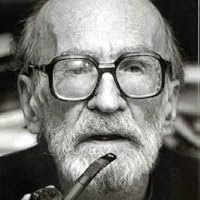
Mircea Eliade
Romanian-born historian of religion, fiction writer, philosopher, professor at the University of Chicago, and one of the pre-eminent interpreters of world religion in the last century. Eliade was an intensely prolific author of fiction and non-fiction alike, publishing over 1,300 pieces over 60 years. He earned international fame with LE MYTHE DE L’ÉTERNAL RETOUR (1949, The Myth of the Eternal Return), an interpretation of religious symbols and imagery. Eliade was much interested in the world of the unconscious. The central theme in his novels was erotic love.
(Goodreads.com)
Book: “The Future of the Body: Explorations Into the Further Evolution Of Human Nature”
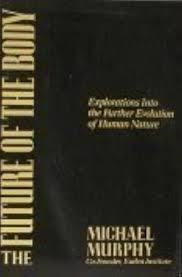
(Image from Amazon.com)
The Future of the Body: Explorations Into the Further Evolution Of Human Nature
Michael Murphy
In the oral and written histories of every culture, there are countless records of men and women who have displayed extraordinary physical, mental, and spiritual capacities. In modern times, those records have been supplemented by scientific studies of exceptional functioning.
Are the limits of human growth fixed?
Are extraordinary abilities latent within everyone?
Is there evidence that humanity has unrealized capacities for self-transcendence?
Are there specific practices through which ordinary people can develop these abilities?
Michael Murphy has studied these questions for over thirty years.
In The Future of the Body, he presents evidence for metanormal perception, cognition, movement, vitality, and spiritual development from more than 3,000 sources. Surveying ancient and modern records in medical science, sports, anthropology, the arts, psychical research, comparative religious studies, and dozens of other disciplines, Murphy has created an encyclopedia of exceptional functioning of body, mind, and spirit. He paints a broad and convincing picture of the possibilities of further evolutionary development of human attributes.
By studying metanormal abilities under a wide range of conditions, Murphy suggests that we can identify those activities that typically evoke these capacities and assemble them into a coherent program of transformative practice.
A few of Murphy’s central observations and proposal
About the author
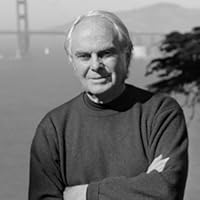
Michael Murphy
Bestselling author Michael Murphy has been called the father of the human potential movement, one of the most influential movements in twentieth-century American culture. His bestselling book Golf in the Kingdom (1972) inspired the creation of the Shivas Irons Society, a nonprofit group dedicated to finding beauty and discovery through the game of golf, and has recently been adapted into a movie starring Malcolm McDowell (2010). His other books include Jacob Atabet (1977), An End to Ordinary History (1982), In the Zone (1995), and The Kingdom of Shivas Irons (1997). He lives in California.
(Goodreads.com)
Thomas Merton on love and friendship
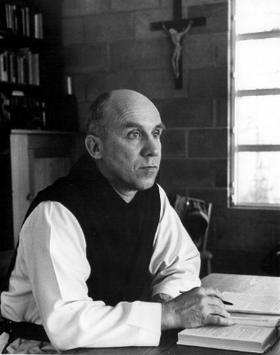
“Love is our true destiny. We do not find the meaning of life by ourselves alone we find it with another.”
~ Thomas Merton
“Where self-interest is the bond, the friendship is dissolved when calamity comes. where Tao is the bond, friendship is made perfect by calamity.”
~ The Way of Chuang Tzu by Thomas Merton
Thomas Merton, religious name M. Louis, was an American Trappist monk, theologian, mystic, poet, and social activist. He was a professed member of the Abbey of Our Lady of Gethsemani, near Bardstown, Kentucky, living there from 1941 to his death. Wikipedia
Born January 31, 1915, Prades, France
Died December 10, 1968 (age 53 years), Bangkok, Thailand
Translation Saturday Meeting June 20

(Image courtesy of Steve Hines and AI)
June 20: 11:00 AM – 12:00 PM PST
Mike Zonta, H.W., M.
In a crisis — any crisis — The Prosperos offers Translation. Translation Saturday Meetings is a weekly series of Translation presentations by veteran Translators, live and up to date on the issues of the day.
It is not a Translation workshop, It is not a Translation class. It is not a group Translation in the usual sense, though group participation is encouraged.
It is, however, restricted to those who have taken Translation class. So if you have never taken Translation class, check the calendar tab on The Prosperos website (TheProsperos.org) or get in touch with us and we will schedule a class.
Last week our Translation was done entirely by ChatGPT and the sense testimony was: Money is a huge corrupting force. The conclusion was: Truth alone has authority; therefore no symbol of scarcity, including money, can corrupt the Reality Self. Therefore money symbolizes the value of being, the value of fullness.
– – – – – – – – – – – – – – See you there!!! – – – – – – – – – – – – – –
Here’s the link: https://us02web.zoom.us/j/81749347119
For more info and link to join please email Mike Zonta at:
Are Iranians Any Closer to Freedom?
June 18, 2026 (jodemocracy.org)

| The United States and Iran formally signed a 14-point memorandum of understanding on June 17. Under the terms, which include ending sanctions on Iran, releasing its frozen funds, and pledging not to interfere in each other’s internal affairs, both sides have agreed to a 60-day ceasefire to allow further negotiations toward a final peace deal. The following Journal of Democracy essays cover the war that began on February 28 with attacks launched by the United States and Israel, the massive uprising of Iranians that preceded it, and the most recent chapter of the Islamic Republic’s brutal repression of its people. |
 The Islamic Republic’s War on Iranians The Islamic Republic’s War on IraniansIran’s theocracy has waged a brutal campaign against its own citizens for years. Now that the Woman, Life, Freedom movement has stripped the regime of any legitimacy, the mullahs have had no response but to sharpen their instruments of repression. By Ladan Boroumand |
| The War with Iran Made the IRGC Stronger If one of the goals of the war was to decimate the Islamic Revolutionary Guard Corps, it has had the opposite effect. The IRGC will come out of the conflict stronger and more embedded in Iranian politics. By Roya Izadi |
 Why the Iranian Regime Owns the Streets Why the Iranian Regime Owns the StreetsThe progovernment rallies that crowd Iran’s streets are no accident. They are a critical and underappreciated pillar of the regime’s strength, and they are shaping Iran’s response to the war. By Mohammad Ali Kadivar |
 Why the Islamic Republic Still Stands Why the Islamic Republic Still StandsAfter January’s mass protests, Iran seemed on the verge of revolutionary upheaval. How is it weathering the U.S.-Israeli assault? By Peyman Asadzade |
 Iran’s Democratic Hopes Amid the Smoke of War Iran’s Democratic Hopes Amid the Smoke of WarIf the war ends with the dismantling of the regime’s repressive apparatus, the Iranian people will have a rare, if fraught, opportunity. The totalitarian mindset often survives totalitarian regimes. By Ladan Boroumand |
 Iran’s Massacres Will Haunt the Regime Iran’s Massacres Will Haunt the RegimeIran’s hardline government responded to nationwide protests with horrific violence, killing thousands of Iranians in a matter of days. There is nothing the regime can offer its people to regain their support. By Ehsan Habibpour and Sharan Grewal |
The Journal of Democracy is published quarterly in January, April, July, and October. Subscribe now for full access to the Journal of Democracy archives.

Cop Accused of Using AI to Fake Evidence
The officer allegedly used AI to “create evidential material in a number of cases.”
By Joe Wilkins
Published Jun 18, 2026 (Futurism.com)

Sign up to see the future, today
Can’t-miss innovations from the bleeding edge of science and techEmail addressSign Up
Law enforcement agencies across the world have rushed to integrate AI into their investigations, promising faster arrests and higher case closure rates. The rising number of wrongful arrests attributed to AI facial recognition systems, however, tells another story: that speed and accuracy are two entirely different things.
But while false arrests due to facial recognition software can easily be blamed on glitchy tech, an even more disturbing pattern is starting to emerge, as AI-wielding officers don’t just misidentify suspects, but use the technology to fabricate evidence.
Over the weekend, the BBC reported that officials in Derbyshire County, England are investigating one law enforcement officer who’s alleged to have used generative AI to “create evidential material in a number of cases.”
The yet-unnamed officer has not been arrested, but has been suspended from duty pending the outcome of the investigation, which is reportedly being undertaken by Derbyshire police and the Crown Prosecution Service.
“A criminal investigation has been launched into an allegation of perverting the course of justice after the alleged use of AI systems by an officer to create evidential material in a number of cases,” a Derbyshire police spokesperson told the Financial Times.
It’s the first case of its kind in the UK, coming days after the country’s brand-new national PoliceAI center issued guidance advising officers to stop using generative AI to prepare court statements due to the tech’s tendency to hallucinate answers.
“We’ve said to some police forces, ‘you can’t do that, because we haven’t gone through all the checks and balances,” Alex Murray, head of the PoliceAI center told the FT in an interview. “We need to slow it down a bit.”
While AI hallucinations have indeed found their way into police reports due to laziness — like the case of Utah police whose report claimed an officer transformed into a frog — the seriousness of the Derbyshire investigation suggests that’s unlikely to be the case here.
If anything, it sounds more like the Maine cops who were caught last year posting photographs of a “drug bust” that had clearly been tampered with using generative AI.
More on AI: Police Are Using AI Camera Networks to Stalk Women
Joe Wilkins
Correspondent
I’m a tech and labor correspondent for Futurism, where my beat includes the role of emerging technologies in governance, surveillance, and labor.
Pierre Teilhard de Chardin: A Critique with James Tunney
New Thinking Allowed with Jeffrey Mishlove Jun 18, 2026 James Tunney, LLM, is an Irish barrister and author of The Mystery of the Trapped Light: Mystical Thoughts in the Dark Age of Scientism plus The Mystical Accord: Sutras to Suit Our Times, Lines for Spiritual Evolution; also TechBondAge: Slavery of the Human Spirit, Human Entrance to Transhumanism: Machine Merger and the End of Humanity, and AI-Govnerveance: Care and Possession in Dustopia. His most recent book is Trotsky vs Jesus: Battle of the AI-Millennium. His website is https://www.jamestunney.com/ James offers a critical examination of the life and ideas of Pierre Teilhard de Chardin, challenging the popular view that he successfully reconciled science and religion. He argues that Teilhard’s concepts of convergence, the noosphere, and evolutionary spirituality contributed to modern transhumanist and technocratic worldviews while departing from traditional Catholic theology. Tunney explores the implications of these ideas for artificial intelligence, global governance, human dignity, and the future direction of civilization. 00:00:00 Introduction 00:08:32 Convergence and the Tower of Babel 00:16:17 War, geology and emerging vision 00:24:02 Church reactions and theological controversy 00:32:08 Vatican II and modernism debates 00:40:06 Noosphere and technological networks 00:47:14 Cosmic Christ and consciousness 00:54:22 Transhumanism and global technocracy 01:00:00 Consequences of Teilhard’s ideas 01:02:04 Conclusion (Recorded on May 25, 2026)
Mike Zonta, BB editor
Jean Houston, ‘Midwife of Souls’ Who Advised Hillary Clinton, Dies at 89
[Jean Houston is also the half-sister, I believe, of Prosperos student and friend Steve Houston.]
–Mike Zonta, BB editor
The author of books like “The Possible Human,” she held workshops that drew on mythology, psychology and the experiential ethos of Esalen. But she refused to be called a guru.


June 18, 2026 (NYTimes.com)
Jean Houston, a spellbinding figure in the human potential movement of the 1960s who used guided imagery to inspire unmoored suburbanites, burned-out executives and even Hillary Rodham Clinton, helping Mrs. Clinton conduct imaginary conversations at the White House with Eleanor Roosevelt, died on May 16 at her home in Ashland, Ore. She was 89.
Her death was confirmed by her friend and business partner, Constance Buffalo.
The daughter of a gag writer for Bob Hope, George Burns and Henny Youngman, Ms. Houston rejected any association with the word “guru,” viewing it as an intellectual demotion. She called herself an “evocateur of the possible” and a “midwife of souls.”
“In my definition, guru is spelled ‘Gee, You Are You,’” she said on the Oprah Winfrey television show “Super Soul Sunday.” “I seem to be a process. I seem to be a verb of becoming, and held by the lure of becoming that keeps us going on.”
As the founder of numerous organizations, including the Human Capacities Corporation, Mystery School, Social Artistry School and the Possible Society, Ms. Houston led workshops at empowerment retreats, in corporate boardrooms, at her geodesic-domed house in Oregon and in far-flung countries with the United Nations.

“She had a remarkable capacity to be present to others,” Robertson Work, a U.N. policy adviser who accompanied her on trips around the world, said in an interview. “You felt like you were being seen. You could discover: ‘What is my greatness? What is my potential?’”
Ms. Houston synthesized mythology, the psychology of Carl Jung and Joseph Campbell, and the experiential ethos of Esalen, the California retreat that shaped the human potential movement.
During her multiday workshops, participants engaged in imaginary conversations with historical figures like Mahatma Gandhi and Pablo Picasso, acted out the stages of evolution while pretending to be a fish or a monkey, and translated their dreams into elaborate dances.
“The idea was that it’s possible to cultivate a higher power within yourself,” Marion Goldman, a professor emeritus of sociology and religious studies at the University of Oregon and the author of “The American Soul Rush: Esalen and the Rise of Spiritual Privilege” (2012), said in an interview. “By making the self a better place, you make the world a better place.”
In addition to her workshops, Ms. Houston published more than two dozen books, including “The Possible Human: A Course in Enhancing Your Physical, Mental and Creative Abilities” (1982), which sold more than 400,000 copies.
“The imaginal realms of inner space proliferate and spill over into the external world in a phenomenal growth of new science, art, music, literature, politics, and above all in a new vision of mankind and world that is the glory of humanism,” she wrote in the book’s introduction.

There were dissenters.
Writing in Skeptical Inquirer magazine, Martin Gardner, a critic of pseudoscience, called Ms. Houston’s workshops “bewildering” and judged her “flowery New Age jargon” to be “so vague and murky that it is often difficult to understand.” (Adding insult to injury, the article’s headline labeled her a guru.)
Still, her pull was gravitational — even at the White House. In 1994, Ms. Houston was among a group of motivational speakers whom President Bill Clinton and the first lady invited to Camp David for a series of pick-me-up conversations after their universal health care initiative failed and Republicans took control of Congress.
She and Mrs. Clinton hit it off.
“Jean wraps herself in brightly colored capes and caftans and dominates the room with her larger-than-life presence and crackling wit,” Mrs. Clinton wrote in her memoir “Living History” (2003). “She is a walking encyclopedia, reciting poems, passages from great works of literature, historical facts and scientific data all in the same breath.”
Ms. Houston helped Mrs. Clinton prepare for a visit to India, Nepal and Bangladesh in 1995. That year, the first lady invited her to the White House to brainstorm ideas for “It Takes a Village,” Mrs. Clinton’s book about the well-being of children.
Mrs. Clinton was physically and mentally exhausted. Perhaps, Ms. Houston suggested, she should speak with her hero, Mrs. Roosevelt. The idea was for Mrs. Clinton to talk as herself and then answer back as Mrs. Roosevelt — the sort of role-playing exercise that Ms. Houston had conducted thousands of times.
At some point, she described the sessions with Mrs. Clinton to the Washington Post reporter Bob Woodward, who recounted the details in his 1996 book, “The Choice.” After an excerpt appeared in The Post, tabloids and Republican opponents of the Clintons accused the first lady of holding seances at the White House.
Mrs. Clinton released a lengthy statement in her defense. “This was an interesting intellectual exercise to help spark my own thoughts,” she said. “It was a brainstorming session for my book — not a spiritual event.”
In an appearance on the “Today” show, Ms. Houston told Katie Couric that she was simply helping the first lady focus her mind by imagining “what she would say to Eleanor Roosevelt should she have the occasion to do so.”
Ms. Houston felt that she had been unfairly maligned.
“I’m not a psychic,” she said. “I’m not a guru.”

Jean Houston was born on May 10, 1937, in Brooklyn. Her mother, Mary (Todaro) Houston, was an actress, interior designer and stock analyst. Her father, Jack Houston, was a comedy writer.
Growing up, she found inspiration in a dummy. When she was 8, she accompanied her father to deliver a script to the ventriloquist Edgar Bergen. Upon arriving, they found Mr. Bergen talking to his plastic-and-wood buddy, Charlie McCarthy.
“Charlie, what is the meaning of life?” Mr. Bergen asked the dummy, as Ms. Houston recalled in her memoir, “A Mythic Life” (1996). “What is the nature of love? Is there any truth to be found?”
The dummy mumbled some answers.
“At that moment,” Ms. Houston wrote, “my skin turned to gooseflesh, an electric hand seemed to touch mine, and a fractal wave of my future activities crashed on the shore of my 8-year-old self. For I suddenly knew that we all contain ‘so much more’ than we think we do.”
Her epiphanies proliferated. On a school trip, she met Helen Keller and marveled at how happy she seemed despite being blind and deaf. She joined an international pen pal club and corresponded about the scriptures of Sikhs, Hindus and Buddhists. She had long conversations with an old man in Central Park; later, she discovered that she had been talking to the philosopher Pierre Teilhard de Chardin.

“When you befriend your own brain,” she said, “a great deal becomes possible.”
At Barnard, she studied religion and theater, acting in Off Broadway plays at night. She attended a doctoral program in religion offered by Columbia University and the Union Theological Seminary, but did not receive a degree. (She later received one in psychology from Union Institute in Cincinnati.)
During graduate school, while conducting studies on LSD use, she met Robert E.L. Masters Jr., a writer. They married in 1965 and spent their honeymoon writing “The Varieties of Psychedelic Experience,” which was reviewed on the cover of The New York Times Book Review.
Also in 1965, the couple founded the Foundation for Mind Research, the first of many organizations that Ms. Houston started to promote and study human potential.
“We are living at the beginnings of the golden age of brain, mind and body research,” she told The Washington Post in 1978. “We may well be standing, with regard to these, where Einstein stood in the year 1904 with his discovery of the special theory of relativity.”
Mr. Masters died in 2008. Ms. Houston has no immediate survivors.
Among her fondest memories was her childhood meeting with Ms. Keller, who was then in her late 60s — a story she recounted often.
Ms. Keller put her hand on Jean’s face to read her lips.
“Why are you so happy?” Jean asked.
“My child,” Ms. Keller responded, “it is because I live my life each day as if it were my last. And life in all its moments is so full of glory.”
(Contributed by Michael Kelly, H.W.)