
Obama Foundation Streamed live on Jun 18, 2026 Livestream of the Grand Opening Ceremony of the Obama Presidential Center on June 18, 2026 in Chicago, IL. Featuring speeches from President Barack Obama, Michelle Obama and performances by Bruce Springsteen, Christina Aguilera, Common, Eddie Vedder, Guitars Over Guns, Illinois Army National Color Guard, Jennifer Hudson, John Legend, Marc Anthony, Stevie Wonder, Tems, The Roots, U2’s Bono and The Edge,. and Uniting Voices Chicago An invocation led by Pastor Joel Hunter and Joshua DuBois. Remarks and special appearances from Marsai Martin, Marty Nesbitt, and Valerie Jarrett.
Monthly Archives: June 2026
Thomas Aquinas on loving those whose opinions we reject
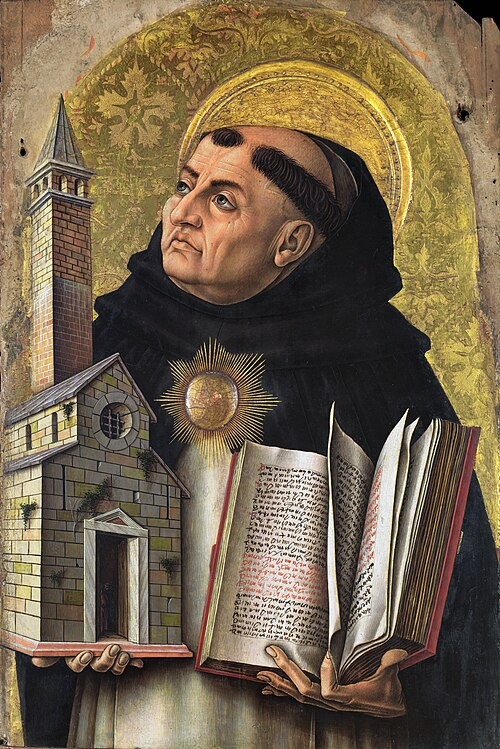
Panel of a 15th-century altarpiece
“We must love them both, those whose opinions we share and those whose opinions we reject, for both have labored in the search for truth, and both have helped us in finding it.”
~ Thomas Aquinas
Thomas Aquinas was an Italian Dominican friar and priest, theologian, and philosopher. He is considered one of the most influential thinkers in the history of Catholic theology and Western philosophy. Thomas was a proponent of natural theology and the father of a school of thought known as Thomism. Wikipedia
Born circa 1225 Roccasecca, Italy
Died March 7, 1274, Abbazia di Fossanova, Fossanova Abbey, Italy
Obama on democracy
MS NOW Jun 18, 2026 Former President Obama spoke at the opening of his Presidential Center in the South Side of Chicago. MS NOW: My Source for News, Opinion, and the World.
Book: “The Idea of the Holy”

The Idea of the Holy
Rudolf Otto, John Wilfred Harvey (Translator)
Since the English translation first appeared in 1923, Rudolf Otto’s volume has established itself as a classic in the field of religious philosophy. It offers an in-depth inquiry into the non-rational factor in the idea of the divine and its relation to the rational.
About the author
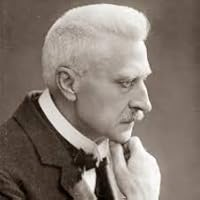
Rudolf Otto
74 books84 followersFollow
German theologian, philosopher, and historian of religion, who exerted worldwide influence through his investigation of man’s experience of the holy. Das Heilige (1917; The Idea of the Holy, 1923) is his most important work.
Book: “The Future of an Illusion”

The Future of an Illusion
Sigmund Freud, Peter Gay, James Strachey (Editor)
In the manner of the eighteenth-century philosopher, Freud argued that religion and science were mortal enemies. Early in the century, he began to think about religion psychoanalytically and to discuss it in his writings. The Future of an Illusion (1927), Freud’s best known and most emphatic psychoanalytic exploration of religion, is the culmination of a lifelong pattern of thinking.
About the author

Sigmund Freud
Dr. Sigismund Freud, M.D. (University of Vienna)—later changed to Sigmund—was a neurologist and the founder of psychoanalysis, who created an entirely new approach to the understanding of the human personality. He is regarded as one of the most influential—and controversial—minds of the 20th century.
In 1873, Freud began to study medicine at the University of Vienna. After graduating, he worked at the Vienna General Hospital. He collaborated with Josef Breuer in treating hysteria by the recall of painful experiences under hypnosis. In 1885, Freud went to Paris as a student of the neurologist Jean Charcot. On his return to Vienna the following year, Freud set up in private practice, specialising in nervous and brain disorders. The same year he married Martha Bernays, with whom he had six children.
Freud developed the theory that humans have an unconscious in which sexual and aggressive impulses are in perpetual conflict for supremacy with the defences against them. In 1897, he began an intensive analysis of himself. In 1900, his major work The Interpretation of Dreams was published in which Freud analysed dreams in terms of unconscious desires and experiences.
In 1902, Freud was appointed Professor of Neuropathology at the University of Vienna, a post he held until 1938. Although the medical establishment disagreed with many of his theories, a group of pupils and followers began to gather around Freud. In 1910, the International Psychoanalytic Association was founded with Carl Jung, a close associate of Freud’s, as the president. Jung later broke with Freud and developed his own theories.
After World War One, Freud spent less time in clinical observation and concentrated on the application of his theories to history, art, literature and anthropology. In 1923, he published The Ego and the Id, which suggested a new structural model of the mind, divided into the ‘id, the ‘ego’ and the ‘superego’.
In 1933, the Nazis publicly burnt a number of Freud’s books. In 1938, shortly after the Nazis annexed Austria, Freud left Vienna for London with his wife and daughter Anna.
Freud had been diagnosed with cancer of the jaw in 1923, and underwent more than 30 operations. He died of cancer on 23 September 1939.
(Goodreads.com)
Plato’s Warning Against Friends-with-Benefits | Democracy is Anarchy
Feb 8, 2025An Interview with Berkeley’s GRF Ferrari Subscribe to my newsletter if you want content updates, invitations to events, and to support my work: johnathanbi.com Transcript: https://www.johnathanbi.com/p/transcr… If you want a chance to attend my lectures and be kept up to date on all my content subscribe to my newsletter: greatbooks.io Companion lectures and interviews:
- GRF Ferrari on Plato’s Republic: • Democracy is Anarchy | Berkeley’s GRF Ferr…
Updated and Revised: Mike Zonta, BB editor
Spirituality: Mayor Mamdani’s full speech at the Knicks championship parade
CBS New York Jun 18, 2026 The mayor spoke about the Knicks’ resilience during their run to the NBA title and the spirit of New York City. For video licensing inquiries, contact: licensing@veritone.com
Featured Books from New Thinking Allowed
These writings reflect Falconer’s real-life experiences – raw, intimate, and often intense dialogues with Spirit – filtered through the lens of someone who has walked the path of deep personal healing. With more than 50 years of experience as a spiritual healer, Bob brings hard-won and compassionate authenticity to his work. His direct relationship with the Spirit Realm has anchored his healing practice and his recovery from extreme childhood abuse, creating a solid spiritual foundation that he carries through even the darkest of times.

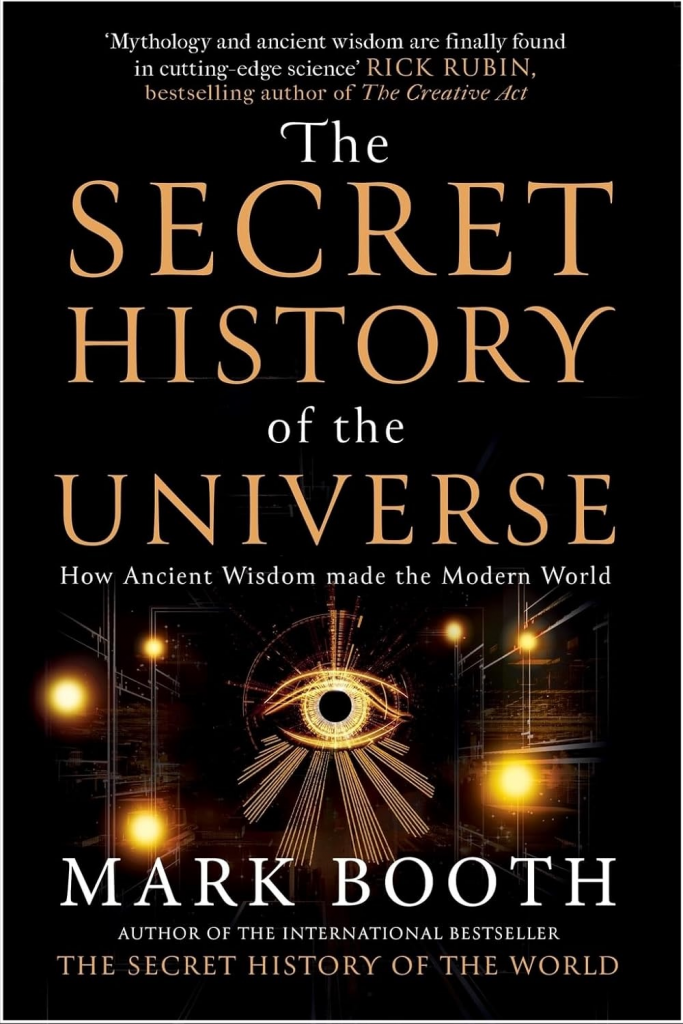
Mark Booth offers an alternative view, showing us how the great geniuses of modern science, from Marie Curie, Nikola Tesla, and Albert Einstein to today’s architects of AI, turned instead to secret, mystical, and “higher” teachings, including Indian mysticism and Freemasonry, to make sense of the strange phenomena they were encountering. Experimenting with alternative states of consciousness, they risked isolation and even madness.
In this edited volume, Sharon Mijares and her colleagues explore approaches to mental health that integrate psychology with spiritual practices such as meditation, mindfulness, and yoga. The book examines alternative perspectives on a wide range of psychological disorders while emphasizing treatment of the whole person rather than symptoms alone. Drawing on case studies and the experience of leading clinicians, it offers practical insights into psychospiritual methods of healing and transformation.

We need experts to secure one of the most dangerous technologies ever built

(Image from 80000hours.org)
| We need experts to secure one of the most dangerous technologies ever built Share: Link Aaron Gertler June 19, 2026 (us2.campaign-archive.com) |
| Hi everyone, In April, Anthropic’s newest model, Mythos, discovered vulnerabilities and exploits in every major operating system and web browser. After two months of hardening the model, Anthropic released it to the public — only for the US government to force it offline within days after Amazon engineers found they could trick the model into helping with cyberattacks (though Anthropic disputes the importance of this jailbreak). Given the pace of AI progress, models as capable as Mythos won’t stay rare for long. And even if the models all have safety features, they’ll be under constant attack from people who want to unlock their most dangerous abilities. Most of the worst outcomes from advanced AI start with a security failure: North Korea bribes an engineer to smuggle out weights and builds its own frontier AI; terrorists jailbreak a model into designing a pathogen; a scheming system disables its own restrictions without being noticed. Solving these problems requires people who can think like attackers, spot vulnerabilities, and harden infrastructure against spies and hackers (both human and AI). But those skills take years to build, and the AI safety world needs them now. Security experts might be the field’s greatest bottleneck. So if you’ve spent your career securing systems, or trying to break them, you’re qualified for some of the most important jobs we know of. The work pays well. The field is small and well-connected; it won’t take long to build a network and a reputation. And you don’t have to be an AI specialist — you’ll pick up the context as you go along. You can start applying today. If you want to use the skills you’ve developed to solve interesting problems, stymie clever opponents, and protect the world from AI catastrophe, our newest career profile is for you. |
(Contributed by Michael Kelly, H.W.)