Why We Keep Dating The Wrong Person & How You Can Find The Right Life Partner Now 

 June 15, 2026 (Menalive.com)

By  Jed Diamond

                I have been a marriage and family counselor for more than fifty years. It was more than embarrassing to be helping others but finding my own love life in constant crisis.  When people visit me at MenAlive you will see my welcome video, “Confessions of a Twice-Divorced Marriage Counselor.”

                It took me a long time to take my own advice and get help. That’s the bad news. The good news is that I finally found a good therapist and found the right life partner. Carlin and I have been joyfully married for 46 years and more in love now than ever. The even better news is that I can help you if would like to find your right partner and stop looking for love in all the wrong places, the title of one of my most popular and best-selling books.

                If you are interested in working with me on these issues, drop me a note (Jed@Menalive.com).

               Continue reading, if you’d like to learn more about why we get hooked on relationships that are bad for us. 

                The truth is that things have changed a great deal from the time when I was looking for love. With the advent of social media and an on-line world of endless possibilities along with a real-life world of broken promises, dating has become more difficult than ever. More people are acting like porcupines in the snow that are hungry for love and affection. Yet as soon as they get close their prickly spines wound each other and they distance themselves.

                According to a recent article in Forbes magazine article by Emily Phares,

               “Most single men and women between the ages of 18 and 34 (53% and 68%, respectively) say they want a romantic relationship, according to a 2024 study commissioned by dating platform Tinder, which surveyed 8,000 heterosexual participants in the U.S., U.K., Australia and Canada. However, nearly all respondents — including 91% of men and 94% of women — say they think the current dating environment is more difficult than ever.”

                There are unique challenges that people face, regardless of age, but I have found that we never stop wanting love and often the dating difficulties faced by men and women in their 40s, 50s, 60s, and beyond can even more stressful.

                In my book, The Enlightened Marriage: The 5 Transformative Stages of Relationships and Why the Best is Still to Come, I share what Carlin and I have learned. Iyanla Vanzant author and former host of Iyanla Fix My Life on the Oprah Winfred Network (OWN) had this to say after reading my book:

               “There are some skills you must have, some ways you must be, and some things you must learn or unlearn if you want to have a healthy, fulfilling, and loving relationship. Jed Diamond’s work in The Enlightened Marriage covers all of the ‘musts’ and then some. What a blessing!”

Are You Looking For Love in All the Wrong Places?

                Here are some questions I had to address in my own life and which I help my clients explore in their lives:

  1. Am I truly satisfied with my love life?
  2. Do I find that the people I am attracted to turn out later to be wrong for me?
  3. Even when tell myself, “I won’t make that mistake again,” do I find myself in another bad situation?
  4. If I look at my dating history and look honestly at those I’ve been drawn to, is there a pattern?
  5. What role models did I have growing up? What kind of marriage did my parents have and how might that have influenced my love life?
  6. Did I experience “adverse childhood experiences” growing up that included physical, emotional, or sexual abuse or neglect?
  7. Was my father physically or emotionally absent when I was growing up?
  8. Was my relationship with my father too distant or inappropriately close?
  9. Was my mother physically or emotionally absent when I was growing up?
  10.  Was my relationship with my mother too distant or inappropriately close?
  11. Deep down how safe do I feel being vulnerable and intimate with a mate?
  12. How loving do I feel toward myself? How comfortable do I feel with my physical, emotional, and sexual self?

A Few Important Things I Have Learned Over the Years

  1. It is never too early or too late to improve your mental, emotional, and relational love life.
  2. At the end of our lives, people rarely feel regret because they didn’t make enough money or achieved great success in their work lives. Most people wish they had learned to love more deeply and well.
  3. Even those of us who were raised with a healthy family with parents who loved us and loved each other, we all suffer wounds to our love lives.
  4. Since much of the wounding comes when we are young and impacts all of us to some degree, we often block out the painful memories which slip into our subconscious.
  5. What remains unconscious tends to rule our lives since we continue to repeat old patterns without recognizing their subconscious origins.
  6. Each dysfunctional date, love affair, or marriage adds a little bit to our addictive behavior of repeating old patterns.
  7. The opposite of addiction is healthy connection.
  8. We are not stupid or crazy, though at times our behavior makes us feel we have lost our minds. There is actually a positive desire underlying our dysfunctional love lives.
  9. I believe that unconsciously we are hoping that by re-creating the dysfunctional relationships from our past, we believe that this time things will be different. This time I will fix things and get the love I have been missing all my life.
  10. Sometimes we can do the healing ourselves and fix things on our own. Most times we can benefit from working with a therapist, counselor, or guide who knows the territory, has been there themselves, and has helped themselves and others to heal.
  11. It is never too late to heal old wounds and have a relationship of your dreams.

               I hope you find my articles helpful. Drop me a note (Jed@MenAlive.com) and let me know. I read every personal email I receive from people. If I can help you, I would be pleased to connect.

Author Image

Best Wishes,

Jed Diamond

Founder and VHS (Visionary Healer Scholar) of MenAlive

Inside Turkey’s Democratic Crisis

Since winning Turkey’s 2023 national election, President Erdoğan and the ruling AK Party have seen their popularity plummet. In response, they’ve ramped up their repression of the main opposition party — most notably, jailing its presidential candidate, Istanbul mayor Ekrem İmamoğlu and removing party leader Özgür Özel.

Don’t miss Özel’s recent Journal of Democracy essay outlining his vision for restoring democracy in Turkey, along with our coverage of the country’s hard turn toward autocracy in the last year. 
How We Restore Turkey’s Democracy

President Erdoğan’s rule has grown more repressive as he realizes he has no democratic path to power. But we are united in our resolve and determined to make Turkey a democratic republic worthy of its people.

By Özgür Özel
How to Fight Turkey’s Authoritarian Turn

As President Erdoğan’s grip on power is slipping, his regime is turning more repressive. But Turkey may still avoid becoming a full-blown autocracy. The opposition is increasingly popular, and there remains a way to tilt the playing field to their advantage.

By Berk Esen and Sebnem Gumuscu
Turkey’s Hard Road to Democratic Renewal

Turkey’s democratic future hinges on its opposition parties doing something few expected: winning elections in unfair conditions. Yet the opposition’s strong performance in local elections suggests that they may be putting together a winning formula for Turkey and beyond.

By Ayça Alemdaroğlu, Toygar Sinan Baykan, Ladin Bayurgil, and Aytuğ Şaşmaz
Secularism, Islamism, and the Future of Turkey

The political struggle between President Erdoğan and opposition leader Ekrem İmamoğlu is a fierce battle for the country’s democracy. But it goes deeper than that. It is also a struggle between Islamist and secularist visions of Turkey.

By Ahmet T. Kuru
After Crackdown, Is Turkey an Autocracy?

Turkey’s president would rather turn his country into a full autocracy than give up power. But the Turkish people are clinging to what remains of their democracy, and they are ready to fight for it.

By Berk Esen and Sebnem Gumuscu

The Journal of Democracy is published quarterly in January, April, July, and October. Subscribe now for full access to the Journal of Democracy archives.

Book: “On Religion: Speeches to its Cultured Despisers”

On Religion: Speeches to its Cultured Despisers

Friedrich SchleiermacherRichard Crouter (Editor)

Schleiermacher’s On Religion: Speeches to its Cultured Despisers is a classic of modern Protestant religious thought that powerfully displays the tensions between the Romantic and Enlightenment accounts of religion. This edition presents the original 1799 text in English for the first time. Richard Crouter’s introduction places the work in the milieu of early German Romanticism, Kant criticism, the revival of Spinoza and Plato studies, and theories of literary criticism and of the physical sciences. This fully annotated edition also contains a chronology and notes on further reading.

About the author

Friedrich Schleiermacher

Friedrich Daniel Ernst Schleiermacher was a German theologian and philosopher known for his impressive attempt to reconcile the criticisms of the Enlightenment with traditional Protestant orthodoxy. He also became influential in the evolution of Higher Criticism. His work also forms part of the foundation of the modern field of hermeneutics. Because of his profound impact on subsequent Christian thought, he is often called the “Father of Modern Protestant Theology”, and is considered an early leader in liberal Christianity. The neo-orthodoxy movement of the twentieth century, typically (though not without challenge) seen to be spearheaded by Karl Barth, was in many ways an attempt to challenge his influence.

(Goodreads.com)

Book: “Omens of Millennium”

Omens of the Millennium: The Gnosis of Angels, Dreams & Resurrection

Harold Bloom

In this impassioned, erudite, and provocative work, Harold Bloom, bestselling author and America’s foremost literary and cultural critic, examines society’s “New Age” obsessions: angels, prophetic dreams, and near-death experiences. Omens of Millennium traces these cultural phenomena from their ancient and traditional origins to their present-day, millennial manifestations. In addition, it is a personal account of Bloom’s Gnosticism. Certain to educate, challenge, and entertain, Omens of Millennium is as fascinating as it is timely.

About the author

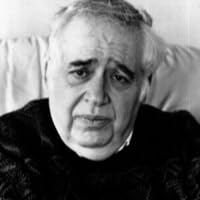
Harold Bloom

Harold Bloom was an American literary critic and the Sterling Professor of Humanities at Yale University. In 2017, Bloom was called “probably the most famous literary critic in the English-speaking world.” After publishing his first book in 1959, Bloom wrote more than 50 books, including over 40 books of literary criticism, several books discussing religion, and one novel. He edited hundreds of anthologies concerning numerous literary and philosophical figures for the Chelsea House publishing firm. Bloom’s books have been translated into more than 40 languages. He was elected to the American Philosophical Society in 1995.

Bloom was a defender of the traditional Western canon at a time when literature departments were focusing on what he derided as the “school of resentment” (multiculturalists, feminists, Marxists, and others). He was educated at Yale University, the University of Cambridge, and Cornell University.

(Goodreads.com)

Book: “The American Religion”

The American Religion

Harold Bloom

In this fascinating work of religious criticism, Harold Bloom examines a number of American-born faiths: Pentecostalism, Mormonism, Seventh-day Adventism, Christian Science, Jehovah’s Witnesses, Southern Baptism and Fundamentalism, and African-American spirituality. He traces the distinctive features of American religion while asking provocative questions about the role religion plays in American culture and in each American’s concept of his or her relationship to God. Bloom finds that our spiritual beliefs provide an exact portrait of our national character.

About the author

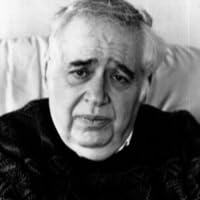
Harold Bloom

Harold Bloom was an American literary critic and the Sterling Professor of Humanities at Yale University. In 2017, Bloom was called “probably the most famous literary critic in the English-speaking world.” After publishing his first book in 1959, Bloom wrote more than 50 books, including over 40 books of literary criticism, several books discussing religion, and one novel. He edited hundreds of anthologies concerning numerous literary and philosophical figures for the Chelsea House publishing firm. Bloom’s books have been translated into more than 40 languages. He was elected to the American Philosophical Society in 1995.

Bloom was a defender of the traditional Western canon at a time when literature departments were focusing on what he derided as the “school of resentment” (multiculturalists, feminists, Marxists, and others). He was educated at Yale University, the University of Cambridge, and Cornell University.

(Goodreads.com)

PsychoSpiritual Transformation with Sharon Mijares


New Thinking Allowed with Jeffrey Mishlove Jun 21, 2026 Psychology and Psychotherapy Sharon Mijares, PhD, is a core faculty member at the California Institute for Human Science. She is editor and contributor to a number of anthologies, including The PsychoSpiritual Clinician’s Handbook: Alternative Methods for Understanding and Treating Mental Disorders; The Revelation of the Breath: A Tribute to Its Wisdom, Power, and Beauty; and Modern Psychology and Ancient Wisdom: Psychological Healing Practices from the World’s Religious Traditions. She is the sole author of Fragmented Self, Archetypal Forces, and Embodied Mind. Sharon discusses the profound relationship between psychology, spirituality, mysticism, and personal transformation, drawing upon a lifetime of experiences that span Jungian psychology, Sufism, indigenous wisdom, and psychospiritual healing. She reflects on how suffering, trauma, mystical experiences, past-life memories, and encounters with diverse spiritual traditions contributed to her own journey from troubled beginnings to becoming a respected psychologist and educator. Mijares emphasizes individuation, the awakening of the divine spark within, the importance of balancing feminine and masculine energies, and the transformative power of mystical longing. 00:00:00 Introduction 00:03:17 Psychology and spirituality 00:07:29 Mysticism beyond religion 00:12:26 Reincarnation and transformation 00:15:21 Jung and individuation 00:21:21 Carmelite memories 00:28:21 Reincarnation and indigenous wisdom 00:35:19 Trauma as awakening 00:42:28 Living beyond labels 00:46:07 Conclusion New Thinking Allowed host, Jeffrey Mishlove, PhD, is author of The Roots of Consciousness, Psi Development Systems, and The PK Man. Between 1986 and 2002 he hosted and co-produced the original Thinking Allowed public television series. He is the recipient of the only doctoral diploma in “parapsychology” ever awarded by an accredited university (University of California, Berkeley, 1980). He is also the Grand Prize winner of the 2021 Bigelow Institute essay competition regarding the best evidence for survival of human consciousness after permanent bodily death. He is Co-Director of Parapsychology Education at the California Institute for Human Science. (Recorded on Thursday, May 28, 2026)

Book: “Dark Night of the Soul”

Dark Night of the Soul

John of the CrossEdgar Allison Peers (Translator)

“The clearer and more manifest divine things are in themselves, the more they are naturally obscure and hidden from the soul. It is here like natural light: […] the more we want to stare directly at the sun, the more we dazzle the visual power and deprive it of light […]. Likewise, when this divine light of contemplation invests the soul which is not yet completely enlightened, it produces spiritual darkness in it, because not only does it exceed it, but because it deprives it of its natural intelligence. and obscures the act. »

On the mystical path, the experience of night is neither dark, nor dramatic, nor tragic. This magnificent poetic treatise shows, on the contrary, that she is the recipient of divine lessons. A major work of the negative path.

« Plus les choses divines sont en soi claires et manifestes, plus elles sont naturellement obscures et cachées à l’âme. Il en est ici comme de la lumière naturelle : […] plus on veut fixer le soleil en face, et plus on éblouit la puissance visuelle et on la prive de lumière […]. De même, quand cette divine lumière de la contemplation investit l’âme qui n’est pas encore complètement éclairée, elle produit en elle des ténèbres spirituelles, parce que non seulement elle la dépasse, mais parce qu’elle la prive de son intelligence naturelle et en obscurcit l’acte. »

Sur le chemin mystique, l’expérience de la nuit n’est ni noire, ni dramatique, ni tragique. Ce magnifique traité poétique montre au contraire qu’elle est réceptrice de leçons divines. Une œuvre majeure de la voie négative.

About the author

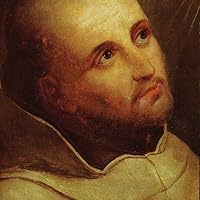
John of the Cross

St. John of the Cross (Spanish: Juan de la Cruz), born June 24 1542, Juan de Yepes Álvarez, was a major Counter-Reformation figure, a Spanish mystic, Catholic saint, Carmelite friar and priest. He was a reformer of the Carmelite Order and is considered, along with St Teresa of Ávila, as a founder of the Discalced Carmelites. He’s also known for his writings. Both his poetry & his studies on the growth of the soul are considered the summit of mystical Spanish literature & a peak of all Spanish literature. He was canonized as a saint in 1726 by Pope Benedict XIII. He is one of the 33 Doctors of the Church.

(Goodreads.com)

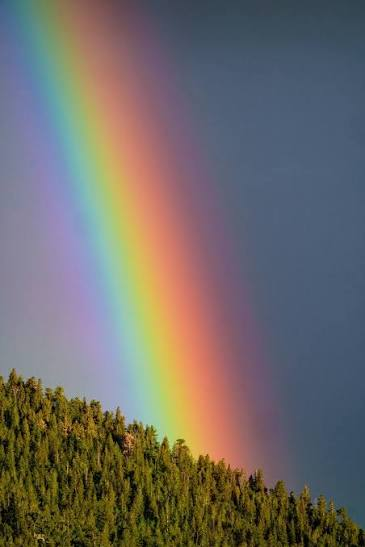
Did God fly the first rainbow flag?

Tay’s Photography’s Post (Facebook.com)

Genesis 9: 12-16

12 And God said, “This is the sign of the covenant I am making between me and you and every living creature with you, a covenant for all generations to come: 13 I have set my rainbow in the clouds, and it will be the sign of the covenant between me and the earth. 14 Whenever I bring clouds over the earth and the rainbow appears in the clouds, 15 I will remember my covenant between me and you and all living creatures of every kind. Never again will the waters become a flood to destroy all life. 16 Whenever the rainbow appears in the clouds, I will see it and remember the everlasting covenant between God and all living creatures of every kind on the earth.”