COLUMBUS, OH—Thryssskmsss, a 2-year-old barn funnel weaver spider, confided to friends Wednesday that she isn’t sure she’s ready for 3,000 children at this point in her life. “There’s so much I want to do—explore the world’s dark cracks, visit the drainpipes, see what it’s like to eat a dragonfly—but I can’t do those things if I’ve got several hundred spiderlings clinging to every leg,” the spider said from the eaves of her Columbus home. “If I had 3,000 hungry mandibles to feed, I’d be in the web catching flies all day, and that’s just not where I’m at right now.” Thryssskmsss added that she expects one day she’ll be ready to settle down and find a nice male to mate with and then devour.
ARIES (March 21-April 19): You are often the best possible remedy for stale, unoriginal thinking that’s festering in your vicinity. And you are especially so these days. Others might have the gall to disrupt the deadening status quo, but you have the charm to do it without scorching every bridge and laying waste to the land. So I invite you to step into the role of cheerful troublemaker. Unleash your iconoclastic sparks with the intention of making life friskier and more imaginative, not more tangled and irritating.
TAURUS (April 20-May 20): In many farming cultures, including parts of India, growers speak or sing to their crops as they walk through the fields. It’s a gesture of personal care that mirrors growing scientific interest in how plants respond to sound and vibration. Some studies suggest that plants exposed to sustained speech and song may grow more vigorously. Your assignment in the coming weeks, Taurus, is to speak to the growing things in your life with similar devotion. Talk to your projects. Sing to your relationships. Tell jokes to your dreams. The universe is extra responsive to your sweet voice.
GEMINI (May 21-June 20): Neurologist Oliver Sacks said, “I am haunted by the density of experience.” He meant that every moment contains far more richness than we can fully register or remember. This observation will be especially relevant for you in the coming weeks. Your mind (and heart!) will be flooded with an abundance of stimuli, ideas, feelings and impressions. It might initially feel overwhelming, but will ultimately be a boon—especially if you prepare yourself for the intensity and abundance. Imagine yourself standing next to a fountain and feeling cheerful about getting soaked.
CANCER (June 21-July 22): You have superpowers that hardened hearts and tough guys can’t fathom. Receptivity is a key part of your genius, for example. Emotional fluency is at the root of your intelligence. Your ability to feel so much and so deeply makes you dangerous to status quos managed by people who overthink everything. Wait! There’s more. You can nurture without smothering and protect without imprisoning. You wield the powers of memory without being enslaved by nostalgia. You make home a verb, not a noun, as you build shelter for yourself and your tribe. I hope you will express these gorgeous talents to the max in the coming weeks and months.
LEO (July 23-Aug. 22): An astrologer rooted in older traditions might claim that now is an ideal time to promote your personal agenda through sly, gossipy maneuvering. But since I am devoted to building a new culture grounded in compassionate values that nourish the soul, my message is different. I’m pleased to tell you that the coming weeks will be a potent phase to engage in elevating gossip that serves the greater good, to celebrate unsung heroes, and to call attention to everything that is thriving. For practical dreamers like you and me, carelessly speaking ill of others undermines our own aspirations. One of the most effective ways to expand our own possibilities is to use the power of language to boost other people’s chances for joy and success.
VIRGO (Aug. 23-Sept. 22): The ancient Library of Alexandria contained over half a million scrolls. If you devoted eight hours a day to reading, you could finish about 5,000 books over the course of your life. The librarians back then knew they would never read all the texts they managed and protected. Their job wasn’t to consume all knowledge but to be stewards of abundance. They’re good role models for you, Virgo. The wonderful fact is that you don’t have to master every single thing that attracts your attention. Your far more relaxing task is to curate with care and wisdom. Your growing edge is to know what to preserve and what to release. One of your noblest projects is to commune pleasurably with the intriguing mysteries that life brings you, not obsess on them.
LIBRA (Sept. 23-Oct. 22): Libra psychologist Carol Dweck distinguishes between fixed mindsets (“I’m not smart enough”) and growth mindsets (“I can become smarter”). When you have a fixed mindset, obstacles weigh you down. With a growth mindset, they motivate you to develop. What determines your trajectory isn’t your current skill level but how you relate to your edge. With this in mind, Libra, I invite you to monitor your self-talk as you encounter challenges. Are you prone to thinking that limitations are permanent, or do you see them as temporary states you can use as opportunities? You now have a good chance to instill the latter as a root habit.
SCORPIO (Oct. 23-Nov. 21): What’s something you wish you could change about yourself? Is it a trait, pattern, fear or story about your body? And what exactly tells you that this can never change? Is it loyalty to old expectations or a rotting prophecy someone laid on you? Consider the possibility that maybe the “can’t” is really a “won’t,” or a “don’t know how yet,” or “I’m afraid of who I’d be without this.” Then imagine that you don’t have to transform this thing instantly, but, for starters, need only shift it by ten percent in the direction of mercy and freedom. What small, specific action would generate that ten percent?
SAGITTARIUS (Nov. 22-Dec. 21): What’s your most vital relationship? I dare you to surprise each other in the coming weeks. Refresh your bond with playful experimentation. Here are adventures you two could explore: 1. Take a walk together with no destination in mind, letting curiosity guide you. Talk about the paths you have not yet taken in life but might like to. 2. Describe the most beautiful future you can imagine for each other. Share practical steps you could take to make these scenarios happen. 3. Choose a food treat you both love, speak a blessing over it, then eat it slowly together as you name what you are most grateful for in your connection.
CAPRICORN (Dec. 22-Jan. 19): Chess masters and accomplished musicians practice differently from amateurs. They focus most intensely on their weak points, less so on rehearsing what they already do well. It’s uncomfortable to confront inadequacy, but they’re better for it. In my astrological opinion, Capricorn, you should specialize in a similar courage during the coming weeks. I invite you to direct your generous attention toward your shakiest skills and most uncertain territories. Glorious growth will happen at the edge of your competence.
AQUARIUS (Jan. 20-Feb. 18): Be more like a lightning storm over a green meadow and less like a porch light attracting moths. Be more like a spiritual riddle in an ecstatic poem and less like a slogan printed on a T-shirt. Be more like a Miles Davis improvisation and less like a tune played note-for-note from the sheet music for a formulaic pop song. Can you stretch yourself into more fertile wildness, Aquarius? Will you expand your future with adventures that thrill your imagination? I believe you can and should. For bonus magic, be more like a dream of wandering in a rowdy paradise and less like the old version of yourself. Trust the frontier signals that make your pulse quicken, and speak less about the obvious truths that make everyone nod in agreement.
PISCES (Feb. 19-March 20): Are you ready to assess the state of your emotional pain? Every few years, I invite you to take stock. I ask you to reflect on how well you’ve been cultivating meaningful stress while avoiding useless pain and misery. So, how’s your progress since our last check-in? Have you improved at sidestepping dull torments you’ve relived a thousand times? Are you less vulnerable to being wounded by ignorant or thoughtless people? Can you more swiftly shake off the sting of minor troubles? Most importantly, are you increasingly magnetized to the intriguing dilemmas that challenge you to grow wiser and more resourceful?
New Thinking Allowed with Jeffrey Mishlove Jun 3, 2026 Psychology and Psychotherapy Stephani L. Stephens, PhD, served on the Executive Committee of the International Association of Jungian Studies. Currently, she is a Lecturer in Counseling at the University of Canberra and is a practicing psychotherapist in Canberra, Australia. She is the recipient of the 2018 Frances P. Bolton Fellowship from the Parapsychology Foundation. She is author of C. G. Jung and the Dead: Visions, Active Imagination and the Unconscious Terrain. In this video, rebooted from 2020, she describes details of Jung’s visionary journey, as documented in the Red Book, insofar as it pertains to communication with the deceased. These include initiations and healings as well as conversations with a range of departed individuals, some of whom are specifically identified. Jung struggled to distinguish between the actual dead and the archetypal figures of the unconscious. New Thinking Allowed host, Jeffrey Mishlove, PhD, is author of The Roots of Consciousness, Psi Development Systems, and The PK Man. Between 1986 and 2002 he hosted and co-produced the original Thinking Allowed public television series. He is the recipient of the only doctoral diploma in “parapsychology” ever awarded by an accredited university (University of California, Berkeley, 1980). He is also the Grand Prize winner of the 2021 Bigelow Institute essay competition regarding the best evidence for survival of human consciousness after permanent bodily death. He is Co-Director of Parapsychology Education at the California Institute for Human Science. (Recorded December 22, 2020)
A long time ago a Dutch-born psychologist named Robert Wolff sent me the manuscript of a book he’d been writing for years called Original Wisdom, and asked if I’d write the foreword. I sat with it for several days. I couldn’t put it down.
Wolff had spent decades among the Sng’oi, an indigenous people who live in the deep mountainous rainforest of Malaysia, learning a way of knowing that he had no Western training for and that, he came to believe, Western science had no real vocabulary to describe.
He wrote about Sng’oi who could find each other in dense jungle without speaking, who knew a thunderstorm was coming hours before there was any visible sign, who moved through their forest without leaving a trace, and who made decisions by sitting together in silence until something rose up in the group and was simply known.
The Sng’oi, Wolff insisted, weren’t primitive, weren’t premodern, weren’t on some earlier rung of a ladder we were finally climbing past. They were running on a completely different operating system than the one we run on, refined over thousands of years, that produced, among many other things, an entirely sustainable relationship with the land they lived on.
I wrote the foreword gladly. The book has stayed in print ever since, and I find I keep coming back to it.
I came back to it again this week, after I read a major essay in UNESCO Courier reporting that indigenous knowledge systems are finally being formally integrated into the world’s climate-response toolkit. The piece walks through example after example.
Aboriginal Australians have practiced cool burning, the controlled use of low-intensity fires, for tens of thousands of years to keep their lands safe from the catastrophic megafires we now know to expect when forests are left to accumulate fuel.
The U.S. and Australian governments banned indigenous cultural burning across most of their territories for over a century. The result, in California, Oregon, the Mountain West, and large portions of Australia, has been a fire regime that none of us alive today have ever seen before, because none of us alive today have ever seen the land managed correctly.
Inuit elders document weather and ice patterns with a precision that Western meteorological models still cannot match in the high Arctic. Farmers in Burkina Faso, Mali, Niger, Kenya, and Senegal use techniques like zaï, small water-capture pits, combined with intercropping and indigenous plant varieties, to keep degraded soils productive without synthetic inputs. A 2025 paper in Scientific Reports found that ninety-two percent of South African farmers in one large region rely on traditional plant-based methods to manage pests and diseases.
And this isn’t a fringe finding any more. According to the United Nations, indigenous peoples make up less than five percent of the global population yet steward lands containing roughly eighty percent of Earth’s remaining biodiversity. Forests under indigenous management sequester more carbon, retain more biodiversity, and resist degradation better than forests under almost any other tenure arrangement.
The IPCC’s Sixth Assessment Report formally elevated Traditional Ecological Knowledge from “interesting cultural heritage” to “primary tool for climate adaptation.” That’s the kind of sentence I never honestly thought I’d write in my lifetime.
The deeper move, though, is conceptual. There is a Mi’kmaw word, Etuaptmumk, usually translated into English as “Two-Eyed Seeing”, that the late Mi’kmaw Elder Murdena Marshall and her husband, Elder Albert Marshall, of Eskasoni First Nation in Cape Breton, brought into the academic world in 2004.
The principle is simple. You look at every problem with one eye seeing what indigenous knowledge has to teach, and the other eye seeing what Western science has to teach, and you use the strengths of both rather than pretending one of them is sufficient on its own.
Etuaptmumk literally means the gift of multiple perspectives. It’s now spreading through Canadian medicine, marine biology, fisheries management, climate research, and education. Whole research grants are being awarded under its banner. Government departments are using it as a framework. The reason it’s spreading is that it works. The combination of methods, when honestly attempted, produces better answers than either method alone.
This is the argument I made decades ago in Last Hours of Ancient Sunlight. The civilization we built over the last few hundred years operated on a fundamental error. We assumed we knew more than the older cultures did, and that progress meant leaving their methods behind.
We took that assumption and built a global civilization on it. The civilization we built has destabilized the climate, collapsed roughly three-quarters of the planet’s wild biomass, and put more than a million species at serious risk of extinction in our own lifetimes. The cultures we condescended to, by contrast, kept the lands they stewarded in some kind of working balance for tens of thousands of years.
What does any of this mean for those of us who aren’t indigenous? Two things, I think. First, give back what was taken, or at least defend it where it still exists. Indigenous land sovereignty isn’t a sentimental gesture. It’s a measurable, quantifiable climate strategy.
Land returned to (or kept under) indigenous stewardship reliably outperforms land managed by states or corporations on almost every ecological metric we know how to measure. Defending that sovereignty is, in plain English, a more cost-effective form of climate adaptation than most of the policies our governments are spending hundreds of billions on.
Second, learn how to look with both eyes. Whatever community you’re in, whatever land you live on, there is almost certainly an indigenous lineage that knew that land before your great-grandparents arrived. In many places the knowledge-keepers are still there, still teaching, still willing to share if asked respectfully and on their terms.
The practice of Etuaptmumk, of holding both ways of knowing without forcing one to submit to the other, is something any one of us can take up tomorrow morning. You don’t have to be indigenous to use the gift. You just have to stop assuming your one eye sees the whole picture.
I came back to Robert Wolff’s book this week because the UNESCO Courier essay reminded me of something he wrote near the end of it, almost in passing: that the Sng’oi didn’t talk about wisdom the way we do. They didn’t think it was rare or special or something you had to earn. They thought everybody had it. They thought we’d just forgotten.
The cultures we used to call primitive were never primitive. They were running an operating system that worked, while we were busy crashing ours. The very good news in 2026 is that some of those systems are still here. They’re being formally recognized by the IPCC, integrated into national parks and marine reserves, and finally listened to in the rooms where decisions get made. That’s not just an environmental story. It’s a homecoming.
If there’s an indigenous community on the land where you live (and there almost certainly is, even if the federal government hasn’t officially recognized them), look up their council, their cultural center, their language program, their hunting and fishing rights, and find a way to support them.
If there’s a tribally-led conservation effort in your region, donate or volunteer. If there’s a Two-Eyed Seeing project in your neighborhood, and there are more of these every year, show up.
And if you’ve never read Wolff’s Original Wisdom, or Last Hours of Ancient Sunlight, or any of the great indigenous-voice writers like Robin Wall Kimmerer (Braiding Sweetgrass), Vine Deloria Jr (God Is Red), or Tyson Yunkaporta (Sand Talk), do yourself the favor. The future of the planet and the deepest parts of the past turn out to be the same conversation.
“The ability to observe without evaluating is the highest form of intelligence.”
~ Krishnamurti.
Jiddu Krishnamurti was an Indian spiritual figure, speaker, and writer. Adopted by members of the Theosophical Society as a child, Krishnamurti was raised to fill the mantle of the prophesied World Teacher, a role tasked with aiding humankind’s spiritual evolution. Wikipedia
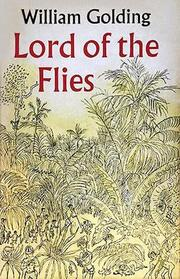
adjective: Marked by a breakdown of order into cruelty, chaos, and savagery.
ETYMOLOGY:
After Lord of the Flies (1954), a novel by William Golding. Earliest documented use: 1969.
NOTES:
In the novel, a group of English schoolboys are stranded on an uninhabited island after a plane crash. At first, they try to establish rules and live together peacefully, but their makeshift society descends into cruelty and savagery.
The title refers to Beelzebub, from Hebrew ba’al-zebub (lord of flies), the name of a Philistine god of the city of Ekron. In later Christian tradition, Beelzebub became identified with the prince of demons, or Satan.
“Age is opportunity no less Than youth itself, though in another dress, And as the evening twilight fades away The sky is filled with stars invisible by day.”
Henry Wadsworth Longfellow (1807 – 1882) American Poet
AN OPPORTUNITY FOR DAILY REFLECTION BROUGHT TO YOU BY THE SCHOOL OF PRACTICAL PHILOSOPHY
The hype surrounding generative AI has generated astronomical amounts of value, with tech companies raising tens of billions of dollars and many — including OpenAI and Anthropic — preparing to go public this year at sky-high valuations, in moves that will produce incredible wealth for their stockholders.
Whether the average Joe will ever directly benefit from all of this is looking dubious at best. That’s despite many of these tools relying on AI models that were trained on the creative output of millions of people, copyright be damned, the vast majority of whom have yet to see a single cent. Quite the contrary — many workers are facing a disastrous job market as a result of corporations stretching themselves thin through massive investments in AI.
To independent senator Bernie Sanders (D-VT), that kind of injustice needs to end. In an essay published by the New York Times, Sanders argued for the creation of an “AI Sovereign Wealth Fund” that would be created through a “one-time 50 percent tax” on the stock of AI companies, including OpenAI, Anthropic, and xAI, to “give the public a direct ownership stake.”
In other words, Sanders is proposing to transfer half of the AI companies’ stock into a public fund — a one-time transfer as opposed to a tax on profits — which the government will manage. Generated revenues could be distributed as “direct payments to the American people.”
While many important details have yet to be ironed out, as Sanders admits, it would represent a massive shift and equity transfer — if his act were to pass, that is.
“The question, then, is not whether AI will change the world,” he wrote. “It will. The question is: Who will own and control that future? Who will benefit from it, and who will be hurt by it?”
Sanders argues such a fund would “give the public a direct role in determining the future of this technology,” while also guaranteeing that the “trillions of dollars potentially generated by AI are used to improve the lives of all of us — not simply to make the richest people in the world even richer.”
While chances of the senator’s idea surviving the Congressional approval process are likely slim — the AI industry holds immense influence over Congress — it’s a creative approach to an increasingly sticky problem. Even tech leaders, who have watched as the backlash to AI continues to grow, have turned their attention to possible solutions to address even greater wealth disparity caused by the emergence of AI.
Jeff Bezos recently argued that the bottom 50 percent of earners shouldn’t pay any taxes, while OpenAI CEO Sam Altman came up with a new concept called “universal basic compute,” which would provide free access to those who can’t afford costly AI tools. Meanwhile, SpaceX founder Elon Musk has called for a new take on universal basic income, uninspiringly dubbed “universal high income.”
Sanders’ sovereign wealth fund takes the idea a step further, giving Americans who don’t happen to be tech billionaires an opportunity to get in on the ground floor. The concept has already been “put into practice right here at home,” Sanders wrote, pointing to an Alaskan sovereign wealth fund that’s allowed residents to receive annual dividends through oil revenues.
“To start, the billions, if not trillions, of dollars generated by this fund would provide direct payments to the American people,” he wrote. “And as the fund generates more and more wealth, the proceeds would be used to ensure that every man, woman and child in our country has a decent and dignified standard of living, including health care, education and housing.”
I’m a senior editor at Futurism, where I edit and write about NASA and the private space sector, as well as topics ranging from SETI and artificial intelligence to tech and medical policy.
Our Dream Self will morph and transform during dreams. It’s always us, or some new/old sense of self emerging. It can be startling! But it brings some opportunities for growth and understanding of some of our unknown strengths.
Come listen, get inspired, and consider taking Hugh John’s upcoming class Lucid Dreaming on Saturday, June 27. HughJohn also facilitates a dream group workshop on Thursdays.