
MS NOW Jun 16, 2026 “Why is This Happening?” The Chris Hayes Podcast Scientists, philosophers, and artists all agree: consciousness is a unique feeling. And at the same time, one of the world’s most confounding and complex questions remains: what exactly is this feeling? Is it awareness? Is it thoughts? Feelings? Michael Pollan joins Chris Hayes to share what he’s learned about the force that animates all of us.
“The Crack in the Cosmic Egg: New Constructs of Mind and Reality”
“Underlying the ultra-conservative’s paranoia is his inability to enter into subsets of reality play other than his own. Once he has modified to a world view he is frozen into it. Alien views become threats to his very universe.”

(Image from AbeBooks.com)
By Joseph Chilton Pearce
“Our inherited representation, our world view, is a language-made affair. It varies from culture to culture. Edward Sapir, the linguist, called this idea of ours that we adjust to reality without the use of language an illusion. He claimed that the “real world” is to a large extent built up on the language habits of the group.”
“…our ‘semantic universe,’ as Lévi-Strauss has called our word-built world.”
“Autistic thinking can only be defined in a roundabout way. For instance, a pianist friend told me of the following experience, the most impressive of his life. His favorite work, one he had lived with for years, was Mozart’s last sonata, K576, the one written after the composer’s late discovery of Bach. My friend was giving a concert one evening, and was scheduled to play this sonata. Just before commencing, he leaned back for a moment to sense the mood of that contrapuntal texture, and was struck anew by its exquisiteness and his love of it. At that moment, in a single frozen instant out of time, he ‘experienced’ the sonata. Every note, phrase, nuance, shadow and line formed in an ethereal circle of perfection for him. He described it as a volume, a sort of universal whole, perfect, far more than human, and happening to him as something unique and totally outside of himself. Though it had occupied only a second, the occurrence was immeasurable by any kind of time, and was numinous and profound.”
“One Yogic activity was the production of a tulpa, a phantasm, or imaginary person. The production was a slow development which could itself only be undertaken in a mature stage of training. Eventually the tulpa creation would begin to form and take on aspects of reality for the subject-creator.”
“Is there an ‘exact image’ of a physical world? Consider even photography. The same subject can be hideous or lovely according to the skill of the photographer. Photography is an art because it can catch aspects of reality that escape us, precisely as painting can do. I can traverse the same tired street year in and year out, familiar with every twig and stone–but a photographer can suddenly present me with a photograph of it that makes me catch my breath much as from a poem or a piece of music. I refuse to believe the ‘police lineup’ photograph on my driver’s license is my real image; as with all aspects of the police mentality it somehow has sought out the worst possible aspects of me.”
“The Worship of God is: Honouring his gifts in other men, each according to his genius, and loving the greatest men best: those who envy or calumniate great men hate God; for there is no other God.” (quoting William Blake from The Marriage of Heaven and Hell)
“Speech is radically discontinuous with those life forms leading up to it. Speech serves no adaptive purpose, no ‘pair-group’ survival function, as the naive realists claim. Yet speech was developed by life, and its purpose can be understood from its real function, a function . . . slowly being grasped by others.”
“Underlying the ultra-conservative’s paranoia is his inability to enter into subsets of reality play other than his own. Once he has modified to a world view he is frozen into it. Alien views become threats to his very universe.”
“Back in the mid-thirties, a German told Tom Wolfe that Germany was caught on a fast train with a madman at the throttle. To jump off seemed suicide, to stay on even worse. . . . The German was right. To stay on the train is madness, to leap from it suicide. But there is still a Way–a narrow hard Way, a difficult crack between the worlds where, losing your life, you can find it. Therein might lie the only hope for the train itself, improbable as the notion sounds.”
“The crack in the egg is sought by Jesus to restructure some specific problem area in ordinary reality. His system works only in relationships between people. His non-ordinary states are created as shared states by the constant focus on the needs of the other. No isolation is engendered. Two or three can gather together and reach a non-ordinary consensus, a point of agreement different from that of the ordinary world.”
“Reality-adjusted thinking was Jesus’ point of departure. He did not break with logic or ‘law,’ the reasoning functions of mind. He spoke of perfecting logic in order to go beyond it. His child-metaphors have meaning only against an adult background. The first demand he makes is that the ego-centered, reality-thinking personality must be surrendered. Unless you hate your life you cannot follow where he goes–not just because ambiguity would result from trying to hold two orientations at once; more, unless you are willing to give up your world view structured from infancy, those concepts directing your percepts cannot be restructured.”
“Our leaders, placed in positions of power, immediately succumb to that power and speak of ‘dealing from positions of strength,’ which translates into power over and against–a desire to be God. The great hopefulness exhibited by that long-gone America of the Marshall Plan and the young United Nations, moving for others as the best protections for ourselves has been eclipsed in a mirroring of our adversary’s paranoia. Now we find that it is we ourselves, not that perpetual enemy, who are considered the ‘nightmare of the world,’ as Toynbee plainly called us.”
“The whole experiment is a gesture toward bridging the modes of mind, and the results could reach beyond science fiction. We may yet see the day when the tragedy of school is overcome.”
–excerpts from The Crack in the Cosmic Egg: New Constructs of Mind and Reality by Joseph Chilton Pearce
Body, Mind, and Death with David Lorimer
New Thinking Allowed with Jeffrey Mishlove Aug 31, 2026 New Thinking Allowed Audio Podcast David Lorimer is the Programme Director of the Scientific and Medical Network. He has edited several books, including The Spirit of Science: From Experiment to Experience, Thinking Beyond the Brain: A Wider Science of Consciousness, and The Circle of Sacred Dance: Peter Deunov’s Paneurythmy. He has also authored a number of books including Survival: Death As a Transition, Resonant Mind: Life Review in the Near-Death Experience, and A Quest for Wisdom: Inspiring Purpose on the Path of Life. In this wide-ranging conversation, rebooted from 2021, he describes the history and work of the Scientific and Medical Network, emphasizing the need for scientists to see beyond the limits of a pure materialist metaphysics. He describes the work of the eighteenth century scientist/mystic, Emmanuel Swedenborg – with a particular focus on Swedenborg’s vivid descriptions of the afterlife. He explains the ethical implications of research on near-death experiences. New Thinking Allowed host, Jeffrey Mishlove, PhD, is author of The Roots of Consciousness, Psi Development Systems, and The PK Man. Between 1986 and 2002 he hosted and co-produced the original Thinking Allowed public television series. He is the recipient of the only doctoral diploma in “parapsychology” ever awarded by an accredited university (University of California, Berkeley, 1980). He is also the Grand Prize winner of the 2021 Bigelow Institute essay competition regarding the best evidence for survival of human consciousness after permanent bodily death. He is Co-Director of Parapsychology Education at the California Institute for Human Science. (Recorded on April 16, 2021)
Einstein on changing our thinking
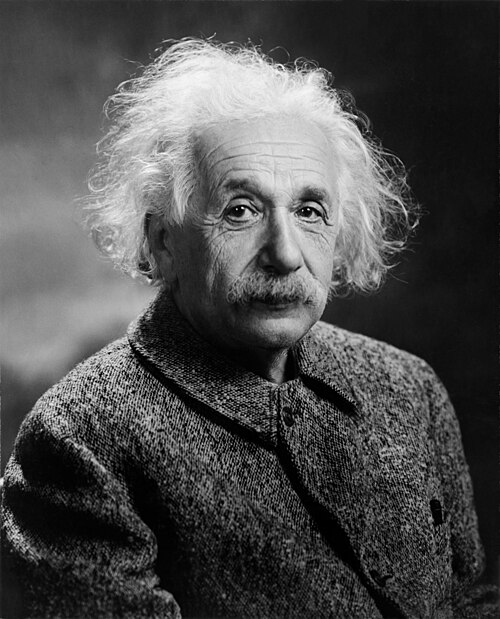
Einstein in 1947
“The world as we have created it is a process of our thinking. It cannot be changed without changing our thinking.”
~ Albert Einstein
Albert Einstein was a German-born physicist who revolutionized physics and our understanding of the universe. He’s best known for his theory of relativity, which helped scientists understand how the universe works. His famous equation, E=mc², describes how matter can be converted into energy. Einstein’s work also contributed to quantum mechanics and statistics. He won the 1921 Nobel Prize in Physics for his explanation of the photoelectric effect.
Born March 14, 1879, Ulm, Germany
Died April 18, 1955 (age 76 years), Princeton Medical Center, Plainsboro Township, NJ
More than 400 endangered animals at risk as Trump administration rips apart decades-old rule

on Aug 31, 2026 02:25 am
Somaiyah Hafeez , News and Data Reporter – The Mirror
Stephan: The damage to public lands and forests being done by psychopath Trump and his serviles will go on for generations. Write your Representative and Senators and protest this egregious damage to the lands and beings.

One of the endangered species being threatened by Trump and his serviles. Credit: The Mirror
More than 400 endangered animal and plant species could face extinction after the Trump administration decided to rescind a rule protecting old-growth forests, it is feared.
The rollback could put 7.4 million acres of designated endangered species habitats and nearly 1,800 miles of protected rivers and streams at risk, a new report from the Center for Biological Diversity argues.
Last week the Trump administration rescinded the 2001 Roadless Area Conservation Rule, citing “outdated restrictions [that] have kept tens of millions of forested acres off-limits to the very treatments that improve forest health and reduce wildfire risk to our communities.”
“Our national forests are home to some of America’s most iconic animals, from grizzlies to hellbenders. These forests provide clean drinking water to countless communities. Bulldozing more roads through them will mean dirtier water, fragmented wildlife habitat and greater wildfire risk,” said Randi Spivak, public lands policy director at the Center for Biological Diversity.
“For a generation […]
Carney to rename rest of Great Lakes as “Lake Legal Adult” so Trump will never want to touch them
5 days ago by Clare Blackwood ( @clareblackwood ) (thebeaverton.com)

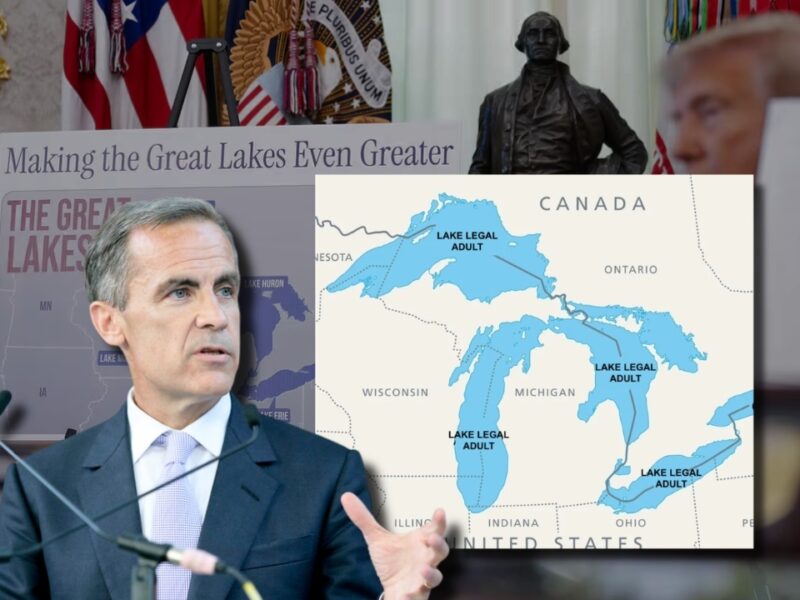
OTTAWA – After Donald Trump signed an executive order renaming Lake Ontario “Lake America,” Prime Minister Mark Carney announced he would preemptively rename the rest of the Great Lakes as “Lake Legal Adult” in order for the president to immediately lose interest in touching them.

“Our friendship with the United States has been in almost as much peril as an underage girl around their president, but going after Lake Ontario was just too much,” said Carney, displaying a map he’d created showing the remaining four lakes filled in with a pattern of the Canadian flag.
“So my team and I brainstormed the scariest, least attractive thing Trump could imagine, and took immediate action to protect the rest.”
Carney also stated that other potential Trump-repelling name changes included “Lake My Father’s Love,” “Lake Eric,” and “Lake Consent,” but his team felt that they didn’t quite hold the same amount of sheer repulsiveness to the president.
“While I understand that naming all four lakes the same name will be confusing to Canadians for a while, it will be worth the temporary inconvenience to ensure that President Trump no longer has any desire to even look at them anymore,” assured Carney.
“In fact, I have just received word from Canada’s Ambassador to the US, Mark Wiseman, that Mr. Trump can no longer even see that any of the Lake Legal Adults exist on a map.”
At press time it’s still Lake Ontario, dipshit.
Albert Camus on the implacable grandeur of life
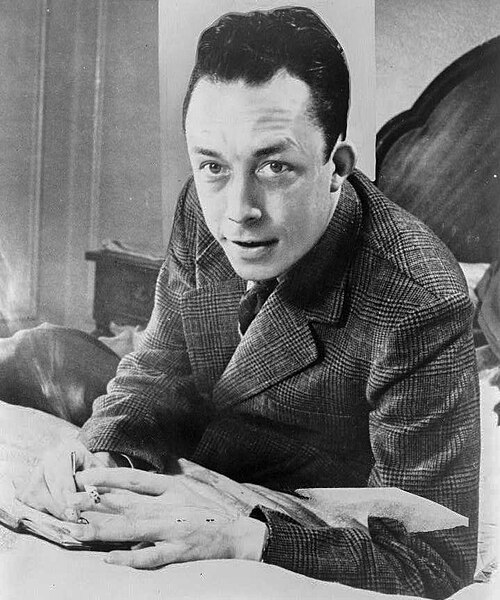
Portrait from New York World-Telegram and The Sun Photograph Collection, 1957
“For if there is a sin against life, it consists perhaps not so much in despairing of life as in hoping for another life and in eluding the implacable grandeur of this life.”
~ Albert Camus
Albert Camus was a French philosopher, novelist, author, dramatist, journalist, world federalist, and political activist. He was the recipient of the 1957 Nobel Prize in Literature at the age of 44, the second-youngest recipient in history, and the first laureate in literature born in Africa. Wikipedia
Born November 7, 1913, Drean, Algeria
Died January 4, 1960 (age 46 years), Villeblevin, France
The Vocabulary of Vulnerability: 10 Wonderfully Untranslatable Words from Around the World for Complex and Difficult Emotions
By Maria Popova (themarginalian.org)

Language is the chalice we lift to our lips to taste our own experience — a vessel that constrains what it contains by giving it its own shape. The more complex our experience, the more muddled the emotions that comprise it, the more it spills outside what language can hold. And yet we live in language — narrative is the neurocognitive pillar of personhood and emotions are how the brain interprets bodily sensations, an interpretation achieved largely by naming. We also live in culture — encoded in each language are a culture’s parameters of what it is permissible to feel, which we internalize as the parameters of what it is possible to feel.
It helps, then, to have a larger lexicon of emotion — larger than our given language, in order to take back the expansiveness of our experience by liberating it from the constraints of culture.
That is what cultural historian Tiffany Watt Smith offers in The Book of Human Emotions: An Encyclopedia of Feeling from Anger to Wanderlust (public library) — a linguistic ledger of feeling exploring the cultural histories and psychosocial nuances behind the words we use to name our most confounding, complex, yet common experiences, partway between The Dictionary of Obscure Sorrows (that lovely lexicon of invented words for real things we feel but cannot name based on real etymologies from around the world) and David Whyte’s Consolations (that passionate unfastening of everyday words to reveal the deeper strata of their emotional nuances).
Art by Julie Paschkis from The Wordy Book
Punctuating the entries in English, from anger to loneliness to delight, are some wonderfully untranslatable words from around the world for very specific affective states and emotional reactions with no equivalent in English — partly because our culture holds no space for them, partly because our model of human nature factors out the reality and dignity of those experiences, partly simply because the English language is not pliant enough to mold itself around such irregularly shaped objects of feeling.
Here are ten of my favorites:
ABHIMAN
SanskritThe literal meaning of abhi-man is “self-pride.” Abhiman evokes the pain and anger caused when someone we love, or expect kind treatment from, hurts us. Sorrow and shock are at its root, but it quickly flourishes into a fierce, bruised pride. To recognize abhiman as an inevitable part of our emotional life is to know that breaking the unspoken contracts of love and respect between families and allies is an extremely serious betrayal.
GreekA distracting, creeping feeling. Like the tickle of a gnat crawling up your arm. A short-lived but disastrous emotional crisis, usually striking between 11AM and 4PM. Its first signs are listlessness and irritability, but it doesn’t take long to turn into desolation and despair.
JapaneseThe sensation of temporary surrender in perfect safety when you crumple into the arms of a loved one to be coddled and comforted. In Japan, amae is commonly acknowledged as part of all kinds of relationships, felt not only between family members, but with friends and in the workplace too. According to the Japanese psychologist Takeo Doi, amae is “an emotion that takes the other person’s love for granted,” there when we depend on another’s help with no obligation to be grateful in return. You can even be encouraged to show amae to yourself. For Doi, surrendering to amae is important because it represents a return to the indulgences and unconditional nurturing of infancy. It’s the glue which allows stable relationships to flourish, an emblem of the deepest trust… this combination of vulnerability and belonging.
20th-century English derivative of Latin and GreekThe sudden urge to kiss someone.
ThaiThe feeling of being reluctant to accept another’s offer to help because of the bother it would cause them.
FinnishFeeling homesick for a place you’ve never been to. From kauko — faraway, and kaipuu — a yearning.
IndonesianThe sudden experience of feeling constricted, inferior and awkward around people of higher status.
PortugueseA melancholic yearning for someone, or something, which is far away or lost. It’s always there, pulsing between the surface with its hopefulness tinged with grief. There is a vague yearning, yet it is interlaid with resignation and the pleasure of remembering past joys.
SanskritViraha is usually translated as longing or the particular kind of love felt during separation or abandonment. An aspect of sringara rasa (erotic and romantic love), one of the nine rasas or themes that shape human experience, viraha is a feeling of incompleteness without a loved one, and a fixation on the ecstasy of the longed-for reunion. Viraha recalls the formulations of romantic infatuation, not only the erotic — the poetry of the Occitan troubadours, or the inconsolable longing expressed in Portuguese fado music. The difference is that viraha is also a religious feeling — the soul’s quest to find it’s spiritual home. [See John Donne’s “Batter My Heart”.]
PolishŻal (pronounced jal) is melancholy felt at an irretrievable loss. This is not straightforward dejection. Żal is fickle, and shifts its shape, one moment resigned, the next rebellious. It combines the disappointment, regret and even violent fury which comes when some part of our lives has been taken away for good. It is most of all a kind of anger at recognizing the end of things.
Couple with Pablo Neruda’s love letter to language, then revisit artist Julie Paschkis’s illustrated ode to words and the meanings between them.
The Climate Crisis Is Bigger Than Your Footprint
The climate crisis won’t be solved with lifestyle choices but through political pressure and bold collective action.

By: Leah C. Stokes
August 31, 2026 (thereader.mitpress.mit.edu)
The first time my newborn’s eyes saw the sky, it was a dull gray. The first time her lungs breathed outdoor air, it was filled with smoke. On the morning she came home from the hospital, a wildfire burned just miles up the coast from Santa Barbara.

It was October 14, 2021, the day before her due date and 75 long nights after her birth. She’d spent that time inside a NICU incubator. But that evening, my baby slept in her bassinet for the first time, reunited with her twin sister who’d come home a few weeks earlier. The next morning, our family woke up under one roof. I’d anticipated this day for the past nine months. To mark the occasion, we were going to sing, eat chocolate cake, and celebrate.
The twins were not all that I’d been growing over that long year. I was having a strange, high-risk pregnancy, gestating policy ideas and babies. During this time, I was working with a team of fellow climate advocates on an ambitious plan to rapidly expand clean electricity and slash fossil fuel use. The idea began as a line in Jay Inslee’s 2020 presidential campaign platform pledging 100-percent carbon-free electricity by 2035. It grew into a policy paper, spawned a network of advocates, and eventually became a bill introduced in Congress. Along the way, we’d even managed to get President Joe Biden to commit to our plan. Now it was part of a major climate package, the biggest in history, slowly winding its way through Congress.
But both the policy and pregnancy proved precarious. There were weeks when my future children looked like they might die, while the policy seemed destined to pass. And other weeks, I was sure the babies would live, while the policy would crumble. I desperately wanted everything to work out, but often that felt impossible.
That jarring feeling hit me again on October 15, 2021, my due date. Just as we were about to sit down for our first dinner under the same roof, I checked my email. When I saw a message from Coral Davenport, my heart sank. As one of the longest-serving climate journalists at The New York Times, Coral was often the first to get the scoop. She wanted to talk as soon as possible. I immediately knew why.
Ten days earlier, as my baby was growing healthy enough to finally come home, I began to hear that the clean energy policy I’d poured so much into was dying. Rumors of its demise grew daily. On one of our last nights at the hospital, my friend Sonia Aggarwal, who worked at the White House, called. It was dinner time, and I needed to drive to the hospital before visiting hours ended, but I also knew I had to pick up the phone.
As one of my closest friends and allies in this work, Sonia said she wanted to be the one to tell me that the policy’s prognosis was not good. She would keep pushing, and so should I, but the case increasingly seemed terminal. Senator Joe Manchin from West Virginia had hardened against the idea. He held the pivotal 50th vote in the Senate and could veto anything he opposed. A man who’d made a fortune in coal could not support a rapid transition away from dirty fossil fuels. That night, surrounded by the incessant beeping and alarms of the NICU, I held my tiny daughter and wept.
One week later, with both of my children now home, I picked up the phone and Coral’s voice came over the line: “I’ve got the story. I know the policy is dead.” She wanted a quote, to explain why this mattered in simple terms, but I couldn’t find the words. “Can I call you back in five minutes?” was all I could manage.
The larger climate package was still on the table, but the clean electricity plan was on the chopping block. Without it, I feared we wouldn’t be able to cut pollution fast enough to hit Biden’s 80 percent clean energy target. Its loss would blow a giant hole through the bill. My first instinct was despair — but despair is contagious. Plus, there were many other policies left in the package, policies worth saving.
With just a small window of time, I reached out to three colleagues I’d worked with over the past nine months. Each one held a different view, leaving me feeling like I was running through the stages of grief in rapid succession. One person was stuck in denial: “It’s not dead yet. Do not confirm it. Keep pushing.” Another wanted to bargain: “Maybe we can still fix this. There must be something else we can do.” The third counseled acceptance: “It’s gone. We need to move on and focus on everything we can still save.”
With these conflicting voices in my head, I tried to compose a brief comment. Coral had the story right; she’d heard it from multiple sources. There was no point in denying or trying to change the facts. I also knew the loss was too big to accept quietly. Instead, I would try to communicate the gravity of the situation while leaving space for hope. I wrote down, word for word, what I intended to say and practiced it aloud to my husband, who was sitting on our bed watching.
All I felt was the overwhelming feeling that I had failed the world, and perhaps most acutely, failed my children.
When I called Coral back, I did my best to stick to my lines. But I found myself saying more than I meant to. Emotion came spilling out of me. My voice trailed off, “It’s pretty sad… it’s so sad.”
My husband, noticing I’d gone off script, signaled that I needed to stop talking. When I hung up, I reassured him, “Oh, the part about me being sad? Don’t worry, she won’t use that.”
That night, we still sat down for dinner. We still sang. We still ate cake. I did my best to hold the grief and the joy simultaneously. I’d found myself in the middle of my life, in the middle of a policy fight, in the middle of the climate crisis. In my brief 35 years, polluters had pumped out more than half of all carbon emissions in human history. Even on that happy day, the crisis was still there, casting a shadow. It had already made the air too smoke-filled to take my newborns outside.
The next morning, I walked to the corner store to pick up a copy of The New York Times and found the article on the front page above the fold: “Crucial element of climate plan likely to be cut: Manchin blocks effort.” It opened with a sober reading of the facts. “The most powerful part of President Biden’s climate agenda — a program to rapidly replace the nation’s coal- and gas-fired power plants with wind, solar and nuclear energy — will likely be dropped from the massive budget bill pending in Congress, according to congressional staffers and lobbyists familiar with the matter.”
Manchin’s staff all but confirmed it. The White House wouldn’t comment. And then, halfway down the page, were my words: “This is absolutely the most important climate policy in the package. We fundamentally need it to meet our climate goals. That’s just the reality. And now we can’t. So this is pretty sad.”
They say you should choose your words carefully. That you shouldn’t say something you wouldn’t want to read on the cover of the newspaper. Because words can have consequences you can’t predict. In the coming days, young people would begin a hunger strike outside the White House, staffers would find new ways to cut pollution, and pressure would grow on Congress to act. But that was all in the future. That Saturday, all I felt was the overwhelming feeling that I had failed — failed the world, and perhaps most acutely, failed my children.
Ifirst heard about climate change two decades earlier, in 2001. At the time, I was in high school, where my geography teacher — a brilliant British man with thick white hair — would draw fluffy clouds on the chalkboard to show how mountains create rain shadows and deserts. He was lighthearted and kind, and encouraged students to speak up. Plus, he had a funny ritual of closing each lecture by saying: “From the bottom of my heart, and the depths of my conviction: get lost.” I took every class he taught.
But one morning, he brought up global warming, saying it was an unproven theory. Just because temperatures were rising alongside carbon dioxide, he posited, did not mean humans were to blame. Correlation was not causation, after all. Despite my admiration for him, this lesson struck me as misguided. I don’t know why at the time, but I knew he was wrong.
During my four years at the University of Toronto, I became immersed in climate change through coursework and extracurriculars. One evening in the winter of 2007, a few months before graduation, I walked towards the University’s Convocation Hall.
Until we get rid of fossil-fuel infrastructure in every corner of our society, individual behavioral changes are mere nibbles at the edges of the problem.
It was here, surrounded by fellow climate activists, that I watched Al Gore give his famous slideshow. In Toronto, he was like a rockstar — when ticket sales for the event went live, the website crashed. After the talk ended, my friends and I were invited to attend a reception. I even got to shake Al Gore’s hand.
Gore’s documentary, “An Inconvenient Truth,” had been released nine months earlier, creating widespread public awareness of climate change for the first time. In it, he presents the same slideshow I saw live. Just four days after this talk, it would win best documentary at the Oscars.
When I think back on that film two decades later, strangely, the thing I remember most vividly is the credits. After all the charts and facts came a black screen and a series of messages appeared. “The climate crisis can be solved. You can reduce your carbon emissions. In fact, you can even reduce your carbon emissions to zero.”
These words appeared before me, like a sacred text. And then the answer came: “Buy efficient appliances and light bulbs…Recycle.”
The idea that individuals could solve climate change on their own was ubiquitous at the time. It was 2007, and “carbon footprints” were all the rage. The claim was that we were each responsible for producing a certain amount of emissions, and we each needed to work relentlessly to reduce them. It felt like everyone I knew was calculating how much pollution their “lifestyle” created.
As a psychology major, I was susceptible to this argument. In college, I ran campaigns to get students to change their behavior and save energy. For my first job after graduation, I conducted carbon audits for a nonprofit. Once I figured out exactly how big the problem was, the proposed solution was to buy carbon offsets, which funded things like reforestation and carbon capture projects. What else could we do? No one seemed to know. It was counting for counting’s sake.
During the same period, I joined 50 million people across the globe and sat in the dark for “Earth Hour,” a global campaign aimed at demonstrating the world’s commitment to climate action. In Toronto, the iconic CN Tower switched off its lights, alongside hundreds of other buildings, instantly dropping energy use by 9 percent. But as that dark hour passed, I began to wonder: How would turning off the lights solve the climate crisis?
When I think back now on the closing credits of “An Inconvenient Truth,” I can see they simply weren’t true. Until we get rid of fossil-fuel infrastructure in every corner of our society, individual behavioral changes are mere nibbles at the edges of the problem.
Of course, this was not Al Gore’s fault — as usual, fossil fuel executives were to blame. In 2004, the fossil fuel company BP put a carbon footprint calculator on its website, encouraging people to estimate how much their behaviors, such as food choices and commutes, affected the planet. For the next three years, they spent upwards of $100 million a year promoting the idea. The phrase “carbon footprint” was unfamiliar at first, but by the time “An Inconvenient Truth” hit theaters in 2006, it was everywhere. No wonder it became the film’s framework for action.
It took me a decade to understand why my brilliant high school teacher had spread climate denial. Beginning in 1998, the American Petroleum Institute funded online curricula that promoted fossil fuels and cast doubt on climate science. These dirty industries were doing everything they could to delay policy action and protect their profits. The longer I worked on climate change, the more I realized there were villains in this story.
Whether or not a baby is born, our world will keep churning out pollution.
The carbon footprint paradigm didn’t just shame people for driving to work or not recycling — it also discouraged having children. Academic articles suggested that the number one way to reduce your impact was to forgo having a child. According to this perspective, the average American is responsible for 16 tons of carbon pollution every year — including every baby. If you don’t have that kid, theoretically the world makes less pollution.
My whole life, I struggled with whether to have children. Typically, when people ask if it’s moral to have a child with climate change accelerating, they are asking two things at once. They want to know if it’s okay to bring a child into a doomed world. And they want to know if the kid would only make the crisis worse. To me, both of these questions are fundamentally flawed: We are not doomed, and everyday people — let alone newborn babies — are not responsible for our dirty energy system.
We have too easily accepted the idea that we’re all to blame for the climate crisis. Whether or not a baby is born, our world will keep churning out pollution. Everyone alive today was born into a society that runs on fossil fuels. That’s even true for my grandparents, born almost a century ago. But it doesn’t have to be this way. We’ve jumped from climate denial to climate despair without pausing to consider a third option: actually doing something about the problem. Our dirty energy system is not inevitable. This is the work, regardless of whether or not someone chooses to have a child.
When we start thinking this way, the question shifts from minimizing our impact on the planet to maximizing it.
For that reason, I suggest that we replace the carbon footprint with a new idea: the carbon wave. Rather than thinking of a single person leaving a footprint in the sand, think of waves in the ocean. These waves are made by strong, sustained winds blowing in the same direction. Over generations, these waves are built as thousands of people work together to create change, adding to the efforts of those before them. And just as waves wash away footprints on a beach, our carbon waves can erase our carbon footprints. Whatever negative impacts we have on the planet from living in a fossil-fuel society can be offset by our activism if we join with others to change it. Working together, we can make waves.
Of course, waves are less controllable than footprints. The waves we make alongside others will have less certain impacts. But their potential is orders of magnitude larger.
The waves we make now will determine our future. The American public wants climate action — they have for decades. We must keep pushing our governments, corporations, and communities to act. We can break the cycle and refuse to pass our dirty energy system to yet another generation.
Leah C. Stokes is Anton Vonk Associate Professor of Environmental Politics at UC Santa Barbara. As a leading climate advocate, she has championed climate policy in the United States at all levels of government and was selected for Time Magazine’s Time100 Next list and Business Insider’s top 30 global climate leaders. She is the author of “The Carbon Wave,” from which this article is adapted.
Posted on Aug 31
The MIT Press is a mission-driven, not-for-profit scholarly publisher. Your support helps make it possible for us to create open publishing models and produce books of superior design quality.
Doctors Just Used AI to Perform Brain Surgery
“It’s given me my life back.”
Published Aug 29, 2026 (Futurism.com)
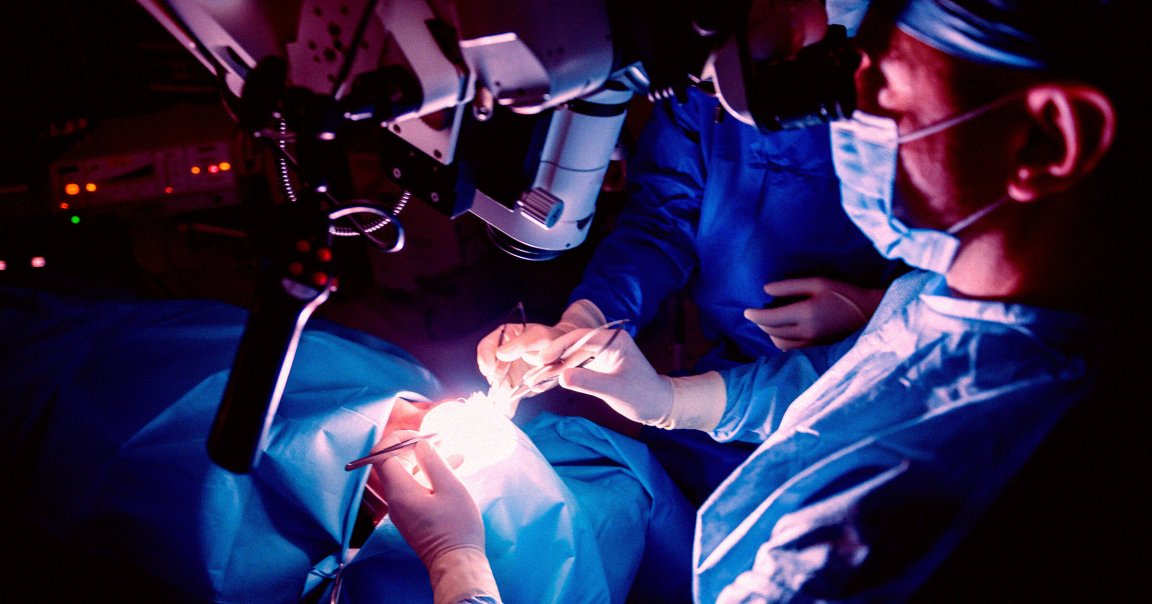
A team of neurosurgeons in London have used AI to help them operate on a man’s brain.
The AI tool analyzed live footage of the operation and flagged key brain structures like nerves and blood vessels as surgeons removed a large tumor on the patient’s pituitary gland, according to The Guardian, ensuring that they didn’t poke around where they shouldn’t be.
The surgery, performed at the National Hospital for Neurology and Neurosurgery in May, saved the eyesight of the patient, 48-year-old Rhys Hibbert. Details of the procedure, though, were kept under wraps until now.
“When I came round… I could see everything in the room clearly,” Hibbert told The Guardian. Before the surgery, he couldn’t walk on his own without glasses or walking sticks.
The pituitary gland is an especially delicate part of the brain to operate on, located right next to the arteries that bring blood to the brain and the optic nerves that control vision. “Going a millimeter wrong can make a critical difference,” health officials said, per the newspaper, possibly leading to blindness, stroke, and death.
Unearthing a tumor there, at the base of the brain hidden from view, posed an even greater challenge. The surgeons would have to cut a precise path to get to the benign growth without damaging the brain.
That’s where the AI tool proved useful. Trained on hundreds of surgical videos of pituitary tumor removals, the AI system “has been exposed to a breadth of surgical examples that would take a surgeon many years to encounter,” Sophia Bano, an associate professor in robotics and AI at University College London and the technical lead for the AI tool, told The Guardian. During its training, researchers manually drew around the vessels and nerves in each video so the AI could get an accurate idea of where they are.
The human doctors remained in control of the entire procedure, but the AI tool played a critical role in guiding their work. Analyzing the procedure through a camera planted in the base of the skull via the nose, it tracked the doctors’ surgical instruments in real time, identified where hidden vessels and nerves were most likely to be, and highlighted safe areas to extract the tumor, according to the BBC, which compared it to facial recognition tech for hidden anatomy.
“From a patient safety perspective, I can see absolutely the benefit. There are no road signs inside our head,” Hibbert told the BBC.
It’s an incredible achievement, though it does raise uncomfortable questions about what happens if the tech goes wrong. The use of AI in medical fields remains a touchy subject, as more doctors rely on AI tools to take clinical notes and look up symptoms.
For surgeries like a pituitary tumor removal, a surgeon typically studies brain scans so they intimately know each patient’s unique anatomy before going in, the BBC noted. Experts worry, though, that doctors may become too dependent on AI tools, especially as a new generation of med students are being raised on using them.
Hibbert knows where he stands.
“It’s given me my life back,” he said of the surgery.
More on neuroscience: We Are Admittedly Creeped Out by These Chunks of Human Brain Matter That Have Lived Longer Than a Toddler
Add Futurism as a preferred source on Google to see more of our reporting.
Frank Landymore
Contributing Writer
I’m a tech and science correspondent for Futurism, where I’m particularly interested in astrophysics, the business and ethics of artificial intelligence and automation, and the environment.