The recent map released by DESI Legacy Imaging Surveys combines more than 260,000 telescope exposures and was collected by more than 160 scientists.DESI Legacy Imaging Surveys | Courtesy
DESI Legacy Imaging Surveys, assisted by researchers from Lawrence Berkeley National Laboratory, produced the world’s largest 2D color map of the universe. The map contains almost 4 billion celestial objects.
The project has been in development for 13 years, during which the team at Legacy Surveys released 10 datasets before the map reached its current and largest form. The latest and 11th data release expands the map to 5.6 trillion pixels.
The map combines more than 260,000 telescope exposures from three different sky surveys: the Beijing-Arizona Sky Survey, the Dark Energy Camera Legacy Survey and the Mayall z-band Legacy Survey. The data was collected by more than 160 scientists.
According to project co-lead David Schlegel, a senior physicist at Berkeley Lab, the project began in 2013 in the interest of studying dark energy.
In studying dark energy, researchers were required to know where the Dark Energy Spectroscopic Instrument should be directed. The team set out to create a 3D map of the universe and its observable objects. The 3D model — of which the team has published smaller iterations since — needed a 2D map to serve as a foundation.
“We had just started collecting data. Our analysis was just being developed,” Schlegel said. “So while we’ve been accumulating data over all these years, we’ve also been accumulating knowledge and our sophistication of those images as well.”
Schlegel said the newest version of the map encompasses the entire extragalactic sky, which is the expanse of sky not blocked by the Milky Way.
Dustin Lang, a DESI Imaging Survey scientist, helped build code used in the project that reconciles information across images of different qualities. The computer is then able to predict the appearance of stars and galaxies above the atmosphere by compositing and comparing the blurriness across multiple images of each portion of the sky.
Different iterations of the data from DESI Legacy Imaging Surveys have been referenced in more than 1,800 published scientific papers. Schlegel said undergraduates at UC Berkeley have not only participated in the project but used the map in their own research — including using it as a reference to discover rare gravitational lensing systems.
Schlegel met his project co-lead Arjun Dey when they were both graduate students at UC Berkeley. Dey was the first person to take Schlegel to see a telescope, which pulled Schlegel into the world of observational astronomy.
Schlegel said seeing all of the research initiatives that use DESI Legacy Imaging Surveys’ data has given him a “warm fuzzy feeling.”
“We’ve gotten what we need out of the data,” Schlegel said. “But then every day I see in the literature other researchers making use of the data, and it’s a validation every day.”
Life is a step-by-step process. And we get stronger as we climb.
I’m reminded that we must constantly guard our minds because, like other forms of illness, it starts with one cell in our bodies or one word in our minds. Processes that develop their own unique routes of internal disruption and destruction.
Guarding our mental and emotional selves requires the same kind of attention we give to structuring our physical diets and fitness programs.
Much like watering plants. We must water our minds with uplifting and inspiring content. A process that becomes our sustainability program, where consistency also matters as well.
Developing and reframing our narratives to influence our thinking and actions to inspire growth.
• Explains the healing and transformational power of intoning the Divine Name
• Teaches how to correctly intone the Divine Name through exercises and audio downloads for maximum vibrational effect
• Reveals how the sacred sound of the Divine Name can be used to promote human and planetary healing
First prohibited and then lost for nearly 2,500 years, the Divine Name, when vocalized, has the ability to shift our vibrations, enabling a hotline to the divine. Intoning this most sacred sound can raise consciousness, invoke spiritual transformation, heal the body, and balance and activate the subtle energy field.
Goldman shares his rediscovery of the Divine Name—the Biblical Tetragrammaton—as being a harmonically related universal sequence of vowels that is non-denominational and can be experienced by everyone. This sacred sound can resonate the physical body, align the chakras, create protection, guidance, and healing, as well as provide a direct link to the higher realms of consciousness. Goldman gives a step-by-step process for effectively intoning the Divine Name with intention and prayer, enabling you to receive vibratory activation and healing.
The book offers links to 60 minutes of audio downloads that will teach you how to properly sound the Divine Name through chakra and biofield resonance. Goldman presents the latest research on the effects of this sacred sound on DNA and water and introduces readers to the Angel of Sound. He reveals how to integrate biofield resonance with universal spiritual teachings to access the ascension harmonics of the Divine Name and bring humankind to the next level of evolution.
Discover the secrets of Ascension Harmonics and experience the sacred resonance of the Divine Name to reconnect to the source of all that is.Show more
Jonathan Goldman is a writer, musician and teacher. He is an authority on sound healing and a pioneer in the field of harmonics. Jonathan is the author of HEALING SOUNDS: THE POWER OF HARMONICS (Inner Traditions), SHIFTING FREQUENCIES (Light Technology) THE LOST CHORD (Spirit Music) and TANTRA OF SOUND (Hampton Road), co-authored with his wife Andi. He has studied with masters of sound from both the scientific and spiritual traditions, including the Dalai Lama’s Chanting Gyuto and Gyume Monks and has been empowered by the Chant Master of the Drepung Loseling Monastery to teach Tibetan Overtone Chanting. Jonathan holds a Bachelor of Science Degree in Film Making from Boston University and a Master’s Degree in the Independent Study on Sound Healing from Lesley College. He is a lecturing member of the International Society for Music and Medicine.
Jonathan is the director of the Sound Healers Association; the original organization dedicated to the education and awareness of sound and music for healing. He is also president of Spirit Music, which produces music for meditation, relaxation and self-transformation. Jonathan has created numerous cutting edge recordings including: “Dolphin Dreams”, “Sacred Gateways: Drumming and Chanting”, “Trance Tara”, “Ultimate Om”, “Holy Harmony” and “Medicine Buddha”; created for H.H., the Dalai Lama’s teachings in Northern California this May, 2001. His overtone chanting is heard on Kitaro’s 2001 Grammy Award winning album. Jonathan’s best selling release “Chakra Chants” won the 1999 Visionary Awards for “Best Healing-Meditation Album” and “Album of the Year”. Jonathan’s highly acclaimed albums: “The Lost Chord”, “The Divine Name” (co-created with Gregg Braden) and “ChakraDance” also won as the Visionary Awards. His latest album are “The Tantra of Sound Harmonizer” and “Reiki Chants”. His collaboration with Tibetan Chant Master Lama Tashi “Tibetan Master Chants” was been nominated for a 2006 Grammy Award for “Best Traditional World Music”.
Jonathan has written numerous articles on the therapeutic and transformational uses of sound and music, which have appeared in many national publications. He has also contributed chapters and interviews to many books, including: MUSICMEDICINE, SONIC ALCHEMY, MUSIC: PHYSICIANS FOR TIMES TO COME and HEALING SPIRITS. Jonathan’s work has been cited in many books, including Julia Cameron’s VEINS OF GOLD. The McGraw-Hill college text, MUSIC IN OUR WORLD, has a chapter on Jonathan’s recording of “Dolphin Dreams”. In DAVINCI DECODED, Jonathan’s CD “Chakra Chants” is listed as the #1 Selection for “Top Ten Spiritual Playlist”.
An internationally acknowledge Master Teacher, Jonathan facilitates Healing Sounds Seminars at universities, hospitals, holistic health centers and expos throughout the United States and Europe. He has appeared on national television and radio, including Art Bell’s “Coast to Coast AM” and has been featured in national periodicals including “USA Today” and “The New York Times”. His annual Healing Sounds Intensive attracts participants from throughout the world.
A fearless and urgent chronicle of the tech-authoritarian movement from its early days in San Francisco politics to its current moment on the international stage, exploring the wild and dystopian ambition of the technocrats at its center, and offering a road map to resistance.
When Silicon Valley says it is ‘‘moving fast and breaking things,’’ the world interprets the chaos as a necessary cost of innovation. Gil Durán reveals something far more a decades-long campaign to replace elected governments with corporate rule.
Drawing on insider political experience and new investigations, Durán traces this ideology from its philosophical roots in The Sovereign Individual by James Dale Davidson and Lord William Rees-Mogg. He introduces its modern apostles—Peter Thiel, Marc Andreessen, Balaji Srinivasan, and Elon Musk—and shows how the promise of technological liberation has transformed into a global movement for digital feudalism, powered by cryptocurrency, artificial intelligence, and the algorithmic propaganda of social media.
The Nerd Reich explains the origins, strategies, and ambitions of Silicon Valley’s war on democracy for the first time. From San Francisco’s weaponized elections and secret billionaire projects to the White House, Durán exposes how the world’s richest men are building a new political order.
The Nerd Reich is more than a hidden history, it’s an urgent democracy is being dismantled not by coups or tanks, but by code, capital, and the illusion of innovation. Durán insists there is still time to fight back—if we act now.
We are fortunate to live at an incredible moment in history. In the next few years, people will be able to use superintelligence beyond human capacity to create and discover extraordinary new things, build new businesses, express new ideas, learn new concepts, and advance our health and quality of life. As we get closer to this moment, it is important to develop a philosophy for how we can best use superintelligence to ensure it improves all of our lives, work, communities, freedom and safety.
The defining questions of our age are who will have access to superintelligence and what will we direct it towards. Will it be centralized and restricted to a few institutions, or will it be a tool that empowers everyone?
We propose a philosophy based on individual empowerment as the source of prosperity, invention as the primary purpose of superintelligence, and balance of power as the foundation of safety.
All new technologies create opportunities and challenges. Superintelligence will be among the most important technologies in history, so its opportunities and challenges will likely be greater than any we’ve seen in our lifetimes. We should take this very seriously.
Still, it is surprising that the discourse from many developing AI is so filled with doom. I do not understand why anyone who believes that AI will eliminate most jobs and much of humanity’s relevance would rush to build that future. The notion that AI is so dangerous that the only safe path is an extreme concentration of power seems inherently problematic. Historically, hoping that an absolute power will benevolently provide for humanity if sufficiently enlightened has not led to safe or positive outcomes.
Humanity has witnessed many transformative advances. Each time there is fear that people will be left behind. But each time humanity has come out with more people sharing greater prosperity, health, and freedom. We believe this will be true with AI as well, and the abundance of the future can be shared by everyone. We also believe that the values that got us to this point — like liberty, open inquiry, free enterprise, and equal opportunity — are also the right values to build a positive future.
Putting power in people’s hands to pursue their own aspirations is how humanity has made the most progress. Novel ideas and major steps forward rarely originate from established institutions alone. They came from the brothers in a bicycle shop who believed people could fly, the bookbinder’s apprentice with no schooling who figured out how to generate electricity, and the kid in a garage who thought personal computers could be for everyone. We believe this will continue to be true. As everyone gains more powerful tools, each person will become more capable of shaping the future, not less.
Invention, not automation, will be the greatest contribution of superintelligence. Early AI could answer questions and do routine work. Soon it will increasingly help discover new knowledge — ranging from discovering new drugs to cure a family member’s disease to finding new ways to improve your business. While the number of questions a person can ask in a day is limited, the number of valuable things superintelligence can invent to help achieve your goals is unlimited.
As intelligence becomes abundant, the most important question will be how we direct it. Some argue that superintelligence itself or a small set of experts who control it should decide what is best for humanity. We disagree. The history of democracy and economics has shown that there is no single objective answer to how people define the best life, and therefore the best approach is letting people decide what matters in their own lives.
We believe that delivering superintelligence to everyone is the way to answer this question. This follows the tradition of putting the power of supercomputers and the internet in everyone’s pockets and on our desks. Rather than centralizing superintelligence, we should distribute it widely and give every person the ability to direct it. This has the potential to begin a new era of personal empowerment where individuals can use this powerful new capability to reach their full potential, pursue their interests, and improve their lives and the world more than ever before.
—
To make this more tangible, here are a few specific ways Meta is building personal superintelligence to improve all of our lives:
• Everyone will have an exceptionally capable personal agent that understands you, your goals, and everything you care about. Your agent will work 24/7 on your behalf to improve your relationships, health, career, finances, home management, hobbies, and more. It will free up time for the things you enjoy, and help you accomplish more than you could otherwise. It will have strong privacy and security options so you can trust it to handle all of your personal content knowing that no one else can access your information, similar to how encryption works on WhatsApp. You’ll be able to interact with your agent through any device, including your glasses to keep you present in the moment with the people you care about.
For example, my agent flags interesting information and helps me prototype ideas. It helps keep me healthy by monitoring my sleep and then watching as I train and giving feedback. My daughter loves to bake so my agent plans personalized recipes for us to make together each weekend, orders the ingredients, and then offers suggestions as we’re baking.
• Everyone will have incredible tools for creation to express your ideas. My 8 year old daughter can already code her ideas and produce videos in an evening that would have either taken me months or been impossible previously. Now we’re designing a robot together. Meanwhile, researchers at Meta are generating novel crystal structures that are ideal for augmented reality glasses, and engineers are creating new apps in a fraction of the time it would have taken before. Everyone will soon have invention superpowers.
• Everyone will have powerful tools to create new businesses and the economy will become more entrepreneurial. People are starting to be able to manifest ideas themselves without having to raise money or build large teams. Many ideas that would have been too hard or expensive to try before will now be possible. This means we’ll see many more ideas and businesses. I predict that this will not only lead to much greater economic growth, but also more employment over time rather than less.
• Everyone will have a personalized tutor and coach with a PhD in every subject and unlimited patience to help you learn anything you want. Students will have extra help in areas they need it that is currently only available to those whose parents can pay. Adults will have a superintelligent learning assistant that knows exactly how to teach you new job skills, new languages, new hobbies, or anything else you’re interested in.
• Everyone will benefit from scientific advances and be able to contribute to scientific progress. For example, Biohub has already shipped open source biological models related to virtual cells and proteins that are helping scientists make new discoveries and design new drugs. When Priscilla and I started this work, our goal was to help scientists cure or prevent all diseases this century, and now with advances in AI we expect this will be possible much sooner.
Since there is a long tail of health conditions and everyone’s biology is different, people’s direct involvement will help unlock personalized therapies and expedite trials to match the pace of invention and enable industry to move beyond focusing disproportionately on common diseases.
Beyond biology, AI will help people advance research in every field by applying the scientific method and working over weeks or months to test and refine hypotheses. Scientific discovery will likely be one of the most valuable forms of invention for society.
• Everyone will have free or affordable access to these tools. For everyone to be part of the future, everyone must have the ability to use superintelligence to improve their lives and shape the world. We will offer free versions that will be accessible to billions of people. For those who want to pay to use more compute, there will be a dynamic auction mechanism that will guarantee that everyone gets the lowest price possible for the intelligence and compute they’re using while also ensuring the capacity is used for whatever people collectively find most valuable. This will ensure the benefits of superintelligence are distributed widely.
These are some of the main efforts that Meta is focused on. Each area advances the values of personal empowerment, and contributes to a future where everyone has a greater role in shaping the world than today. If these efforts succeed, then the future will bring an abundance of personal agency, expression of ideas, deepening of relationships, economic and financial prosperity, improved health, and inventions we cannot imagine today. But most importantly, the future will be created by all of us and a reflection of all of our values and perspectives.
—
At the same time, new technologies also bring new risks. There are many important concerns we are focused on addressing — from concerns about job displacement and ensuring local communities benefit from data center builds, to safety concerns around AI misuse related to cybersecurity and biorisk, to avoiding government tyranny and surveillance, ensuring the US and democratic countries lead, and ultimately making sure humanity maintains control over superintelligence so it serves rather than endangers us.
The conventional view is that these concerns are about technology, and that if we take enough time then we can perfect or align the technology to produce a single benevolent superintelligence. I think this view of alignment is fundamentally flawed.
Humanity is not a monoculture. People’s diverse values represent different tradeoffs they would make on important issues. There is no technological solution that can align with everyone’s opposing interests and values at once. Any singular superintelligence would have to prioritize some values over others and in the process would be incapable of being benevolent to everyone.
Instead, we propose that it is more productive to view each of these concerns through the lens of achieving the right balance of power, as western society has in democratic governing institutions. People and institutions with competing interests naturally check and balance each other to lead towards positive outcomes. The best and most realistic path to building a positive AI future is by delivering superintelligence to everyone.
As a thought experiment, imagine only one person had a superintelligent lawyer. They would have an unfair advantage in court — even if they were wrong on the merits. That would lead to a worse society. But now imagine everyone has a superintelligent lawyer. In this case, justice would be carried out much more fairly and efficiently than it is today when there is often an imbalance in skills and resources in litigation.
Similarly, if one person alone had a cybersecurity superintelligence, they could likely break into almost any technical system and the world would be much less secure than today. But if everyone has access to cybersecurity superintelligence, then all of our technical systems would become more secure than today since the widely deployed superintelligence would help harden and update every system.
If only one business had superintelligence, that business would outcompete all others and lead to a less dynamic and broadly prosperous market than we have today. But if everyone has access to superintelligence, then everyone will have the tools to create new things beyond what is possible today, and the economy will be more dynamic and generate more broad-based prosperity.
When people are empowered, they naturally compete and check each other economically, socially, politically, and in all other planes of human interaction. People also check and balance the power of institutions including businesses and governments.
But if the power of superintelligence is held by a small number of individuals, businesses, governments, or AI itself, then that will naturally lead to outcomes that are less favorable for everyone else. This is not a technological principle. It is about the balance of power. There is no such thing as a singular benevolent superintelligence.
Therefore, the key to a positive future for everyone is achieving a balance of power that favors individuals. The solution is to ensure that superintelligence is broadly distributed to empower people.
Meta is the company primarily focused on building personal superintelligence for everyone. Most other labs are focused on building AI for companies, governments, or other institutions, so if those labs lead, then the balance of power will favor larger institutions over individuals. Meta’s mission since our founding has focused on putting power in people’s hands. If our beliefs and principles lead, then the balance of power will favor individuals and a better future for everyone.
—
Let’s consider each of the risks mentioned above in more detail:
Job Growth and The Economy
People have an infinite demand for new experiences and have always found new problems to tackle. There is a natural balance in the economy between companies working to serve people’s needs more efficiently through automation and individuals gaining new skills to serve more advanced needs. When there is a healthy balance, overall productivity and innovation increase while employment levels remain high.
People fear that automation will outpace individuals’ capability growth, leading to job displacement followed by a difficult period as people learn new jobs. But there is no rule that AI must increase automation faster than it increases individuals’ capabilities or demand for new skills. Recent statistics suggest it may be more likely that individuals’ capability growth could match or outpace automation, in which case people will gain the ability to do many new things before their current jobs change. This would lead to a healthy balance and potentially even job growth.
Which outcome we get depends on the balance in progress between automation on one side and individual empowerment and invention on the other. If the labs focused on automating knowledge work lead, then I expect people and the economy will have a much harder transition. But if everyone has access to personal superintelligence that expands their capabilities, then that pushes the balance towards empowering individuals and a positive future.
There are several reasons to be optimistic that there will be an abundance of jobs in the future. No matter how intelligent AI becomes, there will always be a finite amount of compute and therefore an opportunity cost for how we use it. If people can use AI to invent incredibly valuable new things, then it will make more sense to allocate it towards that rather than automating existing jobs. The more superintelligence serves as a tool of invention, the more likely that individual capability outpaces automation and the future is better for people.
People also continually come up with new ideas to make our lives better and new jobs to bring those ideas to life. A generation ago there were no app developers, social media creators, electric vehicle technicians, and data center operators. In the near future, there will be new jobs that aren’t common today, like one-person product studios designing custom toys, furniture, or clothes; world builders and experience designers creating games, stories, and adventures; personal biologists using superintelligence to formulate personalized treatments; and much more that we can’t yet conceive.
In many ways this is a continuation of historical trends. Before the industrial revolution, 90% of people were farmers growing food to survive. Advances in technology steadily freed much of humanity to focus less on subsistence and more on the pursuits we choose. At each step, people used our newfound productivity to achieve more than was previously possible, as well as spending more time on creativity, culture, relationships, and enjoying life.
Of course some aspects of the way we work will change — just as it did with computers, the internet, and any new technology. This means people will have to adapt, and this will be challenging. But the more that everyone has a personal agent that is superintelligent at teaching us new skills and helping us adapt to change, the smoother this will be.
Company sizes may shrink — just as they did in the transition from industrial giants to tech companies. But this doesn’t mean fewer jobs overall. It implies a larger number of companies with fewer people each. There are many more valuable companies and services to build than people are able to build today. I expect we will start seeing small numbers of people with personal superintelligence agents able to run companies at significant scale. In the future, small businesses will continue to be the backbone of the economy, but each small business will be able to have a much larger impact.
Jackie Flynn Mogensen , Breaking News Reporter – Scientific America
Stephan: Welcome to climate change, and an Arctic warmer that Seattle Washington. If Americans don’t vote into office a Democrat controlled Congress that impeaches anti-climate change morons like Trump and Vance, after two more years the 2040 civilization altering climate crisis will be an increasing unavoidable certainty.
The Arctic today Credit: Anato l Er / Getty
The Arctic is cooking. Across northern Russia—a region that is famously bitterly cold—temperatures this week have routinely surpassed 90 degrees Fahrenheit (32.2 degrees Celsius), adding to the mountain of broken heat records this summer has racked up so far.
In recent days, the Selagoncy meteorological station, near the border of the Arctic Circle, recorded 93.0 degrees F (33.9 degrees C); another station, Olenek, logged 90.9 degrees F (32.7 degrees C), according to data collected by weather information service Ogimet and reported by climatologist Maximiliano Herrera. To put that in perspective, these temperatures are on par for Orlando, Fla., at this time of year.
“Studies in recent years have shown that the Arctic is warming much more rapidly than the rest of the planet due to feedback from the loss of sea ice—so it is not surprising that we are seeing these all-time record temperatures at high latitudes,” says independent meteorologist Alan Gerard.
It’s a dangerous feedback loop: as sea ice melts, the Arctic
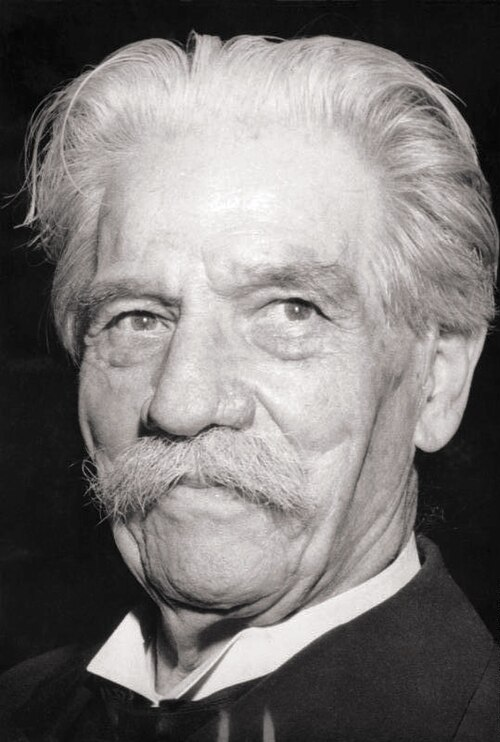
“At times our own light goes out and is rekindled by a spark from another person. Each of us has cause to think with deep gratitude of those who have lighted the flame within us.”
~ Albert Schweitzer
Ludwig Philipp Albert Schweitzer was a German polymath from Alsace. He was a theologian, organist, musicologist, writer, humanitarian, philosopher, and physician. Wikipedia
Ben Elton has written a sweet-natured, melancholy film about the retirement years of someone he’s lately been turning into his specialist subject: William Shakespeare. The great poet is played here with genial sympathy by the film’s director, Kenneth Branagh, sporting a pretty outrageous false nose. Judi Dench is his wife Anne Hathaway, wearied into resilient impassivity by grief, the unfairness of life and an awful secret. Ian McKellen has a colossal, emphatically wigged cameo as the ageing Earl of Southampton.
All Is True is sentimental, theatrical, likable – and unfashionable. There’s a cheekily imagined backstory for Shakespeare’s famous “second-best bed”. It doesn’t go for grand gestures or big subversive laughs, like John Madden’s romance Shakespeare In Love (1998) or Roland Emmerich’s Shakespeare-was-a-fraud caper Anonymous (2011), or in fact Elton’s own rather brilliant and under-recognised TV Bardcom Upstart Crow which features David Mitchell as Shakespeare, Liza Tarbuck as Anne Hathaway and Helen Monks as his stroppy daughter Susanna. Upstart Crow boldly tackled the death of Shakespeare’s son Hamnet at the age of 11 and Elton reopens that wound now, making it the emotional centre of his film. There are certain structural similarities between All Is True and Upstart Crow, although William and Anne are more muted and autumnal here. The stroppiness of the daughter – in this case Judith, sister of Susanna – continues unabated, but is repurposed dramatically. Dench is enigmatic and stoic as Anne; and Kathryn Wilder is an angry and unreconciled Judith. She has some serious issues with her absent patriarch.
Some may prefer Upstart Crow. I found myself thinking of a speech I saw Elton give in the 90s. He was introduced by AN Wilson, who mischievously pointed out that Elton’s uncle was the historian Geoffrey Elton, but claimed that Sir Geoffrey’s studies of Tudor England were far less interesting than Ben Elton and Richard Curtis’s TV series Blackadder in its Elizabethan phase. Elton bounded on stage, saying: “Poor Uncle Geoff. Dead two years and still getting bad reviews.”
All Is True borrows the mysterious alternative title appended to the late play Henry VIII by William Shakespeare (and John Fletcher, not mentioned here). It was the final production at the Globe theatre, which burned down mid-show in 1613 due to a misfiring cannon. The film mixes aspects of the accepted record with some conjectural what-ifs, and stuff that is straightforwardly made up. There is a fictional invention interestingly based on the date of Hamnet’s death.
The film imagines Shakespeare coming home to Stratford for good after the fire, yearning for a prosperous and peaceful retirement but now forced to confront long-suppressed feelings about the death of his son 17 years before. He must deal with the angry, conflicted and still unmarried Judith, and her troubled sister Susanna, married to Dr John Hall – and also his stolidly unimpressed wife Anne. Both daughters create social upset for Shakespeare, who despite his fame is yearning for bourgeois respectability in the provinces. But the awful memory of Hamnet keeps coming back. He angrily disputes ownership of grief with Anne and Judith, pointing out that he feels as deeply as they. But Dench brings an acid rebuke to Anne’s reply that, at the time of his Hamnet’s death, he was writing The Merry Wives of Windsor.
There is a very nice scene in which McKellen’s Earl returns for a chat with Shakespeare, scorning the cringing flattery of the oleaginous MP Sir Thomas Lucy (Alex Macqueen), and preferring only to talk with William himself, who is instantly turned into a blushing subordinate in the presence of the aristocrat whose bygone beautiful youth had inspired his sonnets. Southampton is coolly amused by Shakespeare’s ridiculous striving for social status – and then blandly astonished at Shakespeare apparently continuing to have feelings for him. Shakespeare himself recites his 29th sonnet: “For thy sweet love remembered such wealth brings / That then I scorn to change my state with kings” – and makes it sound like an agonised declaration of love. Southampton repeats the lines back to him and changes their meaning entirely with his tone: no longer about fierce love, but about the absurdity of such emotions in the face of art’s greatness. It is an elegantly managed exchange.
Other moments are less sure, and there are a fair number of people turning up to tell Shakespeare how great he is, while he looks down with a rueful, all-knowing smile. He is not exactly Prospero breaking his staff or Lear resenting his daughters; more a hardworking professional who has decided that enough is enough. Opinions may divide about the big reveal, but I liked the long scenes of winter drear, as William and Anne huddle together in a corner of a dark room, flickeringly lit by firelight like a cave.