Trump and Bernie Agree: Let’s Own AI!

One’s a narcissist, the other’s a socialist, but there’s room for all in this improbable coming together.

Harold Meyerson by Harold Meyerson June 15, 2026 (Prospect.org)

Digital networks thumb's-up
Credit: JuSun/iStock

The case for having the government take co-ownership of AI—make that the cases for having the government take co-ownership of AI—grow louder. I had to pluralize “case” since President Trump’s perspective on the virtues of government co-ownership are distinct from Bernie Sanders’s and those of his fellow democratic socialists (like, e.g., me).

Last week, Trump returned to the topic, saying the White House would soon host a meeting with a dozen or so top AI executives to discuss the industry’s future. For Trump, this isn’t breaking new ground. He’s already made deals to take partial government ownership of a host of corporations: U.S. Steel, Intel, Westinghouse, and roughly 15 companies (where some deals are still in progress) in the fields of rare earth mining or quantum computing.

As my mentor, DSA founder Michael Harrington, used to say, “any idiot can nationalize a company. The question is, can he socialize a company?”

More from Harold Meyerson

Trump’s distinctive brand of idiocy was not what Harrington was focused on. In Trump’s case, the narcissism that fuels his need to control everything around him, to appear the winner in dealmaking, and to have his name stamped on a product to presumably enhance his stature has driven him to champion government co-ownership. He has taken the right-wing belief in a unitary executive one huge step further, governing by the creed of L’état c’est moi as far as Congress and the courts will let him. His is neither democratic socialism nor the socialism claimed by various authoritarians; it’s self-magnifying socialism. The model is neither Karl Marx, Gene Debs, nor Lenin; it’s Louis XIV.

Then there’s Bernie Sanders’s proposal, which is to create a sovereign wealth fund that can take major shares in fundamentally important private enterprises. Such funds exist in nations that sit atop oil fields, like Norway or Saudi Arabia, as well as in one decidedly un-Marxist U.S. state, Alaska, whose residents get an annual dividend of roughly $1,000 to $3,000 from a specified share of the revenues of oil companies drilling on lands that the state has leased or otherwise permitted them to drill on.

There’s no reason, of course, why sovereign wealth funds should restrict their investments to fossil fuels; any industry that generates massive revenues and is essential to public life should logically qualify for government co-ownership. A host of enterprises that meet that second criterion (essential to public life) are often wholly owned by governments, of course: chiefly utilities and transportation, often with the additional goal of reducing costs to consumers.

For Sanders and his allies, the move for co-ownership of the emerging AI industry stems from concerns about both income distribution and oversight in the public interest. As to that latter concern, there’s a reasonable fear that mere regulation won’t be up to the task of ensuring the public good, given both the transformational potential of AI and the speed with which it innovates. Needless to say, this concern for adequate regulation is not something that Trump has raised.

The concern about income distribution, sad to say, is rooted in a current reality in which wages for most Americans either stagnate or grow only incrementally, while income from investment increases much more rapidly and substantially, as last week’s SpaceX IPO that made Elon Musk the world’s first trillionaire illustrates. AI’s potential to reward its investors while eliminating jobs could push that reality to a societal breaking point.

Both of Sanders’s concerns also inform the religious left. As Pope Leo XIV put it in his recent encyclical on artificial intelligence, “When it comes to decisions regarding economic flows and digital platforms, as well as the governance of data and algorithms, we cannot allow a handful of actors to dictate these processes on their own; instead, we must build forms of cooperation that respect the various levels of the global community and make them jointly responsible for the common good.” Co-ownership is a good way to ensure that.

Most of the leaders of the tech behemoths, as well as the largest investors in those companies (e.g., Andreessen Horowitz), paint a rosy future for the economy as AI advances into ever more spheres of life. The revenues and savings it will generate, they say, will flow to all. Last week, in an interview with The Wall Street Journal, Amazon founder Jeff Bezos, who is forming a new AI company, insisted that AI will generate such huge productivity gains that everyone will benefit.

“There’s going to be two-earner income households where one earner drops out of the labor pool, because there’s going to be so much productivity,” Bezos said.

In that statement, he assumed that productivity gains are shared with workers, though that hasn’t been the case since the 1970s, as the Economic Policy Institute has been demonstrating for the past three decades. From the end of World War II through the ’70s, the rate of productivity gains and workers’ wage increases were virtually identical. Since then, as corporate attacks on unions all but eliminated collective bargaining in the private sector, productivity continued to rise while wages did only slightly better than flatlining. As a study by the RAND Corporation, commissioned by businessman Nick Hanauer, has demonstrated, if the share of corporate revenues going to employees had retained the levels it had in the three postwar decades, every American worker’s yearly income would be roughly $28,000 higher than it currently is.

Besides, Bezos himself has done everything in his considerable power to make sure that the immense revenues that Amazon earns are not shared with its workers. The company he founded, in which he remains both its executive chairman and largest single shareholder, will not bargain with its workers who’ve voted to unionize: Those at its Staten Island warehouse so voted four years ago, yet Amazon has consistently refused to sit down with them. It has shuttered all seven of its warehouses in the Canadian province of Quebec after the workers in one of those warehouses opted to go union. It has contested in U.S. courts the constitutionality of the National Labor Relations Board—a settled question for the past 90 years—for fear that the Board, during the Biden administration, might rule that the law requires the company to bargain when its workers have opted to do so (which, incidentally, happens to be exactly what the law requires).

Like most of his peers who control Big Tech, then, Bezos’s promises that AI’s immense revenues will surely trickle down to workers and the public should generate even more immense levels of skepticism. And that, I suppose, is one more reason to insist on public ownership, as American CEOs are maniacally devoted to suppressing labor income, but rely on capital income for such life’s necessities as bigger and sleeker yachts.

Donate Now

David Dayen

David Dayen
Executive Editor

Harold Meyerson

hmeyerson@prospect.org

Harold Meyerson is editor at large of The American Prospect. More by Harold Meyerson

E.T. Admits Shock At Not Even Being Called For Cameo In ‘Disclosure Day’

Published: June 15, 2026 (TheOnion.com)

LOS ANGELES—Saying a courtesy call would have been nice even if nothing ever came of it, E.T. told reporters Monday he was shocked at not being contacted by director Steven Spielberg for a cameo in his new sci-fi movie Disclosure Day. “I knew I wasn’t going to be the lead, which was totally fine, but are you telling me that after more than 40 years of friendship, he can’t pick up the phone and say he’d love to throw a few lines my way?” said the extraterrestrial, adding that it was him and his “glowing fucking fingertip” that gave Spielberg one of the top-earning movies of all time. “I mean, who’s in the logo of his production company? Not Gizmo, that’s for goddamn sure. But somehow I don’t get a single feeler from Mr. Nicest Guy In Hollywood even though I said on Reddit not two years ago that I was eager to get back into acting now that I’ve put my personal demons behind me. Well, guess what, Stevie? You had your chance, buddy boy. When George Lucas calls, you’d better believe I’ll be picking up.” When reached for comment, Spielberg simply stated that he and E.T. had not spoken in many years, but that he wished him all the best. 

The Danger of Artificial Intelligence: Humanity’s Last Invention?

ENDEVR Nov 28, 2025 Edge of Existence: AI | ENDEVR Documentary Watch the First Episode here:   • Nuclear War: How Close Are We To The Edge …   The risk of human extinction has never been higher. A very recent past has seen a global pandemic, a renewed nuclear threat, and runaway climate change. What if COVID-19 is merely a dress rehearsal for a more serious potential disaster? New research predicts a 1 in 6 chance that life as we know it won’t make it to the end of this century. This is a story about the greatest risks to humanity, and what we can do about them. We are living in a time when human-made risks pose the biggest threat to our existence. Technological progress has brought us to a precipice. For the first time ever, we have the capacity to destroy ourselves. Edge of Existence lays out how we can pull ourselves back from this precipice in order to achieve a vast and extraordinary future.

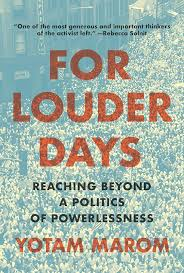
Book: “For Louder Days: Reaching Beyond a Politics of Powerlessness”

  • This article applies to left-wing political organizations, but I think it could apply to The Prosperos as well. –Mike Zonta, BB editor

(Image from Amazon.com)

  • Google AI Overview

For Louder Days: Reaching Beyond a Politics of Powerlessness by Yotam Marom is a non-fiction book that challenges progressive and left-wing movements to overcome their ambivalence toward power, insularity, and comfortable defeat, offering strategies for more effective, strategic, and loving political activism. [1]

Book Details

  • Author: Yotam Marom (experienced organizer and leader in movements like Occupy Wall Street)
  • Publisher: The New Press
  • Core Theme: A critique of the Left’s tendency to prioritize moral purity over actually winning, a trap the author defines as the “politics of powerlessness”. [12]

Why Readers Vibe With It

  • Action-Oriented: Marom provides practical tools and stories drawn from his decades of organizing experience to help activists transition from feeling powerless to building enduring, collective strength. [1]
  • Raw & Tender Tone: It is noted for its unguarded honesty, blending fierce critique with a deep compassion for the movement and a hopeful vision for the future. [12]

You can track reviews, read community ratings, or add it to your reading list on Goodreads. To explore purchasing options or read more about the book’s premise, check out The New Press or Amazon. [1]


The essential guide to establishing an effective opposition movement in the age of Trump, from the leading activist and organizer

“I consider [Marom] one of the most generous and important thinkers for the activist left, for anyone who cares about where we are and how to get to where we should be.” —Rebecca Solnit

There is no way to stop the descent into authoritarianism, nor win a world in which all people can thrive, without massive numbers of people organizing for social, political, and economic change.

Yet experienced movement leader Yotam Marom delivers a hard truth: progressive and left movements too often get in their own way. They can be ambivalent about power, choosing insularity and purity over winning. This amounts to what Marom calls the “politics of powerlessness,” which has kept movements small, weak, and defeated.

In For Louder Days: Reaching Beyond a Politics of Powerlessness, Marom offers a brilliant, lyrical clarion cry for a more honest, more strategic, more loving approach to progressive activism and movement building. Grounded in decades of experience in movements, from leading at Occupy Wall Street and other movement moments to supporting some of the most important climate, racial justice, and democracy movements of our time, Marom dives deep into the challenges that hold movements back, and offers stories, tools, and paths toward real power and enduring change.

Published at the most perilous time in our modern political history, For Louder Days comes not a moment too soon. It is essential reading for committed activists as well as the wider public concerned about the state of our world and hoping to change it for the better.

Book: “The Serpent’s Gift”

The Serpent’s Gift: Gnostic Reflections on the Study of Religion

Jeffrey J. Kripal

“Because thou hast done this, thou art cursed above all cattle, and above every beast of the field.” With those words in Genesis, God condemns the serpent for tempting Adam and Eve, and the serpent has shouldered the blame ever since. But how would the study of religion change if we looked at the Fall from the snake’s point of view? Would he appear as a bringer of wisdom, more generous than the God who wishes to keep his creation ignorant? 

Inspired by the early Gnostics who took that startling view, Jeffrey J. Kripal uses the serpent as a starting point for a groundbreaking reconsideration of religious studies and its methods. In a series of related essays, he moves beyond both rational and faith-based approaches to religion, exploring the erotics of the gospels and the sexualities of Jesus, John, and Mary Magdalene. He considers Feuerbach’s Gnosticism, the untapped mystical potential of comparative religion, and even the modern mythology of the X-Men. 

Ultimately, The Serpent’s Gift is a provocative call for a complete reorientation of religious studies, aimed at a larger understanding of the world, the self, and the divine.

About the author

(Image from esalen.org)

Jeffrey J. Kripal

Jeffrey J. Kripal, Ph.D. (History of Religions, The University of Chicago, 1993; M.A., U. Chicago; B.A., Religion, Conception Seminary College, 1985), holds the J. Newton Rayzor Chair in Philosophy and Religious Thought at Rice University, where he serves as Associate Dean of Humanities, Faculty and Graduate Studies. He also has served as Associate Director of the Center for Theory and Research of the Esalen Institute in Big Sur, California.

(Goodreads.com)

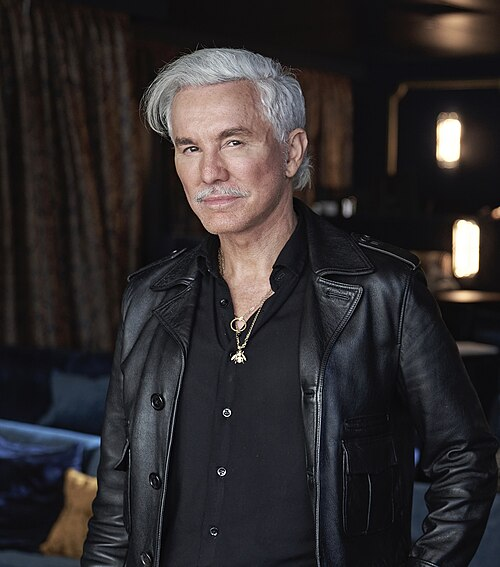
Is Baz Luhrmann in an open marriage?

(Image from en.wikipedia.org)

  • Google AI Overview

Baz Luhrmann and his wife, Oscar-winning designer Catherine Martin, do not have a traditional marriage and have a highly communicative, unconventional arrangement. Luhrmann has described their relationship as a unique “contract” that relies on “acceptance” rather than strict monogamy if one partner’s feelings change. Yahoo Movies UK +1

The topic gained public attention following a spontaneous street interview on a TikTok video. While speaking with an unaware content creator in Sydney, the Elvis and Moulin Rouge! director described his approach to their bond: Yahoo Movies UK +1

  • Authentic Contract: Luhrmann noted that they designed their own “genuine and authentic concept of what our contract to each other should be”. Yahoo Movies UK
  • Radical Acceptance: He explained that their philosophy involves an open dialogue and a degree of “acceptance” if one spouse falls in love or connects with someone else outside the marriage. Yahoo Movies UK +1
  • Deep Partnership: Despite this unconventional approach, the pair have been together for nearly three decades, share two children, and continue to serve as primary creative collaborators. NZ Herald +1

You can read more about his candid street interview in coverage from the Washington Post and watch or listen to his reflections on the dynamics of their partnership via his interview on the How to Fail with Elizabeth Day podcast. The Independent +1

The Amazing Randi and American Skepticism with Mitch Horowitz

New Thinking Allowed with Jeffrey Mishlove Jun 15, 2026 Mitch Horowitz is the author of many books on esoterica, spirituality, mysticism and the occult. Among his titles are The Seeker’s Guide to the Secret Teachings of All Ages, The Miracle Club, One Simple Idea, and Occult America. His website is https://mitchhorowitz.com/. He recently wrote an article evaluating the legacy of James Randi that can be viewed at https://boingboing.net/2020/10/26/the…. Here he explains why, in his opinion, the sociologist Marcello Truzzi chose to label The Amazing Randi and others associated with the American “skeptical” movement as “pseudoskeptics”. He sheds light on the parallels between deliberate ignorance of facts in discussions of the paranormal and of politics. He points out how Randi and other “skeptics” have actually stifled scientific investigations into the paranormal. This activity actually resulted in Jeffrey Mishlove’s favorable lawsuit settlement in 1986. Articles about James Randi’s “million dollar challenge” as referenced in this video can be found at: https://psi-encyclopedia.spr.ac.uk/ar…https://www.dailygrail.com/2008/02/th… New Thinking Allowed host, Jeffrey Mishlove, PhD, is author of The Roots of Consciousness, Psi Development Systems, and The PK Man. Between 1986 and 2002 he hosted and co-produced the original Thinking Allowed public television series. He is the recipient of the only doctoral diploma in “Parapsychology” ever awarded by an accredited university (University of California, Berkeley, 1980). He is also the Grand Prize winner of the 2021 Bigelow Institute essay competition regarding the best evidence for survival of human consciousness after permanent bodily death. He is Co-Director of Parapsychology Education at the California Institute for Human Science. (Recorded on November 10, 2020)

Rozalla – Everybody’s Free (To Feel Good)

DemonMusicGroup Premiered Mar 15, 2024 Official video for ‘Everybody’s Free (To Feel Good) ‘, by Rozalla. Newly remastered in HD. Demon Music Group (DMG) specialise in the production and marketing of Vinyl, CDs, and digital music and is the home of legendary recording artists known the world-over. Subscribe to the official Demon Music Group YouTube: https://lnk.to/DMGYTSUBYD Follow Demon Music Group on social media: https://lnk.to/DMGFOLLOWYD Stream & Discover Demon Music Group’s artists: https://lnk.to/DMGListenYD Shop Demon Music Group releases: https://lnk.to/DMGWEBSITEYD

Lyrics (from genius.com:

[Intro]
Everybody’s free to feel good
Everybody’s free

[Verse 1]
Brother and sister together we’ll make it through
Some day a spirit will lift you and take you there
I know you’ve been hurting
But I’ve been there waiting to be there for you
And I’ll be there just helping you out whenever I can

[Chorus]
‘Cause
Everybody’s free to feel good

[Verse 2]
We all are a family that should stand together as one
Helping each other instead of just wasting time
Now is the moment to reach out to someone
It’s all up to you
When everyone’s sharing their hope
Then love will win through

[Chorus]
‘Cause
Everybody’s free to feel good

Slums are bearing the brunt of the climate crisis — and devising solutions

CREDIT: WORLDSTOCKSTUDIO / SHUTTERSTOCK

As temperatures rise, it is the poor who suffer most. The coping strategies of those living in informal settlements may hold lessons for cities of the future.

By Laura Spinney 06.09.2026 (knowablemagazine.org)

Support sound science and smart stories
Help us make scientific knowledge accessible to all
Donate today


Reporting for this story was supported by the Pulitzer Center.

Since moving into a public housing project in Mumbai nearly 20 years ago, Parveen Shaikh has grown familiar with the ravages of extreme heat. She has acquired a new vocabulary, adding terms like “low blood pressure” — which she has learned is a consequence of blood vessels dilating to keep the body cool and causes dizziness, vomiting and irritability. “Little kids,” she observes, “get angry faster than they used to.”

Shaikh doesn’t remember low blood pressure being a problem when she was growing up in poverty on the city’s sidewalks, though there were plenty of others. It was a victory of sorts when she moved into her home as part of a government relocation program. But as India’s seasons have become less predictable, and its hot periods hotter, the flaws in the housing project’s construction have become apparent.

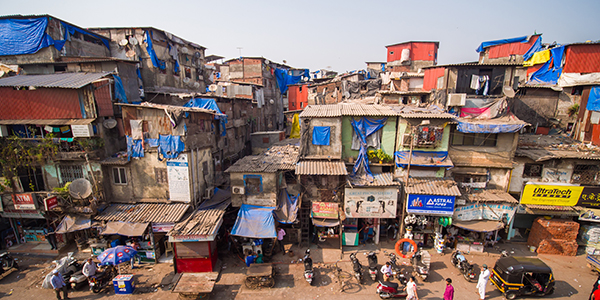
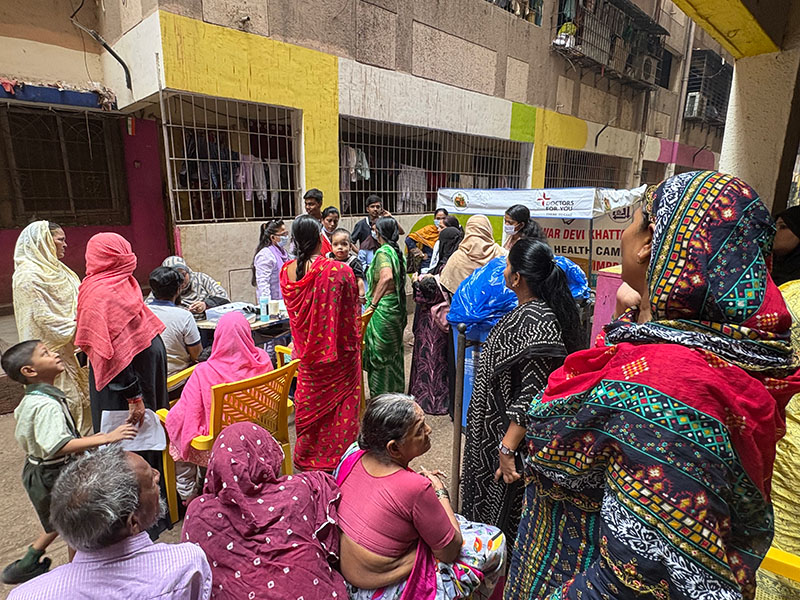
There isn’t much space between the tenements here, and many apartments lack natural light and ventilation. The heat, when it arrives, is inescapable, as are its physiological consequences. On the day in late January when I met Shaikh, summer was more than a month away, but a team of medics was already testing people’s blood pressure in the shade of a residential block.

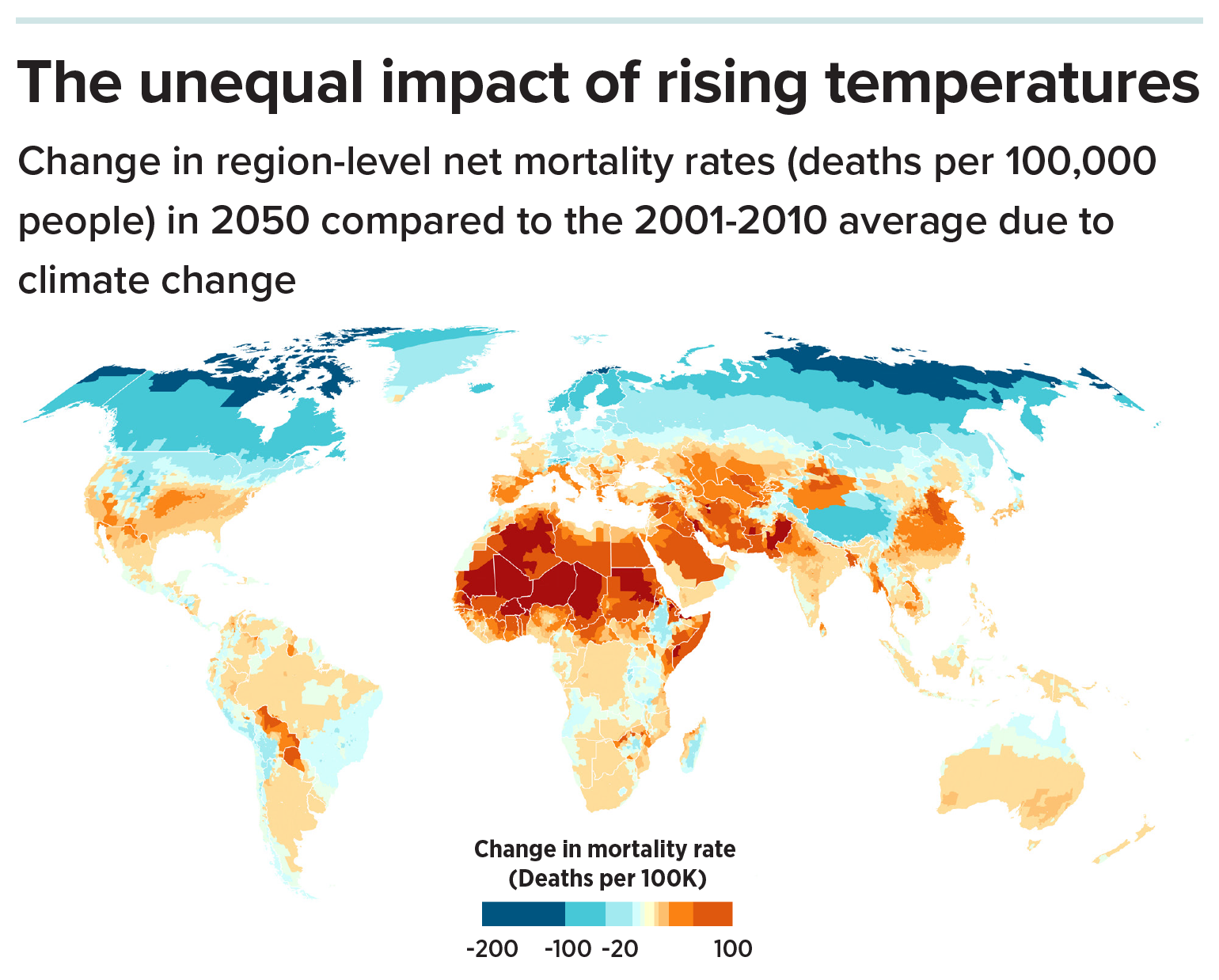
Heat is now a major and growing problem across the Global South. Under the highest emissions trajectory, rising temperatures will cause an additional 6 million deaths per year by 2100, according to estimates from the University of Chicago’s Climate Impact Lab. That’s comparable to today’s annual deaths from infectious diseases. The vast majority of those deaths will happen in the poorest countries, where the most vulnerable of all are those who live or work informally — those who make their homes in slums or on the street, or who are employed in the gig economy.

World map, northern regions in cool blues, central and southern regions in orange and red
The likelihood of dying from climate change-related heat depends on location: More deaths are projected for lower-latitude regions such as Northern Africa, the Middle East and Southwest Asia, while fewer deaths are projected for the globe’s mid-to-high latitudes.CREDIT: HUMAN HEALTH: MEASURING THE IMPACT OF RISING TEMPERATURES ON MORTALITY TO TARGET ADAPTATION PLANNING / CLIMATE IMPACT LAB, MARCH 2026. FULL REPORT

Indeed, climate change “is already profoundly affecting the lives of poor people worldwide — A, because they live in places that are already hot, and B, because they are not able to protect themselves as well,” the Nobel Prize-winning economist Esther Duflo of the Massachusetts Institute of Technology and the Collège de France told me at the Jaipur Literature Festival in India in January.

Duflo, coauthor of the book Poor Economics, whose second edition addresses climate change, sees a vicious cycle at work: Climate change pushes more and more people off the land as that land becomes increasingly uncultivable, and exposes them to a new set of risks in the cities to which they gravitate.

“There is no way to think about how to cope with climate change that doesn’t put the poor at the very center of the conversation,” Duflo says.

So far that conversation has ignored the poor, with the result that cities are ill prepared to undertake the massive infrastructure projects needed to accommodate an accelerating influx of people, says Duflo. That’s especially true in the Global South, which is the fastest urbanizing region and where most of the growth is informal — meaning that it is uncoordinated and happening outside of any legal framework. But it won’t be long before all urbanites — who already account for more than half of humanity — feel the strain.

Yet precisely because it has been the first to inhabit the climate crisis, the Global South has also been generating the first, albeit ad hoc, solutions. Heat, flooding and a surge in infectious diseases are forcing the poor, in particular, to be creative to survive. They are finding ways to keep cool and dry, building resilience from the bottom up — largely without the help of official institutions.

It’s a piecemeal resilience for now, but others are learning from their solutions, and in some cases scaling them up. Researchers are even realizing that despite being marginalized, informal settlements may have structural advantages over formal ones, since many of them combine high density and strong social and economic networks with a relatively small carbon footprint.

A new ethos is emerging — that informal urban growth may not just be inevitable but also may hold lessons in resilience for the cities of the future.

A group of women in colorful saris in an alley
Medics test residents’ blood pressure at a housing project in Mumbai, IndiaCREDIT: LAURA SPINNEY

Mapping heat and health

Slums were long shown as “blank spots” on the world’s maps, UN-Habitat noted in 2003. Partly due to satellite and drone technology, and partly thanks to efforts by informal communities to map themselves, that is no longer true.

As the informal city swam into view, so did the negative effects of climate change on the urban poor. Now researchers are systematically studying those effects, to understand which solutions will bring the greatest benefits.

For example, in an ongoing study run by Indian grassroots organizations in collaboration with Harvard University, female tenant farmers and piece-rate workers received Fitbits to wear, and environmental sensors were fitted in their homes and workplaces to monitor the heat and humidity there. They showed that these people literally have no place to hide.

At the peak of summer, those who work outside, which is the majority, are exposed to near-intolerable temperatures — 35 degrees Celsius (95 degrees Fahrenheit) and higher. “Even the water gets so hot that we feel that we are having tea,” said Subhiben, a study participant from Gujarat who works raking brine in the region’s enormous salt flats. And often, the sensor data show, the heat doesn’t let up when they return home.

Among the negative health outcomes that these women report are cardiac stress, gynecological problems including miscarriage, and mental health issues, says Sahil Hebbar, a doctor with the Self Employed Women’s Association (SEWA) in the Gujarati city of Ahmedabad and one of the coordinators of the study.

The research is revealing unsuspected interactions too, including between heat and malnutrition. According to Hebbar, up to half of SEWA’s members suffer from anemia, which can be caused by iron deficiency. That anemia correlates with much poorer cardiovascular outcomes in response to extreme heat, according to an as-yet unpublished finding of the study.

Other researchers are documenting the infectious diseases spreading in informal settlements, helped along by crowding and inadequate ventilation. Tuberculosis remains endemic in India where, according to the World Health Organization, two deaths from TB occur every three minutes. It is a major problem at Shaikh’s housing project, as it is at many others across the country.

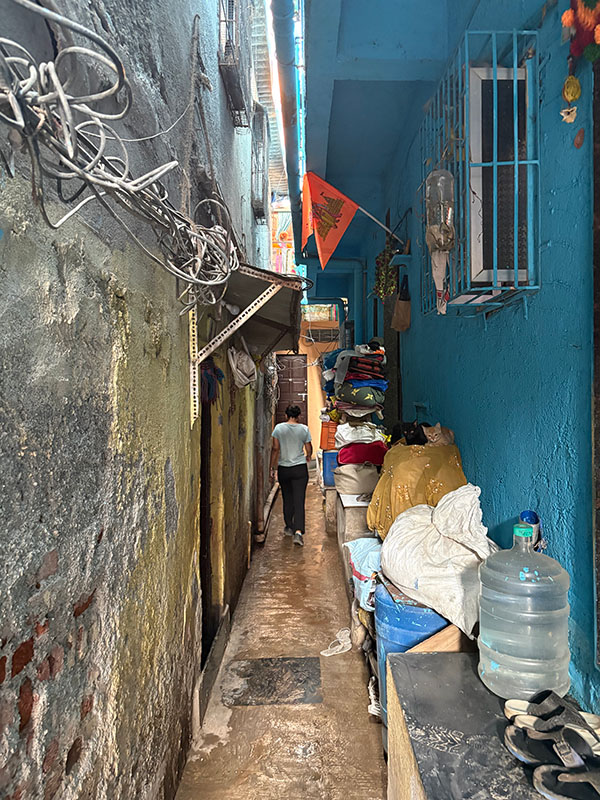
A boy seen from the back walks down a narrow alley between two buildings
An alleyway in Dharavi, an informal settlement in Mumbai, IndiaCREDIT: LAURA SPINNEY

The situation is reminiscent of the disease-ridden slums of New York, London and other northern cities in the early 20th century, except that today the disease is preventable. “We have the tools to diagnose and treat 100 percent of people with TB,” says Guy Marks, a respiratory physician at the University of New South Wales in Sydney and president of the International Union Against Tuberculosis and Lung Disease.

Cholera and other waterborne diseases typically surge in the wake of floods, and a 2025 study showed that one in three informal settlers in the Global South live in floodplains and are at risk of a “disastrous flood.” But such diseases are now a problem outside of floods, too. Meanwhile, vector-borne diseases, such as those carried by mosquitoes, are on the rise. Health geographer Olivier Telle of the CNRS in Paris reports that dengue, which is transmitted by the Aedes aegypti mosquitois thriving in informal settlements where heat is increasing and people stock water because they don’t have access to a running source — providing ideal conditions for mosquitoes to breed.

And rather than staying in these settlements, which are often on the edges of cities, dengue is creeping toward the city centers, following human mobility and employment opportunities. Telle’s team found that in Delhi, for example, the wealthiest neighborhoods had an incidence of dengue similar to impoverished ones, probably because more infected people from the periphery worked there. “You need to protect the least well-off to protect the community as a whole,” Telle says.

YOU MAY ALSO LIKE

Photo illustration shows aerial view of Reno’s skyscrapers, roads and some trees in the foreground. Overlaid with orange to suggest heat.

Food & Environment

Why sizzling cities are mapping hot spots street by street

Drawing of a home in cross section highlighting parts and places to make more energy efficient.

Society

The great green building makeover

Conceptual illustration shows skyscrapers overlaid in red.

Society

What can cities do to survive extreme heat?

Cooling begins at home

As data on climate-driven health problems accumulate, researchers are beginning to discern which grassroots solutions are most protective. One of the most effective ways to protect workers from extreme heat is to ensure that they can keep their homes cool, the India-Harvard study found. Simply painting a roof with white reflective paint, for example, can reduce indoor temperatures in summer by around 2 degrees Celsius. Since WHO estimates that more than half of the urban housing stock that India will need by 2070 has yet to be built, Hebbar hopes that such simple fixes will feed into that future formal development, producing more climate-adapted homes and workplaces.

Others are thinking along similar lines. Mumbai-based Sheela Patel, former chair of the grassroots federation Slum Dwellers International, is leading a project called Roof Over Our Heads (ROOH) in which slum dwellers — mainly women — collaborate with architects and engineers to build climate-resilient, affordable homes. One ROOH house I visited under construction in Mumbai had floor tiles made of plastic collected by informal garbage collectors and recycled. It was about to receive a roof of pre-painted galvanized iron sheeting, which reflects heat.

To date ROOH has built around 250 houses in a dozen countries, and Patel’s hope is that seeing these, other slum dwellers will borrow elements or copy them entirely. The project’s aim is to bring together broadly applicable solutions in a single place, eventually a web-based platform, so that people all over the Global South can access them and adapt them as needed. For her, it’s critical that the solutions come from the people closest to the problem, so that when the authorities finally decide to act, those solutions — tried and tested — will be waiting for them.

Others are devising plans for retrofitting whole settlements to make them more climate-resilient — the kind of solution that needs to be implemented top down, by city or state authorities. In Nairobi, Kenya, for example, a low-cost scheme to connect residents of the informal settlement Mukuru to the city’s sewage system has been put in place. This “simplified sewer,” which uses smaller pipes and shallower excavation, has already led to a significant drop in cholera , even though it’s only partially complete.

A man in a trench moves a big piece of pipe
In an informal settlement in Nairobi, Kenya, people install a simplified sewer. These smaller pipes will connect residents of dense communities to the larger main sewer lines.CREDIT: COURTESY OF AKIBA MASHINANI TRUST

Such in situ upgrading is generally considered the gold standard for improving slums, because inhabitants stay put and their social and economic connections are preserved. But it isn’t always possible, according to urbanist José Núñez Collado of Victoria University of Wellington, New Zealand. For some informal settlements, relocation of the entire community is the best or only option — and that will be true more often, he says, as the climate crisis intensifies.

For now, such relocations tend to happen without much consultation with the inhabitants. This was the case, for example, with La Barquita — a flood-prone informal settlement in Santo Domingo in the Dominican Republic, whose inhabitants were relocated to a social housing project in 2016. Collado’s decade-long study of that relocated community shows that they feel more secure in their new home, La Nueva Barquita, but that many people have either lost their jobs or must now travel farther to work.

Projects like India’s ROOH are attempts to stimulate a more collaborative approach to improving informal settlements — one that combines bottom-up and top-down initiatives, taking account of the needs and expertise of their inhabitants. For ROOH’s Patel, such an approach is long overdue. “We believe that extreme weather is going to impact 2 billion people living informally in the future, a quarter of the global population,” she says. “No government, no industry, is looking at this.”

Stay in the Know
Sign up for the Knowable Magazine newsletter today

What is clear is that the informal city can’t be eliminated. As more data accrue, researchers like complex systems scientist and urbanist Luís Bettencourt of the University of Chicago are using it to show that informal settlements emerge in fast-growing cities as a bottom-up measure by which people build housing in the absence of adequate supply. “They provide a pathway to development,” he says.

Given this, Bettencourt thinks that governments should be working with the urban poor, not only to retrofit informal settlements, but also to plan prospectively — making sure that future cities are fit for habitation, and not just by the rich. His research, which builds on half a century of efforts by informal communities to map and survey themselves, has revealed one principle that he feels should guide all future policy. He distills it into two words: “Informal’s normal.”

Laura Spinney is a writer and journalist based in Paris. She is the author most recently of Proto: How One Ancient Language Went Global (Bloomsbury, 2025), a bestselling account of the origins and spread of the Indo-European languages. As a journalist she has written for the Guardian, the Atlantic and Nature, among many others. Find out more at her website.