
New Thinking Allowed with Jeffrey Mishlove Jul 29, 2026 Don Lattin, a former journalist, is author of Jesus Freaks: A True Story of Murder and Madness on the Evangelical Edge; Following Our Bliss: How the Spiritual Ideals of the Sixties Shape Our Lives Today; The Harvard Psychedelic Club: How Timothy Leary, Ram Dass, Huston Smith, and Andrew Weil Killed the Fifties and Ushered in a New Age for America; Changing Our Minds: Psychedelic Sacraments and the New Psychotherapy; and Distilled Spirits: Getting High, and then Sober, with a Famous Writer, a Forgotten Philosopher, and a Hopeless Drunk. His website is https://www.donlattin.com/. In this video, rebooted from 2021, he describes the extraordinary friendship of three seminal figures: Aldous Huxley, author of Brave New World and The Doors of Perception; Gerald Heard, author of The Five Ages of Man; and Bill Wilson, founder of Alcoholics Anonymous. In the early 1950s, these individuals were among the first to explore the potential of psychedelic drugs (mescaline, psilocybin, and LSD) as a tool for spiritual and psychological breakthroughs. New Thinking Allowed host, Jeffrey Mishlove, PhD, is author of The Roots of Consciousness, Psi Development Systems, and The PK Man. Between 1986 and 2002 he hosted and co-produced the original Thinking Allowed public television series. He is the recipient of the only doctoral diploma in “Parapsychology” ever awarded by an accredited university (University of California, Berkeley, 1980). He is also the Grand Prize winner of the 2021 Bigelow Institute essay competition regarding the best evidence for survival of human consciousness after permanent bodily death. He is Co-Director of Parapsychology Education at the California Institute for Human Science. (Recorded on February 10, 2021)
All posts by Mike Zonta
Liberation Between Death and Rebirth with Robert Thurman (1941-2026)
New Thinking Allowed with Jeffrey Mishlove July 28, 2026 Philosophy Robert Thurman, PhD, passed on June 16 of this year. He was a shining light of love and joy, and a friend to the New Thinking Allowed family. We are grateful to have known him and to be touched by his warmth and passion. He was professor emeritus at Columbia University where he was a teaching professor for 50 years on Indo-Tibetan Buddhist Studies. He was the first Westerner Tibetan Buddhist monk, ordained by His Holiness the Dalai Lama. He authored many books, including Why the Dalai Lama Matters: His Act of Truth as the Solution for China, Tibet, and the Whole World and Infinite Life: Awakening to Bliss Within. His most recent book is Wisdom is Bliss: Four Friendly Fun Facts That Can Change Your Life. His website is bobthurman.com. In this video, rebooted from 2023, Robert describes how to become liberated from suffering through understanding in the between of death and rebirth, known as the bardo in the Tibetan language. He describes other in-betweens and how to attain instant liberation. 00:00:00 Introduction 00:02:36 Mistranslation of The Tibetan Book of the Dead 00:04:56 The betweens or bardos 00:10:42 Near-death and death experiences 00:23:31 Deathlessness 00:35:11 Stages of liberation 00:45:51 Attachment 00:57:07 Interconnection 01:19:24 Instant liberation 01:21:02 Conclusion New Thinking Allowed CoHost, Emmy Vadnais, OTR/L, is a licensed occupational therapist, intuitive healer and coach, and spiritual guide based in St. Paul, Minnesota. Emmy is the founder of the Intuitive Connections and Holistic OT communities. She is the author of Intuitive Development: How to Trust Your Inner Knowing for Guidance With Relationships, Health, and Spirituality. She offers intuitive coaching to help individuals access their inner guidance for clarity, healing, and meaningful decision-making. Her website is https://emmyvadnais.com (Recorded on November 15, 2023)
Free Will Astrology: Week of July 30, 2026
by Rob Brezsny | July 28, 2026
ARIES (March 21-April 19): Aries artist Vincent van Gogh lived in Arles, France, for fifteen months in 1888 and 1889. It was the most prolific time of his career. His buoyant genius overflowed, pouring out over 200 paintings, including the lavish “Sunflowers” series. I suspect you will enjoy your own surge of splashy productivity in the coming months. It may not be as manically generative as van Gogh, though. I think your creativity will be rather relaxed and deeply healing. Start planning now for how you want to channel all this imaginative exuberance.
TAURUS (April 20-May 20): I invite you to clear out every fixed idea your mind carries about where you are “supposed” to be. Once you have made that inner space wide and uncluttered, begin a fresh inquiry into the nature of your real home. Use questions like these to navigate: 1. What’s the first place you think of when you come across the word “sanctuary”? 2. Which environments reliably bring out your brightest, truest qualities? 3. Do you have what you would call power spots? If so, how do they make you feel in your body and psyche? 4. Which locations on Earth fascinate you, even if you have never visited them? 5. Could there be a future dwelling that offers a more peak-level experience of home than the familiar place where tradition now soothes you?
GEMINI (May 21-June 20): The brain doesn’t literally multitask. It rapidly shifts attention between tasks, creating the illusion of simultaneity. For many people, each interchange costs mental energy and reduces efficiency. But some brains can switch faster with a lower energy cost, making them better at sustained task-switching. I’m sure you can guess the identity of the zodiac’s number one task-switcher: you, of course! And the good news is that in the coming weeks, you will be even more adept than usual in wielding your superpower. One implication is that you will know when not to overdo it and when not to use it trivially. You will be a master of seamless, effective and meaningful transitions.
CANCER (June 21-July 22): Astronomers know that many stars don’t travel alone. Binary stars orbit each other for eons, their mutual gravity shaping each partner’s destiny. I propose we make this your featured metaphor in the coming months. It will be a favorable time to de-emphasize the notion that strength and creative power require complete autonomy. I suspect that flexible, spirited interdependence will generate far better results than lonely self-sufficiency. Which alliances and relationships will expand your orbit rather than shrink it? Invest in them.
LEO (July 23-Aug. 22): Neurologists say that when you vividly imagine performing an action like shooting a basketball or playing piano, your brain activates many of the same networks it uses in real practice. In other words, mental rehearsal can measurably improve your actual performance. Many athletes use this trick. But here’s an interesting twist: Such visualizations work for emotional and social skills too. We can enhance our resilience and better regulate our moods if we practice doing so in the privacy of our imaginations. I bring this to your attention, Leo, because you’re in a period when your fantasy life has extra-robust practical power. I invite you to rehearse being who you want to be in the theater of your mind.
VIRGO (Aug. 23-Sept. 22): Your assignment: Compose a vigorous prayer in which you ask life for something you fear you don’t deserve or are not supposed to want. What is the blessing, healing or freedom that feels “too much,” “too selfish,” “too late” or “too impossible” for you to yearn for? Name this prize and how you imagine it might allow you to give more, love more, or live more honestly. You could begin your appeal with these words: “Dear Great Mystery, I’m nervous about asking for this, but I will ask anyway,” and then let your heart speak without editing. Do this at least once every day for ten days.
LIBRA (Sept. 23-Oct. 22): In 1848, a Libra-born carpenter named James Marshall discovered a few glittering flakes of gold floating on the American River in California. His find ignited the Gold Rush, drawing hundreds of thousands of people westward. Alas, Marshall himself never became rich from the discovery, though many other people did. I’m hoping and predicting a different outcome when you locate treasure in the coming weeks, Libra. In this instance, you will share in the spoils.
SCORPIO (Oct. 23-Nov. 21): The lyrebird can imitate almost any sound, including chainsaws, car alarms, camera shutters and other birds’ songs. But they don’t just mimic sounds randomly. They compose elaborate performances, weaving a variety of imitations into complex acoustic tapestries. In a sense, they are remix artists. During the coming weeks, Scorpio, I hope you give yourself permission to resemble a lyrebird. Sample freely from everything you’ve absorbed. Weave your influences into new configurations. Express your imaginative concoctions of repurposed ideas and enchantments. The voice isn’t less yours because it borrows from other voices. Originality is in part about arrangement, not just source material.
SAGITTARIUS (Nov. 22-Dec. 21): Astronauts who have orbited Earth describe the “overview effect.” Viewing the entire globe from high above triggers rich epiphanies and cognitive shifts, providing a visceral sense of the planet’s fragility and unity. Borders dissolve. Conflicts seem absurd. I surmise you are ripe for a similar blessing, Sagittarius. You’ll be able to see your current dramas from expansive vantage points that make their true scale and significance obvious. Armed with these perspectives, you will naturally clarify your priorities and allow petty concerns to fade away.
CAPRICORN (Dec. 22-Jan. 19): You are the result of an ancestral crowd: two parents, four grandparents and eight great-grandparents. Without these fourteen lives weaving together in the precise ways they did, your unique destiny would never have taken shape. Their choices and challenges helped sculpt your gifts and your rough edges, your cravings and your turn-offs. The coming weeks will be a ripe astrological moment to get more intimate with this lineage. As you delve into your family’s stories, you may uncover vital clues for refreshing your views on dilemmas that have dragged on for a while. Are you daring enough to let your sense of “where I come from” evolve—and, with it, your sense of what kind of future you want to create?
AQUARIUS (Jan. 20-Feb. 18): According to my investigations, there’s a place you need to go, but fear or timidity is holding you back. Where is it? Is it a physical location, a creative risk, a complicated conversation or a spiritual threshold? Visualize it. Who would you be if you appeared there in your full glory? What do you worry might happen if you do? What interesting future might never bloom if you don’t? I hope you formulate a feisty plan. To begin, write these words: “If I decide to go there anyway, acknowledging my fear but not being controlled by it, what first step will I take and what help will I seek?”
PISCES (Feb. 19-March 20): Professional athletes sometimes talk about “winning ugly.” That’s when they achieve a victory even though they haven’t played their very best. I foresee you using that phrase for yourself soon, after you notch a less-than-pretty but undeniably real success. There’s another expression you might also exemplify, too: “ugly ripe.” Officially, it’s the name of luscious heirloom tomatoes whose lumpy, offbeat forms contrast with the smooth, bland specimens stacked in most supermarket bins. In the coming weeks, it will describe the nonstandard yet succulent flavor of your life.
Homework: What was the pain that healed you most? tinyurl.com/w3w3w3w
Dramatic video shows teenage lifeguard rescue boy from violent waves at Santa Cruz beach
By Brooke Park, Staff WriterJuly 27, 2026
Gift Article (SFChronicle.com)
The Independent Jul 28, 2026
Swimmers filled the water Saturday afternoon at Seabright State Beach in Santa Cruz. Then, suddenly, the waves began to surge violently, hitting the shore with thunderous strength.
One young boy was caught up in the surf.
- Update: Trump invites teen lifeguard to White House after Santa Cruz ocean rescue
- Read more: How ‘extremely brave’ teenage lifeguard rescued young boy from violent surf in Santa Cruz
A rookie lifeguard in his first year on the job ran into the churning waters, while beachgoers fled the water and parents scrambled to find their children, according to Scott Vander Dussen, a Santa Cruz local who recorded a video of the beach rescue. In a roughly two-minute struggle with relentless, towering waves, the lifeguard — a teenager, according to Vander Dussen and media reports — helped pull the boy to safety.
“When those waves started crashing, the sound of them hitting kind of commanded everyone’s respect and attention,” Vander Dussen said. “When they saw the lifeguard run out, the whole beach began pointing. Everyone was staring. Let me tell you, I’ve never seen this. The whole water cleared out as if someone yelled ‘shark!’”

A rookie lifeguard rescued a young boy from intense waves at Seabright State Beach in Santa Cruz on Saturday.Scott Vander Dussen/Instagram @santacruznow
Aided by another lifeguard toward the end of the rescue, the lifeguard’s heroism — captured on video — was just one of 25 or so rescues Santa Cruz State lifeguards made along the coast that day, with three on Seabright State Beach alone, Vander Dussen said officials told him. Over the weekend, state parks lifeguards performed 34 rescues in the Santa Cruz district.
A beach hazards statement was in effect last weekend, and the National Weather Service has extended it through the evening of Saturday Aug. 1. Authorities warned of an increased chance of sneaker waves and strong rip current, with breaking waves as high as 10 feet. Seas can grow particularly topsy-turvy with storm activity in the ocean; in this case, the combination of wave energy following a storm near New Zealand, plus a hurricane near Hawaii, pushed up danger levels along the California coast.
About a dozen bystanders entered the surf to try and help the lifeguard save the boy, with one doubling back when he encountered the intensity of a crashing wave and another knocked down by the current before retreating, according to Vander Dussen.
“I don’t want to sound in any way unappreciative of the Good Samaritans who went out there to help, but I think most people didn’t understand what the lifeguard was doing,” Vander Dussen said. “Those waves are so intense. There’s only a brief window when you can make forward progress towards the shore, and the rest of the time, his job is simply to endure, hold ground.”
Bystanders should not attempt rescues themselves, California State Parks spokesperson Tyler Hersko said in a statement.
“Many cases have been made more dangerous by bystanders attempting rescues, putting themselves in a position beyond their abilities,” Hersko said.
The lifeguards ultimately pulled the boy, limp and exhausted, from the waters. First responders medically cleared the approximately 10-year-old boy, who was then able to sit up and talk, and he returned to his parent, Vander Dussen said.
Vander Dussen, who lives near the beach and has relationships with several lifeguards there, said the rescue prompted him to urge the community to support House Resolution 1188, which would express “support for the work of open water lifeguards as first responders and emergency response providers.”
The Pacific Ocean is very active right now, with unusual marine heat and an emerging El Niño providing extra fuel for storms.
Anthony Edwards contributed to this story.
July 27, 2026

Staff writer
Brooke Park is a Hearst Fellow covering breaking news and the climate and environment beat. She previously covered Bexar County government at the San Antonio Express-News and has worked at several major newsrooms across Texas, including the Texas Tribune, Texas Monthly, The Dallas Morning News and The Austin American-Statesman. She is a graduate of the University of Texas at Austin, where she studied journalism.
How to reach Brooke
Email brooke.park@hearst.com.
Alan Watts on unlearning
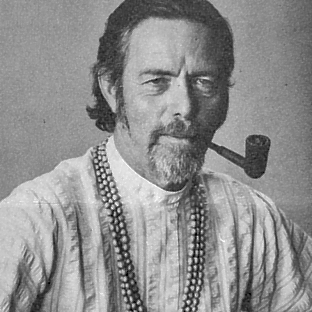
“A scholar tries to learn something everyday; a student of Buddhism tries to unlearn something daily.”
~ Alan Watts
Alan Wilson Watts was a British and American writer, speaker, and self-styled “philosophical entertainer”, known for interpreting and popularising Buddhist, Taoist, and Hindu philosophy for a Western audience. Wikipedia
Born January 6, 1915, Chislehurst, United Kingdom
Died November 16, 1973 (age 58 years), Druid Heights
America: Birth Of A Nation
The Onion Premiered Jul 3, 2026 As the United States celebrates 250 years of American exceptionalism, The Onion looks back on the pivotal moments and enlightened fathers who gave birth to the greatest nation on Earth. Become an Onion member while it’s still optional: https://membership.theonion.com/?camp…
Full Moon In Aquarius – When The Cradle Hits The Fan

On July 29th, 2026, we have a Full Moon at 6° Aquarius. The Full Moon is conjunct Pluto, and it’s opposite Jupiter.
The Full Moon in Aquarius activates the Cradle “everything-at-4-degrees” configuration that peaked in July and got all astrologers excited about.
Although Jupiter has since moved to 6° Leo, the Cradle involving Jupiter, Uranus, Neptune, and Pluto is still very much active.

And it’s the actual Full Moon in Aquarius that adds the personal element to it.
Without the Sun and the Moon, without personal planets, the Cradle remains an abstract, collective dream.
Full Moon In Aquarius – When The Cradle Hits The Fan
The Full Moon in Aquarius takes the Cradle out of the ephemeris and brings it into our lives.
What makes it relatable – what makes someone say “ah – THIS is what this is about” is the Full Moon.
Because:
No personal planets = nothing is personal. Personal planets = things become personal.
The Moon is at 6° Aquarius – joining Pluto at 4° Aquarius. The Sun is at 6° Leo – joining Jupiter at 6° Leo.
Until now, the Cradle has been a pattern in the sky – promising, but difficult to grasp. At the Full Moon, it hits the fan – it enters our relationships, decisions, and circumstances. What was collective becomes personal.
What does this mean?
Of course, different things to different people. The same aspect hits our charts in different ways, depending on our natal houses, whether or not we have planets around the Full Moon degrees, and whatever else happens in our life.
For some, a change at home. For others, a career opportunity. Or a discussion that reveals an unconscious pattern running behind the scenes for decades. Whatever it is – it IS significant.
There’s a potency to this Full Moon that gets right in our faces. Something WILL show up. A thought, an event, a turning point – something will reveal what this Cradle – what’s going on at the collective level – has to do with us.
Full Moons have a way of illuminating things. At a Full Moon, what’s been dark and ungraspable becomes visible.
The Full Moon And The Leo-Aquarius Axis
Leo-Aquarius is the ‘what’s my place in the world?’ axis. What makes me unique, and what do I do with it?
I’m a good singer (the Leo talent). But how does that voice find its place in the world? Do I take my guitar to the local pub? Do I play in a band? In a choir? Do I join an orchestra? Do I teach others how to sing? Do I develop a music app?
In the context of the Cradle, the Full Moon in Aquarius will reveal the role we are being called to play in this new world that is emerging before our eyes.
Full Moon In Aquarius And The Air-Fire Era
The world is changing, and it’s changing fast. And while we might not see the full extent of it yet, the outer planets lining up tell us that the tectonic plates have already shifted.
Our lives still carry plenty of residue from the Yin-sign era – Pluto in Capricorn, Neptune in Pisces, Uranus in Taurus. The jobs we do, the structures we depend on, our ideas about who we are were shaped by that world.
But since the beginning of this year, the outer planets have crossed the threshold into a new world – and we have crossed with them. Pluto is now in Aquarius. Neptune, in Aries. Uranus, in Gemini.
We feel it in our bones – that there’s something out there, something else, that awaits. That the person we have been is no longer the person who can carry us into tomorrow.
And the more aware we become of this shift, the less we try to cling to the past, and the more say we have in what happens next.
Full Moons are the ultimate revelation transits. At the peak of the cycle, the Full Moon takes whatever has been developing and spells it out for us.
And our job is to see what is being revealed. To recognize it instead of deflecting or doubting. And then take that first step that sets us on a new trajectory.
Full Moon In Aquarius – A child Born Of An Eggshell
The Sabian symbol of the Full Moon couldn’t have been more revealing:
“A child born of an eggshell”
Not from a womb – from an egg. This child is not born into an existing lineage, with an inherited identity and a ready-made place in the world. It hatches as something unprecedented.
This is not about becoming a better-adjusted version of who we have been. It’s about breaking out of the shell of family scripts, social conditioning, and identities designed for a world that no longer exists.
The child is not here to continue the family business. It is born equipped for what comes next.
The Cradle has set things in a new direction. At the Full Moon, the egg cracks – and something new walks out.
Word-built world: thaumaturgy
- Google AI
thaumaturgy
/ˈTHôməˌtərjē/
Thaumaturgy comes from Ancient Greek roots meaning “wonder-working”: thaûma (miracle or marvel) and érgon (work). [1, 2]
Greek Roots
- Thaûma (θαῦμα): Meaning miracle, marvel, or wonder (from the genitive root thaûmatos).
- Ergon (ἔργον): Meaning work, labor, or action.
- Thaumatourgía (θαυματουργία): The combined ancient Greek noun translating literally to “miracle-working” or “performing wonders”. [1, 2, 3, 4]
Historical Timeline in English
- Late Latin: The related term thaumaturgus (wonder-worker) was used historically to describe Christian saints or mystics possessing divine powers. [1, 2]
- 16th Century: Root concepts and early variations entered English usage during the Renaissance (such as in John Dee’s 1570 mathematical preface) to describe astonishing acts or mechanical marvels. [1]
- Early 18th Century: The exact modern noun form thaumaturgy established itself in English dictionaries (recorded around 1727) to mean the active performance of miracles, magic, or sacred wonder-working. [1, 2]
Q&A: New York Times editor Dean Baquet on the good (and bad) old days, and why journalists shouldn’t reject AI
Last week, Baquet spent two days with Mission Local, and talked about the future of local journalism. Here’s what we learned.
 by H.R. Smith July 28, 2026 (MissionLocal.org)

A lot of journalism bigwigs are good talkers.
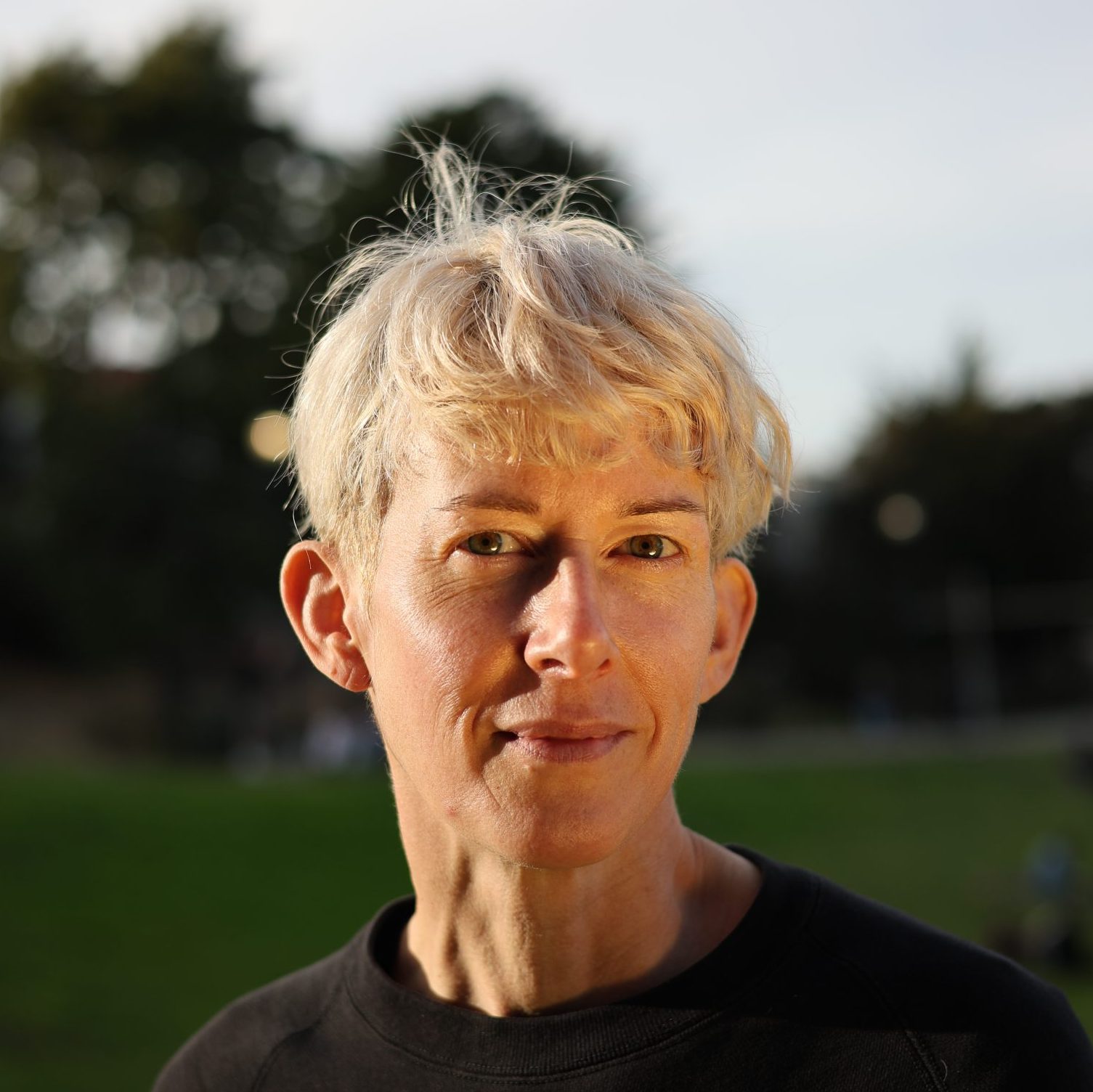
Dean Baquet, who was the executive editor at the New York Times from 2014 to 2022, a period when it achieved more subscribers than ever before in its then-164 years, is arguably a very big wig. But when Baquet visited Mission Local’s offices last week, what stood out was his unflagging enthusiasm for listening.
Over the course of two days, Baquet sat down with Mission Local’s editors and talked editing, and sat down with reporters and spent hours tossing ideas back and forth about their different beats.
He grilled our City Hall team on the good, the bad, and the ugly of San Francisco governance (“Sounds like Chicago!” he said, more than a few times) and offered lessons from the investigative work that he’s edited at local newspapers all over the country through the New York Times Local Investigations Fellowship, which he’s led since 2023.
It was a master class in journalism, and a shot in the arm for a punch-above-your-weight nonprofit newsroom whose mission is training reporters and covering local news in an industry where the number of local journalists has, by one estimate, dropped 75 percent since 2002.
On his final night, Baquet sat down with Mission Local’s managing editor, Joe Eskenazi, at a gathering of our supporters last Thursday. Here’s what they talked about.
This conversation has been edited for readability and flow.

Joe Eskenazi: I think we should first start by defining what it is that is local news. In my own deep past, I went to a exurban daily to apply for a job, and they had a local news model which was ingenious. Every kid playing baseball gets his name in the paper, and the parents buy the paper. And this paper still exists, whereas so many others don’t.
But this, I imagine, is not the basis for local journalism as you would see it.
Dean Baquet: My definition of local news is pretty broad. I would include the publication that makes sure your kids’ baseball scores get published.
In the last three years, I’ve probably been in 40 or 50 newsrooms around the country. I think local news is — I see it as news that is about communities, up to and including states.
It ranges from how governments work, how local politicians work, how local institutions work. Local crime, local sports — I have a pretty broad view.
JE: What are we losing as we lose local news?
DB: I think it has contributed to the sense of disconnection Americans feel. I think it has led to the surprise at the seismic shifts in the country’s politics. I think there used to be a sense people had — and I don’t think I’m mythologizing this — there was a sense that people had that there were some truths that were held commonly, and I think a lot of those truths appeared in local newspapers.
Even if you hated the president — whether you were conservative, liberal, middle of the road — you cared about the school board. You cared about streets getting fixed. Local news provided coverage of the things that everybody cared about, and I think that entire ecosystem, in many states, is completely blown over.


JE: You started out as a local guy in your local hometown paper, and you worked your way up to the New York Times. What happens to the pipeline, now when there are fewer places to get in?
DB: People think that everybody at the New York Times graduated from Harvard and then went to work for the New York Times. That’s actually not true. I grew up in New Orleans, worked for the afternoon newspaper in New Orleans, the morning newspaper in New Orleans, the Chicago Tribune, and then went to work for the New York Times. That’s a very difficult career to pull off now.
JE: You kind of anticipated my next question, which is, you are a guy who grew up in New Orleans. (He dropped out of college to be a news reporter in New Orleans, which, by the way, no one does this anymore. Don’t do that.) What are the ramifications of journalism becoming a profession where you often need a master’s degree to even get your resume on the pile?
DB: When I first started in New Orleans, being a journalist was actually much more of a working-class profession. Most of the people in the newsroom of the Times-Picayune, when I showed up — and I was 19 — most of the people had gone to LSU or Loyola or were from Louisiana.
And then I think some of it was Watergate, some of it was the heroic reporting of Vietnam, some of it was the civil rights movement — being a journalist became a mission and became a sort of a romantic profession. When I was at the Times-Picayune, there were suddenly a lot of really talented reporters from the Ivy League, from the East Coast, from California who came to work in the newsroom.
That did make the newsroom better, in some ways — not because people went to the Ivy Leagues, but just because suddenly your pool of talent was bigger. But it also did one thing I don’t think we anticipated. It used to be that there might be reporters shopping at your supermarket. There was a good chance there was a reporter whose kid went to school with your kid. That started to erode.

JE: You’ve written and spoken a lot about the dearth of investigative ability of undersized, overworked local newsrooms — as you put it, places that are too strapped to even chase down a tip. Tell us a bit about that.
DB: The best investigative reporting is risky. I don’t mean I don’t mean risky that somebody’s going to shoot you. I mean risky in the sense that you get a tip, and you actually don’t know if you’re going to be able to pull it off.
You could do that when I worked for the Chicago Tribune. It was a 600-person newsroom. I chased tips, and some of the tips ended up being year-long investigations, and some of them fizzled out. The newsroom was big enough to support that.
If you have a newsroom of 10 people, and you’re trying to put out a daily report to build an audience, you can’t have a reporter come in and say, “I think I might have a story for next month.” That is why there’s just less and less of this kind of reporting.
The program I run — I have a team of four or five editors who work for me, and we pick 10 to 12 investigations a year from around the country, pitched by local newsrooms or local freelancers. If we pick the story, we pay the salary of the reporter, we pay all the expenses, we edit the stories.
Some of them go in the New York Times. Some of them don’t. All of them go in local publications. We did one last year in Texas, and we published it in 20 newspapers, Univision, news organizations that are very tiny along the border.
It’s designed to do two things, it’s to let younger reporters chase tips, so we bear the risk. Some of them turn out to be great stories. One of them last year won the Pulitzer Prize. Some of them turn out to be just okay. But that’s okay. Hopefully the reporter at the end of the year knows more stuff, and can go back to her newsroom and continue to do the work.
JE: We were talking yesterday about the changing role of competition. I used to write for SF Weekly, and I have to say that the rivalry with the San Francisco Bay Guardian was not friendly. Nobody was getting together for drinks afterwards. There were no softball games. I did have an editor threaten to strangle one of the men at the Guardian with his own ponytail, and he was very serious about it. I don’t know if you had that happen, but you did work in Chicago, which is a tough town. Tell me about the changing role of competition. Are we better now, for it being different?
DB: Competition in big city newsrooms really was a blast. It was cutthroat. When I was at the Times-Picayune, the afternoon paper and the morning paper were owned by the same publisher. There was a glass wall between the two newsrooms, and we hated each other.
I was a federal courthouse reporter. I would sit there and I would watch the federal courthouse reporter for the morning Times-Picayune sitting at his desk, and I would get sick if he didn’t leave.
Chicago was the most competitive news town I’ve ever worked in. There were three fabulous television investigative reporters. The Tribune had a great investigative team. The Sun Times had a great investigative team. And frankly, we drove each other to do great work. That’s gone. The Chicago Tribune‘s great newsroom is now a condo. So that competition is gone.
I think competition was good for journalism. I mean, as I said in the newsroom yesterday, I can tell you, I actually am an idealist. I can tell you that I wake up every day and I want to change the world. That happens to be true. But as a young reporter, I would be lying if I said that I was driven more by that than beating Gordon Gsell, who sat across from me on the other side of the glass.
That’s over, and I think we have to just accept it. Washington is still very competitive, but it’s gone around the country for the most part.
Now newsrooms work together more. That used to make me sad until I actually saw it in action. If you have a lot of small newsrooms and they can all put their heads together and work on one big mighty project, I think that’s great. I ran a big investigation in Mississippi last year, and every publication in Mississippi ran the story. That would never have happened 10 years ago.

JE: You were a very local reporter who covered local news, and then you worked your way up to Chicago and the Times and Los Angeles. How do you feel the big national publications do when they drop a reporter into a place like New Orleans, or for that matter, San Francisco?
DB: You know, it’s interesting. They used to do a really bad job.I was the national editor of the New York Times and in the print game, you were covering the country for your New York readers. You had California readers, but most of your readers were in New York — which meant that you weren’t thinking about breaking stories. Which meant that sometimes cliches infiltrated your coverage. Every story about New Orleans had to have a bayou in there. I’m not sure I’ve seen a bayou in New Orleans, but it just happened because you were writing for people in New York.
Boom — in comes the digital era. Actually, the New York Times‘ biggest audience is in California. Actually, if you cover a wildfire in California now, you’re covering it for people whose lives are affected by it. It’s changed the whole dynamic.
We now will run maps of where the fires are. That wouldn’t have happened 20 years ago, because our readers wouldn’t have known the difference.
I actually think that the national news organizations — the Times, the Post, and I guess the Journal, in a different way — I think they’re better now because the readers are sitting there thinking, “You’re not writing just for New York. You are now writing for me. And I actually want to know.”
JE: Yesterday when you were kindly speaking with the newsroom, you said it’s harder to do investigative work on a local level than the national level or the international level.
DB: I’ve done all three. I did local investigative stories, I did some international investigative stories, and I did a lot of national. The closer you are to home, the harder it is. For instance, in some international stories, you might see a reference like “the governor is rumored to be aligned with the cartel.” That’s not an uncommon phrase. Imagine saying that the governor of California or Ohio is rumored to be aligned with the cartels. You can’t.
The closer to the ground — people know the story. They know the subjects of the story. If Mission Local does a big investigative story that takes a hard look at an institution, your readers are affected by that. They pay taxes. They have a stake in it.

JE: This dovetails with what you’ve said in the past about objectivity in journalism. Though I know that that’s a term you don’t favor, and it’s a concept you do.You use the analogy that a reporter should get onto the plane with an empty notebook. But this is local journalism, so we’re getting onto the bus. I’m wondering — how does sophisticated objectivity work in local journalism?
DB: I don’t use objectivity because I don’t really care about the word. Frankly, though there’s a whole history to the word. If anybody wants to read a book about the history of objectivity, there is such a thing. What I think is that some subjects are simple: anti-Semitism, racism, misogyny. Those are simple. A lie is a lie.
That’s about 5 percent of what we cover. The other 95 percent — religion, even subjects like abortion, are complicated by people’s feelings and people’s histories. And I think our job is to go out and try to understand and grapple with those complications.
I grew up in a very Catholic family. I was an altar boy, and I remember coming home from college as an arrogant schmuck and telling my father I was pro-choice at 17, and I thought he was going to kill me. That does not mean my father’s a jerk. It means that things are complicated.
I think that the job of journalism is not to hop on a plane or hop in a taxi and go to a community to affirm what you already thought. It’s to go to a community with an empty notebook, with no preconceived notions, and try to understand what’s on people’s minds, and try to understand a subject and not judge.
That’s 90 percent of all stories. The other 10 percent: Boom! Nail them. But most stories are really, really complicated.
JE: What do we do about people who are dishonest? The disinterested model of journalism fails when you have knowing liars.
DB: We were the first ones to use the word “lie” in reference to Donald Trump, and I remember the moment. It was a clear lie. He was running for office. I still debated. The political politics editor came in, and we talked about it. It was such an evident lie that we used the word.
But I still told everybody I want to sign off on every use of the word “lie,” because I mean, there’s no question that he lies a lot, and newspapers now call him out for it. But I don’t want to call the head of the school board in Chicago a liar if he says the budget is $62 million and it’s actually $69 million. That gets sort of ridiculous.
Everybody gets caught up in the use of the word. I don’t think it’s important. I think what’s important is to just prove the point. I think what’s important is to do the reporting and say “the person said this, but here’s the reality.” But there’s something intellectually lazy about just falling on the word and not doing the reporting and just proving the point.
The New York Times’ coverage when they got Donald Trump’s finances has been remarkable, but none of the stories say Donald Trump is riddled with conflicts of interest. They say Donald Trump made X billions of dollars as president, making money from the things he regulates. I think that’s more powerful than anything else you can say.
The craft of reporting, proving the point, making the case, laying it out; I think that’s our primary job.
JE: And is this trickling down to local journalism?
DB: I mean, at any given moment, I’m involved in 10 investigations around the country in different newsrooms, and local governments are sort of — they’re following the lead of the president of the United States. They sue more. They don’t give us basic stuff.
I’m running a project in Mississippi, where a 1-year-old was shot by a police officer in a parking lot in a small town outside Jackson. We’ve been banging away, writing stories for a month. The police have given us nothing, zero. They’ve never even identified the police officer, and that’s not uncommon.
I think people have become emboldened by the White House to not cooperate — to say “fake news” at the drop of a hat. I think it’s infiltrated local news.
JE: Is there a cure for that?
DB: You keep reporting. You keep reporting, and you don’t let up.
JE: You again anticipated another question we have here. You’ve bemoaned the loss of shoe-leather reporting, which has gone the way of leather-soled shoes. You said that too much reporting is now done remotely. What are the benefits of reporting in person?
DB: When I first did a series at the New York Times about the New York City Board of Elections, I wanted to know who owned the warehouses where voting machines are stored in every county and every borough. I had to go to every courthouse in every borough. You can now do that online pretty easily now. I think that’s fantastic.
But I do think that the ease of reporting online should not get in the way of the fact that you should face the person you’re writing about. You should face your sources. One of the most important parts of the reporting craft is knocking on somebody’s door, trying to convince somebody to talk to you about something that makes them uncomfortable. You should learn how to make the case for your story.
JE: Now, yesterday you were kind enough to share your time at Mission Local, and you mentioned a great little story of the sort you would find just walking around in your neighborhood — in your case, Greenwich Village. And you mentioned that during the World Cup, people would just gather around and drink beer and watch the games at the bodegas. My colleague, Oscar Palma, brought up that he had written a story about unlicensed street vendors, and then they did indeed get busted by the health department.
What is the right approach for a journalist to cover something that’s definitely happening, but also could lead to ramifications like this?
DB: You should always treat — I’m going to call non-journalists and non-politicians “normal people.” Forgive me. I’ve never thought of a better phrase. You should treat normal people differently. If the mayor calls you up, tells you something, and then calls you back two hours later and says, “You know what? That was off the record.” — “Sorry, I’m writing.”
If you interview the parent of somebody who was killed, and then they call you back two hours later and say, “I really can’t. You really can’t use that part about the breakup of my marriage contributing to the delinquency of my child” — I’m probably not going to use that.
On the other hand, I do think some stories are important enough to tell that you do have to make your subjects a little bit uncomfortable. But emphasis on “important enough to tell.”
In the case of the Greenwich Village story,I think that’s an important snapshot of life in Greenwich Village, and I think some stories are important enough that I think you just got to try to convince the quote-unquote “normal people” that there’s a reason to tell the story.

JE: Now, we in local journalism are not in a position to turn down money, but I know you have complicated thoughts about proposals for government funding. How would that be different than taking money from people who make toilet paper, or from various foundations?
DB: I’m not opposed to it. I just think I’m anxious about it.
A lot of places, including California, give state money to put into newsrooms. I do worry a little bit about the legislator who will get mad when he or she learns that the reporter who wrote something bad about him is actually being paid by the state. Eventually, that’s going to happen, and some legislator is going to go nuts and lean on the small local paper. That makes me nervous.
On the other hand, local news is in a fundamental crisis. I don’t think you can overstate how big of a crisis it is. So I’m not opposed to taking the money. I just want people to think hard about it.
Frankly, I think the future of local news funding has got to come from people being willing to pay for news. It’s got to come from the way that people understand that local institutions like this one deserve their support. Maybe the way people think automatically that they’re supposed to help support their local library.
JE: You’ve also told us that you would like to free up reporters to do more reporting, and that leads to the gigantic virtual elephant in the room, which is AI. You have interesting views on the role of AI in a newsroom, especially a small newsroom.
DB: Yeah. So, everything we say about AI comes from Dean Baquet, not from the New York Times, because the New York Times might disagree with me.
The New York Times is also a very different animal. The newsroom that I left as the executive editor three and a half years ago had over 2,000 people, and now it’s about 2,500. So, that’s a different creature.
My view is: If you have a 10-person newsroom, and AI can help you do some of the work that will allow you to keep those ten people on the street reporting, we should be open-minded about what AI can do.
If that means AI can do a certain level of editing — I’m not talking about the most sensitive stuff — if that means that AI can pull together weather coverage, I’m okay with that.
Do I think that some bad actors in the publishing business will have one poor person sitting in a newsroom and AI doing everything else? Yes. But I think that’s possible anyway.
Every time technology comes into journalism, it’s unexpectedly transformational. If you read the histories of journalism, the arrival of the telegraph was like — can you imagine? So the internet comes and, sadly, many newspaper publishers looked the other way, avoided it, pretended it wasn’t going to happen. I don’t want us to do that this time. It’s coming. We’ve got to figure out how to make use of it.
JE: Where are your red lines? What would you say AI shouldn’t do?
DB: The fantastic obit you did two days ago: AI can’t do that, and shouldn’t do that. The red line should be those moral, ethical judgments that good journalists make every day. But would it bother me if AI did some first-cut editing? Not really. Not in a 10-person newsroom.
JE: Are we at risk of looking back through a rose-colored mist? What about the past would not be worth recreating now?
DB: In the newsroom I started in, the women covered “women’s news.” All of the women worked in the style sections. We should not recreate that.
If you look at Southern newspapers in the 1960s, most of them were embarrassing. They did not do great coverage of the great story of that era, which is the civil rights movement. We don’t want to recreate that.
Newsrooms were not fabulous. We should not think “woe is me.” They were really big, but many of them were not great. When I left Mission Local’s newsroom today, I kept thinking — the spirit of your newsroom, which is a lot of very young, idealistic journalists who question some of the norms I grew up with, and are passionate about their communities — that’s an improvement.
It’s too bad you don’t have a 600-person newsroom, but that’s clearly an improvement. Everybody says that younger journalists ask harder questions. Fabulous! They should, because we didn’t ask enough hard questions.
Newspapers — you hate to think of it, but it was sort of a manufacturing plant. Everybody wrote the same way. Go back and look at the writing of newspapers 40 years ago. They were awful. Writing’s better now. There’s more risk-taking.
I don’t want to romanticize the old world. I just wish we were as big as they were, with some of the same values we have now.

JE: When was the golden age?
DB: I think, starting in the late ’70s and into the ’80s, newspapers were probably the best they ever were. Watergate suddenly made people want to do more hard-hitting reporting. Newspapers were rolling in it; 30-percent profit margins were not unusual. There were these great regional papers.
We had learned that we made a lot of mistakes. In the early years of Vietnam, we weren’t questioning the government enough. The Post was better than it ever was. The Times at that time was better than it ever was. I think that was probably the best period.
JE: On a more joyful and fun note, you’ve talked about the need to insert joy and fun into what we do as local journalists. What do you have in mind?
DB: A lot of the new publications can be a little bit earnest, partly because they’re funded by philanthropists. When you read the Miami Herald at its peak, you felt like you were in Miami. Carl Hiaasen was a columnist! Everybody will give you money to cover healthcare, but nobody’s giving money to get a really fun local columnist with a sense of place.
Think of all the things that the old newspapers did well. They had comics. They had local cartoonists. The best of them had really good local columnists. A lot of the new publications don’t have that. You guys do. I wish more of them had that.
I’ve spent my whole life explaining the problems of the world. But I also like a little bit of joy. I love a book review. I really do miss the alt-weeklies.
JE: It’s not hard to find things to worry about regarding the state of local journalism. What gives you hope?
DB: A lot. Technology has made storytelling more vibrant. We did a project about what happens when the state of Texas decided to put a police officer in every school, and we had all of these very powerful videos that showed police officers beating up kids, and to have that mixed in with the words — that storytelling is better.
What we’re seeing now is what journalism looked like two hundred years ago. A city like New Orleans, a city like New York, they had newspapers that covered the Jewish community, newspapers that covered the Italian community, newspapers that covered the Black community, newspapers that just covered ships going in and out.
That’s starting to happen again. There’s much more experimentation, much more willingness to try stuff, and a lot less head scratching over “Is this appropriate for us?”
I think the young reporters are just as good as we were. I think we have got to help them get the training they need, but they ask harder questions than I did. They ask, “Why do we do it this way?” We need to be asked that.
I come away from all these visits to newsrooms — and as I said, I do it a lot — I come away excited. Mission Local is going to do great stuff, and it’s going to do stuff that the San Francisco papers of 25 years ago did not do. And I think that’s fabulous.
H.R. Smith
H.R. Smith has, among other things, reported on tech and climate change for Grist, studied at MIT as a Knight Science Journalism Fellow, contributed to the atlases Infinite City and Nonstop Metropolis, and organized wrestling matches on Shotwell St. between different California archtypes.More by H.R. Smith
Word-built world: theurgy
- Google AI
theurgy
/ˈTHēərjē/

Theurgy is a specialized branch of ritual practice and white magic defined literally as “god-work“, aimed at invoking deities, purifying the soul, and achieving union with the divine (henosis). [1, 2, 3, 4]
Key Concepts of Theurgy
- Etymology: Derived from the Greek words theos (god) and ergon (work). [1]
- Goal: Unlike standard petitionary prayer, theurgy seeks to elevate the human soul so it can commune with or be receptive to higher divine powers. [1, 2]
- Historical Roots: Deeply tied to late antique Neoplatonism (promoted by philosophers like Iamblichus) as a method to bridge the gap between mortal finitude and divine infinity. [1, 2]
- Practices: Included structured rituals, meditations, sacred chants, and the use of sympathetic ritual objects to invite divine presence. [1, 2]
If you’d like, I can provide more details on:
- Neoplatonic philosophy behind the practice
- How it differs from thaumaturgy (practical/wonder-working magic)
- Historical figures like Iamblichus who shaped the concept