Me: Uncle Tom was really (in the book) a very heroic, if not Christ-like figure, wouldn’t you say?
ChatGPT: Yes—I’d say that’s a very defensible reading, especially if you mean Uncle Tom as he actually appears in Harriet Beecher Stowe’s novel, rather than the later stereotype that “Uncle Tom” came to mean.
Tom is extraordinarily heroic. His defining quality is refusal to return evil for evil, even when he is brutally abused. He repeatedly puts his Christian conscience above his own safety. In the final section, when Simon Legree demands that he reveal where Cassy and Emmeline have gone, Tom refuses even though he knows it may cost him his life.
And there is something distinctly Christ-like about Stowe’s presentation of him:
He forgives people who mistreat him.
He refuses to hate Legree.
He suffers rather than betray another person.
His faith becomes strongest under persecution.
His death is explicitly framed in Christian, almost martyr-like terms.
Most importantly, his moral authority is greater than that of the people who legally own him.
Stowe was deliberately constructing Tom as a Christian martyr. His final words and the reactions of those around him make the parallel with Christ quite unmistakable.
The irony is that the cultural meaning of “Uncle Tom” eventually became almost the opposite of Stowe’s character. The phrase came to mean a servile Black person who accommodates white authority. But Stowe’s Tom isn’t servile in the morally important sense: he obeys God rather than men. His refusal to cooperate with Legree is actually an act of profound resistance.
In fact, I think one could argue that Tom’s Christianity is the most radical political element of the novel: Legree possesses Tom’s body legally, but he cannot possess Tom’s conscience.
Saturday & Sunday, Sept. 26-27 This class will run two full days (11:00 am – 5:00 pm, Pacific Time)– It’s online, so you can attend from wherever you are!
Your Instructor — Heather Williams, H.W., M.
Heather Williams became a Mentor in The Prosperos School of Ontology in 1978. She has taught The Prosperos classes for many years, in many different cities.
“You will really get a greater awareness regarding Spiritual Truth! Heather sparkles and has such a dynamic, concise delivery.” — Dr. Anna Hamilton, late Dean of The Prosperos
Releasing the Hidden SplendourTM is a simple technique that helps us to free ourselves from old patterns, to know ourselves Truthfully, to LOVE ourselves unconditionally, and to more fully live our unique, individual life purpose.
In this class we dive into the Old Testament stories of Moses, Joseph, Ruth & Naomi and Job. These people suffered enormous challenges, and by turning within to listen to God, their Higher Self, they awakened to a whole new understanding of their life purpose! This can happen to you, as well — as you practice this technique.
In this class, and in the workshops that follow, you will learn to “WORK” with a memory that made you feel bad (angry, fearful, hurt, insulted, injured, etc.), using a simple emotional technique that allows you to GIVE up the old pattern FOR a whole, new understanding of your true identity!
ARIES (March 21-April 19): On the sci-fi TV show “Stargate SG-1,” benevolent aliens known as the Asgard visit Earth to seek assistance from a secret U.S. government team. The ultra-advanced, hyper-intelligent Asgard have been unable to defeat their great nemesis, another alien species called the Replicators. Their hope is that their primitive partners, the humans, might stumble onto some basic, straightforward answer that their own sophisticated minds can’t see. The gamble pays off. One of Earth’s leading physicists, who’s a naive amateur by Asgard standards, devises a rough, unsophisticated strategy that works wonderfully. Treat this as your parable, Aries: Put your faith in simple, uncluttered approaches, and don’t underestimate “beginner-level” fixes.
TAURUS (April 20-May 20): During one of my visits to the annual Burning Man festival in the Nevada desert, I encountered a prankster named Mother Very Superior. This nonbinary performer was dressed like a nun and wore a prominent chastity belt. Wielding a toy whip, they gently lashed me on my shoulders and prayed over me, saying, “I absolve you of all your sins. Therefore, you are now free to commit a raucous slew of new sins.” I hope you get a similar dispensation, Taurus. To be fully available for the rollicking delights you’re eligible for, it would be wise to reduce your karmic debt.
GEMINI (May 21-June 20): Archaeologists studying ancient Roman shipwrecks found that sailors deliberately made their vessels heavier by stowing rocks in the hull. This reduced the profitability of their voyages, since it reduced their cargo capacity. On the other hand, it meant they wouldn’t capsize during storms. An excellent trade-off! Let’s use this scenario as a metaphor for your life right now, Gemini. I’m going to suggest that you will benefit from adding more ballast. Seemingly burdensome elements could keep you steady if conditions become unruly. Consider this: Not everything heavy is holding you back. Some of it’s keeping you strong and stable.
CANCER (June 21-July 22): During the Baroque era, Cancerian artist Artemisia Gentileschi painted powerful biblical and historical women who killed tyrants and delivered their people from violent domination. By channeling her creative passion into figures of righteous fury, she transformed her personal trauma into psychological power. I invite you to be inspired by Gentileschi as you reconfigure your own story in the coming weeks, Cancerian. Wouldn’t it be fun and potent to transform the way you imagine both the past and future plot threads of your destiny?
LEO (July 23-Aug. 22): In traditional sourdough baking, a small portion of fermented dough called a starter is saved and refreshed regularly. Some bakeries maintain the same lineage for years. The starter is a living culture of wild yeasts and lactic acid bacteria that feed on flour and water, producing acids and gases that leaven the dough and create bread with complex flavor, aroma and texture. Let’s use this as a metaphor for your life, Leo. What long-running resource can you use to help create situations that will empower you to thrive in interesting ways during the coming months?
VIRGO (Aug. 23-Sept. 22): The coming months could be a legendary turning point you will celebrate in the future: a pivotal time when you finally outsmart an old adversary and untangle a knotted inheritance, clearing the way to pursue your true calling with undiluted devotion. Or, on the other hand, the days ahead could be another round in the long saga of “almost”: a decisive phase when you avoid a challenge that has been begging for your full brilliance, leaving your future without shining clues for how to further decode the ancient riddle. Which destiny will you accomplish, dear Virgo? Will you answer the call to adventure? Or ignore it until it fades away?
LIBRA (Sept. 23-Oct. 22): Some of my most useful revelations arrive in the dark. Once, while hiking in a wooded canyon at dusk, I lost the trail and had to feel my way forward by the sound of the creek. In that blind descent, an insight about a personal riddle I’d been pondering for months appeared unbidden, as if it had been waiting in the shadows for me. As I followed the stream bank to safety, I celebrated by singing Leonard Cohen’s song “Hallelujah.” The moral of the story is that some lessons can be best learned by going down: into the body, into confusing feelings, into the rich compost of mysteries we may be hesitant to explore. How about you, Libra? In my professional opinion, your next pivotal breakthroughs are lurking in the fertile darkness rather than the brilliant heights. I hope you’re brave enough to descend. The treasure is buried, as treasure often is.
SCORPIO (Oct. 23-Nov. 21): In 1912, Scorpio meteorologist Alfred Wegener proposed the theory of continental drift. It’s the idea that Earth’s continents were once joined in a single supercontinent and have gradually drifted apart to their present positions over millions of years. Most scientists initially rejected his hypothesis because he couldn’t explain how the movement occurred. He didn’t live long enough to receive vindication, but decades later, his novel hypothesis was fully accepted. I’m pleased to report that your wait will be far shorter, Scorpio. Please keep your faith in the novel ideas and perceptions that others don’t understand yet. The world’s almost ready for your innovations.
SAGITTARIUS (Nov. 22-Dec. 21): There is a kind of lightning called a “sprite.” It’s a ghostly red discharge that blossoms high above thunderstorms. I suspect you may soon experience your own personal versions of this wonder. Fleeting insights may appear in unexpected places. Emotionally rich revelations could arrive out of nowhere. Because the moments could pass quickly, it will be crucial to notice them when they arrive. They could stimulate major shifts in your understanding. Keep your perceptive powers highly attuned.
CAPRICORN (Dec. 22-Jan. 19): Fertility clinics store frozen human embryos. Numbering in the hundreds of thousands, they are suspended in a long, chilly pause, awaiting instructions from the people who created them. This accumulation of potential life on hold makes me think of you. If you would thaw and reclaim the neglected, untouched regions of your own imagination, you would become an even more formidable generator of focused creative power. The encouraging news is that the coming weeks will be an unusually favorable phase to expedite this process.
AQUARIUS (Jan. 20-Feb. 18): Some earthquakes unleash energy in violent bursts, but others are incremental commotions that unfold gradually over days or even weeks. The way they reorganize the Earth’s crust is kinder and gentler. Let’s regard these slow quakes as an apt metaphor for the initially disruptive but ultimately constructive transformations underway in your beautiful life, Aquarius. You may not see spectacular evidence that change is percolating, but I guarantee that it is. Old structures are in a transitional phase of subtle disarray, creating conditions for new dispensations you can’t imagine yet. My prediction: The rearrangement of your landscape will be healing.
PISCES (Feb. 19-March 20): The Sargasso Sea is the only sea on Earth without a land boundary. It’s defined entirely by four strong Atlantic Ocean currents that circle it. Its edges aren’t solid walls but slowly shifting rivers of water. I think this anomalous body of water is always a vivid symbol of your world, Pisces, and even more so these days. Your boundaries are currents, not coastlines. You hold your shape through movement, not through rigid definition. This is more challenging to maintain than solid borders, but it’s also a great potential strength. Use it with aplomb!
“Connectedness is of the essence of all things of all types. It is of the essence of types, that they be connected. Abstraction from connectedness involves the omission of an essential factor in the fact considered. No fact is merely itself. The penetration of literature and art at their height arises from our dumb sense that we have passed beyond mythology; namely, beyond the myth of isolation.”
Alfred North Whitehead’s quote means that everything in the universe is deeply connected to everything else, and true art and thought reject the false idea that humans or things exist in total isolation. [1, 2]
Key Ideas in Simple Terms
Everything is connected: Nothing in the world stands alone. Every object, event, and idea is shaped by and linked to other things. [1, 2]
No fact is by itself: When we try to study or look at something as if it is completely separate from the rest of the world, we miss the most important part of what it really is. [1]
The myth of isolation: Old myths and simple thinking taught that humans and things are trapped in separate boxes.
Art and literature: Great art and literature succeed because they tap into a deeper truth. They show us that we are part of a shared, living web of existence, moving past the illusion that we are all alone. [1]
Alfred North Whitehead was an English mathematician and philosopher. He created the philosophical school known as process philosophy, which has been applied in a wide variety of disciplines, including ecology, theology, education, physics, biology, economics, and psychology. Wikipedia
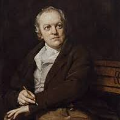
William Blake’s quote “Eternity is in love with the productions of time” means that the timeless, infinite divine realm deeply values, cherishes, and seeks expression through the physical things humans create and experience within our limited lifetimes. [1, 2, 3]
Key Concepts in the Quote
Eternity: The permanent, endless, and timeless realm of the spirit or God. It does not change and has no clock.
Time: Our temporary physical world. It is marked by aging, limits, endings, and change.
Productions of Time: Everything we make, feel, and do while alive. This includes art, music, human struggles, love, and everyday actions. [1, 2, 3]
The Core Message
Fulfilling the Infinite: Blake flips the usual idea that heaven or eternity is perfect and our physical world is just trash. Instead, he says eternity needs our mortal world to truly feel and express itself. [1]
Meaning in the Finite: Because time has limits, everything we do matters deeply. A poem, a painting, or an act of kindness has real weight because it happens in a temporary life. [1]
Making the Temporary Last: When we put true passion and soul into our work, those mortal creations take on an eternal quality. They echo far beyond our own lives. [1]
William Blake was an English poet, painter and printmaker. Largely unrecognised during his life, Blake has become a seminal figure in the history of the poetry and visual art of the Romantic Age. Wikipedia
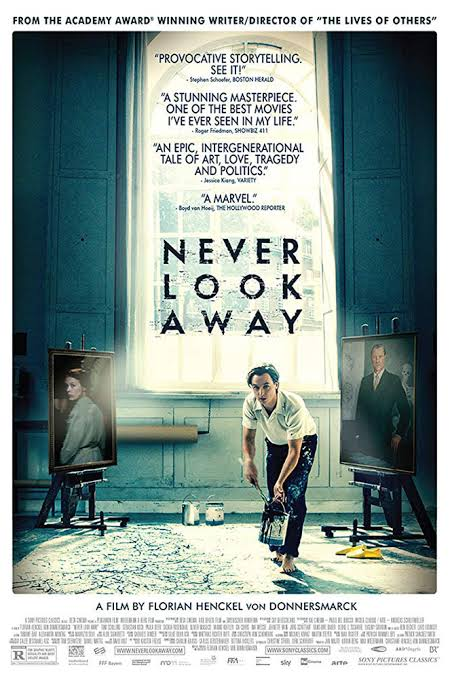
Paula Beer as Ellie Seeband: [She stops, taken aback by the question.]
Kurt: Do you love me? Otherwise… It doesn’t work… with me.
Ellie: [She doesn’t understand.]
Kurt: Otherwise it doesn’t work.
Ellie: I love you.
Kurt: [He becomes more passionate and aroused.] Really?
Ellie: Yes.
Later:
Oliver Masucci as Professor Antonius van Verten (Kurt’s art teacher): “I think, therefore I am”. Descartes had questioned everything. Everything. Everything could be an illusion, a trick, his imagination. But then he understood that something had provoked that very thought within him, and consequently something must exist… and that something he decided to call “myself”… But who are you? What are you?
New Thinking Allowed with Jeffrey Mishlove Aug 24, 2026 New Thinking Allowed Audio Podcast New Thinking Allowed CoHost, Emmy Vadnais, OTR/L, is a licensed occupational therapist, intuitive healer and coach, and spiritual guide based in St. Paul, Minnesota. Emmy is the founder of the Intuitive Connections and Holistic OT communities. She is the author of Intuitive Development: How to Trust Your Inner Knowing for Guidance With Relationships, Health, and Spirituality. She offers intuitive coaching to help individuals access their inner guidance for clarity, healing, and meaningful decision-making. Her website is https://emmyvadnais.com Here she offers a number of techniques and strategies for self-healing and distant healing of others. They include breathing exercises and visualization. She focuses on stress management, intuition development, and compassion for oneself and others.
New Thinking Allowed with Jeffrey Mishlove Aug 25, 2026 New Thinking Allowed Audio Podcast Joanna Kujawa, PhD, is a Polish-born author, scholar, and spiritual detective based in Australia. She is the author of The Other Goddess: Mary Magdalene and the Goddesses of Eros and Secret Knowledge, and Alien Goddess: UFOs, AI, and the Goddesses of Ascension. Her website is https://www.joannakujawa.com/ Joanna suggests that goddesses throughout history and within a variety of cultures and spiritual traditions are not only archetypal, but are real beings and reside in the interdimensional realm. She estimates that 90% of the feminine has been pushed aside by the masculine, impacting all genders in their consciousness. She offers ways for the feminine and masculine to be more in balance and provides how to embrace the goddesses’ holistic knowledge of intuition and their transformative powers of healing, love, and compassion to empower us all and create a better life, both individually and collectively. 00:00:00 Introduction 00:02:26 Goddess characteristics 00:08:49 Embodying the feminine 00:13:06 Types of goddesses 00:27:23 Goddess stories 00:46:29 Masculine and feminine balance 01:01:16 Demeter and the maiden well 01:08:15 The Eleusinian Mysteries 01:13:03 Unity consciousness, wisdom, and ascension 01:25:12 Conclusion New Thinking Allowed CoHost, Emmy Vadnais, OTR/L, is a licensed occupational therapist, intuitive healer and coach, and spiritual guide based in St. Paul, Minnesota. Emmy is the founder of the Intuitive Connections and Holistic OT communities. She is the author of Intuitive Development: How to Trust Your Inner Knowing for Guidance With Relationships, Health, and Spirituality. She offers intuitive coaching to help individuals access their inner guidance for clarity, healing, and meaningful decision-making. Her website is https://emmyvadnais.com (Recorded on June 26, 2026)
The great cruelty of life, and also its great mercy, is that only hindsight ever knows each last — the last time your lover put their hand on the small of your back, the last sip of the last cup at your favorite coffee shop before it vanished overnight, the last living note of your mother’s voice. Bittersweet or downright devastating, lasts are the currency of loss with which we pay the price for loving. They are the necessary losses that make us who we are, our training ground for mastering the art of losing by which we apprentice ourselves to love.
Great children’s books are works of philosophy in disguise — philosophy being, in Montaigne’s perfect definition, the art of learning to die, which is of course the key to learning to live, just as learning to lose is the key to learning to love. Odds and Ends (public library) by Finnish author and artist Maija Hurme is one such book — a tender illustrated catalogue of losses, from the everyday to the existential, that is at bottom a love letter to what we have, to the bittersweet knowledge that we have none of it for the keeping, calling to mind poet Lisel Mueller’s poignant line: “What exists, exists so that it can be lost and become precious.”
Taxonomized by type, there are the “late lasts” (“the last rays of the sun, spreading color across the sky”), the “hopeful lasts” (“the last migrating bird to arrive might still find a mate”), the “last chances” (“a lost toy is always found in the very last place you look”), the “lasts that are firsts” (a baby’s “last wobbly moment before she starts walking”), the “lingering lasts” (“watching the last snowflake of winter drift slowly and silently down”), the “lonely lasts” (“the last tree standing”).
Page after page we come to feel that we are rehearsing for the final act, the “very last last” that awaits every living thing.
Everything ends with a last: the very last thought, the very last breath, the very last heartbeat. And the very last goodbyes.
Pulsating beneath it all is an invitation to practice the art of letting go, which, paradoxically, is what allows us to go on living.
When we look up at the night sky, we see a star suddenly twinkle and then go out.
Maria tells me that this star died hundreds or millions of years ago, long before we were even born. The last rays of its light are reflected in our eyes.
“All things are so very uncertain, and that’s exactly what makes me feel reassured,” Tove Jansson wrote in one of our civilization’s great works of philosophy disguised as a children’s book. This is the paradox we live with: We crave certainty, only to discover over and over that it is a mirage, that the love of life is rooted in the courage of uncertainty — because certainty doesn’t allow for surprise, but everything we know of life is the product of the wildest bet that prevailed against the odds of otherwise so we may exist; because certainty thrives on clear category and neat classification, but the most meaningful experiences we have inhabit the liminal spaces between the common categories of what we can name.
NASA engineer Lisa Rosenberg offers a lovely ode to the life-force of uncertainty in the title poem from her altogether ravishing collection Weeds and Stars (public library) — the finest reverie of reality since Diane Ackerman’s The Planets: A Cosmic Pastoral, with the feeling-tone of Whitman’s Leaves of Grass and the sensibility of astronomer-poet Rebecca Elson’s A Responsibility to Awe:
WEEDS AND STARS by Lisa Rosenberg
Weeds and stars and everything between, from ocean dwellers to accretion disks — resilient, intact, or wholly fragmented — recall the transience of clouds.
The ocean dwellers and accretion disks, the finest river stones and faintest moons recall the transience of clouds, of harmonies at work in gorgeous noise.
The faintest moon, the finest river stone, the lucid silences at play in dreams find harmony at work in gorgeous noise. Let night and day be open quandaries
in play with silences and lucid dreams. Forget the cries for certainty, the heft of night and day and open quandaries, the pitch-perfected music of the spheres.
The case for certainty forgets the weft of wholes, of fragments and resiliency, imperfect music of imperfect spheres, the weediest of stars, the in-betweens.
In our yearning for certainty, we have tried to reduce the cosmos to clockwork, to side with probability over surprise, and yet again and again it is the break in the pattern, the chaos in the order, that creates the conditions for possibility. The most brutal benediction of life is that every experience is unrepeatable, every organism irreplicable, every existence a singular phenomenon that has never before occurred and will never again occur in the entire history and future of the universe — something Rosenberg channels in another poem from the book, reverencing the most poetic of numbers:
PRAISE ON PI DAY by Lisa Rosenberg
To praise the nonrepeating, I will praise the universe: each smooth circumference, each jagged fit and fractal-sculpted face of life and not-life. They’re everywhere you look.
The universe, each smooth circumference of our daily mess, won’t fit in simple bins of life and not-life. They’re everywhere and elsewhere, too. What surprises us is not
our daily mess, unfit for simple bins, but each repeated lesson learned anew and elsewhere, too. What surprises us is not that we forget, but that our learning shifts
with each repeated lesson learned anew. The aster blooms. The supernova cools. We might forget that all our learning shifts into the pupil of the coming day.
The aster blooms. The supernova cools its jagged fit and fractal-sculpted face into the pupil of a coming day where praise is nonrepeating, and we praise.





 Everything ends with a last:

