“The attempt to develop a sense of humor and to see things in a humorous light is some kind of a trick learned while mastering the art of living.”
~ Viktor Frankl
Viktor Emil Frankl was an Austrian neurologist, psychiatrist, philosopher, and Holocaust survivor, who founded logotherapy, a school of psychotherapy that describes a search for a life’s meaning as the central human motivational force. Logotherapy is part of existential and humanistic psychology theories. Wikipedia
There’s a grove of old growth a couple of hours from where I live, Douglas firs so old and so tall that walking into it feels like walking into a cathedral somebody forgot to put a roof on.
The light comes down green and slow. The traffic noise in your head, the one that never quite stops, goes quiet. The first time I stood in there I caught myself doing the thing we all do when something is too big for us: I stopped narrating.
For a few minutes there was no running commentary, no to-do list, no me in the usual sense at all, just the trees and the smell of duff and a silence with actual weight to it. I came out feeling scrubbed clean, and I couldn’t have told you why.
Now I can, because the scientists have started measuring it.
This past winter a team at McGill, working with colleagues in Chile, examined more than a hundred brain-imaging studies of what actually happens inside our heads when we spend time in the natural world. What they found is a kind of cascade.
The brain processes the fractal patterns of nature, the branching of a fern or a river delta, far more easily than the hard edges and blinking screens of a city, so the sensory load drops almost the moment we walk outside.
As it drops, the body slips out of fight-or-flight; the heart rate slows, the breath deepens, and the amygdala, our little threat alarm, settles down.
Then attention, which we normally have to force, begins to restore itself on its own.
And finally the brain networks tied to anxious, repetitive, self-focused thinking grow quiet.
The researchers found that as little as three minutes can start the whole thing rolling. Three minutes.
That last part, the quieting of the self-focused machinery, is where this gets interesting, because it’s the same thing researchers keep finding when they study awe in particular.
A growing body of work shows that “positive awe,” the feeling we get from vastness, from a night sky or a mountain or a piece of music that lifts the top of your head off, nudges the nervous system out of fight-or-flight and into the rest-and-digest state, while quieting the very parts of the brain that keep us trapped in our own small story.
The psychologist Dacher Keltner, who’s spent decades on this, sends people out on what he calls “awe walks”, and finds they come back with lower stress, less inflammation, and a stronger pull toward generosity and connection. Awe doesn’t just feel good. It measurably moves us out of ourselves and toward each other.
Awe works by making you feel small, and it turns out that feeling small, for a few minutes, is exactly what an overloaded nervous system has been starving for.
Here’s what gets me, though. We treat all of this as a luxury. Wonder is the thing we’ll get to once the inbox is clear, something you schedule a vacation around once a year if you’re lucky.
But the science is saying nearly the opposite: that awe is maintenance, as basic to a human animal as sleep or clean water, and that we’ve built a civilization almost perfectly designed to keep us from it.
We’ve paved the groves, lit up the night so thoroughly that most of us can’t see the Milky Way from our own backyards anymore, and filled every spare second with a screen engineered to hold our attention precisely by keeping us agitated and self-focused, which is to say in the exact brain state that nature dissolves.
The people who never lost this knew it in their bodies.
Years ago, Louise and I had the honor of spending time with the psychologist Robert Wolff, who spent years deep in the Malaysian jungle with an aboriginal people called the Sng’oi. He wrote a book about it, and I wrote the foreword to it: Original Wisdom: Stories of an Ancient Way of Knowing.
What struck Wolff, what changed him, was that the Sng’oi had an uncanny, intuitive sense of the living world around them, a way of knowing that came not from analyzing the forest but from being so woven into it that the line between self and place wore thin.
They weren’t taking awe walks. They were simply at home, in the way our whole species was at home for three hundred thousand years before we built walls and started calling the outside “scenery.” Wolff came back convinced that we haven’t evolved past that way of being. We’ve just forgotten it.
I’m not romanticizing here. I like antibiotics and hot showers and the laptop I’m typing this on as much as the next person. But I think we’ve made a quiet, costly trade, swapping a baseline of belonging for a baseline of low-grade alarm, and then wondering why so many of us feel frayed all the time.
The good news, and it really is good news, is that the door back is almost absurdly easy to open. You don’t need the cathedral grove (though I’d recommend it) or the forest where Louise and I climb a mountain every weekend. You just need three minutes and a little attention.
So here’s what I’d suggest, and it won’t cost you a dime. Once a day, find something bigger than you and give it your full, undivided attention for a few minutes.
The sky doing its slow evening thing. A tree you’ve walked past a thousand times, looked at as though you’d never seen it before. The ocean if you’re near it, a thunderstorm if one rolls through, the frankly unreasonable fact of a single leaf.
Don’t photograph it. Don’t narrate it. Just let it be too big for you, and notice what happens to the noise in your head. Your nervous system already knows exactly what to do. It’s been waiting for you to stop and look.
A comprehensive review found that mRNA vaccines — a popular target of viral vaccine conspiracy theories and medical misinformation in the wake of the COVID-19 pandemic — are a resoundingly safe and effective feat of modern medicine.
Published this week in the journal The Lancet, the review confirmed that mRNA vaccines are robustly effective at preventing the spread of infectious diseases like COVID, and show incredible promise for treating diseases like cancer as well. It was conducted by an international team of researchers based in Canada, Hong Kong, the United Kingdom, and the United States, and took the drug’s manufacturing, clinical trials, and data from billions of real-world vaccinations into account.
“mRNA vaccines represent a transformative advance in vaccinology,” reads the study, “combining rapid development timelines, scalable manufacturing, and strong immunogenicity with a favorable safety profile.”
The study’s results also dispel the erroneous notion that mRNA vaccines alter human DNA. Instead, as intended, mRNA vaccines provide human cells with what’s basically a limited set of instructions that allow them to momentarily — and safely — replicate a given virus or disease, allowing the body to develop an immune response.
The review also showed that the mRNA shots are safe for sensitive groups like children and pregnant women, and that booster shots are helpful for extending a shot’s efficacy.
“After billions of doses, we now have an extraordinary amount of scientific evidence,” said Dr. Anna Blakney, lead author on the study and an assistant professor of biomedical engineering at the University of British Columbia, in a statement. “This review affirms that mRNA vaccines are a safe and highly effective platform, supported by rigorous testing and real-world monitoring.”
Crucially, the review doesn’t shy away from possible side effects, which do occur. Some people do appear to have had allergic responses, with some takers, most notably young men, experiencing myocarditis after getting an mRNA shot.
“With any new vaccine or medicine, it is important that we clearly and transparently communicate the safety data and rigorous testing that supports their use,” Dr. Manish Sadarangani, a pediatrician and director of the Vaccine Evaluation Center at British Columbia Children’s Hospital Research Institute, said in a statement. “This is essential to building public trust, countering misinformation and supporting informed decisions about vaccination.”
But side effects are also a reality of pretty much every drug on the planet, and as the study authors urge, their findings show that negative side effects of mRNA jabs are rare and certainly don’t outweigh the benefits: limiting the spread of infectious disease, reducing instances of severe illness and death, and offering additional protection to those who can’t receive vaccines themselves due to medical reasons.
If you’re hesitant about getting an mRNA vaccination, please don’t listen to podcasters or get your medical advice from social media posts. Listen to scientists — or better yet, consult your doctor.
I’m a senior staff writer at Futurism, investigating how the rise of artificial intelligence is impacting the media, internet, and information ecosystems.
“They do not sweat and whine about their condition,” Walt Whitman wrote of the other animals, “they do not lie awake in the dark and weep for their sins, they do not make me sick discussing their duty to God, not one is dissatisfied, not one is demented with the mania of owning things.”
Here was “the poet of the body and the poet of the soul” holding up a mirror to us creatures inhabiting an animal body complicated by a soul — that organ of want and worry which we ourselves invented to explain why we make art, why we fall in love, why we yearn to converse with reality in prayers and postulates.
It is daring enough to ask what a soul actually is. Carl Jung knew that it defies the substance we are made of: “The soul is partly in eternity and partly in time.” Virginia Woolf knew that it defies our best technology of thought: “One can’t write directly about the soul. Looked at, it vanishes.” It is doubly daring to question the age-old dogma that the soul is the province of the human animal alone. Even as we have incrementally and reluctantly admitted other creatures into the temple of consciousness, we have denied them souls — denied them, because our tools of communication and computation have failed to probe it, an inner life capable of imagination and play, of love and grief, of dreams and wonder. And yet our very language defies our denial: the word animal comes from the Latin for soul.
Art by Jackie Morris from The Lost Words by Robert Macfarlane
In 1991, long before we came to consider the soul of an octopus, long before fMRI and EEG studies revealed not only that birds dream but what they dream about, Gary Kowalski took up this daring question in The Souls of Animals (public library) — an inquiry into the “spiritual lives” (and into what that means) of whooping cranes, elephants, jackdaws, gorillas, songbirds, horses, dogs, and cats. At its center is the idea that spirituality — which he defines as “the development of a moral sense, the appreciation of beauty, the capacity for creativity, and the awareness of one’s self within a larger universe as well as a sense of mystery and wonder about it all” — is a natural byproduct of “the biological order and in the ecology shared by all life.” (There are in this view echoes of Kepler, who believed that the Earth itself is an ensouled body, and of myriad native cosmogonies that regard other animals as sources of more-than-human wisdom and emissaries of the numinous.)
Kowalski — a parish minister by vocation, who spends his days praying with the dying, blessing bonds of love, and helping people navigate moral quandaries — celebrates the soul as “the magic of life,” as that which “gives life its sublimity and grandeur,” and reflects:
For ancient peoples, the soul was located in the breath or the blood. For me, soul resides at the point where our lives intersect with the timeless, in our love of goodness, our passion for beauty, our quest for meaning and truth. In asking whether animals have souls, we are inquiring whether they share in the qualities that make life more than a mere struggle for survival, endowing existence with dignity and élan.
[…]
Many people think of soul as the element of personality that survives bodily death, but for me it refers to something much more down-to-earth. Soul is the marrow of our existence as sentient, sensitive beings. It’s soul that’s revealed in great works of art, and soul that’s lifted up in awe when we stand in silence under a night sky burning with billions of stars. When we speak of a soulful piece of music, we mean one that comes out of infinite depths of feeling. When we speak of the soul of a nation, we mean its capacity for valor and visionary change… Soul is present wherever our lives intersect the dimension of the holy: in moments of intimacy, in flights of fancy, and in rituals that hallow the evanescent events of our lives with enduring significance. Soul is what makes each of our lives a microcosm — not merely a meaningless fragment of the universe, but at some level a reflection of the whole.
Without anthropomorphizing our nonhuman relations we can acknowledge that animals share many human characteristics. They have individual likes and dislikes, moods and mannerisms, and possess their own integrity, which suffers when not respected. They play and are curious about their world. They develop friendships and sometimes risk their own lives to help others. They have “animal faith,” a spontaneity and directness that can be most refreshing… all the traits indicative of soul. For soul is not something we can see or measure. We can observe only its outward manifestations: in tears and laughter, in courage and heroism, in generosity and forgiveness. Soul is what’s behind-the-scenes in the tough and tender moments when we are most intensely and grippingly alive.
By investigating the inner lives of other creatures, Kowalski argues, we are invariably deepening our own:
As [modern] shamans, we are allowed to examine enigmas like “What makes us human?” and “What makes life sacred?” We can ask not only about the mating behavior and survival strategies of other animals but whether they have souls and spirits like our own. The danger here is that we are often in over our heads. But at least we are swimming in deep water and out of the shallows. In searching for answers to such queries, I have found, we not only enrich our understanding of other creatures, we also gain insight into ourselves.
[…]
There is an inwardness in other living beings that awakens what is innermost in ourselves. I have often marveled, for instance, watching a flock of shore birds. On an invisible cue, they simultaneously rise off the beach and into the air, then turn and bank seawards in tight formation. They are so finely coordinated and attuned in their aeronautics it is as though they share a common thought, or even a group mind, guiding their ascent. At such moments, I feel there are depths of “inner space” in nature that can never be sounded. And it is out of those same depths, in me, that awe arises as I contemplate the synchronicity of their flight. To contain such depths is to participate in the realm of spirit.
We have invented no greater expression of our inwardness than music — the language of the soul, with its eternal translation between mathematics and mystery. We know that other animals partake of that language — each spring birds sing the world back to life, each summer cicadas serenade the sun with their living mandolin, and when we set out to tell the cosmos who we are, a whale song joined Bulgarian folk music and Bach on The Golden Record.
Birds, Kowalski observes, sing for reasons beyond the pragmatic — their song is “far from a mechanical performance” and “much more complex than a simple cry of self-assertion.” It is music, which is distinguished from noise by an organizing principle of creative intent, and creativity may be the purest evidence of soul. Kowalski writes:
Surprisingly, many birds are relatively insensitive to pitch. But the best singers employ all the elements of tone, interval, rhythm, theme, and variation in complex and highly pleasing combinations. And what is music if not the deliberate arrangement of sound in aesthetic patterns?
Greatly influenced by philosopher Martin Buber’s I-Thou model of relating, Kowalski admonishes against relying on our own frames of reference in assaying what other creatures are expressing and how it is being expressed:
The tempo of life is faster-paced for birds than for people. This is one of the reasons the individual notes in bird song are so short, sometimes distinguishable only with a spectrograph, and why the compositions of birds last a few seconds at most, compared to an hour or more for a human symphony. It is also why birds sing in the upper registers (just as the pitch on a phonograph record rises when played at high speed). To the birds, with a metabolism continually in allegro, human beings must appear to be lazy and dim-brained creatures indeed. Just as our music reflects the rhythm and intensity of our inner life, the music of birds expresses the flash and flutter of their nervous and high-strung existence.
Examining another subset of the creative impulse — visual art — Kowalski cites Desmond Morris’s famous 1950s studies, which found that non-human primates given pens and paints not only became adept at using them with “a distinct feel for symmetry and balance,” but developed individual styles of drawing. He considers what that indicates:
Art arises from a spiritual longing that all people share: to make our mark on the world and to spend our life energy in a work that rises above the mundane, adding grace to existence. We respond to the light of the world around us by giving expression to our own inner light, and when the two are on the same wavelength, the world seems more brilliant and finely focused.
Insisting that such spiritual longings do not belong to human beings alone, he cites an astonishing case study:
In 1982 Jerome Witkin, a professor of art at Syracuse University and a respected authority on abstract expressionism, was invited to view a collection of drawings by a “mystery artist.” The professor was busy at the time, preparing for a traveling exhibition. Nevertheless, he was sufficiently intrigued to accept the invitation.
“These drawings are very lyrical, very, very beautiful,” the professor said when he saw the portfolio. “They are so positive and affirmative and tense, the energy is so compact and controlled, it’s just incredible.”
“This piece is so graceful, so delicate,” he said of one drawing. “I can’t get most of my students to fill a page like this.”
Only after he had finished his professional evaluation did Witkin learn the identity of the artist: a fourteen-year-old, 8,400-pound Asian elephant named Siri who lived in Syracuse’s Burnet Park Zoo. Siri’s keeper, David Gucwa, had seen her tracing lines with sticks and stones in the dust of her cage. Against the wishes of the zoo’s superintendent, who scoffed at the notion of an artistic elephant, Gucwa had given her pads of paper and charcoal, permitting her to express herself more freely.
When Witkin showed Siri’s drawings to a colleague without context — an expert on children’s drawings charing the university’s art education department — she firmly concluded that they were not done by a child. Witkin himself readily likened them to the work of Willem de Kooning, wishing the painter himself could see Siri’s art.
It was this report of Siri that inspired May Sarton — one of my favorite poets and favorite thinkers — to reimagine these reckonings in a poem. (The footnote of credit in Sarton’s collection is how I discovered Kowalski’s book.)
THE ARTIST by May Sarton
The drawings were abstract, Delicate, Like Japanese calligraphy. When the painter de Kooning Was shown them, he said, “Interesting. Not done by a child, I think, Or if so, an extraordinary child.” “The artist is an elephant, Sir, Named Siri.”
It had once come about That the keeper noticed Her sensitive trunk Drawing designs in the dust. After an argument With the head of the zoo Who laughed at him, The keeper himself Brought large sheets of paper And boxes of charcoal And laid them at Siri’s feet. For an hour at a time In happy concentration The elephant created designs. Like Japanese calligraphy. What artist’s hand As skillful As that sensuous, sensitive trunk?
Elephant by Utagawa Yoshimori, 1863
Two decades after Iris Murdoch found psychological symmetry between art and morality, locating in both “an occasion for unselfing,” Kowlaski turns to the acts of selflessness and compassion that evince a moral faculty — that fundament of a soul. Pelicans and crows, he notes, have been known to care for blind comrades. Darwin himself reported of a band of monkeys coming to the aid of member seized by an eagle, at the risk of their own lives. But nothing renders such morally tinted actions more vivid and more moving than one nineteenth-century naturalist’s account of a misfire.
Working in an era when “collecting specimens” meant killing creatures, he aimed at a tern but only wounded the bird, which fell helplessly into the sea. Immediately, other terns began circling above “manifesting much apparent solicitude,” until two of them dove down toward their wounded comrade. They lifted him up, one at each wing, carried him several yards, and gently put him down before another two picked him up, and so the group took turns carrying him the entire distance to the shore. The naturalist was so moved by this display of compassion and solidarity that, although he was within shot of the rock on which the wounded tern had been rested, he couldn’t bring himself to finish what he had set out to do.
To witness such a scene is to be stilled with wonder and with humility — which, as Rachel Carson so poignantly wrote, “are wholesome emotions, and they do not exist side by side with a lust for destruction.” A generation after her, and well ahead of our still dawning awakening to the ecological and ethical dignity of other species, Kowalaski reflects:
If we are to keep our family homestead — third stone from the sun — safe for coming generations, we must awaken to a new respect for the family of life.
[…]
We are kin to, and must be kind to, all creation. Overcoming speciesism — the illusion of human superiority — will be the next step in our moral and spiritual evolution.
Art by Jackie Morris from The Lost Spells by Robert Macfarlane
To behold such a display of moral feeling with our own eyes is stirring enough, but to be witnessed back by another creature’s eyes is nothing short of a spiritual experience. In a passage that calls to mind Alan Lightman’s transcendent account of looking into the eyes of an osprey, Kowalski writes:
It is difficult to probe the inward awareness of another being. The realm of what one mystic called “the interior castle” is wholly private and wrapped in solitude. But when we look into another’s eyes — even into the eyes of an animal — we may find a small window into that inner sanctum, a window through which our souls can hail and greet one another.
[…]
The act of making eye contact with another being presupposes a conscious self behind either pair of peepers: I see you seeing me, and I am aware that you are aware that we are looking at each other.
Perhaps in the end it is not we who have the power to acknowledge or deny the souls of other creatures but other creatures who confer soul-ness upon us. Kowalski writes:
If by soul we mean our sense of self, our identity as particular persons, then our souls are interwoven with those of other living beings… We know ourselves as human, in part, through our relationships with the nonhuman world.
[…]
We are rather unsure of ourselves. What distinguishes our species may be this inward anxiety. While other animals may be endowed with special gifts—acute hearing, keen eyesight, incredible speed — human beings are nothing special. This is both a biological and a moral judgment. Lack of specialization makes us highly adaptable, but it also means we have no fixed form or definite identity. Without many inborn instincts to guide us, we as human beings need models for how to live. We need a sense of our own possibilities and limits, and we find them not only in the artificial rules and restraints imposed by human society but in the lessons for living suggested by biology and the earth itself. We are the younger siblings in life’s family — the perpetual neonates of the animal world. In a fundamental way we need other creatures to tell us who we are.
Out of this arises an urgency more than ethical, more than ecological, but existential — nothing less than examining what we are and why we are here at all:
What profit do we have if we gain the whole world and lose or forfeit our own souls? The human race may survive without the chimpanzees, orangutans, and other wild creatures who share the planet. But we will have attenuated the conditions that are necessary for our own “ensoulment”… And when we look into the mirror there will be less and less to love.
[…]
There is a glimmering of eternity about our lives. In the vastness of time and space, our lives are indeed small and ephemeral, yet not utterly insignificant. Our lives do matter. Because we care for one another and have feelings, because we can dream and imagine, because we are the kinds of creatures who make music and create art, we are not merely disconnected fragments of the universe but at some level reflect the beauty and splendor of the whole. And because all life shares in One Spirit, we can recognize this indwelling beauty in other creatures.
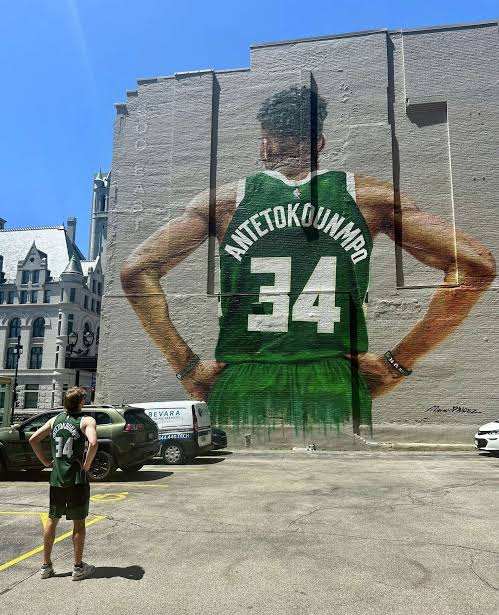
Danny Nelson wears a Giannis Antetokounmpo Milwaukee Bucks jersey while staring at a mural of him in downtown Milwaukee on Tuesday, June 23, 2026.Steve Megargee/AP Photo/Steve Megargee
At the end of June, we had 2 important ingresses: Chiron moved into Taurus, and Jupiter into Leo.
Early this month, the 2 formed an exact square, triggering some of our deepest vulnerabilities around rejection, visibility, and the fear of not being accepted for who we are.
What gives this transit its unique flavor is that both planets have just entered new signs. Chiron hasn’t been in Taurus for more than 4 decades. Jupiter hasn’t been in Leo since 2015.
So this is not just another Jupiter-Chiron square. These 2 ingresses have shifted us into a completely new reality – one that, for many of us, is a total first.
To understand what makes this Jupiter-Chiron square unique, let’s get back to what Taurus and Leo stand for.
Taurus Vs Leo
Taurus is the intelligence of the body – discerning what feels safe, nourishing, real, and right – and what’s not.
Chiron in Taurus has the mandate to restore our somatic intelligence – what the body knows before the mind comes up with an explanation – our ability to feel what’s good for us and what’s not, to sense our boundaries, and to feel good in ourselves without needing validation or external confirmation.
Leo energy is different. It’s not the primal, early, instinctual knowing of Taurus. Leo follows Gemini, the mind, and Cancer, the emotions. So by the time we get to Leo, we have moved through all 4 elements and have developed a more rounded sense of self.
Leo is the developmental process where we learn to stand as individuals and be seen.
Jupiter in Leo then interprets the body’s truth through a big identity story: What does this mean about me? Who I am, how I am seen, and what’s expected of me?
And this is where the Chiron square creates the pressure point: “Will I still be seen, loved, respected, and wanted if I follow my body’s truth?”
Leo is ruled by the Sun, the largest body in our solar system by an order of magnitude. We cannot not see the Sun. The Sun is simply there, impossible to ignore, beaming its light and heat.
That’s why for people with Leo placements, being seen for who they are is at the very core of their experience. Not for ego strokes, contrary to some stereotypes. Not for applause. But for the experience of being witnessed.
The Leo Wound
Leo, the fixed fire sign, cannot help but radiate energy. So being allowed to express its fire as it is, without containment or apology, is one of its core needs.
But what happens when that radiance, that pure expression of one’s energy, is not witnessed? Or when it’s questioned?
This is terrifying not necessarily because of the rejection itself, but because it touches the very core of Leo’s identity.
You don’t witness me, so I don’t exist. My heat is not welcome – even if I can’t help but radiate it. If I am not witnessed, if I am turned down, then who am I?
So when Chiron in Taurus exposes our raw body truth, it also exposes the deepest Leo vulnerabilities:
Not feeling seen or appreciated.
Feeling that our sovereignty is questioned.
Feeling that our boundaries are crossed or not treated with respect.
The more Chiron takes us into this vulnerable, no-outcome-guarantee excavation, the more it can trigger Leo’s fear of identity collapse. We may see rejection where there is none, or experience rejection – real or imagined – as a direct ego death.
Jupiter In Leo Square Chiron In Taurus
Chiron in Taurus challenges Jupiter in Leo narratives. Everything we thought we knew about our identity, about who we are, and about what makes us valuable may suddenly be questioned.
As a response to the tension, the tendency can be to retreat, tomanufacture worst-case scenarios, to save face, or to act distant in advance, in an unconscious effort to re-establish control.
“I didn’t want this anyway”. “I don’t care”.
But Chiron’s invitation is not to avoid vulnerability. The reason that deep, underlying wound was triggered was for a very specific reason.
The power of the Sun is not that it shines all the time – at least not from our geocentric perspective on Earth.
The Sun gives us heat during the day, and then retreats under the horizon so we can embody, integrate, and rest during the night.
A key lesson for Sun-ruled Leo is learning how to set with grace. To be okay with the fact that its radiant heat, while life-giving and impossible to live without, is not needed all the time.
This means being okay not being the #1 person all the time. Not being seen all the time. Not being needed all the time.
This doesn’t make us less of who we are. On the contrary. It can take away the pressure to perform, the pressure to always be on, the pressure to constantly prove our light.
When we learn to take a back seat and slide into the underworld, anonymous and unseen, it can feel incredibly vulnerable.
But that’s exactly what helps us relax into being – becoming more, not less, of who we are.
Chiron And Vulnerability
Vulnerability feels scary, especially for a fixed sign like Leo, where consistency is so central.
But vulnerability serves a purpose. Vulnerability is what we feel when the old identity no longer fits, but the new one has not stabilized yet.
It is the part of us that steps into something before the mind has figured out the plan. At some level, we already know that there is “more” out there.
We don’t know exactly what – hence the vulnerability. But the longing has been awakened, and this makes the old reality impossible to sustain.
Vulnerability requires being a little less sparkly, less polished – and more raw in the truth of the present moment, whatever that is.
Even if it makes us feel smaller, even if it appears to dim our light, even if the outcome is completely unknown.
We don’t have to always provide. Always be the one others count on. Always be the generous one. It’s ok to pause. The world will not only survive without us – it may also learn to do its own share.
Jupiter Square Chiron – When Truth Triggers Rejection
This vulnerability has a distinct Chiron in Taurus flavor: what actually feels right, right now? What makes my body say yes? Say no? What makes me feel safe? Unsafe?
These are the types of questions we may have forgotten to ask. Because the pressure to perform a version of life that kept us seen, approved of, or needed also meant that we had to check out from our own somatic intelligence.
Since Chiron entered Taurus, the longing to reconnect with our body, our senses, and our sense of safety, to what feels right, has become increasingly difficult to ignore.
Yet at the same time, because Jupiter in Leo squares this process, we are asked to hold an uncomfortable dilemma.
The longing has been unmistakably awakened – but so have our deepest feelings of insecurity and rejection.
It’s like: “Ah, that’s what feels right” but at the same time “The world is rejecting my newfound truth” – so that truth, while real, also feels inappropriate, inconvenient, or not even possible.
Jupiter Square Chiron – The Story Behind The Discomfort
The invitation with all Jupiter hard aspects is to see the story behind the discomfort.
Jupiter, the first social planet, is the planet of beliefs – which is really the type of narratives we’ve been brought into – the culture of the time, the customs, the social codes, the unwritten and written laws of what’s right and what’s wrong.
Unlike Mercury, which reads reality in real time through direct observation and individual mental processing, Jupiter is the overarching story we have already been brought into.
The story we may not even be aware of – the story we may have never considered questioning, because it was there from the very beginning.
So when Chiron in Taurus comes with the longing to be more of ourselves, to lean more into what feels right, the Jupiter in Leo story automatically kicks into gear.
Why it’s inappropriate. Why it’s too much. Why it won’t be accepted. Why it will cost us love, approval, visibility, or belonging.
Remember, we are talking about a Jupiter-Chiron square – not a supportive aspect like a trine or a sextile.
But the gift of the square lies exactly in the dissonance it creates. Yes, the discomfort comes. The rejection. The feeling of exposure. The feeling it’s something wrong, that we’re doing something wrong.
But that is precisely the tension that forces us to look at the story underneath it:
What if the discomfort is not proof that something is wrong, but proof that an old story is being exposed?
What if the answer is not to fix the vulnerability, but to stay with it long enough for the body to tell us what is true?
What if we can trust our inner knowing before we know where it will lead?
The invitation of Jupiter square Chiron is to let the old story crack open, so a deeper truth can finally be felt, trusted, and lived.
New Thinking Allowed with Jeffrey Mishlove Jul 7, 2026 James Tunney, LLM, is an Irish Barrister who has lectured on legal matters throughout the world. He is a poet, a scholar, and author of The Mystery of the Trapped Light: Mystical Thoughts in the Dark Age of Scientism plus The Mystical Accord: Sutras to Suit Our Times, Lines for Spiritual Evolution. His paintings have been shown in galleries in Scandinavia and London. In this video, rebooted from 2021, he shares his passion for and knowledge of a fine art painting. This highly illustrated conversation covers the artwork of Hildegard of Bingen, Jean-Michel Basquiat, Andy Warhol, Carl Jung, Francis Bacon, Frank Auerbach, Norman Rockwell, Paul Cézanne, Georgiana Houghton, Édouard Manet, Georges Seurat, Hilma af Klint, Wassily Kandinsky, Francisco Botticini, Leonardo da Vinci, Filippo Brunelleschi, William Blake, Gino Severini, Sir Joshua Reynolds, Jack Yeats, Oskar Kokoschka, Franz Marc, Max Beckmann, Seán Scully, Ian Fairweather, August Macke, Piero della Francesca, and Nicholas Roerich – as well as his own work. Special emphasis is placed on expressionism in painting. New Thinking Allowed host, Jeffrey Mishlove, PhD, is author of The Roots of Consciousness, Psi Development Systems, and The PK Man. Between 1986 and 2002 he hosted and co-produced the original Thinking Allowed public television series. He is the recipient of the only doctoral diploma in “parapsychology” ever awarded by an accredited university (University of California, Berkeley, 1980). He is also the Grand Prize winner of the 2021 Bigelow Institute essay competition regarding the best evidence for survival of human consciousness after permanent bodily death. He is Co-Director of Parapsychology Education at the California Institute for Human Science. (Recorded on January 16, 2021)
New Thinking Allowed with Jeffrey Mishlove Jul 6, 2026 Matthew Ingram is author of Retreat: How the Counterculture Invented Wellness. In this 2020 video, he describes two major styles of meditation that he, himself, practices – Vipassana or mindfulness meditation, based on pure awareness, and Vedic mantra meditation. The cultural context for meditation practice is crucial. There is a close relationship between Eastern meditative practices and western forms of psychotherapy. Other western disciplines, such as self-hypnosis are akin to meditation. The discussion also focuses on abuses that can occur between teachers of meditation and their students. His website is http://www.woebot.com. New Thinking Allowed host, Jeffrey Mishlove, PhD, is author of The Roots of Consciousness, Psi Development Systems, and The PK Man. Between 1986 and 2002 he hosted and co-produced the original Thinking Allowed public television series. He is the recipient of the only doctoral diploma in “parapsychology” ever awarded by an accredited university (University of California, Berkeley, 1980). He is also the Grand Prize winner of the 2021 Bigelow Institute essay competition regarding the best evidence for survival of human consciousness after permanent bodily death. He is Co-Director of Parapsychology Education at the California Institute for Human Science. (Recorded on December 19, 2020)
“The function of prayer is not to influence God, but rather to change the nature of the one who prays.”
~ Kierkegaard
Søren Aabye Kierkegaard was a Danish Lutheran theologian, philosopher, poet, social critic, and religious author who is widely considered to be the first existentialist philosopher. Wikipedia
In a new interview with the Sunday Times, the band’s 82-year-old frontman said he once tried using AI to help title the Stones’ 2023 album, “Hackney Diamonds.” It did not go well.
“No one could agree, and I threw all these titles at it, and it came back with such rubbish; it didn’t help me at all,” Jagger said. “I was saying, ‘These are my 12 album titles, give me some more,’ and of course in the end we never used any of them.”
The comments come as the Rolling Stones prepare to release “Foreign Tongues,” the band’s next studio album, on Friday, July 10. The band has already experimented with AI-linked visual effects in the video for “In the Stars,” which features digitally de-aged versions of Jagger, Keith Richards and Ronnie Wood.
That tension places the Stones inside a broader debate over AI’s role in music and the arts.
Earlier this year, Spotify moved to add verification badges to help distinguish real artist profiles from AI-generated personas, while artists including Grammy-winning producer Jack Antonoff have criticized AI-assisted music-making as a threat to the purpose of creating art.
The issue has particular resonance in the Bay Area, where OpenAI and Anthropic have major operations in San Francisco and Google, which operates Gemini, is headquartered in Mountain View.
Jagger’s view appears more pragmatic than absolutist. He dismissed AI as a writing partner but said it may have some use for artists.
“It can unstick you, and you think, ‘OK, that was rubbish,’ or ‘Mine are loads better than yours,’” Jagger told The Sunday Times. “It gives you confidence.”
Beyond its album release, Jagger told the Argentine newspaper La Nación that the band does not expect to tour this year.
“I’d love to tour this album,” Jagger said. “I hope to tour next year and I hope to do it as soon as possible.”
He sounded less enthusiastic about the residency-style model used by some major acts, including a potential run at the Las Vegas Sphere, saying such runs can make concerts more expensive for fans who have to travel to one city.
“I like to go places,” Jagger said.
In the Sunday Times interview, Jagger, Richards and Wood also discussed making “Foreign Tongues,” the band’s creative momentum in its eighth decade and “Ringing Hollow,” a new song that reflects on the current state of affairs in America.
Richards, a longtime Connecticut resident, described the track as “a nostalgic love affair with America, and (it being) a bit of a disappointment at the moment.”
“Foreign Tongues” follows “Hackney Diamonds,” which gave the Stones a late-career jolt in 2023. The new album was produced by Andrew Watt and includes contributions from Paul McCartney, Robert Smith, Chad Smith and Steve Winwood.


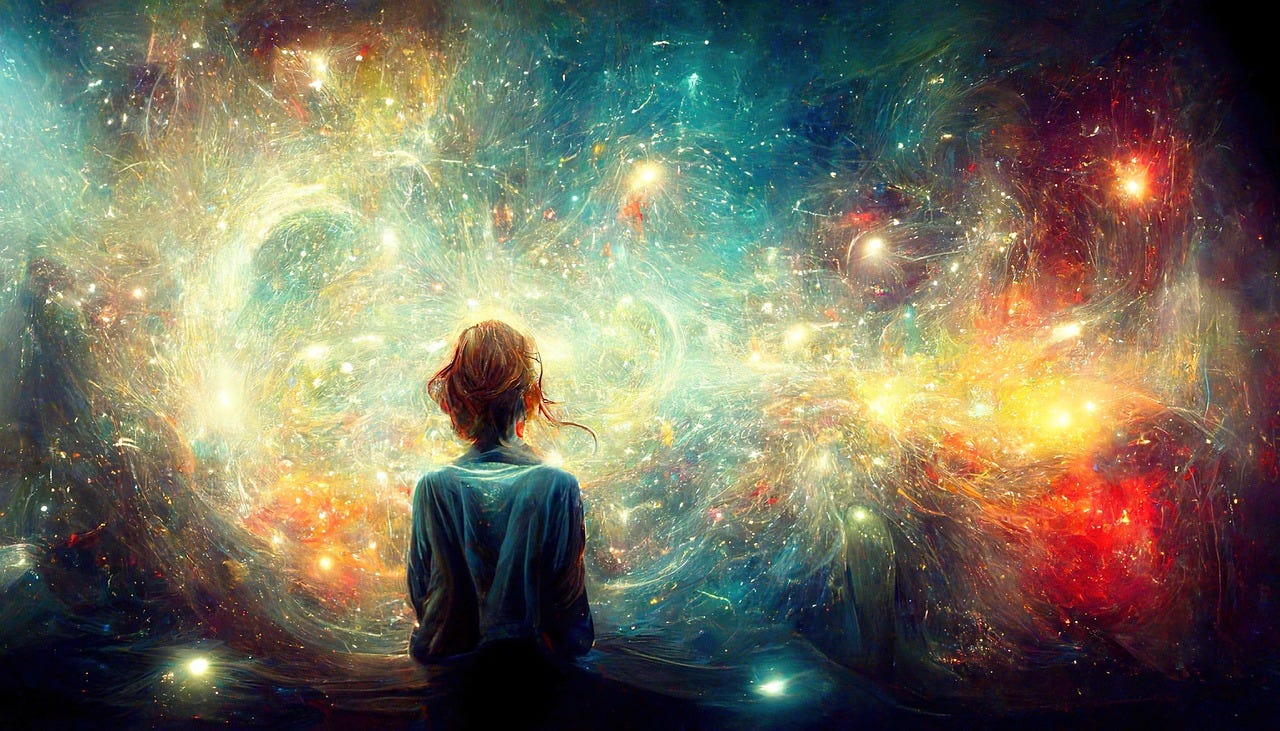


 For ancient peoples, the soul was located in the breath or the blood. For me, soul resides at the point where our lives intersect with the timeless, in our love of goodness, our passion for beauty, our quest for meaning and truth. In asking whether animals have souls, we are inquiring whether they share in the qualities that make life more than a mere struggle for survival, endowing existence with dignity and élan.