In this book, P.M.H. Atwater explores the possibility of the soul, God, other worlds, heaven and hell, the afterlife, religion, and the purpose of life. It investigates and reports on the power of changed lives, the expansion of normal faculties, and the importance of spirituality. With drawings, cartoons, and sidebars from experts, The Big Book of Near-Death Experiences is also simple and accessible, designed for the busy reader who wants quick little nuggets of wisdom.
Cry the Beloved Mind is, indeed, a compassionate, respectful, self-help book which allows patients, their families, and the general reader to understand what their doctors are doing when using powerful mind-modifying medications such as Prozac, BuSpar and Tegretol. As for Dr. Neppe’s consultations in the book, he has taken a fresh approach, writing in a style that he describes as being “a play within prose.” It is fundamentally a dialogue between the generic “Doctor” and his patients or medical students using the entirely new literary genre of “sciction”-medical science expressed through fictitious composite case histories.
All the World an Icon is the fourth book in an informal “quartet” of works by Tom Cheetham on the spirituality of Henry Corbin, a major twentieth-century scholar of Sufism and colleague of C. G. Jung, whose influence on contemporary religion and the humanities is beginning to become clear. Cheetham’s books have helped spark a renewed interest in the work of this important, creative religious thinker.
In Pilanesberg, a juvenile African elephant (Loxodonta africana) pauses to sniff the air, its trunk gently reaching toward the observer as if to know them by scent. In that shared moment, two minds meet through a sense older than words.
HOUSTON—Marking a momentous leap forward in humankind’s understanding of the universe, NASA scientists announced today they had received a radio transmission confirming the existence of intelligent, extremely condescending life in a galaxy nearly 13.8 billion light-years away.
According to officials at the Lyndon B. Johnson Space Center, the message arrived several days after researchers sent a signal to the recently discovered URFy-32924369 galaxy. Members of a highly arrogant alien species responded, saying it was “nice to finally hear from [our] quaint planet” and that it “certainly took [humanity] long enough.”
The extraterrestrials explained they had intercepted NASA’s transmission using their “far superior technology,” because they did not want to “wait the intervening billions of years to receive a simple message from a species working within the laughable constraints of the speed of light.”
“We were extremely excited to have made contact with this highly advanced form of life, but it quickly became clear they’re pretty big jerks,” said NASA scientist Raymond Morrison, referring frequently to a 24-page transcript of the interstellar transmission filled with patronizing language and backhanded compliments. “After telling us they hadn’t exactly been holding their breath waiting for us to figure out how to make contact with our ’charmingly simplistic devices,’ they informed us they had studied our planet millennia ago but decided it was ’too hopelessly primitive to be worthwhile.’”
According to NASA, the alien species described Earth’s 78-percent nitrogen atmosphere as a “decent start,” and said mankind had “come a long way in the past century, relatively speaking, considering it took [humans] a full 4 million years to walk upright.”
Scientists have expressed mix feelings about the landmark event, noting that while the thrilling discovery of intelligent alien life signals the dawning of a new age in our ability to answer fundamental questions about the very nature of existence, they had not expected an extraterrestrial species to be so dismissive of virtually every aspect of human life.
“We sent them very peaceful, welcoming messages, and they responded by saying it was ’marvelous’ that the human race had managed to sustain itself for so long without having made any noteworthy advances of any kind,” Morrison said of the aliens, who described the physical appearance of humans with the phrase “interesting-looking, would be the most polite way to put it.” “I mean, they weren’t threatening us in any way, but they didn’t have to be such pricks about everything.”
The contemptuous transmission casually discounts centuries of human achievement, with the aliens saying they could not believe mankind still deals with issues of disease and overpopulation. The message then goes on to openly mock humans’ “pathetically short life spans.”
“When we sent them examples of our very best cultural offerings, they said they ’rather enjoyed the amusing little tinklings’ of Mozart and the ’adorable scribblings’ of Rembrandt,’” said Morrison, adding that his team will no longer transmit samples of music and art for the aliens to belittle. “They then said they could completely understand how our incredibly low intelligence and level of evolutionary development would allow us to enjoy such ’low-caliber’ sensory stimuli.”
“They were absolutely relentless,” Morrison continued. “I personally feel pretty terrible about myself right now.”
The NASA scientists noted, however, that the tone of the discourse changed dramatically after the aliens were sent images of a man jumping from ramps while riding a Kawasaki Jet Ski.
“For some reason, when they saw this footage, we received a barrage of messages saying ’Hold on a second, what is that ?’ and ’Please, tell us everything about this Jet Ski,’” said Morrison, later reading several more excerpts from the transmission, among them, “How fast can the Jet Ski go?” and “Is the man riding the Jet Ski a king on your planet?” “They are evidently completely mesmerized by Jet Skis, and have offered us anything we want in exchange for the technology.”
At press time, NASA had received a transmission from the alien species in which they apologized for their earlier messages, saying they had “greatly underestimated the Keepers of the Jet Ski.”
Reality checks are a powerful lucid dreaming technique that can boost your self-awareness during the day and unlock your dream world at night. When combined with other lucid dream exercises, reality checks can intensify your efforts, or they can lead to spontaneous lucid dreams by ingraining the habit of reality testing.
What Are Reality Checks?
To master lucid dreaming, you must learn to differentiate between dreams and waking reality. In most dreams, the dreamer accepts the dream as real until they wake up, realizing that something was amiss.
By incorporating reality checks into your daily routine, you train yourself to perform them within dreams, triggering your conscious mind to realize, “I’m dreaming!”
What Makes a Good Reality Check?
A reliable reality check for the unpredictable dream world demands careful consideration. The common arguments for being awake, such as sight, touch, awareness, and a general sense of existence, are insufficient since they apply equally to the dream realm. The dreamer’s mind often lacks the clarity and logical thinking of the waking state.
To reliably discern when you are dreaming, you need a test that induces an “Aha!” moment of realization. It must consist of two components: a simple question and an “impossible” pre-determined action or experience.
How To Do Reality Checks
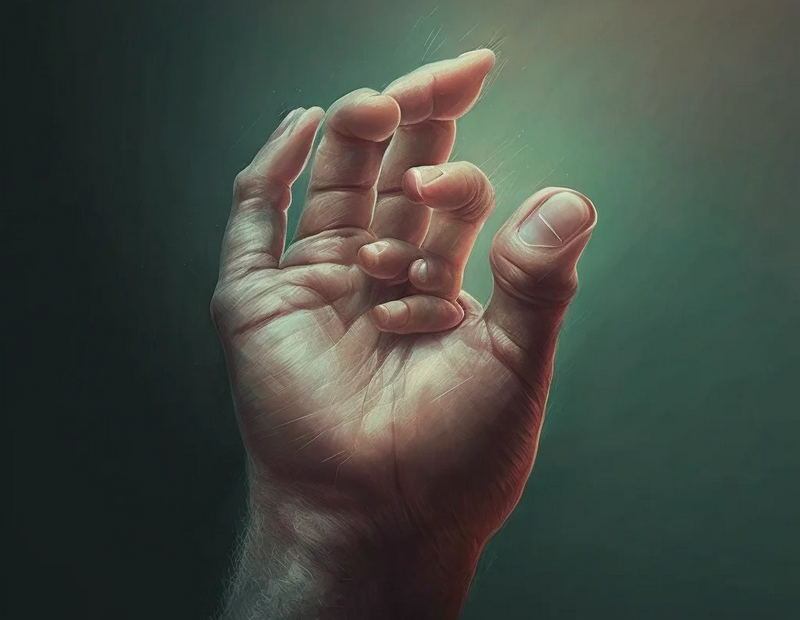
One effective reality check involves pushing two fingers from your right hand into the palm of your left hand and willing them to pass through. In your waking life, this test consistently offers resistance, while in a dream, you can often pass your fingers through your palm.
“Once upon a time, I dreamt I was a butterfly, flittering hither and thither, to all intents and purposes a butterfly …suddenly I awoke… Now I do not know whether I was then a man dreaming I was a butterfly, or whether I am now a butterfly dreaming I am a man.”
~ Chuang-tzu
When conducting this technique during the day, ensure that you not only perform the physical action but also ask yourself, “Am I dreaming?” and genuinely mean it. Assess your surroundings, and ponder the solidity of objects, challenging your perception./p>
Repeat your chosen reality check a minimum of a dozen times daily and make each check count. Soon, you’ll find yourself asking the same question within a dream, triggering lucidity.
For instance, when I do a reality check, I might look at a cup on my desk and wonder if it really exists or am I imagining it? Can I definitely pick it up or might my fingers pass through it? If I look away and look back, is it still there?
How about the air? Can I infuse the air around me with new characteristics like warmth, color, or texture? This is how you build self-awareness, questioning your feelings and perceptions in the moment by experimenting with what’s real.
Be sure to come to a well-informed decision each time about whether you’re awake or dreaming. When a reality check occurs in a dream, it will jog your mind into critical thinking mode and you’ll realize you’re dreaming.
Top 10 Reality Checks for Lucid Dreams
While the finger and palm check is a reliable choice, you can also explore these “impossible” reality tests. You want to image the impossible actually happening, so the expectation effect works in a dream and gives up the illusion:
Breathe – Hold your nose and mouth shut and imagine breathing.
Jump – Imagine jumping across the room in slow motion.
Read – Read a sentence twice and imagine it changing.
Look– Imagine your vision gets clearer or blurrier at will.
Hand– Imagine pushing your hand through a wall.
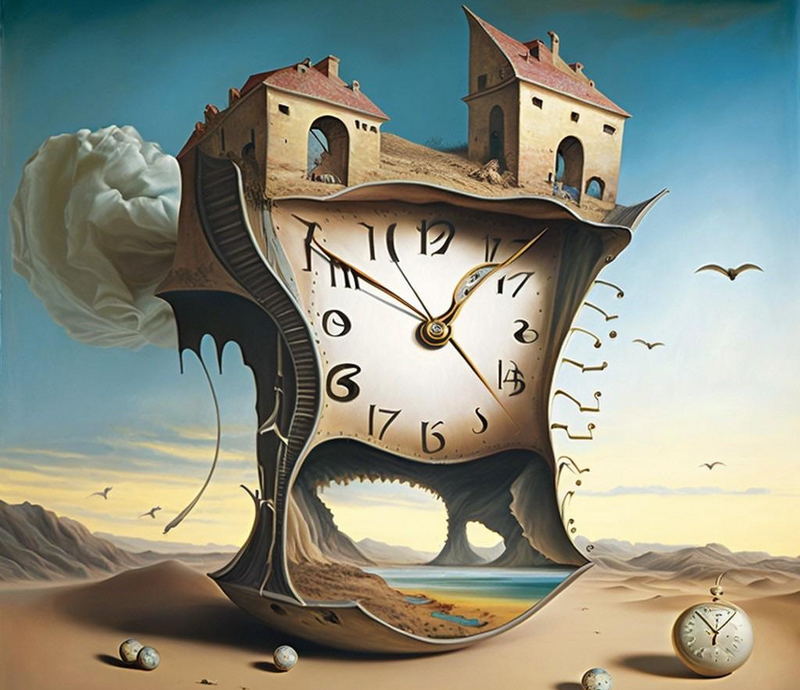
Time – Look at a clock and watch the numbers morph and drift.
Fly– Imagine flying out the window or hovering above the ground.
Palms– Look at your palms and see your hands morph close-up.
Mirrors – Stare into a mirror in low lighting and see your face change.
Play – Play an instrument and hear extra sounds from nowhere.
For good measure, perform two reality checks each time. If one fails, the other acts as a backup. My go to reality check is trying to push my hand through the desk or wall. It’s such a great feeling when it actually happens in a dream and I become lucid; it feels real no matter how absurd the situation.
Enhancing Your Self-Awareness
The mind constructs patterns based on real-life experiences. For instance, since you’ve had the experience of gravity your whole life, you don’t need to repeatedly question it. You already know that you can’t float or take off at will. Likewise, you know the sky is blue, you can’t control objects with your mind, and walls are too solid to pass through.
However, questioning your basic experiences can promote a new way of thinking, in the waking world and in dreams. Engineers call it thinking from first principles. Psychologists call it bottom-up processing. The rule is: take nothing for granted.
Increasing your self-awareness is a fun and fast learning curve. Pay attention to your surroundings, examine them in detail, and question their nature. This approach establishes a direct path to lucid dreaming.
Troubleshooting Reality Checks
As this is a very popular lucid dreaming technique, I get a lot of questions about how to do reality checks and why they don’t always work in dreams. Here are some of most common questions and answers.
How can I remember to do more reality checks each day?
Set up triggers that remind you to do reality checks, like reminders on your phone, sticky notes around the house, or draw a symbol on the back of your hand. You can also set up mental trigger points, reminding you to do a couple of reality checks every time you walk up stairs, pour a drink, or open a door.
Why aren’t any reality checks appearing in my dreams?
Ensure your process is mindful and meaningful. Since your dreams relay waking experiences, the more impressionable or frequent the experience, the more likely it is to arise in a dream. Combine reality checks with other lucid dreaming techniques for synergistic effects. Keep a dream journal and record a dream every night, practice dream incubation and meditation as you fall asleep.
Why didn’t my dreaming reality check make me lucid?
Ensure your waking reality checks are thoughtful and that you’re not simply going through the motions. It’s an easy trap to fall into when you have this same thought ten times a day. Use multiple phrasings of the question “am I dreaming?” Use your imagination to flick back and forth between what reality is showing you and what a dream could show you.
Occasionally, reality checks fail through no fault of your own. You may be having a very normal life-like dream, or even a false awakening. In fact, since lucid dreamers have many more false awakenings that non-lucid dreamers, it’s a good idea to perform a couple of deep reality checks every time you wake up.
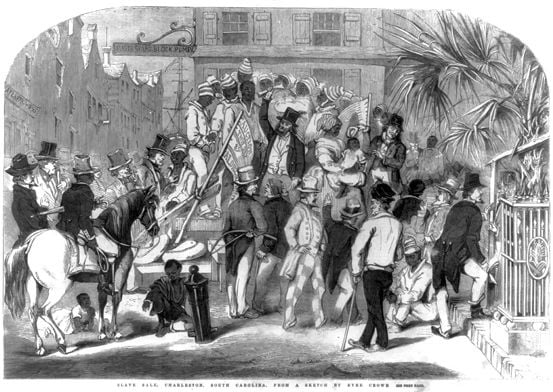
A woodcut of a slave sale in Charleston (postandcourier.com)
Google AI Overview
In the Old South, “slave rentals” were part of the “hiring out” system, a common and profitable economic practice in which enslavers leased out enslaved people to others for a fixed period
. This system expanded the reach of slavery beyond traditional plantation owners, involving a wide range of white people in the institution.
The process and economics of hiring out
The transaction. Owners would rent out enslaved men, women, and children for a specific fee and period, typically for a year, though shorter terms were also common. The enslaver would receive payment, while the hirer gained temporary control over the enslaved person’s labor.
Diverse hirers. People who did not own slaves, including farmers, urban businesses, widows, and artisans, frequently rented enslaved labor. Institutions like colleges and railroad companies also hired enslaved workers to fill positions.
Motivations for owners. Renting out enslaved people was a key strategy for enslavers to generate income, especially for those with “excess” hands. The practice was a significant component of the domestic slave trade, particularly as prices for enslaved people fluctuated. In some cases, owners would even rent out pregnant or nursing women at nominal fees to avoid the expense of caring for “unproductive” workers.
Advertisements. Hiring out was widely advertised in newspapers alongside notices for slaves for sale or for runaways. These advertisements helped connect owners with those in need of temporary labor.
Experiences of hired-out enslaved people
Increased autonomy (and its limits). For some enslaved people, particularly skilled urban workers, the hiring-out system, especially a variation called “self-hire,” offered a limited form of independence. A self-hired slave might be able to find their own employer and housing, negotiate the terms of their labor, and manage a stipend for their living expenses.
New vulnerabilities. Despite potential opportunities, the system placed enslaved people in a precarious position. When hired out, they were separated from their families and communities and had to endure new living and working conditions under a temporary master who had little investment in their long-term health. As a result, hired slaves were at increased risk of abuse and neglect.
Expanded networks. Being hired out, particularly in urban settings, allowed enslaved people to develop wider social networks, learn new trades, and gain knowledge of the local landscape. This increased mobility also provided more opportunities for literacy and escape.
Resistance. Enslaved workers resisted the hiring system in various ways. Sometimes, resistance was overt, as when enslaved people at South Carolina College went on “strike” to protest a decrease in their labor force. In other cases, they were able to negotiate with owners and hirers to influence the terms of their work.
Impact on the institution of slavery
Reinforced slavery. The hiring-out system made slavery accessible to a wider demographic of white Americans who couldn’t afford to purchase enslaved people outright. By involving more people in the economics of human bondage, the system strengthened the institution’s foothold in Southern society and reduced class differences among white people.
The paradox of autonomy. The system’s allowance of limited mobility and negotiation for some enslaved people created a paradox for slaveholders. While they benefited from the revenue, they also feared that the relative autonomy could undermine the strict controls of the system and encourage resistance or escape.
Perpetuated after the Civil War. Following the Civil War, many of the exploitative practices of the hiring-out system were mirrored in the convict leasing system, where formerly enslaved and other Black individuals were leased out for labor as a form of punishment for crimes.
Marianne Williamson Sep 4, 2025 The question before us is not only “What do we have to do in order to endure and transform this moment?” Every bit as importantly, it’s “Who do we have to be?” Going deep is as important as going wide, a critical mass is as important as a majority, and changes within us will cause changes in the world we see. Let’s gooooooo…..
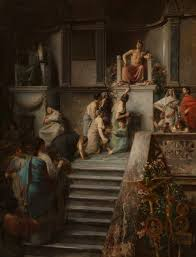
Caligula Indulging in the Worship of the People, 1877
Art: Émile Lévy According to Wikipedia, Roman emperor Caligula (12-41 CE) became “increasingly self-indulgent, cruel, sadistic, extravagant and sexually perverted thereafter, an insane, murderous tyrant who demanded and received worship as a living god, humiliated the Senate, and planned to make his horse a consul.”
Translation is a 5-step process of “straight thinking in the abstract” comparing and contrasting what seems to be truth with what you can syllogistically, axiomatically and mathematically (using word equations) prove is the truth. It is not an effort to change, alter or heal anything.
The claims in a Translation may seem outrageous, but they are always (or should always be) based on self-evident syllogistic reasoning. Here is one Translation from this week.
1) Truth is that which is so. That which is not truth is not so. Therefore Truth is all that is. Truth being all is therefore total, therefore whole, therefore complete. Truth being true is therefore right, therefore proper, therefore appropriate, therefore fitting, therefore suitable, therefore fit, therefore sound, therefore healthy. I think therefore I am. Since I am and since Truth is all that is, therefore I, being, am Truth. Since I, being, am Truth, therefore I, being, have all the attributes of Truth. Therefore I, being, am total, whole, complete, right, proper, approprite, fitting, suitable fit, sound, healthy. Since I am mind (self-evident) and since I (being) am Truth, therefore Truth is Mind. (Two things being equal to a third thing are equal to each other.) Since Truth is Mind, therefore Mind has all the attributes of Truth. There Mind is total, whole, complete, right, proper, appropriate, fitting, suitable, fit, sound, healthy.
2) Some of us have not outgrown our infantile grandiosity.
3) Truth being all is therefore without limit. Being without limit, istherefore immortal. Therefore mortality is a lie about the immortality of Truth. OR: Truth is immortal. Truth being true, therefore proper, therefore appropriate, therefore timely, therefore Truth is mature (timely). Truth being mature, that which is infantile, not mature, not ripe, not timely, not fitting, is not so. Therefore Truth is always on time. Truth being all that is and pretension being an untruthful claim, therefore Truth is unpretentious (not overly complex). Truth being unpretentious is therefore not self-important. Therefore Truth is Self-important.
4) Truth is immortal. Truth is mature (timely). Truth is always on time. Truth is unpretentious (not overly complex). Truth is Self-important.
5) Truth is timely Self-importance.
Weekly Invitational Translation Group invites your participation. If you would like to submit a Translation on any subject, feel free to send your weekly Translation to zonta1111@aol.com and we will anonymously post it on the Bathtub Bulletin on Friday.
“Your reason and your passion are the rudder and the sails of your seafaring soul. If either your sails or your rudder be broken, you can but toss and drift, or else be held at a standstill in mid-seas. For reason, ruling alone, is a force confining; and passion, unattended, is a flame that burns to its own destruction. Therefore let your soul exalt your reason to the height of passion, that it may sing; And let it direct your passion with reason, that your passion may live through its own daily resurrection, and like the phoenix rise above its own ashes.”
Gibran Khalil Gibran, usually referred to in English as Kahlil Gibran (January 6, 1883 – April 10, 1931), was a Lebanese-American writer, poet and visual artist; he was also considered a philosopher, although he himself rejected the title. Wikipedia
On September 7th, 2025, we have a Full Moon and Total Lunar Eclipse in Pisces.
The eclipse is total – which means it’s intense – VERY intense. And it’s in the middle of the sign (15° Pisces) – right at the heart of the Piscean territory. This one goes straight to the point.
The lunar eclipse highlights the tension of the Virgo-Pisces axis – where we aim to find balance between our worldly duties and our higher purpose.
Both Virgo and Pisces want to reach some sort of ‘perfection’ – but they go about it in different ways:
In Virgo – through constant improvement: read diet, wellness, self-help, routines. The approach is practical and rooted in the physical world.
In Pisces – through merging with something that is already perfect; at least, what we see as perfect, something we can’t fully grasp, that lures us like a mermaid call.
These 2 seemingly opposite drives create a feedback loop: the more pressure we put into getting it ‘right’ in the physical world (Virgo), the greater the longing to merge with something greater (Pisces).
Pisces is where we hide from the physical Virgo reality; and Virgo is where we come back to Earth – after wandering lost for too long in the too vast Piscean waters.
The Lunar Eclipse on September 7th, 2025 aims to find balance between these 2 approaches, with a focus on the Pisces side of the axis.
We are in the Virgo season, so our focus naturally turns to everyday reality: work, errands, routines, the small rituals that give us a sense of safety and control.
However, the more pressure we face in daily life – work, duties, responsibilities (Virgo) – the more the psyche leans the other way, into an alternate field where “perfection” is not set by worldly standards but by the hidden drives and unmet desires of the soul (Pisces).
Pisces is where our higher self tries to connect with us through symbols and signs: a dream you can’t shake, a chance encounter that rings like a bell, a longing you can’t translate into ordinary life.
And because these Piscean longings can feel phantasmagoric and out of reach, the way we try to bring them to heel is by doubling down on the Virgo side of the axis: more work, more yoga, stricter diet – whatever keeps us anchored in ‘reality’.
The Age Of Virgo, The Age Of Pisces
This Virgoan reflex is braided into our utilitarian society. Virgo, the maiden with the grains, symbolizes the shift from hunting and gathering to agriculture.
That shift began around 12.000 BCE, at the dawn of the Neolithic era, when we had the Age of Virgo.
Interestingly, much of that order (urban establishments, systematized agriculture) grew around temples – the Piscean need to worship and merge with something greater – out of which the Virgo way of functioning emerged: settlement, organization, and production.
And then approx. 2000 years ago, around the year 0, corresponding to the birth of Jesus, we entered the Age of Pisces, with its signatures of spirituality, faith, and redemption.
But Pisces, too, casted Virgo as its shadow: alongside transcendence arose the mundane disciplines of daily life, the rules, routines, and systems of work and service that anchored spiritual devotion.
Just as Virgoan agriculture and settlement once gathered around temples – giving form to a Piscean need to worship – so too did the Piscean call to transcendence later give rise to Virgoan structures: the routines and systems of daily life that kept devotion anchored.
We are now transitioning into the Age of Aquarius, with a wholly different set of logics and priorities. Yet with Neptune in Pisces (from 2011- to 2025, and again 2025-2026), accompanied by Saturn, and the Nodal axis moving through Pisces–Virgo, the focus remains.
The Lunar Nodes on the Virgo-Pisces axis are asking us to sort this polarity out – once and for all.
Eclipses – when the Sun and Moon conjoin the Nodes – are activation points for the axis they occupy, asking us to face imbalances and integrate the missing pieces.
Just like Yin has a bit of Yang, and Yang has a bit of Yin, Virgo and Pisces are 2 expressions of the same polarity, seeking a higher integration.
To achieve this, we have 2 eclipses this current Eclipse season: the upcoming Lunar Eclipse in Pisces (on Sept. 7th-8th, 2025), and a Solar Eclipse in Virgo (on Sept. 21st).
Lunar Eclipse In Pisces – In My Secret Life
Right now, with the Lunar Eclipse, the focus is on Pisces.
Pisces is the last sign of the zodiac – the metaphoric ocean, the great storehouse, the unconscious – or however we want to call that space where everything we’ve gathered from Aries through Aquarius is dissolved and recombined in a melting pot, from which something new can later arise in Aries.
What is this Piscean dreamscape exactly?
When pressure from the environment (Virgo) becomes exacting, we retreat to our Piscean island – a place without burdens, without rigid black-and-white lines, where life opens into colors and nuances.
And it’s exactly the morphing, ambivalent, ever-shifting nature of Pisces that helps us recalibrate – in the same way sleep restores our capacity to function in the 3D world the next day.
The Piscean process is not meant to confuse us; but to help us sink deeper into meaning.
Leonard Cohen (Sun in Virgo, Moon in Pisces) said it best:
“And the dealer wants you thinking
That it’s either black or white.
Thank God it’s not that simple
In My Secret Life.”
The world – through its systems, metrics, and deadlines – likes things in black-and-white terms.
But when we live only in checklists and optimization, the cycle can start to feel like an endless loop or a burden. That is not because the Virgo ritual is wrong. It’s because ritual without soul contact goes dry. Our inner life is deeper and more complex, and retreating into Pisces offers an oasis of the soul. However, that oasis can also turn into an escape – just like Virgoan works and rituals harden into dry routines – when we push too far into either extreme.
Suffering arises when there’s a gap between the sanctuary we feel inside (Pisces) and the reality of our daily life (Virgo).
The task is not to chase the mirage of perfection on either side. The invitation is to build a bridge – to let the part of us that speaks in symbols and tides (Pisces) be in direct conversation with the part that schedules, crafts, and implements (Virgo).
If, in our secret lives, we get to be who we really are, how do we sneak a truthful slice of that self into daylight – in forms our everyday life can actually hold?
Because the ideal, the mirage, the dream is a symbol for something deeper, subtler, and more numinous than a literal outcome.
The hidden longing behind “I want to look 10 years younger,” might be a nudge to reconnect with our inner child – or to live a chapter that never got lived when it wanted to.
Full Moon Lunar Eclipse In Pisces – The Aspects
This Full Moon Eclipse forms an auspicious trine to Jupiter (at 19° Cancer) – a reminder that we have what it takes – that all the resources we need are within reach.
Jupiter says: perhaps the Piscean longing is not ‘just a dream’. Perhaps it’s the next reality, quietly incubating – ready to surface when the time is right.
Mercury is at 10° Virgo, opposing the eclipse, adds discernment. Data can inform us – or confuse us. Some “facts” are just clever reasons to stay exactly where we are; others are spec sheets for what the dream could look like in real terms.
This questioning, self-doubting Mercury opposite Eclipse energy is not meant to stop us from moving forward. It’s meant to make sure we read the signs – so what we build matches what we mean.
At the Lunar Eclipse in Pisces, don’t dismiss seemingly unrelated inputs. If an image or idea keeps knocking, keep looking at it.
And don’t be overwhelmed by the abstract, “impossible” Piscean dream. Just because it can’t exist as-is in concrete form doesn’t mean it can’t inspire a kindred form – something you can actually design, build, and live in the Virgo world.
Listen for the underlying message that runs through a weird dream, an overheard phrase, a random headline, or a chance encounter. When those threads repeat, you’re being guided toward the next piece of your story.
At this North Node Lunar Eclipse in Pisces, trust the dream enough to follow its thread, and trust yourself enough to let the life you live in secret spill over into the one you live in.
Consciousness, spirituality, biography, sexuality, androgyny, futurism, space, the arts, science, astrology, democracy, humor, books, movies and more